Disclosure: Some of the links you’ll encounter are affiliate links. If you click and buy something, I’ll get a commission. If you’re reading a review of some precious metals company, please understand that some of the links are affiliate links that help me pay my bills and write about what I love with no extra cost to you. Thank you!
The 2009 Sacagawea Dollar launched the Native American Dollar coin series, featuring the traditional obverse of Sacagawea with her son and a new reverse honoring the “Three Sisters” of agriculture (corn, beans, and squash).
A major change to the coin’s design is moving of the date, mint mark, and “E Pluribus Unum” inscription to the coin’s edge rather than the obverse.
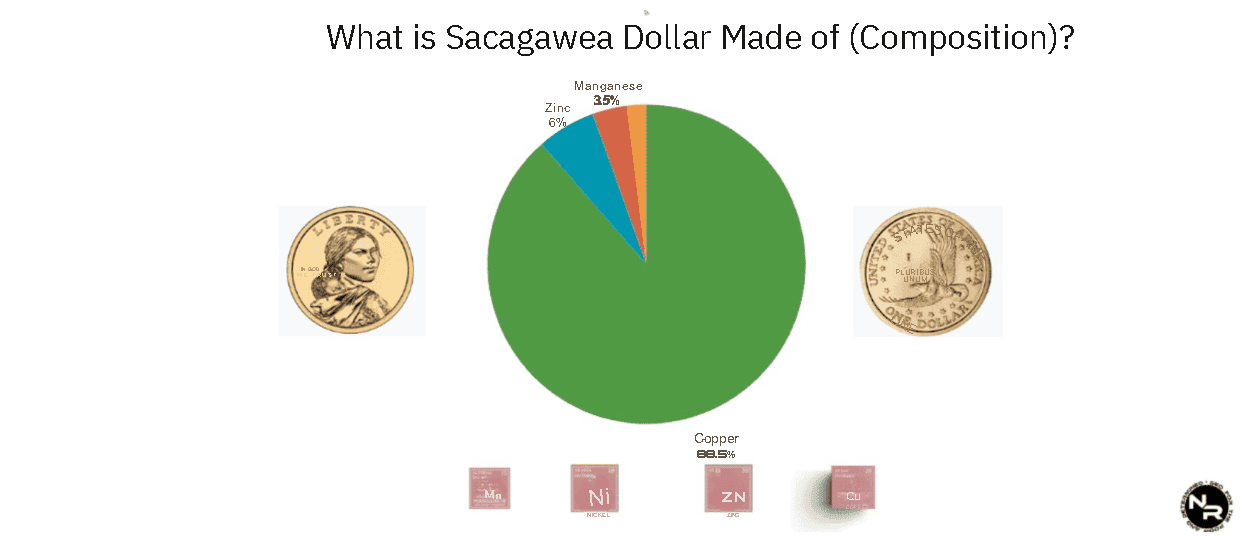
The 2009 Sacagawea Dollar consists of 88.5% copper, 6% zinc, 3.5% manganese, and 2% nickel, a standard composition for nearly all Sacagawea Dollar versions, (except those made of gold or silver).
The value of 2009 Sacagawea Dollar differs based on previous circulation or lack thereof.
Circulated coins are worth face value ($1), while uncirculated examples fetch a few dollars.
High-grade specimens can reach $10-$100+. Various mint errors exist, including rotated dies, double dies, and off-center strikes, with error coins selling from $300 to over $1,000 at auction depending on rarity and condition.
Learn more below!
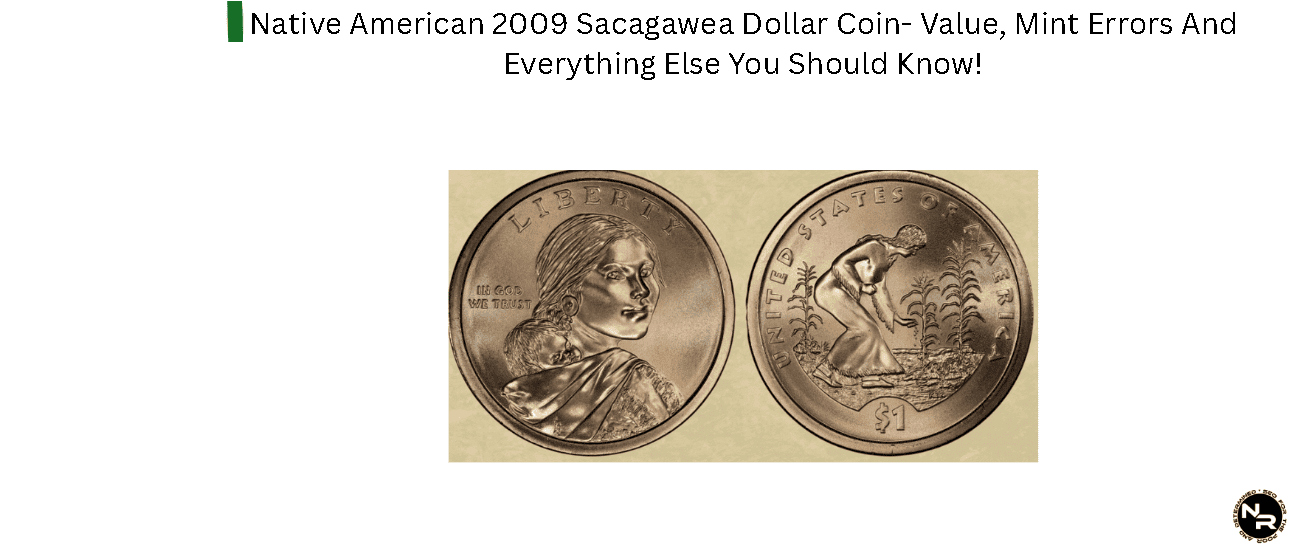
What is the 2009 Sacagawea Dollar Coin?
The 2009 Sacagawea Dollar was the first edition in the new annual Native American Dollar coin series. It had the standard Sacagawea Dollar obverse of Sacagawea carrying her son on her back, and a new reverse celebrating the “Three Sisters” of agriculture (corn, beans and squash).
The 2009 Sacagawea Dollar was also the first coin in the series to have edge lettering (date, mint mark, “E Pluribus Unum”). This was a significant shift from the previous 2000-2008 Sacagawea Dollar designs where date and mint marks were located on obverse to the right of Sacagawea’s portrait.
2009 Sacagawea Dollar coin is made from a standardized alloy consisting of copper, zinc, manganese and nickel.
The exact composition is 88.5% copper, 6% zinc, 3.5% manganese, and 2% nickel.
| Design | Profile of Sacagawea with her child, Jean Baptiste Charbonneau |
| Year of issue: | 2009 |
| Mint marks | Philadelphia (P), Denver (D), and San Francisco (S). |
| Mintage | Philadelphia (P): 39,000,000 (Circulating). Denver (D): 36,000,000 (Circulating). San Francisco (S): 2,200,000 (Proofs). Satin Finish: 784,614 (for Mint Sets, P & D). |
| Denomination | $1 |
| Alloy: | Outer layers of .770 copper, .12 zinc, .070 manganese, and .040 nickel (manganese-brass); inner core of pure copper |
| Weight: | 8.1 g (0.26 troy ounces) |
| Diameter: | 26.5 mm |
| Edge: | Lettered |
| OBV Designer: | Glenna Goodacre |
| REV Designer: | Norman E. Nemeth |
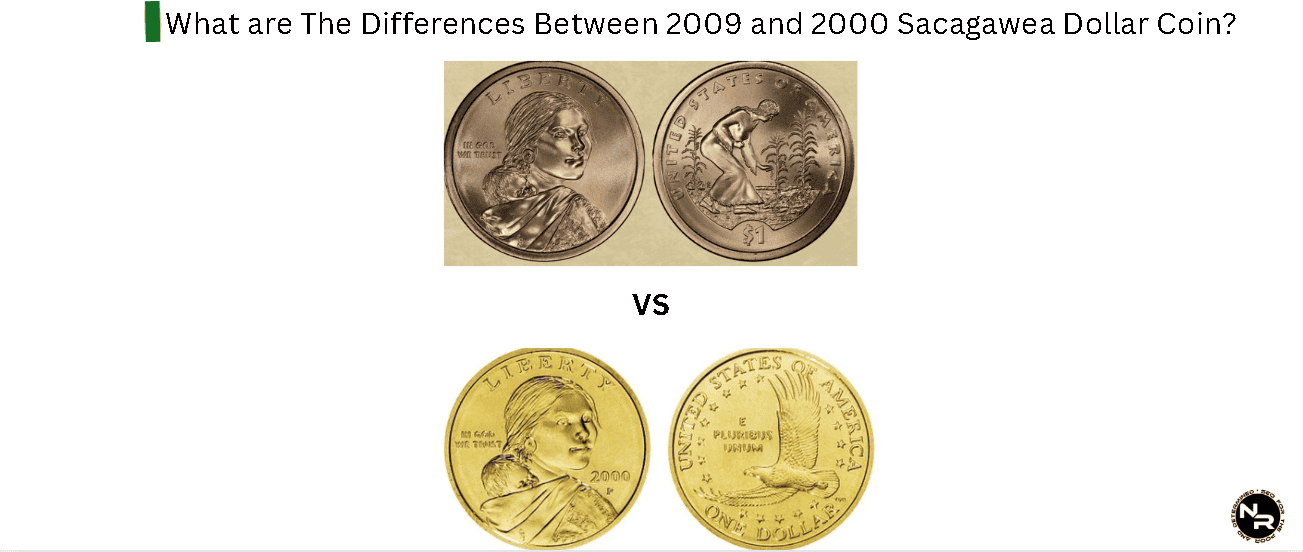
What are The Differences Between 2009 and 2000 Sacagawea Dollar Coin?
The primary differences between the 2000 and 2009 Sacagawea dollar coins are the reverse design and the location of the date and mint mark.
The 2009 coin is also the first year of the congressionally mandated Native American $1 Coin Program.
| Feature | 2000 Sacagawea Dollar | 2009 Sacagawea Dollar (Native American $1 Coin Program) |
|---|---|---|
| Obverse | Sacagawea carrying her infant son, Jean-Baptiste. | Sacagawea carrying her infant son, Jean-Baptiste. |
| Reverse | A soaring eagle with 17 stars around the rim. | Native American woman planting seeds in a field of corn, beans, and squash, representing the "Three Sisters" method of agriculture. |
| Date and Mint Mark Location | Located on the obverse of the coin, below the date. | Moved to the edge of the coin, along with the mottoes "E PLURIBUS UNUM" and "IN GOD WE TRUST". |
Hey, do you like Sacagawea dollar coin and valuable coins in general? Then check this out! Especially important to you if you’re from the United States.
What’s the Value of the 2009 Sacagawea Dollar Coin?
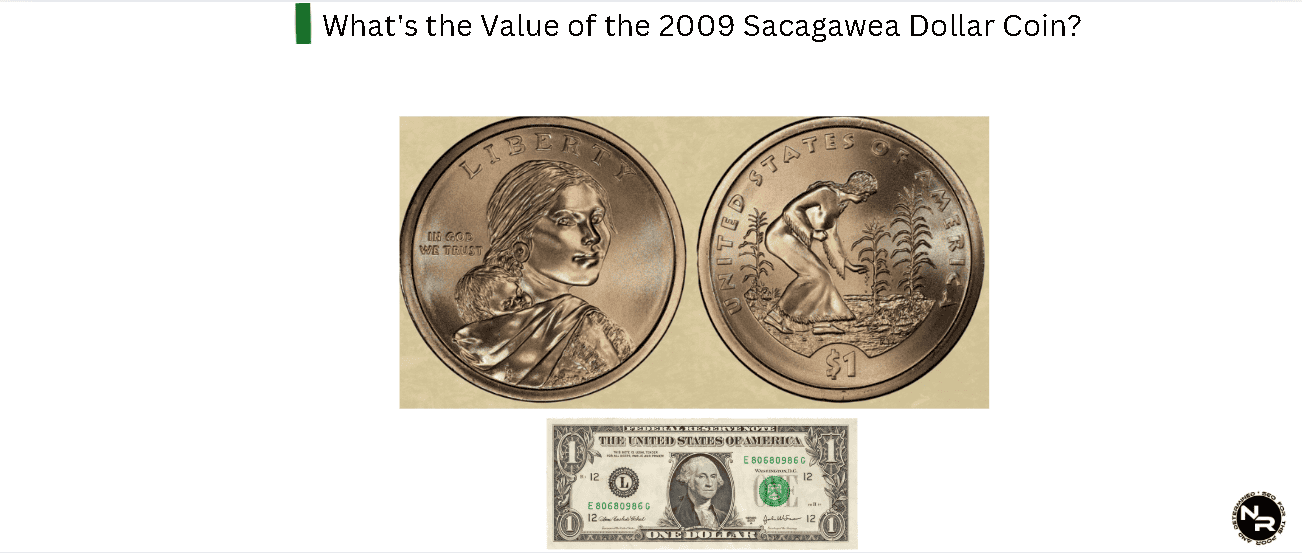
The value of a 2009 Sacagawea dollar ranges from its $1 face value for circulated coins, to a few dollars for uncirculated ones to hundreds of dollars for mint-condition error coins.
Pristine, certified examples sell for significantly more, especially proof versions (2009-S) or those with high collector grades (e.g., MS68/PF70) reaching $10 to over $100.
Some exceptional, rare 2009 Sacagaweas sell for much more, depending on the specific coin and the auction competition.
| Mint Grade | Value |
|---|---|
| MS-60 | $1 to $5 |
| MS-61 | $6 to $10 |
| MS-62 | $20 to $25 |
| MS-63 | $50 |
| MS-64 | $70 |
| MS-65 | $100 |
| MS-66 | $200 |
| MS-67 | $250 |
| MS-68 | >$500 |
| MS-69 | >$700 |
| MS-70 | >$1,000 |
Hey, do you like Sacagawea dollar coins and valuable coins in general? Then check this out! Especially important to you if you’re from the United States.
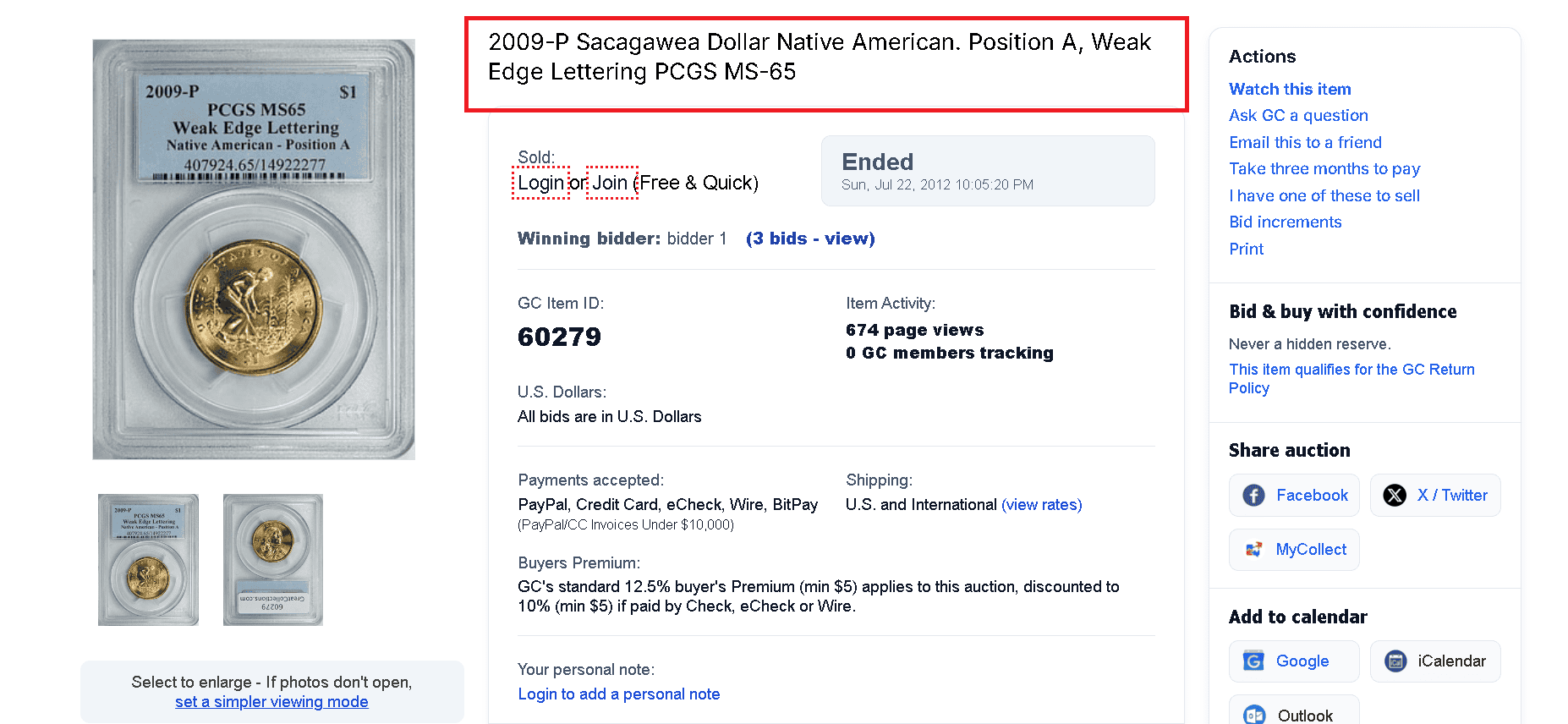
Are There Any Mint Errors Associated With the 2009 Sacagawea Dollar Coin?
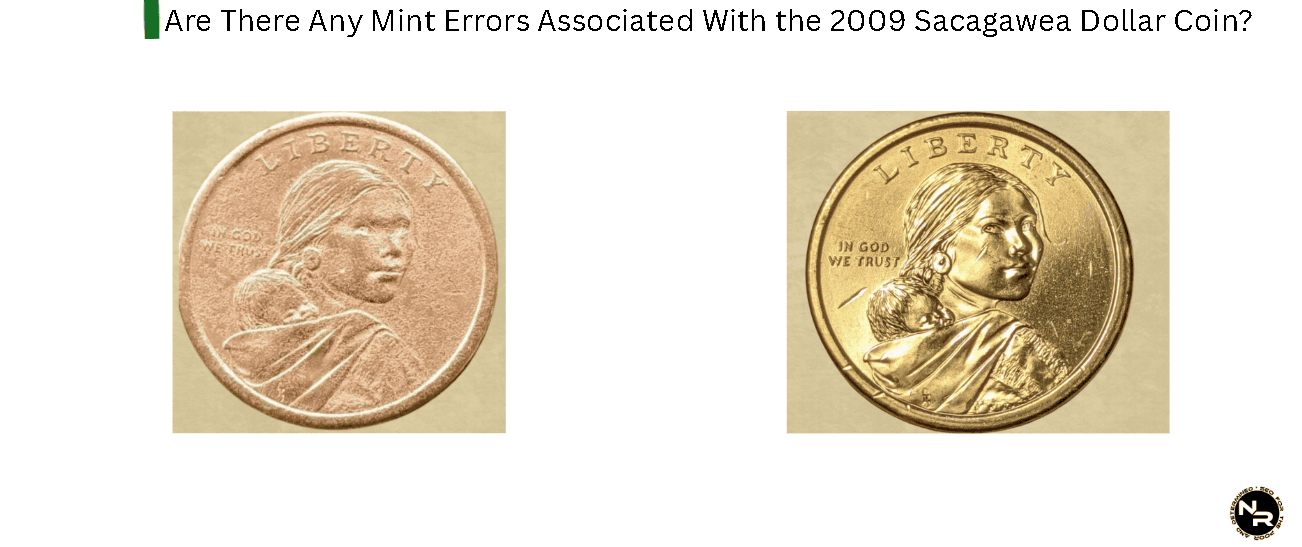
Yes, there’re plenty of mint errors associated with the 2009 Sacagawea Dollar coin.
I detail these errors below. Remember that most of these Sacagawea error coins are so rare you’ll probably never encounter then in your day-to-day life.
- Rotated Die Error. This occurs when the obverse and reverse designs are misaligned, causing one side to appear rotated at an angle. The value increases with the degree of rotation. A 2009-D MS64 coin with a 100-degree rotation sold for $585.
- Double Die Error. This happens when the die strikes the planchet multiple times at slightly different angles, creating visible doubling on inscriptions and devices. Stronger doubling produces a more valuable coin. A 2009-P MS60 with obverse and reverse doubled die sold for $300.
- Die Crack Error. This appears as a raised crack on the coin’s surface, caused when metal fills cracks in the die during striking. Larger, more prominent die cracks are more valuable. A 2009-P MS62 with a large obverse die crack sold for $505.
- Strike Through Error. This occurs when foreign objects (grease, hair, debris) are caught between the die and planchet during striking, leaving an impression. The object may fall off or remain stuck to the coin. A 2009-D MS61 with a reverse strike-through error sold for $930.
- Rim Cud Error. This appears as a raised bump along the coin’s rim, caused when a piece of the die’s edge breaks off and fills with metal. Larger rim cuds are more desirable to collectors. A 2009-D MS65 with a large rim cud sold for $715.
- Curved Clipped Planchet Error. This occurs when the blanking press overlaps previously punched holes, resulting in a missing portion of the coin’s edge. Coins with large, visible clipped edges are more valuable. A 2009-D MS63 with a curved clipped planchet sold for $1,010.
- Missing Clad Layer Error. This happens when the upper clad layer peels off due to impurities weakening the bond with the copper core. The peeling can occur on one or both sides of the coin. A 2009-P MS62 with a missing clad layer sold for $820.
- Off-Center Strike Error. This occurs when the die strikes the planchet away from center, causing misaligned designs. The more off-center the strike (measured in percentage), the more valuable the error. A 2009-D MS65 with a 45% off-center strike sold for $945.
Hey, do you like Sacagawea dollar coin and valuable coins in general? Then check this out! Especially important to you if you’re from the United States.
Are There 2009 Sacagawea Dollars Without Dates on Them?
No, there’re no 2009 Sacagawea Dollar coins without dates on them. In fact, nearly 100% of 2009 Sacagaweas are dated to 2009 and you can see it via their edge lettering.
Early Sacagawea coins (2000-2008) had their dates (and mint marks) on the front side of the coin (obverse).
However, starting 2009 and onwards the date, mint mark and “E Pluribus Unum” inscriptions were moved to the edge of the coin.
Note: I mentioned that nearly all 2009 Sacagawea Dollar coin have dates on their edges.
I said “nearly” because recently a unique, no-date 2009 Sacagawea Dollar has been found.
This specimen is the only one of its kind ever discovered. It’s in mint condition and shows no sign of edge lettering. This means it was struck like that making it extremely valuable to numismatists.
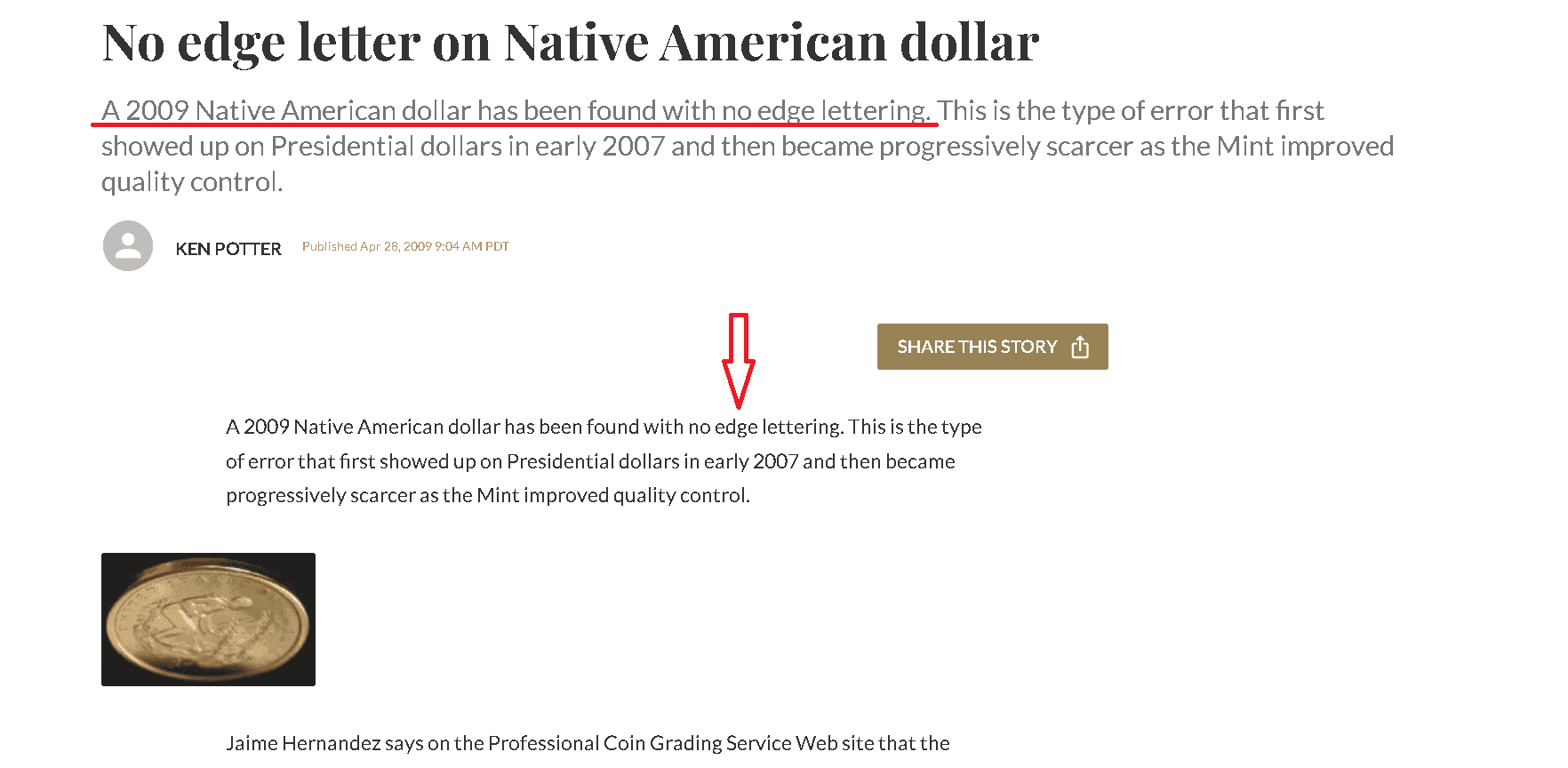
Note: any other 2009 Sacagawea dollars that don’t have edge lettering and dates on them have almost certainly lost these features due to extensive circulation.
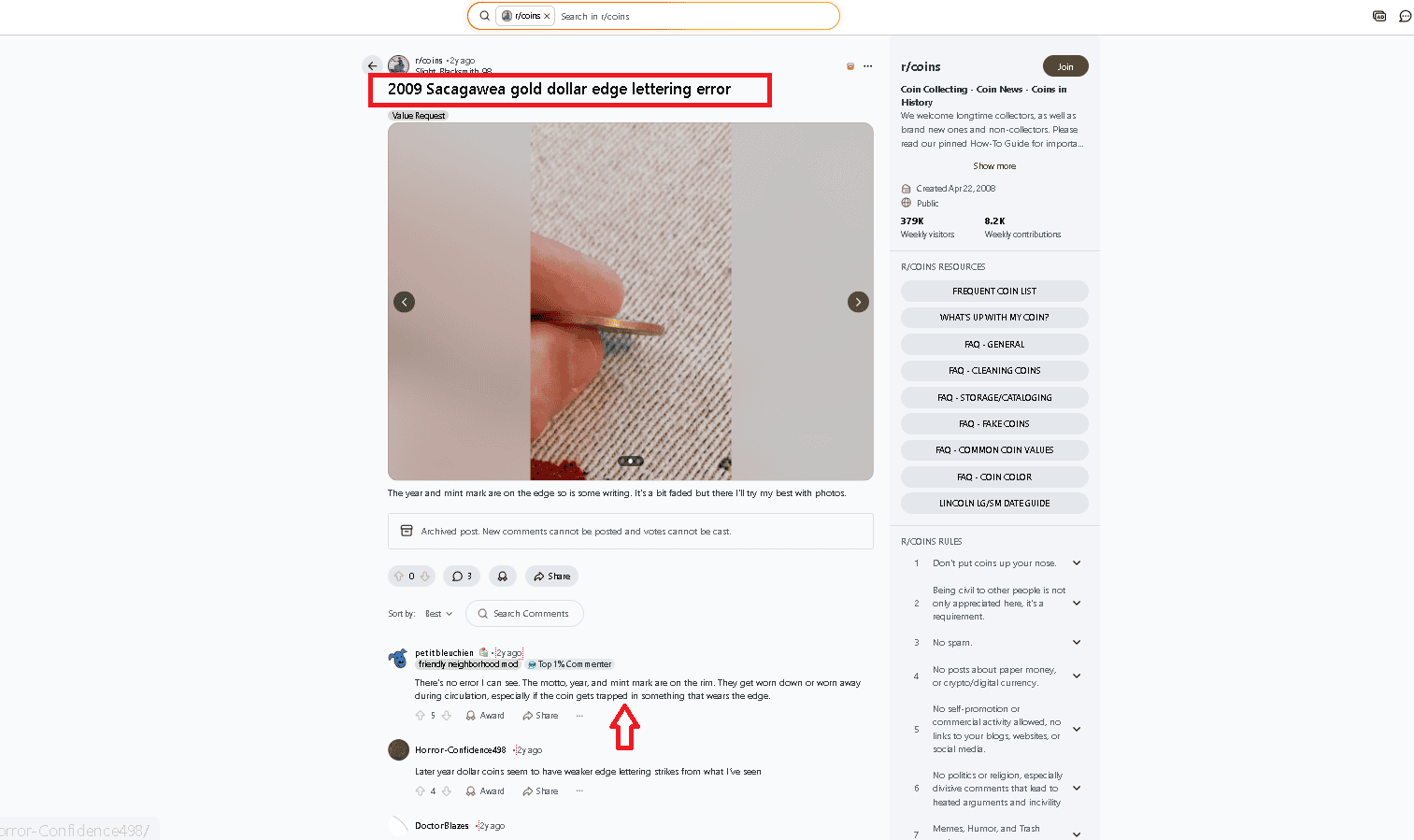
Here’s an example of a 2009 Sacagawea Dollar coin with edge lettering completely lost to time and circulation.
Hey, do you like Sacagawea dollar coin and valuable coins in general? Then check this out! Especially important to you if you’re from the United States.
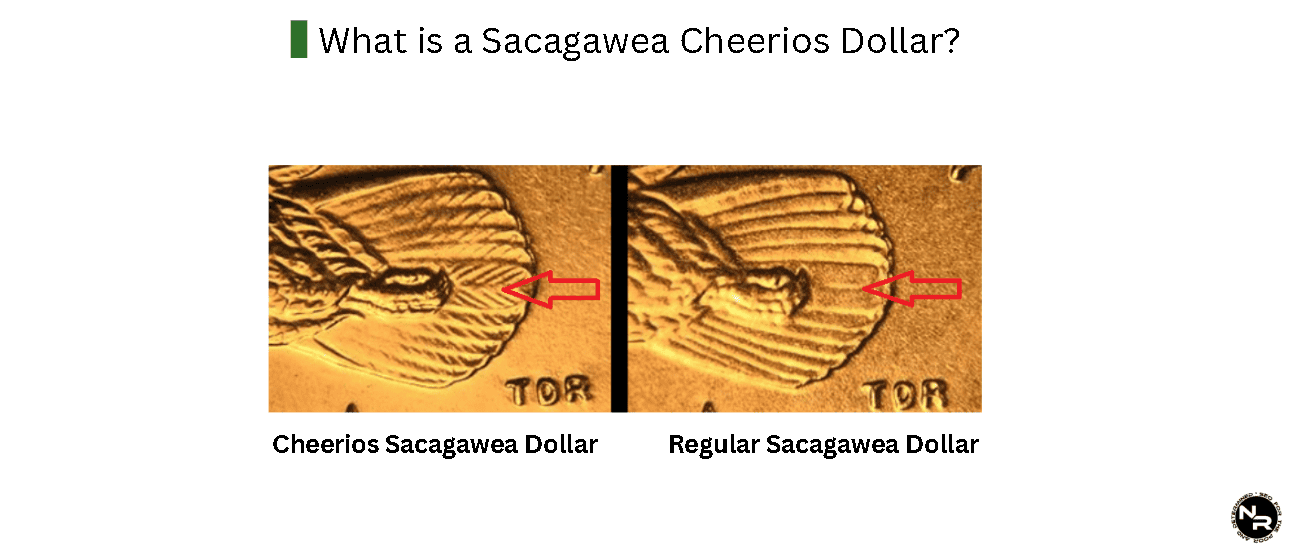
Were 2009 Sacagawea Dollar Coins Part of the Cheerios Promotion?
No, the 2009 Sacagawea Dollar coins weren’t part of Cheerios promotion.
Only the 2000-P Sacagawea dollars were part of the Cheerios promotional campaign and a similar promotional campaign didn’t happen before the launch of 2009 Sacagaweas.
Learn about 2000-P Cheerios Sacagawea dollars by reading my guide next.
Are There 2009 Sacagawea Dollar Coins Made of Gold?
No, there’re no 2009 Sacagawea Dollar coins made of gold.
All of the 2009 Sacagaweas were made from the standardized alloy of 88.5% copper, 6% zinc, 3.5% manganese, and 2% nickel.
It’s possible that some numismatist has had his regular 2009 Sacagawea Dollar gold plated. In that case the gold-plated coin would be at least partially made of gold, but it still wouldn’t be an official U.S. coin minted by the government.
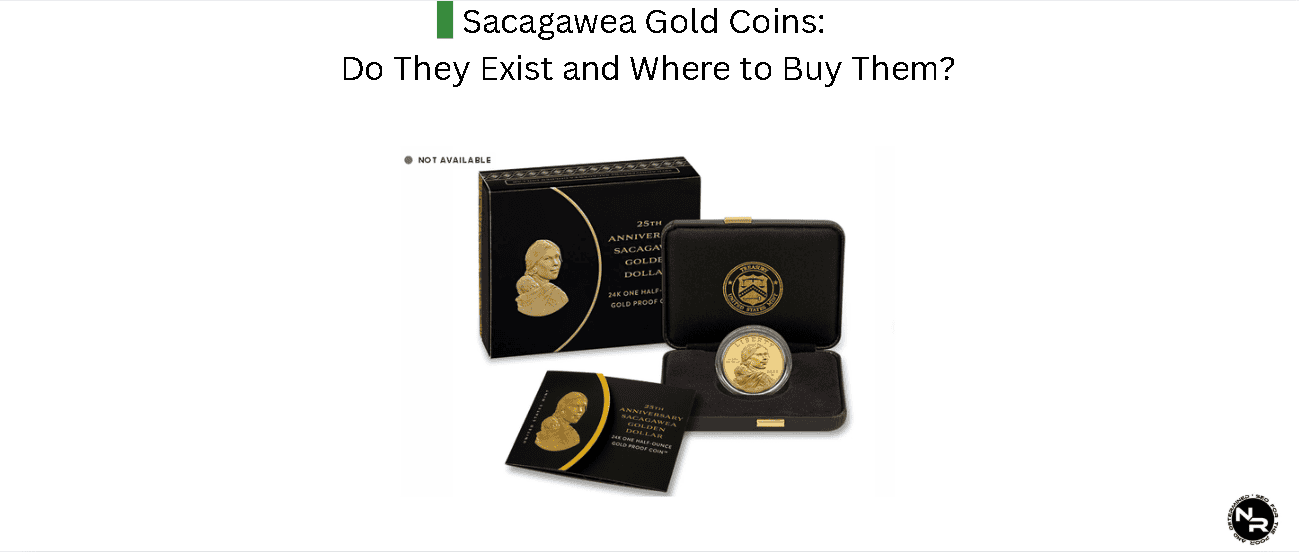
There’re only two types of real gold Sacagawea Dollars. One type is the space-flown Sacagawea, and another is the 24k gold commemorative coins from 2025.
Hey, do you like Sacagawea dollar coin and valuable coins in general? Then check this out! Especially important to you if you’re from the United States.
Are There 2009 Sacagawea Dollar Coins Made of Silver?
No, there’re no 2009 Sacagawea Dollar coins made of silver.
All of the 2009 Sacagaweas were made from the standardized alloy of 88.5% copper, 6% zinc, 3.5% manganese, and 2% nickel.
It’s possible that some numismatist has had his regular 2009 Sacagawea Dollar silver plated. In that case the coin would be at least partially made of silver, but it still wouldn’t be an official U.S. coin minted by the government.
Did the Philadelphia Mint Strike the 2009 Sacagawea Dollar Coins?
Yes, the Philadelphia Mint struck 2009 Sacagawea dollars. These coins are identified by the “P” mintmark on the edge of the coin, and all of them were released into circulation.
Note: the Philadelphia Mint struck 39,200,000 regular 2009-D Sacagawea (Native American) Dollars.
Did the Denver Mint Strike the 2009 Sacagawea Dollar Coins?
Yes, the Denver Mint struck 2009 Sacagawea dollars. These coins are identified by the “D” mintmark on the edge of the coin, and all of them were released into circulation.
Note: the Denver Mint struck 35,700,000 regular 2009-D Sacagawea (Native American) Dollars.
Did the San Francisco Mint Strike the 2009 Sacagawea Dollar Coins?
Yes, the San Francisco Mint struck the 2009 Sacagawea Dollar coins.
However, this branch of the U.S. Mint struck only the proof versions of 2009 Sacagawea, whereas Denver and Philadelphia Mints struck the 2009 Sacagawea dollar meant for circulation.
Note: the San Francisco Mint struck approximately 2.18 million (2,179,867) proof versions of the 2009 Sacagawea dollar coin.
Did the West Point Mint Strike the 2009 Sacagawea Dollar Coins?
No, the West Point Mint didn’t strike the 2009 Sacagawea Dollar coins. Instead, these coins were struck by the Philadelphia, Denver and San Francisco Mints.
Native American 2009 Sacagawea Dollar Coin- Value, Mint Errors And Everything Else You Should Know! Conclusion
The 2009 Sacagawea Dollar launched the Native American Dollar coin series, featuring the traditional obverse of Sacagawea with her son and a new reverse honoring the “Three Sisters” of agriculture (corn, beans, and squash).
Circulated 2009 Sacagawea dollars are worth face value ($1), while uncirculated examples fetch a few dollars.
High-grade specimens can reach $10-$100+. Various mint errors exist, including rotated dies, double dies, and off-center strikes, with error coins selling from $300 to over $1,000 at auction depending on rarity and condition.
References:
- No edge letter on Native American dollar- https://www.numismaticnews.net/archive/no-edge-letter-on-native-american-dollar
- 2009 Sacagawea gold dollar edge lettering error- https://www.reddit.com/r/coins/comments/1899wlo/2009_sacagawea_gold_dollar_edge_lettering_error/
- Rare 2009 Sacagawea Dollar Errors Worth Money (Full List with Pictures)- https://www.coinvaluechecker.com/2009-sacagawea-dollar-error-value/
- 2009-P Sacagawea Dollar Native American. Position A, Weak Edge Lettering PCGS MS-65- https://www.greatcollections.com/Coin/60279/2009-P-Sacagawea-Dollar-Native-American-Position-A-Weak-Edge-Lettering-PCGS-MS-65

Nikola Roza
Nikola Roza is a blogger behind Nikola Roza- SEO for the Poor and Determined. He writes for bloggers who don't have huge marketing budget but still want to succeed. Nikola is passionate about precious metals IRAs and how to invest in gold and silver for a safer financial future. Learn about Nikola here.