
Disclosure: Some of the links you’ll encounter are affiliate links. If you click and buy something, I’ll get a commission. If you’re reading a review of some precious metals company, please understand that some of the links are affiliate links that help me pay my bills and write about what I love with no extra cost to you. Thank you!
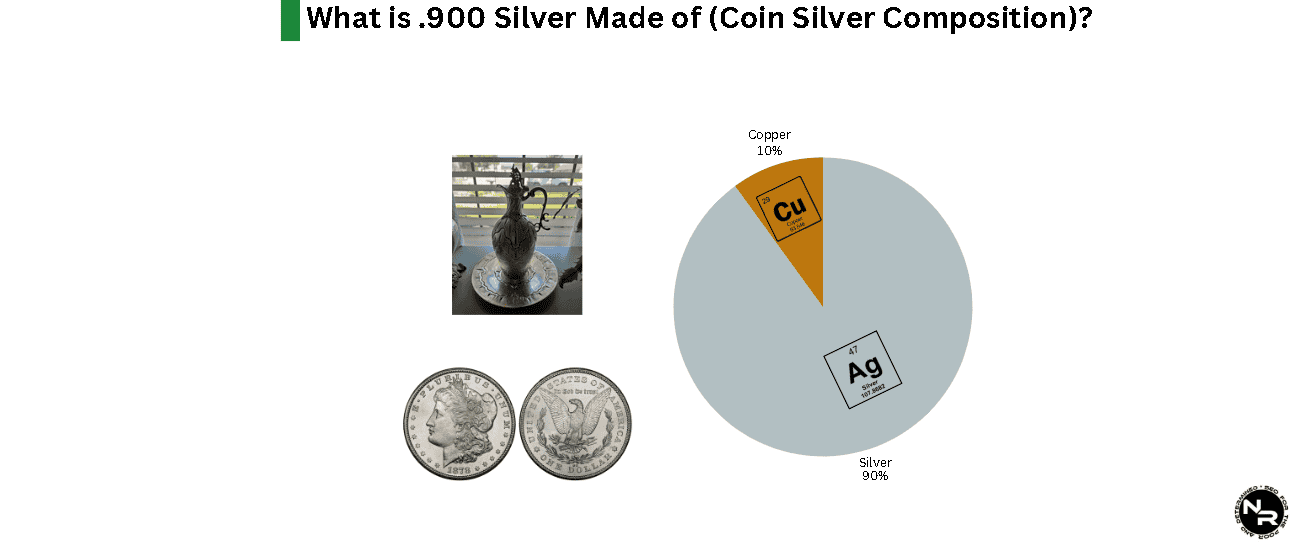
900 silver is a silver alloy containing 90% pure silver and 10% other metals (typically copper). This silver alloy is known as “coin silver” because it was used in U.S. coinage from 1792-1964.
900 silver is non-magnetic, hypoallergenic (unless allergic to copper/silver), and can be tested using an eraser which leaves black marks when rubbed against genuine 900 silver.
While less pure than sterling silver (92.5%), it’s more valuable than lower-grade alloys like 500 silver.
Today, 900 silver is found mainly in vintage coins, antique jewelry, and some European pieces.
Here’s an awesome quiz on the topic of 900 silver. Take it after you’ve read my guide below.
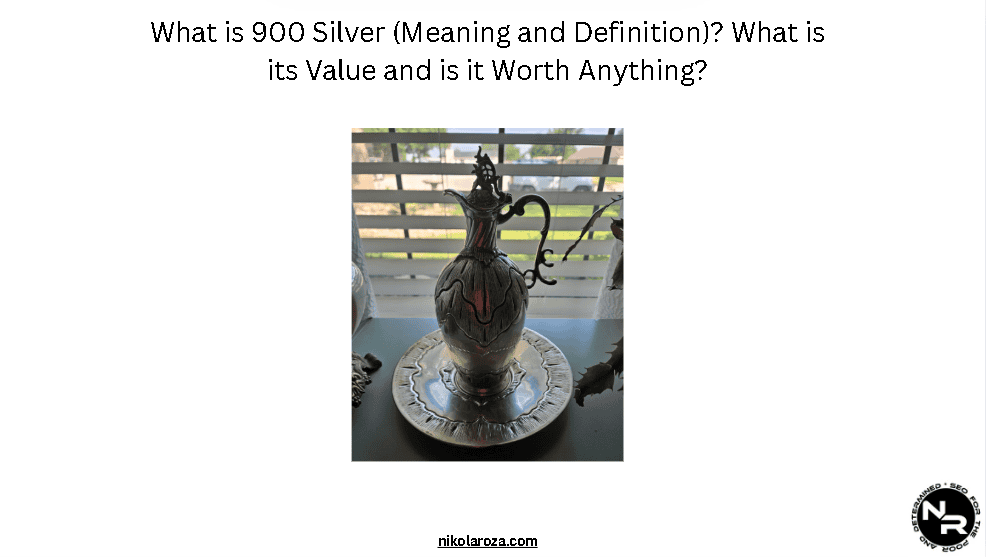
What is 900 Silver (Meaning and Definition)?
900 silver (also known as coin silver) is a silver alloy that contains 90% silver and 10% other metals, typically copper. 900 silver is called “coin silver” because it was historically used to make coins in the U.S. coinage from 1792-1964.
Nowadays 900 silver is no longer used in coinage and this silver alloy is only found in older coins, vintage jewelry, antique items, and some European silver jewelry.
Hey, being so keenly interested in .900 silver must mean you like genuine, real silver in all shapes and forms, especially as coins and bars.
Right?
Are you also a proud American citizen with a keen eye for economy and investing?
Check this out next if you answered yes!
What is the Melt Value of 900 Silver? How Much is it Worth and is it Worth Anything?
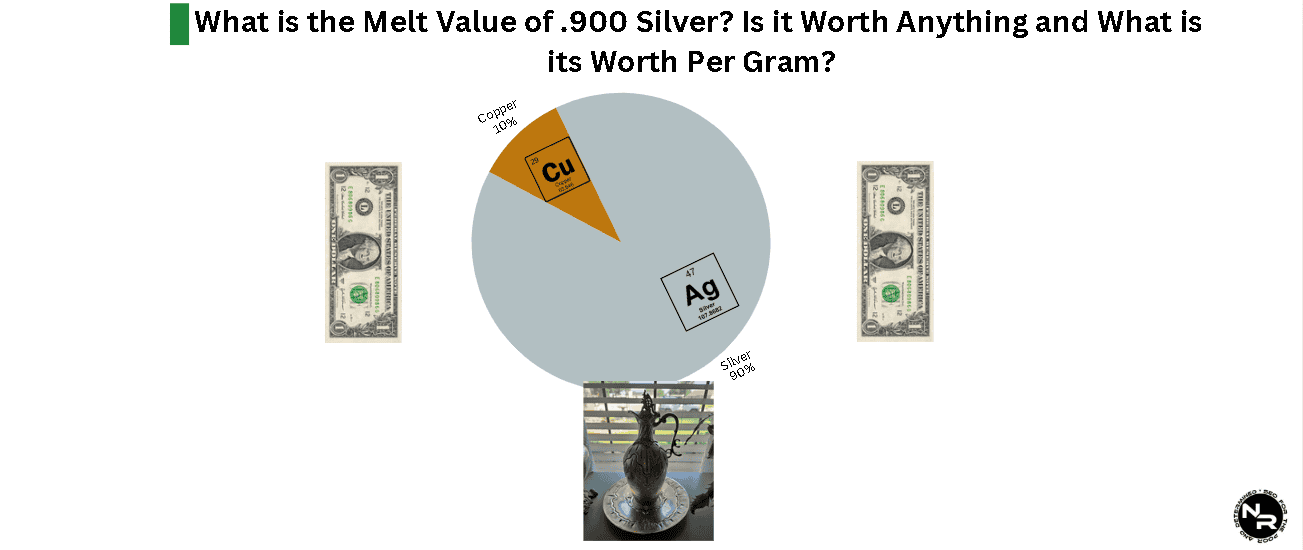
The melt value of .900 silver depends on the current silver market price which fluctuates from moment to moment based on the demand/supply interplay.
To determine the worth of your .900 silver item first you need to measure its weight.
Next, multiply the weight by the silver spot price and then by 0.900 (for 90% purity) to get the melt value.
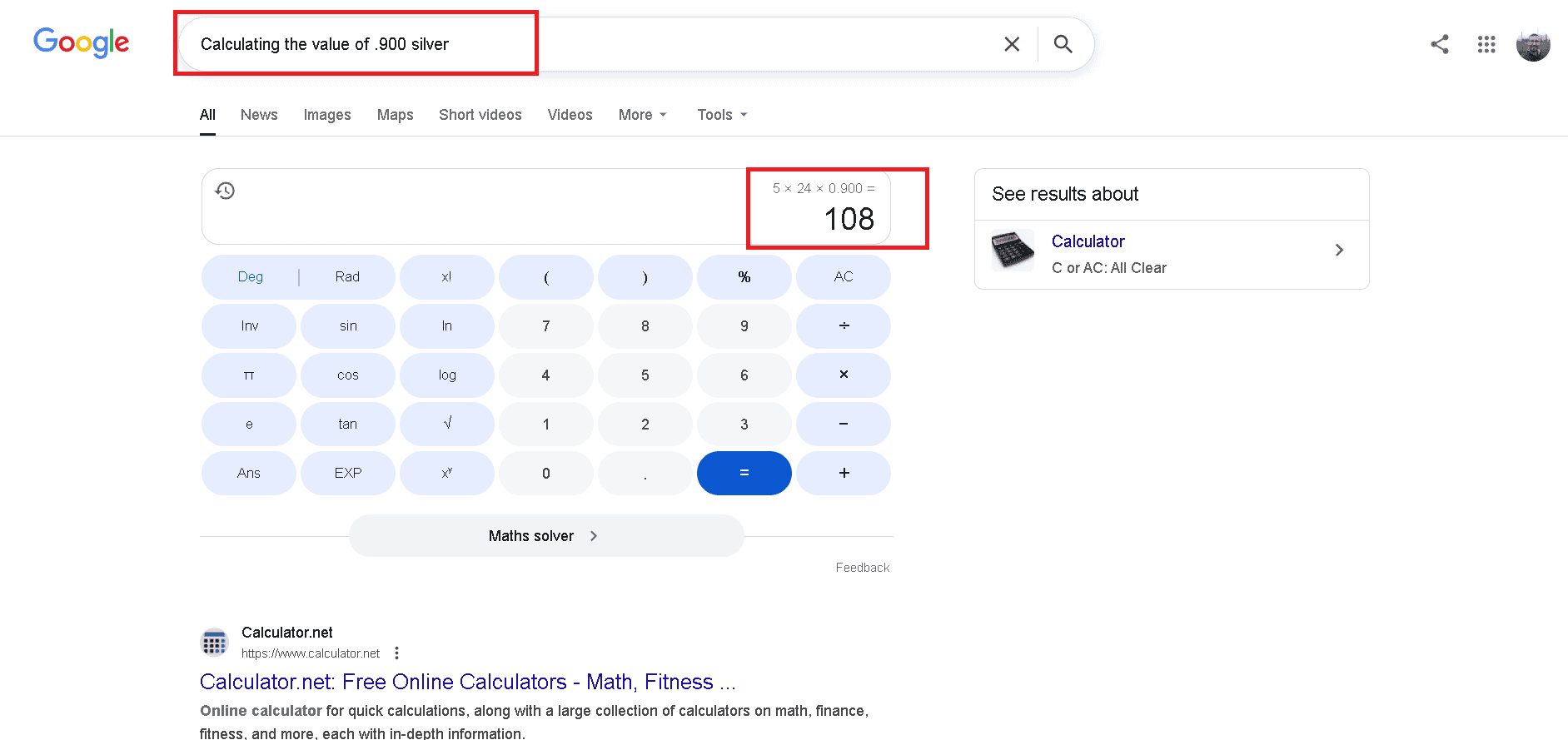
For example, let’s say the current price of silver is $5 per gram. And your 900 silver object weighs 24 grams.
The exact worth of that 900 silver item would be $5 x 24 x 0.900=$108.
.900 silver is worth much more when sold as collectible items. Some .900 items sell for hundreds of dollars at auctions when their melt value is several time less.
The value there isn’t in the silver content, but in the perceived value of the piece as a whole.
See examples below.
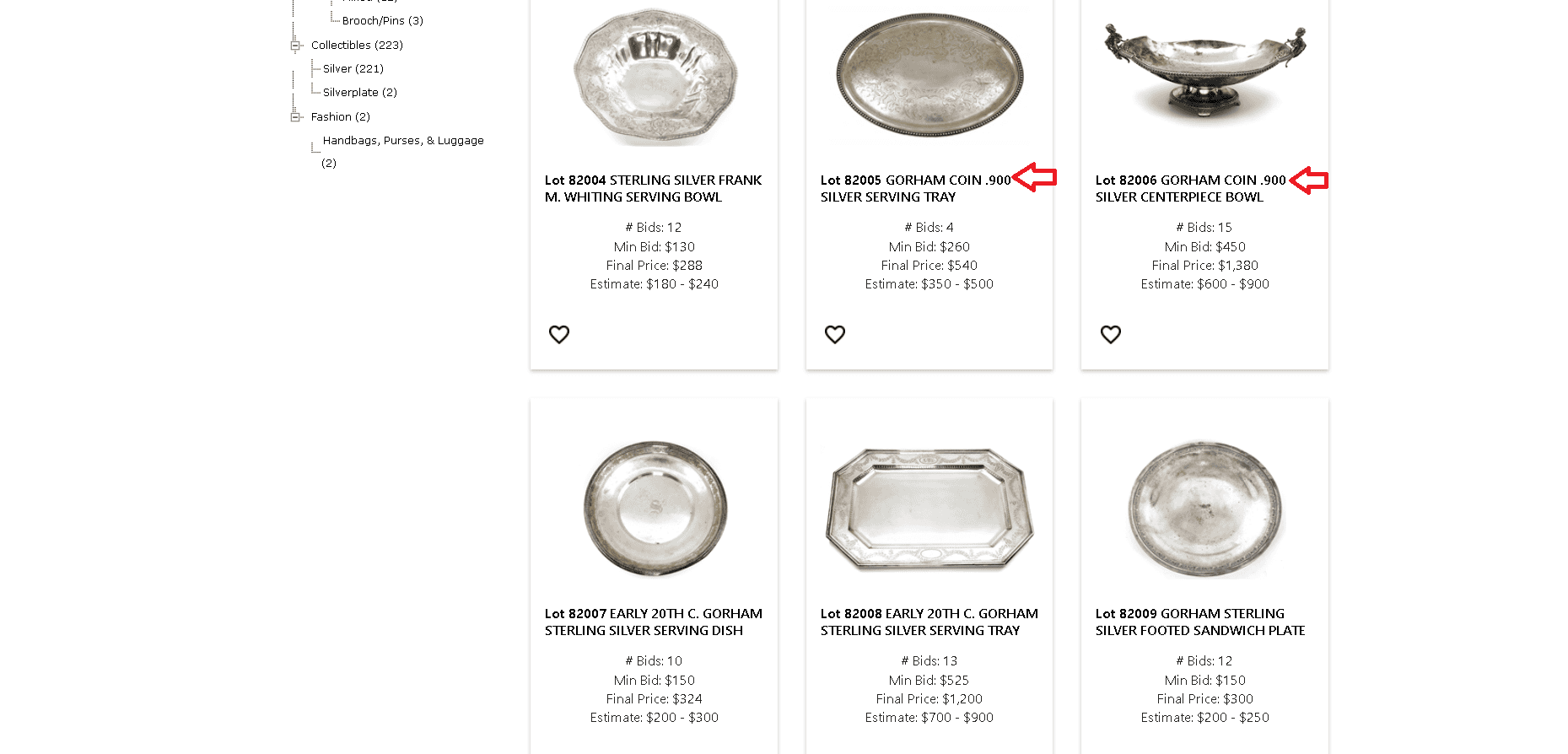
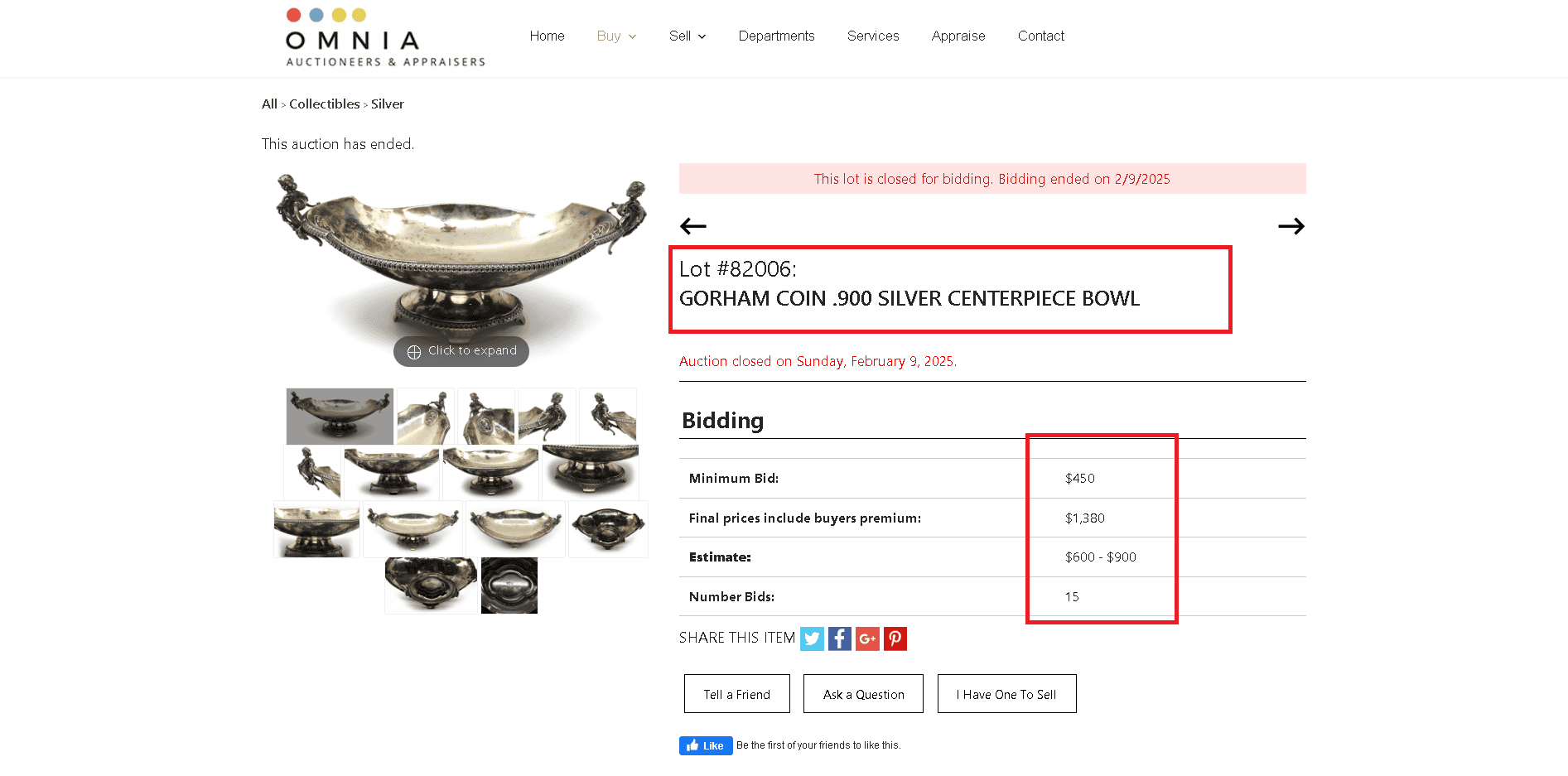
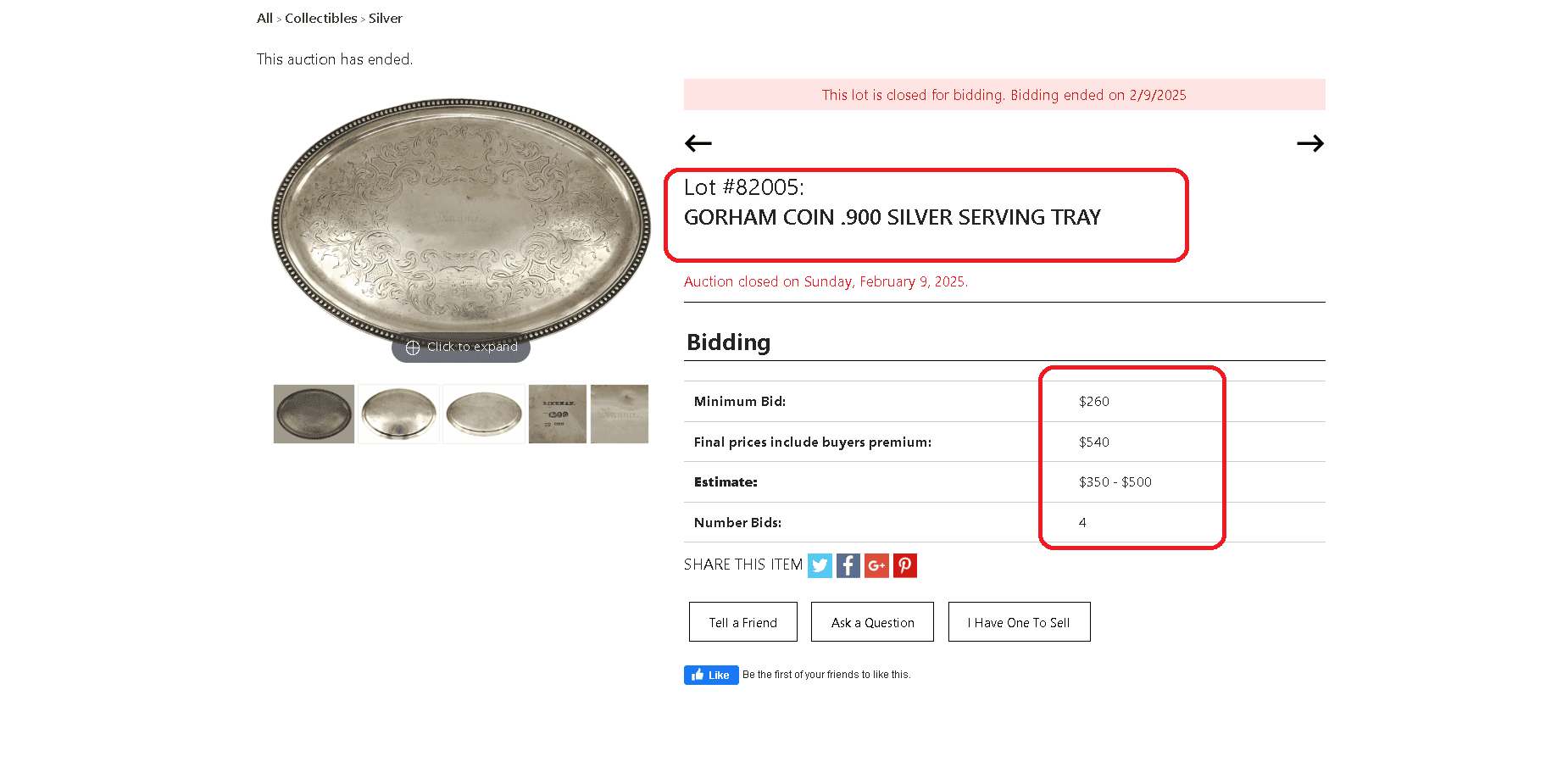
Hey, being so keenly interested in .900 silver must mean you like genuine, real silver in all shapes and forms, especially as coins and bars.
Right?
Are you also a proud American citizen with a keen eye for economy and investing?
Check this out next if you answered yes!
Is 900 Silver Magnetic or Not?
No, 900 silver isn’t magnetic. .900 silver is composed of 90% pure silver and 10% copper. Pure silver doesn’t magnetize, and copper is diamagnetic (copper is weakly repelled by a magnetic field).
For example, coins made from .900 silver should never magnetize no matter the size and power of your magnet.
You have a fake coin if your .900 silver coin starts to magnetize when you test it.
Is 900 Silver Hypoallergenic or Allergenic?
Yes, 900 silver is hypoallergenic because it’s composed of 90% pure silver and 20% copper.
Pure silver is hypoallergenic to everyone except a small group of people with silver allergies.
Copper is hypoallergenic to most people although a small percentage of people in the world is allergic to this metal.
You’ll be allergic to 900 silver jewelry or coins if you’re allergic to copper or silver, or both.

Hey, being so keenly interested in .900 silver must mean you like genuine, real silver in all shapes and forms, especially as coins and bars.
Right?
Are you also a proud American citizen with a keen eye for economy and investing?
Check this out next if you answered yes!
What are the Hallmarks for .900 Silver? Do These Marks Exist?

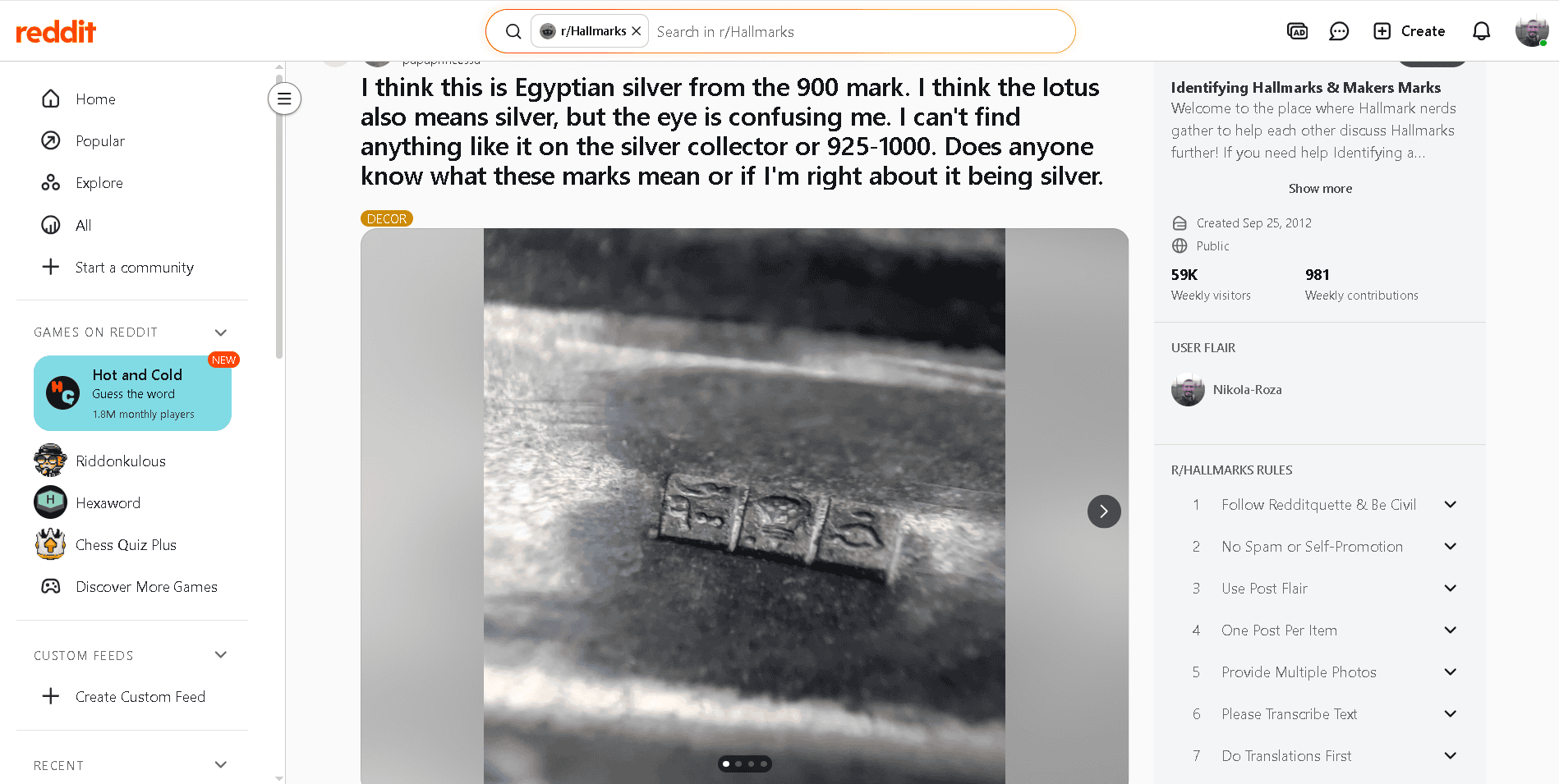
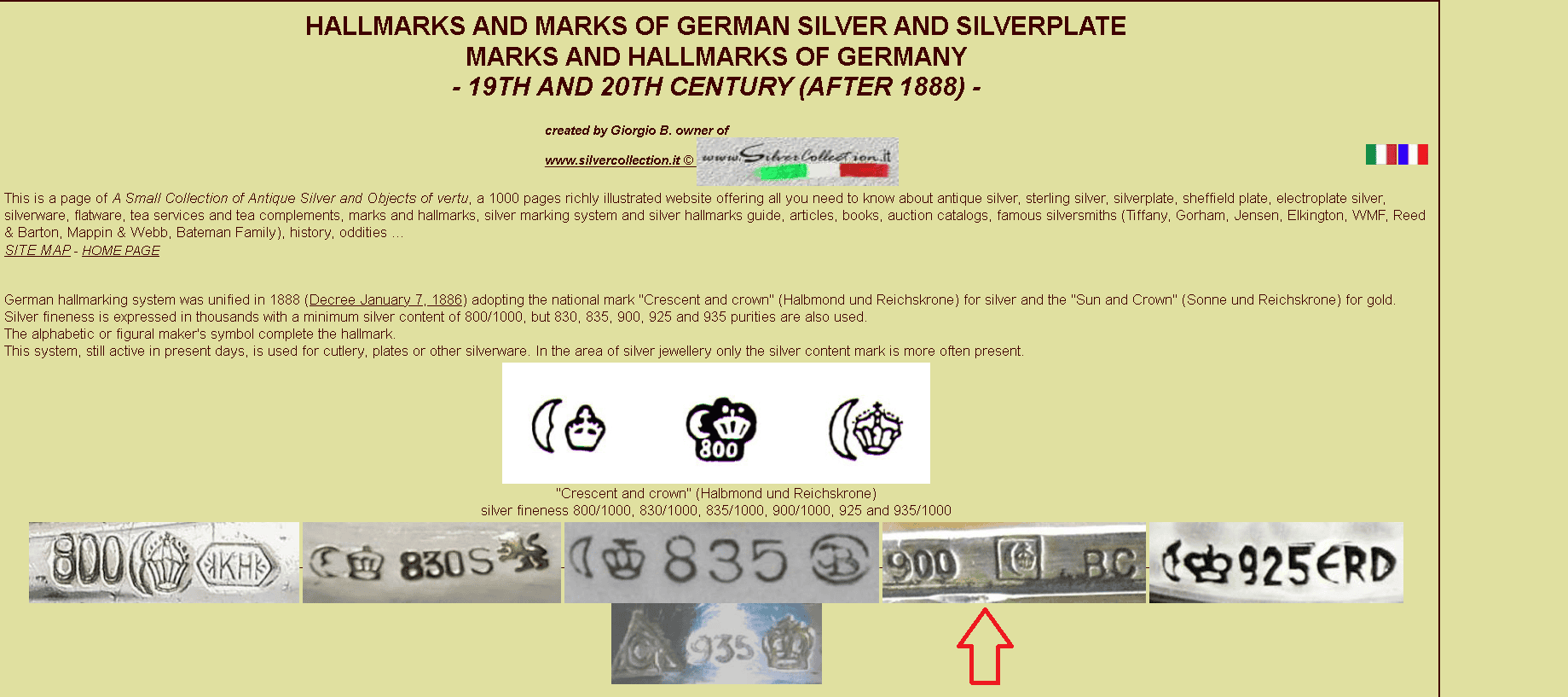
.900 silver is marked with a numerical stamp of “900”, indicating it contains 90% pure silver and 10% copper.
These items, often antique, may also be marked simply with the word “Coin” or “Standard”. They may also contain maker’s marks, city and assay office marks, date letters and occasionally import/export marks.
Many .900 silver items contain all of these stamps, but many don’t.
Furthermore, coin silver was used to create many coin types, especially in the U.S. Some of these coins were hallmarked with a “900” fineness mark and some weren’t.
Old coins can also have their hallmark erased due to the passage of time and wear and tear (especially true for circulated coins).
The bottom line is that you should clearly see the number 900 engraved on the piece. In small jewelry pieces the number will smaller and more concealed, but should still be there.
.900 silver was at some point in time the silver standard in United States (Coin Silver), China, Argentina, Switzerland, Italy, Yugoslavia, Czechoslovakia, Hungary, Japan, and Egypt.
You’ll see some of those country-specific .900 marks below.
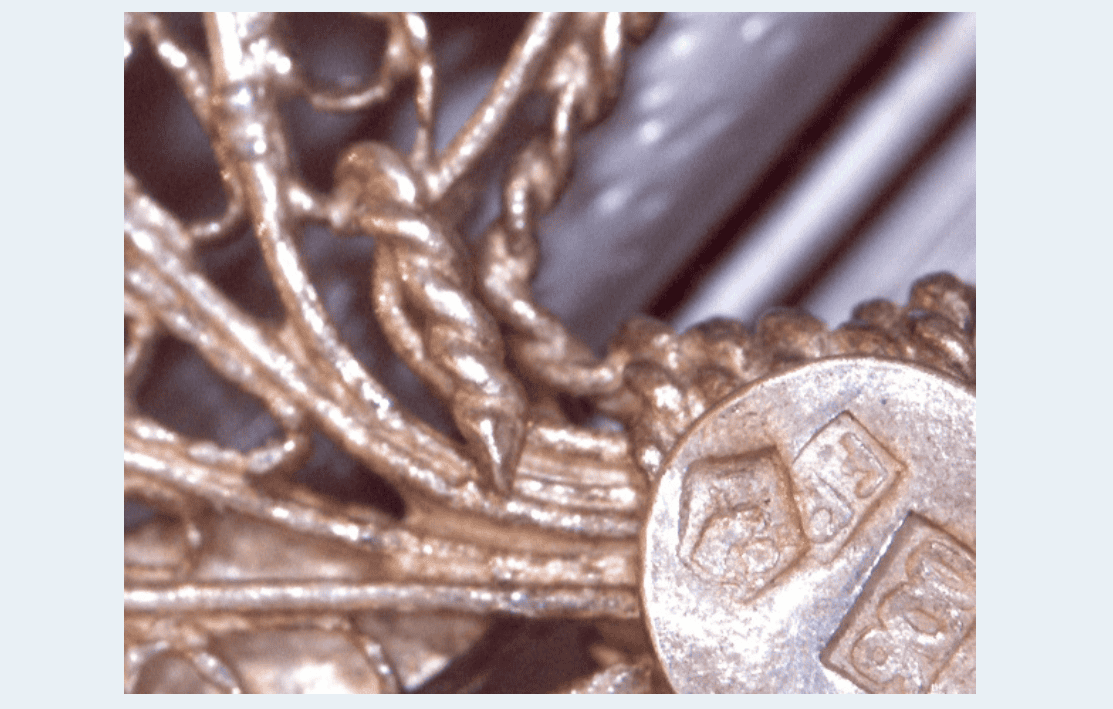
Hey, being so keenly interested in .900 silver must mean you like genuine, real silver in all shapes and forms, especially as coins and bars.
Right?
Are you also a proud American citizen with a keen eye for economy and investing?
Check this out next if you answered yes!
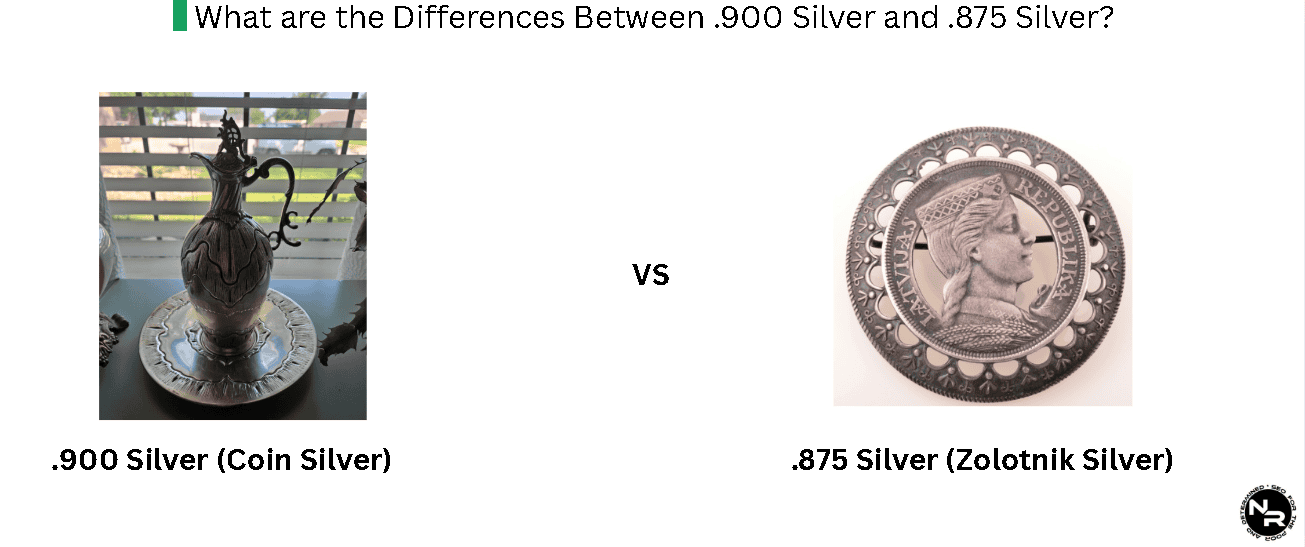
What’s the Difference Between 900 Silver and Silver 875?
The main difference between 900 silver and silver 875 lies in their silver purity. 900 silver is a silver alloy that contains 90% silver and 10% other metals (mostly copper with trace amounts of other metals).
Silver 875 (also known as zolotnik Russian silver) is an alloy of 87.5% pure silver and 12.5% other metals.
This silver alloy contains slightly less pure silver than 900 silver and slightly more copper. Because of higher copper amount silver 875 is more allergenic than 900 silver.
Both silver alloys are hypoallergenic for most people except those with very sensitive skin.
| Comparison | Silver 900 | 875 silver |
|---|---|---|
| Composition | 90% silver and 10% copper. | 87.5% silver and 12.5% copper. |
| Value | .900 silver is more valuable than .875 silver because it contains slightly more pure silver and slightly less copper. | .875 silver is less valuable than .875 silver because it contains less pure silver and more copper. |
| Allergenic properties | .900 silver is less allergenic than .875 silver because it contains slightly less copper than it (copper is more allergenic than pure silver). | .875 silver is more allergenic than .900 silver because it contains slightly more copper than it (copper is more allergenic than pure silver). |
| Durability | Silver .900 is slightly less durable than .875 silver because it contains less copper (copper is more durable than silver). | Silver .875 is more durable than .900 silver because it contains slightly more copper (copper is more durable than silver). |
| Tarnishing properties | .900 silver tarnishes slower than .875 silver because it contains slightly less copper than it (copper tarnishes faster than silver). | .875 silver tarnishes faster than .900 silver because it contains slightly less copper than it (copper tarnishes faster than silver). |
| Common applications | .900 silver was primarily used for American coins before 1965, earning it the nickname "coin silver". It was widely used in 19th-century American and, historically, Latin American, German, and Chinese jewelry or, silverware due to its durability. | .875 silver was widely used in Russia and Soviet Union countries for coinage, flatware and jewelry. |
Hey, being so keenly interested in .900 silver must mean you like genuine, real silver in all shapes and forms, especially as coins and bars.
Right?
Are you also a proud American citizen with a keen eye for economy and investing?
Check this out next if you answered yes!
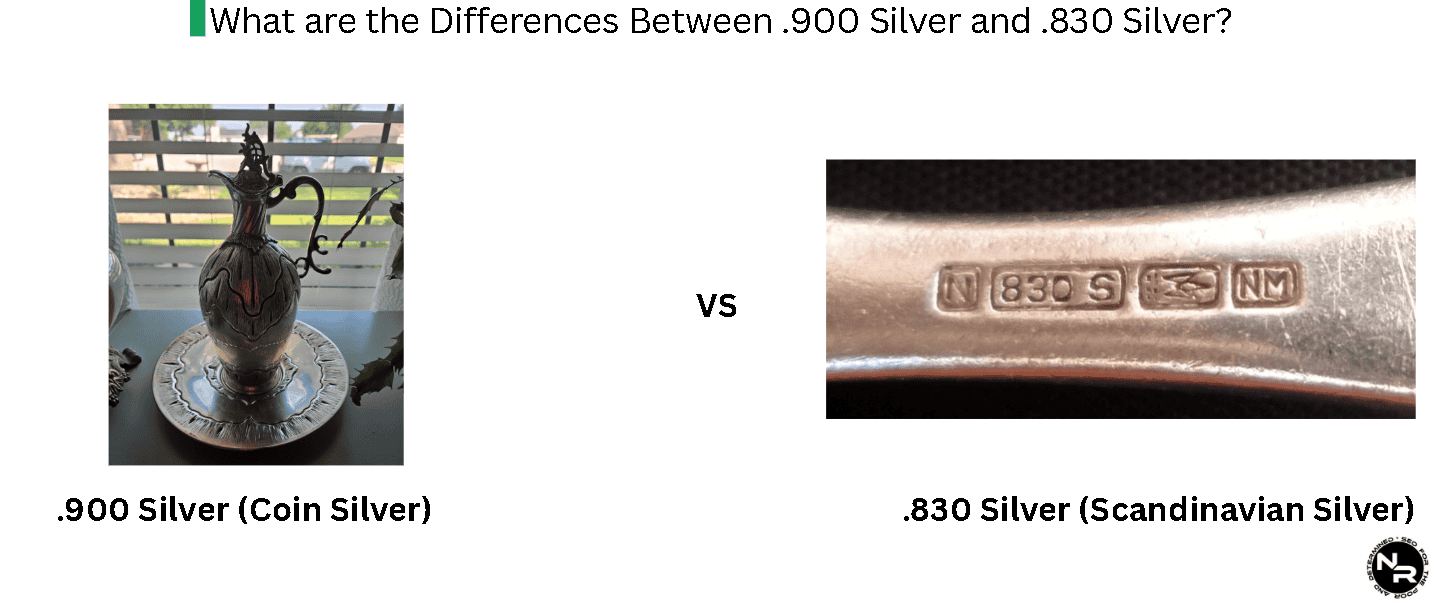
What’s the Difference Between 900 Silver and Silver 830 (Scandinavian Silver)?
The primary difference between 900 silver and 830 silver is their purity and intended use. .900 silver contains 90% silver and is often referred to as “coin silver,” frequently used in older, durable items.
.830 silver contains 83% silver, commonly found in vintage Scandinavian jewelry and silverware, offering higher durability but lower, albeit still high, purity.
| Comparison | Silver 900 | 830 silver |
|---|---|---|
| Composition | 90% silver and 10% copper. | 83% silver and 17% copper. |
| Value | .900 silver is more valuable than .830 silver because it contains more pure silver and less copper. | .830 silver is less valuable than .900 silver because it contains less pure silver and more copper. |
| Allergenic properties | .900 silver is less allergenic than .830 silver because it contains less copper than it (copper is more allergenic than pure silver). | .830 silver is more allergenic than .900 silver because it contains more copper than it (copper is more allergenic than pure silver). |
| Durability | Silver .900 is less durable than .830 silver because it contains less copper (copper is more durable than silver). | Silver 830 is more durable than .900 silver because it contains more copper (copper is more durable than silver). |
| Tarnishing properties | .900 silver tarnishes slower than .830 silver because it contains less copper than it (copper tarnishes faster than silver). | .830 silver tarnishes faster than .900 silver because it contains more copper than it (copper tarnishes faster than silver). |
| Common applications | .900 silver was primarily used for American coins before 1965, earning it the nickname "coin silver". It was widely used in 19th-century American and, historically, Latin American, German, and Chinese jewelry or, silverware due to its durability. | 830 silver was widely used in Scandinavian countries like Norway, Sweden, Finland and Denmark, especially for flatware and jewelry, from the late 19th century until the early 20th century, when it gradually gave way to the Sterling (.925) standard. |
Hey, being so keenly interested in .900 silver must mean you like genuine, real silver in all shapes and forms, especially as coins and bars.
Right?
Are you also a proud American citizen with a keen eye for economy and investing?
Check this out next if you answered yes!
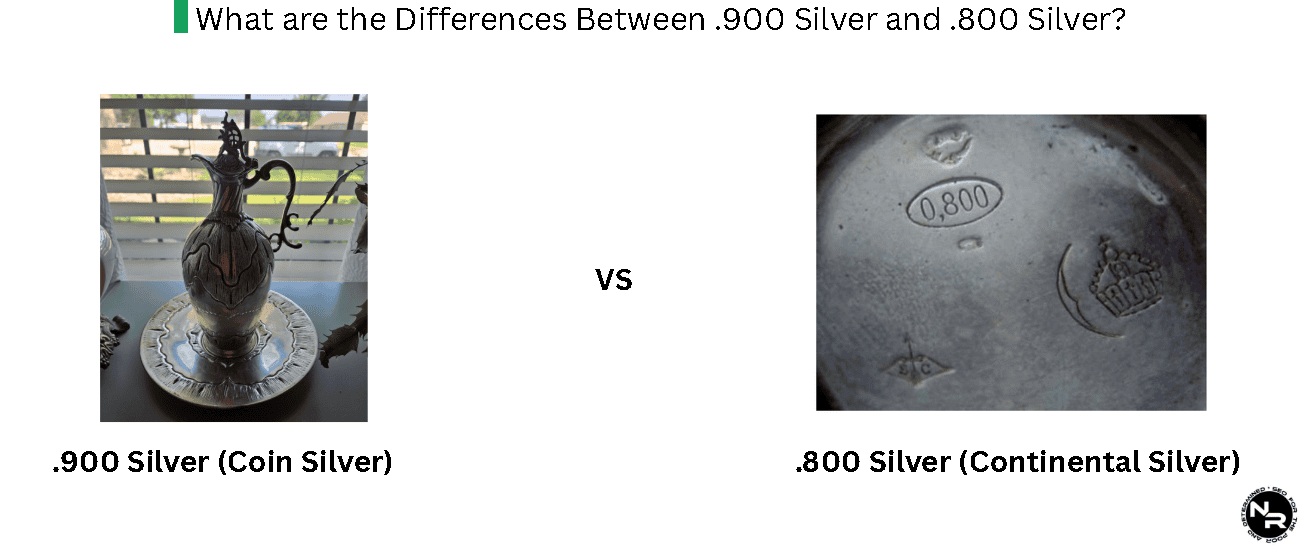
What’s the Difference Between 900 Silver and Silver 800?
The primary difference between 900 silver and 800 silver is the purity level. 900 silver contains 90% pure silver (often called “coin silver”), while 800 silver contains 80% pure silver (often called “European” or “continental” silver).
Both are alloys mixed with other metals (usually copper) for durability, but 800 silver is harder, less expensive, and tarnishes less quickly than .900 silver.
| Comparison | Silver 900 | 800 silver |
|---|---|---|
| Composition | 90% silver and 10% copper. | 80% silver and 20% copper. |
| Value | .900 silver is more valuable than .800 silver because it contains more pure silver and less copper. | Silver .800 is less valuable than silver .900 because it contains less pure silver and more copper. |
| Allergenic properties | .900 silver is less allergenic than .800 silver because it contains less copper than it (copper is more allergenic than pure silver). | Silver .800 is more allergenic than .900 silver because it contains more copper than it. |
| Durability | Silver .900 is less durable than .800 silver because it contains less copper (copper is more durable than silver). | Silver 800 is more durable than silver .900 because it contains more copper than it (copper is more durable than silver). |
| Tarnishing properties | .900 silver tarnishes slower than .800 silver because it contains less copper than it (copper tarnishes faster than silver). | .800 silver tarnishes faster than .900 silver because it contains more copper than it (copper tarnishes faster than silver). |
| Common applications | .900 silver was primarily used for American coins before 1965, earning it the nickname "coin silver". It was widely used in 19th-century American and, historically, Latin American, German, and Chinese jewelry or, silverware due to its durability. | It was a common standard in continental Europe, particularly Germany and Italy, from the late 19th to mid-20th centuries. |
What’s the Difference Between 900 Silver and Silver Decoplata?
The main difference between 900 silver and Silver Decoplata lies in their silver purity. 900 silver is a silver alloy that contains 90% silver and 10% other metals, while Silver Decoplata (.720 silver) is an alloy of 72% pure silver and 28% copper.
Decoplata is less valuable than 900 silver because it has significantly lower silver content. It’s also more allergenic because of higher copper content.
Silver Decoplata is primarily associated with coinage, particularly in Netherlands and Mexico during the mid-20th century, where it was used as a coin debasement measure to reduce the silver content in coins while maintaining their size.
| Comparison | Silver 900 | 720 silver |
|---|---|---|
| Composition | 90% silver and 10% copper. | 72% silver and 28% copper. |
| Value | .900 silver is more valuable than .720 silver because it contains more pure silver and less copper. | Silver Decoplata is less valuable than silver .900 because it contains less pure silver than it. |
| Allergenic properties | .900 silver is less allergenic than .720 silver because it contains less copper than it (copper is more allergenic than pure silver). | Silver Decoplata is more allergenic than .900 silver because it contains more copper than it. And copper is considered more allergenic than silver. |
| Durability | Silver .900 is less durable than .720 silver because it contains less copper (copper is more durable than silver). | Silver Decoplata is more durable than .900 silver because it contains more copper (copper is more durable than silver). |
| Tarnishing properties | .900 silver tarnishes slower than .720 silver because it contains less copper than it (copper tarnishes faster than silver). | Silver Decoplata tarnishes faster than silver .900 because it contains more copper than it. |
| Common applications | .900 silver was primarily used for American coins before 1965, earning it the nickname "coin silver". It was widely used in 19th-century American and, historically, Latin American, German, and Chinese jewelry or, silverware due to its durability. | Used primarily for minting circulating coinage in various countries during the mid-20th century. |
Hey, being so keenly interested in .900 silver must mean you like genuine, real silver in all shapes and forms, especially as coins and bars.
Right?
Are you also a proud American citizen with a keen eye for economy and investing?
Check this out next if you answered yes!
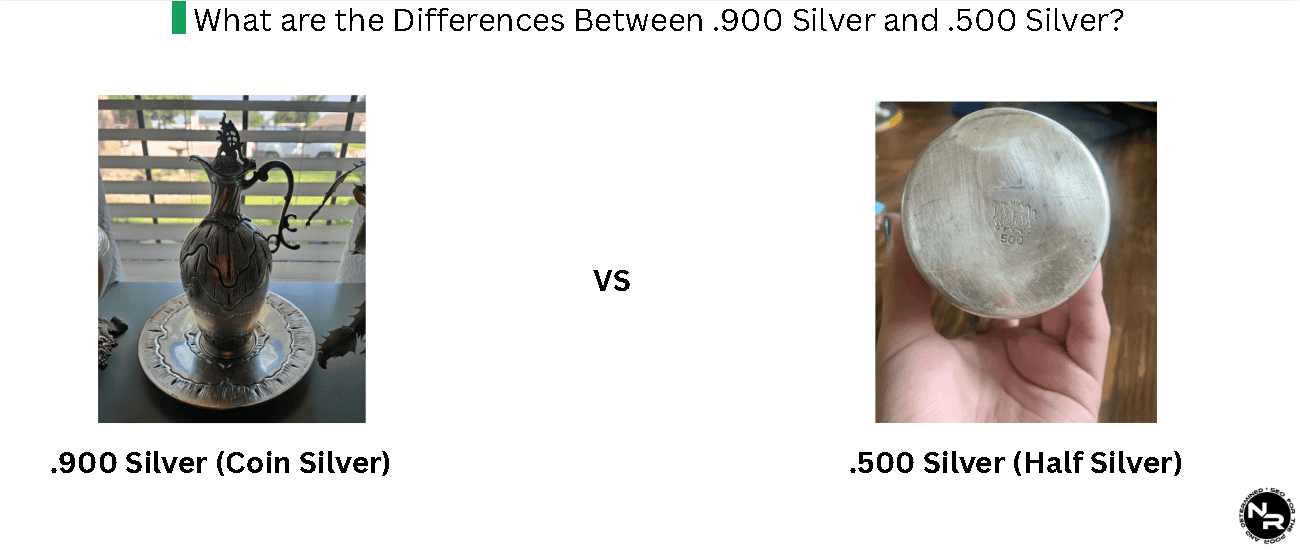
What’s the Difference Between 900 Silver and 500 Silver?
The main difference between 900 silver and 500 silver lies in their silver purity. 900 silver is a silver alloy containing 90% silver and 10% other metals. 500 silver (also known as half-silver) is an alloy of 50% pure silver and 50% other metals (copper, zinc, nickel, lead…).
500 silver is less common than 900 silver and is primarily found in older British coins and cutlery.
It is also more allergenic compared to 900 silver and is more prone to tarnishing due to higher amount of copper content.
| Comparison | Silver 900 | 500 silver |
|---|---|---|
| Composition | 90% silver and 10% copper. | 50% silver and 50% copper. |
| Value | .900 silver is more valuable than .500 silver because it contains more pure silver and less copper. | Silver 500 is less valuable than .900 silver because it contains less pure silver and more copper. |
| Allergenic properties | .900 silver is less allergenic than .500 silver because it contains less copper than it (copper is more allergenic than pure silver). | Silver .500 is more allergenic than Silver .900 because it contains more copper than it. |
| Durability | Silver .900 is less durable than .500 silver because it contains less copper (copper is more durable than silver). | Silver .500 is more durable than silver .900 because it contains more copper (copper is more durable than silver). |
| Tarnishing properties | .900 silver tarnishes slower than .500 silver because it contains less copper than it (copper tarnishes faster than silver). | Silver 500 tarnishes faster than .900 silver because it contains too much copper compared to its silver content. |
| Common applications | .900 silver was primarily used for American coins before 1965, earning it the nickname "coin silver". It was widely used in 19th-century American and, historically, Latin American, German, and Chinese jewelry or, silverware due to its durability. | 500 Silver was commonly used in British coins between 1920 and 1946. Occasionally, it is used in jewelry where cost is a significant concern. |
What’s the Difference Between 900 Silver and Nickel Silver?
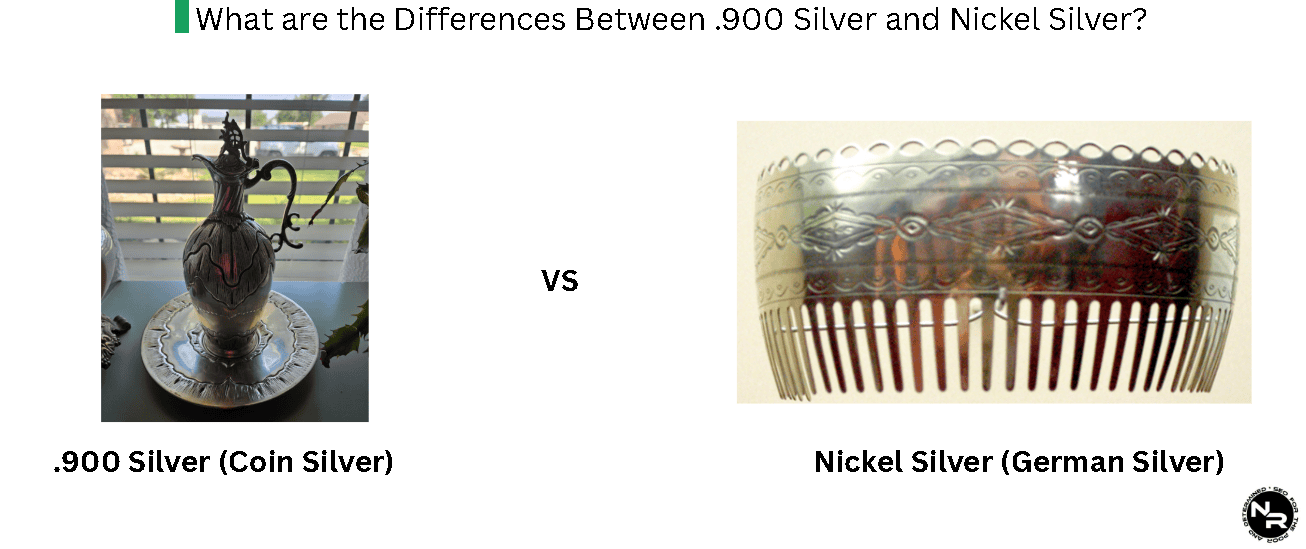
The difference between 900 silver and nickel silver is that they’re not the same class of metals. 900 silver is an alloy of silver containing 90% silver and 10% other metals (most often copper).
Nickel silver, (also known as German Silver), is an alloy of copper, nickel and zinc without a trace of real silver. Nickel silver is a misnomer because the alloy has no silver but looks a lot like it visually.
900 silver was used in the past in coinage and also for jewelry and cutlery production. But nowadays it’s been supplanted by sterling silver as a superior alloy.
Nickel silver is used in a wide range of applications due to its durability, corrosion resistance, and silvery appearance.
It’s often used as a base metal for silver-plated items, in musical instruments, for jewelry, and in industrial applications like plumbing fixtures and marine fittings.
| Comparison | Silver 900 | Nickel silver |
|---|---|---|
| Composition | 90% silver and 10% copper. | 60% copper, 20% nickel, and 20% zinc. |
| Value | .900 silver is more valuable than nickel silver because it contains more pure silver and less copper. | Nickel silver is less valuable than .900 silver because it contains no pure silver. |
| Tarnishing properties | .900 silver tarnishes slower than nickel silver because it contains less copper than it (copper tarnishes faster than silver). | Nickel silver tarnishes faster than .900 silver because it contains too much copper and no pure silver. |
| Durability | Silver .900 is less durable than nickel silver because it contains less copper (copper is more durable than silver). | Nickel silver is more durable than silver .900 because it contains more copper (copper is more durable than silver). |
| Allergenic properties | .900 silver is less allergenic than nickel silver because it contains less copper and nickel than it (both copper and nickel are more allergenic than pure silver). | Nickel silver is more allergenic than silver 900 because it contains more copper and nickel than it. |
| Common applications | .900 silver was primarily used for American coins before 1965, earning it the nickname "coin silver". It was widely used in 19th-century American and, historically, Latin American, German, and Chinese jewelry or, silverware due to its durability. | Nickel silver is used in decorative items (jewelry, flatware, architectural trim), musical instruments (flutes, saxophones), electronics (contacts, switches, connectors), and precision components (keys, watch parts, springs, ballpoint pen tips). |
Is There Bullion (Coins and Bars) of 900 Silver?
Yes, there’re coins made of 900 silver.
Many U.S. coins minted before 1965, specifically dimes, quarters, and half dollars, are made of a 90% silver alloy.
Examples include Roosevelt dimes, Washington quarters, and Walking Liberty half dollars.
Specific examples of .900 silver coins include:
- Roosevelt Dimes: Dated 1964 or earlier.
- Washington Quarters: Dated 1964 or earlier.
- Walking Liberty Half Dollars: Minted from 1916 to 1947.
- Franklin Half Dollars: Minted from 1947 to 1954.
- Mercury Dimes: Minted from 1916 to 1945.
- Morgan Silver Dollars: Minted from 1878 to 1904 and 1921.
- Peace Silver Dollars: Minted from 1921 to 1935.
- Seated Liberty Half Dimes: Minted from 1837 to 1853.
- Barber Dimes: Minted from 1892 to 1911.
- Standing Liberty Quarters: Minted from 1917 to 1930.
- Seated Liberty Dollars: Minted from 1840 to 1873.
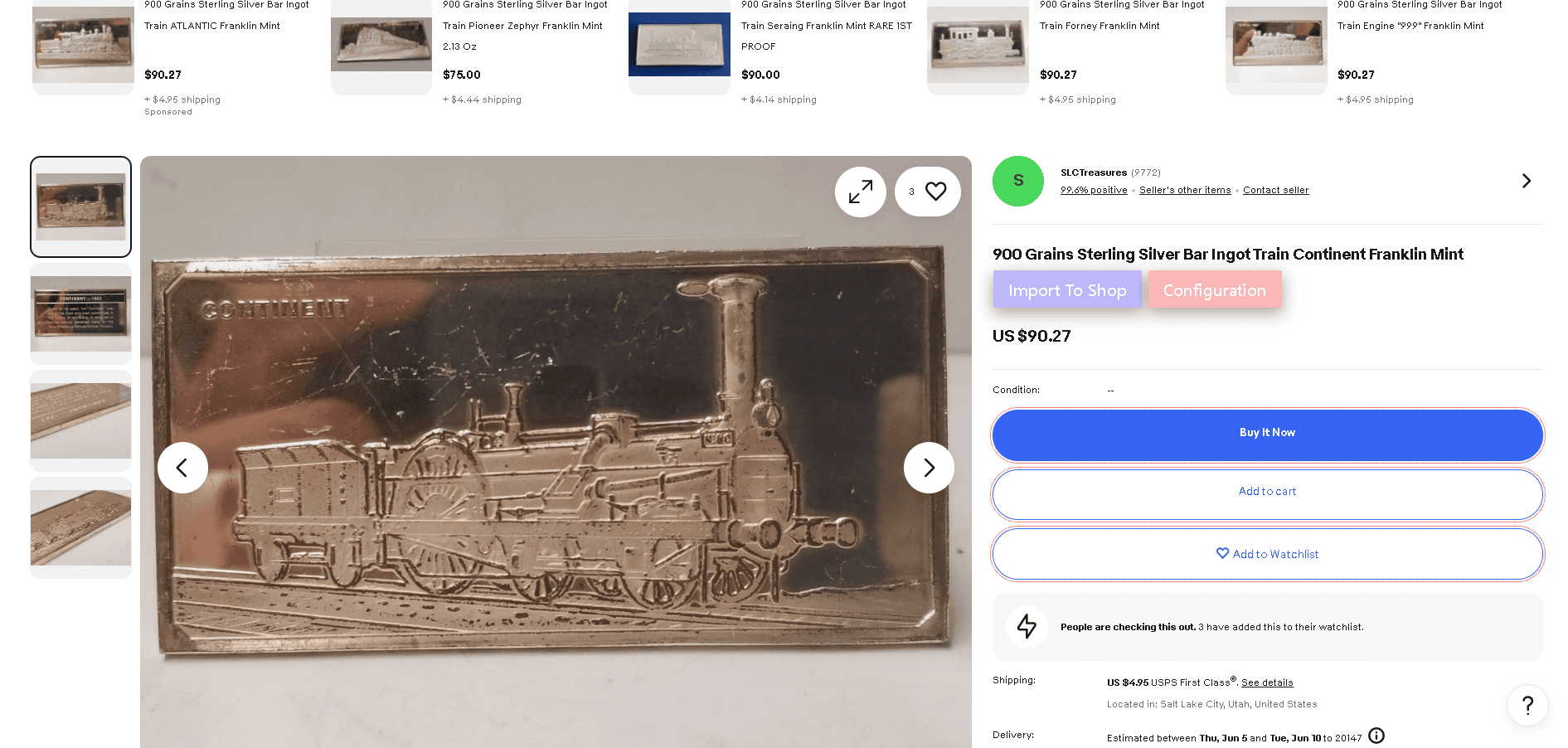
900 silver bars also exist, but are pretty rare and definitely not mass produced.
Here’s an example of a 900 silver bar.
Hey, being so keenly interested in .900 silver must mean you like genuine, real silver in all shapes and forms, especially as coins and bars.
Right?
Are you also a proud American citizen with a keen eye for economy and investing?
Check this out next if you answered yes!
What is 900 Silver (Meaning and Definition)? What is its Value and is it Worth Anything? Conclusion
900 silver is a silver alloy that contains 90% pure silver and 10% other metals (copper). 900 silver is historically known as “coin silver” because it was used in U.S. coinage from 1792-1964.
900 silver is non-magnetic and hypoallergenic (unless you’re allergic to copper/silver).
Today, 900 silver is found mainly in vintage coins, antique jewelry, and some European pieces.
References:
- Is 900 silver worth more or less than 925 silver?- https://www.answers.com/other-math/Is_900_siver_worth_more_or_less_than_925_silver
- 900 Silver Guide- https://www.silverrecyclers.com/blog/900-silver.aspx
- What Does an 900 Stamp Mean on Silver Jewelry?- https://www.nobbier.com/blogs/editorial/what-does-an-900-stamp-mean-on-silver-jewelry/
- Rings stamped both 900 and 925- https://www.reddit.com/r/JewelryIdentification/comments/1e5502z/rings_stamped_both_900_and_925/
- I have an old silver bracelet stamped with 900 and a very small crown on something squiggly. I would like to know where- https://www.justanswer.com/appraisals/g5vek-old-silver-bracelet-stamped-900.html
- Collectible Sterling Silver & Objects of Vertu Auction- https://buy.omniaauctions.com/catalog.aspx?auctionid=82
- GORHAM COIN .900 SILVER CENTERPIECE BOWL- https://buy.omniaauctions.com/GORHAM_COIN__900_SILVER_CENTERPIECE_BOWL-LOT36868.aspx
- GORHAM COIN .900 SILVER SERVING TRAY- https://buy.omniaauctions.com/GORHAM_COIN__900_SILVER_SERVING_TRAY_-LOT36825.aspx
- Copper hypersensitivity- https://pubmed.ncbi.nlm.nih.gov/25098945/
- 1878-CC Morgan Dollar- Real vs Fake- https://readingroom.money.org/1878-cc-morgan-dollar/
- Old French 900 silver hallmark?- https://www.925-1000.com/forum/viewtopic.php?t=46492
- HALLMARKS AND MARKS OF GERMAN SILVER AND SILVERPLATE
MARKS AND HALLMARKS OF GERMANY
– 19TH AND 20TH CENTURY (AFTER 1888)- https://www.silvercollection.it/germansilverhallmark2.html - 900 Grains Sterling Silver Bar Ingot Train Continent Franklin Mint- https://www.ebay.com/itm/394195453757

Nikola Roza
Nikola Roza is a blogger behind Nikola Roza- SEO for the Poor and Determined. He writes for bloggers who don't have huge marketing budget but still want to succeed. Nikola is passionate about precious metals IRAs and how to invest in gold and silver for a safer financial future. Learn about Nikola here.
