
Disclosure: Some of the links you’ll encounter are unique links. Click and buy something and I’ll earn some money, at zero expense to you. Thank you!
Sterling silver tarnishes over time because it contains 92.5% silver and 7.5% copper, with the copper reacting to sulfur, moisture, and chemicals. Common causes of tarnish include air humidity, chlorine, saltwater, bleach, perspiration, cosmetics, and household cleaners. While substances like baking soda and white vinegar can help remove tarnish when used correctly, hydrogen peroxide, prolonged vinegar exposure, bleach, and lemon juice damage and corrode sterling silver.
Gold-plated sterling silver also tarnishes once the plating wears away, exposing the silver beneath. With proper care, sterling silver remains attractive for years, and most tarnish can be safely cleaned at home using simple methods.
| Substance | Tarnish (Yes/No) |
|---|---|
| Water | Water doesn't tarnish sterling silver, but it accelerates the tarnishing process by reacting with sulfur compounds in the air to form silver sulfide. |
| Fire | Fire and heat don't tarnish sterling silver in the traditional sense, but extreme temperatures cause oxidation, discoloration, and even melting (silver melts at 1,763°F/962°C). Brief exposure to flame leaves dark marks or a rainbow-like oxidation layer on the sterling silver item's surface. This is different from the black sulfide tarnish caused by air exposure. |
| Chlorine | Chlorine is highly damaging to sterling silver, causing chemical reactions that lead to corrosion, discoloration, and permanent pitting or erosion of the metal. Pool water, hot tubs, and bleach should be avoided when wearing sterling silver jewelry, as chlorine creates irreversible damage rather than simple tarnish that can be polished away. |
| Bleach | Bleach (sodium hypochlorite) is extremely harmful to sterling silver, causing rapid and severe chemical reactions that corrode, discolor, and permanently damage the metal. |
| Baking soda | Baking soda doesn't tarnish sterling silver and is commonly used to clean it. Baking soda helps remove tarnish through a gentle chemical reaction when combined with aluminum foil and hot water. |
| Toothpaste | Toothpaste doesn't tarnish sterling silver and is sometimes used as a makeshift polish to remove tarnish. But, it's not recommended by jewelry professionals. Most toothpastes contain abrasive particles that scratch and dull the finish and cause more harm than good over time. |
| Vinegar | Vinegar (acetic acid) doesn't tarnish sterling silver and can be used to clean light tarnish. Prolonged exposure or high concentrations can corrode and damage the metal. |
| Hydrogen peroxide | Hydrogen peroxide tarnishes and discolors sterling silver because it's an oxidizing agent that reacts with the metal's surface, causing darkening and accelerated oxidation. |
| Lemon juice | Lemon juice (citric acid) doesn't tarnish sterling silver but corrodes and damages it with prolonged exposure, causing pitting, discoloration and erosion of the metal's surface. |
| Makeup | Makeup doesn't directly tarnish sterling silver, but many cosmetics contain oils, chemicals, and sulfur compounds that accelerate tarnishing and leave residue buildup on silver jewelry. Products like foundation, hairspray, perfume, and lotions create a film on silver surfaces that attracts tarnish-causing agents and dull the metal's shine over time. |
| Nitric acid | Nitric acid is extremely corrosive to sterling silver and rapidly dissolves, pit, and destroy the metal through a vigorous chemical reaction that produces toxic fumes. This powerful oxidizing acid is sometimes used in professional silver testing or refining processes, but it causes severe and irreversible damage that completely ruins jewelry or decorative items. |
| Alcohol | Alcohol (isopropyl or ethanol) doesn't tarnish sterling silver and is safe to use for cleaning, as it evaporates quickly without leaving residue or causing chemical reactions. Pure alcohol doesn't damage silver, though some alcohol-based products like perfumes or hand sanitizers may contain additives that could contribute to tarnishing over time. |

Does Sterling Silver Tarnish When Exposed to Water?
Yes, sterling silver tarnishes when exposed to water. A small amount of water doesn’t immediately damage sterling silver. However, repeated and prolonged exposure leads to noticeable tarnishing. Sterling silver is especially sensitive to chlorine in public swimming pools as chlorine in the water reacts with the copper in the silver alloy.
Here’s an example from Reddit of someone dropping sterling silver rings into chlorinated water and very quickly regretting it.
The rings appeared rusted beyond repair (however, sterling silver doesn’t rust) though other redditors said it’s probably a lot of surface tarnish.

Does Sterling Silver Tarnish When Exposed to Saltwater?
Yes, sterling silver tarnishes when exposed to saltwater.
Saltwater tarnishes sterling silver faster than regular water and even chlorinated water. Prolonged exposure to saltwater can even corrode sterling silver jewelry, flatware and other items.
You’re reading about sterling silver’s tarnishing properties and how to prevent it. Check this out next if you’re a proud American worried about the economy and curious about investing in gold and other precious metals.
Does Sterling Silver Tarnish When Exposed to Nitric Acid?
No, sterling silver doesn’t tarnish when exposed to nitric acid. Sterling silver reacts with the acid and this reaction is the way to test whether you have real or fake sterling silver.
Let’s say you want to use nitric acid to test a sterling silver bracelet.
Apply a drop of nitric acid to your sterling silver bracelet. The bracelet is made of real sterling silver if it starts to adopt a creamy color. The bracelet is made of fake silver if it turns green when exposed to nitric acid.

Does Sterling Silver Tarnish When Exposed to Vinegar?
Yes, exposing sterling silver to vinegar causes it to tarnish.
The tarnish effect is time-dependent and volume-dependent. This means a drop of vinegar applied to your sterling silver necklace for a few seconds doesn’t do anything to it.
However, dropping your necklace into a bowl of vinegar and leaving it overnight causes it to tarnish completely and even look rusted and corroded.

Note: white vinegar is often used as a safe and effective way to clean tarnished silver, usually in combination with baking soda and aluminum foil. It’s because vinegar’s acidic nature helps to remove tarnish without damaging the sterling silver item.
You’re reading about sterling silver’s tarnishing properties and how to prevent it. Check this out next if you’re a proud American worried about the economy and curious about investing in gold and other precious metals.
Does Sterling Silver Tarnish When Exposed to Lemon Juice?
No, sterling silver doesn’t tarnish when exposed to lemon juice. You can use lemon juice to effectively clean tarnish off your sterling silver.
However, lemon juice is highly acidic and causes silver to corrode, resulting in a dull, pitted, and uneven surface. This type of damage is much more dangerous than tarnish because you won’t be able to easily remove it.
The acidity of lemon juice can even permanently damage sterling silver jewelry that’s exposed to it for too long (>24h).

Does Sterling Silver Tarnish When Exposed to Hydrogen Peroxide?
Yes, exposing sterling silver to hydrogen peroxide causes it to tarnish, often leaving a black, brown or dull appearance on the silver item.
I don’t recommend you clean sterling silver with hydrogen peroxide as it permanently damages the item you’re trying to clean. And you won’t be able to clean the tarnish afterwards unless you go and visit a jeweler for professional cleaning. Hydrogen peroxide has such a strong tarnishing effect on sterling silver that it only takes a couple of hours for it to go dark brown and look irreparable.

Does Sterling Silver Tarnish When Exposed to Moist Air?
Yes, sterling silver tarnishes when exposed to moist air. It’s because moisture in the air facilitates chemical reactions between silver and sulfur compounds.
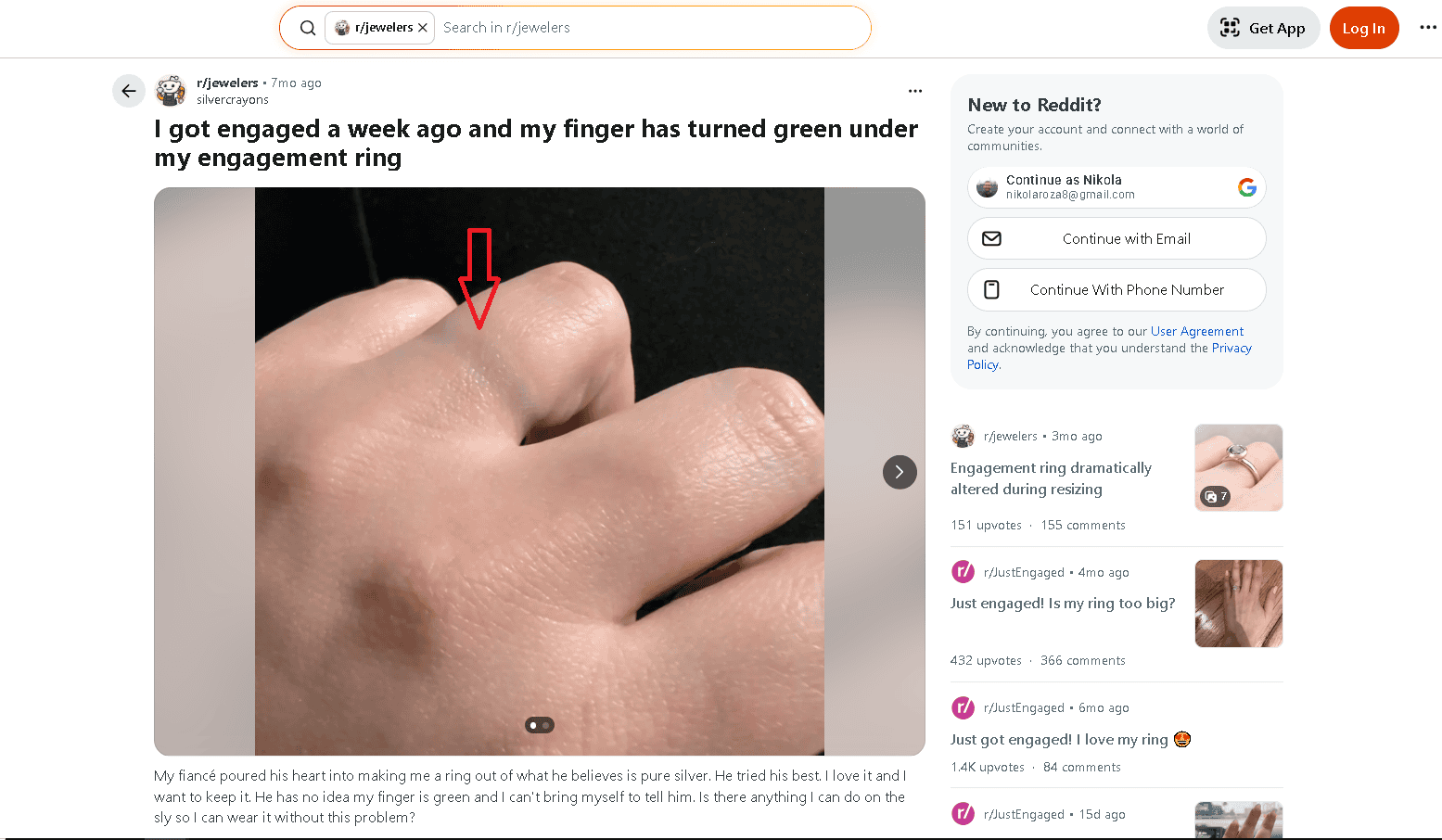
Air also makes sterling silver turn green and stain the finger wearing that ring. See example below.
You’re reading about sterling silver’s tarnishing properties and how to prevent it. Check this out next if you’re a proud American worried about the economy and curious about investing in gold and other precious metals.
Does Sterling Silver Tarnish When Exposed to Bleach?
Yes, sterling silver tarnishes when exposed to bleach. Bleach is a strong agent and it tarnishes silver much faster than water, air moisture, lemon juice and even chlorine.
The chlorine in bleach reacts chemically with sterling silver, creating a layer of silver chloride which appears as a dark tarnish. Get your silver away from bleach because bleach is strong enough to dissolve sterling silver jewelry.

Does Sterling Silver Tarnish When Exposed to Flame and Fire?
Yes, sterling silver tarnishes when exposed to flame and fire. Fire tarnishes sterling silver because heat causes the copper content in the alloy to oxidize and form a layer of copper oxide on the surface. This layer of copper oxide is called “fire scale” or “fire stain”.
Here’s an example of fire stain and tarnish on a sterling silver object. You can clearly see the oxidized copper on the surface of the piece.

You can use a small and weak flame from a lighter to test the authenticity of your silver jewelry.
Does Sterling Silver Tarnish When Exposed to Baking Soda?
No, sterling silver doesn’t tarnish when exposed to baking soda. You can use baking soda to clean tarnish off your silver from the comfort of your home. Remember that baking soda is mildly abrasive and with enough pressure you can scratch and damage your jewelry.
You’re reading about sterling silver’s tarnishing properties and how to prevent it. Check this out next if you’re a proud American worried about the economy and curious about investing in gold and other precious metals.
Does Sterling Silver Tarnish When Exposed to Toothpaste?
Yes, sterling silver tarnishes when exposed to toothpaste. Most commercial toothpaste brands contain mild abrasives that scratch the sterling silver’s surface and create many tiny grooves where tarnish builds up more easily.
This means repeated toothpaste exposure causes your silver item to tarnish faster and more noticeably.

Does Sterling Silver Tarnish When Exposed to Alcohol?
Yes, alcohol tarnishes sterling silver. Alcohol reacts with the copper within the sterling silver alloy causing a chemical reaction that leads to the formation of a dark silver sulfide layer on the surface (tarnish).
Alcohol weakens the quality and causes breakage of the sterling silver jewelry making it appear dull and lifeless.

Note: you can use rubbing alcohol (isopropyl alcohol) to clean sterling silver, as it efficiently removes light tarnish and surface dirt.
Be cautious and only use rubbing alcohol on solid sterling silver pieces which are unlikely to be damaged and tarnished.

You’re reading about sterling silver’s tarnishing properties and how to prevent it. Check this out next if you’re a proud American worried about the economy and curious about investing in gold and other precious metals.
Does Gold Plating Over Sterling Silver Tarnish?
Yes, gold plating over silver sterling tarnishes over time. Gold plating over sterling silver can come off exposing the silver which then tarnishes as any other sterling silver.
Gold plate, unless made of 24k gold which doesn’t tarnish, also tarnishes when exposed to oxygen, sulfur, moisture, and other elements. Higher karatage gold tarnishes much slower than lower purity gold alloys.

Note: besides gold plated sterling silver there’s also rhodium-plated sterling silver.
Sterling silver that’s plated with rhodium is immune to tarnishing up until the plating is damaged. Then the regular tarnishing process begins.
Does Sterling Silver Jewelry Tarnish? How Long Can it Last Without Tarnishing?
Yes, sterling jewelry tarnishes when exposed to salty air, chlorine, sulfur, humidity, fire, perspiration, cosmetics, household bleach and other strong chemicals.
Here’s an example comparison of tarnished vs untarnished sterling silver ring.

Sterling silver typically begins to tarnish in anywhere from two months to three years, depending on environmental exposure and care you put into it.
It can also tarnish within weeks or even days in high humid and high-sulfur environments. However, with proper care it can also last you for many years before eventually tarnishing.
Does Cubic Zirconia Sterling Silver Tarnish?
Yes, cubic zirconia sterling silver tarnishes over time. Cubic zirconia stones don’t tarnish, but the sterling silver surrounding them does. Sterling silver that’s part of cubic zirconia jewelry is vulnerable to tarnish just the same as jewelry made of sterling silver alone.
You’re reading about sterling silver’s tarnishing properties and how to prevent it. Check this out next if you’re a proud American worried about the economy and curious about investing in gold and other precious metals.
How to Remove Tarnish from Sterling Silver? How to Clean it?
One of the easiest way to clean tarnished silver at home is with baking soda, a common kitchen ingredient.
Here are the steps.
Prepare the solution. In a container, combine 1 cup of baking soda per gallon of hot water. You can also add 1/2 cup of salt to the solution.
Submerge the silver. Place the silver in the solution, making sure it’s completely submerged. You can wrap the silver in aluminum foil to help remove the tarnish.
Soak and check. Let the silver soak until the tarnish is gone. The time it takes depends on how tarnished the silver is. You can check periodically and add more hot water if the water starts to cool down.
Rinse and dry. Remove the silver from the solution, rinse with clean water, and dry with a soft cloth.
Polish. Buff the silver with a silver polish to remove any remaining tarnish.
- I got engaged a week ago and my finger has turned green under my engagement ring- https://www.reddit.com/r/jewelers/comments/1lfy6e9/i_got_engaged_a_week_ago_and_my_finger_has_turned/
- what happens to sterling silver in VINEGAR???- https://www.youtube.com/watch?v=tY6TVWLHyM8
- help! i put my sterling silver ring in hydrogen peroxide!- https://www.reddit.com/r/jewelry/comments/v28sgc/help_i_put_my_sterling_silver_ring_in_hydrogen/
- Help with fire stain!! Please- https://www.reddit.com/r/Benchjewelers/comments/1d7bt2f/help_with_fire_stain_please/
- Can rubbing alcohol be used to sterilize/clean sterling silver- https://www.reddit.com/r/jewelry/comments/7vlqo5/can_rubbing_alcohol_be_used_to_sterilizeclean/
- Clean Tarnished Silver Jewelry- https://jewelrymakingjournal.com/clean-tarnished-silver-jewelry/
- How long does sterling silver last with constant sweat?- https://www.reddit.com/r/jewelry/comments/1dtshue/how_long_does_sterling_silver_last_with_constant/

Nikola Roza
Nikola Roza is the owner of Nikola Roza- Everything You Can Learn About Precious Metals. He writes for people who love precious metals and jewelry and who're interested in adding gold, silver platinum and palladium to their Gold IRAs and retirement portfolios.
