Disclosure: Some of the links you’ll encounter are unique links. Click and buy something and I’ll earn some money, at zero expense to you. Thank you!
British platinum hallmarks are legally required stamps on platinum items over 0.5g sold in the UK, guaranteeing their purity, origin, and date.
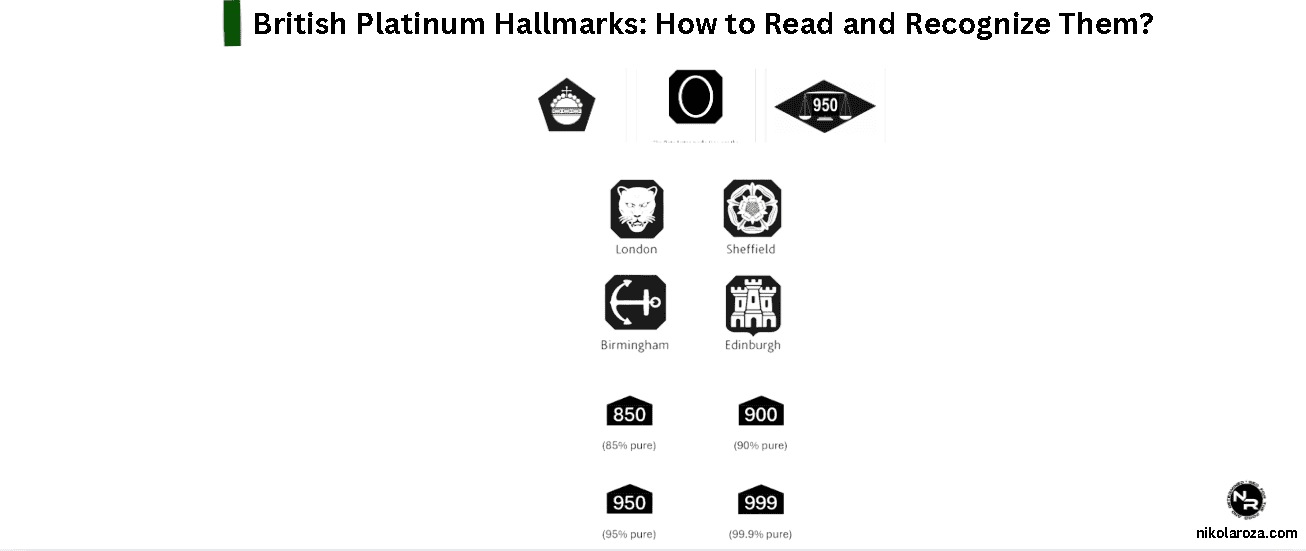
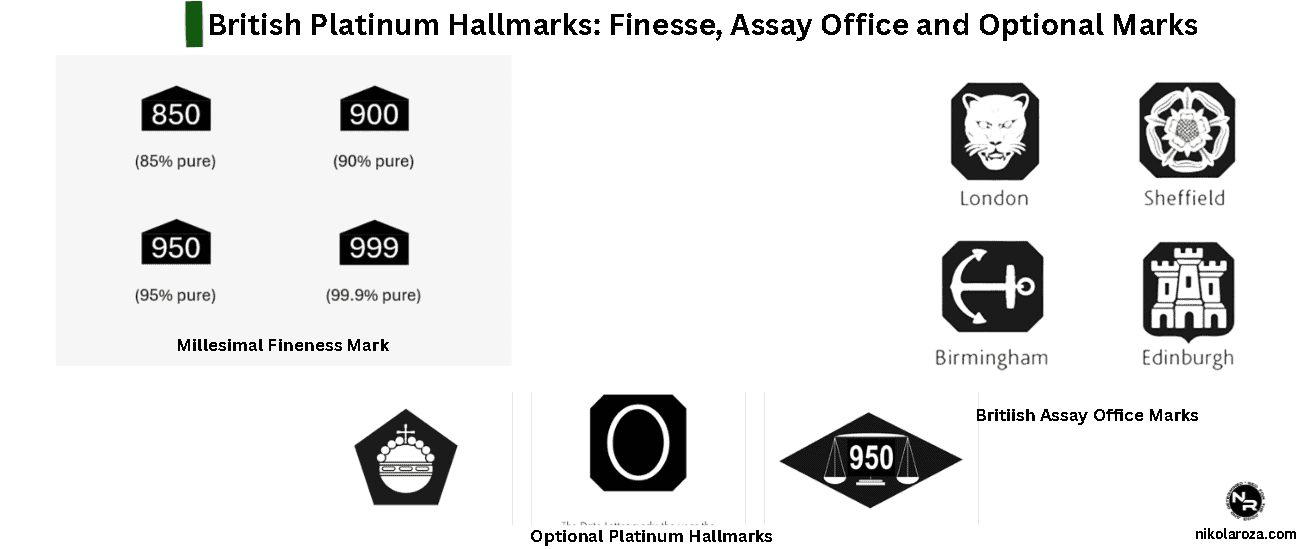
Platinum hallmarking became mandatory in 1975 in the UK with the first items officially stamped on January 2 of that year. The original mark was an orb and cross, though following the 1999 Hallmarking Act, compulsory marks shifted to a sponsor’s mark, millesimal fineness number (e.g., “950”), and an assay office mark.
All four active British assay offices (London, Birmingham, Edinburgh, and Sheffield) conduct platinum hallmarking. The Dublin Assay Office also hallmarks platinum for items in Ireland.
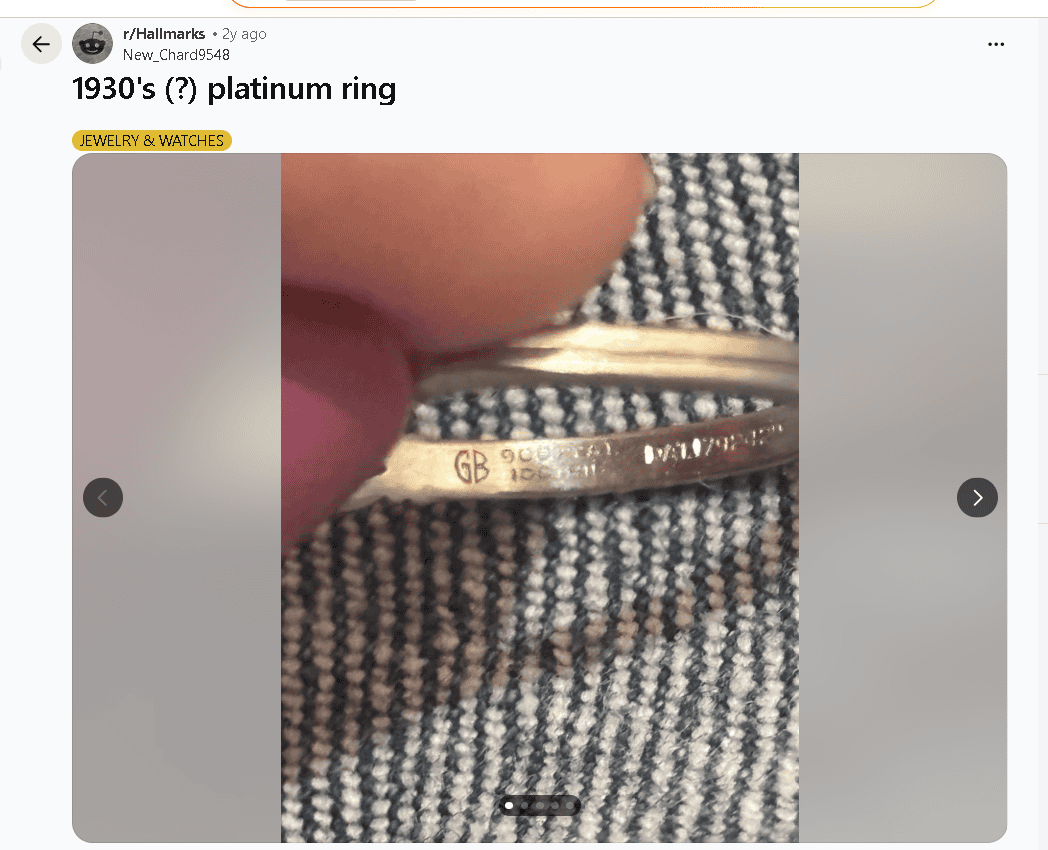
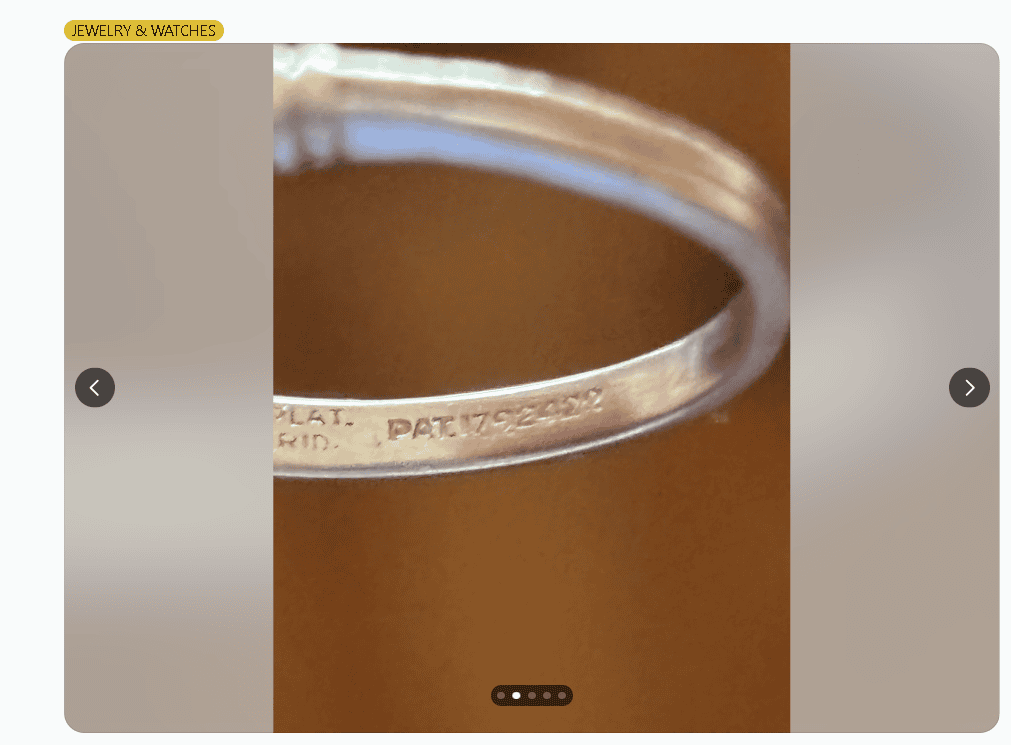
Several historical offices, including York, Exeter, Newcastle, and Chester, never hallmarked platinum, as all closed before the 1975 mandate. Prior to 1975, any platinum marking in the UK was informal and non-standardized, as illustrated by a 1930s platinum-iridium ring bearing a makeshift stamp you’ll see in the article below.
What are British Platinum Hallmarks? When was the First Platinum Item Assayed and Hallmarked in the UK?
British platinum hallmarks are official, legal stamps required for platinum items over 0.5g sold in the UK. These stamps have been a requirement since 1975 to guarantee platinum purity, origin and date.
The original British platinum mark was an orb with a cross and the first platinum items were officially assayed and hallmarked in the UK on January 2, 1975.
The orb and cross mark became optional following the 1999 Hallmarking Act, with compulsory marks instead being the sponsor’s mark, millesimal fineness (e.g., ‘950’), and assay office mark.
All currently active British assay offices (London, Birmingham, Edinburgh and Sheffield) preform platinum testing and hallmarking at a regular basis.
See examples below of modern finesse marks, assay offices stamps and traditional British platinum hallmark symbols.
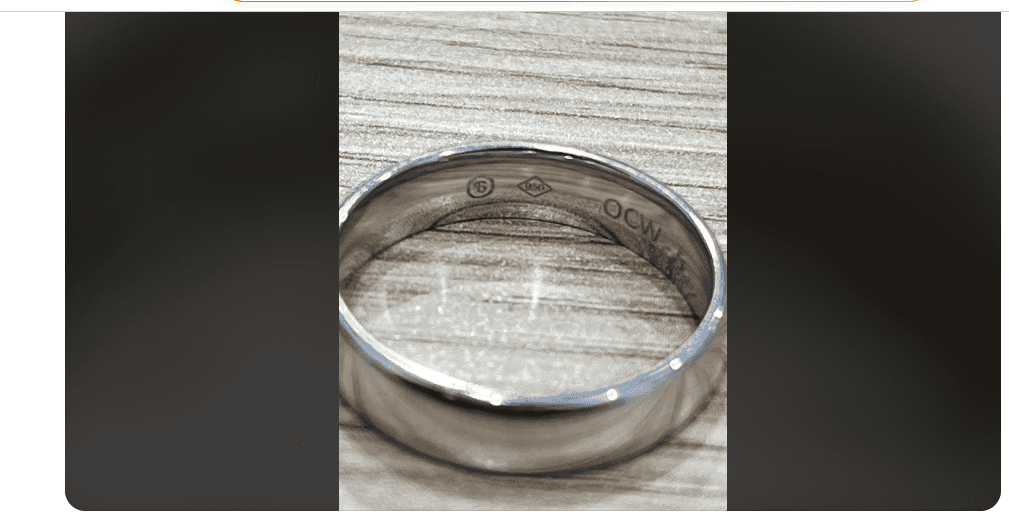
And here’s an example of a platinum ring made and hallmarked in the 1930s in Great Britain. The composition of this platinum ring is 90% platinum and 10% iridium and it says so on the back of this ring. See it in an image below.
This is an example of a makeshift platinum hallmarking because hallmarking platinum was standardized and become obligatory in 1975 in the UK. Before that time you could find a whole range of symbols and numbers denoting British-made platinum, none of them official.
Check this out next when you’re done reading my British platinum hallmarks guide.
It’s a must-have info you must have, especially if you’re a proud American who’s curious about investing in gold, silver and other precious metals.
Does the Dublin Assay Office Hallmark Platinum?
Yes, the Dublin Assay Office hallmarks platinum, along with gold, silver, and palladium, as part of its mandatory, no-weight-exemption testing for all precious metal items manufactured in or imported into Ireland.
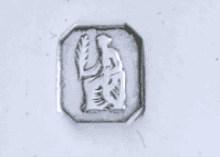
Platinum is hallmarked based on its purity and the official stamps are 600, 850, 900, 950, and 999. Other obligatory stamps include a sponsor’s mark (maker), and the Hibernia mark as the official hallmark of the Dublin Assay Office.
Did the York Assay Office Hallmark Platinum While it Was Operational?
No, the York Assay Office never hallmarked platinum while it was operational. The York Assay Office closed around 1857–1858, and platinum hallmarking became obligatory in 1975 in Great Britain.
The York Assay Office only hallmarked silver (and briefly gold) during its active years, primarily using symbols like a half-leopard head/half-fleur-de-lys, and later the City Arms (cross of St. George with five lions).
Did the Exeter Assay Office Hallmark Platinum While it Was Operational?
No, the Exeter Assay Office never hallmarked platinum while it was operational. The Exeter Assay Office closed in July 1883, and platinum hallmarking became obligatory in 1975 in the United Kingdom.
The Exeter Assay Office mostly hallmarked silver (and a little bit of gold) during its active years, primarily using symbols like crowned X or a three-turreted castle town mark. These marks were often accompanied by the lion passant sterling silver mark, a date letter, and a maker’s mark.
Check this out next when you’re done reading my British platinum hallmarks guide.
It’s a must-have info you must have, especially if you’re a proud American who’s curious about investing in gold, silver and other precious metals.
Did the Newcastle Assay Office Hallmark Platinum While it Was Operational?
No, the Newcastle Assay Office never hallmarked platinum while it was operational. The Newcastle Assay Office closed in 1884, and platinum hallmarking became obligatory in 1975 in Great Britain.
The Newcastle Assay Office mostly hallmarked silver (and a little bit of gold) during its active years, primarily using symbols like town mark of three castles, often arranged two over one. Other common symbols were the lion passant sterling silver mark, date letters and maker’s marks.
Did the Chester Assay Office Hallmark Platinum While it Was Operational?
No, the Chester Assay Office never hallmarked platinum while it was operational. The Chester Assay Office closed on August 24, 1962, and platinum hallmarking became obligatory in 1975 in the United Kingdom. Meaning the Chester Assay Office missed the obligatory platinum hallmarking directive by 13 years.
The Chester Assay Office mostly hallmarked silver (and a decent amount of gold) during its active years, primarily using symbols like three wheatsheaves (garbs), often accompanied by a sword. Other common symbols were the lion passant sterling silver mark, date letters and maker’s marks.
- Discover the history of UK Hallmarking, from its origins in 1300 to the present day- https://www.assayofficelondon.co.uk/about-us/history-of-hallmarking
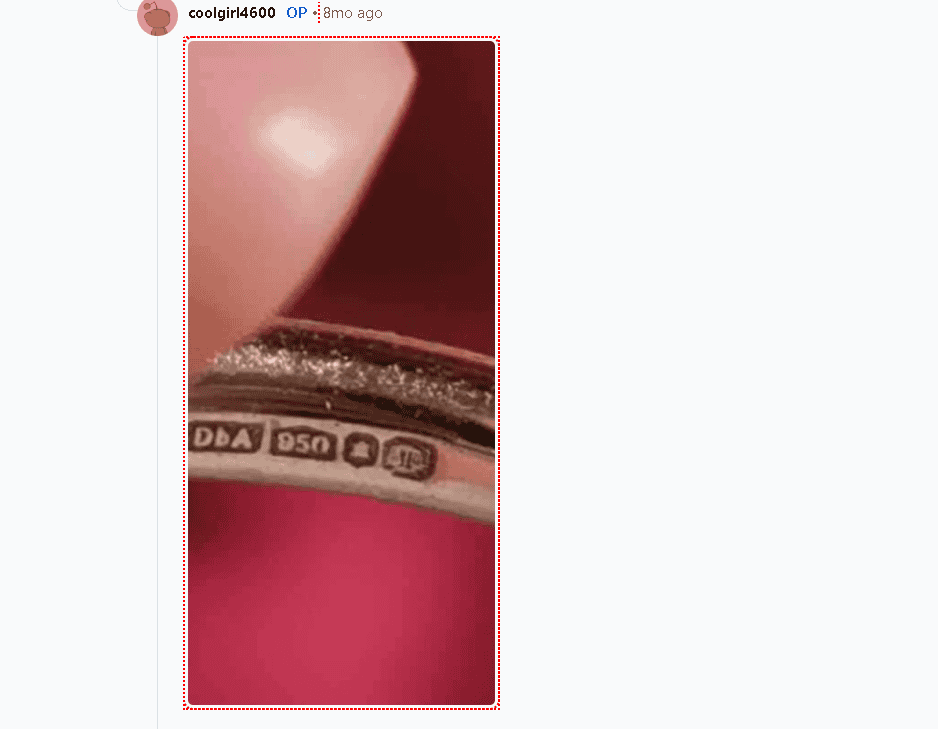
- Is this a common looking hallmark for a platinum ring? I’m only familiar with gold and silver marks- https://www.reddit.com/r/Platinum/comments/14sys6y/is_this_a_common_looking_hallmark_for_a_platinum/
- Identify British platinum hallmarks- https://www.reddit.com/r/Hallmarks/comments/1lnc2zt/identify_hallmarks/

Nikola Roza
Nikola Roza is the owner of Nikola Roza- Everything You Can Learn About Precious Metals. He writes for people who love precious metals and jewelry and who're interested in adding gold, silver platinum and palladium to their retirement portfolios. Nikola is passionate about gold IRAs and investing in multiple asset types for a safer financial future. He also runs a successful online jewelry store where you can buy precious metal jewelry and various replicas of famous coins and bars. Learn about Nikola here.