Disclosure: Some of the links you’ll encounter are unique links. Click and buy something and I’ll earn some money, at zero expense to you. Thank you!
Gold ownership in the United States is legal.
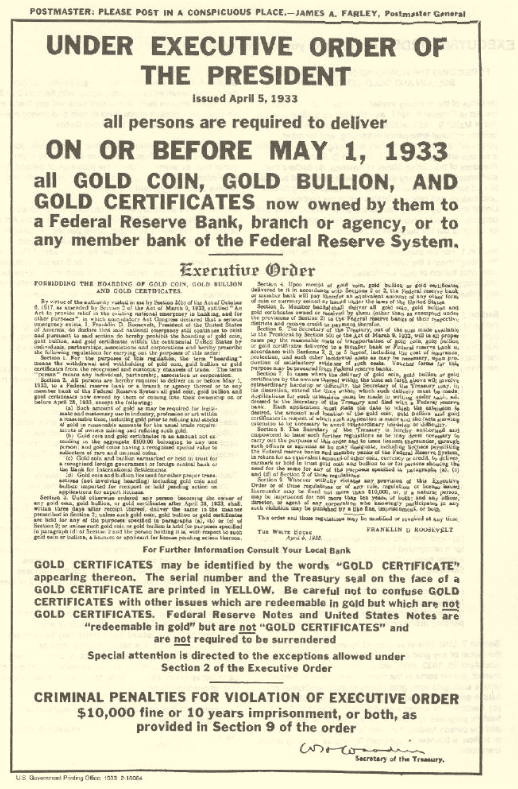
Private citizens can own gold bars, coins, bullion, and jewelry in any quantity with no federal limits. This right was restored on December 31, 1974, after a 40-year ban stemming from Executive Order 6102 (1933), which required citizens to surrender gold to the Federal Reserve during the Great Depression.
Bringing gold into the U.S. is permitted but must be declared to Customs, and amounts over $10,000 require a FinCEN 105 form. Selling gold is also legal, though profits are taxed as capital gains, and cash transactions over $10,000 must be reported via IRS Form 8300.
Melting privately owned gold is allowed. But melting circulating coins like pennies and nickels is forbidden.
Gold held in a Self-Directed IRA must be stored in an IRS-approved depository. Keeping that gold bullion at home triggers taxes and potential penalties.
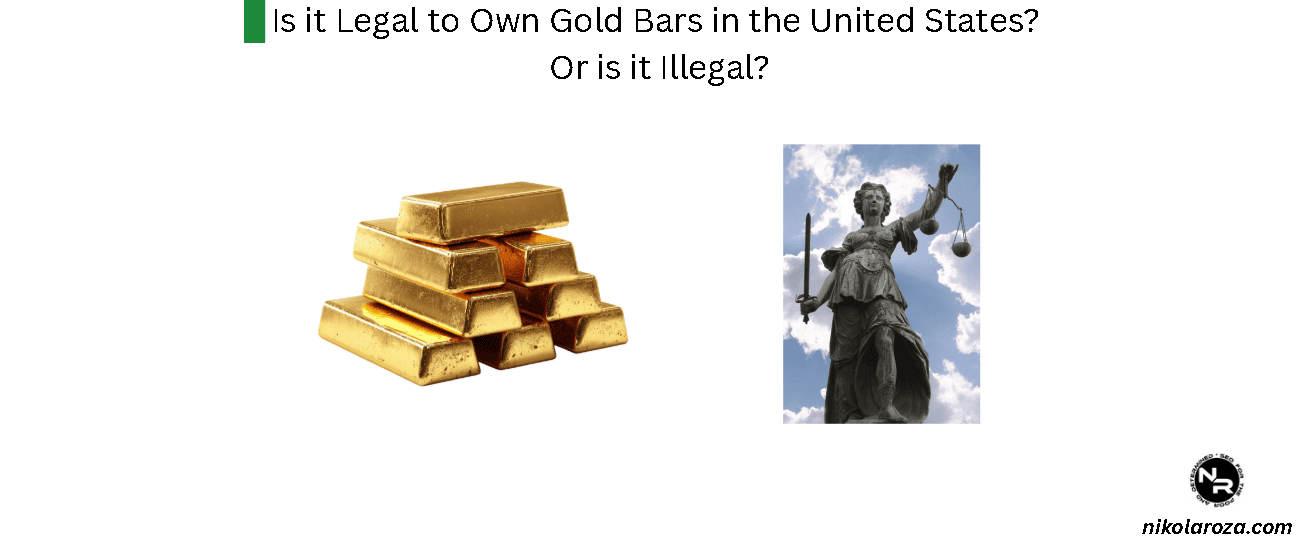
Is it Legal to Own Gold Bars in the United States?
Yes, it’s legal to own gold bars, coins, and other bullion forms in the United States. This legality is governed in part by the repeal of restrictions under the Gold Reserve Act of 1934 and subsequent legislative changes such as Public Law 93-373, which restored private gold ownership rights.
There’re no federal limits on the amount of gold you can own. However, gold-involving transactions are subject to reporting requirements enforced by agencies such as the IRS and (FinCEN), particularly under anti-money laundering (AML) laws.
Learn more about it below.
When Did it Become Legal to Own Gold Bars in the United States? And How Much Ounces of Gold Can You Legally Own?
It became legal to own gold bars, coins and other bullion forms on December 31, 1974, following a 40-year restriction period (1933–1974).
The previous restriction period originated from Executive Order 6102, signed by President Franklin D. Roosevelt, which required citizens to surrender most of their gold holdings to the Federal Reserve System.
Executive Order 6102 aimed to combat gold hoarding and alleviate the deflationary pressures of the Great Depression,
Nowadays as an American citizen can own as many gold ounces as you want and can afford. And your gold can be in bar, coin, ingot or jewelry form.
There’re also no specific restrictions on the weight of gold held in private storage.
Is it Legal to Bring Gold into the U.S.?
Yes, it’s legal to bring gold into the U.S.. But, you must declare it to Customs and Border Protection (CBP) officers. There’s no duty on gold bullion (bars/coins), but gold valued over $10,000 requires a FinCEN 105 form.
Failure to declare gold upon entry into the United States results in fines and sometimes confiscation. It’s against the law for you to bring gold into the U.S. from sanctioned countries like Cuba, Iran, and Sudan.
Note: always carry receipts, invoices, or certificates of authenticity to prove gold ownership when entering the United States from abroad.
Also, foreign gold coins that are legal tender (“spendable gold”) are treated as currency and subject to the same reporting rules.
Is it legal to Sell Gold in the United States?
Yes, it’s legal to sell gold in the United States, as private ownership of gold was re-legalized in 1974. While selling is legal, you must comply with tax regulations, reporting profits as capital gains, and dealers may file IRS reports for large cash transactions (over $10,000) or specific large-volume sales.
The IRS treats gold as a capital asset. Any profit made from selling gold must be reported on your income tax return.
The transaction must be reported to the IRS via Form 8300 to prevent money laundering if you sell gold for cash (or cash equivalents) exceeding $10,000.
Is it Legal to Melt Gold in the United States?
Yes, it’s legal to melt down privately owned gold jewelry, scrap gold, and many types of gold bullion or coins in the United States..
Gold melting activity is permitted under property rights principles, provided the gold isn’t subject to specific legal restrictions or contractual obligations.
US regulations prohibit melting pennies and nickels. This is outlined by the U.S. Mint under 31 CFR § 82, which was implemented to prevent the destruction of circulating coinage for metal value arbitrage.
Is it Legal to Keep Gold From Gold IRA Account at Home?
No, it’s not legal to keep physical gold from a Gold IRA at home.
Keeping IRA gold at home triggers income tax on the full value, plus a 10% penalty if you are under 59½.
According to the IRS (Internal Revenue Code (IRC) Section 408(m)), precious metals held in a Self-Directed IRA must be stored in an IRS-approved gold depository. Good examples are Delaware Depository, Brink’s Global Services, Texas Bullion Depository and a few others.
The rules pertaining to gold IRAs are enforced through qualified custodians such as trust companies and financial institutions regulated under federal and state law.
Good examples of such companies are Equity Trust Company, STRATA Trust Company and GoldStar Trust Company.
Note: working with custodians and depositories is overwhelming to most investors who just want to buy precious metals and diversify their investment and retirement portfolios.
Working with a safe, privately-owned USA gold company removes that hurdle as these companies do 95% of the work for you and with you.
This is the US gold company I recommend.
Is it Legal to Own Gold Bars in the United States? Or is it Illegal? (Conclusion)
Gold ownership is legal in the United States, with no federal limits on quantity or form.
This right was restored in 1974 after a 40-year ban originally imposed by Executive Order 6102 during the Great Depression. Importing gold is allowed but must be declared to Customs, with amounts over $10,000 requiring additional paperwork.
Selling gold is legal, though profits are subject to capital gains tax, and large cash transactions must be reported to the IRS. Melting privately owned gold is permitted.
Gold held within a Self-Directed IRA must remain in an IRS-approved depository, not at home.

Nikola Roza
Nikola Roza is a blogger behind Nikola Roza- SEO for the Poor and Determined. He writes for bloggers who don't have huge marketing budget but still want to succeed. Nikola is passionate about precious metals IRAs and how to invest in gold and silver for a safer financial future. Learn about Nikola here.