
Disclosure: Some of the links you’ll encounter are affiliate links. If you click and buy something, I’ll get a commission. If you’re reading a review of some precious metals company, please understand that some of the links are affiliate links that help me pay my bills and write about what I love with no extra cost to you. Thank you!
Rare silver hallmarks are distinctive stamps on silver items indicating their origin, maker, and purity.
Unlike common marks such as the lion passant, rare hallmarks come from closed regional assay offices, obscure silversmiths, or short-lived periods, making them historically significant.
These marks serve as authentication “fingerprints” that substantially increase a piece’s value to collectors.
Examples include York’s half-leopard head and marks from master craftsmen like Paul de Lamerie. Historic pieces with rare hallmarks have sold for millions, such as an 18th-century French royal soup dish fetching $10.2 million.
Rare silver hallmarks aren’t the same as antique silver hallmarks. While all antique hallmarks are old, only those appearing on limited surviving pieces qualify as truly rare.
Learn more below!
Take this quiz and test your knowledge on rare silver hallmarks and stamps. Take the quiz after you’ve read my guide for your best results.
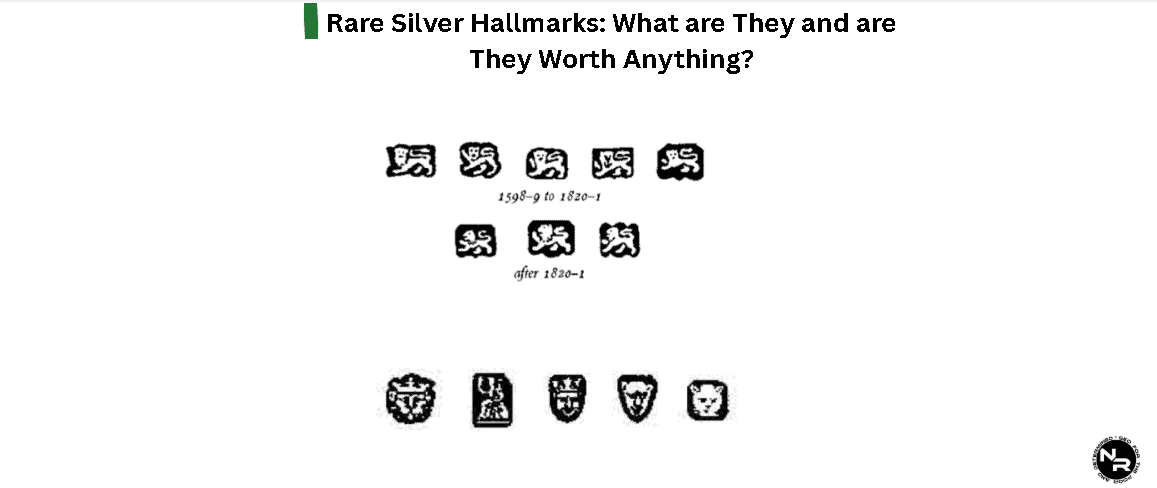
What are Rare Silver Hallmarks (Meaning and Definition)?
Rare silver hallmarks are unique, unusual, or historical stamps indicating specific origins, special editions or rare silver purity standards.
Rare silver marks often feature distinctive symbols like a crowned harp, thistle, or castle, differing them from common lion passant silver marks.
These special hallmarks tell stories about a silver item’s age, maker, place of assay, and historical context, making them valuable to collectors.
Silver hallmarks that are rare or even unique have become so due to a variety of reasons.
Some silver markings are rare due to closed regional assay offices (like Norwich, York, Chester, Glasgow). And some are rare because of short-lived or unique duty marks and maker’s marks from obscure silversmiths.
Some even feature intentional hidden markings for secret messages (like Jacobite symbols).
Bottom line is that rare silver hallmark indicate both large historical and monetary value to potential collectors.
See examples below.
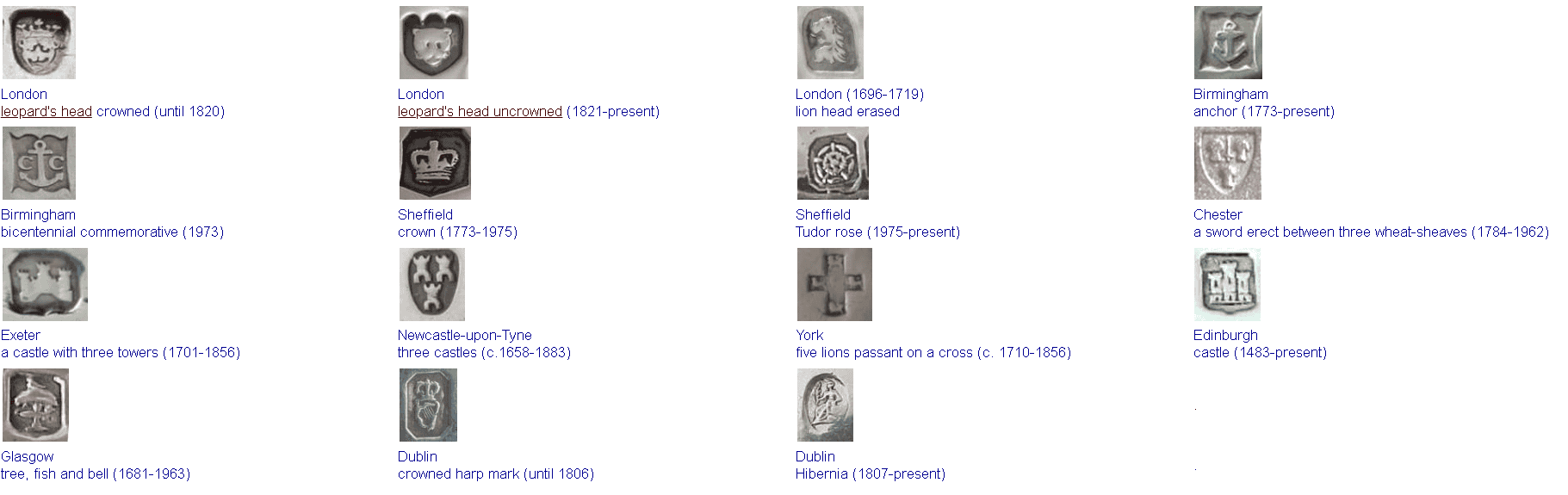
Are Rare Silver Hallmarks Worth Anything? Why Do Silver Collectors Want Them?
Yes, rare silver hallmarks are highly valuable to unique silver collectors. They act as historical “fingerprints” that significantly increase an object’s monetary and historical worth.
Collectors look at rare silver hallmarks as definitive proof of a piece’s authenticity, origin, age, and maker that transform an anonymous silver item into a documented collectible work of art.
These special silver items are potentially worth a lot of money. See example below.
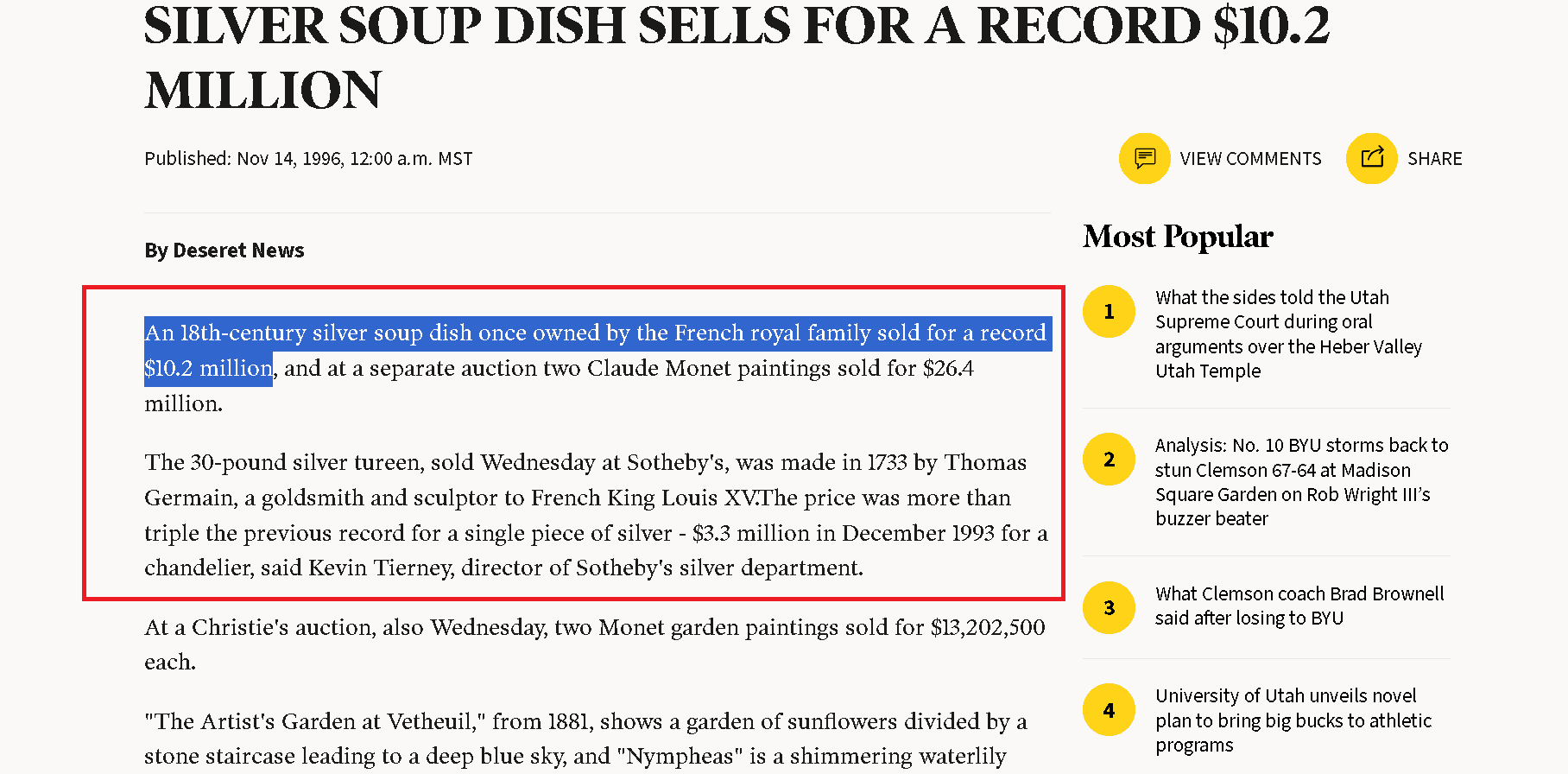
In 1996 an 18th-century silver soup dish once owned by the French royal family sold for a record $10.2 million.
The 30-pound silver tureen was made in 1733 by Thomas Germain, a goldsmith and sculptor to French King Louis XV and it bears the maker’s mark of maître-abonné AF.
Next, there’s this massive (~2,600 ounces) wine cistern previously owned by Thomas Wentworth in the 18-th century sold for approximately 2.5 million GBP in a Sotheby auction.
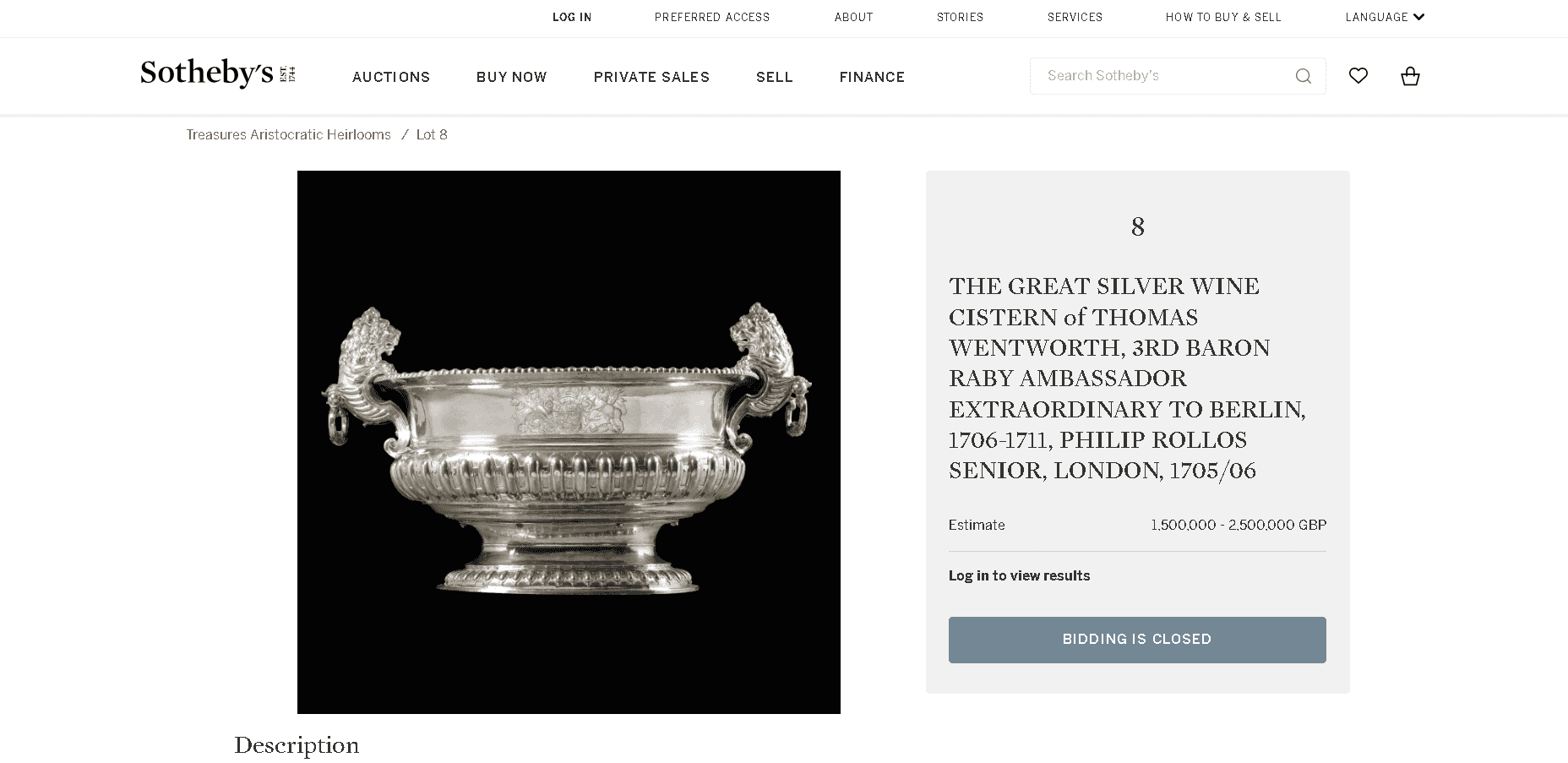
Note: The cistern is fully hallmarked on the underside, with the maker’s mark and Britannia mark on the handles. The piece bears the maker marks of Philip Rollos senior, one of the finest immigrant goldsmiths working in London in the late 17th and early 18th century.
Next, there’s this 1738 silver coffee-pot created by Paul de Lamerie (1688–1751) – the greatest silversmith working in Britain in the 18th century. This coffee pot was created for a successful merchant and was estimated at £3.5-4.5 million.
It was the centerpiece of the British Silver exhibition at The Metropolitan Museum in New York. This silver coffee pot bears the London silver hallmarks for 1738 with de Lamerie’s maker’s mark from his second period (post-1732).
Ultimately it went unsold but you can see how much rare silver can be worth.
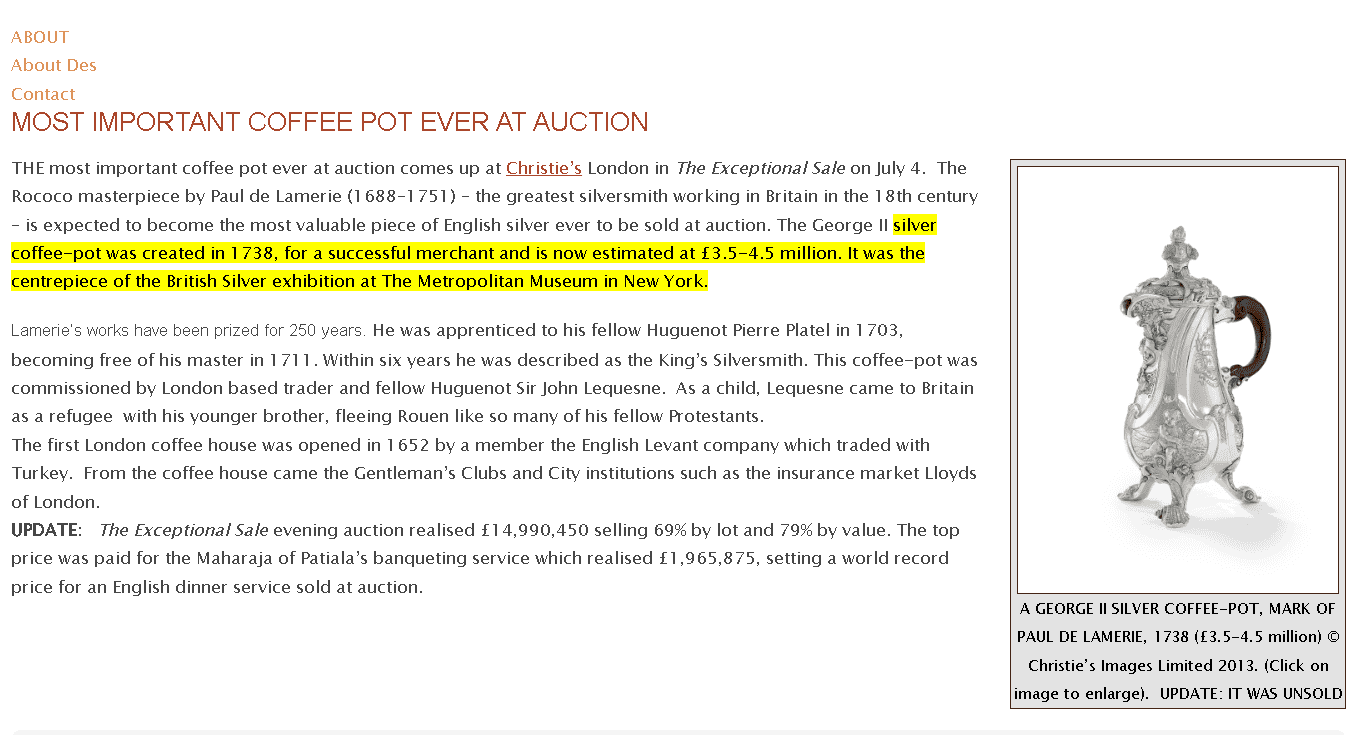
Note: Paul de Lamerie mark from 1732 onwards featured “PL” (his initials) with decorative elements around it – specifically with a crown and mullet (star) above, a pellet (dot) between the letters, and a fleur-de-lis below, all within a shaped cartouche.
How To Identify Rare Silver Hallmarks at Home and By Yourself?
To identify rare silver hallmarks by yourself at home you need to first locate the stamped symbols on the silver item, often on the back or underside.
Then you need to examine the standard mark (purity), town mark (assay office), date letter (creation year), and maker’s mark.
Understanding marks like “Sterling,” “EPNS,” or specific maker’s marks, as well as specific international marks like the Minerva head in France or “925” for 92.5% silver content, can help you reveal an item’s purity, manufacturer, and approximate age.
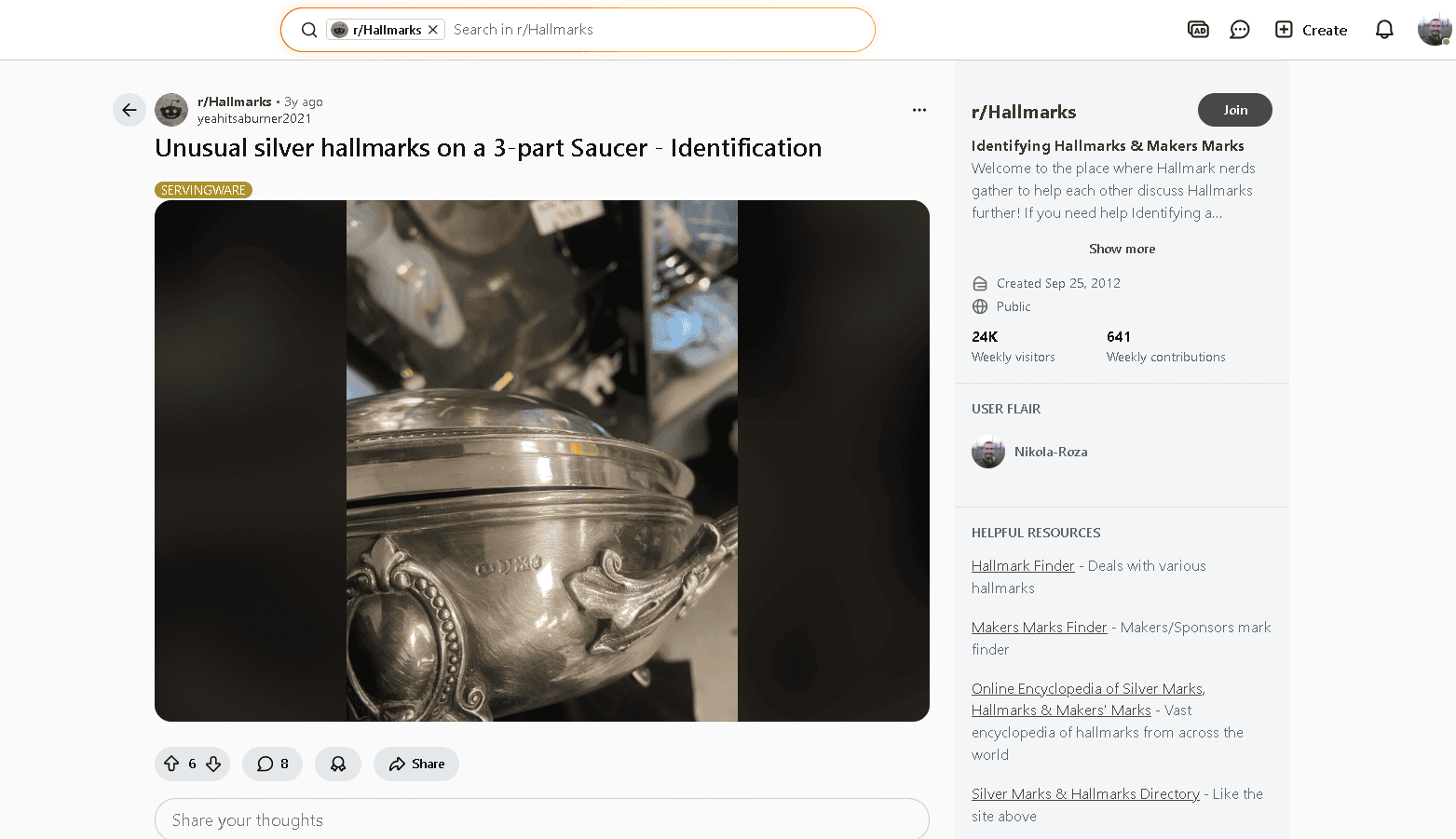
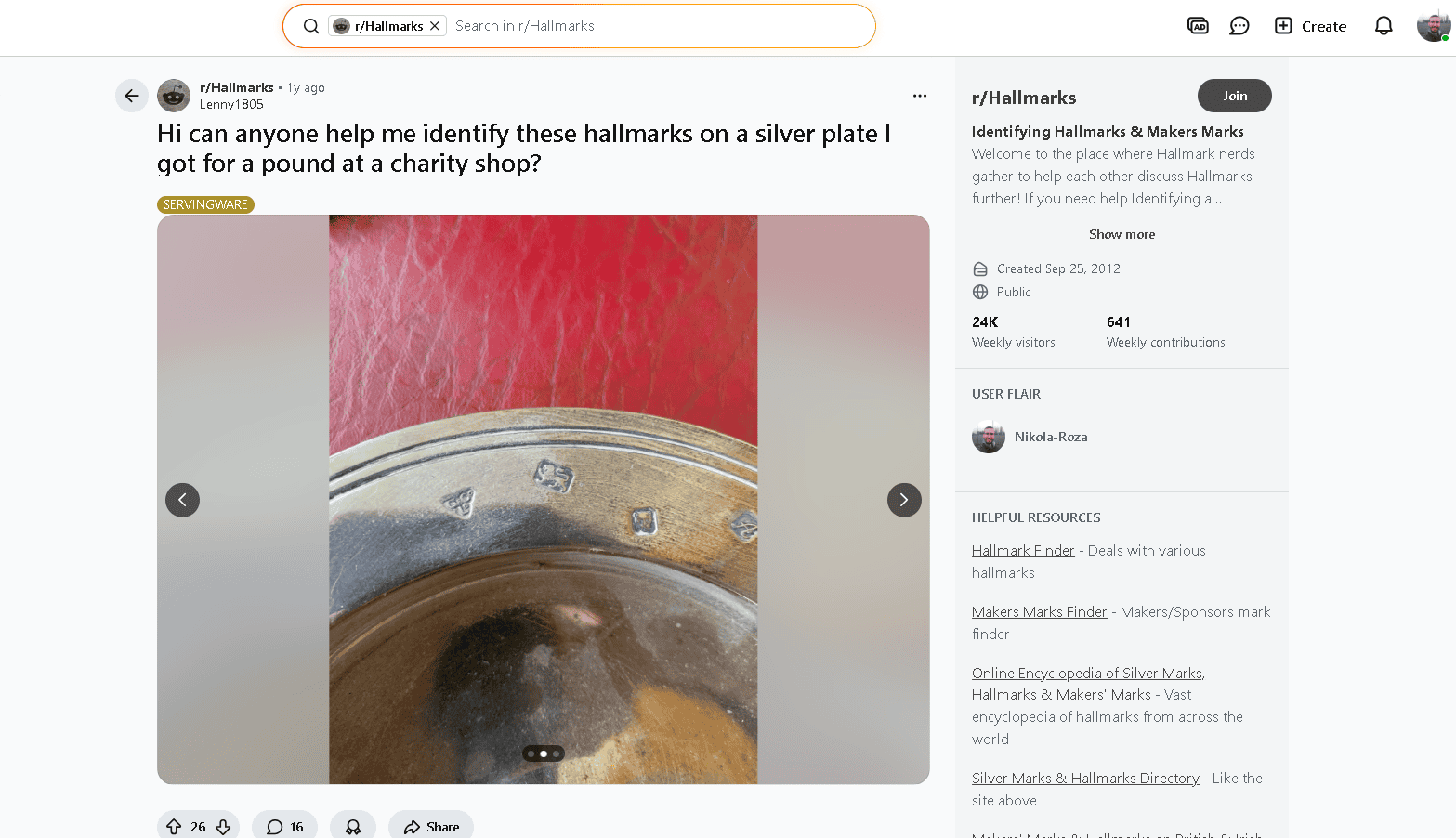
You may also go to Reddit and start a thread asking about your potential rare and valuable hallmarked silver. You can also examine threads of other people to see if someone asked about silver that’s similar to yours.
See example I found below.

What are the Most Common Silver Hallmarks?
The most commons silver hallmarks are those present on the today’s most popular types of silver.
These are:
- 925 / .925 / STERLING: The most common, indicating 92.5% silver (Sterling Silver).
- 999 / .999: Fine silver, 99.9% pure (rare for jewelry, but common for IRA-approved silver you can have as part of your silver IRA account).
- 900 / Coin: American “Coin Silver,” 90% pure.
- 800 / 830 / 850: Continental European silver (80-85% silver).
Other popular silver hallmarks are:
- Lion Passant: The standard mark for Sterling Silver in the UK.
- Leopard’s Head: London Assay Office mark.
- Anchor: Birmingham Assay Office mark.
- Crown: Sheffield Assay Office mark.
- Seated Figure of Britannia: Britannia Silver (95.8% silver).
Are Rare Silver Hallmarks the Same as Antique Silver Hallmarks?
No, rare silver hallmarks aren’t the same as antique silver hallmarks.
An antique silver hallmark is by definition old, but can be present on thousands or even tens of thousands of silver items.
Whereas rare silver hallmarks are present on only a limited number of silver items.
For example, the lion passant is both a common and antique silver hallmark that’s present on millions of silver items. It was first used in 1544 during the Tudor period.

Whereas York’s half-leopard head (before 1423) hallmark is present on a relatively few silver pieces that have survived up to our time.

Rare Silver Hallmarks: What are They and are They Worth Anything? Conclusion
Rare silver hallmarks are unique, historically significant stamps that indicate a piece’s origin, maker, and purity. They are valuable to collectors because they act as authenticated “fingerprints” that drastically increase a silver item’s monetary and historical worth.
These rare silver markings often originate from closed regional assay offices (like York or Chester), obscure silversmiths, or short-lived duty periods, and are distinct from merely antique, yet common, hallmarks like the lion passant .
References:
- Rare silver hallmarks- https://www.silvercollection.it/DICTIONARYDECRYPTINGUKSTERLINGMARKS.html
- A short history and guide to English Silver Hallmarks- https://wallingfordarcade.com/a-short-history-and-guide-to-english-silver-hallmarks/
- Lion Passant on Sterling Silver: What It Means- https://www.sebastiancharles.com/blog/lion-passant-on-sterling-silver-what-it-means
- SILVER SOUP DISH SELLS FOR A RECORD $10.2 MILLION- https://www.deseret.com/1996/11/14/19276919/silver-soup-dish-sells-for-a-record-10-2-million/
- THE GREAT SILVER WINE CISTERN of THOMAS WENTWORTH, 3RD BARON RABY AMBASSADOR EXTRAORDINARY TO BERLIN, 1706-1711, PHILIP ROLLOS SENIOR, LONDON, 1705/06- https://www.sothebys.com/en/auctions/ecatalogue/2010/treasures-aristocratic-heirlooms-l10307/lot.8.html
- MOST IMPORTANT COFFEE POT EVER AT AUCTION- https://antiquesandartireland.com/2013/05/auction-coffee-lamerie/
- I am trying to identify a silver hallmark but cannot find it anywhere. The first symbol is like the pope’s hat or a house but with a gold cat on top of the roof- https://www.justanswer.com/antiques/78uwt-trying-identify-silver-hallmark-cannot-find.html

Nikola Roza
Nikola Roza is a blogger behind Nikola Roza- SEO for the Poor and Determined. He writes for bloggers who don't have huge marketing budget but still want to succeed. Nikola is passionate about precious metals IRAs and how to invest in gold and silver for a safer financial future. Learn about Nikola here.
