Disclosure: Some of the links you’ll encounter are affiliate links. If you click and buy something, I’ll get a commission. If you’re reading a review of some precious metals company, please understand that some of the links are affiliate links that help me pay my bills and write about what I love with no extra cost to you. Thank you!
Testing ruthenium for purity at home?
Is it really possible?
And what is the best way to see if solid ruthenium or ruthenium-plated items are fake or real?
Find out below!
TLDR- How to Tell if Ruthenium is Real or Fake?
Doing the X-ray fluorescence (XRF) analysis is the best and most reliable way to tell whether ruthenium is real or not.
This non-destructive testing technique measures the emitted X-rays after a sample is irradiated, revealing its elemental composition, including ruthenium purity.
Obviously, this is something only a professional jeweler can do.
See below the methods that don’t work so you don’t accidentally damage your ruthenium-plated jewelry and ruthenium coins.
- Is it Possible to Test Ruthenium With a Multimeter?
- Is it Possible to Test Ruthenium at Home With Water?
- Is it Possible to Test Ruthenium at Home With Hydrogen Peroxide?
- Is it Possible to Test Ruthenium With Vinegar?
- Is it Possible to Test Ruthenium With a Lighter Flame or Fire?
- Is it Possible to Test Ruthenium With an Eraser at Home?
- Is it Possible to Test Ruthenium With Magnets at Home?
- Is it Possible to Test Ruthenium With Toothpaste?
- Is Is it Possible to Test Ruthenium With Iodine at Home?
- Is it Possible to Test Ruthenium With Bleach at Home?
- Is it Possible to Test Ruthenium at Home With Alcohol?
- Is it Possible to Test Ruthenium at Home With Lemon Juice?
- Is it Possible to Test Ruthenium With Baking Soda at Home?
- Is it Possible to Test Ruthenium at Home With Sound?
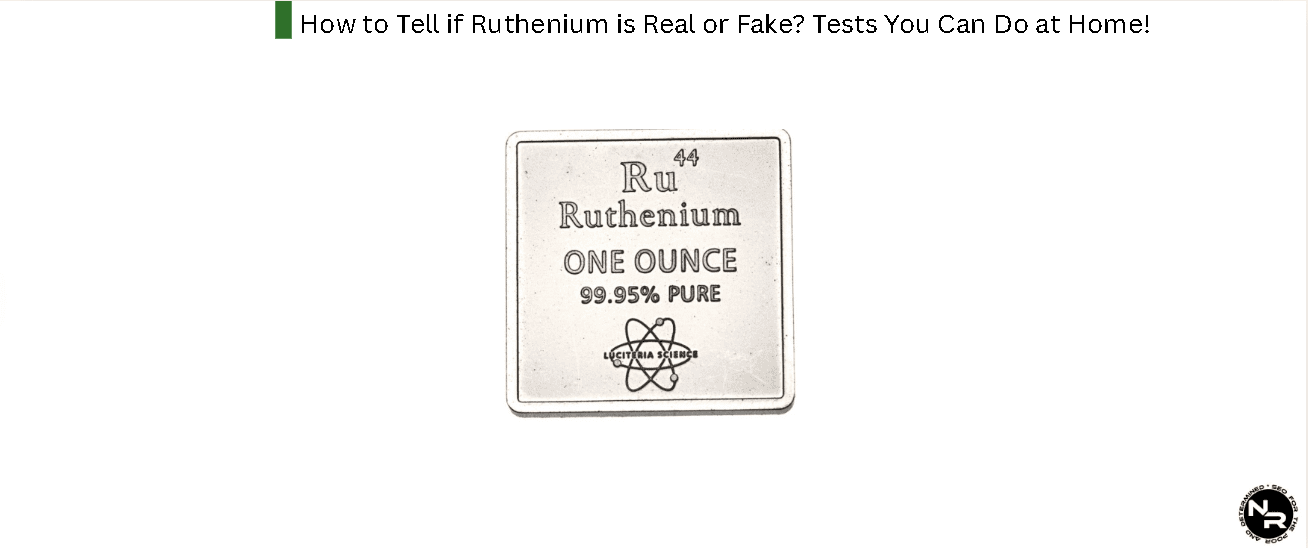
Table of Contents
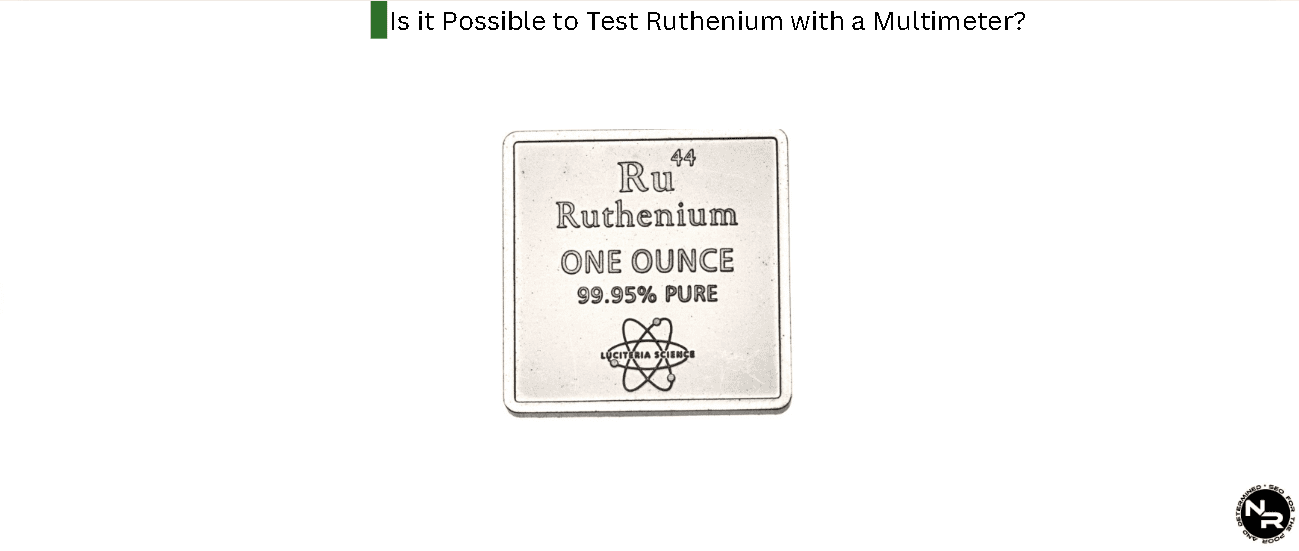
Is it Possible to Test Ruthenium With a Multimeter?
No, it’s not possible to test ruthenium with a multimeter.
Ruthenium is a good electrical conductor which means pure, solid ruthenium sample will have very low resistance. However, most common multimeters aren’t accurate enough to measure resistance below 1 ohm consistently, and this is necessary for testing a high-conductivity metal such as ruthenium.
Also, a multimeter measures electrical properties (voltage, current, resistance) and not the chemical composition of a material.
This means you could measure the metal’s resistance, without knowing for sure which metal it is.
Is it Possible to Test Ruthenium at Home With Water?
No, it is not possible to safely and accurately test ruthenium at home using only water. Ruthenium as a metal is highly resistant to most acids and doesn’t react with water at room temperature.
Ruthenium is a very stable, inert metal that remains unaffected by air, water, and most acids, including even aqua regia (which dissolves gold and platinum).
This chemical resistance makes a simple water test ineffective for identification.
Is it Possible to Test Ruthenium at Home With Hydrogen Peroxide?
No, it’s not possible to reliably and safely test for the presence of ruthenium at home using only hydrogen peroxide.
Ruthenium can be involved in complex reactions with hydrogen peroxide in laboratory and industrial settings, but these reactions aren’t suitable for a simple or definitive home test, and some ruthenium compounds are highly toxic.
Is it Possible to Test Ruthenium With Vinegar?
No, it is not possible to accurately or safely test for ruthenium using vinegar at home.
Ruthenium is an extremely resistant noble metal that’s not attacked by common acids, including acetic acid (vinegar), hydrochloric acid, nitric acid, or even the highly corrosive aqua regia (a mix of hydrochloric and nitric acids).
Also, a lack of reaction with vinegar only indicates the metal in question is non-reactive to that specific, weak acid. But it doesn’t confirm the metal is ruthenium, or how much ruthenium is there in an item.
Is it Possible to Test Ruthenium With a Lighter Flame or Fire?
No, it’s not possible to test solid ruthenium metal with a lighter flame or fire to observe a characteristic color change.
Ruthenium is a highly unreactive noble metal which means it won’t respond to weak flames like the one from a typical lighter.
Ruthenium also has an extremely high melting point (2,334 °C) so you won’t be able to melt ruthenium outside of a chemical lab settings.
Is it Possible to Test Ruthenium With an Eraser at Home?
No, it’s not possible to test ruthenium for authenticity at home using an eraser.
The “eraser test” is a verification method used by medical technicians to determine the nature of blemishes on surgical instruments (e.g., distinguishing a stain from rust or pitting), or by jewelers to check the purity of silver based on tarnish or residue left behind.
However, the same test has zero effect on ruthenium, a highly durable and corrosion-resistant platinum group metal.

Is it Possible to Test Ruthenium With Magnets at Home?
No, it’s not possible to test ruthenium with magnets at home.
Ruthenium is paramagnetic in its bulk metallic form at room temperature. This means it’s only very weakly attracted to a strong magnetic field and doesn’t retain magnetism on its own.
However, this attraction is too subtle to be detected with common household magnets which means you won’t be able to gather any valuable data from pointing your magnet to a suspected ruthenium item.
Is it Possible to Test Ruthenium With Toothpaste?
No, it’s not possible to test ruthenium using toothpaste. Toothpaste doesn’t contain the specific chemicals required to react with ruthenium in a detectable way for a home test.
Ruthenium is fully resistant to a strong chemical like Aqua Regia so a common toothpaste would have no effect on it.
Is Is it Possible to Test Ruthenium With Iodine at Home?
No, it’s not possible to test ruthenium with iodine at home or anywhere else. Iodine has zero effect on ruthenium, an extremely hard and chemically inert precious metal that’s immune to pretty much anything you throw at it.
Is it Possible to Test Ruthenium With Bleach at Home?
Yes, It’s possible to test ruthenium with bleach at home. But, it’s extremely dangerous and I don’t recommend you even try it.
Bleach dissolves solid ruthenium which leads to the production of ruthenium tetroxide, a highly volatile and toxic ruthenium compound which you can inhale and seriously hurt your health.
Don’t test ruthenium with bleach!

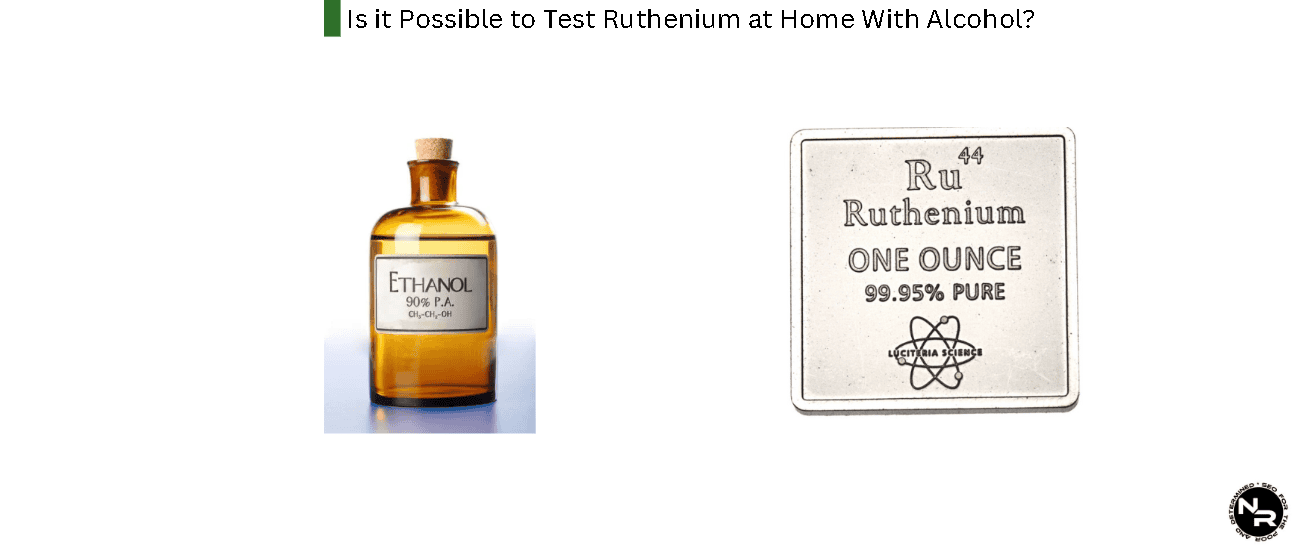
Is it Possible to Test Ruthenium at Home With Alcohol?
No, it’s not possible to test ruthenium with alcohol at home. Pure alcohol has zero effect on ruthenium, an extremely hard and chemically inert precious metal that’s immune to pretty much anything you throw at it.
Because ruthenium is unaffected by alcohol you can use rubbing alcohol to gently clean and polish ruthenium coated jewelry and ruthenium coins that you own.
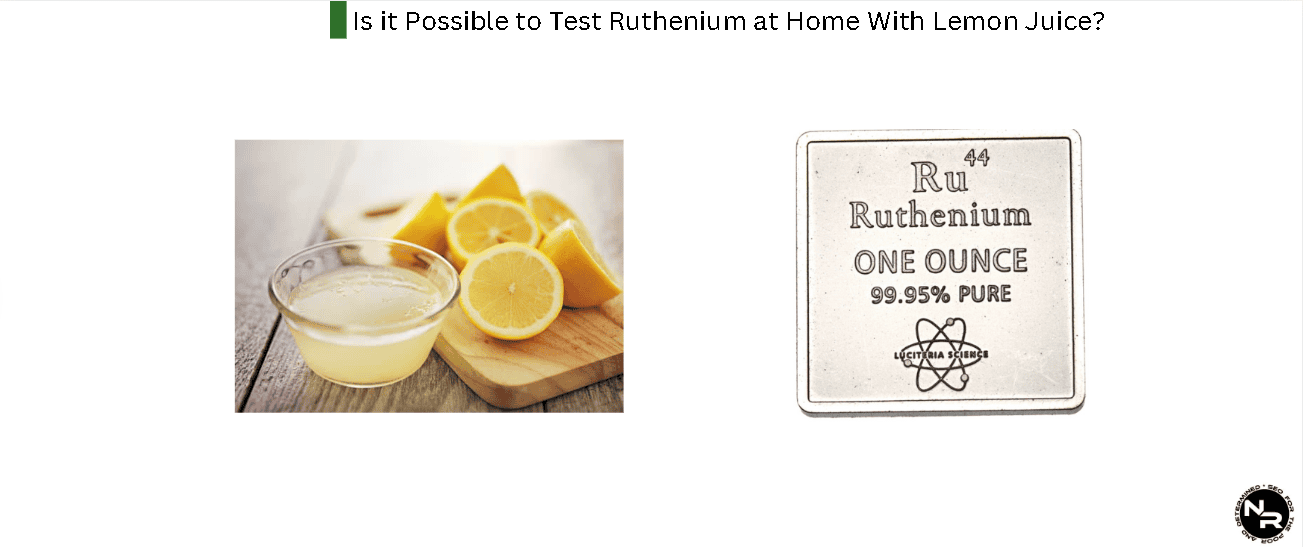
Is it Possible to Test Ruthenium at Home With Lemon Juice?
No, it is not possible to test for ruthenium at home with lemon juice. Ruthenium is a highly unreactive metal that’s impervious to common acids, including those found in lemon juice.
Especially since lemon juice contains citric acid, a relatively weak acid.
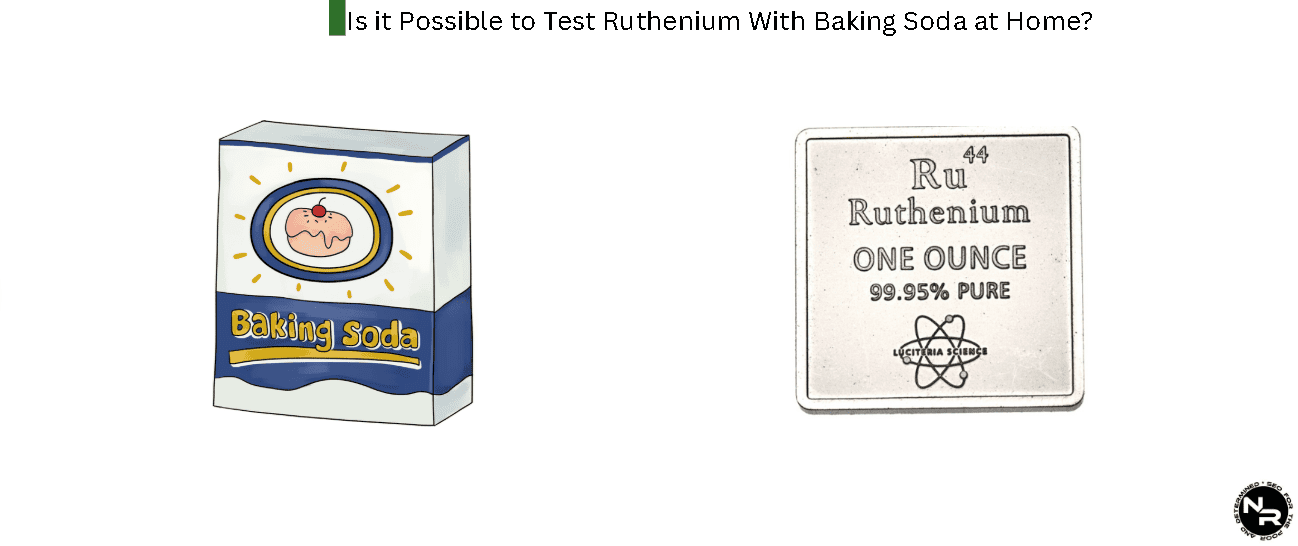
Is it Possible to Test Ruthenium With Baking Soda at Home?
No, it is not possible to reliably or safely test for ruthenium metal using only baking soda at home.
Ruthenium is a highly unreactive platinum group metal that doesn’t react with common household acids or bases, including baking soda (sodium bicarbonate) solutions.
Ruthenium is even invulnerable to aqua regia, a highly corrosive mixture of nitric and hydrochloric acids that dissolves gold and platinum.
Is it Possible to Test Ruthenium at Home With Sound?
No, it’s not possible to accurately test or identify ruthenium at home using sound. Pinged ruthenium doesn’t emit a specific sound you can listen for to determine whether it’s this precious metal or not.
How to Tell if Ruthenium is Real or Fake? Tests You Can Do at Home! Conclusion
Testing ruthenium authenticity at home is essentially impossible through common household methods.
Ruthenium is an extremely stable, chemically inert noble metal from the platinum group that resists nearly all acids, including aqua regia (which dissolves gold and platinum). It doesn’t react with water, vinegar, hydrogen peroxide, alcohol, lemon juice, baking soda, toothpaste, or iodine at room temperature.
Common testing methods prove ineffective: multimeters can’t accurately measure its low electrical resistance, magnets can’t detect its weak paramagnetic properties, and its extremely high melting point (2,334°C) prevents flame testing.
The eraser test used for other metals yields no results with ruthenium, and sound testing produces no characteristic identification.
One dangerous exception is bleach, which dissolves ruthenium and creates highly toxic ruthenium tetroxide gas—making this method extremely hazardous. Professional laboratory equipment like X-ray fluorescence analysis or fire assay remains necessary for authentic ruthenium identification.

Nikola Roza
Nikola Roza is a blogger behind Nikola Roza- SEO for the Poor and Determined. He writes for bloggers who don't have huge marketing budget but still want to succeed. Nikola is passionate about precious metals IRAs and how to invest in gold and silver for a safer financial future. Learn about Nikola here.