Disclosure: Some of the links you’ll encounter are unique links. Click and buy something and I’ll earn some money, at zero expense to you. Thank you!
Blue gold is a real but rare gold alloy made by combining yellow gold with either indium (46% gold, 54% indium) or gallium (58.5% gold, 41.5% gallium). This results in 11-karat or 14-karat gold with a distinctive blue hue.
Unlike natural gold, blue gold doesn’t occur in nature and is created in laboratories.
Blue gold jewelry is non-magnetic and hypoallergenic, making it safe for most people to wear. However, blue gold is highly brittle and unsuitable for most jewelry applications, which explains its scarcity in the market.
Blue gold jewelry pieces like rings, necklaces, and brooches have been produced in extremely limited quantities through special orders and they’re virtually impossible to find in regular jewelry stores.
Blue gold can’t be included in gold IRA accounts, and blue gold coins or bars don’t exist commercially due to the metal’s fragile nature. It remains a novelty item in the precious metals world rather than something you see every day.
Here’s an awesome quiz about blue gold. Take it after you’ve read my guide below.
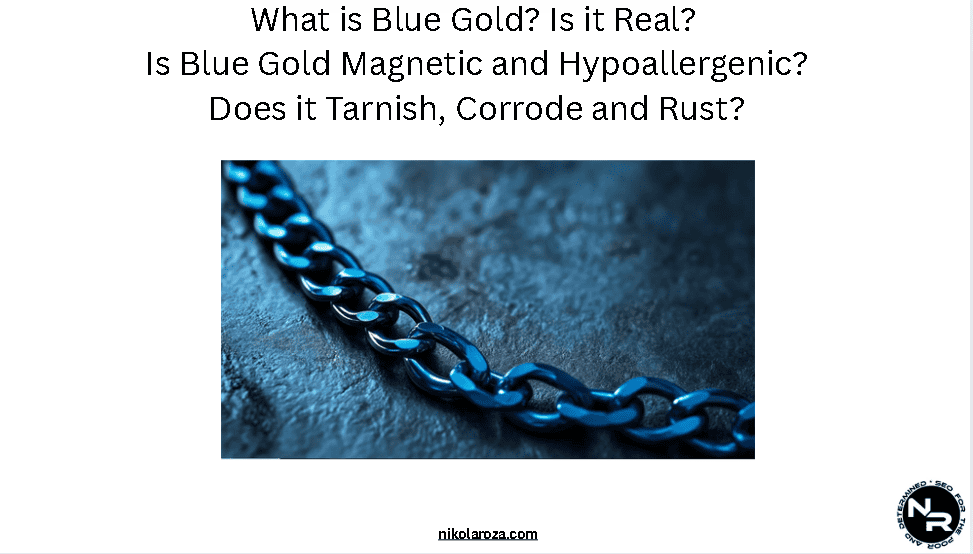
What Is Blue Gold? Is it Real? What is it Made of?
Yes, blue gold is real and it’s an alloy of yellow gold and indium or gallium. The latter two metals give this gold alloy a distinct shade of blue.
Yellow gold alloyed with indium in proportions 46:54% produces blue gold. Yellow gold alloyed with gallium in proportions 58.5:41.5% gives blue gold.
| Blue Gold Type | Compostion |
|---|---|
| Yellow gold+ indium | 46% gold+ 54% indium. |
| Yellow gold+ gallium | 58.5% gold+ 41.5% gallium |


Blue gold is only available in 11k and 14k variants.
Yellow gold alloyed with indium produces 11k blue gold because there’s only 46% gold compared to 54% indium. Yellow gold alloyed with gallium produces 14k because there’s 58.5% gold compared to 41.5% gallium.
Pro tip. Blue gold made through oxidation process is also possible. In this case 75% of yellow gold is alloyed with 25% iron. Jewelers then subject this gold alloy to specific heat treatments (with temperatures ranging from 450-600 degrees) to create a thin, protective blue oxide coating on the surface.
The blue oxidized surface layer is thin, meaning that it will rub off over time unless you’re extremely careful while wearing it. This is especially true for rings, bracelets, and other jewelry items worn on the hands.
You like blue gold which means you like real, yellow gold as well, right? Check this out next if you answered yes!
What is the Melt Value per Gram of Blue Gold? Is it Expensive to Buy and Own?
The worth of blue gold is based on the current gold market price which fluctuates from moment to moment based on the interplay of demand and supply.
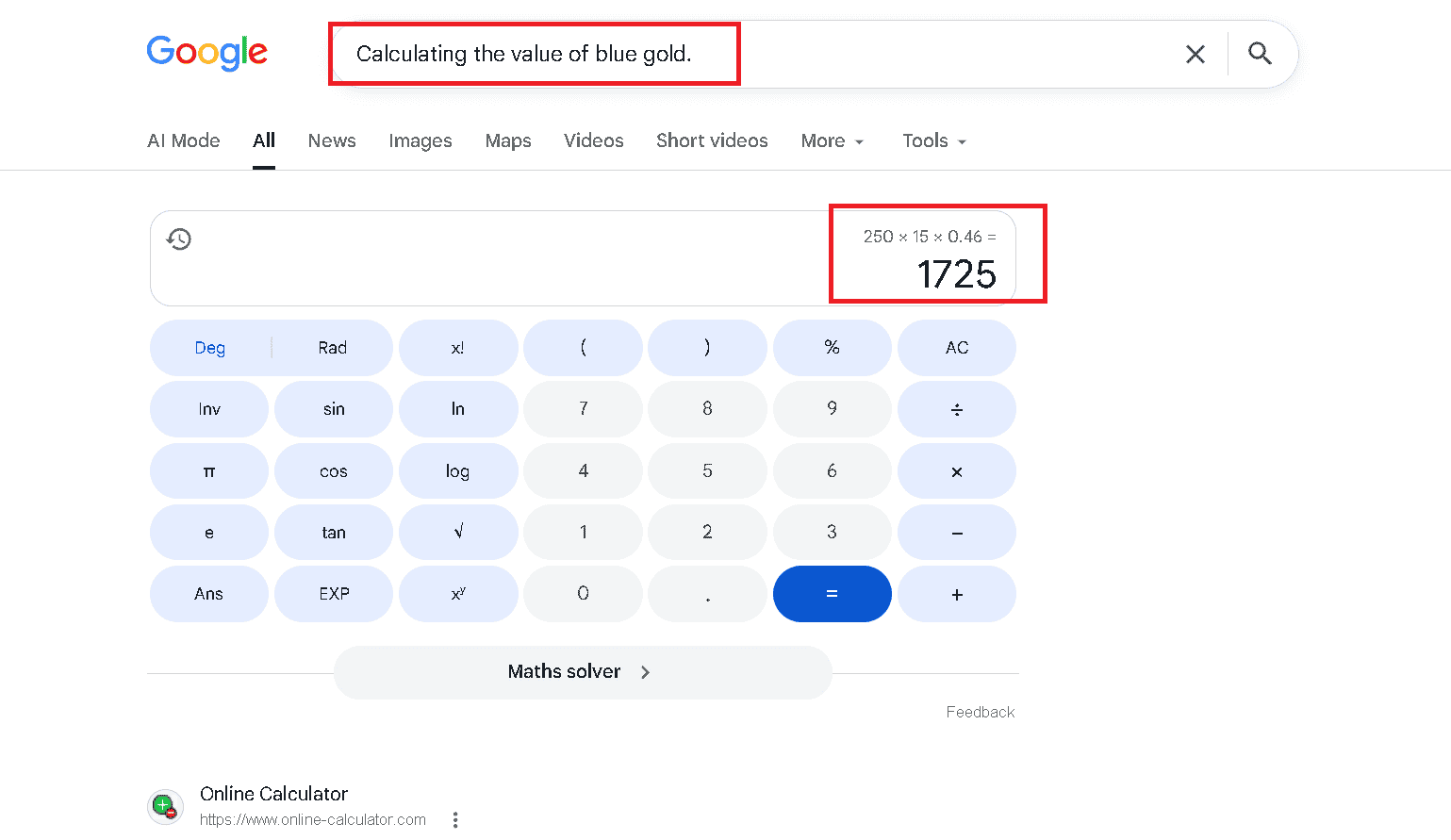
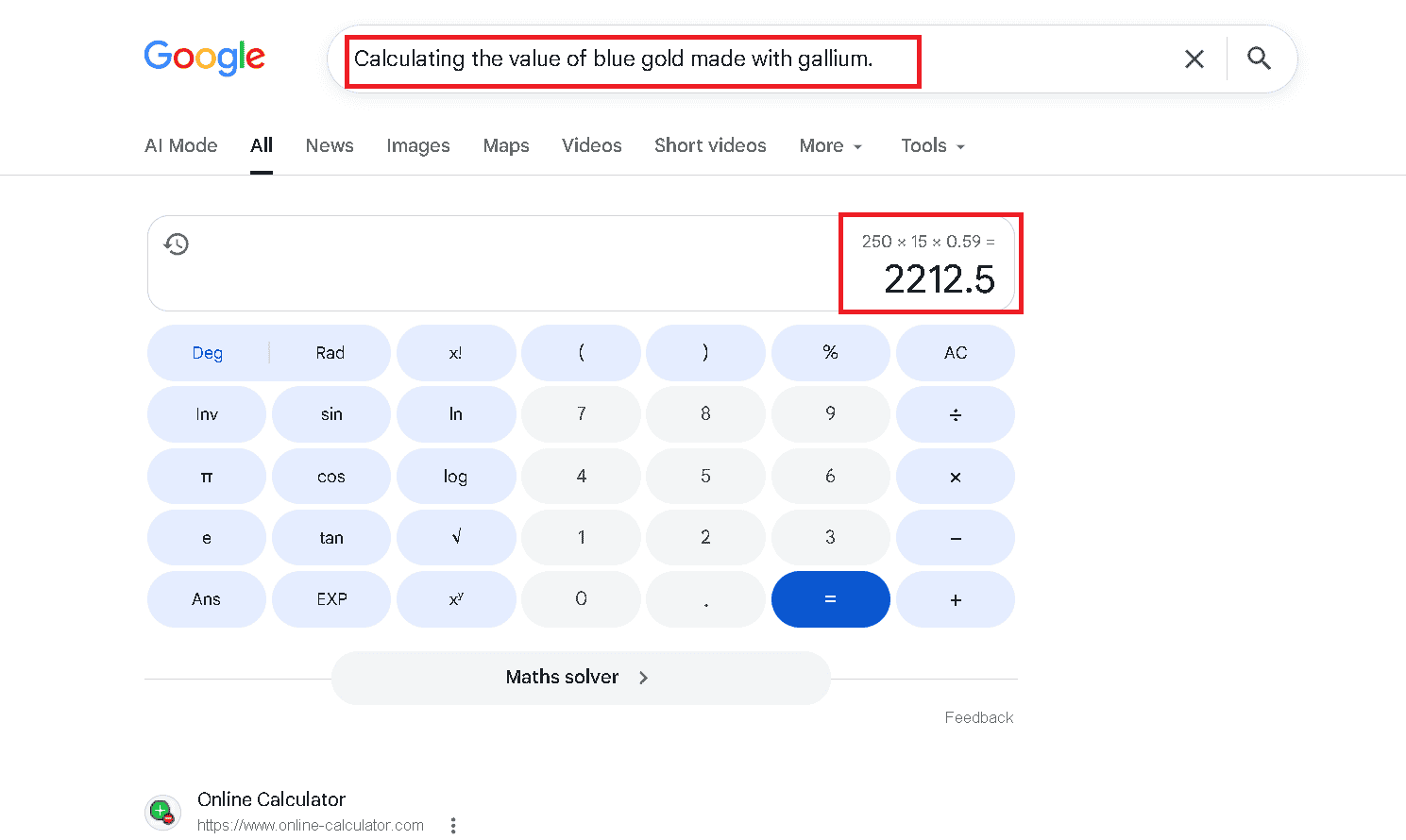
To determine the worth of a blue gold item first you need to measure its weight. Next, multiply the item’s weight in grams with the current gold price per gram, and then multiply that by either 0.46 or 0.59 (the amount of gold in both blue gold alloy variants).
Let’s say the current gold price is $250 per gram, and you have a blue gold broch that weighs 15 grams.
The exact worth of that blue gold item would be $250 x 15 x 0.46=$1725.
The same calculation applies for blue gold made with gallium, except this time you multiply with 0.59 instead of 0.46. $250 x 15 x 0.59=$2212.5.
Is Blue Gold Magnetic?
No, blue gold isn’t magnetic. Blue gold doesn’t magnetize both when it’s made with indium and with gallium.
Indium is a paramagnetic metal which means it’s weakly attracted by an externally applied magnetic field. Once the magnet is removed the magnetic effect disappears. Indium’s paramagnetic effect is nullified when indium is mixed with diamagnetic yellow gold so you won’t notice any magnetization if you try to test blue got with magnets.
Gallium is a diamagnetic metal which means it’s weakly repelled by a magnetic field. And of course gold is a diamagnetic precious metal.

You like blue gold which means you like real, yellow gold as well, right? Check this out next if you answered yes!
Does Blue Gold Tarnish? Does it Corrode, Rust and Oxidize?
Yes, blue gold tarnishes and below are all the potential tarnishing-causing substances and their dangerous effect on blue gold jewelry items.
- Chlorine. Chlorine tarnishes and corrodes blue gold. Chlorine reacts with the indium (or gallium) component in the alloy and causes discoloration and structural weakening. You shouldn’t shower or swim in pools while wearing blue gold jewelry.
- Bleach. Bleach tarnishes and corrodes blue gold. As an alkaline solution, bleach attacks the reactive metals within the blue gold alloy, degrading both color and structural integrity.
- Toothpaste. Toothpaste tarnishes and corrodes blue gold. The abrasive particles react with the indium or gallium in the alloy, dulling the characteristic indigo surface finish.
- Vinegar. Vinegar both tarnishes and corrodes blue gold. Its acids attack the non-gold metals in the alloy, and undiluted vinegar is particularly damaging, accelerating disintegration of the alloy’s surface.
- Hydrogen peroxide. Hydrogen peroxide tarnishes and corrodes blue gold. It degrades the oxide layer protecting the reactive metal component, leading to color changes and weakening of the alloy over time.
- Lemon juice. Lemon juice tarnishes blue gold. Its acids chemically react with the indium or gallium in the alloy, dissolving the protective surface layer and causing permanent discoloration.
- Makeup. Makeup tarnishes blue gold. The chemicals in cosmetics react with the alloy metals and cause permanent surface discoloration, but don’t corrode or structurally degrade blue gold jewelry.
- Alcohol. Alcohol tarnishes blue gold and corrodes it with repeated, long-term exposure. It reacts with both the yellow gold base and the alloying metal, gradually dulling the blue finish.
- Water. Blue gold doesn’t tarnish in water under brief exposure. However, prolonged contact causes corrosion and loss of luster. Saltwater is especially harmful, as chloride ions attack the reactive metal component and can cause pitting and intergranular corrosion.
- Nitric acid. Nitric acid tarnishes and corrodes blue gold. It is highly corrosive and blue gold jewelry degrades quickly upon exposure.
- Fire. Fire doesn’t tarnish or corrode blue gold. Gold itself is fire-resistant, and indium and gallium have sufficiently high melting points to withstand typical heat exposure without discoloration under normal conditions.
Is There Blue Gold Jewelry? Is it Real?
Yes, there’s blue gold jewelry. It’s real, but extremely rare.
There’s no market for blue gold jewelry as this gold alloy is a novelty compared to other, more popular gold alloys (for example white gold alloy, rose gold alloy or red gold alloy). Blue gold is also very brittle and unsuitable for serious jewelry work.
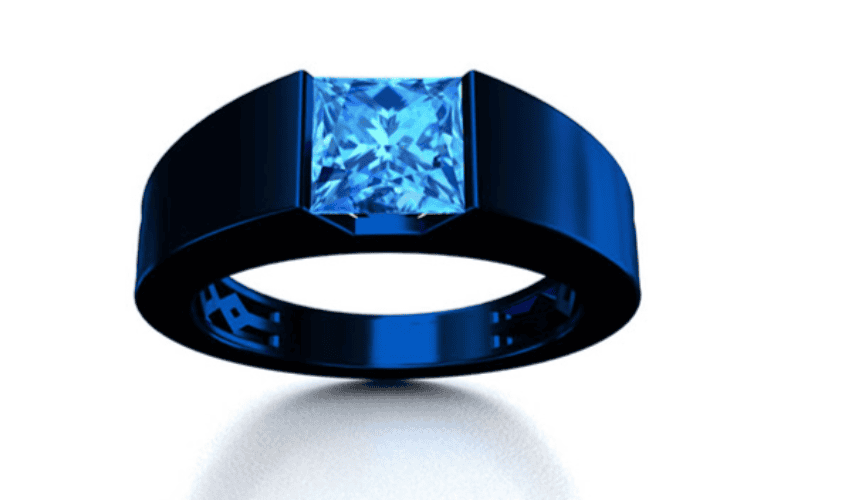
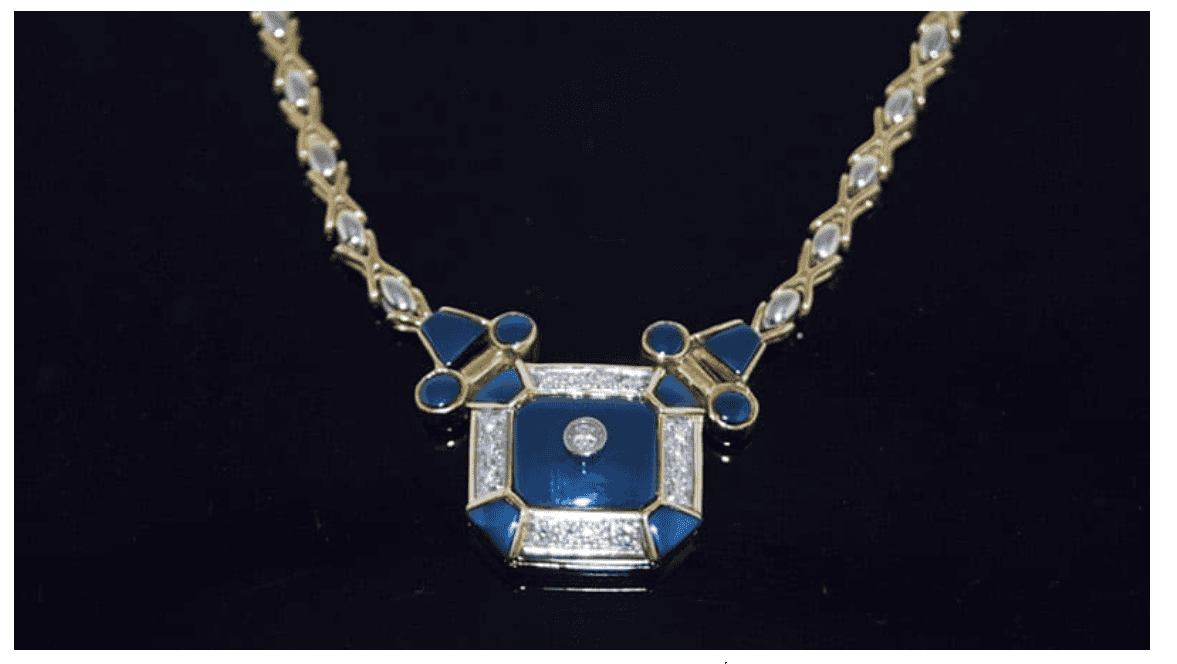
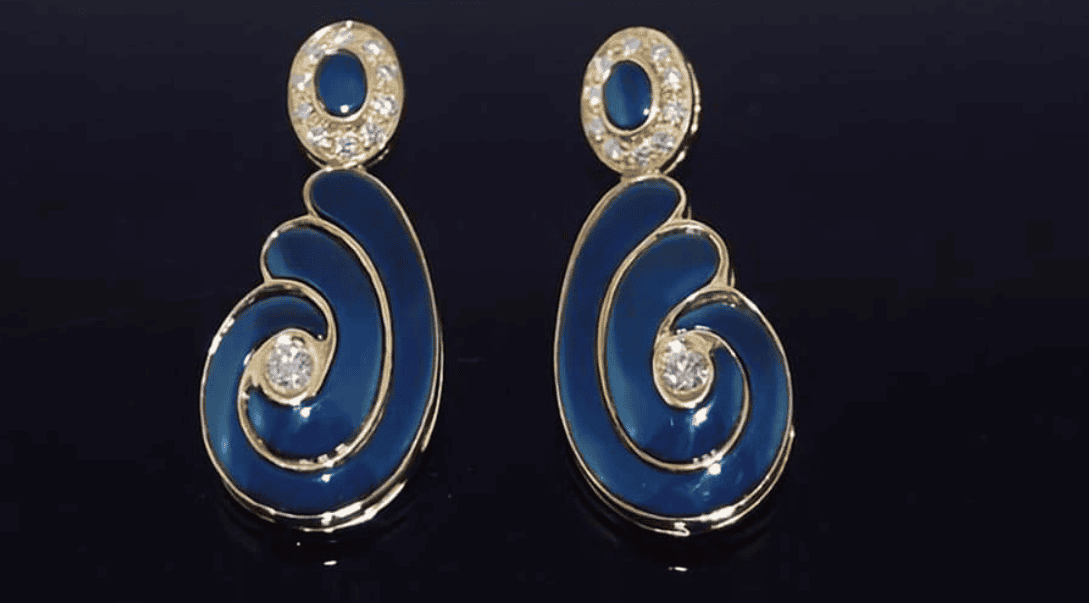
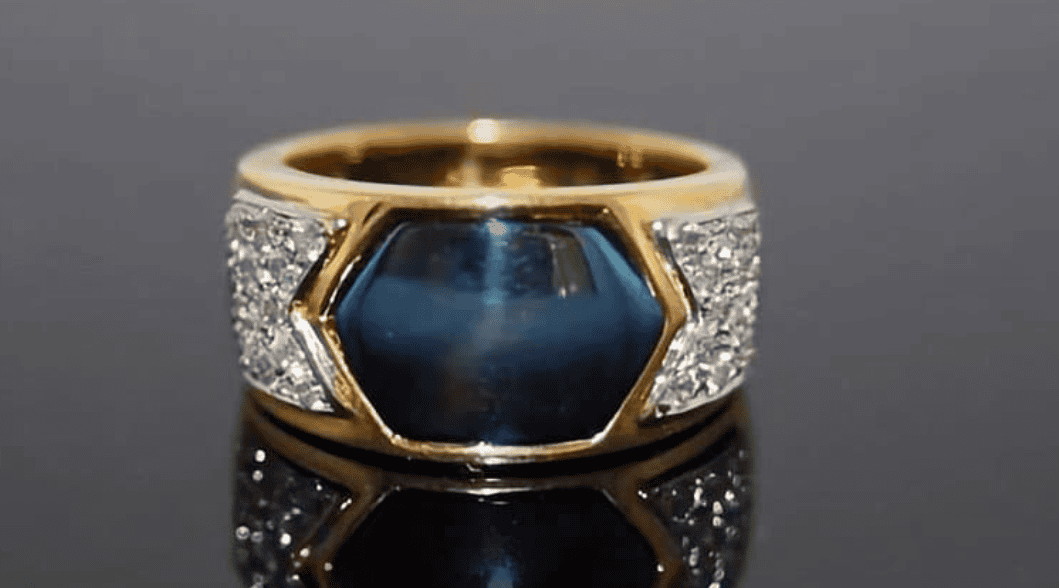
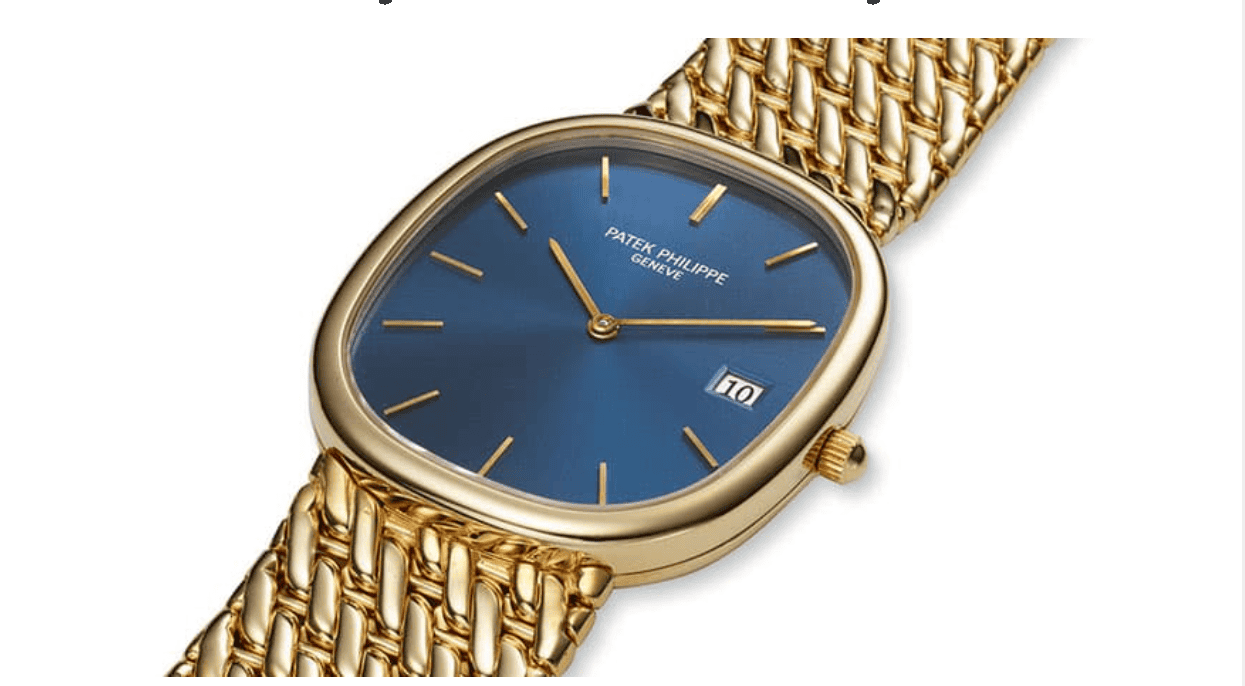
So far blue gold rings, necklaces, bracelets and broches have all been produced, but in vey limited quantities and based on special requests and orders. You can’t buy these in any jewelry shop, online or offline.
Below are example of real blue gold jewelry I found online.

You like blue gold which means you like real, yellow gold as well, right? Check this out next if you answered yes!
What is Blue Gold Vermeil? Is it Real?
Blue gold vermeil is a type of gold jewelry where a thick layer of blue gold is electroplated onto a sterling silver base.
The blue gold layer must be at least 2.5 microns thick and the gold content must be at least 10 karats to be considered true blue gold vermeil.
Blue gold vermeil is real, but extremely rare and you’ll probably never encounter it in a common jewelry shop.
You might be able to go to a professional jeweler and make a custom order. But, it’ll cost you a lot of money as blue gold is extremely rare and very expensive. Most jewelers don’t even work with it as there’s no market for blue gold.
Other popular and more common gold vermeil options are white gold vermeil, rose gold vermeil and the classic yellow gold vermeil.
All great choices!
Is it Possible to Turn Blue Gold into Yellow Gold? How to Make Blue Gold?
Yes, it’s possible to turn blue gold into yellow gold.
First, you need to melt the blue gold alloy. Second, remove indium or gallium from the alloy. Now you’re left with melted yellow gold.
Third, add additional metals to yellow gold to make it harder and more durable. Fourth, reshape the new yellow gold alloy into a jewelry item of your choice.
Turing blue gold into yellow gold is possible, but I recommend you turn to a professional jeweler to help you.
You like blue gold which means you like real, yellow gold as well, right? Check this out next if you answered yes!
Is Blue Gold Hypoallergenic or Allergenic?
Yes, blue gold is hypoallergenic. Yellow gold is hypoallergenic and so are both indium and gallium. This means you won’t have a skin reaction or dermatitis flare if you buy and start wearing blue gold jewelry.
It’s possible to be allergic to gold, though it’s extremely rare. But if you’re one of these people then blue gold will cause skin problems for you.
I suggest you best avoid it.

It’s also possible to be allergic to indium, and one study showed >3% of people are allergic to this metal. Indium usage is rare in jewelry industry so you’d need to get tested to know for sure whether you’re sensitive to it or not.
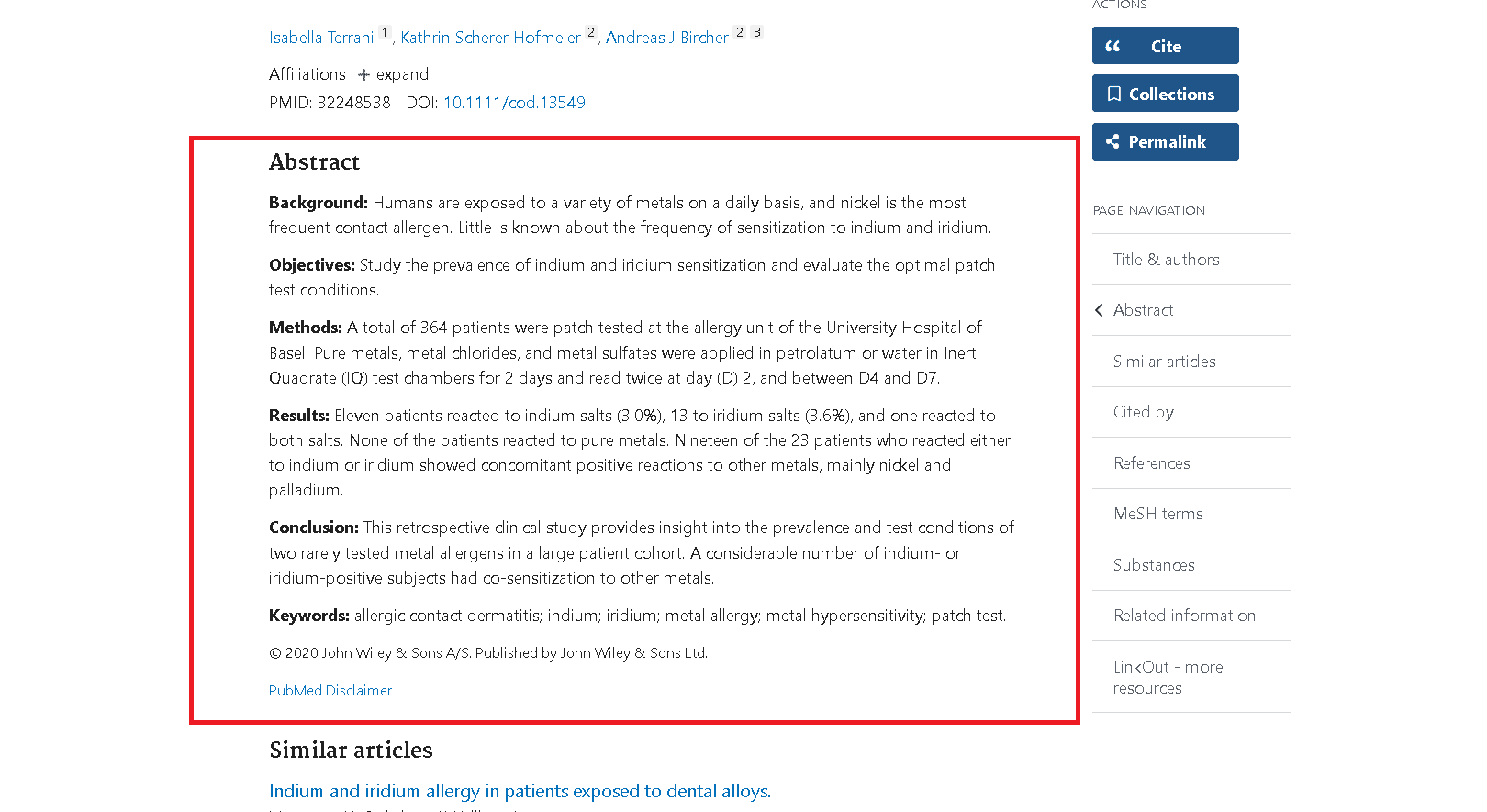
There’re no reports of gallium hypersensitivity so it’s possible that if you’re allergic to indium in blue gold you won’t be allergic to blue gold made with gallium.
You like blue gold which means you like real, yellow gold as well, right? Check this out next if you answered yes!
Is it Possible to Include Blue Gold as Part of a Gold IRA Account?
No, it’s not possible to include blue gold as part of a gold IRA account. Blue gold bullion isn’t IRA-approved.
IRA-approved precious metals are palladium, gold, platinum and silver.
- Silver bullion must be at least 99.9% pure;
- Palladium must be at least 99.95% pure.
- Platinum bullion must be at least 99.95% pure;
- Gold bullion must be 99.5% pure;
Check out Augusta Precious Metals if you’re looking to buy IRA-eligible precious metals and are worried about gold IRA scams. Augusta is a top safe gold investment company in the US and working with them is both secure and fast. They also waive all fees for 10 years for all new customers.
Read my Augusta Precious Metals review next!
Or download their free gold investment guide here!

Do Blue Gold Coins and Bars Exist? Is That Bullion Real?
No, blue gold coins and bars don’t exist. Blue gold is a novelty in the precious metals bullion market and currently you can’t buy and own coins and bars made from this bluish gold alloy.
Blue gold is brittle and crumbles easily. This means it’s unsuitable to be molded into bullion.
The closest product I found online are these blue gold pieces Luciteria sells.
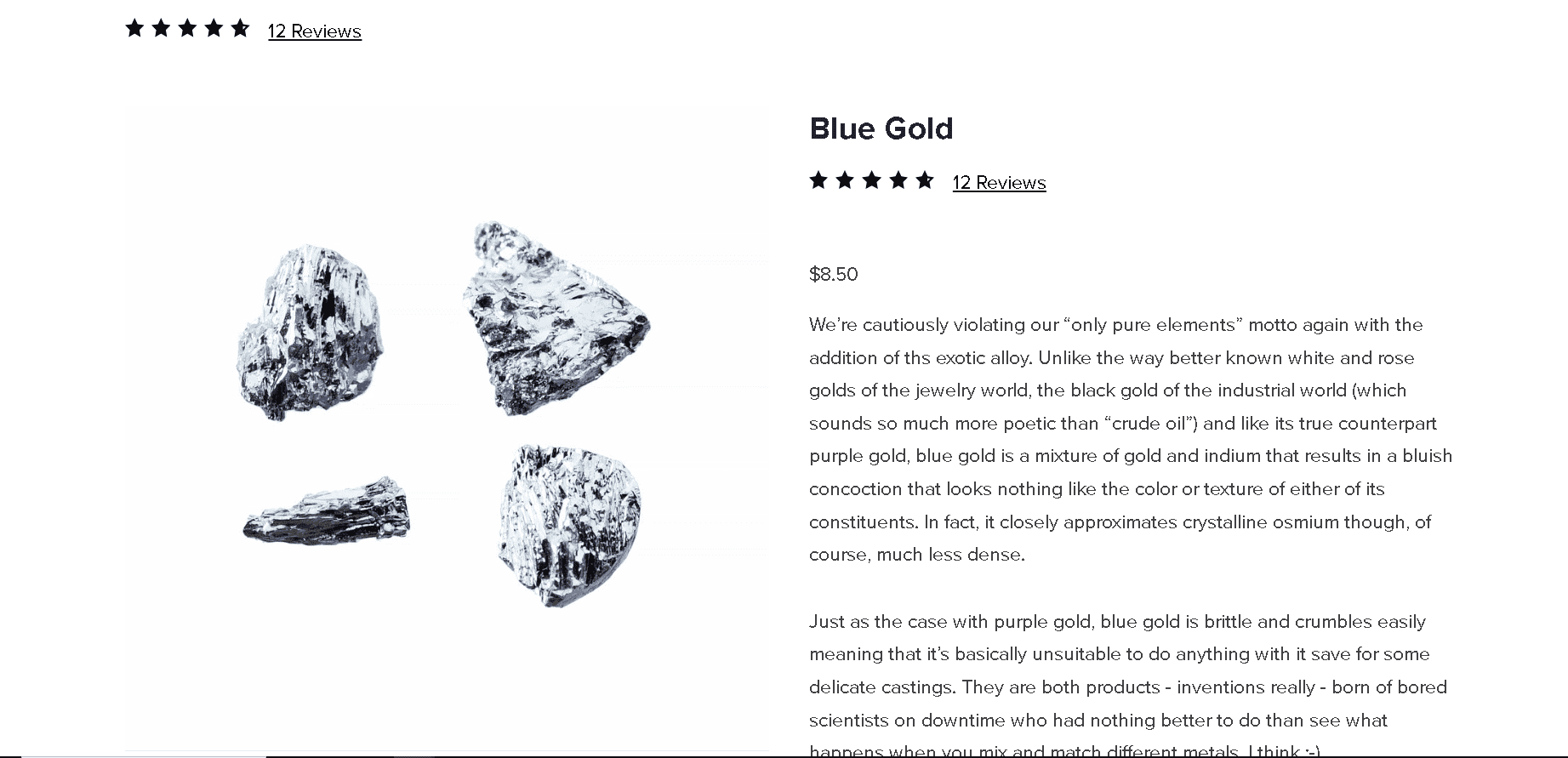
10+ years ago the first blue gold bar was developed. This was a prototype just to show it’s possible and this particular bar isn’t for sale.

You like blue gold which means you like real, yellow gold as well, right? Check this out next if you answered yes!
Blue Gold vs Black Gold- What are the Differences?
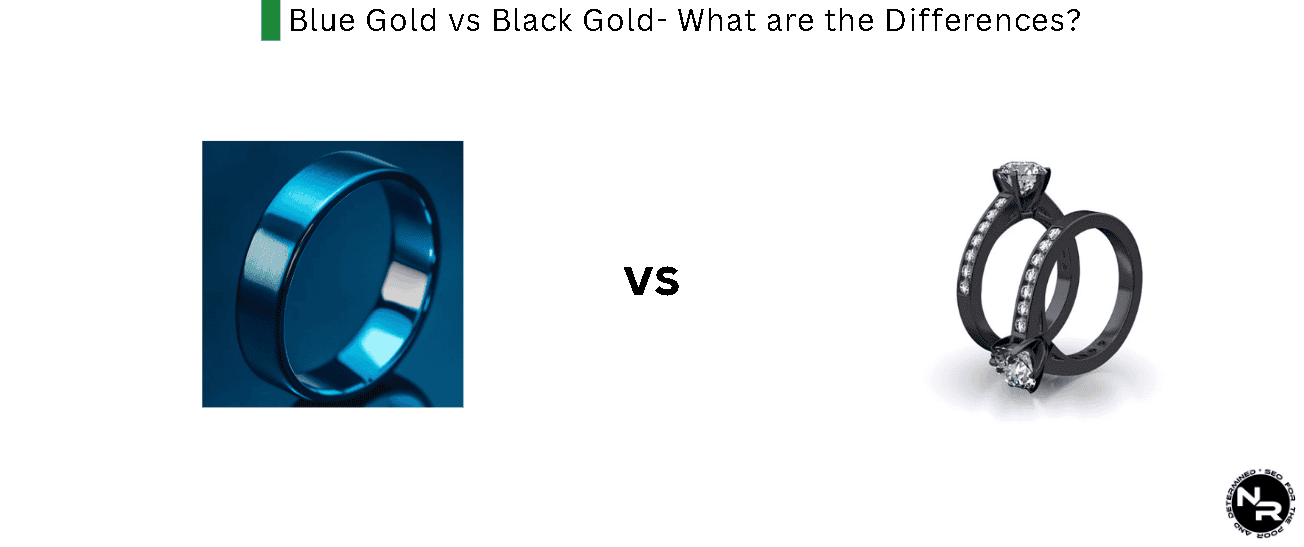
There’re many differences between blue gold and black gold.
Blue gold is an alloy of gold with metals like indium or gallium, resulting in a blue color. Black gold is created by alloying gold with metals like cobalt or ruthenium, or by rhodium plating white gold to create a black finish.
The differences between blue gold and black gold lie in their composition, how the color is achieved, and their typical uses in jewelry. Blue gold is rarer and often used for statement pieces, while black gold is widely used for modern and classic jewelry designs, often appearing as a more modern and versatile alternative to yellow gold.
Both black gold and blue gold are rare, but blue gold is significantly rarer given that you can buy black gold online, while you can’t buy blue gold anywhere.
| Comparison | Blue Gold | Black Gold |
|---|---|---|
| Composition | Yellow gold +gallium or indium. | Yellow gold coated with with a thin layer of a dark metal like rhodium or ruthenium. |
| Color and tarnish resistance | Blue gold tarnishes when blue gold is made from yellow gold and gallium. Blue gold doesn't tarnish when it's made from yellow gold and indium. | Black gold doesn't tarnish because its core is non-tarnishable real gold. |
| Durability and scratch resistance | Blue gold is extremely brittle and not very durable and scratch resistant. | Black gold that has rhodium or ruthenium plating is exceptionally strong, durable and scratch resistant. Electroplated black gold scratches easily. |
| Cost | Blue gold is more expensive than black gold due to uniqueness of this gold alloy and its constituent parts. | Black gold is less expensive than blue gold. |
| Skin tone compatibility | The best skin tone for blue gold is a cool skin tone or a neutral undertone. | The best skin tone for black gold is natural warm, cool, or neutral undertones. |
| Hypoallergenic properties | Blue gold is hypoallergenic to most people. Allergies to indium and gallium are rare, but possible. | Black gold is hypoallergenic. Yellow gold as base is hypoallergenic and both rhodium and ruthenium as coating are non-allergenic. |
You like blue gold which means you like real, yellow gold as well, right? Check this out next if you answered yes!
- Blue Gold: A Mystery- https://alromaizan.com/blog/blue-gold-a-mystery
- Like to have your gold in blue or purple?- https://www.emirates247.com/markets/gold/like-to-have-your-gold-in-blue-or-purple-2011-10-18-1.424144
- Blue Gold: A Guide to the Rarest Gold Color- https://jewelryinformer.com/gold/blue-gold/
- What Is Blue Gold: Your Ultimate Guide- https://www.nobbier.com/blogs/editorial/what-is-blue-gold/
- Blue Gold- https://www.luciteria.com/elements-for-sale/blue-gold
- Oral manifestations of gold allergy- https://pubmed.ncbi.nlm.nih.gov/8288779/
- Indium and iridium: Two rare metals with a high rate of contact sensitization- https://pubmed.ncbi.nlm.nih.gov/32248538/
- What is Blue Gold?-https://www.diamondere.com/blog/introducing-blue-gold-mens-wedding-bands/
- Blue Gold: A Guide to the Rarest Gold Color- https://jewelryinformer.com/gold/blue-gold/
- Value of Black Gold: How Much Is It Worth?- https://lexiejordanjewelry.com/blogs/posts/what-is-black-gold
- What Is Blue Gold: Your Ultimate Guide- https://www.nobbier.com/blogs/editorial/what-is-blue-gold/

Nikola Roza
Nikola Roza is the owner of Nikola Roza- Everything You Can Learn About Precious Metals. He writes for people who love precious metals and jewelry and who're interested in adding gold, silver platinum and palladium to their retirement portfolios. Nikola is passionate about gold IRAs and investing in multiple asset types for a safer financial future. He also runs a successful online jewelry store where you can buy precious metal jewelry and various replicas of famous coins and bars. Learn about Nikola here.