
Disclosure: Some of the links you’ll encounter are unique links. Click and buy something and I’ll earn some money, at zero expense to you. Thank you!
Russian silver hallmarks certify purity, date, and origin using the Zolotnik system (in use from 10th century-1927). Common Russian silver standards include 84 zolotniki (.875 fineness, most common), 88 (.916), 90 (.937), 91 (.947), and 96 (.999 pure).
Russian hallmarking system included four main assay offices: St. Petersburg (crossed anchor and scepter), Riga, Vilnius, and Warsaw. Post-1896, the Kokoshnik mark (woman’s head in traditional Russian headdress) became standard, facing left before 1908 and right after.
Russian silver hallmarks include town mark, assayer’s initials with year, purity/standard mark, and maker’s mark in Cyrillic.
Soviet hallmarks (post-1917/1927) replaced the Zolotnik system with metric standards (875, 916) and used star with hammer and sickle instead of imperial symbols. Modern Russian sterling silver (.925) exists but is relatively rare.
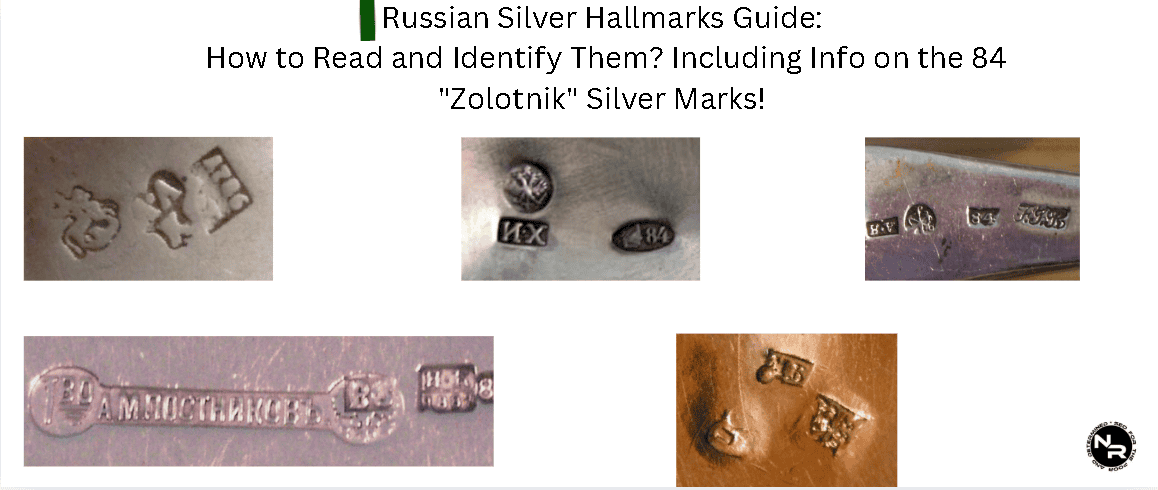
What are Russian Silver Hallmarks? How to Read and Identify Them?
Russian silver hallmarks are official stamps used to certify the purity, date, and origin of silver items, primarily utilizing the Zolotnik system (from the 10th century until 1927).
To read and identify Russian silver hallmarks look for the stamps like Kokoshnik head, Zolotnik number (commonly 84, but there’re others like 88, 91, and 94), assayer’s initials, and Cyrillic maker’s marks.
Russian Empire throughout its history has had many silver assay offices often based in regional cities and each with their district markings. But in 1872 these were all consolidated into a system of four main, government-approved silver assaying institutions (St. Petersburg, Warsaw, Vilnius and Riga).
Below you’ll see examples from all four assay offices along with some modern and vintage silver hallmark samples originating in Russia.
What are Russian Silver Hallmarks from the St. Petersburg Assay Office? How to Read and Identify Them?
Russian silver hallmarks from the St. Petersburg Assay Office are a set of stamped marks on silver items that guarantee their purity, origin, and age.
These hallmarks consist of four main, separate stamps.
- Town Mark. St. Petersburg specifically used a crossed anchor and scepter (often inside a shield) from 1741 to 1896.
- Assay Master’s Mark. Initials of the official in charge, often with the year of production (e.g., “A·Sh” for Alexander Sheviakov).
- Purity/Standard Mark. Primarily 84 (84 zolotniks, which is .875 fineness).
- Maker’s Mark. Cyrillic initials of the silversmith (e.g., “BK” for Butz, “I.P” for Pavlov).
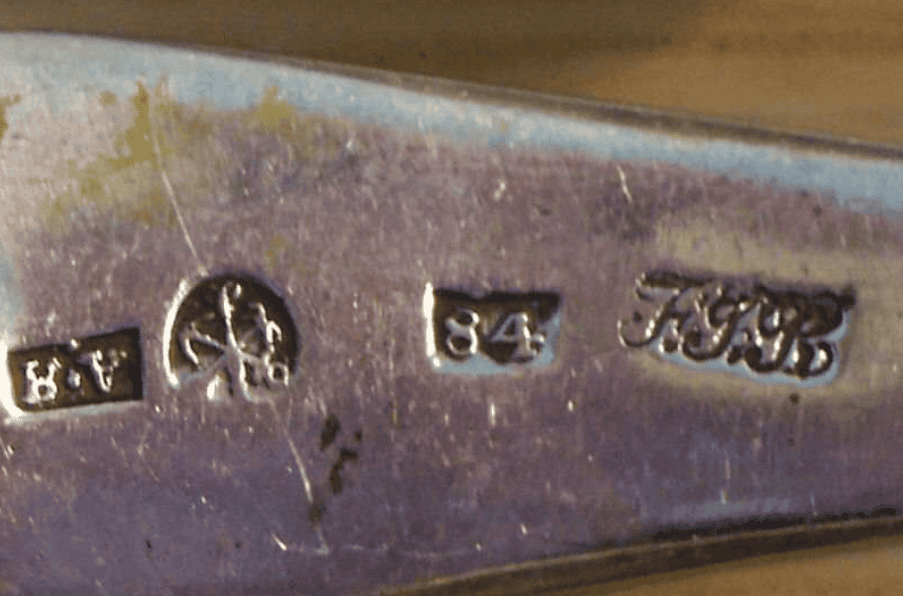
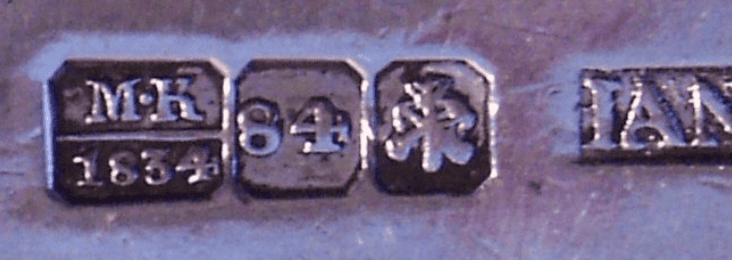
The hallmarks for St. Petersburg assay office changed and evolved over the years.
Starting from 1735, the founding year of St. Petersburg’s silver assay office, and ending in 1740, the mark was a double-headed imperial eagle often accompanied by “СП” or “СПБ”. From late 18th Century (Mid-Late) to 1896 the town mark was two crossed anchors, one for the sea, one for the river, over a scepter (1741-1896).
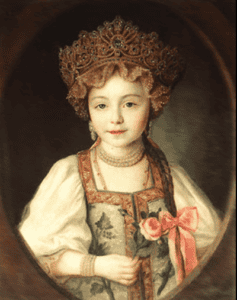
From 1896–1908 (The “Kokoshnik” Era) the standard was a woman’s head wearing a Kokoshnik (traditional Russian headdress) facing left. This mark was usually accompanied by a Greek letter or a symbol indicating St. Petersburg.
In the Late Imperial period (1908–1917) the town mark was a woman’s head (Kokoshnik) facing right accompanied by Greek letter or a symbol indicating St. Petersburg.
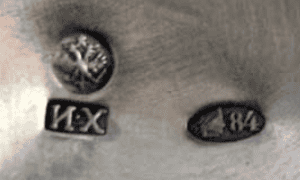
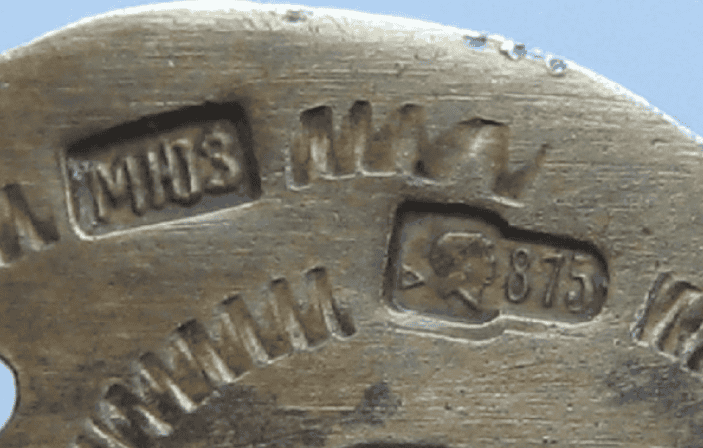
In the Soviet Period (after 1917/1927) the hallmarking system transitioned to the metric system (e.g., 875, 916).
The hallmark was a star with a hammer and sickle, often with a Cyrillic letter for the city (first St. Petersburg, later Leningrad).
Check this out next when you’re done reading my Russian silver hallmarks guide. It’s crucial information you must have, especially if you’re a proud American who worries about the economy and is interested in investing in gold, silver and other precious metals.
What are Russian Silver Hallmarks from the Riga Assay Office? How to Read and Identify Them?
Russian silver hallmarks from the Riga Assay Office are a set of stamped marks on silver items that guarantee their purity, origin, and age.
Russian silver hallmarks from the Riga Assay Office (acting under Imperial Russian jurisdiction) typically consist of a “84” zolotnik standard mark, a Kokoshnik mark (woman’s head in a headdress), and the initials of the assay master or a Greek letter indicating the district.
Often you’ll see the “BB” mark signifying Bernhard Bergholtz, a Riga-based silversmith active between 1922 and 1939, known for creating high-quality silver items often featuring Art Nouveau, or Jugendstil, floral engravings.
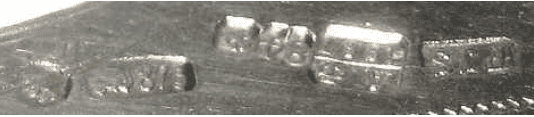
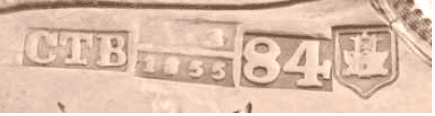
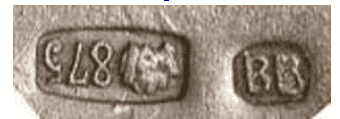
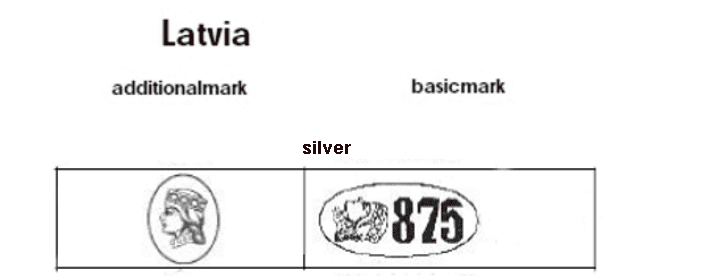
Latvia gained independent form the Soviet Union in 1990, and since then their silver hallmarks changed to reflect the political change.
Nowadays Riga silver features “Milda,” the Latvian Goddess of Freedom, wearing a crown within a rectangle or circle, representing the assay office mark. High-quality Latvian silver is also marked with fineness numbers 875 or 916.
Check this out next when you’re done reading my Russian silver hallmarks guide. It’s crucial information you must have, especially if you’re a proud American who worries about the economy and is interested in investing in gold, silver and other precious metals.
What are Russian Silver Hallmarks from the Vilnius Assay Office? How to Read and Identify Them?
Russian silver hallmarks from the Vilnius Assay Office are a set of stamped marks on silver items that guarantee their purity, origin, and age.
Vilnius was a key provincial capital in the Russian Empire (specifically within the Kovno/Vilna Guberniyas) from the early 19th century until 1918 and silver produced there was subject to imperial Russian standards, featuring specific town marks, assayer initials, and, later, “Kokoshnik” marks.
A typical 19th-century Russian silver item from Vilnius has stamps containing elements you’ll see below.
- Assayer’s initials (with year). The initials of the regional assayer, often with the date underneath (e.g., “1867”).
- Town Mark. A special symbol representing the city. For Vilnius, this was a specific city coat of arms or a city-specific mark indicating it was vetted within that provincial assay district.
- Fineness (Zolotnik) Mark. The standard measurement of purity, most commonly 84 (84/96ths, or 875/1000 silver).
- Maker’s Mark. The initials or name of the silversmith, often in Cyrillic.
See some examples below.

Check this out next when you’re done reading my Russian silver hallmarks guide. It’s crucial information you must have, especially if you’re a proud American who worries about the economy and is interested in investing in gold, silver and other precious metals.
What are Russian Silver Hallmarks from the Warsaw Assay Office? How to Read and Identify Them?
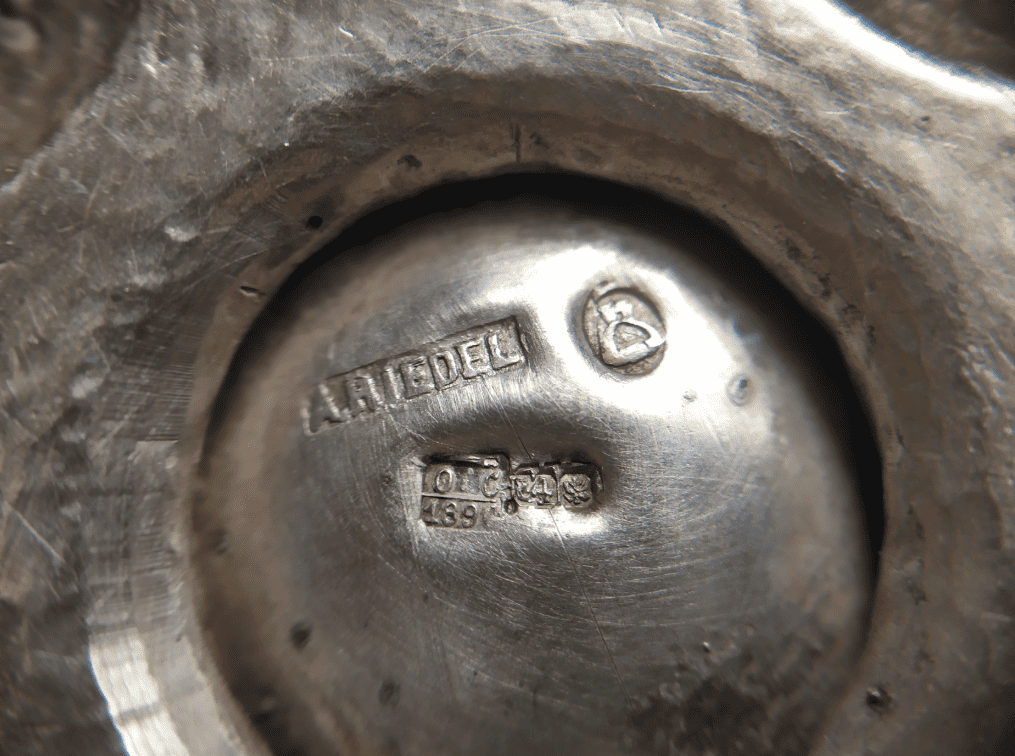
Russian silver hallmarks from the Warsaw Assay Office are a set of stamped marks on silver items that guarantee their purity, origin, and age. These silver items were required to follow Russian imperial standards, featuring unique combinations of Polish-made artistry with Russian imperial symbols and Cyrillic lettering. This period lasted from roughly 1850 and 1915.
Russian hallmarks from the Warsaw assay office are listed below.
- The Fineness (Zolotnik) Mark. Pre-1900s, this is usually 84 (representing 875/1000 purity), which was standard for Russian silver.
- Assayer’s Initials & Date. Often, a two-letter Cyrillic mark with the year (e.g., “OC 1885”).
- The Town/Regional Mark. The Warsaw Assay Office used specific identifiers, which were often integrated with the assayer’s initials.
- The Kokoshnik Mark (Post-1896). A woman’s head in a traditional Russian headdress (kokoshnik) facing left (before 1908) or right (after 1908). Warsaw silver items might also be marked with a Greek letter indicating the district.
- Maker’s Mark. Often a Cyrillic monogram, but Warsaw jewelry makers were unusual in that they frequently added their own unique symbols or trademarks (e.g., B. Buch used a star of David; J. Goldman used an elephant).
Check this out next when you’re done reading my Russian silver hallmarks guide. It’s crucial information you must have, especially if you’re a proud American who worries about the economy and is interested in investing in gold, silver and other precious metals.
What are Russian Silver Hallmarks for Sterling Silver?
Russian silver hallmarks for sterling silver don’t exist because of a different silver purity measurement system used in Russia.
In Russia silver content was measured in zolotniki.
Common Russian silver standards are listed below.
- 84 zolotniki = 875/1000 (.875).
- 88 zolotniki = 916/1000 (.916).
- 90 zolotniki = 937/1000 (.937).
- 91 zolotniki = 947/1000 (.947).
- 96 zolotniki = 1000/1000 (.999)
These marks are accompanied by the assay office mark, maker mark and date of testing.
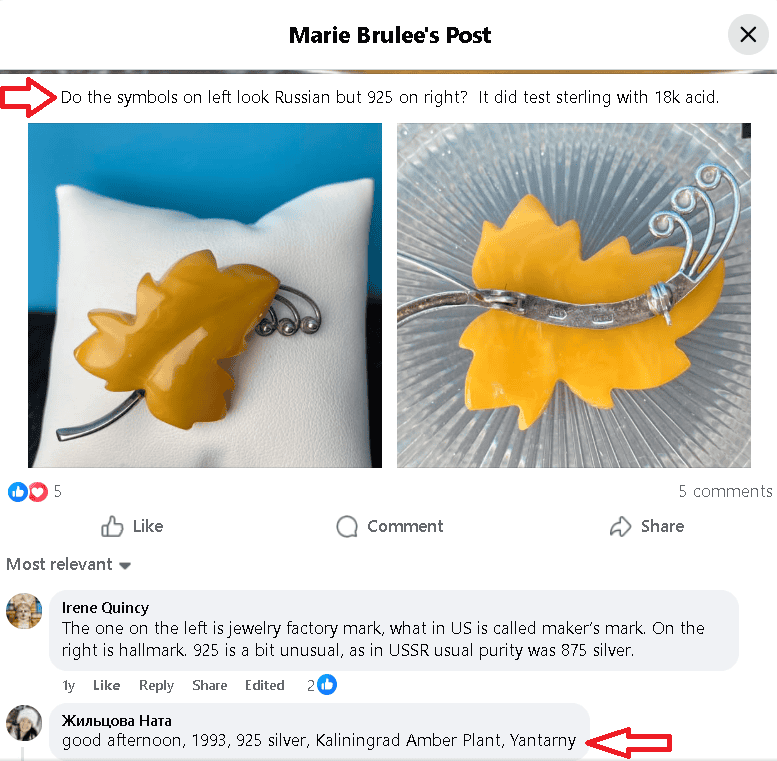
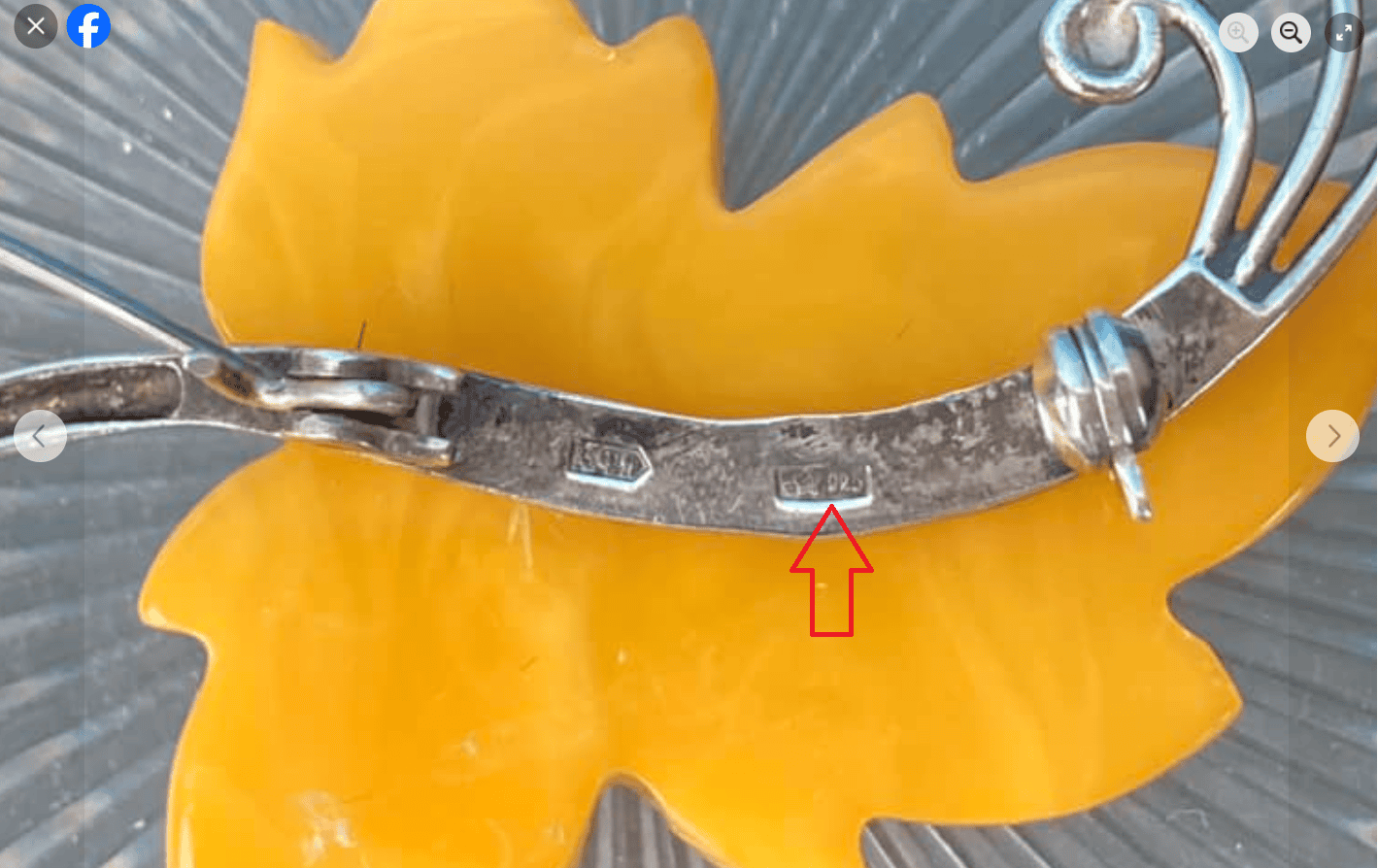
Everything I said above holds true for Russian silver hallmarks from Imperial and Soviet periods. However, in modern times true Russian sterling silver exists, though relatively rare.
I was able to find one Russian sterling silver item made in 1993 in Kaliningrad. See it below.
Check this out next when you’re done reading my Russian silver hallmarks guide. It’s crucial information you must have, especially if you’re a proud American who worries about the economy and is interested in investing in gold, silver and other precious metals.
What are Some Soviet Russian Silver Hallmarks? How are They Different From the Russian Empire’s Silver Hallmarks?
Soviet silver hallmarks are very different compared to Russian silver hallmarks.
They differ from Imperial marks by replacing the old zolotnik system and by removing the czarist Kokoshnik head and imperial monograms. Soviet Union used a standardized, centralized, and ideologically branded silver hallmarking system (star/star + hammer and sickle) rather than regional, artisan-focused stamps.
Here’s my guide to Soviet silver hallmarks for you to dig deeper, and below are some examples of Soviet-style silver hallmarks.
| Feature | Russian silver | Soviet silver |
|---|---|---|
| Purity system | Zolotnik standard | Decimal |
| Symbolism | Woman's head in a kokoshnik headdress. | Hammer and sickle or star. |
| Regional/centralized hallmarking system | Regional hallmarking offices. | Centralized system for the entire Soviet Union |
| Maker marks | Cyrillic initials of the specific maker/workshop. | State-run factory codes. |
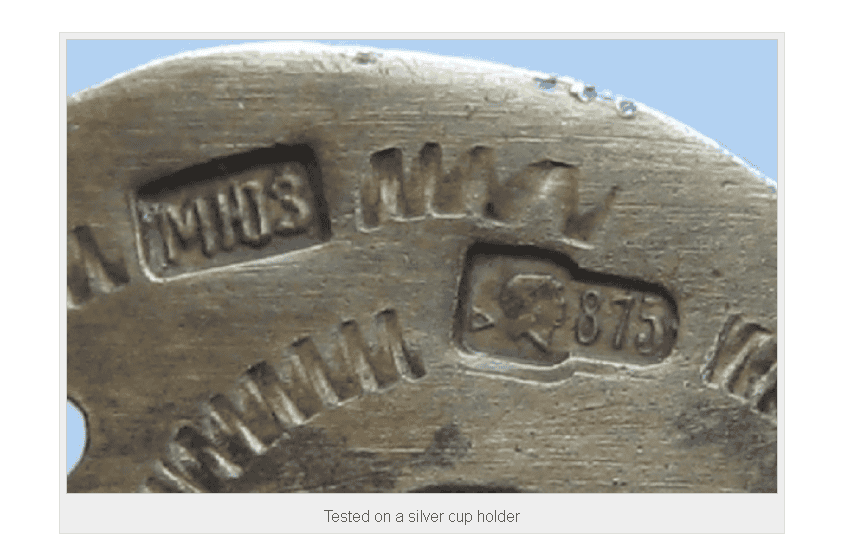
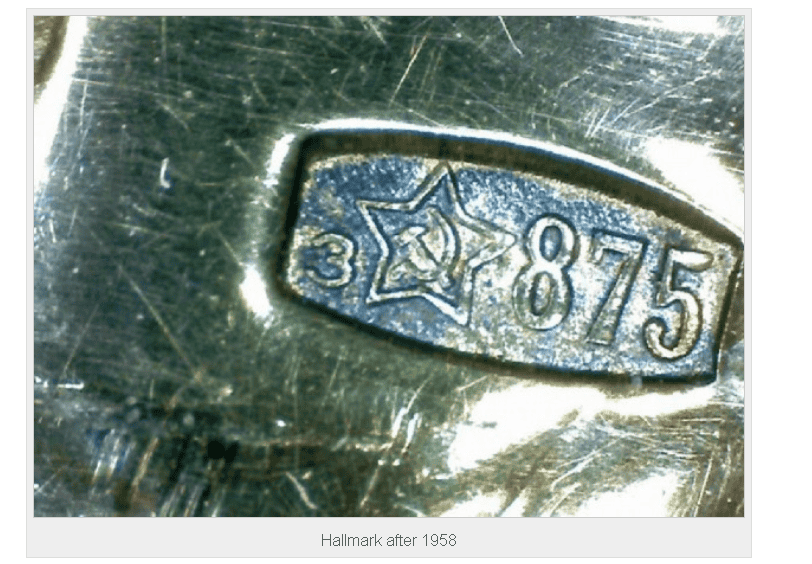
In modern Russian Federation official silver marks often feature a stylized woman’s head (reminiscent of the Kokoshnik) along with the metric fineness number.
Check this out next when you’re done reading my Russian silver hallmarks guide. It’s crucial information you must have, especially if you’re a proud American who worries about the economy and is interested in investing in gold, silver and other precious metals.
- Kokoshnik- https://en.wikipedia.org/wiki/Kokoshnik
- – THE DIRECTORY OF SILVER HALLMARKS FROM RUSSIA –https://www.silvercollection.it/russiansilverhallmark.html
- Hallmarking silver in the USSR how to read the signs on the marking- https://soviet-art.ru/hallmarking-silver-in-the-ussr-how-to-read-the-signs-on-the-marking/
- Russian silver hallmark from the Riga assay office- https://www.silvercollection.it/DICTIONARYEUHALLMARKLATVIA.HTML
- Russian silver hallmarks from Vilnius- https://www.silvercollection.it/DICTIONARYEUHALLMARKLITHUANIA.HTML
- 84 hallmark WARSAW- https://www.925-1000.com/forum/viewtopic.php?t=56111

Nikola Roza
Nikola Roza is the owner of Nikola Roza- Everything You Can Learn About Precious Metals. He writes for people who love precious metals and jewelry and who're interested in adding gold, silver platinum and palladium to their retirement portfolios. Nikola is passionate about gold IRAs and investing in multiple asset types for a safer financial future. He also runs a successful online jewelry store where you can buy precious metal jewelry and various replicas of famous coins and bars. Learn about Nikola here.
