
Disclosure: Some of the links you’ll encounter are unique links. Click and buy something and I’ll earn some money, at zero expense to you. Thank you!
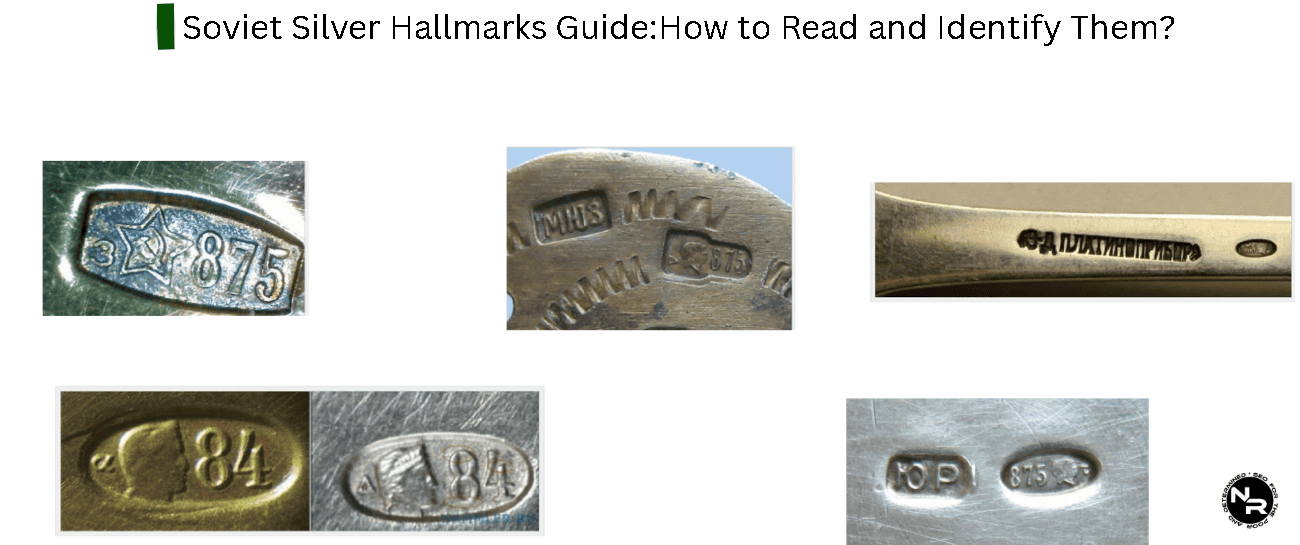
Soviet silver hallmarks were official stamps guaranteeing silver purity, origin, and age in the USSR.
Until 1927, they followed Imperial Russian standards using the Kokoshnik (woman’s head in headdress). A new system adopted in 1927 featured a worker holding a hammer, Greek letters indicating assay offices, and purity numbers.
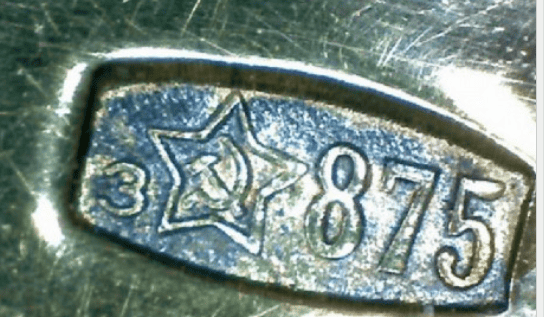
In June 1958, the design changed to hammer and sickle within a five-pointed star, initially raised (convex) until 1965, then recessed.
Soviet hallmarks differed from Imperial marks by removing czarist symbols and using standardized communist imagery. After the USSR dissolved in 1991, the Russian Federation adopted new hallmarks in 1994, reinstating the Kokoshnik facing right with metric fineness numbers.
What are Soviet Silver Hallmarks?
Soviet silver hallmarks are official markings stamped on silver items in the USSR to guarantee purity, origin, and age.
Soviet silver stamps succeeded Russian Imperial silver hallmarks, thought the transition wasn’t as smooth as reading this sentence.
Silver hallmarking in the USSR was carried out according to the rules introduced by the assay charter of tsarist Russia until 1927. This means silver purity was certified by a stamp in the form of a woman’s head in a kokoshnik, enclosed in shields of various shapes (round, rectangular, oval or in the form of a hammer).
A new branding system was adopted in 1927 and this system was in effect for the next thirty years. During that time silver items produced in USSR that corresponded to the officially established samples were marked with the hallmark of an assaying institution. The authenticity of the product was confirmed by a relief of a worker holding a hammer on his shoulder.
To the worker relief was added a Greek letter representing the assay office that did the testing along with a number indicating the purity level.
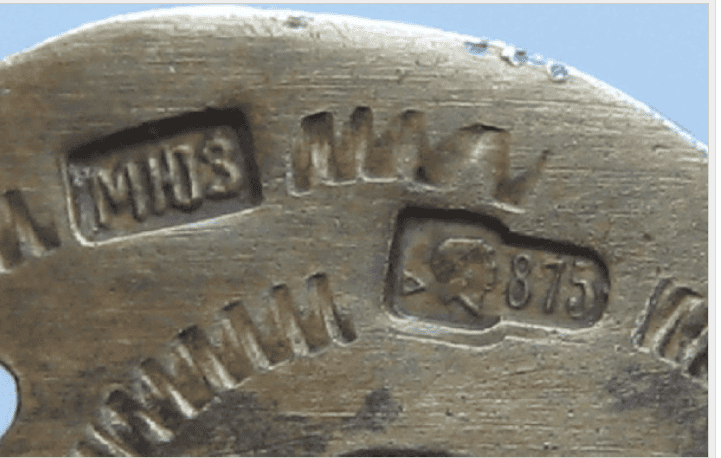
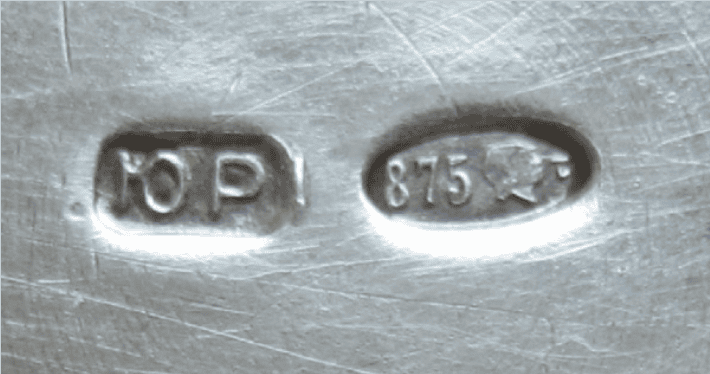
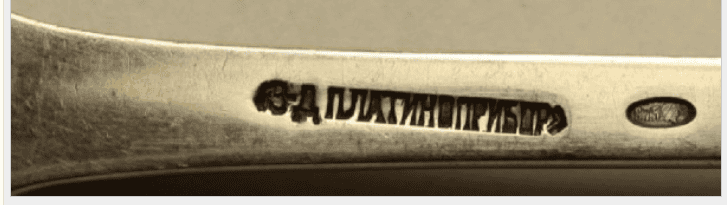
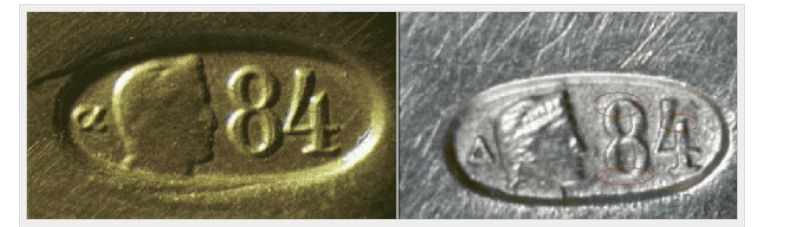
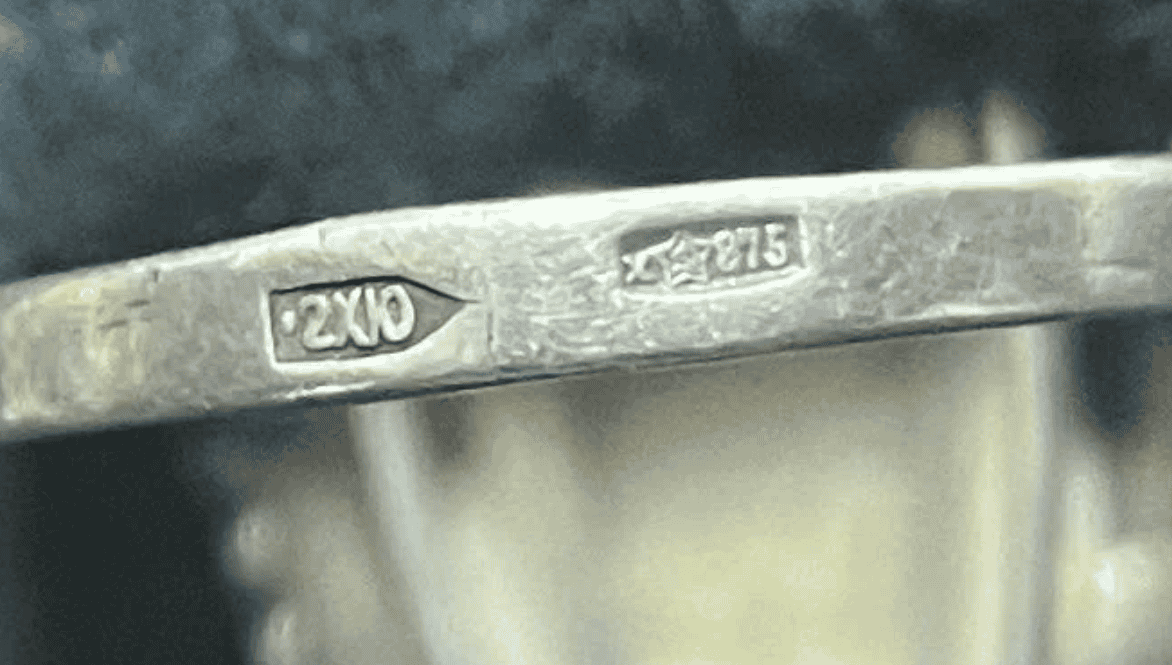
In June 1958, the Soviet metal hallmarking system underwent another revision. The design was modified to feature a hammer and sickle positioned within a five-pointed star.
Initially, until 1965, the marking was raised (convex), but it was later changed to an indented (recessed) design, as this style proved easier to reproduce when items required restoration after significant wear.
The assay office identification code was marked using Russian letters, and occasionally it appeared as a pattern of lines and dots arranged in specific sequences.
Check this out next when you’re done reading my Soviet silver hallmarks guide.
It’s crucial information you must have, especially if you’re a proud American with a keen interest in economy and are curious about investing precious metals.
How are Soviet Silver Hallmarks Different From Imperial Russian Silver Hallmarks?
Soviet silver hallmarks look different from Russian Imperial silver markings because they replaced the old zolotnik system, removed the czarist Kokoshnik head and the imperial monograms.
These old symbols of a dismantled empire were replaced with a standardized, centralized, and ideologically branded hallmarking system (star + hammer and sickle).
See the table below for more details on the difference between these two silver hallmarking systems.
| Feature | Russian silver | Soviet silver |
|---|---|---|
| Purity system | Zolotnik standard | Decimal |
| Symbolism | Woman's head in a kokoshnik headdress. | Hammer and sickle or star. |
| Regional/centralized hallmarking system | Regional hallmarking offices. | Centralized system for the entire Soviet Union |
| Maker marks | Cyrillic initials of the specific maker/workshop. | State-run factory codes. |
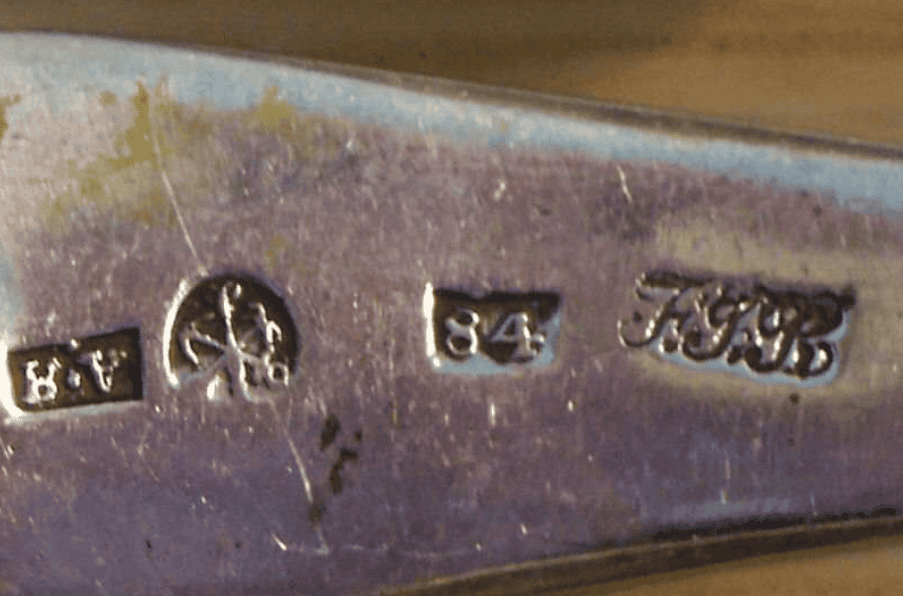
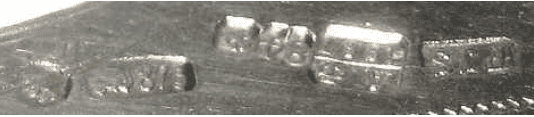
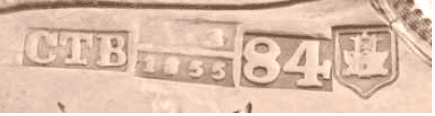
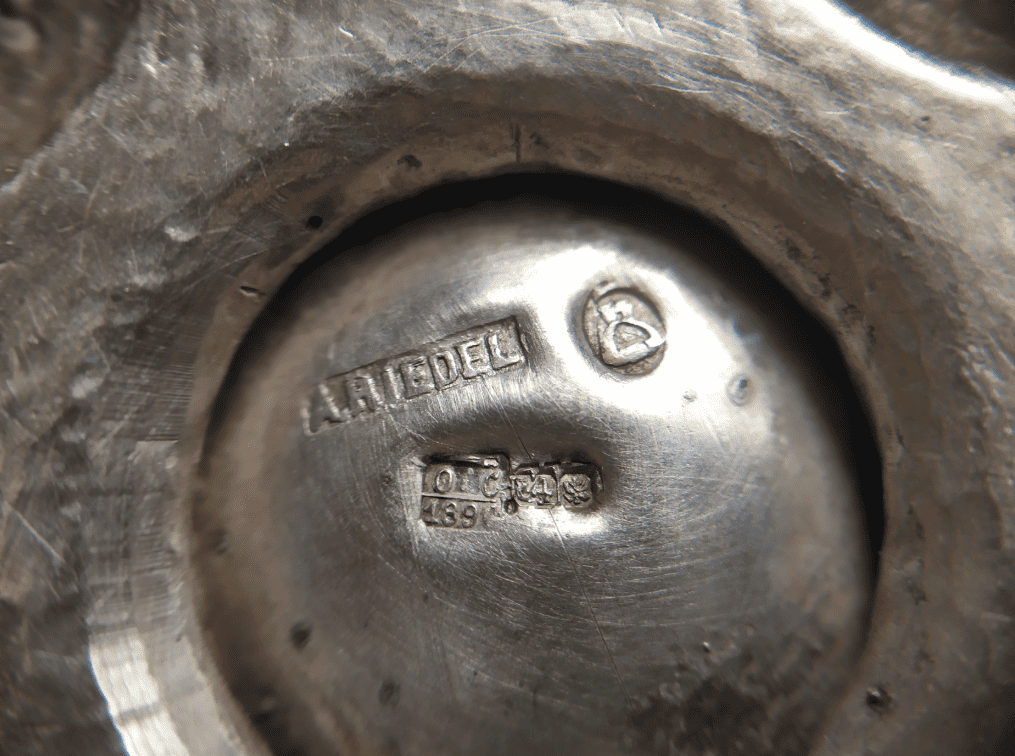
And here’re some Russian silver hallmarks from the Imperial period so you can visually spot the key differences between them.
I included silver hallmarks from all four main assay offices of the Russian Empire (St. Petersburg, Warsaw, Vilnius and Riga).
Notice how there’re no stars, workers in helmets, sickles and hammers anywhere?

Check this out next when you’re done reading my Soviet silver hallmarks guide.
It’s crucial information you must have, especially if you’re a proud American with a keen interest in economy and are curious about investing precious metals.
When Did the Modern Russian State (Russian Federation) Abandon Soviet-Style Hallmarks for its Own?
The modern Russian Federation formally abandoned Soviet-style silver hallmarks for its own in 1994.
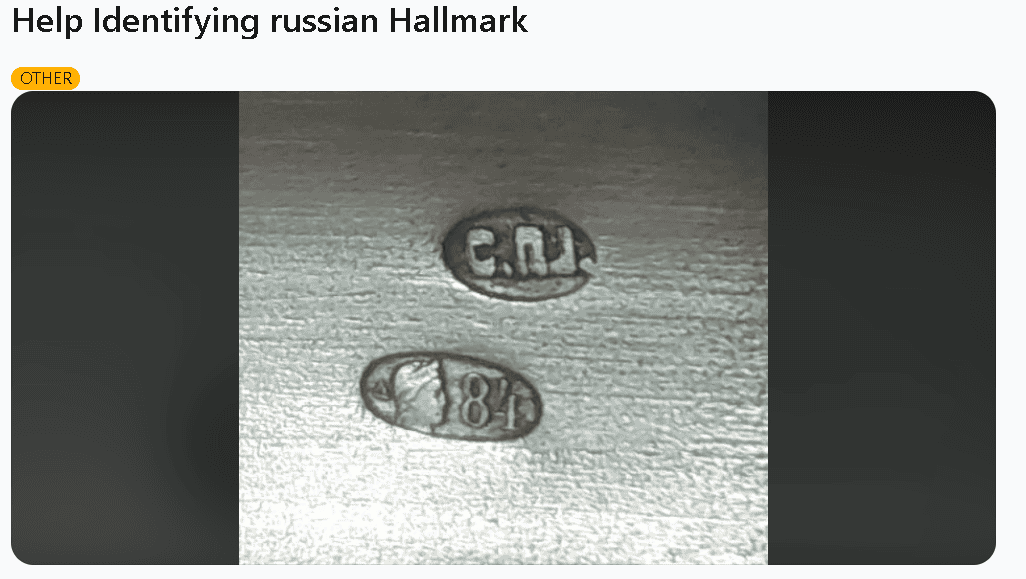
The Soviet Union dissolved in December 1991, but it took three years for the star with hammer and sickle to be replaced with new official hallmarks. The new hallmark featured a “kokoshnik” (a woman’s head wearing a traditional Russian headdress) facing to the right, similar to the Imperial-era mark, but updated for the new Russian Federation.
Also present are the metric fineness number to indicate silver purity.
Here’s an example below, though this one lacks the fineness number.
Check this out next when you’re done reading my Soviet silver hallmarks guide.
It’s crucial information you must have, especially if you’re a proud American with a keen interest in economy and are curious about investing precious metals.
- Hallmarking silver in the USSR how to read the signs on the marking- https://soviet-art.ru/hallmarking-silver-in-the-ussr-how-to-read-the-signs-on-the-marking/
- Help Identifying Russian Hallmark- https://www.reddit.com/r/Hallmarks/comments/1f1kxr1/help_identifying_russian_hallmark/
- Anyone know what these stamps mean?- https://www.reddit.com/r/Antiques/comments/16tfrlm/anyone_know_what_these_stamps_mean/
- THE DIRECTORY OF SILVER HALLMARKS FROM RUSSIA –https://www.silvercollection.it/russiansilverhallmark.html

Nikola Roza
Nikola Roza is the owner of Nikola Roza- Everything You Can Learn About Precious Metals. He writes for people who love precious metals and jewelry and who're interested in adding gold, silver platinum and palladium to their retirement portfolios. Nikola is passionate about gold IRAs and investing in multiple asset types for a safer financial future. He also runs a successful online jewelry store where you can buy precious metal jewelry and various replicas of famous coins and bars. Learn about Nikola here.
