
Disclosure: Some of the links you’ll encounter are affiliate links. If you click and buy something, I’ll get a commission. If you’re reading a review of some precious metals company, please understand that some of the links are affiliate links that help me pay my bills and write about what I love with no extra cost to you. Thank you!
British silver hallmarks are government-regulated stamps on silver items that guarantee purity, origin, and age, preventing fraud since medieval times.
Key hallmark types include: Standard Mark (Lion Passant for .925 sterling silver, Seated Britannia for .958 Britannia silver), Assay Office Mark indicating testing location, Date Letter showing the year, Maker’s Mark with silversmith initials, and Duty Mark (1784-1890) showing tax payment.
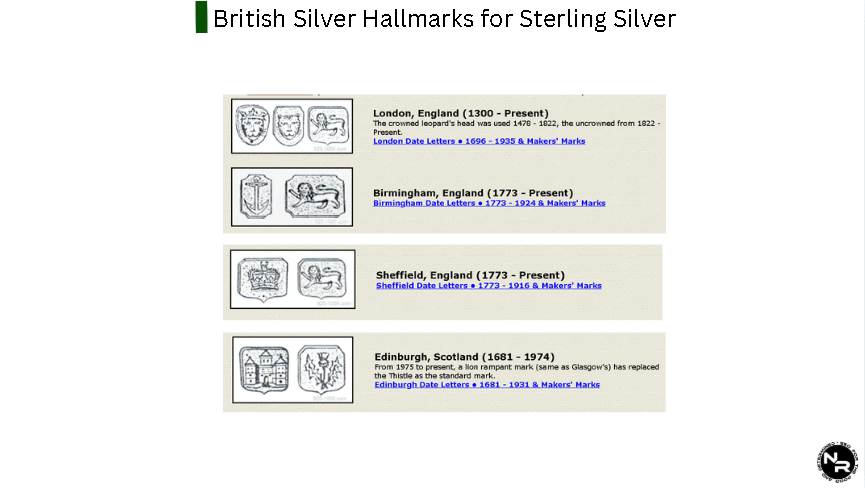
Major British assay offices have distinct marks. Sheffield uses a Crown (1773-1973) or Tudor Rose (1973-present). Birmingham displays an Anchor (since 1773). London features a Leopard’s Head (crowned pre-1821, uncrowned after). Edinburgh shows a three-towered Castle with Thistle.
Complete hallmarks typically combine these stamps to provide comprehensive authentication.
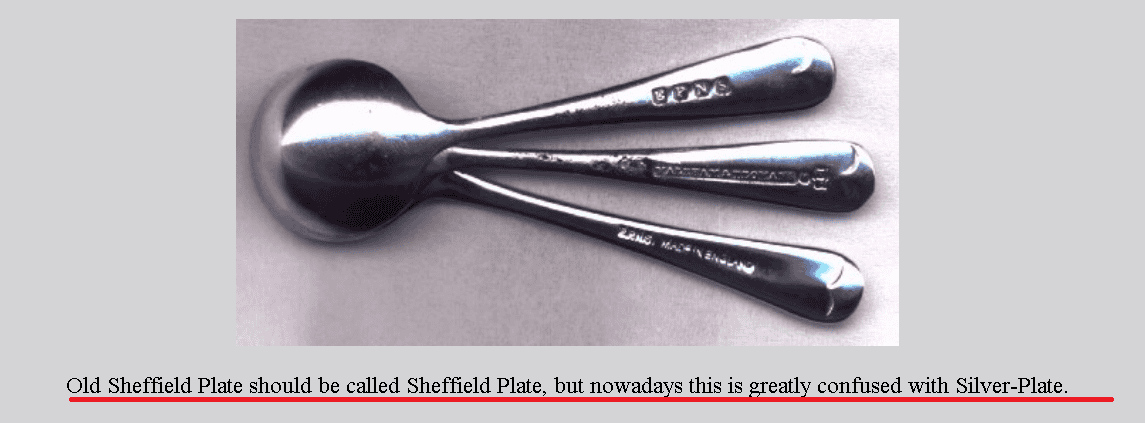
It’s important not to confuse genuine Sheffield silver with Sheffield Plate (EPNS), which lacks official hallmarks despite similar-looking marks.
- What are British Silver Hallmarks? How Many Types are There and How to Identify Them?
- What are British Silver Hallmarks from the Sheffield Assay Office? How to Identify Them?
- What are British Silver Hallmarks from the Birmingham Assay Office? How to Identify Them?
- What are British Silver Hallmarks from the London Assay Office? How to Identify Them?
- What are British Silver Hallmarks from the Edinburgh Assay Office? How to Identify Them?
- What are British Silver Hallmarks for Sterling Silver?
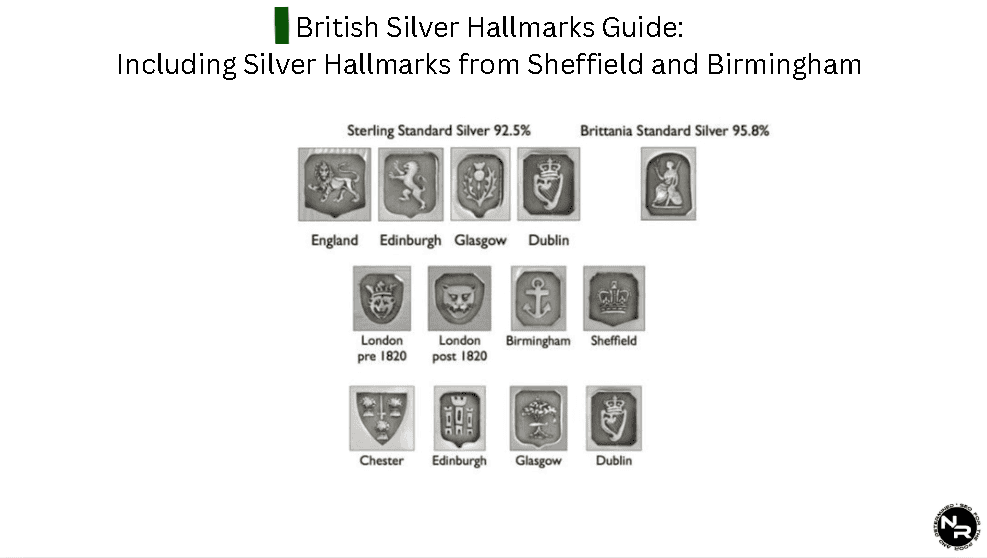
Table of Contents
What are British Silver Hallmarks? How Many Types are There and How to Identify Them?
British silver hallmarks are a set of stamped marks on silver items that guarantee their purity, origin, and age.
These markings are prescribed and regulated by UK’s government-authorized assay offices and some of them have been used for centuries to prevent fraud, identify manufacturers and silver purity levels.
Key aspects of British silver hallmarks are:
- Standard Mark (Purity). It identifies the silver content. The most common ones are the Lion Passant for sterling silver (.925 silver) and Seated Britannia for Britannia silver (.958 silver).
- Assay Office Mark (Town Mark). It indicates where the item was tested. Common marks include a Leopard’s Head (London), Anchor (Birmingham), Crown (Sheffield), and Thistle (Edinburgh).
- Date Letter. Often, stylized letter representing the specific year the item was hallmarked.
- Maker’s Mark. Initials of the individual silversmith or firm that produced the piece.
- Duty Mark. A profile of the reigning monarch, found on items made between 1784 and 1890, indicating tax was paid.
What are British Silver Hallmarks from the Sheffield Assay Office? How to Identify Them?
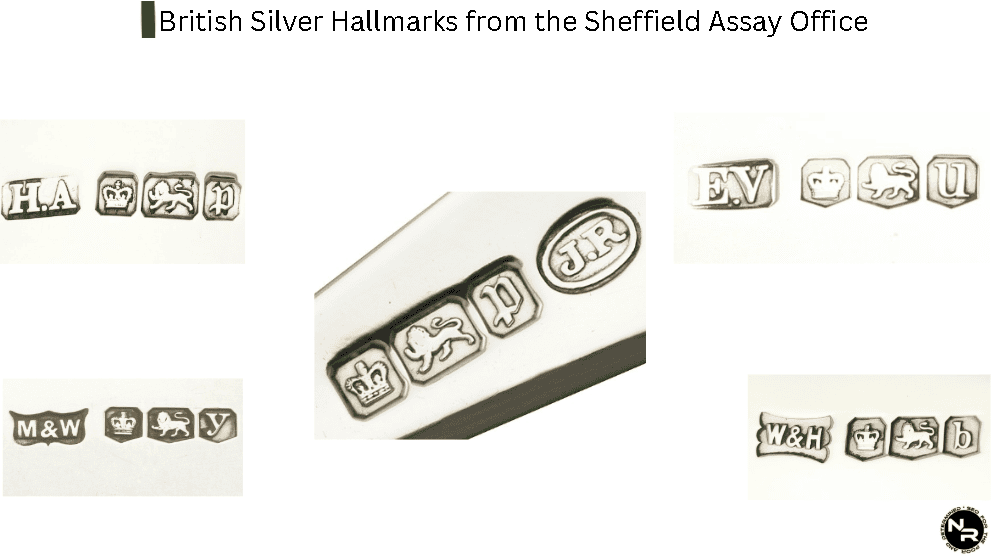
British silver hallmarks from the Sheffield Assay Office (established 1773) are official stamps guaranteeing silver purity. These stamps are identified identified by a Crown (1773–1973) or a Tudor Rose (1973–present) town mark.
Silver pieces assayed and hallmarked at Sheffield also often carry additional markings, usually a sponsor’s mark and date letter and a monarch’s head which is a duty mark that signifies tax payment.
This one is optional and not all Sheffield silver pieces you encounter will have it.
Here are examples of Sheffield silver hallmarks. You can see the obligatory crown mark accompanied by lion passant for sterling silver + some sponsor marks.
Note: don’t confuse genuine Sheffield silver with Sheffield Plate (EPNS). Electro Plated Nickel Silver items often have marks that look like silver, but aren’t stamped with the official Crown/Rose.
What are British Silver Hallmarks from the Birmingham Assay Office? How to Identify Them?
British silver hallmarks from the Birmingham Assay Office are official stamps guaranteeing silver purity. Birmingham-specific hallmark is an anchor symbol, adopted upon the office’s opening in 1773.
Besides the obligatory anchor mark, other common stamps are a sponsor’s mark and date letter and a monarch’s head, a duty mark which signifies tax payment.
Lion passant and seated Britannia markings are also common given the popularity of sterling silver and Britannia silver.
See example below of a Birmingham-assayed sterling silver item that was made by Nathaniel Mills in the mid 1840s.

- Maker’s Mark: The letters “N.M” in a rectangle, refer to Nathaniel Mills.
- Standard: The traditional lion passant meaning it is 925, Sterling silver.
- Duty Stamp: A portrait of a young Queen Victoria.
- Date Letter: A “W” in an artistic font. This points to Birmingham between 1845 and 1846.
- Assay Office: The anchor stamp represents the Birmingham Assay Office.
What are British Silver Hallmarks from the London Assay Office? How to Identify Them?
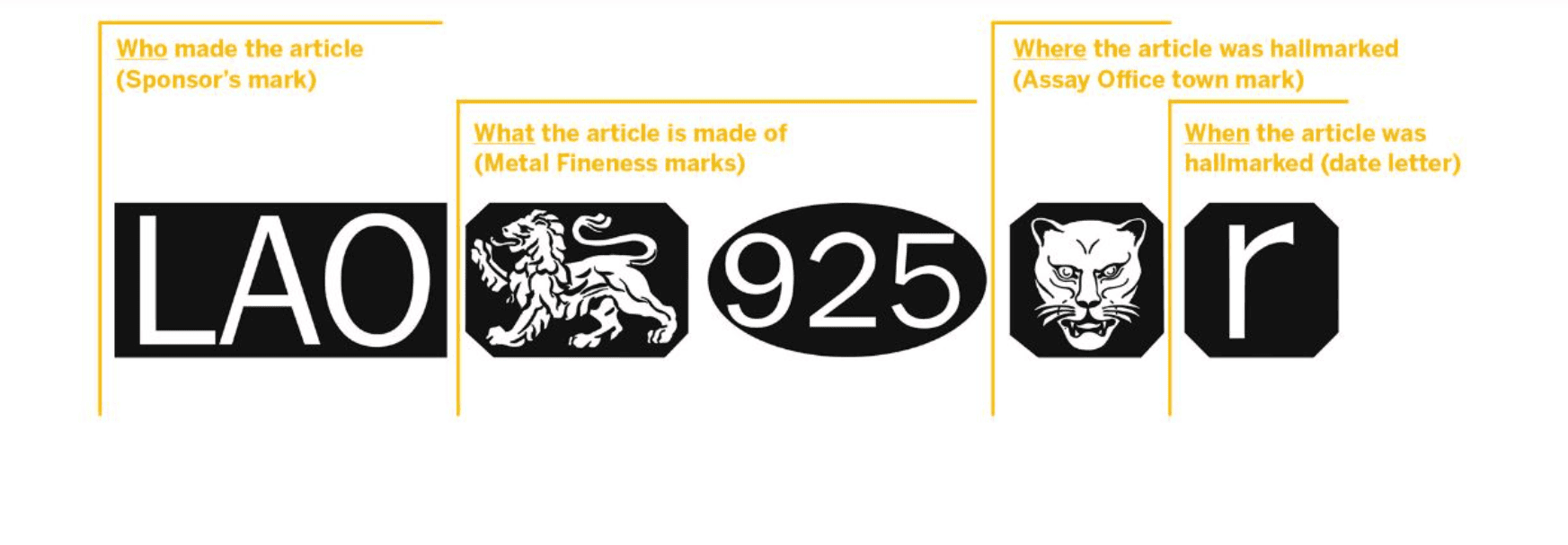
British silver hallmarks from the London assay office are official stamps that guarantee silver purity. London assay office was stablished in the 1300s at Goldsmiths’ Hall and its hallmarks are identified by a crowned (pre-1821) or uncrowned (post-1821) leopard’s head.
Usually accompanying the leopard’s head are date letter, maker’s mark and hallmarks for different silver standards (commonly used are lion passant for sterling silver and seated Britannia for Britannia silver).
What are British Silver Hallmarks from the Edinburgh Assay Office? How to Identify Them?
British silver hallmarks from the Edinburgh assay office are official stamps that guarantee silver purity.
These markings are identified by a three-towered castle symbol, typically accompanied by a thistle mark indicating Scottish sterling standard, a maker’s mark, and a date letter.
Before the thistle was adopted, Edinburgh often used other marks to indicate the standard, sometimes in combination with the castle.
If the item was made in Scotland but not in Edinburgh, it might have a tree, bird, bell, and fish (Glasgow mark) instead of the castle.
Older silver pieces may include a monarch’s head, indicating that duty was paid.
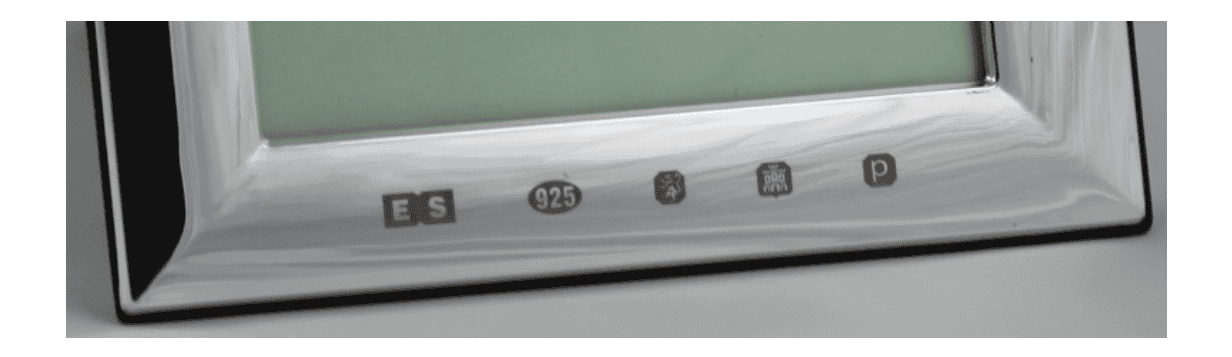
What are British Silver Hallmarks for Sterling Silver?
British silver hallmarks for sterling silver (.925 purity) traditionally consist of a series of stamps, most notably the Lion Passant (a walking lion with raised paw) to signify sterling standard.
A complete, pre-1999, British hallmark typically includes the maker’s mark, the Lion Passant, a town mark (assay office), a date letter, and a duty mark.
See examples below.

British Silver Hallmarks Guide- Learn to Read and Identify Them! Including Silver Hallmarks from Sheffield and Birmingham (Conclusion)
British silver hallmarks are government-regulated stamps used since medieval times to guarantee the purity, origin, and age of silver items.
A complete hallmark typically consists of five components: the Maker’s Mark (initials), the Standard Mark (e.g., a Lion Passant for .925 sterling), the Assay Office Mark (e.g., London’s Leopard’s Head or Birmingham’s Anchor), a Date Letter for the specific year, and occasionally a Duty Mark (1784–1890) signifying tax payment.
Identifying these marks helps collectors distinguish genuine British silver from fake and trace the history of specific and antique silver pieces.
References:
- UK AND BRITISH SILVER HALLMARKS – A COMPLETE GUIDE- https://seattlegold.com/uk-and-british-silver-hallmarks-a-complete-guide/
- Sheffield Silver Overview- https://www.acsilver.co.uk/shop/pc/sheffield-silver-d230.htm
- Silver, Silver-Plate and Old Sheffield Plate- https://www.bexfield.co.uk/article1.htm
- Silver Hallmarks- https://www.bullionbypost.co.uk/index/silver/silver-hallmarks/
- https://www.assayofficelondon.co.uk/faqs
- UK hallmarks guide- https://www.edinburghsilver.co/blog/the-sterling-standard/
- How to read British hallmarks on silver? https://www.925-1000.com/british_marks.html

Nikola Roza
Nikola Roza is a blogger behind Nikola Roza- SEO for the Poor and Determined. He writes for bloggers who don't have huge marketing budget but still want to succeed. Nikola is passionate about precious metals IRAs and how to invest in gold and silver for a safer financial future. Learn about Nikola here.
