
Disclosure: Some of the links you’ll encounter are unique links. Click and buy something and I’ll earn some money, at zero expense to you. Thank you!
British silver hallmarks are government-regulated stamps guaranteeing silver purity, origin, and age.
Five key mark types exist: Standard Mark (Lion Passant for .925 sterling, Seated Britannia for .958), Assay Office Mark, Date Letter, Maker’s Mark, and Duty Mark (1784-1890).
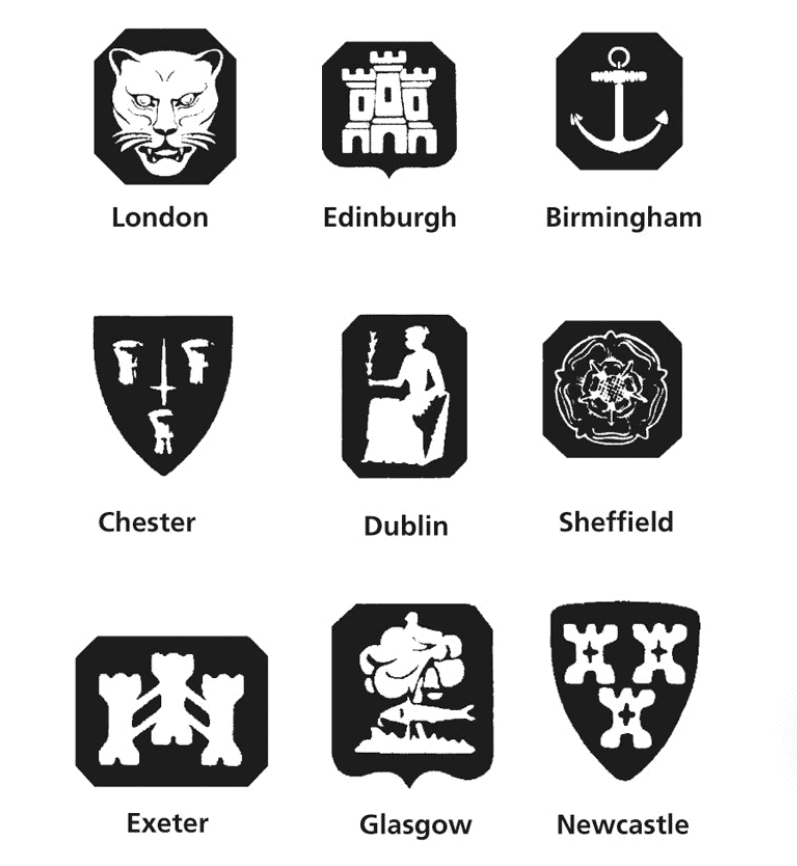
Currently active assay offices include London (Leopard’s Head, established in 1300s), Birmingham (Anchor, 1773), Sheffield (Crown/Tudor Rose, 1773), Edinburgh (Three-Towered Castle with Thistle), and Dublin (Crowned Harp with Hibernia).
Once active but now closed British assay offices include York (Five Lions Passant, closed 1857), Exeter (Crowned X/Castle, closed 1883), Newcastle (Three Castles, closed 1884), Glasgow (Tree, Fish and Bell, closed 1964), and Chester (Three Wheatsheaves, closed 1962).
Most assay offices closed due to declining silver production and centralization of hallmarking services.
Complete sterling silver hallmarks typically combine maker’s mark, Lion Passant, town mark, date letter, and duty mark for comprehensive authentication.
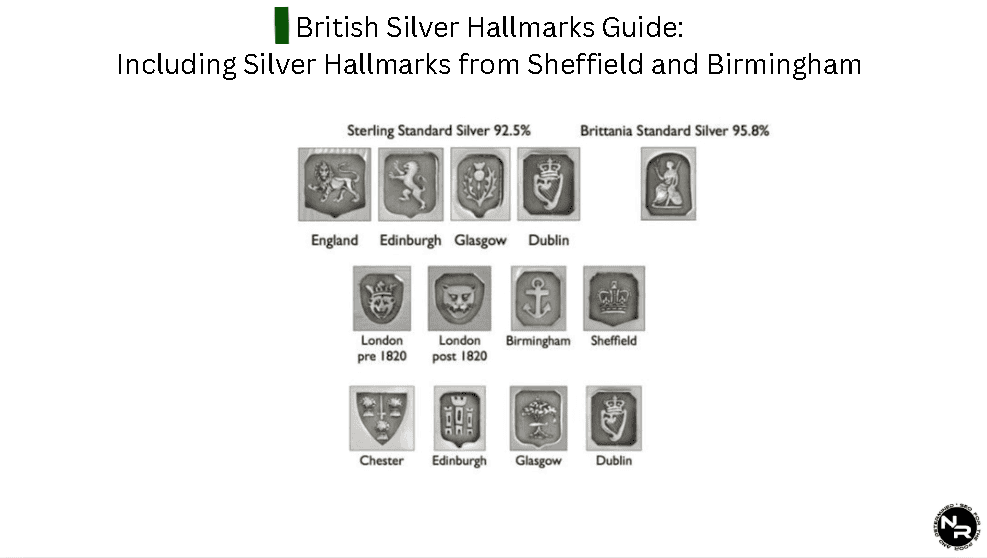
What are British Silver Hallmarks? How Many Types are There and How to Read and Identify Them?
British silver hallmarks are a set of stamped marks on silver items that guarantee their purity, origin, and age. These markings are prescribed and regulated by UK’s government-authorized assay offices and some of these stamps have been used for centuries to prevent fraud, identify manufacturers and silver purity levels.
Key aspects of British silver hallmarks are listed below.
- Standard Mark (Purity). It identifies the silver content. The most common ones are the Lion Passant for sterling silver (.925 silver) and Seated Britannia for Britannia silver (.958 silver).
- Assay Office Mark (Town Mark). It indicates where the item was tested. Common marks include a Leopard’s Head (London), Anchor (Birmingham), Crown (Sheffield), and Thistle (Edinburgh).
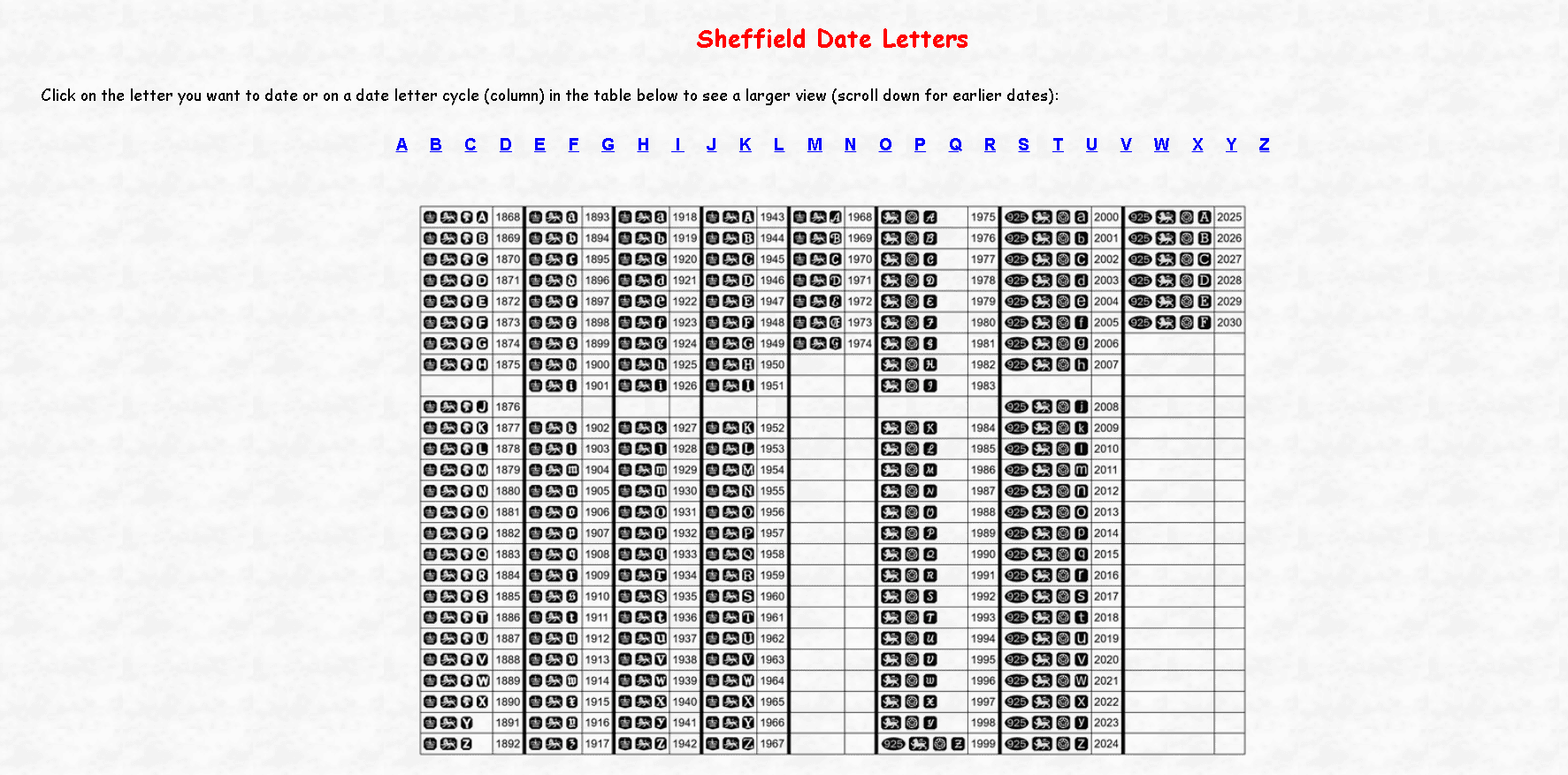
- Date Letter. Often, stylized letter representing the specific year the item was hallmarked.
- Maker’s Mark. Initials of the individual silversmith or firm that produced the piece.
- Duty Mark. A profile of the reigning monarch, found on items made between 1784 and 1890, indicating tax was paid.
I cover below silver hallmarks from all currently operating British assay offices and also from the ones that are closed and no longer operational. The former include assay offices from London, Birmingham, Edinburgh, Sheffield and Dublin. The latter include assay offices from Exeter, Chester, Newcastle, Glasgow and York.
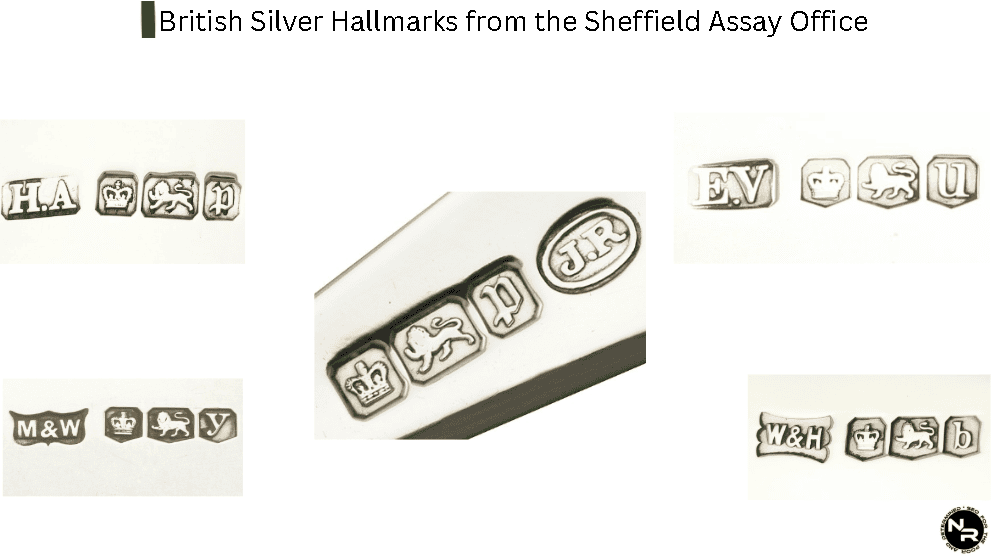
What are British Silver Hallmarks from the Sheffield Assay Office? How to Read and Identify Them?
British silver hallmarks from the Sheffield Assay Office (established 1773) are official stamps guaranteeing silver purity. These stamps are identified identified by a Crown (1773–1973) or a Tudor Rose (1973–present) town mark.
Silver pieces assayed and hallmarked at Sheffield also often carry additional markings, for example a sponsor’s mark and date letter and a monarch’s head, a duty mark that signifies tax payment. The last one is optional and not all silver pieces hallmarked in Sheffield have it.
Here are examples of Sheffield silver hallmarks. You can see the obligatory crown mark accompanied by lion passant for sterling silver + some sponsor marks.
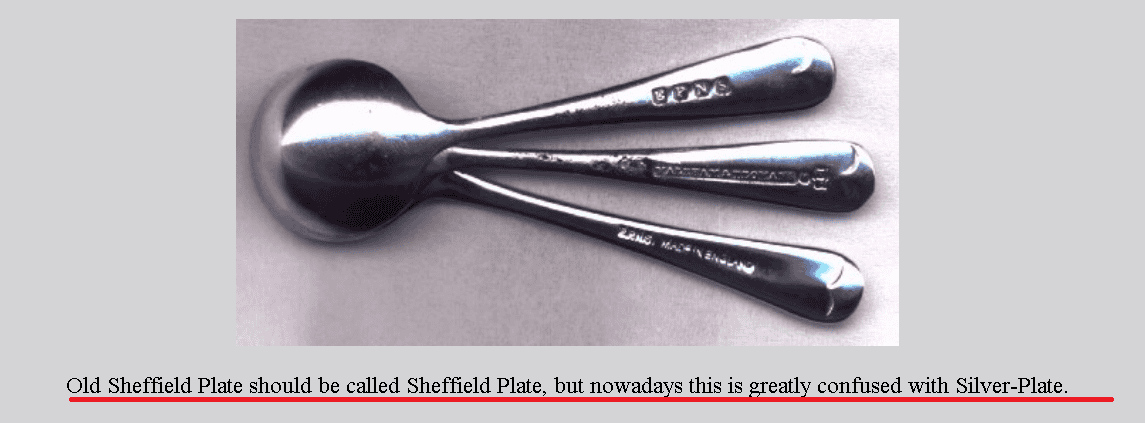
Don’t confuse genuine Sheffield silver with Sheffield Plate (EPNS). Electro Plated Nickel Silver items often have marks that look like genuine silver hallmarks, but aren’t stamped with the official Crown/Rose.
Check this out next when you’re done reading my British silver hallmarks guide. It’s crucial info you should have, especially if you’re a proud American curious about investing in gold, silver and other precious metals.
What are British Silver Hallmarks from the Birmingham Assay Office? How to Read and Identify Them?
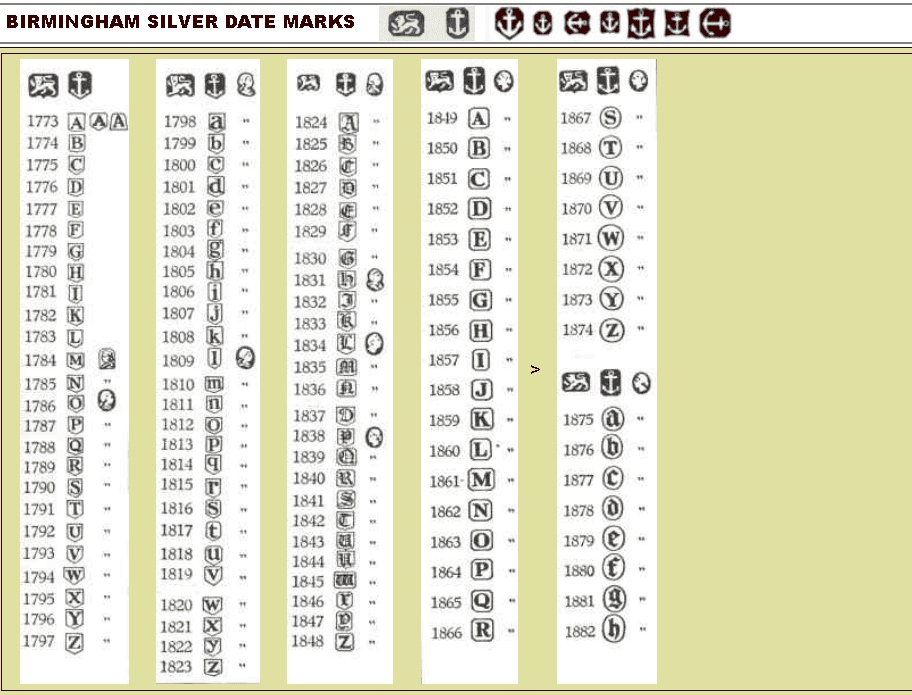
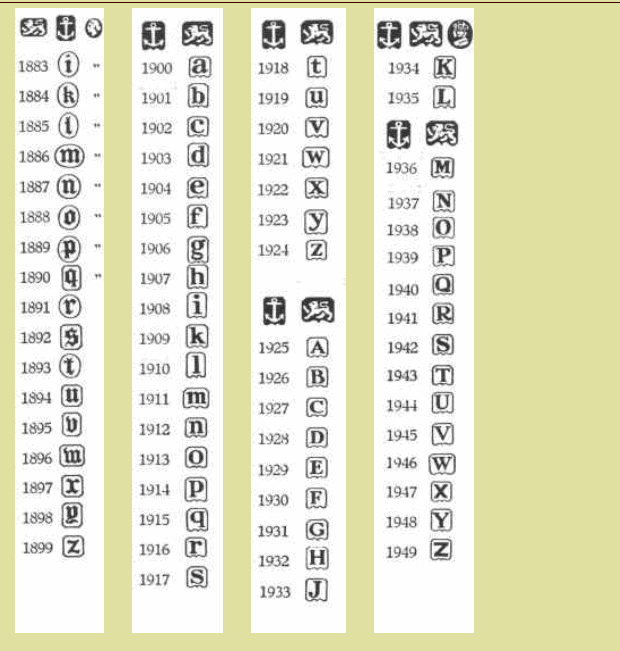
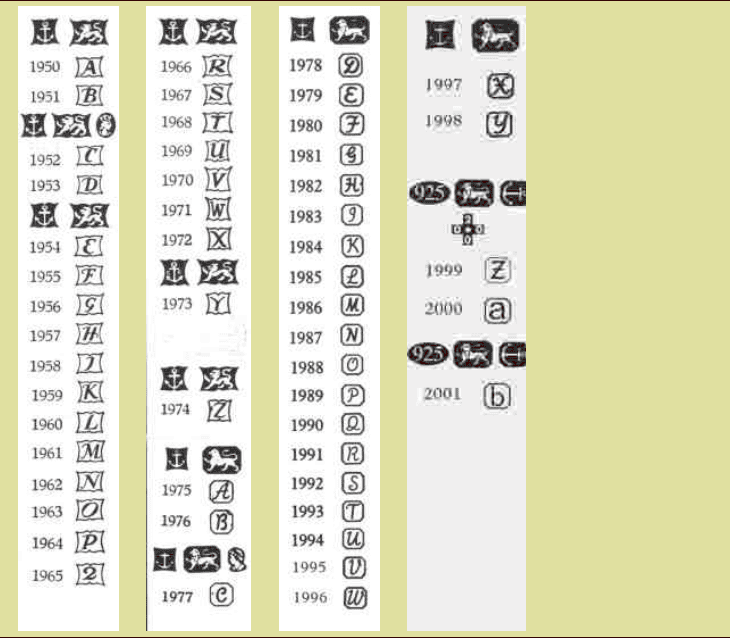
British silver hallmarks from the Birmingham Assay Office are official stamps guaranteeing silver purity. Birmingham-specific hallmark used for all precious metals is an anchor symbol, adopted upon the office’s opening in 1773.
Besides the obligatory anchor mark, other common stamps are a sponsor’s mark, date letter and a monarch’s head, a duty mark which signifies tax payment. Lion passant and seated Britannia markings are also common given the popularity of sterling silver and Britannia silver.
See below an example of a Birmingham-assayed sterling silver item that Nathaniel Mills made in the mid 1840s.

- Maker’s Mark. The letters “N.M” in a rectangle, refer to Nathaniel Mills.
- Standard. The traditional lion passant meaning it is .925 Sterling silver.
- Duty Stamp. A portrait of a young Queen Victoria.
- Date Letter. A “W” in an artistic font. This points to Birmingham between 1845 and 1846.
- Assay Office. The anchor stamp represents the Birmingham Assay Office.
Check this out next when you’re done reading my British silver hallmarks guide. It’s crucial info you should have, especially if you’re a proud American curious about investing in gold, silver and other precious metals.
What are British Silver Hallmarks from the London Assay Office? How to Read and Identify Them?
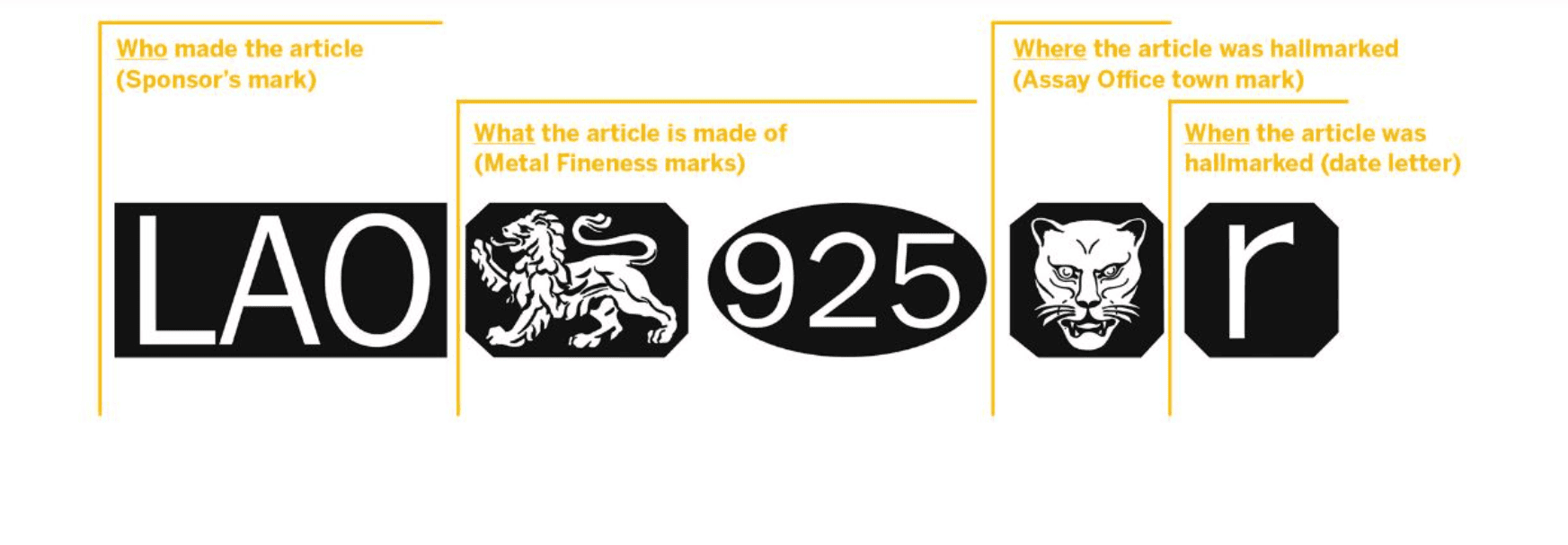
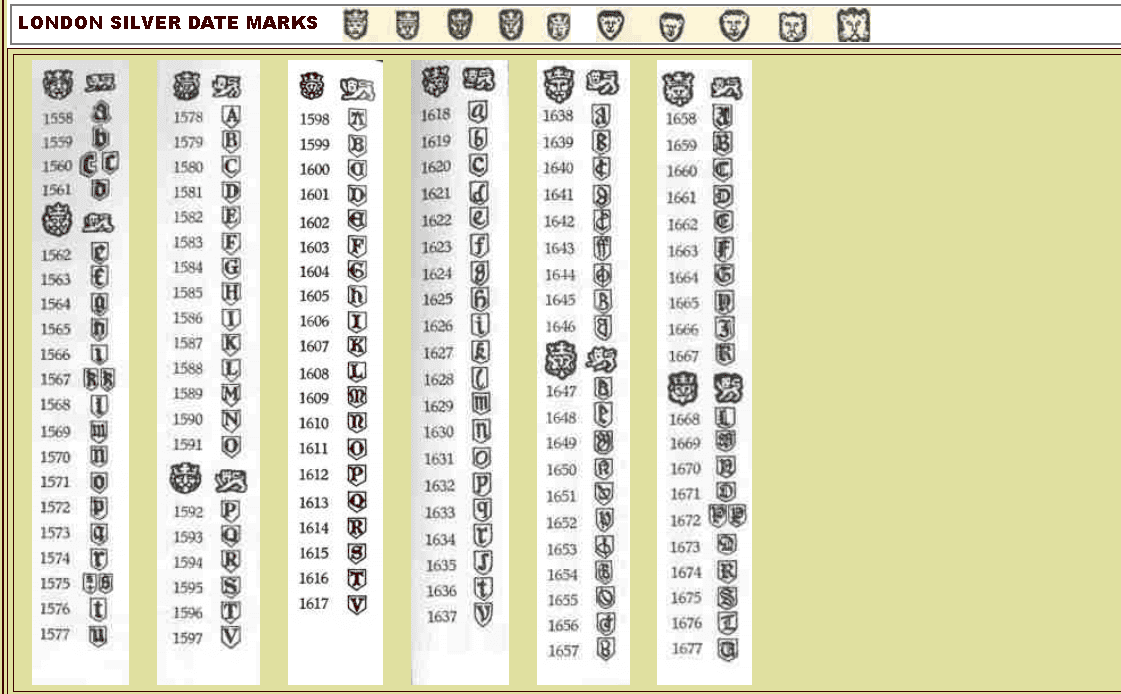
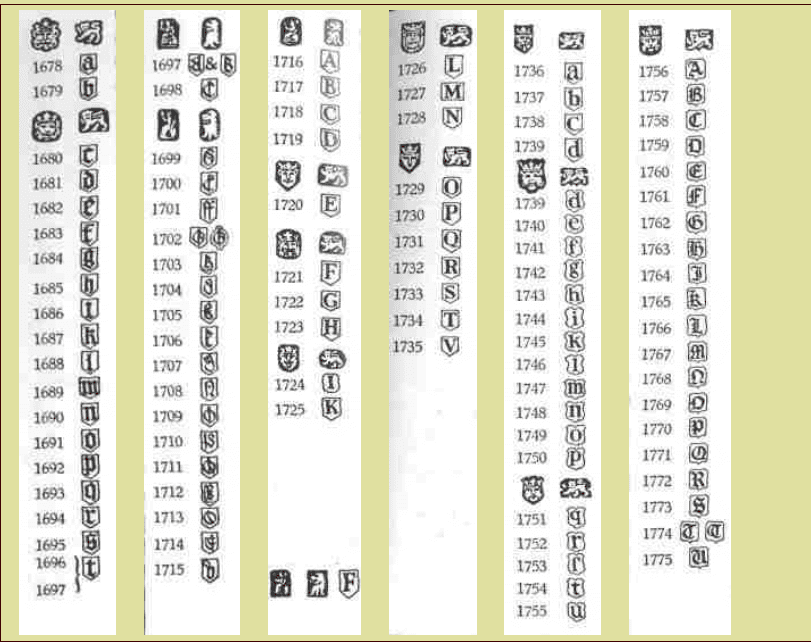
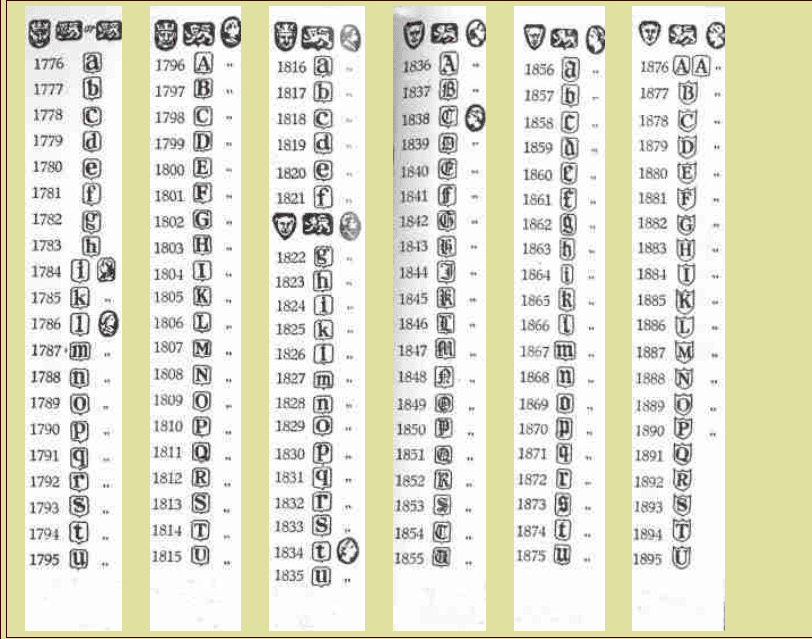
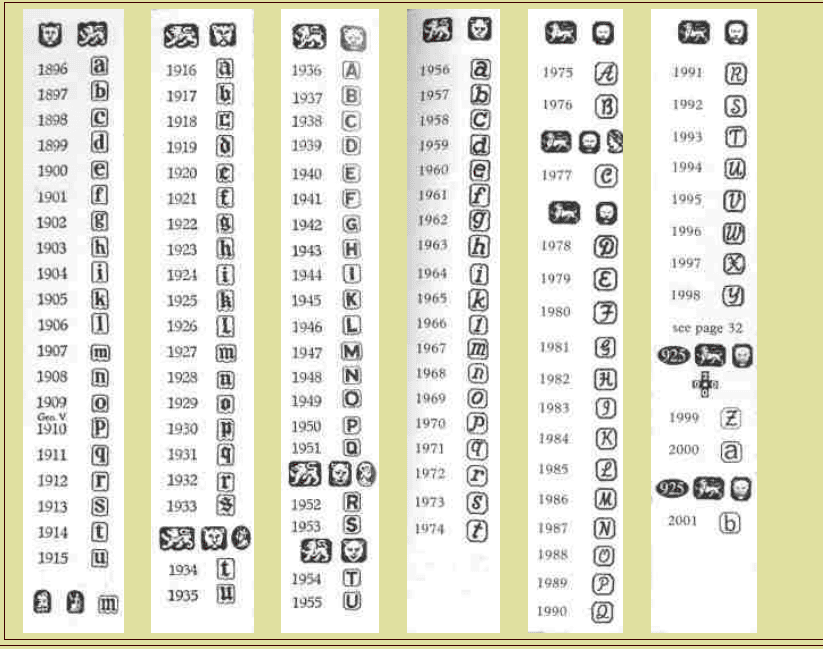
British silver hallmarks from the London assay office are official stamps that guarantee silver purity. London assay office was established in the 1300s at Goldsmiths’ Hall and its hallmarks are identified by a crowned (pre-1821) or uncrowned (post-1821) leopard’s head.
Usually accompanying the leopard’s head are date letter, maker’s mark and hallmarks for different silver standards (commonly used are lion passant for sterling silver and seated Britannia for Britannia silver).
Check this out next when you’re done reading my British silver hallmarks guide. It’s crucial info you should have, especially if you’re a proud American curious about investing in gold, silver and other precious metals.
What are British Silver Hallmarks from the Edinburgh Assay Office? How to Read and Identify Them?
British silver hallmarks from the Edinburgh assay office are official stamps that guarantee silver purity.
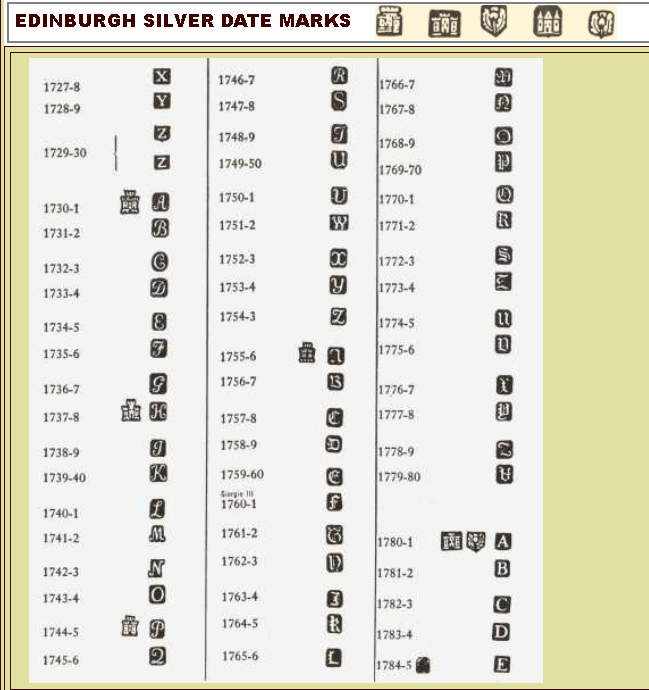
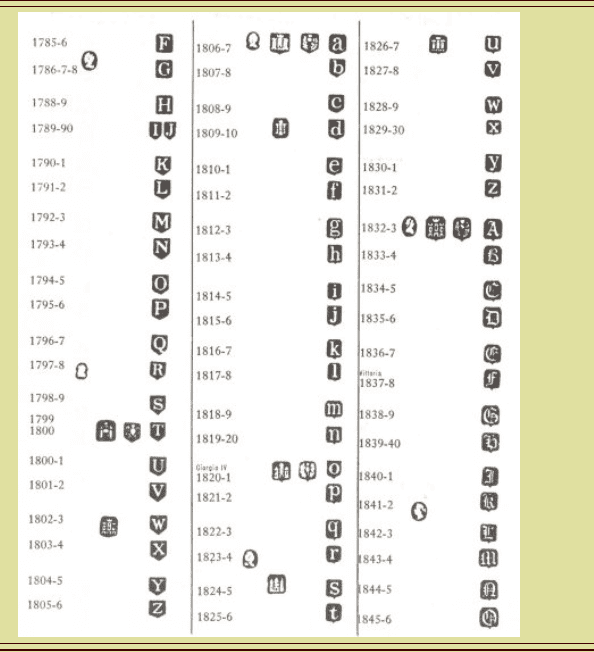
These markings are identified by a three-towered castle symbol accompanied by a thistle mark indicating Scottish silver standard, a maker’s mark, and a date letter.
Before the thistle was adopted, Edinburgh often used other marks to indicate the standard, sometimes in combination with the castle. The item might have a tree, bird, bell, and fish (Glasgow mark) instead of the castle if it was made in Scotland, but not in Edinburgh. Older silver pieces may also include a monarch’s head, indicating that duty was paid. However, not all of them do.
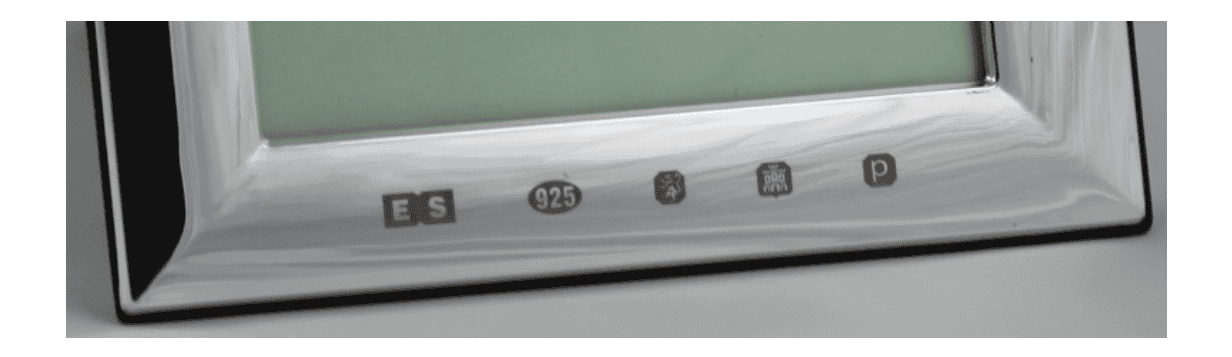
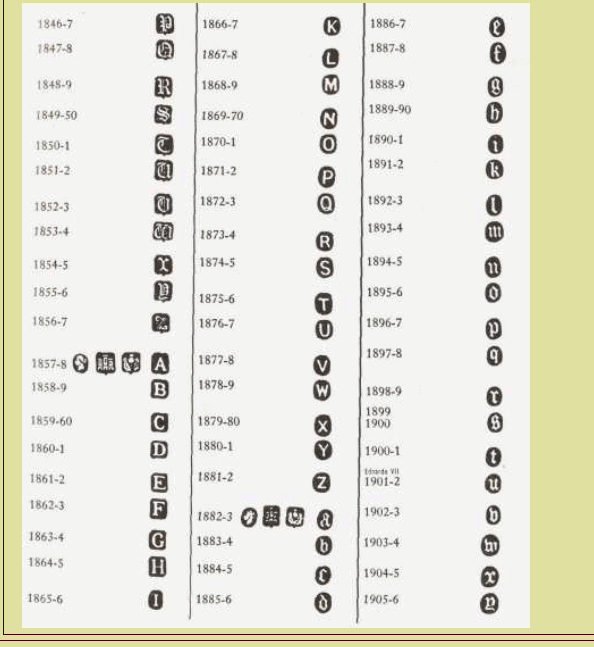
See below an example of sterling silver assayed at the Edinburgh assay office. Besides the thistle hallmark you can also see the “925” and lion passant marks for sterling silver along with some maker marks too.
Check this out next when you’re done reading my British silver hallmarks guide. It’s crucial info you should have, especially if you’re a proud American curious about investing in gold, silver and other precious metals.
What are the British Silver Hallmarks from the Dublin Office? How to Read and Identify Them?
British silver hallmarks from the Dublin assay office are official stamps that guarantee silver purity.
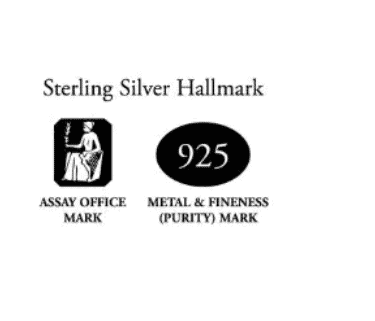
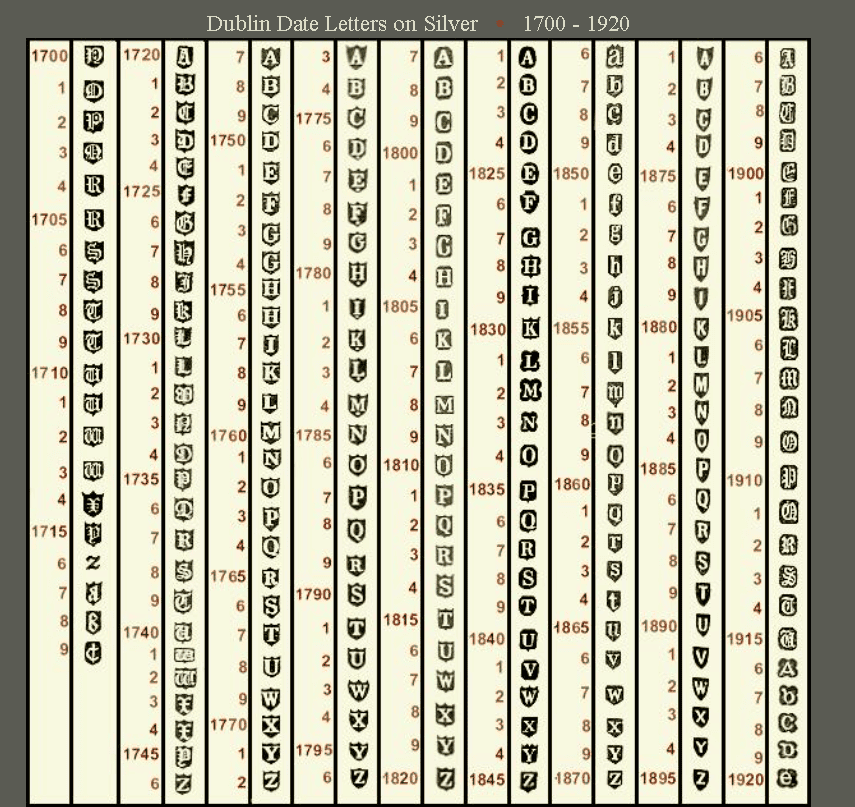
Dublin silver hallmarks are distinguished by the crowned harp (assay mark), Hibernia (duty/region mark), a date letter, and a maker’s mark. You can identify Irish silver hallmarked in Dublin by finding these symbols, which confirm Irish origin and purity.
The “Hibernia” hallmark is a definitive clue that a piece of silver was assayed and hallmarked by the Dublin assay office.
What are the British Silver Hallmarks from the York Assay Office? How to Read and Identify Them?
British silver hallmarks from the York assay office are official stamps that guarantee silver purity.
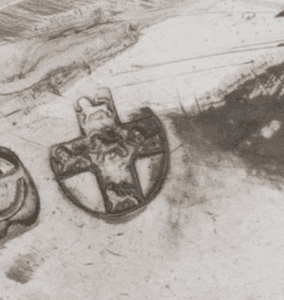
York silver hallmarks are identified by either a shield featuring a half leopard’s head and half fleur-de-lys, or five lions passant on a cross (used from 1710-1856). Other accompanying symbols are date letters, maker’s marks, and the silver standard mark (lion passant or seated Britannia).
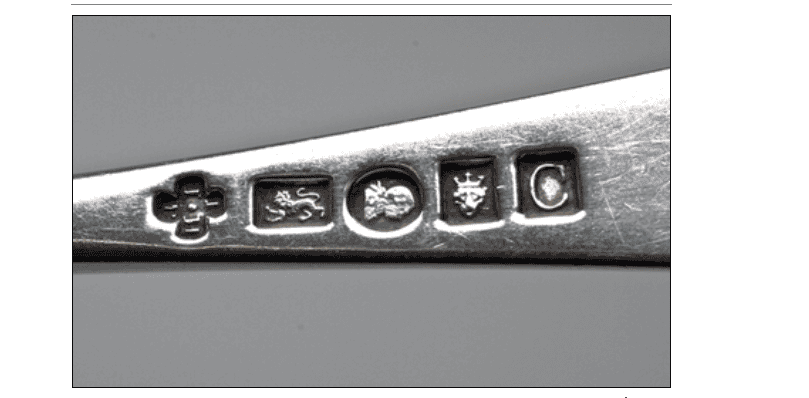
Here’s a clearer example of a five lions passant on a cross hallmark denoting York silver.
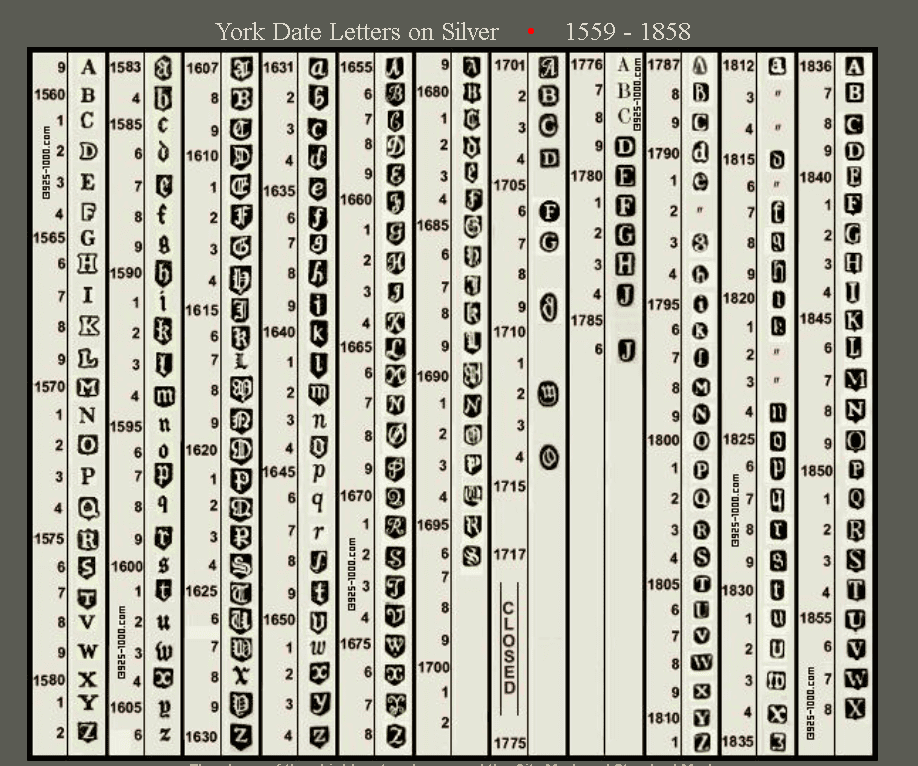
The York Assay Office closed permanently around 1857–1858 due to a long-term decline in the volume of silver being produced and tested in the city.
After reopening in 1776, the office relied on a few prolific makers, but centralization of hallmarking services and economic changes ultimately made it unsustainable and unprofitable.
Check this out next when you’re done reading my British silver hallmarks guide. It’s crucial info you should have, especially if you’re a proud American curious about investing in gold, silver and other precious metals.
What are the British Silver Hallmarks from the Exeter Assay Office? How to Read and Identify Them?
British silver hallmarks from the Exeter assay office are official stamps that guarantee silver purity.
Exeter silver hallmarks are primarily identified by a crowned X or a three-turreted castle town mark, often accompanied by the lion passant sterling mark, a date letter, and a maker’s mark. To read them, look for this castle mark alongside a duty mark (sovereign head) between 1784 and 1883.
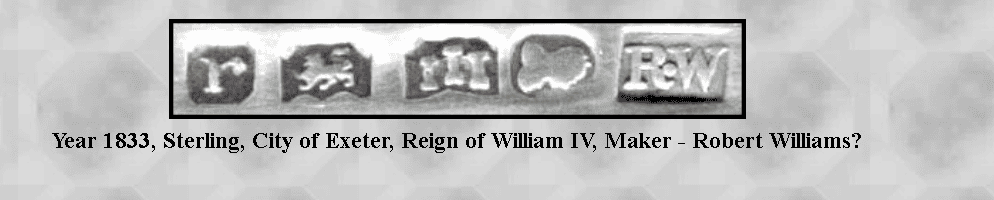
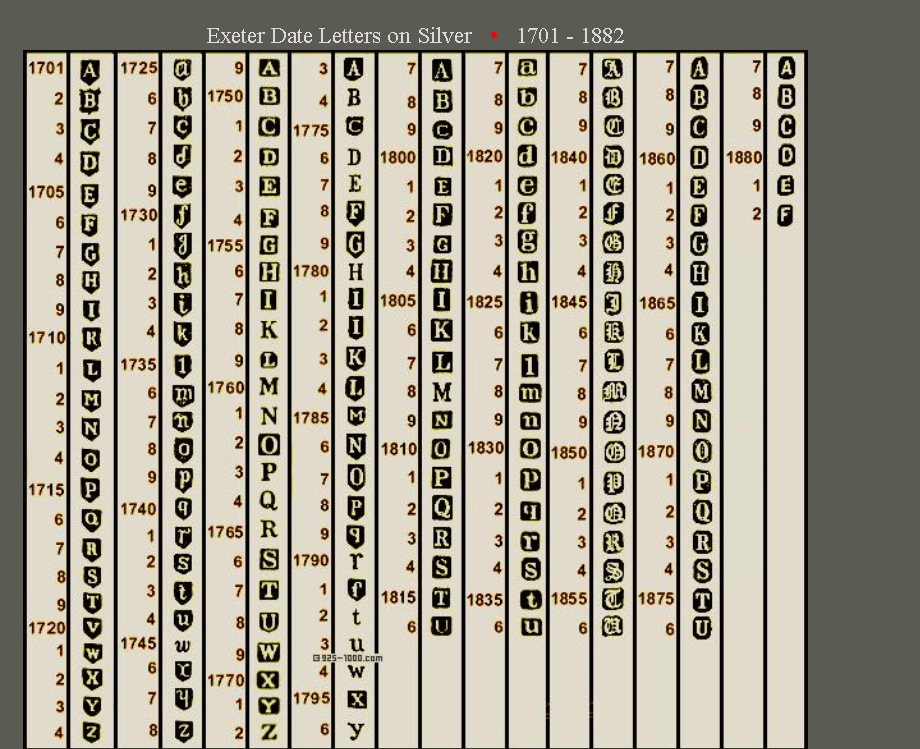
The Exeter Assay Office closed in July 1883 due to a significant decline in the volume of silver and gold items sent for hallmarking.
The closure resulted from a lack of demand and specifically when Josiah Williams & Co, a major Bristol firm that provided most of the work, transferred their business to London.
What are the British Silver Hallmarks from the Newcastle Assay Office? How to Read and Identify Them?
British silver hallmarks from the Newcastle assay office are official stamps that guarantee silver purity.
Newcastle assay office silver hallmarks are identified by a town mark of three castles, often arranged two over one.
To read them, look for the three castles, a date letter (changing annually), a lion passant (sterling silver), and a maker’s mark. They often appear alongside other British marks.
Newcastle marks can be confused with other, later, or less common silver hallmarks. Always look for the distinct, often crudely struck three-castle symbol as that’s the definitive proof.
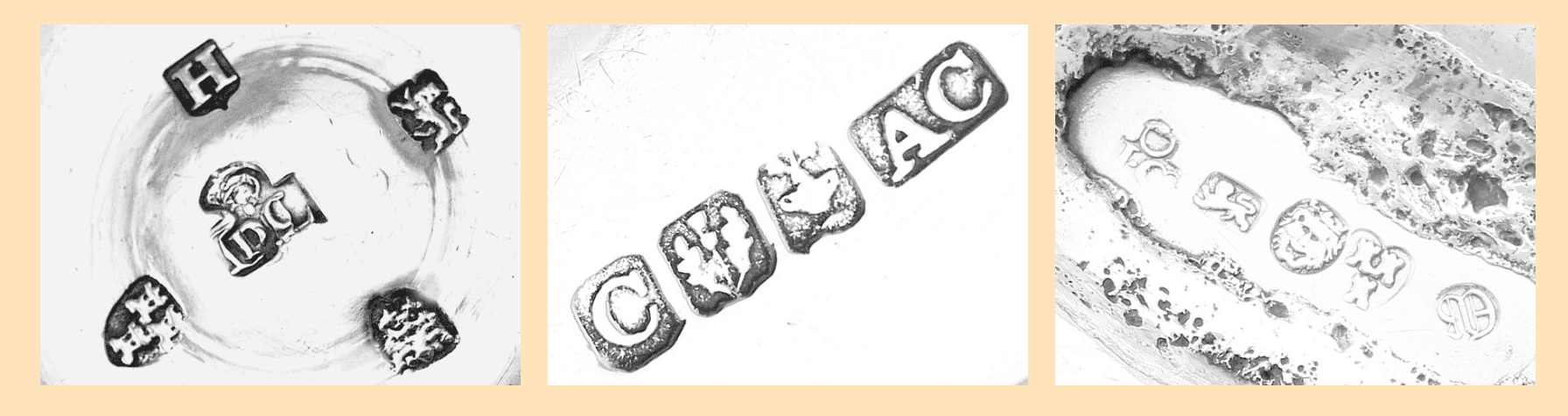
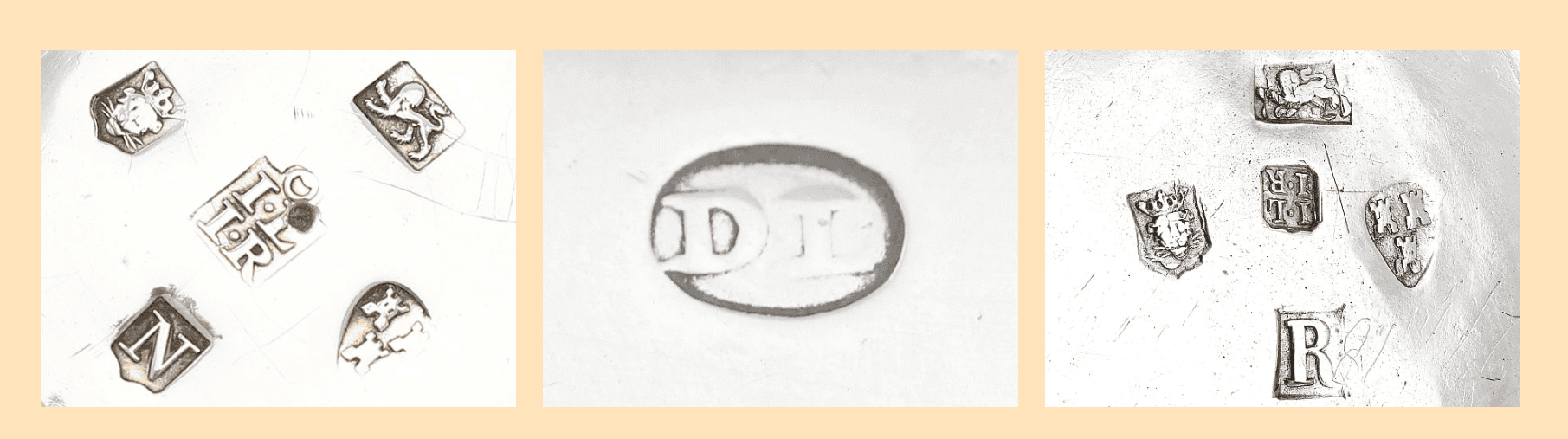
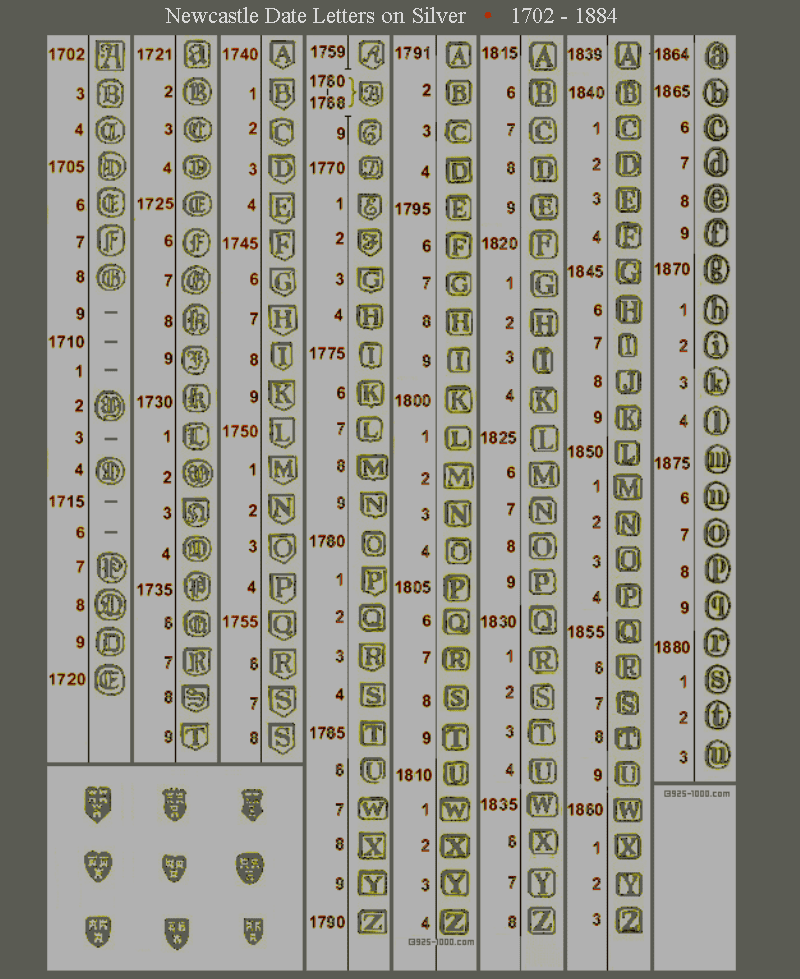
The Newcastle Assay Office closed in 1884 (some sources cite 1883) due to a severe decline in local silver production and demand coupled with increased competition and improved transportation to London.
By the late 19th century, the local silversmithing trade had diminished, making it non-viable and unprofitable to continue silver testing services.
Check this out next when you’re done reading my British silver hallmarks guide. It’s crucial info you should have, especially if you’re a proud American curious about investing in gold, silver and other precious metals.
What are the British Silver Hallmarks from the Glasgow Assay Office? How to Read and Identify Them?
British silver hallmarks from the Glasgow assay office are official stamps that guarantee silver purity.
Glasgow Assay Office silver hallmarks, active from 1681 to 1964 (with a break until 1819), are identified by the town mark of a tree, fish, and bell, often accompanied by the lion rampant (Scottish sterling standard).
To read British silver Glasgow stamps look for this symbol alongside a date letter, maker’s mark, and sometimes a duty mark.
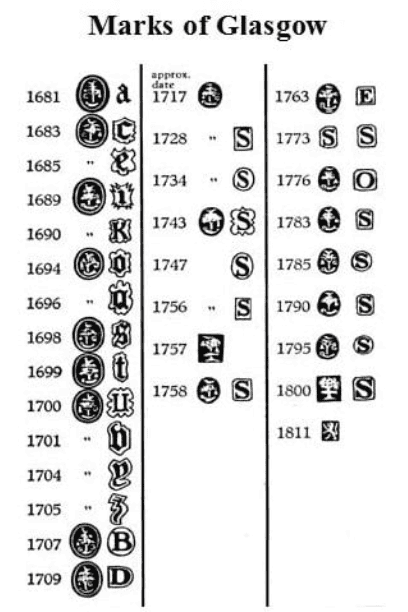
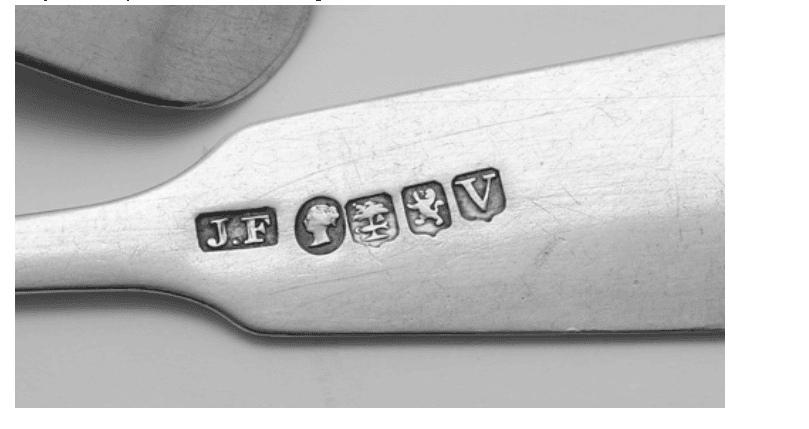
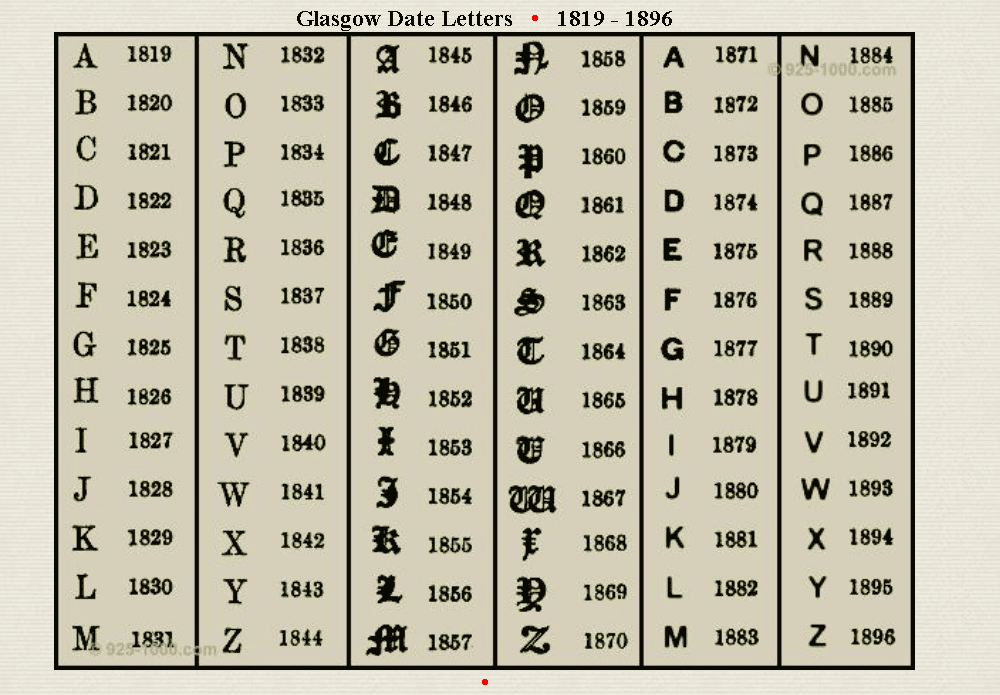
The Glasgow Assay Office closed in 1964 due to a recommendation by the Stone Committee in 1959. This directive aimed to streamline UK’s hallmarking by reducing the number of offices and centralizing operations.
Following its closure, all Scottish silver hallmarking activities were transferred to the Edinburgh Assay Office.
Check this out next when you’re done reading my British silver hallmarks guide. It’s crucial info you should have, especially if you’re a proud American curious about investing in gold, silver and other precious metals.
What are the British Silver Hallmarks from the Chester Assay Office? How to Read and Identify Them?
British silver hallmarks from the Chester assay office are official stamps that guarantee silver purity.
Chester silver hallmarks are identified by a town mark of three wheatsheaves (garbs), often accompanied by a sword, used from the 16th century until the office closed in 1962. To identify them, look for the three wheatsheaves, a lion passant (sterling standard), a date letter (specific font/shield), and a maker’s mark.
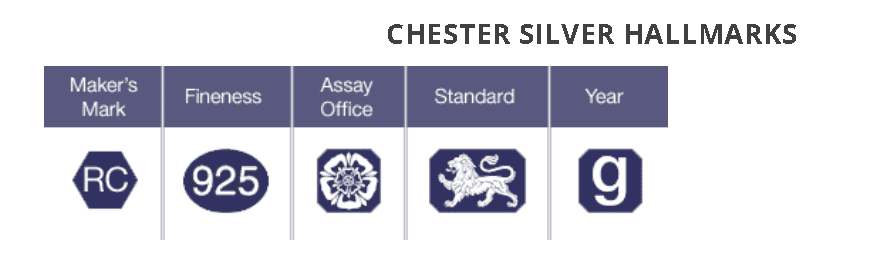
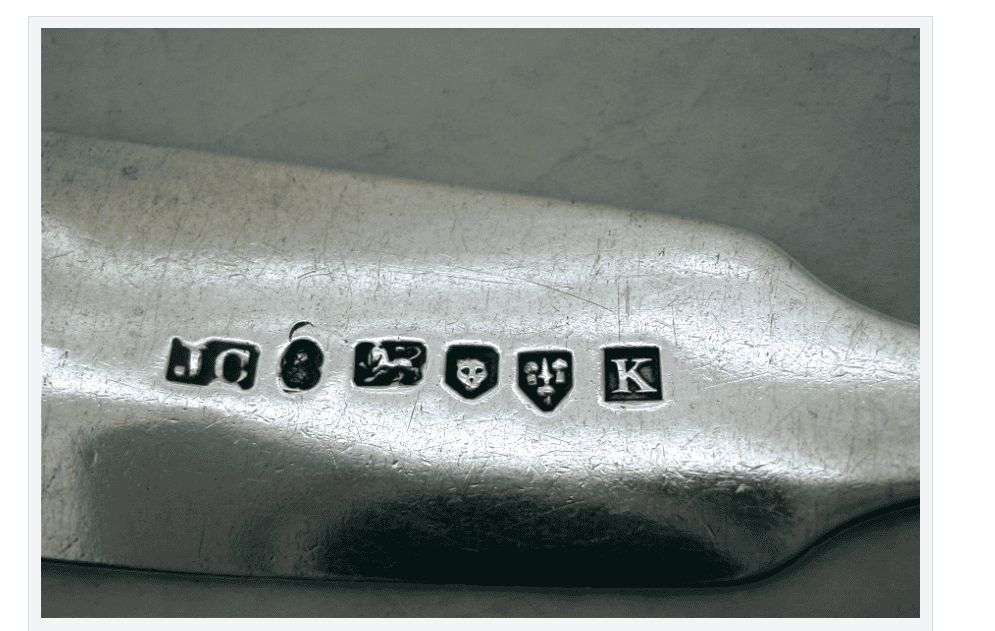
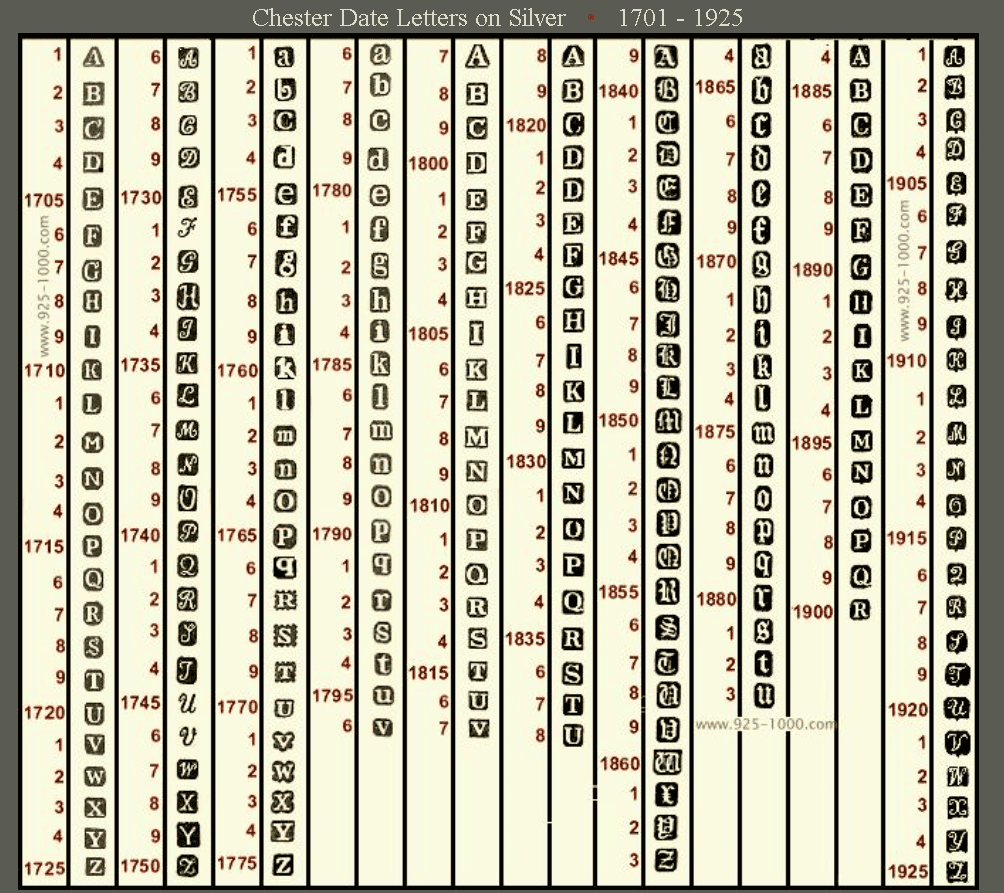
The Chester Assay Office closed on August 24, 1962, due to a severe workload decline. A significant silver hallmarking reduction combined with the retirement of key, specialized staff rendered the office non-viable and unprofitable.
Check this out next when you’re done reading my British silver hallmarks guide. It’s crucial info you should have, especially if you’re a proud American curious about investing in gold, silver and other precious metals.
What are British Silver Hallmarks for Sterling Silver?
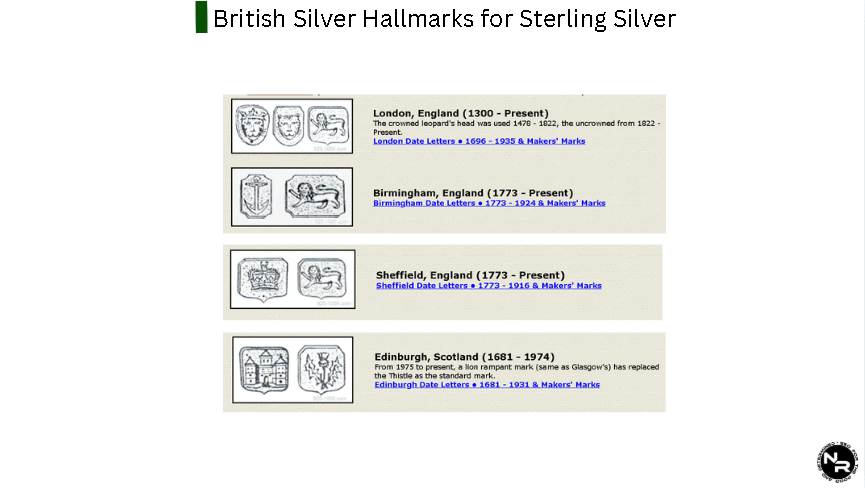
British silver hallmarks for sterling silver (.925 purity) consist of a series of stamps, most notably the Lion Passant (a walking lion with raised paw) to signify sterling standard.
A complete, pre-1999, British hallmark typically includes the maker’s mark, the Lion Passant, a town mark (assay office), a date letter, and a duty mark.

- UK AND BRITISH SILVER HALLMARKS – A COMPLETE GUIDE- https://seattlegold.com/uk-and-british-silver-hallmarks-a-complete-guide/
- Sheffield Silver Overview- https://www.acsilver.co.uk/shop/pc/sheffield-silver-d230.htm
- Silver, Silver-Plate and Old Sheffield Plate- https://www.bexfield.co.uk/article1.htm
- Silver Hallmarks- https://www.bullionbypost.co.uk/index/silver/silver-hallmarks/
- https://www.assayofficelondon.co.uk/faqs
- UK hallmarks guide- https://www.edinburghsilver.co/blog/the-sterling-standard/
- How to read British hallmarks on silver? https://www.925-1000.com/british_marks.html
- UK and British Silver Hallmarks – A Complete Guide- https://canadagold.ca/resources/uk-and-british-silver-hallmarks-a-complete-guide/
- Sheffield Date Letters- https://www.silvermakersmarks.co.uk/Dates/Sheffield.html
- ENGLISH, SCOTTISH AND IRISH SILVER HALLMARKS
BIRMINGHAM SILVER DATE LETTERS AND SYMBOLS
THE GUIDE TO MARKS OF BRITISH SILVER
– BIRMINGHAM –https://www.silvercollection.it/englishsilverhallmarksbir.html - ENGLISH, SCOTTISH AND IRISH SILVER HALLMARKS
LONDON SILVER DATE LETTERS AND SYMBOLS
THE GUIDE TO MARKS OF BRITISH SILVER
– LONDON –https://www.silvercollection.it/englishsilverhallmarks.html - ENGLISH, SCOTTISH AND IRISH SILVER HALLMARKS
EDINBURGH SILVER DATE LETTERS AND SYMBOLS
THE GUIDE TO MARKS OF BRITISH SILVER
– EDINBURGH – https://www.silvercollection.it/englishsilverhallmarksedi.html - Antique York Silver Tableforks (set of 12) – Hampston & Prince- https://www.leopardantiques.com/object/stock/detail/705
- York silver date hallmarks and maker’s marks- https://www.925-1000.com/dlYork.html
- Silver Hallmarks :: CHESTER, England (1701 – 1961)- https://gaukantiques.com/2013/03/11/silver-hallmarks-chester-england-1701-1961/
- Chester silver date marks guide- https://www.925-1000.com/dlChester.html
- Frequently Encountered Newcastle Goldsmiths and Silversmiths- https://www.acsilver.co.uk/shop/pc/Popular-Newcastle-Goldsmiths-and-Silversmiths-d87.htm
- Newcastle date marks- https://www.925-1000.com/dlNewcastle.html
- Exeter silver date hallmarks guide – https://www.830-1000.dk/dlExeter.html
- Irish Hallmarks from the Dublin Castle Assay Office- https://www.theirishjewelrycompany.com/blog/post/about-irish-hallmarks-from-the-dublin-assay-office

Nikola Roza
Nikola Roza is the owner of Nikola Roza- Everything You Can Learn About Precious Metals. He writes for people who love precious metals and jewelry and who're interested in adding gold, silver platinum and palladium to their retirement portfolios. Nikola is passionate about gold IRAs and investing in multiple asset types for a safer financial future. He also runs a successful online jewelry store where you can buy precious metal jewelry and various replicas of famous coins and bars. Learn about Nikola here.
