
Disclosure: Some of the links you’ll encounter are affiliate links. If you click and buy something, I’ll get a commission. If you’re reading a review of some precious metals company, please understand that some of the links are affiliate links that help me pay my bills and write about what I love with no extra cost to you. Thank you!
Only a few types of businesses are as attractive to hackers as financial and wealth management companies. Because of the value of information transmitted between a customer and the finance company, no security measure is excessive.
Financial and general data protection regulations exist to combat online financial fraud. However, it’s still recommended that you take extra measures, such as implementing email security practices and protocols.
While email protocols are often implemented by default by email providers, you can also implement several practices. By pairing security protocols with these practices, you can significantly enhance email security in finance and wealth management.
Table of Contents
Key Risks of Insecure Email Communication
A business email compromise (BEC) can be devastating for both the company and its customers. A hacker can perform one of these attacks to compromise email security:
- Phishing attack: A hacker sends a link that resembles your business’s website. However, this website lacks secure communication and can be exploited to steal customer or employee information.
- Man-in-the-middle (MITM) attack: This attack can happen if the communication isn’t encrypted. A hacker intercepts an email and can steal private information or gain access to it.
- Brute force: If your company’s email platform doesn’t use strong enough authentication, brute force attacks can easily access your accounts. This type of attack tries out an endless number of credential combinations.
Furthermore, one of these scenarios can also happen:
- Data leakage: If your employees aren’t careful enough, they can send private data to the wrong recipients. Data leakages that contain credentials can occur through other forms of cyber attacks.
- Compliance violations: Financial institutions must comply with various regulations, such as GDPR, FINRA, and the Gramm-Leach-Bliley Act (GLBA). Failure to secure email communication can lead to data breaches, resulting in financial losses and legal consequences.
- Account compromise: Some of the previously mentioned attacks and situations can lead to an account compromise. However, account compromise can also be caused by sharing credentials with co-workers or leaving devices unattended.
There are many email security solutions that could minimize the risk of the previously mentioned unwanted situations. However, there are risks that your business can mitigate through practices for email security in finance and essential protocols.
Core Email Security Protocols
Implementing email security protocols is the first line of defense in safeguarding sensitive communications.

One of the most basic yet essential protocols for email security in finance is TLS. This encryption protocol secures email traffic between two parties. TLS is the bare minimum level of email protection and an essential line of defense against MTM attacks.
Another core email security protocol is S/MIME, which provides encryption and digital signing for email messages. S/MIMe ensures that only the intended recipient can decrypt the email and verify its authenticity. It’s another protocol that further increases security against MTM attacks.
Domain-based Message Authentication, Reporting, and Conformance (DMARC) works along with SPF (Sender Policy Framework) and DKIM (DomainKeys Identified Mail) to enhance email communication security and prevent phishing and spoofing attacks.
Phishing attempts are a significant problem for both personal and professional emails.
If my email is visible on some websites, I might receive spam attacks in my inbox. The risk is even higher for individuals in finance and wealth management businesses.
As mentioned in the context of DMARC, SPF allows domain owners to identify the email servers that have the authorization to send emails on behalf of their domain. It prevents email spoofing and can improve email deliverability.
The last protocol we’ll cover is DKIM, which adds an extra layer of protection. It includes a digital signature to the email header. Just like the previous two protocols, DKIM minimizes the chances of spoofing and ensures data integrity.
Best Practices for Email Security in Financial Services
Beyond implementing email security protocols, financial institutions should adopt a comprehensive approach to secure communication.
Some practices will be more effective than others, but each removes a vulnerability that hackers could exploit.
Secure Email Hosting
While many financial firms leverage their hosting, not all have the resources to do so. This is where hosting services come in, as they are often responsible for storing data.
Secure hosting solutions offer encryption for data in transit and at rest, safeguarding sensitive financial information from unauthorized access. These platforms often comply with industry regulations like GDPR and FINRA, ensuring everything meets data privacy standards.
Utilizing secure email hosting can help protect confidential client communications, reduce the risk of cyberattacks, and build a foundation of security that assures clients their financial details are managed with the highest level of confidentiality.
Advanced Encryption Standards and Protocols
While the previously mentioned standards are excellent for essential protection, it is also recommended to implement advanced encryption standards, such as AES.
You should also protect data at rest, such as emails stored on servers. They should also be encrypted to protect against unauthorized access. This minimizes the effectiveness of attacks from bad actors.
Multi-Factor Authentication
Even if you implement the best security protocols, your employees’ and clients’ accounts can be compromised through attacks such as brute force. MFA, such as two-factor authentication, significantly increases account protection.
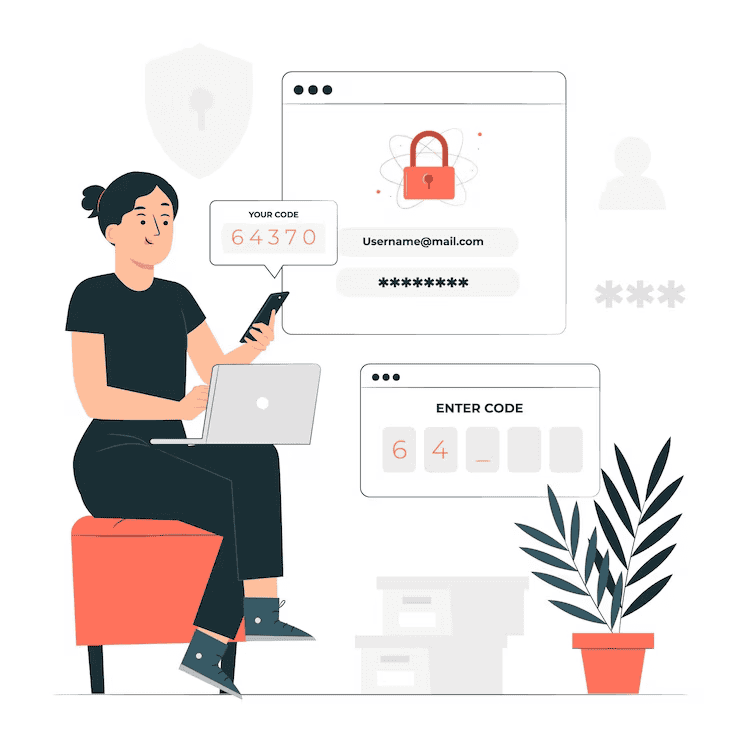
You can introduce company-wide policies requiring all employees to use MFA, which involves authentication via means other than a password, such as a biometric scan, SMS, or email code. This can be done via password managers.
You can introduce additional measures for high-net-worth clients, such as hardware security tokens, IP whitelists, or biometric authentication.
Secure Email Gateways and Filtering Solutions
Secure email gateways and filtering solutions can significantly minimize the chances of malicious emails even reaching clients’ inboxes. They advanced email filtering techniques, such as machine learning and behavioral analysis, to detect and block suspicious emails.
SEGs can also ensure that outbound traffic doesn’t violate data regulations by scanning emails for sensitive information that shouldn’t be shared externally. This mitigates risk even if an account is compromised.
Employee Training
The best security protocols are obsolete without proper employee training. Many companies have introduced short courses on recognizing phishing and social engineering attacks.
Financial institutions should implement extensive cybersecurity training to ensure email communication isn’t compromised. Employee training can also cover important aspects of personal security, such as password generation and internet literacy.
Along with cybersecurity training, employees in finance need to understand data compliance and how to handle sensitive information.
Secure Communication for Sensitive Financial Documents
Communication between a financial firm and a client needs to be as confidential and secure as possible. Under many regulations, economic data and personally identifiable information are distinct from other data types and require extra care.
Financial and wealth management services handle a higher intensity of such data, and the communication often includes filings for LLC taxes, investment contracts, and account details.
Encrypting emails and implementing DMARC can ensure that those with unauthorized access are “blocked” from accessing sensitive information.
Impact on Client Trust and Retention
High levels of security play an essential role in the financial sector. If your clients don’t trust your financial or wealth management service, it’s unlikely that you’ll attract new or retain clients.
This is especially important for high-net-worth individuals who want to collaborate with only the most professional businesses. Although many regulations and guidelines exist for financial firms, many incidents have led to companies going bankrupt.
If you’re looking to offer financial services for UHNWIs, taking care of cybersecurity, starting with email communication, is essential. In the long run, high levels of caution can make your business seem more professional and attract more prominent clients.
While the basic measures are essential, implementing the latest security trends can help you build a better reputation and differentiate your business from competitors.
Wrap Up
The communication between a client and a financial service should be secured by all means necessary. While there isn’t a tool, practice, service, or protocol that will guarantee 100% security, there’s a lot that you can do to impact the security of your business.
By default, your email service already supports many protocols and practices mentioned throughout the article. However, some require additional investment. Financial organizations should avoid saving on security, as compromises are much more expensive.
Implementing the practices and protocols mentioned in the article will enhance your security posture and mitigate potential risks.

Veljko is an IT student who has successfully combined his passion for technology with his exceptional writing skills. As an emerging specialist in cybersecurity, he has completed several courses and has been published in notable blogs in the industry. In his free time, Veljko enjoys weightlifting, reading, and programming.

Nikola Roza
Nikola Roza is a blogger behind Nikola Roza- SEO for the Poor and Determined. He writes for bloggers who don't have huge marketing budget but still want to succeed. Nikola is passionate about precious metals IRAs and how to invest in gold and silver for a safer financial future. Learn about Nikola here.