Disclosure: Some of the links you’ll encounter are unique links. Click and buy something and I’ll earn some money, at zero expense to you. Thank you!
Platinum-iridium alloy combines 90-95% platinum with 5-10% iridium, creating a material prized in jewelry for its enhanced hardness, strength, and durability while maintaining platinum’s luster and chemical stability.
This platinum alloy is paramagnetic (weakly attracted to magnets) and generally hypoallergenic, though rare allergic reactions can occur. It’s commonly used in wedding rings and high-end jewelry due to its resistance to tarnish and deformation. Platinum/Iridium alloy is created through vacuum arc melting or induction melting at temperatures around 1800-2000°C.
Its value fluctuates based on current platinum and iridium spot prices, with typical hallmarks including “Irid Plat” markings.
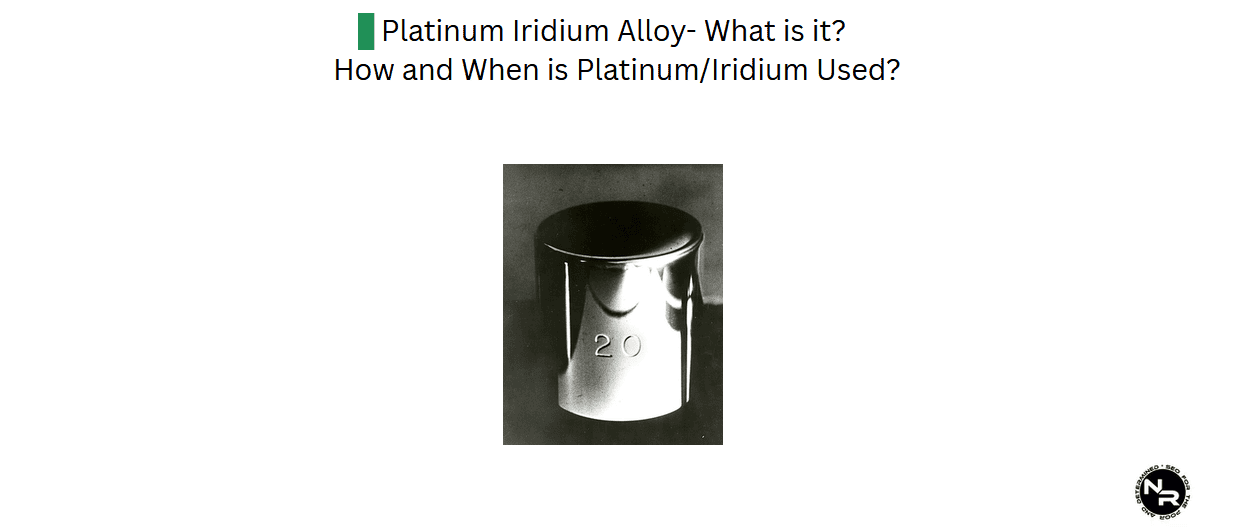
What is Platinum/Iridium Alloy (Definition and Meaning)?
Platinum-iridium alloy is an alloy of platinum and iridium that contains either 90% platinum and 10% iridium (Pt90Ir10), or 95% platinum and 5% iridium (Pt95Ir5).
Platinum Iridium is prized in jewelry industry for increased hardness, strength, and durability compared to pure platinum while retaining the luster, elegance, chemical stability and high-temperature resistance of this noble metal.
Being interested in Platinum/Iridium alloy means you’re interested in genuine, real platinum in all shapes and forms. Right? Are you also a proud American citizen who worries about the economy and has an interest in precious metal investing?
Check this out next if you answered yes!
Is Platinum Iridium/Alloy Magnetic?
No, platinum/iridium alloy isn’t magnetic. It’s paramagnetic. Platinum/Iridium is paramagnetic because both platinum and iridium are paramagnetic noble metals. Being paramagnetic means this alloy is only weakly attracted to a magnetic field and doesn’t retain any magnetism once the field is removed.
Bottom line is that your platinum/iridium jewelry shouldn’t respond to magnets of any size. You have a fake platinum/iridium jewelry item if it starts to magnetize.
Is Platinum/Iridium Alloy Hypoallergenic?
Yes, Platinum/Iridium alloy is hypoallergenic. It’s because both platinum and iridium are safe metals for people with metal allergies and alloying is unlikely to cause any problems, even in people with heightened skin sensitivity.
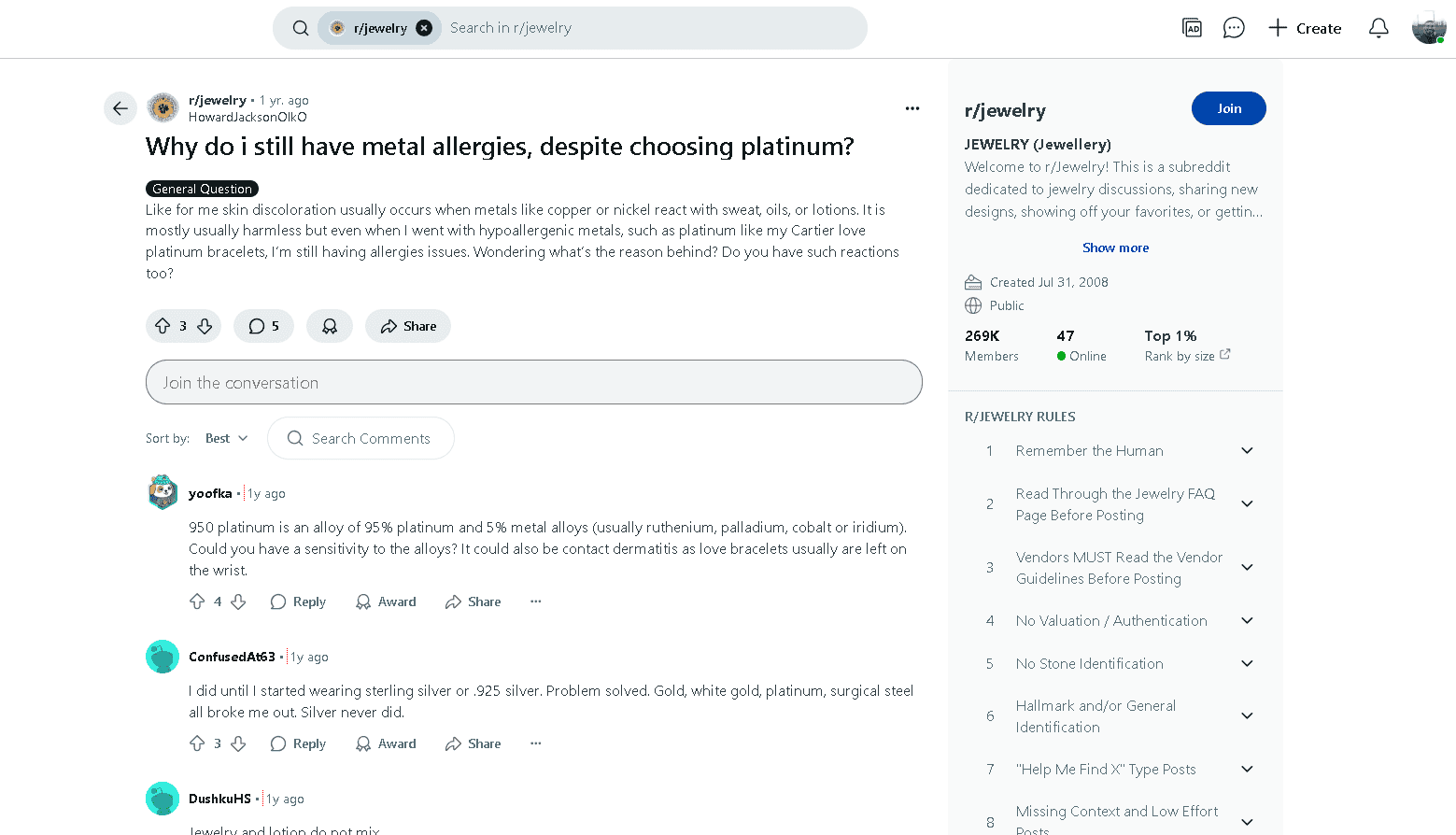
So, platinum and iridium aren’t allergenic, but they can still cause allergenic reaction in sensitive people. For example, here’s someone who got a rash from their 95% platinum and 5% iridium (Pt95Ir5).
Bottom line is that you won’t be able to wear platinum/iridium jewelry if you’re sensitive to platinum, iridium or both. But for most people this alloy is safe.
Being interested in Platinum/Iridium alloy means you’re interested in genuine, real platinum in all shapes and forms. Right? Are you also a proud American citizen who worries about the economy and has an interest in precious metal investing?
Check this out next if you answered yes!
Does Platinum/Iridium Alloy Tarnish? Does it Corrode and Oxidize?
Below are all the potential tarnishing-causing substances and their dangerous effect on Platinum/Iriidum jewelry items.
- Chlorine. Chlorine doesn’t tarnish or corrode platinum-iridium jewelry. Platinum and iridium are highly resistant to chlorine exposure under normal household and swimming pool conditions. However, prolonged exposure to highly concentrated chlorine solutions or repeated contact with hot chlorinated water dulls the polish over time.
- Bleach. Bleach doesn’t tarnish or corrode platinum-iridium. The alloy is exceptionally resistant to alkaline chemicals such as household bleach. Nevertheless, prolonged soaking in concentrated bleach isn’t recommended because it gradually dulls the jewelry’s polished finish.
- Toothpaste. Toothpaste doesn’t tarnish or corrode platinum-iridium. However, its abrasive particles create fine surface scratches that reduce the metal’s mirror-like polish. These scratches are cosmetic and can be removed by professional polishing.
- Vinegar. Vinegar doesn’t tarnish or corrode platinum-iridium. The weak acetic acid found in household vinegar isn’t strong enough to attack platinum or iridium under normal conditions.
- Hydrogen peroxide. Hydrogen peroxide doesn’t tarnish or corrode platinum-iridium. The alloy is highly resistant to oxidation and remains chemically stable during normal household exposure.
- Lemon juice. Lemon juice doesn’t tarnish platinum-iridium. The citric acid in lemon juice is too weak to react with platinum or iridium, even after prolonged contact.
- Makeup. Makeup doesn’t tarnish platinum-iridium. Cosmetic products may leave residues that temporarily reduce the metal’s shine, but they don’t chemically react with or permanently discolor the alloy.
- Alcohol. Alcohol doesn’t tarnish or corrode platinum-iridium jewelry. Isopropyl alcohol and ethanol are safe for occasional cleaning and won’t chemically damage the alloy.
- Water. Water doesn’t tarnish or corrode platinum-iridium. The alloy is highly resistant to fresh water, saltwater, and humidity.
- Nitric acid. Nitric acid doesn’t attack platinum-iridium under normal conditions. Platinum and iridium are highly resistant to nitric acid, although extremely concentrated acids, elevated temperatures, or specialized laboratory chemical mixtures eventually damage the alloy.
- Fire. Fire doesn’t tarnish or corrode platinum-iridium. This alloy has an exceptionally high melting point and excellent heat resistance. However, extreme temperatures encountered during jewelry repair or industrial processes alter the polish or require refinishing, though the alloy remains highly resistant to oxidation.
Is There Jewelry Made From Platinum Iridium Alloy?
Yes, there’s jewelry made from Platinum/Iridium, most commonly as a 95% platinum / 5% iridium blend (Pt950/Ir) and 90% platinum / 10% iridium blend (Pt900/Ir). These two platinum/iridium alloy variations are valued for their added strength, hardness, resistance to tarnish and deformation and workability in jewelry creation.
Wedding rings are the jewelry pieces most often produced from Platinum/Iridium. It’s because wedding rings are constantly worn and need to be able to maintain their structural integrity and beauty over time.
Of course, high-end jewelry items, such as necklaces and bracelets, benefit from this alloy’s luster and resistance to tarnish.
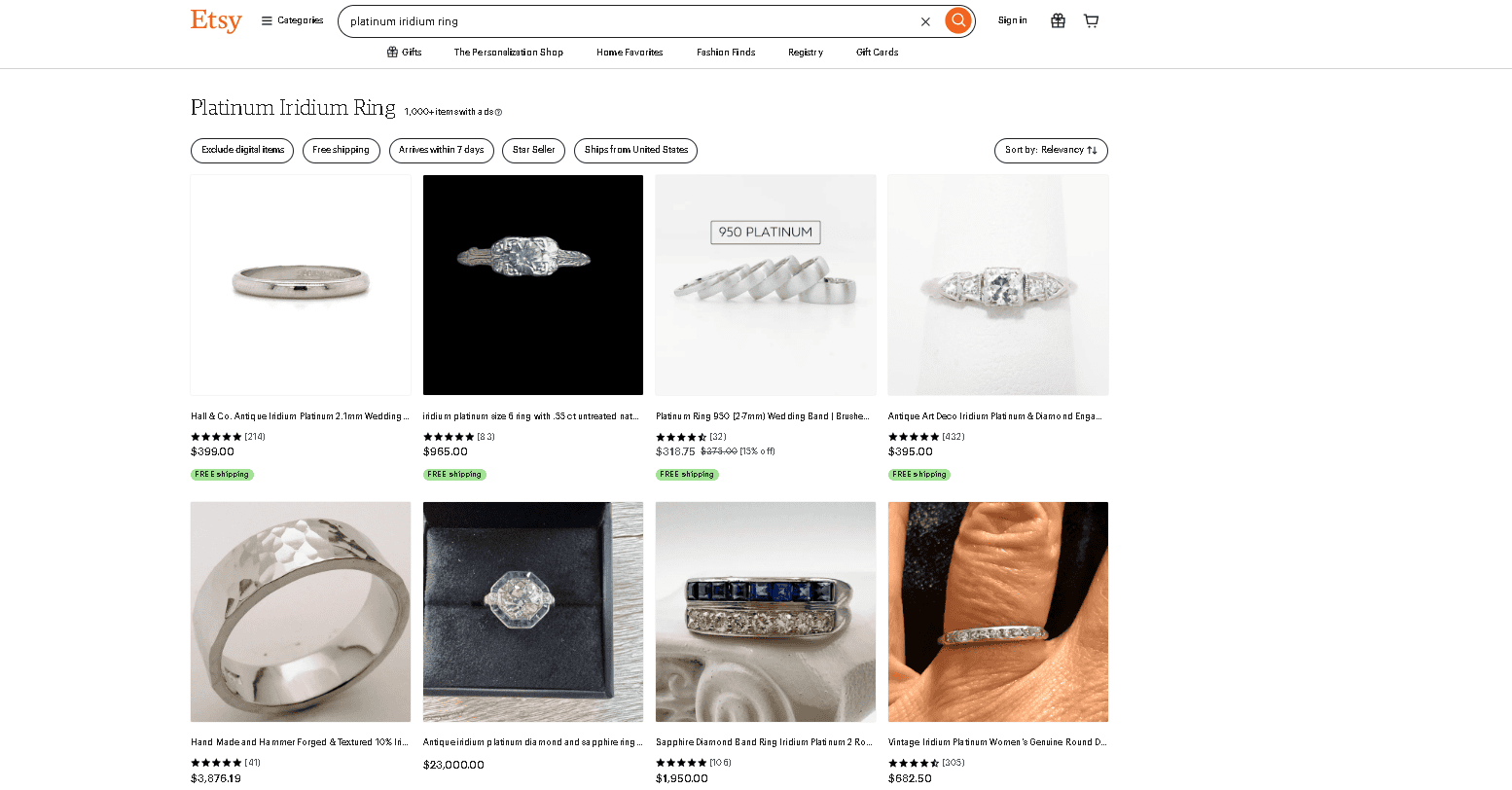
What are the Platinum/Iridium Alloy Properties That are Beneficial for Jewelry Design?
Platinum-iridium alloy is the first choice for many jewelry when creating intricate and delicate jewelry pieces. Combined, these metals give a much better result than platinum or iridium alone.
- Durability. Iridium significantly increases the hardness and strength of platinum, making the alloy more resistant to deformation and wear and tear.
- Corrosion Resistance. Both iridium and platinum are highly resistant to oxidation and corrosion, even in harsh chemical environments.
- High Melting Point. Platinum/Iridium has a melting point of around 2,100°C (3,812°F), making it suitable for high-temperature applications.
- Bio-compatibility. This alloy isn’t toxic and doesn’t cause adverse reactions when in contact with human skin.
Being interested in Platinum/Iridium alloy means you’re interested in genuine, real platinum in all shapes and forms. Right? Are you also a proud American citizen who worries about the economy and has an interest in precious metal investing?
Check this out next if you answered yes!
Is There Bullion Made From Platinum Iridium Alloy?
No, there’s no bullion made from Platinum Iridium. Instead, investment-grade platinum bullion is exclusively made from platinum 999 (fine platinum).
Investment-grade platinum coins and bars are made from IRA-approved platinum bullion and it’s these coins and bars you can include as part of your gold IRA or platinum IRA.
Augusta Precious Metals is the best precious metals investment company in the United States. You can get in touch with them to buy the IRA-eligible platinum bullion you want.
With Augusta you can either purchase platinum coins and bars to keep at your home; or purchase them as part of your new platinum IRA account.

What is the Hallmark for Platinum Iridium Alloy?
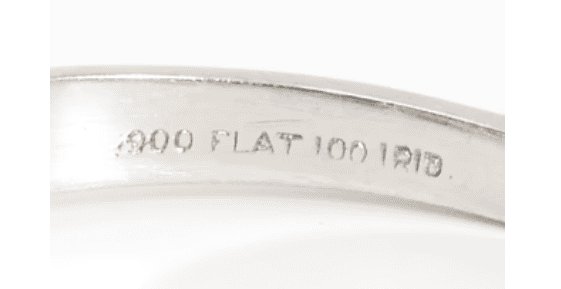
The hallmark for Platinum Iridium is typically Irid Plat, 10 Irid 90 Plat, 100 Irid 900 Plat, 10% Irid 90% Plat stamped or laser-etched onto the jewelry piece.
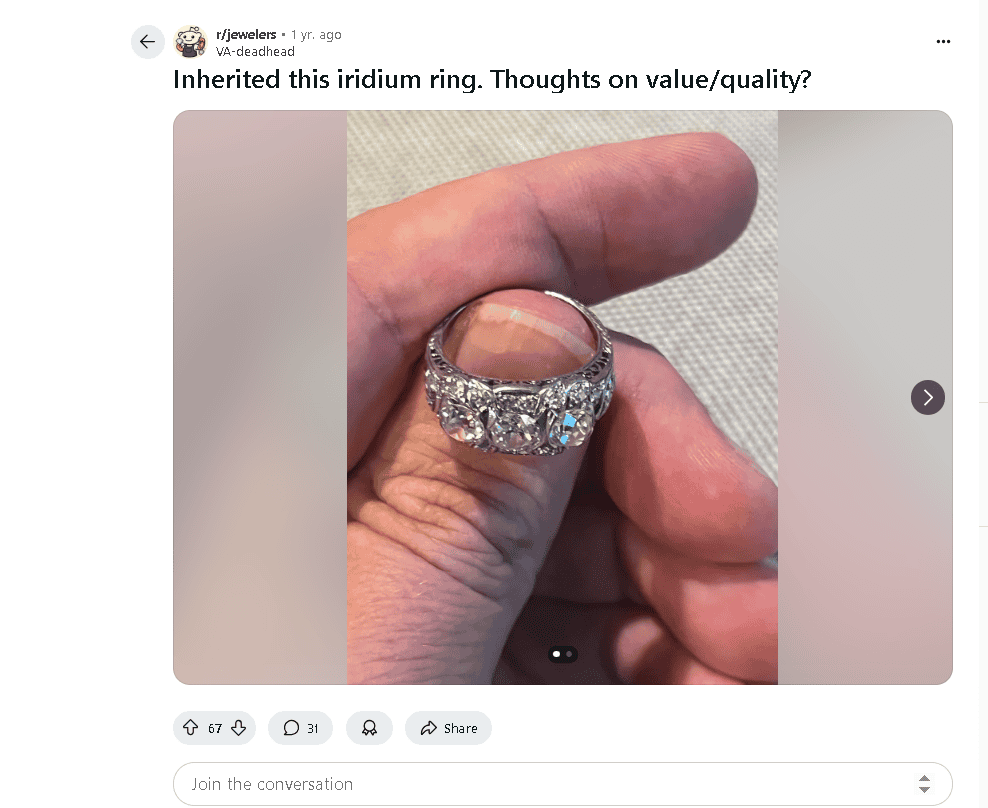
Below is an example of a platinum/iridium ring with a clearly visible hallmark.
How are Platinum and Iridium Alloyed?
Platinum and Iridium are alloyed in two distinct ways.
Vacuum Arc Melting is the most common method for creating platinum-iridium alloy. Both metals are melted together in a vacuum or inert atmosphere (like argon) to prevent oxidation. The metals are heated to temperatures around 1800-2000°C using an electric arc, allowing them to form a homogeneous mixture.
Induction Melting is another approach where electromagnetic induction heats the metals in a crucible, typically made of alumina or zirconia to avoid contamination.
How Much is Platinum Iridium Alloy Worth? What is its Melt Value?
The melt value of Platinum/Iridium depends on the current platinum and iridium market prices which fluctuate from moment to moment based on the demand/supply interplay.
To determine the worth of your platinum/iridium item first you need to measure its weight. Next, calculate the amount of platinum and iridium within your jewelry object.
For example, let’s say your object weighs 10 grams. That’s 9gr of platinum and 1gr of iridium. Multiply the 9gr of platinum with the gram spot price of this metal. Then add to that 1gr of iridium multiplied with the gram spot price of this metal.
Let’s say the spot price of platinum is $300, and of iridium is $450. The exact melt value of your platinum/iridium item would be 9 x $300+ 1 x $450= $3150.
Zolotnik silver is worth much more when sold as collectibles. Some .875 items sold for hundreds of dollars at auctions, and their weight didn’t pass 40 grams.
The value there wasn’t the silver content, but the perceived value of the piece as a whole.
- Iridium Platinum Explained- https://www.georgianjewelry.com/blogs/news/iridium-platinum-explained
- Why do i still have metal allergies, despite choosing platinum?- https://www.reddit.com/r/jewelry/comments/1eypy4m/why_do_i_still_have_metal_allergies_despite/
- Platinum-Iridium Alloy: Properties, Applications, and Cases- https://www.refractorymetal.org/platinum-iridium-alloy-properties-applications-and-cases.html
- Inherited this iridium ring. Thoughts on value/quality?- https://www.reddit.com/r/jewelers/comments/1fyhu15/inherited_this_iridium_ring_thoughts_on/
- Platinum Iridium Ring Collections- https://www.etsy.com/market/platinum_iridium_ring

Nikola Roza
Nikola Roza is the owner of Nikola Roza- Everything You Can Learn About Precious Metals. He writes for people who love precious metals and jewelry and who're interested in adding gold, silver platinum and palladium to their Gold IRAs and retirement portfolios.