Disclosure: Some of the links you’ll encounter are unique links. Click and buy something and I’ll earn some money, at zero expense to you. Thank you!
Testing rhodium for purity at home?
Is it really possible?
And what is the best way to see if rhodium jewelry is real or fake?
Find out below!
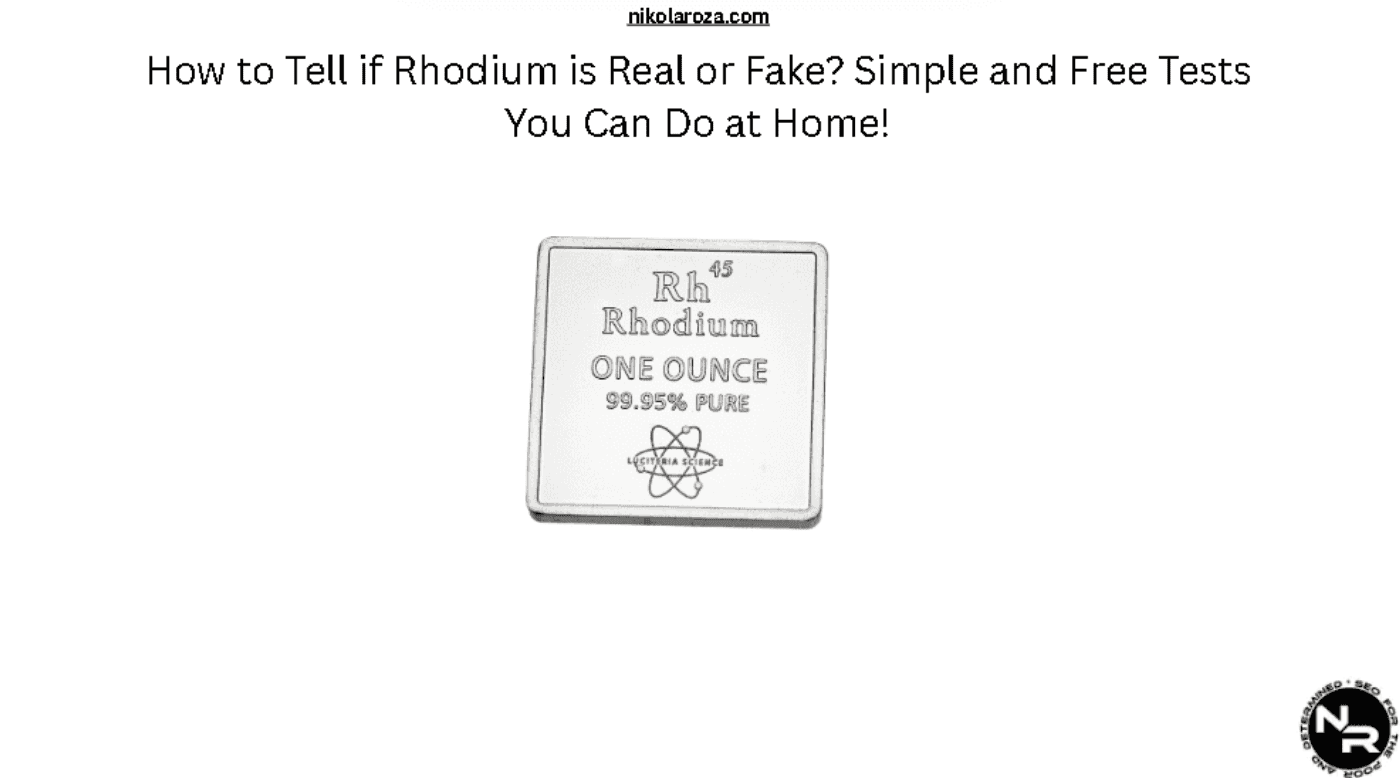
TLDR- How to Tell if Rhodium is Real or Fake?
The best and most reliable way to tell whether rhodium is real or fake is do the X-ray fluorescence (XRF) analysis. This non-destructive technique measures the emitted X-rays after a sample is irradiated, revealing its elemental composition, including rhodium purity.
Alternatively, you can do a fire assay or cupellation which involves fusing the sample and measuring the resulting rhodium.
See below the methods that don’t work so you don’t accidentally damage your rhodium-plated jewelry.
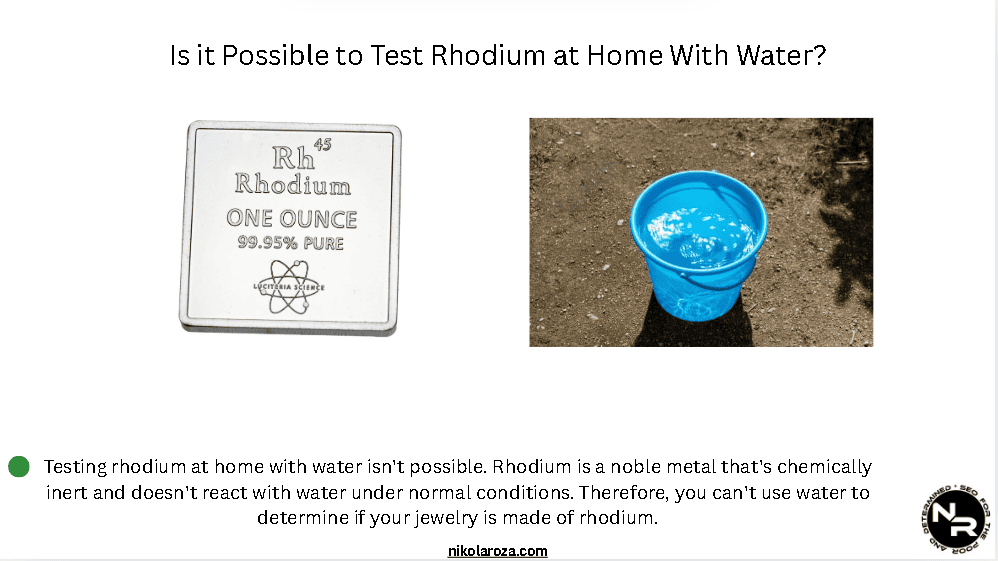
Is it Possible to Test Rhodium at Home With Water?
No, testing rhodium at home with water isn’t possible. Rhodium is a noble metal that’s chemically inert and doesn’t react with water under normal conditions. Therefore, you can’t use water to determine if your jewelry is made of rhodium.
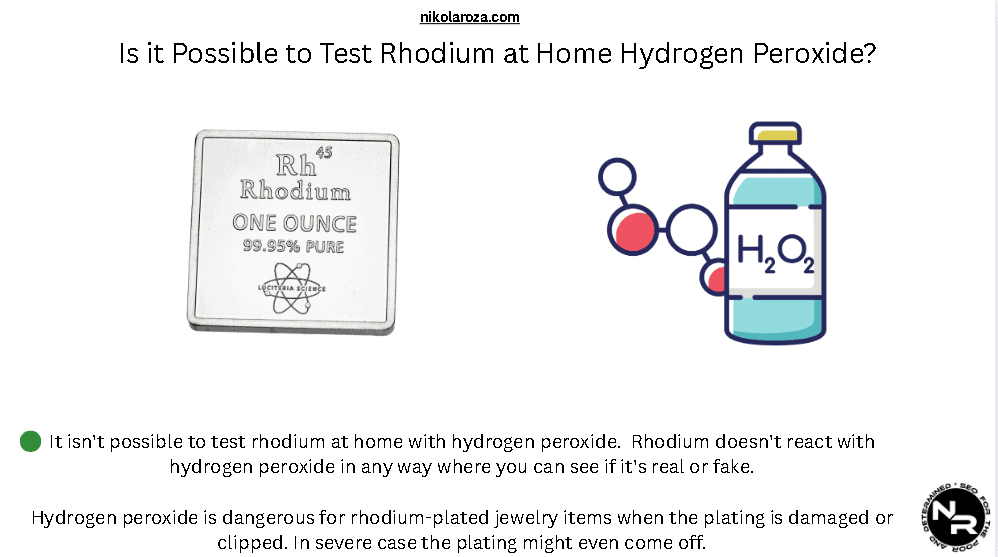
Is it Possible to Test Rhodium at Home With Hydrogen Peroxide?
No, it isn’t possible to test rhodium at home with hydrogen peroxide. Rhodium doesn’t react with hydrogen peroxide in any way where you can see whether it’s real or fake.
Hydrogen peroxide is dangerous for rhodium-plated jewelry items when the plating is damaged or clipped. In severe case the plating might come off from being exposed to hydrogen peroxide and this usually happens when people use this chemical to aggressively clean their jewelry.
Check this out next once you’re done reading my “is rhodium real or fake” guide. Especially important if you’re an American citizen with a keen interest in precious metals and investing.
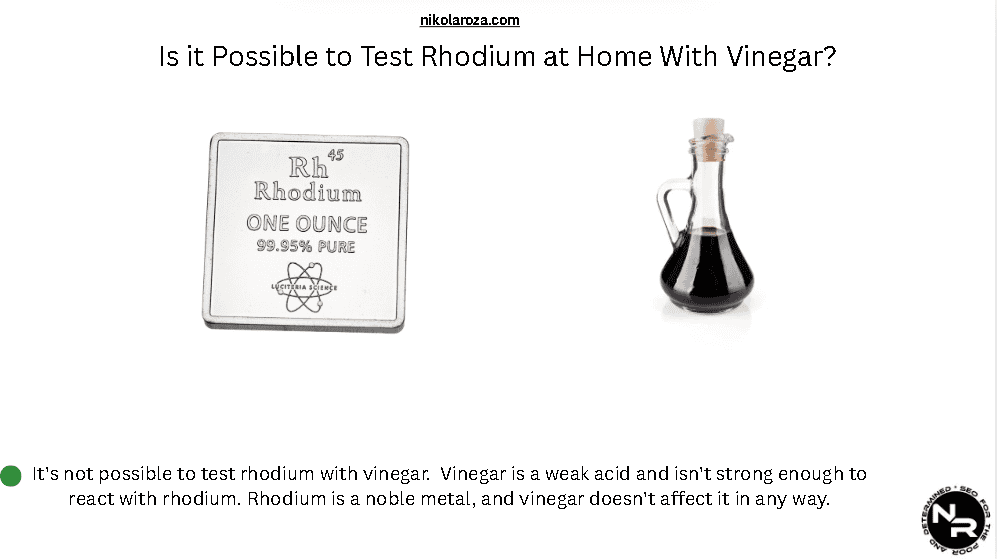
Is it Possible to Test Rhodium With Vinegar?
No, it’s not possible to test rhodium with vinegar. Vinegar is a weak acid and isn’t strong enough to react with rhodium. Rhodium is a noble metal, and vinegar doesn’t affect it in any way.
Is it Possible to Test Rhodium With a Lighter Flame or Fire?
No, it’s not possible to test rhodium with a lighter flame or a strong fire.
Rhodium has a high melting point of 1960 °C (3560 °F). A lighter flame doesn’t generate enough heat to melt or significantly alter the rhodium. Normally, you’d want to see some surface changes when you expose a metal to flame but with rhodium there’ll be none.
Remember that lighter flame could damage rhodium-plated jewelry item. Especially if the plating is thin or worn out.
Is it Possible to Test Rhodium at Home With Nitric Acid?
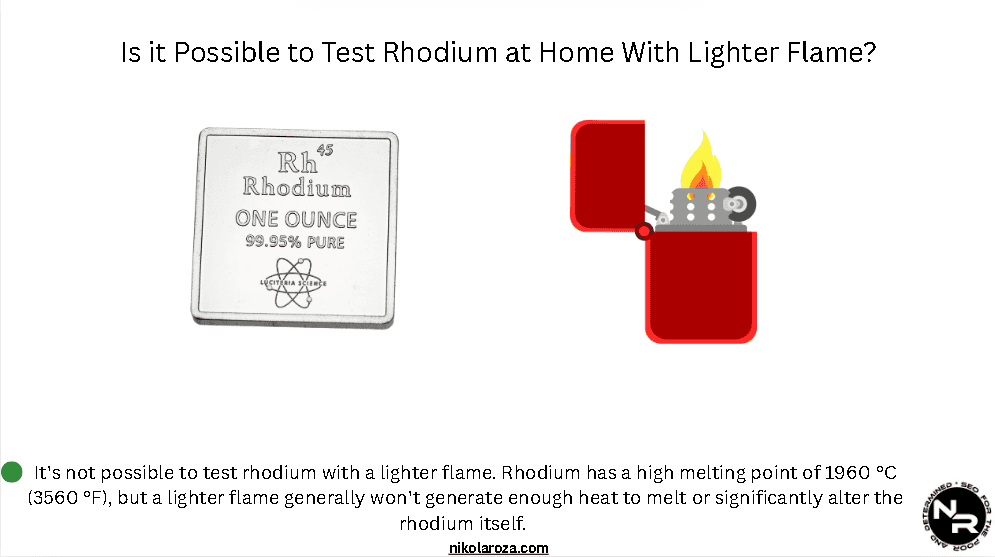
No, it’s not possible to test rhodium with nitric acid. Rhodium as a noble metal doesn’t react to nitric acid and exposing rhodium jewelry to nitric acid doesn’t give conclusive results.
Rhodium plating over some other precious metals as base might react to nitric acid. Not because rhodium reacts to nitric acid, but because the plating is damaged or thin and covering a base metal that reacts to nitric acid. A good example is sterling silver because sterling silver tarnishes when exposed to nitric acid.
Check this out next once you’re done reading my “is rhodium real or fake” guide. Especially important if you’re an American citizen with a keen interest in precious metals and investing.
Is it Possible to Test Rhodium at Home With Magnets?
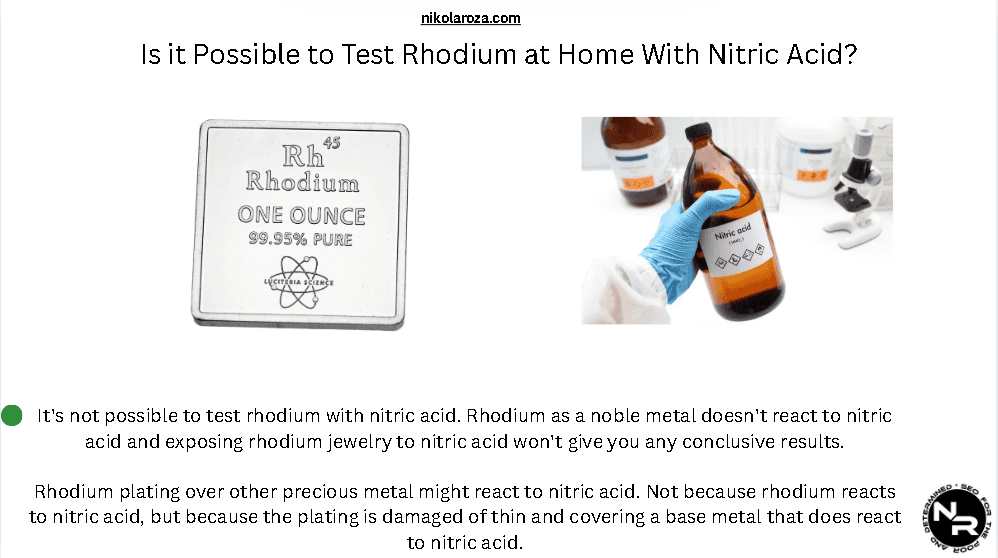
No, it isn’t possible to test rhodium at home with magnets. Rhodium is paramagnetic, meaning it’s weakly attracted to a magnetic field and doesn’t retain any magnetism after being exposed to a magnet.
Next, rhodium is often alloyed with other metals and these can be magnetic or ferromagnetic. But you wouldn’t know which metal in the alloy is responding to your magnet without taking it to a professional jeweler for inspection.
Is it Possible to Test Rhodium at Home With Iodine?
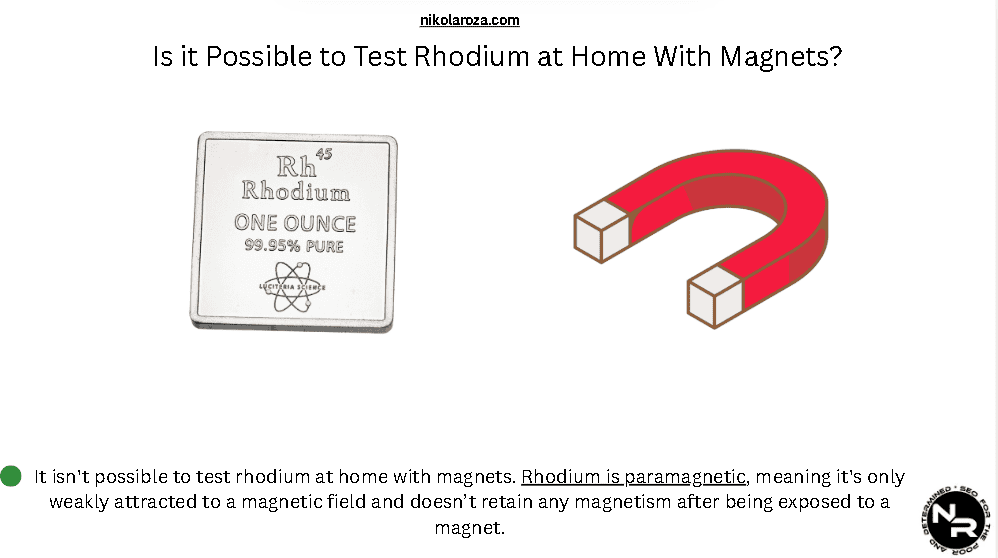
No, it isn’t possible to test rhodium at home with iodine. Rhodium is a noble, non-reactive metal and iodine has no effect on rhodium. This means iodine drops on a surface of a rhodium-plated jewelry item don’t give any conclusive results.
You can use iodine to test whether palladium is real or fake. This is important if you’re trying to use iodine to test a rhodium-plated palladium jewelry item.
In that case all that’s needed is for rhodium-plating to be thinned out or cracked and the palladium base will start to change color in response to iodine.
Check this out next once you’re done reading my “is rhodium real or fake” guide. Especially important if you’re an American citizen with a keen interest in precious metals and investing.
Is it Possible to Test Rhodium at Home With Toothpaste?
No, it isn’t possible to test rhodium with toothpaste. Rhodium as a noble metal is non-reactive and won’t react in any way when exposed to toothpaste.
But, toothpaste is abrasive and it’ll scratch your rhodium jewelry if you place it on rhodium jewelry and leave it there for a few hours. Rhodium-plated jewelry is especially vulnerable to toothpaste’s abrasive properties.
Is it Possible to Test Rhodium at Home With Eraser?
No, it isn’t possible to test rhodium at home with an eraser. Rubbing an eraser over a piece of rhodium jewelry won’t leave any clue on whether said piece of jewelry is made of authentic rhodium or not.
Rhodium-plated silver jewelry might react to silver because you can use erasers to test whether silver is real or fake.
Is it Possible to Test Rhodium at Home With Bleach?
No, it isn’t possible to test rhodium at home with bleach. Rhodium is a hard, noble metal that unreactive doesn’t respond to bleach and is unreactive.
Bleach corrodes weaker, susceptible metals but rhodium is too hard for it, especially upon brief exposure. Bleach damages rhodium-plated jewelry when the plating is damaged or worn out.
Check this out next once you’re done reading my “is rhodium real or fake” guide. Especially important if you’re an American citizen with a keen interest in precious metals and investing.
Is it Possible to Test Rhodium at Home With Sound?
No, it isn’t possible to test rhodium at home with sound (rhodium ping test). Rhodium doesn’t produce any distinct sound when tapped.
This is opposite to silver testing where you can use sound to test whether silver is real or fake.

Is it Possible to Test Rhodium at Home With Alcohol?
No, it’s not possible to test rhodium at home with alcohol. Alcohol doesn’t affect rhodium in a way that allows for its identification.
You can use rubbing alcohol for cleaning rhodium jewelry without causing damage exactly because alcohol doesn’t react with rhodium in any way.
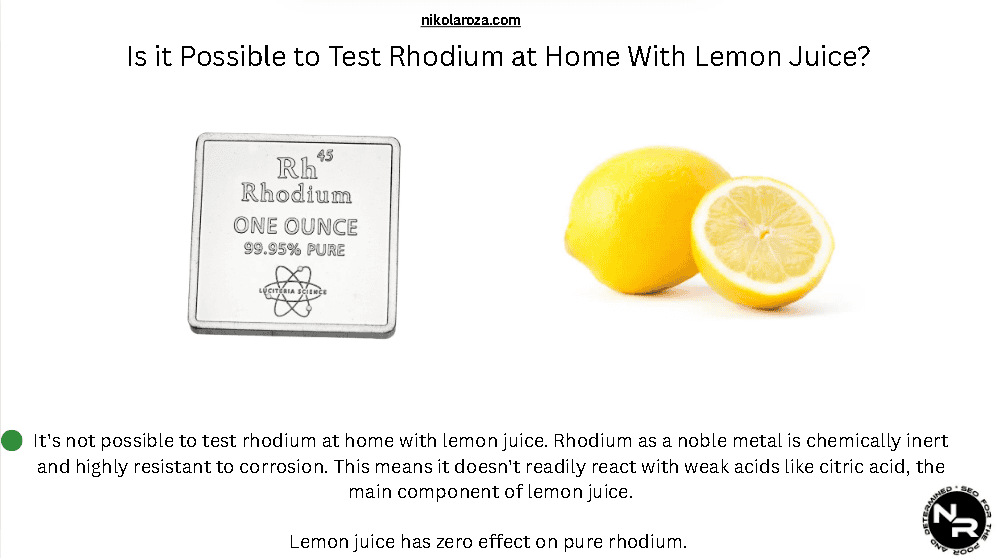
Is it Possible to Test Rhodium at Home With Lemon Juice?
No, it’s not possible to test rhodium at home with lemon juice. Rhodium as a noble metal is chemically inert and highly resistant to corrosion. Meaning rhodium doesn’t readily react with weak acids like citric acid coming from lemons and lemon juice.
Lemon juice has zero effect on pure rhodium. Lemon juice can, however, further damage already damaged or poorly done rhodium plating.
Check this out next once you’re done reading my “is rhodium real or fake” guide. Especially important if you’re an American citizen with a keen interest in precious metals and investing.
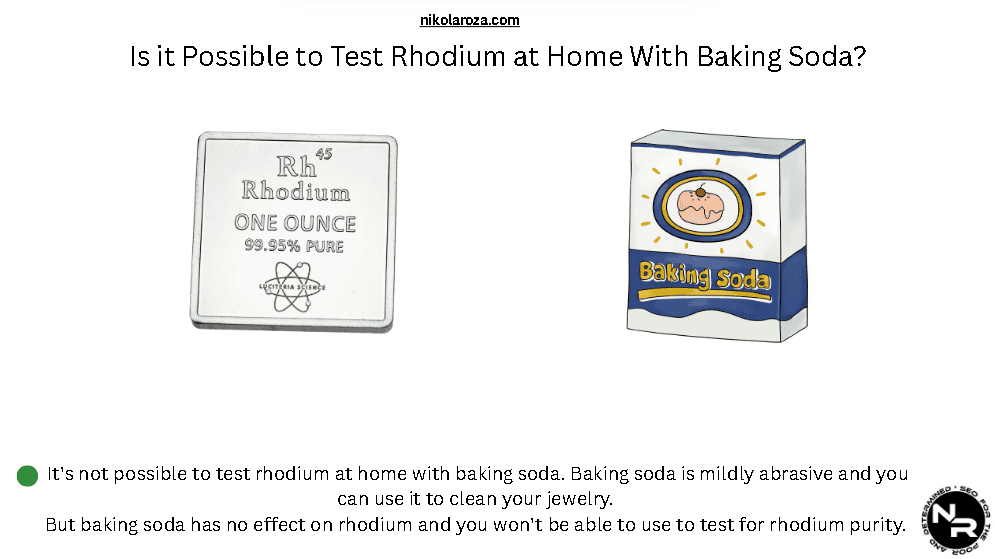
Is it Possible to Test Rhodium at Home With Baking Soda?
No, it’s not possible to test rhodium at home with baking soda. Baking soda is mildly abrasive and you can use it to clean your jewelry. But baking soda has no effect on rhodium and you won’t be able to use it to test for rhodium purity.
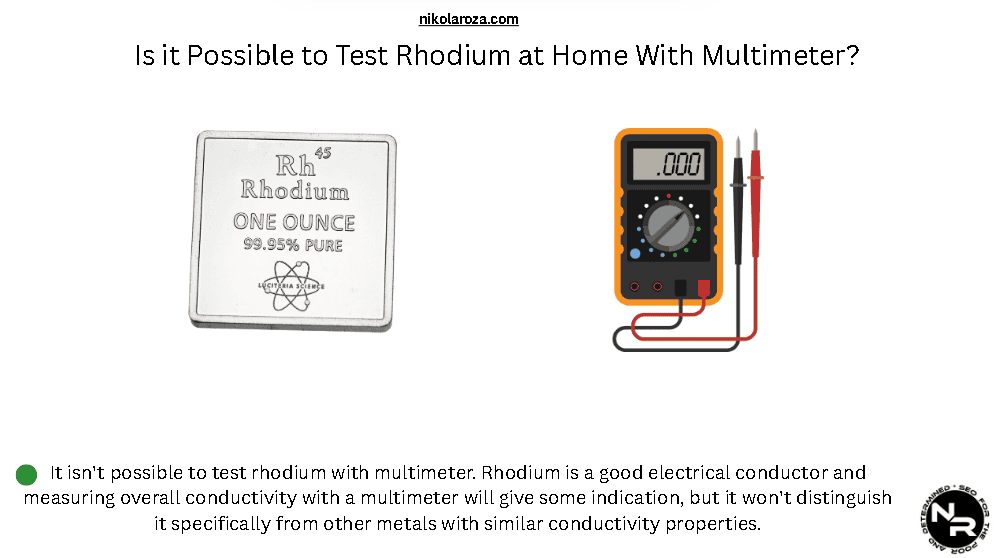
Is it Possible to Test Rhodium with Multimeter?
No, it isn’t possible to test rhodium with multimeter.
Rhodium is a good electrical conductor and measuring overall conductivity with a multimeter might give you a clue. But it won’t distinguish it specifically from other metals with similar conductivity properties.
Rhodium-plated jewelry also can’t be tested with a multimeter. Because in that case multimeter’s reading will be dominated by the underlying base metal, and not by the thin rhodium layer.
- How can we tell if a jewelry is rhodium?- https://www.quora.com/How-can-we-tell-if-a-jewelry-is-rhodium
- How to tell if silver is plated in rhodium? https://www.reddit.com/r/jewelers/comments/17lge52/how_to_tell_if_silver_is_plated_in_rhodium/
- Tips for Quickly Identifying Precious White Metal Jewelry- https://www.mgsrefining.com/blog/tips-for-quickly-identifying-precious-white-metal-jewelry/
- Value of Rhodium and is my Rhodium Real?- https://www.everything-wedding-rings.com/value-of-rhodium-and-is-my-rhodium-real.html

Nikola Roza
Nikola Roza is the owner of Nikola Roza- Everything You Can Learn About Precious Metals. He writes for people who love precious metals and jewelry and who're interested in adding gold, silver platinum and palladium to their retirement portfolios. Nikola is passionate about gold IRAs and investing in multiple asset types for a safer financial future. He also runs a successful online jewelry store where you can buy precious metal jewelry and various replicas of famous coins and bars. Learn about Nikola here.