
Disclosure: Some of the links you’ll encounter are affiliate links. If you click and buy something, I’ll get a commission. If you’re reading a review of some precious metals company, please understand that some of the links are affiliate links that help me pay my bills and write about what I love with no extra cost to you. Thank you!
intro
image
Table of Contents
Does Rose Gold Tarnish, Yes or No?
Yes, rose gold tarnishes.
Rose gold tarnish happens because the copper in rose gold alloy reacts with moisture and oxygen and starts to oxidize.
Here are all the substances that can potentially make rose gold change its appearance (either via light patination or full on tarnishing).
| Substance | Tarnish (Yes/No) |
|---|---|
| Water | Rose gold doesn't tarnish in water. Water has zero effect on rose gold and can't tarnish or corrode it. However, saltwater due to its corrosive nature affects rose gold jewelry items over time, especially affecting the copper content in the alloy. |
| Fire | Fire and strong flames don't tarnish and corrode rose gold. Rose gold is stable under heat, though extreme temperatures cause the copper to oxidize and give rose gold a darker red hue. |
| Chlorine | Chlorine tarnishes and corrodes rose gold. The copper in rose gold makes it more susceptible to chlorine damage than other gold alloys. Chlorine reacts with the copper in the alloy and causes discoloration and structural weakening. I recommend you avoid going into chlorinated pools when wearing rose gold jewelry. |
| Bleach | Bleach both tarnishes and corrodes rose gold. The copper component in rose gold is particularly vulnerable to bleach. Bleach causes discoloration and deterioration of the metal over time. Avoid exposing your rose gold to bleach. |
| Baking soda | White gold doesn't tarnish when exposed to baking soda. In fact, baking soda is commonly used as a gentle cleaning agent for white gold jewelry to remove dirt and restore shine. |
| Toothpaste | Toothpaste doesn't tarnish and corrode rose gold. However, the abrasive particles in toothpaste make tiny, microscopic scratches on the surface of the alloy. Over time this degrades the metal's surface and diminishes its warm, rosy luster. I don't recommend you use toothpaste to clean your rose gold jewelry. |
| Vinegar | Vinegar tarnishes rose gold due to its acidity reacting with the copper content. Avoid regular contact with vinegar to maintain the appearance of rose gold jewelry. Mild and brief exposure won't cause immediate damage. |
| Hydrogen peroxide | Hydrogen peroxide doesn't tarnish and corrode rose gold. However, rose gold is affected by hydrogen peroxide with long term, repeated exposure. The copper in rose gold reacts with hydrogen peroxide and gets slightly discolored. It's better to use gentler cleaning solutions specifically designed for rose gold jewelry. |
| Lemon juice | Lemon juice tarnishes rose gold over time. The citric acid in lemon juice reacts with the copper in the rose gold alloy, causing discoloration. Don't clean rose gold with lemon juice if you love your rose gold jewelry. |
| Makeup | Makeup has no immediate effect on rose gold. It doesn't tarnish, corrode, oxidize or rust rose gold jewelry items. However, some makeup products contain harsh chemicals that over time affect the copper content in rose gold. |
| Nitric acid | Nitric acid affects rose gold by reacting with the copper content in the alloy. While yellow gold within the alloy is resistant, the copper that gives rose gold its distinctive color is vulnerable to nitric acid which causes discoloration and deterioration. |
| Alcohol | Alcohol doesn't tarnish or corrode rose gold. You can use rubbing alcohol (isopropyl alcohol) to clean your rose gold jewelry. However, frequent cleaning of rose gold jewelry items with alcohol isn't recommended as alcohol dries out the metal and affects the copper content over time. Your rose gold will develop a patina sooner if you regularly clean it with alcohol. |
What Does Tarnished Rose Gold Look Like?
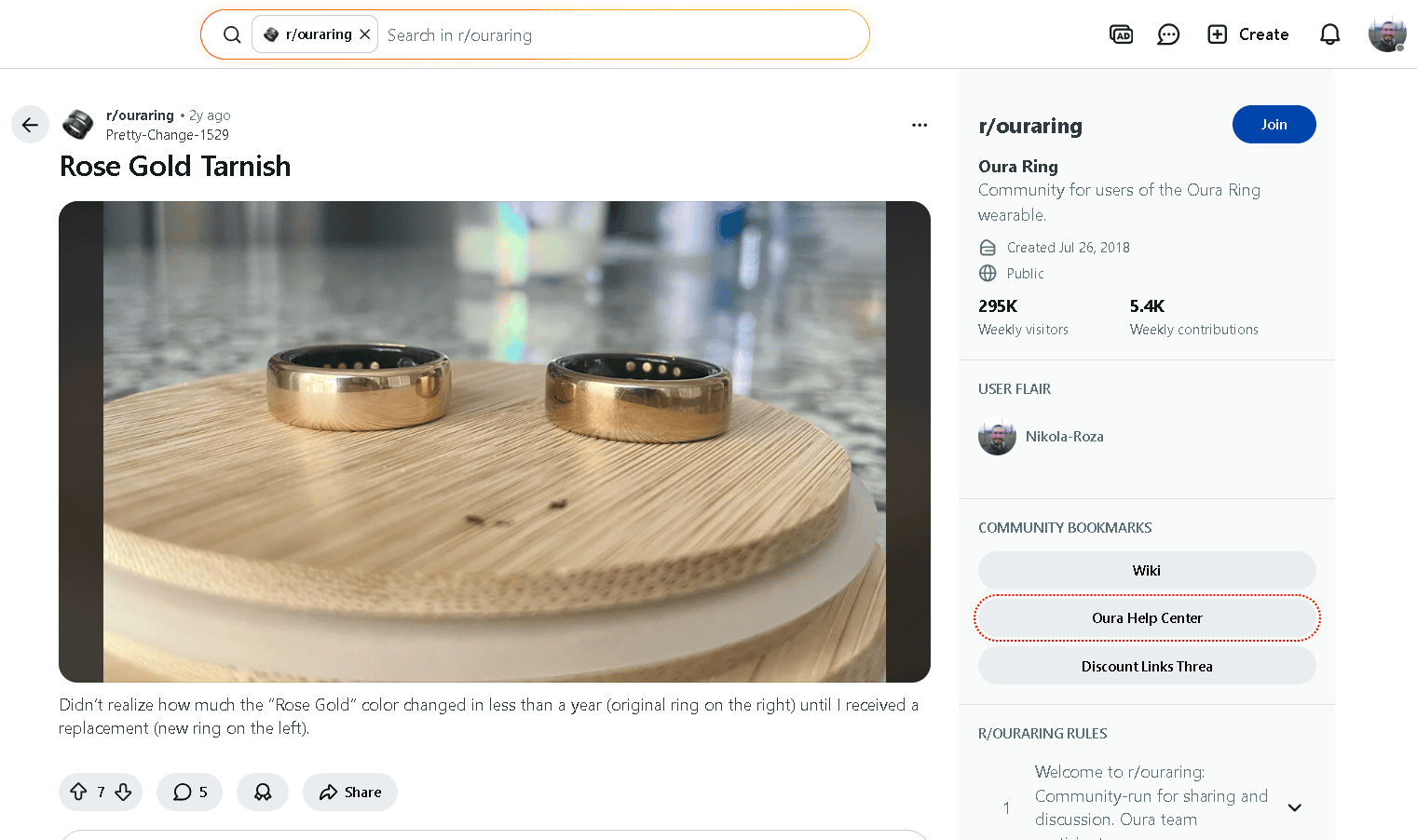
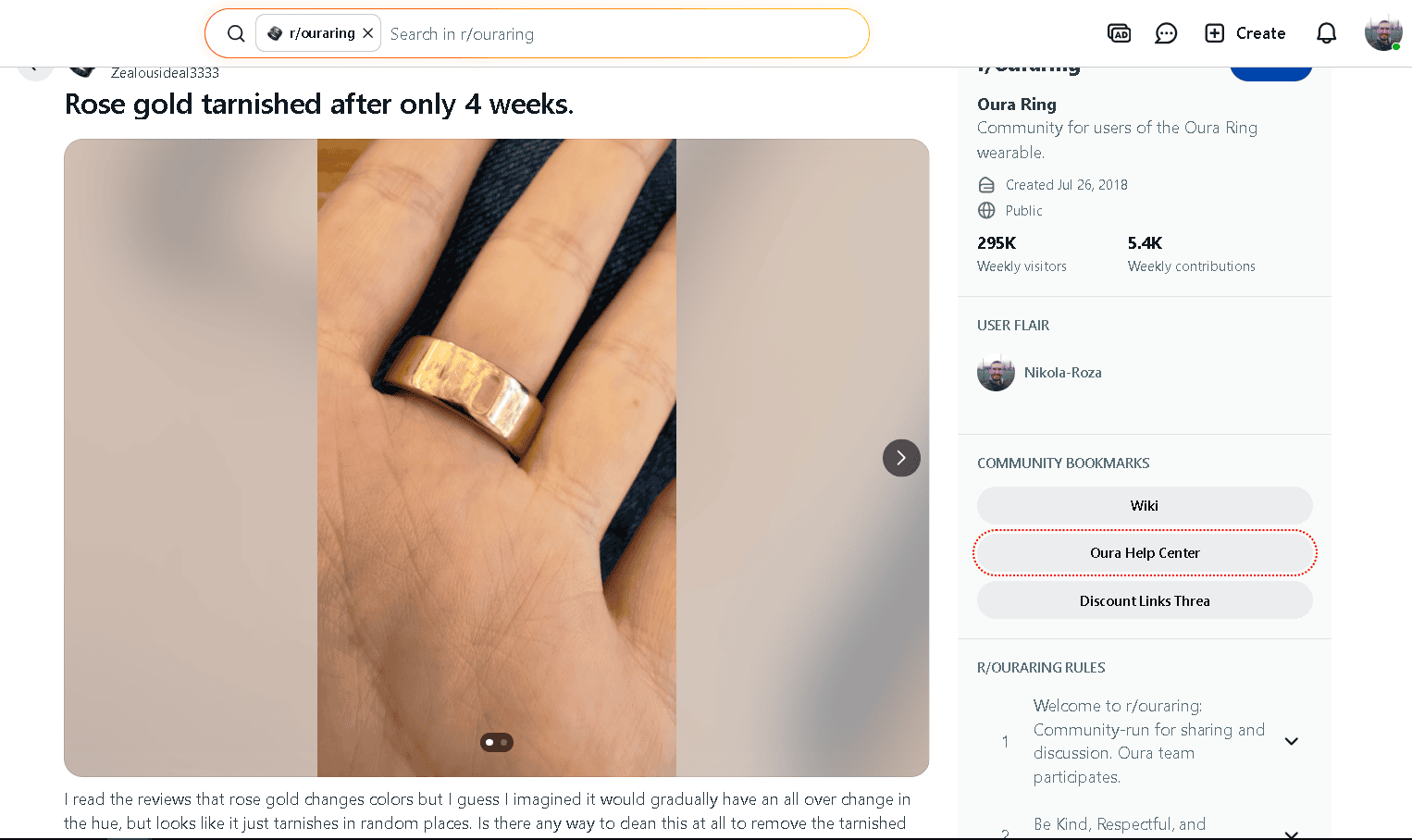
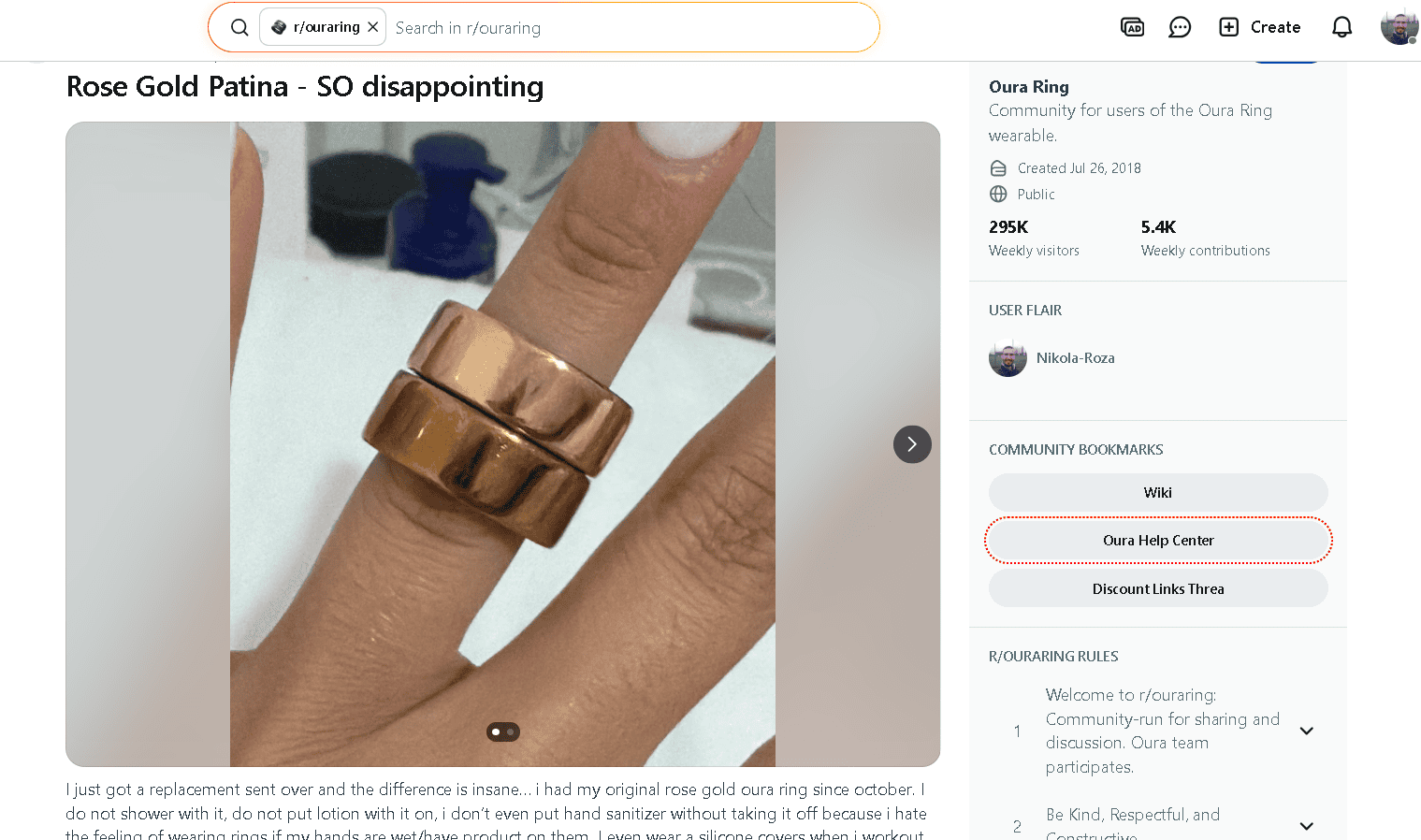
Tarnished rose gold looks darker, muted, and more reddish-brown compared to new or recently polished rose gold.
Rose gold’s appearance changes due to copper oxidation with the rose gold alloy. Jewelry connoisseurs often describe this process as “rose gold developing a vintage patina’.
In cases of oxidation from chemicals (like chlorine) or heavy wear, it may develop dark, non-shiny spots.
See examples below.

Do Oura Rings Made of Rose Gold Tarnish?
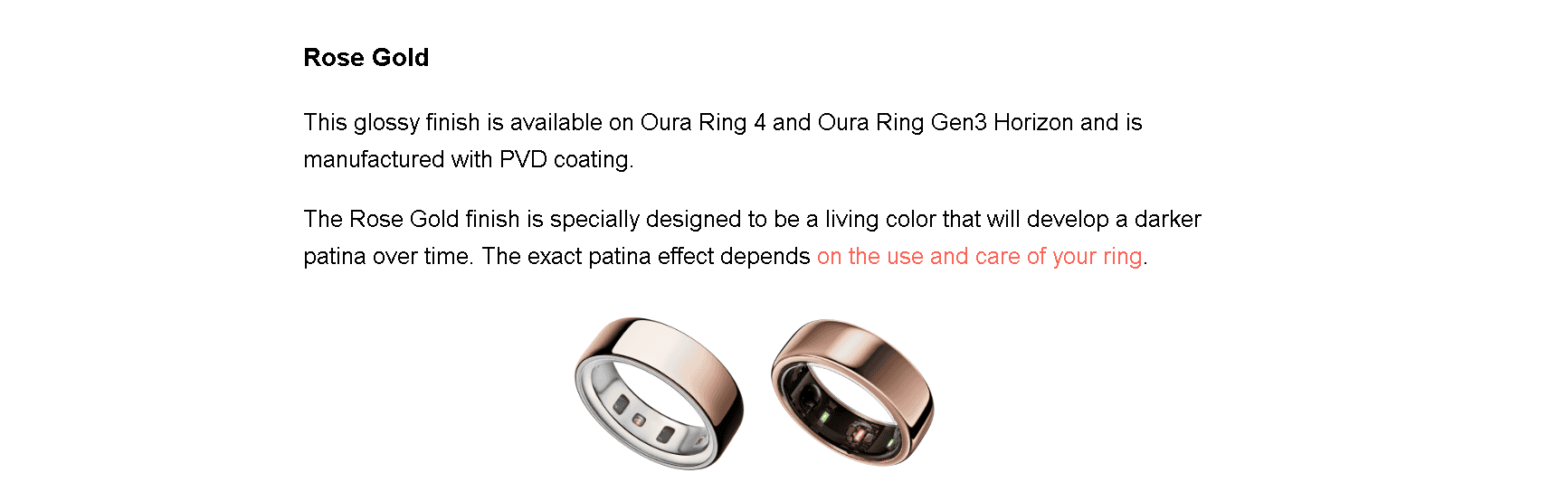
Yes, Oura rings with rose gold fiishin tarnish by developing a “living color” patina, meaning the glossy finish will darken, turn brown, or become a bronzy, copper color over time.
This color change is a result of the PVD coating aging, which many users report starts within a few months, turning the ring from pink to a darker, sometimes uneven, tone.
Some users avoid showering or using soaps while wearing the ring to maintain the original look for longer, However, the color change is generally considered inevitable for this particular finish.
Does 18k Rose Gold Tarnish?
Yes, 18k rose gold tarnishes due to high copper content.
18k rose gold over time develops a slight, warm patina due to oxidation of its copper component. This is often considered a desirable vintage characteristic.
Note: 18k rose gold tarnishes (patinates) way slower and to a lesser degree than lower karatage rose gold alloys like 14k and 10k rose gold.
This is because of a much higher non-tarnishing pure gold content (18k gold contains 75% (18/24 parts) pure gold content).
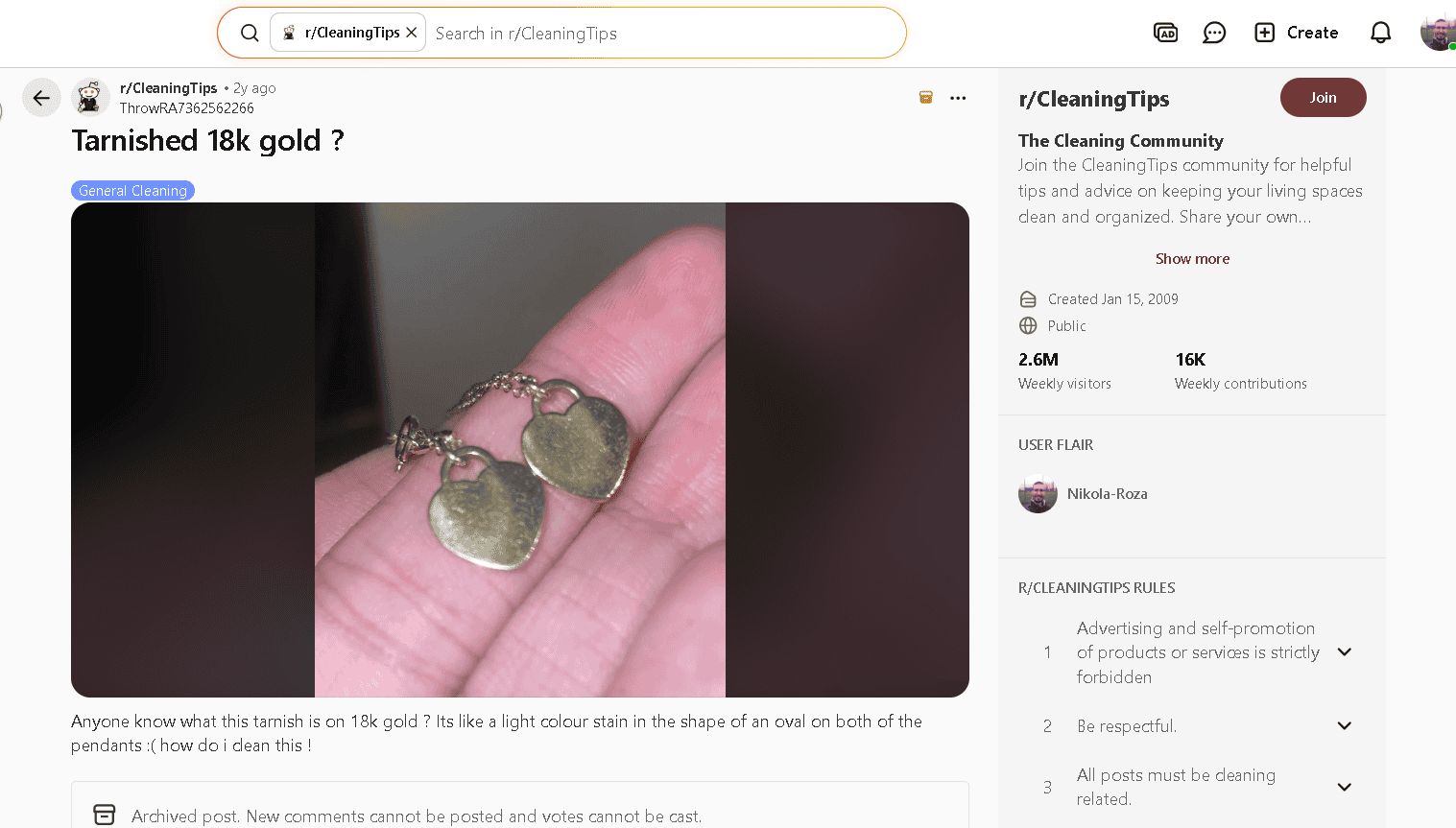
Here’re some examples of tarnished (patinated) 18k rose gold for you to see what it looks like.
Does 14k Rose Gold Tarnish?
Yes, 14k rose gold tarnishes due to high copper content.
14k rose gold over time develops a slight, warm patina due to oxidation of its copper component. This is often considered a desirable vintage characteristic.
Note: 14k rose gold tarnishes (patinates) slower and to a lesser degree than 10k rose gold, a lower karatage rose gold alloy.
This is because of a much higher non-tarnishing pure gold content (14k gold contains 58.3% pure gold (14/24 parts)).
However, 14k rose gold patinates (tarnishes) faster than 18k rose gold.
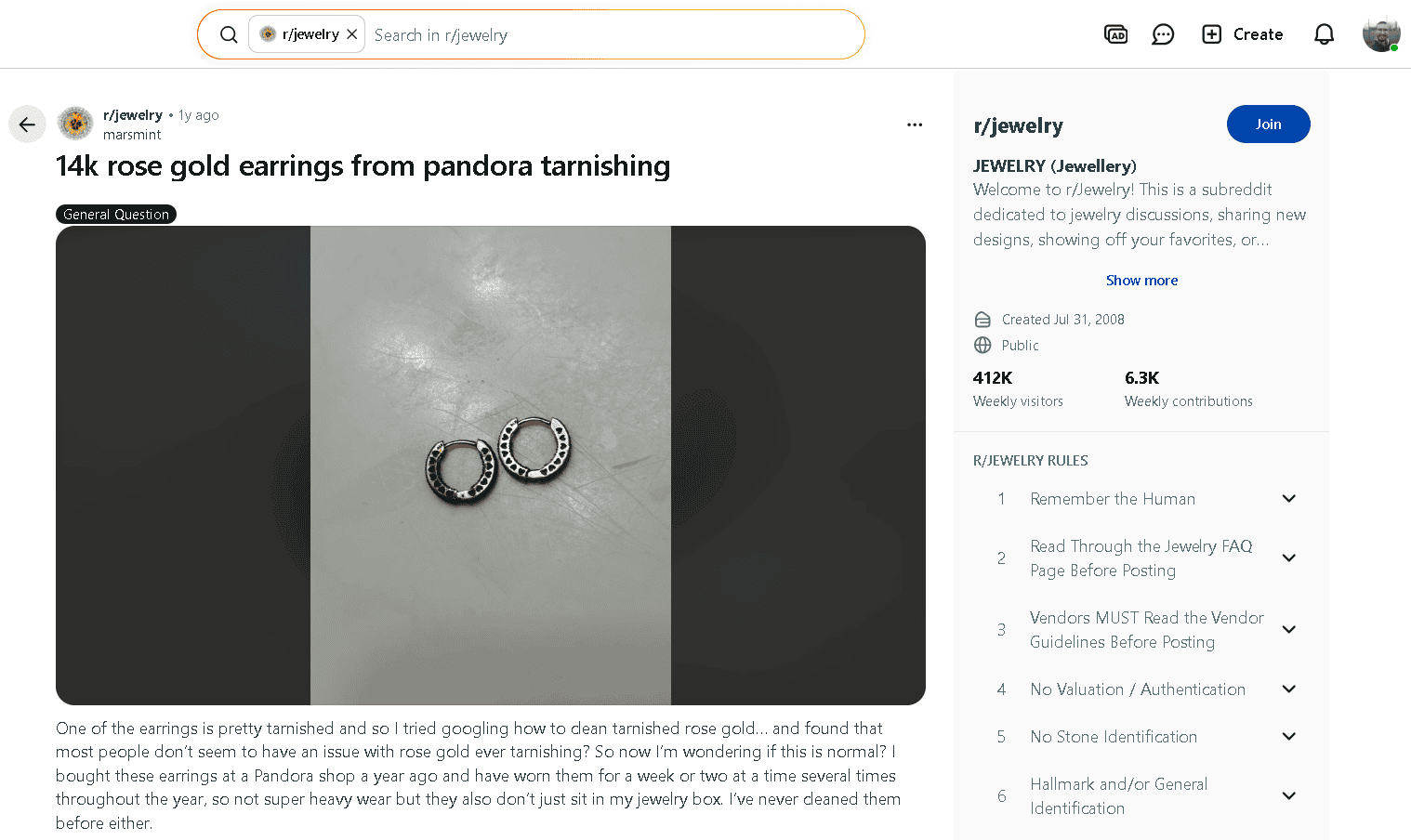
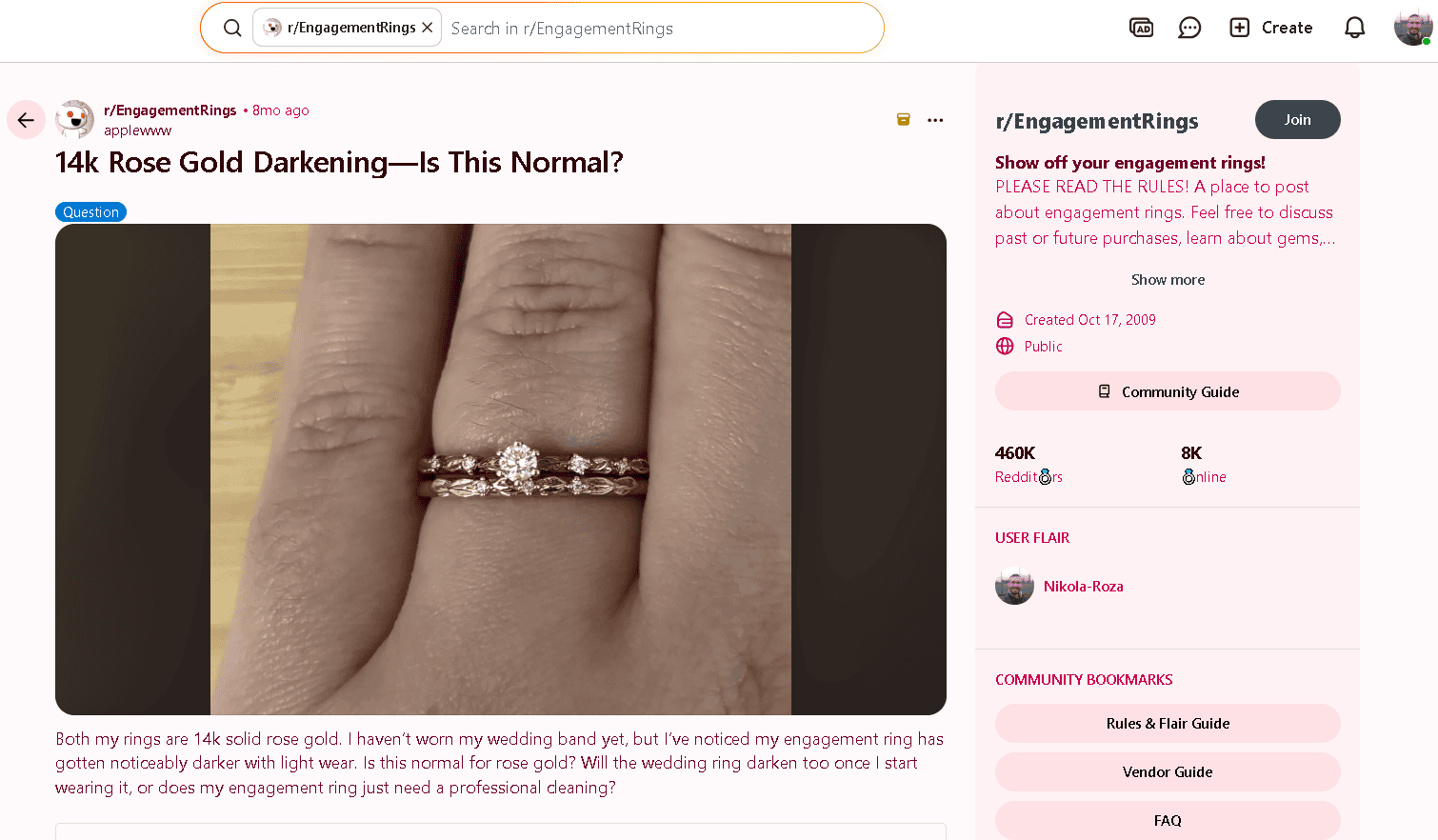
Here’re some examples of tarnished (patinated) 14k rose gold for you to see what it looks like.
Does 10k Rose Gold Tarnish?
Yes, 10k rose gold tarnishes due to high copper content.
10k rose gold over time develops a slight, warm patina due to oxidation of its copper component. This is often considered a desirable vintage characteristic.
Note: 10k rose gold tarnishes (patinates) way faster and to a higher degree than higher karatage rose gold alloys like 14k and especially 18k rose gold.
This is because of a much higher copper content (58.3%) and lower amount of pure gold content content (10k gold contains 41.7% (10/24 parts) pure gold content).
Here’re some examples of tarnished (patinated) 10k rose gold for you to see what it looks like.


Does Plated Rose Gold Tarnish?
Yes, rose gold-plated jewelry tarnishes over time. Plated rose gold tarnishes because the thin layer of gold eventually wears off, exposing the base metal to oxygen and moisture, which causes oxidation. Due to its high copper content, plated rose gold is specifically prone to developing a darker patina or fading over time as the plating degrades.
With proper care plated rose gold could last you 2–3 years, but then you’ll need to pay for replating.
Does Fake Rose Gold Tarnish?
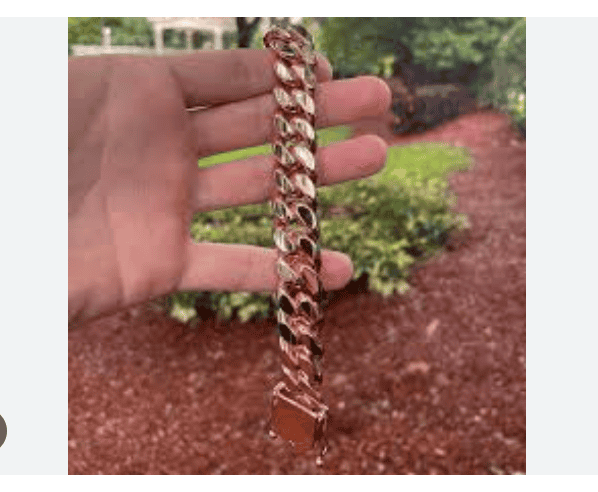
Yes, fake or plated rose gold will tarnish and fade over time. In fact, it’ll tarnish much faster due to the lack of solid gold and over abundance of other, cheap tarnishing materials.
Your rose gold item may darken and turn completely black or green. These are all signs pointing to fakery and the fact your supposed “real” rose gold item is actually fake.
The basic principle is that genuine rose gold tarnishes evenly and develops an attractive patina. Fake rose gold suffer ugly oxidation which makes the jewelry item unpleasant to look at.
How to Clean Tarnish off Rose Gold?
References:
- Tarnish on 18K rose gold band after holding it once. Did I get scammed?- https://www.reddit.com/r/EngagementRings/comments/1126sm4/tarnish_on_18k_rose_gold_band_after_holding_it/
- Rose Gold Tarnish- https://www.reddit.com/r/ouraring/comments/1dt6dy5/rose_gold_tarnish/
- Has anyone had negative experiences with 10k rose gold tarnishing? Just wondering about the copper content making this an issue. Should I just stick to 14k?- https://www.reddit.com/r/Moissanite/comments/166mozo/has_anyone_had_negative_experiences_with_10k_rose/
- Rose gold tarnished after only 4 weeks.- https://www.reddit.com/r/ouraring/comments/1kzceht/rose_gold_tarnished_after_only_4_weeks/
- Rose Gold Patina – SO disappointing- https://www.reddit.com/r/ouraring/comments/1kra93m/rose_gold_patina_so_disappointing/
- Tarnished 18k gold?- https://www.reddit.com/r/CleaningTips/comments/19erysq/tarnished_18k_gold/
- 14k rose gold earrings from pandora tarnishing- https://www.reddit.com/r/jewelry/comments/1fjj5it/14k_rose_gold_earrings_from_pandora_tarnishing/
- 14k Rose Gold Darkening—Is This Normal?- https://www.reddit.com/r/EngagementRings/comments/1kzacvz/14k_rose_gold_darkeningis_this_normal/
- Can 14K gold tarnish or turn your finger green?- https://www.reddit.com/r/jewelry/comments/1kgnqp2/can_14k_gold_tarnish_or_turn_your_finger_green/
- Oura Ring Finishes- https://support.ouraring.com/hc/en-us/articles/21255327138579-Oura-Ring-Finishes

Nikola Roza
Nikola Roza is a blogger behind Nikola Roza- SEO for the Poor and Determined. He writes for bloggers who don't have huge marketing budget but still want to succeed. Nikola is passionate about precious metals IRAs and how to invest in gold and silver for a safer financial future. Learn about Nikola here.