Disclosure: Some of the links you’ll encounter are unique links. Click and buy something and I’ll earn some money, at zero expense to you. Thank you!
Platinum patina is the gradual change in appearance platinum jewelry develops from everyday wear, producing a soft, frosted, or satin finish as microscopic surface scratches accumulate. Platinum patination is the same thing as platinum tarnish, though many people new to platinum confuse the two; platinum is highly resistant to corrosion, so what looks like tarnishing is really just textural wear.
The effect can be removed or reversed through cleaning and polishing, typically by soaking the piece in warm water with mild dish soap and gently scrubbing with a soft brush and then drying with a lint-free cloth. Deeper scratches require professional jeweler’s help.
True chemical patination isn’t possible on platinum, though similar dark or antique looks can be achieved temporarily through plating with metals like rhodium or ruthenium. Patination speed depends on the alloy’s purity and added metals, with copper accelerating the process and iridium slowing it.
What is Platinum Patina (Definition and Meaning)? Is it Reversible?
Platinum patina is the appearance change platinum jewelry develops over time due to wear and tear. Patinated platina has a subtle, frosted, or satiny finish that many platinum jewelry owners love.
Platinum jewelry experiences microscopic scratches and abrasions when it’s worn. Wearing platinum causes its surface atoms to condense and adopt a more dull and uniform look (patinated look). Platinum patination is a natural process that develops over time and that you can stop and reverse at any time with some polishing and (gentle) manual scrubbing.
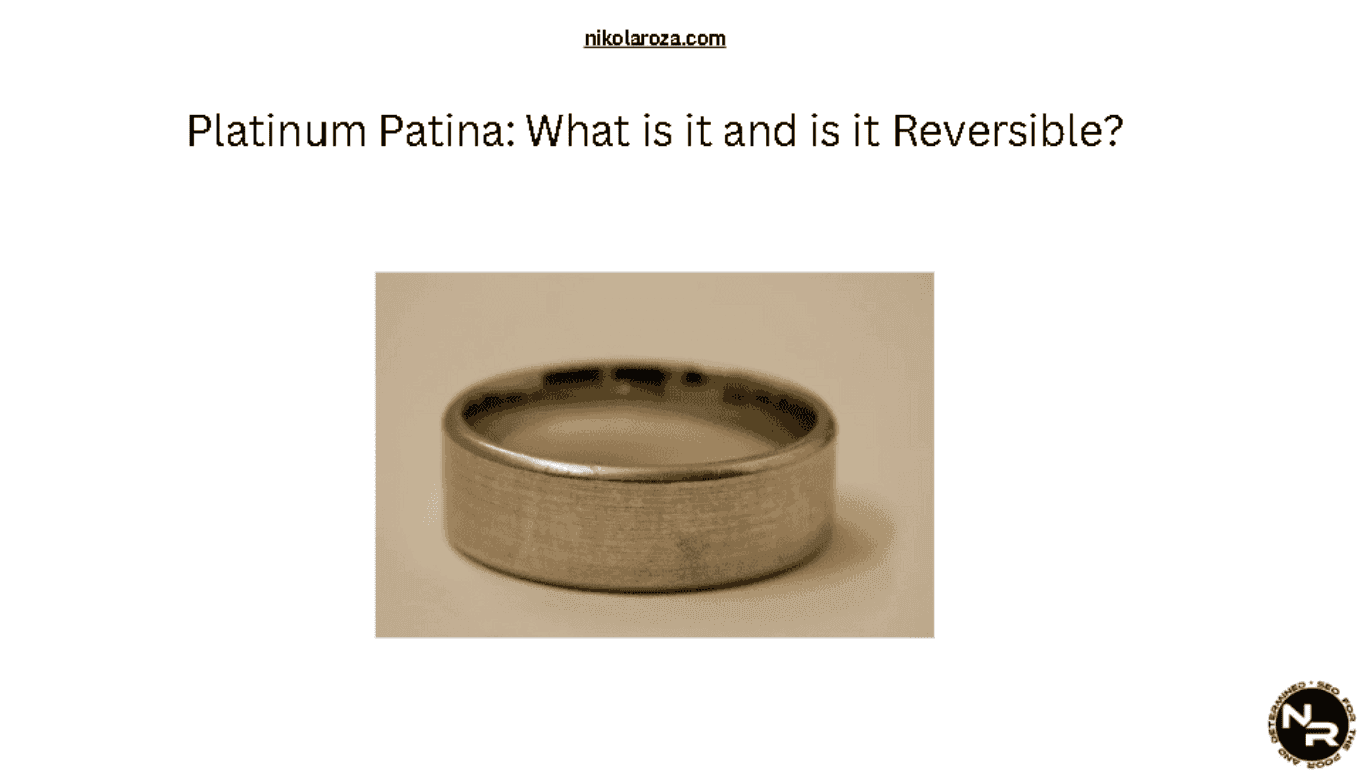
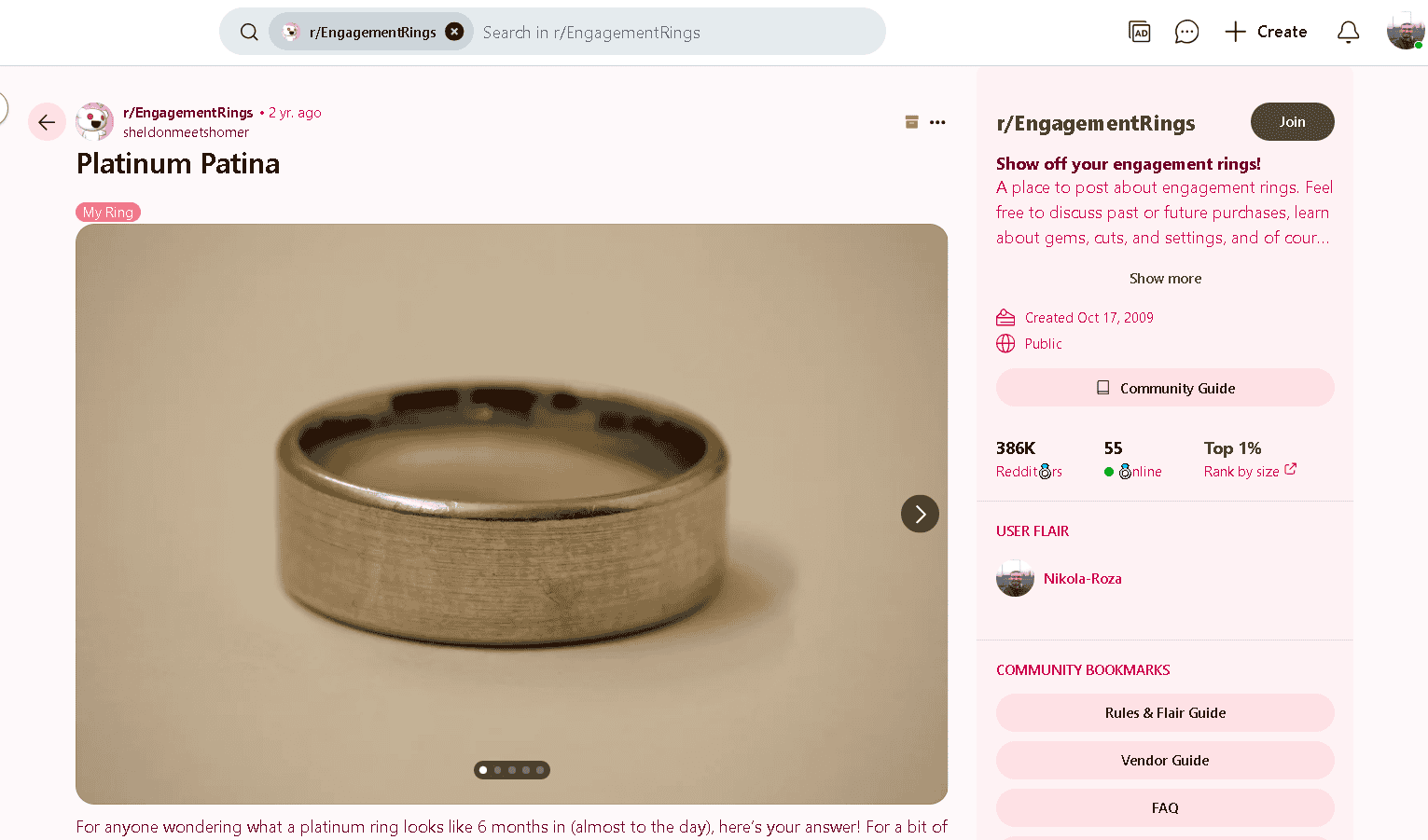
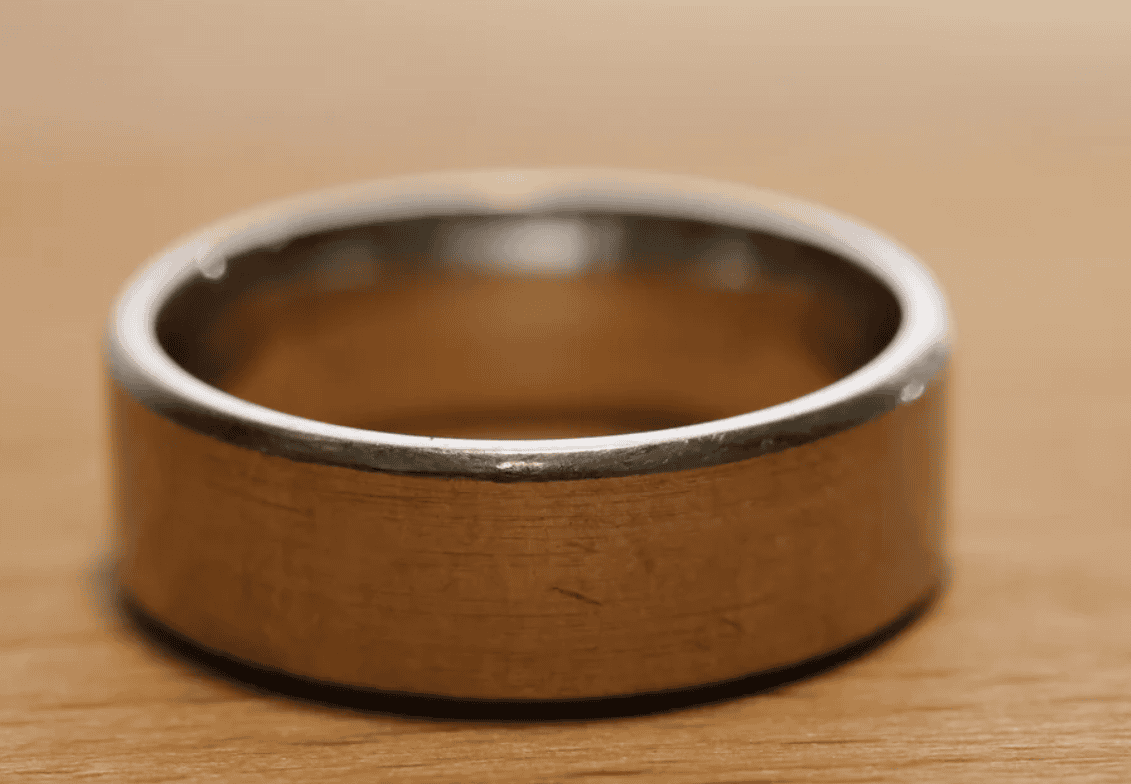
Here’s a patinated platinum ring as an example, and below is a showcase of natural platinum scratches that develop with daily platinum jewelry wear.
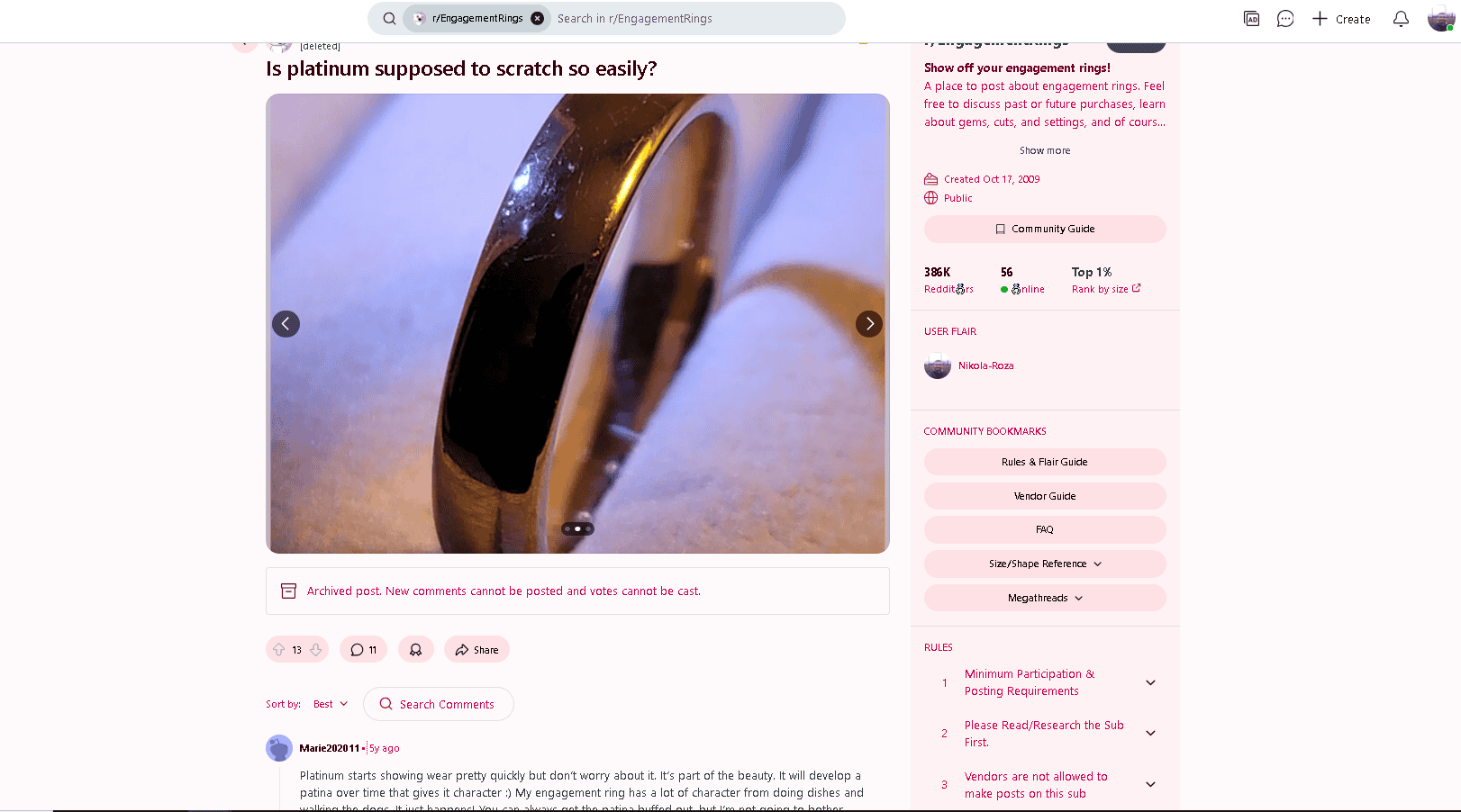
Platinum patination is a fascinating topic. But you should check out this next, especially if you’re an American with a keen interest in the economy and precious metal investing.
Is Platinum Patina the Same as Platinum Tarnish?
Yes, platinum patina is the same as platinum tarnish. Platinum patination is a natural and subtle change in the metal’s appearance that occurs over time due to wear and tear and exposure to the environment.
Platinum tarnish is platinum patina. Platinum is a noble metal that doesn’t tarnish, but the advanced patination stages make platinum look like it’s tarnished. Many novices to platinum jewelry mistake the two processes.
It’s possible for platinum to tarnish when it’s alloyed with sterling silver. Sterling silver is nearly identical to platinum and many times cheaper to work with. And sterling silver is vulnerable to tarnishing.
What are Some Examples of Platinum Patina?
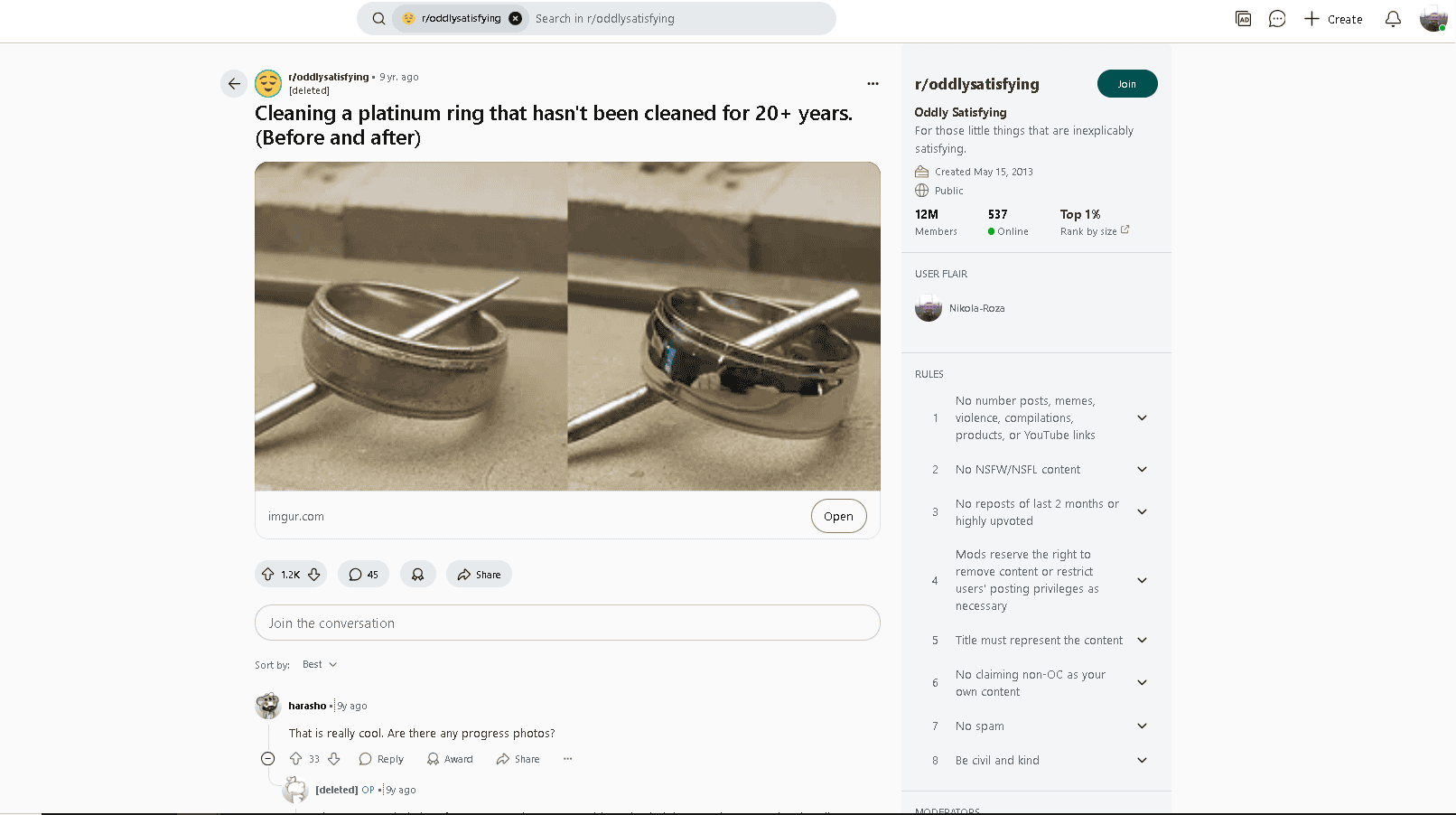
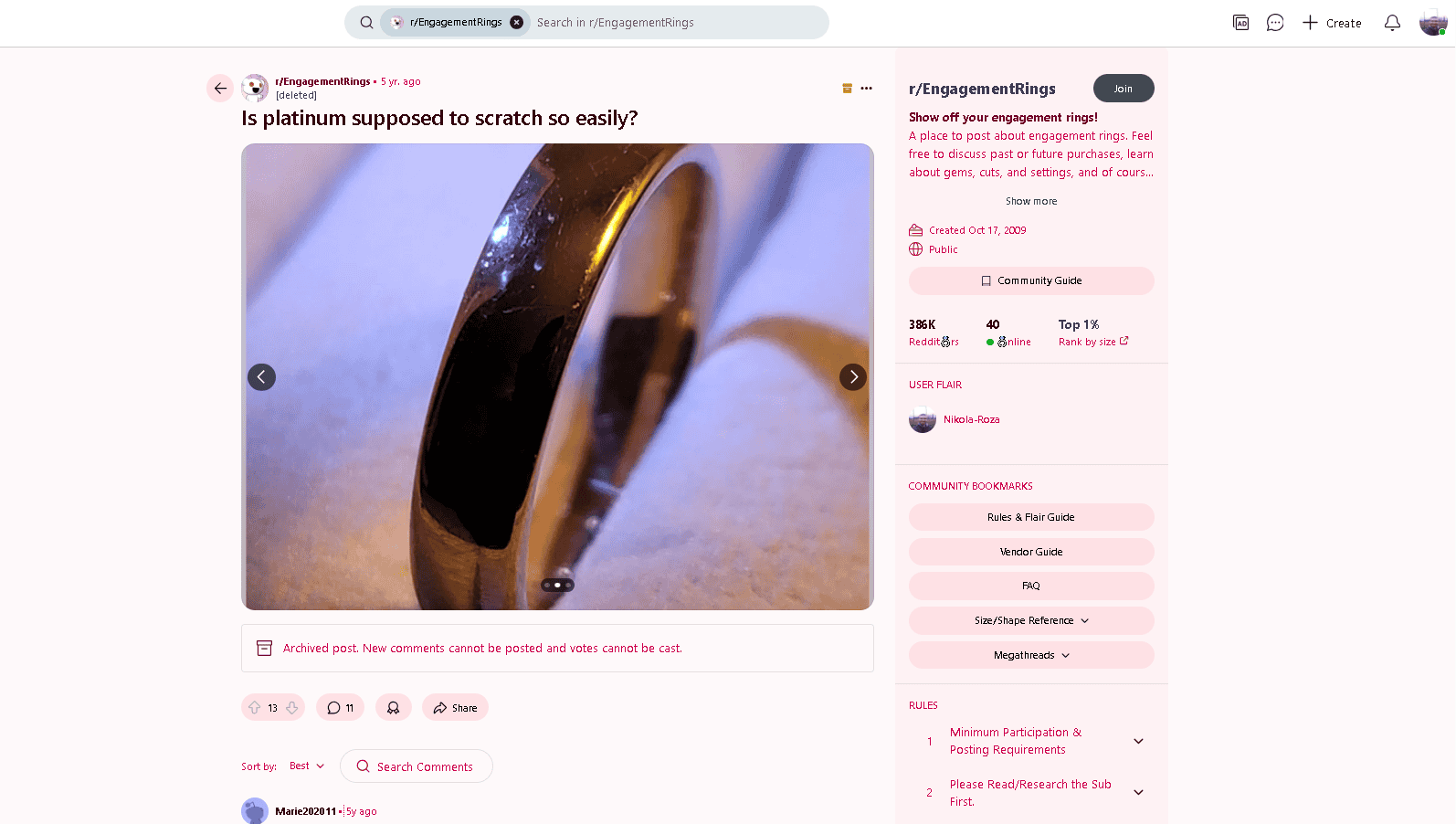
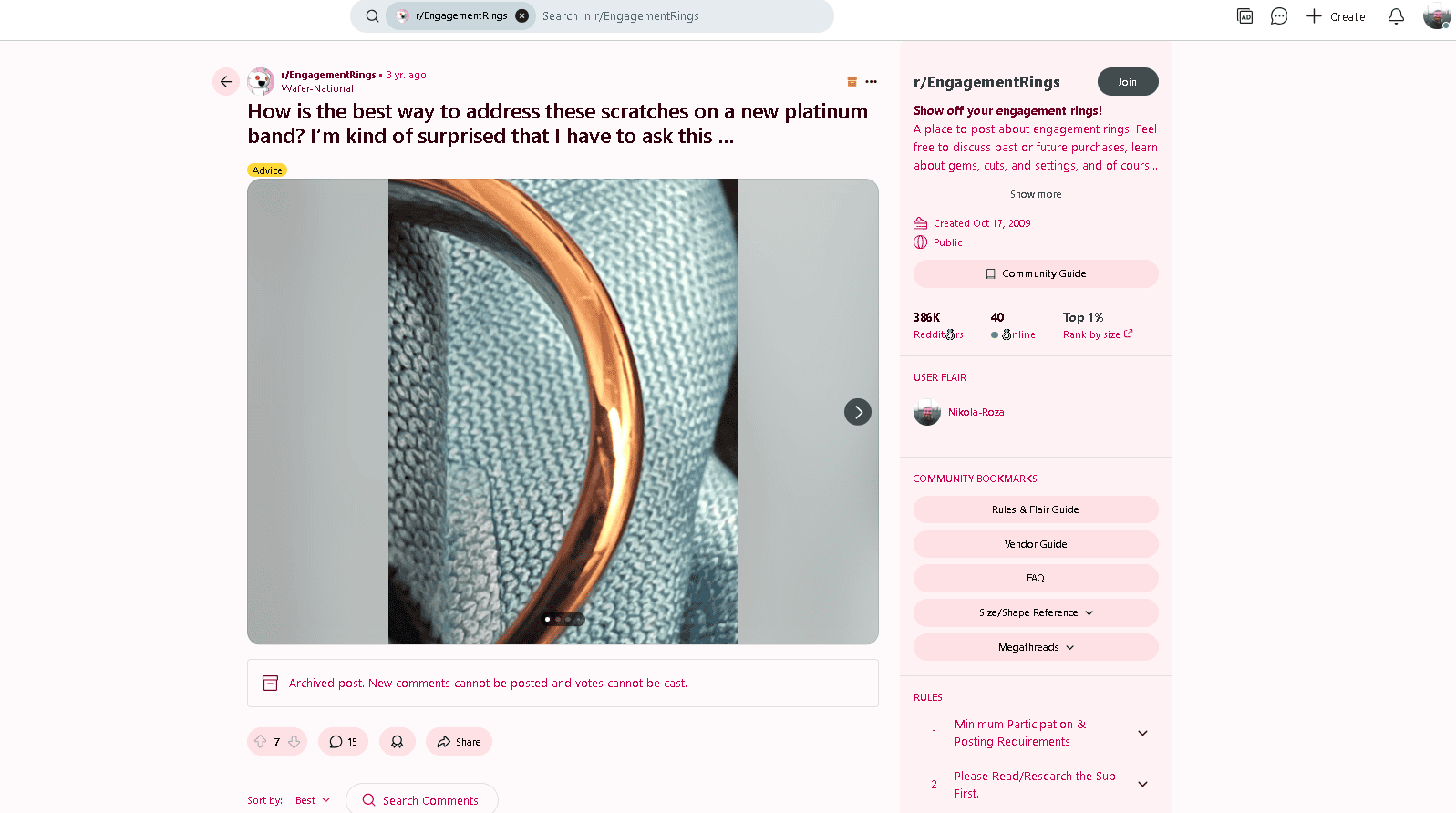
Here are some example of platinum patina on platinum jewelry (rings, necklaces, bracelets, chains, broches, pendants…).
How to Remove Patina off Platinum Jewelry?
To remove patina off platinum jewelry mix mild dish soap with warm water, soak the jewelry for a few minutes, and gently scrub with a soft-bristled brush (like a toothbrush).
After cleaning, use a soft, lint-free cloth to dry and polish the jewelry. Some people add a few drops of ammonia to the soapy water for extra cleaning power. Be cautious and ensure thorough rinsing as you don’t want ammonia to discolor your platinum jewelry.
Platinum is a dense metal and removing deep scratches and significant patina requires professional intervention. I suggest you try to manually remove patina from your platinum, and then go to professional jeweler if you fail.
Platinum patination is a fascinating topic. But you should check out this next, especially if you’re an American with a keen interest in the economy and precious metal investing.
Is it Possible to Artificially Patinate Platinum Jewelry?
No, artificially patinating platinum jewelry isn’t possible because platinum is a highly inert “noble” metal that doesn’t tarnish or oxidize.
The patina that develops on platinum is a surface-level textural change caused by microscopic scratches from everyday wear and it’s something that happens over time.
A true chemical patina can’t be applied, but there’re two alternative methods for giving platinum a dark or antiqued appearance.
First, you can apply a temporary chemical coating, which means plating platinum with a different metal that can be patinated. This is a temporary finish, as the plated layer is very thin and will eventually wear away.
Second, you can coat platinum with a darker metal like rhodium or ruthenium. This gives platinum a vintage look, but the plating eventually wears off revealing the base metal underneath.
Here’s an example of a platinum ring coated with rhodium.

Platinum patination is a fascinating topic. But you should check out this next, especially if you’re an American with a keen interest in the economy and precious metal investing.
Does Platinum Vermeil Patinate?
No, platinum vermeil doesn’t patinate in the traditional, tarnishing sense (like the greenish oxidation on copper or the blackening of silver). The platinum plating over sterling silver naturally wears thin over time, and the base sterling silver oxidizes and develops a silver patina once exposed to air, sweat, and moisture.
Bottom line is that platinum vermeil patinates due to exposed sterling silver.
Does Platinum Purity Affect the Speed of Patination?
Yes, platinum purity affects the speed of patination. Pure platinum doesn’t tarnish, but still patinates due to receiving a myriad of microscopic scratches with daily wear over time.
The presence of other metals in various platinum alloys determines the patination speed. For example, platinum 600 contains 60% pure platinum in its alloy. The rest is filled with other metals, some of which are prone to tarnishing.
A good example is copper, which is added to platinum to increase its hardness, casting properties and catalytic performance. Copper easily oxidizes when exposed to moisture and water and this causes the entire platinum alloy to change color and patinate quickly.
There’re also platinum alloys where platinum is alloyed with metals harder and more scratch resistant than it. A good example is Platinum/Iridium, a 90/10 platinum alloy that’s superbly hard and resistant to patination because iridium as a noble metal is very tarnish-resistant.
Platinum Patina vs Palladium Patina- What are the Differences?
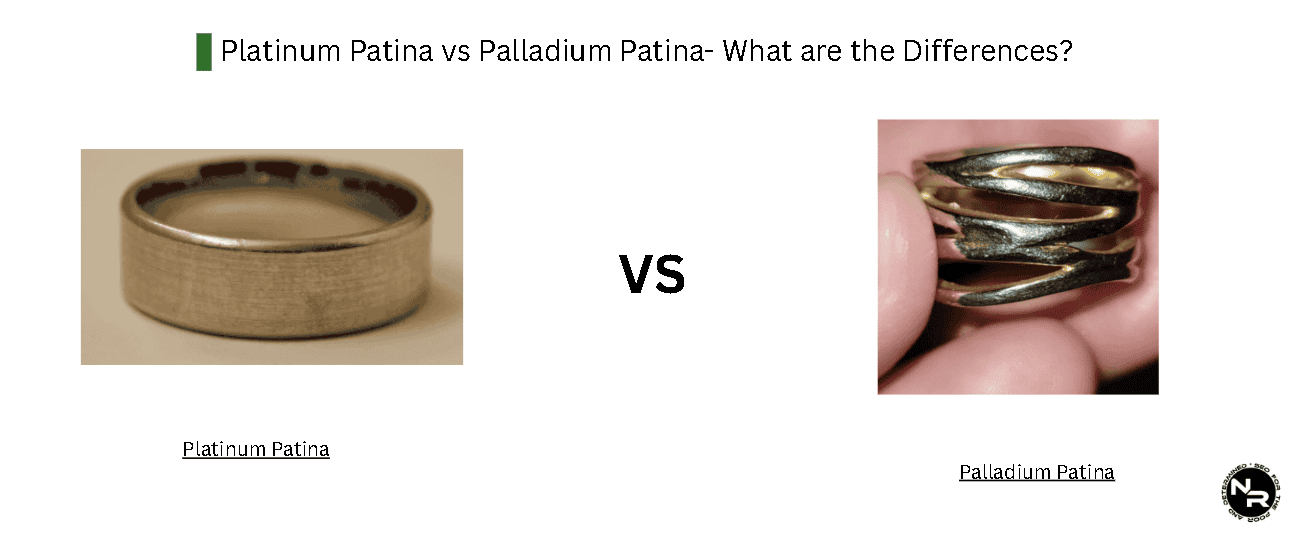
Platinum patina and palladium patina look similar at first glance, but are very different.
Platinum patina creates a subtle, satiny, muted gray luster from its initial bright polish. Palladium develops a darker, more pronounced grayish patina.
You can restore the shine of both metals by polishing the surface, and both are durable choices, though palladium is slightly harder and lighter than platinum.
Overall, platinum’s patina adds depth and sophistication to its inherent white color, while palladium’s patina gives it a distinctively dark gray appearance.
Platinum patination is a fascinating topic. But you should check out this next, especially if you’re an American with a keen interest in the economy and precious metal investing.
- Everything You Need to Know About Platinum Patina- https://www.inspereza.com/blogs/inspiration/everything-you-need-to-know-about-platinum-patina
- If Your Ring Looks Dull, It Might Be Platinum Patina – Here’s What That Is and What to Do About It- https://www.withclarity.com/blogs/metal/what-is-platinum-patina
- Platinum patina – yay or nay https://www.reddit.com/r/EngagementRings/comments/q2k37d/platinum_patina_yay_or_nay/
- Is platinum supposed to scratch so easily- https://www.reddit.com/r/EngagementRings/comments/kwumzb/is_platinum_supposed_to_scratch_so_easily/
- Platinum Patina- https://www.reddit.com/r/EngagementRings/comments/18dgk85/platinum_patina/
- Is platinum supposed to scratch so easily?- https://www.reddit.com/r/EngagementRings/comments/kwumzb/is_platinum_supposed_to_scratch_so_easily/
- Cleaning a platinum ring that hasn’t been cleaned for 20+ years. (Before and after)-https://www.reddit.com/r/oddlysatisfying/comments/5ch4dw/cleaning_a_platinum_ring_that_hasnt_been_cleaned/
- How is the best way to address these scratches on a new platinum band? I’m kind of surprised that I have to ask this … https://www.reddit.com/r/EngagementRings/comments/t9y897/how_is_the_best_way_to_address_these_scratches_on/
- Rhodium Plating- https://www.reddit.com/r/jewelers/comments/1fcu0d1/rhodium_plating/

Nikola Roza
Nikola Roza is the owner of Nikola Roza- Everything You Can Learn About Precious Metals. He writes for people who love precious metals and jewelry and who're interested in adding gold, silver platinum and palladium to their retirement portfolios. Nikola is passionate about gold IRAs and investing in multiple asset types for a safer financial future. He also runs a successful online jewelry store where you can buy precious metal jewelry and various replicas of famous coins and bars. Learn about Nikola here.