Disclosure: Some of the links you’ll encounter are unique links. Click and buy something and I’ll earn some money, at zero expense to you. Thank you!
Palladium jewelry develops patina over time. It’s a natural shift to a matte, slightly darker finish caused by microscopic scratches and skin oil contact during everyday wear. Patina is purely cosmetic and doesn’t damage the metal, though opinions on it vary, some like the vintage look, others don’t. Lower-purity alloys like palladium 500 patinate faster than higher-purity ones like palladium 950.
Removing surface-level patina is straightforward. Soak in warm soapy water, scrub gently with a soft toothbrush, then dry and polish with a lint-free cloth; deeper scratches need a professional jeweler.
Palladium serves as a protective coating on gold jewelry, blocking air exposure to prevent discoloration, though this coating cracks with wear. Artificial patination of palladium is possible, but difficult, requiring controlled heating to roughly 800°C to form an oxide layer, or applying black rhodium plating for a temporary darkened effect.
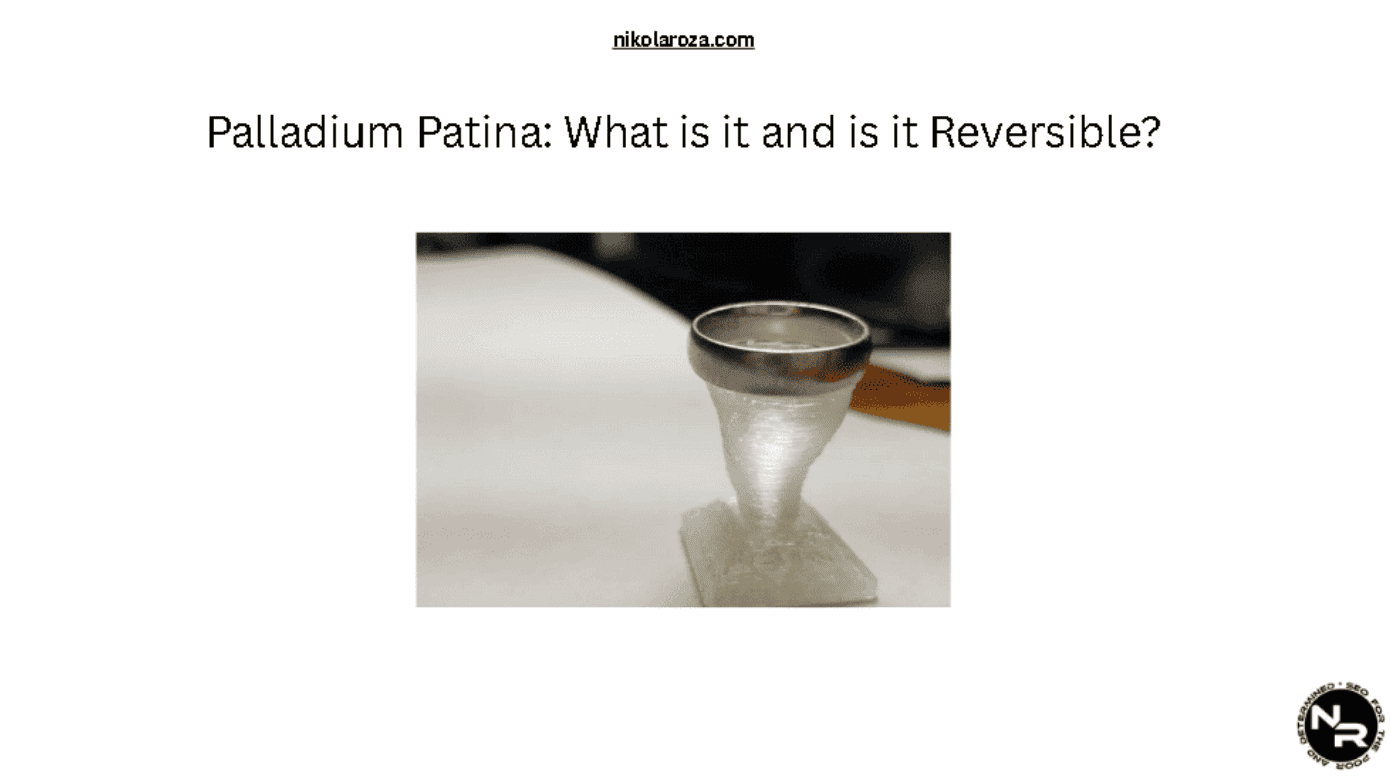
What is Palladium Patina (Definition and Meaning)? Is it Reversible?
Palladium patina is the subtle change in appearance that palladium jewelry develops over time due to wear and tear.
Palladium patination is a natural process where microscopic scratches and contact with skin oils cause the metal to shift and create a matte, slightly darker, and softer finish. Patination occurs naturally as palladium jewelry is worn and experiences minor abrasions from everyday activities. These scratches don’t damage the metal but overtime cause palladium to noticeable patinate.
Some people love it as it gives their palladium jewelry a unique, vintage, antique look. Others hate it.
Is Palladium Patina the Same as Palladium Tarnish?
Yes, palladium patina and palladium tarnish are the same. Patina on palladium is the subtle change in color and texture that naturally occurs over time due to wear and tear, resulting in a slightly darker, matte finish.
Palladium tarnish is palladium patina. Palladium is a noble metal that doesn’t tarnish, but it patinates and many novices to palladium jewelry mistake the two processes.
Different palladium alloys are more or less susceptible to patination and tarnishing depending on their purity levels. Palladium alloys introduce different metals that react differently with the environment, leading to a more pronounced, faster patination compared to high-purity palladium. These other metals also patinate in a different way and color compared to pure palladium.
For example, a low-purity palladium alloy like palladium 500 is tarnishes much faster then a higher purity palladium alloy like palladium 950.
Palladium patination is a fascinating topic. But you should check out this next, especially if you’re an American with a keen interest in the economy and precious metal investing.
What are Some Examples of Palladium Patina?
Here are some examples of palladium patina on palladium jewelry (rings, earrings, bracelets, necklaces, chains, broches…).
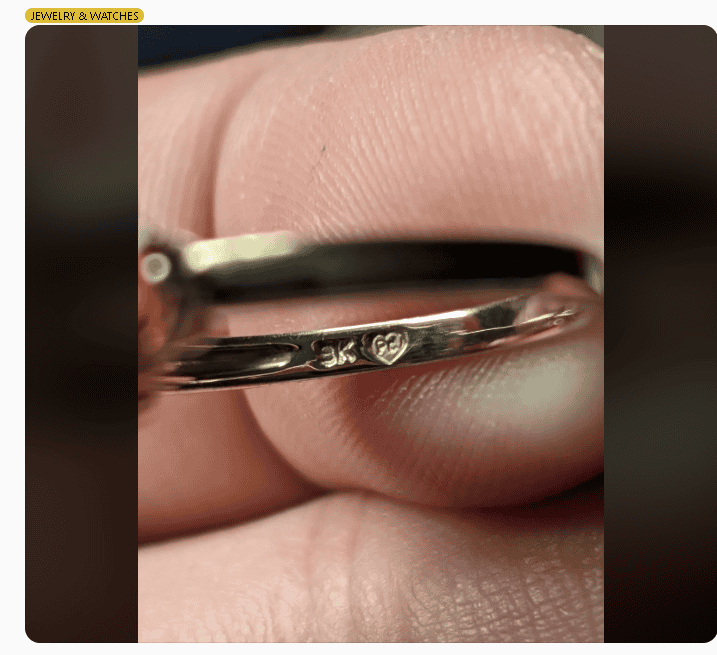
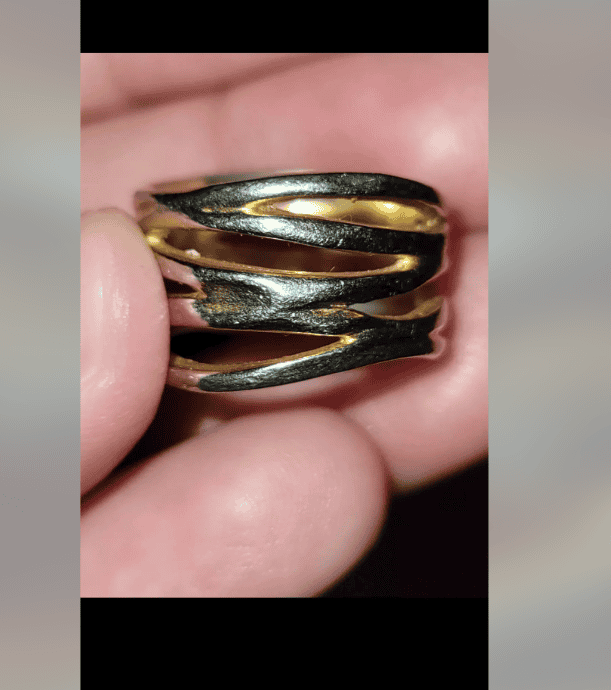
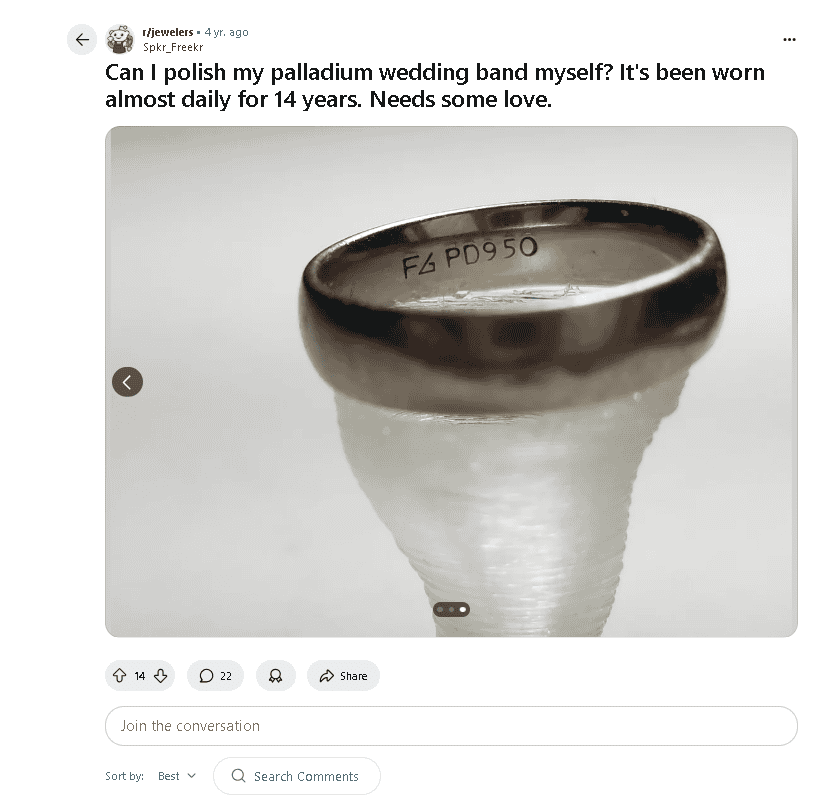
Palladium patination is a fascinating topic. But you should check out this next, especially if you’re an American with a keen interest in the economy and precious metal investing.
How to Remove Patina off Palladium Jewelry?
To remove patina off palladium jewelry mix mild dish soap with warm water, soak the jewelry for a few minutes, and gently scrub with a soft-bristled toothbrush.
After cleaning, use a soft, lint-free cloth to dry and polish the jewelry. Some people add a few drops of ammonia to the soapy water for extra cleaning power. Be cautious and ensure thorough rinsing as you don’t want ammonia to discolor your palladium jewelry.
Palladium is a dense metal and removing deep scratches or significant patina requires professional intervention. I suggest you try to remove patina from your palladium jewelry manually, and then go to professional jeweler if you fail.
Does Palladium Coating Prevent Gold from Patinating?
Yes, palladium coating prevents gold from patinating. Palladium is a tarnish-resistant metal that’s often used as a protective layer on gold jewelry, especially white gold, to maintain its shine and prevent discoloration.
Palladium acts as a barrier when applied as coating, preventing the underlying gold or other metals from coming into direct contact with the air and other tarnishing agents.
Palladium is a durable metal, but it’s not invincible. Meaning the palladium coating over gold eventually cracks and/or wear off. This leads to eventually patination of your gold item.
My advice for you is to take your palladium-covered gold jewelry item to a professional jeweler as soon as you notice a crack.
Palladium patination is a fascinating topic. But you should check out this next, especially if you’re an American with a keen interest in the economy and precious metal investing.
Is it Possible to Artificially Patinate Palladium Jewelry?
Yes, it is possible to artificially patinate palladium jewelry, but it’s a complex process typically performed by professional jewelers using heat. Unlike other metals that tarnish easily with chemicals, palladium’s high corrosion resistance makes it a difficult metal to patinate artificially.
Palladium doesn’t tarnish at room temperature, but a layer of palladium(II) oxide (PdO) forms on the surface when the metal is heated to around 800°C in an oxygen-rich atmosphere.
This oxide layer appears blue-gray or black, depending on the temperature and duration of heating.
This palladium patination technique must be performed with precision, as uncontrolled heating damages the piece and makes palladium toxic.
Jewelers can also apply a black rhodium plating to palladium’s surface to achieve a darkened, patina-like finish. This is a less permanent solution than a heat-induced oxide layer, as the black rhodium plating eventually wears off with friction and time.
- Palladium? Plated?- https://www.reddit.com/r/Hallmarks/comments/1bwj1ja/palladium_plated/
- Palladium? https://www.reddit.com/r/VintageJewelry/comments/1cu8p3i/palladium/
- Can I polish my palladium wedding band myself? It’s been worn almost daily for 14 years. Needs some love.- https://www.reddit.com/r/jewelers/comments/psvej0/can_i_polish_my_palladium_wedding_band_myself_its/
- Palladium patinas- https://orchid.ganoksin.com/t/palladium-patinas/34090

Nikola Roza
Nikola Roza is the owner of Nikola Roza- Everything You Can Learn About Precious Metals. He writes for people who love precious metals and jewelry and who're interested in adding gold, silver platinum and palladium to their Gold IRAs and retirement portfolios.