Disclosure: Some of the links you’ll encounter are unique links. Click and buy something and I’ll earn some money, at zero expense to you. Thank you!
Gold patina is a surface discoloration that develops on gold alloys over time due to oxidation of metals within the alloy.
Pure 24k gold doesn’t patinate because it’s highly resistant to oxidation, but gold alloys containing copper, silver, nickel, or zinc patinate. This creates subtle color changes or more noticeable reddish, greenish, or yellowish hues.
Lower karat gold patinates faster than higher karat gold. For example, 10k gold patinates quicker than 18k or 22k gold due to higher non-gold metal content.
Rose gold patinates as copper oxidizes, while white gold’s patina occurs when rhodium plating wears off, revealing the yellowish alloy underneath.
Natural patina can be removed using mild dish soap and warm water, baking soda paste, or vinegar solutions.
Patina can also be artificially applied using chemicals like Liver of Sulfur for decorative purposes, creating an aged, vintage appearance on gold jewelry.
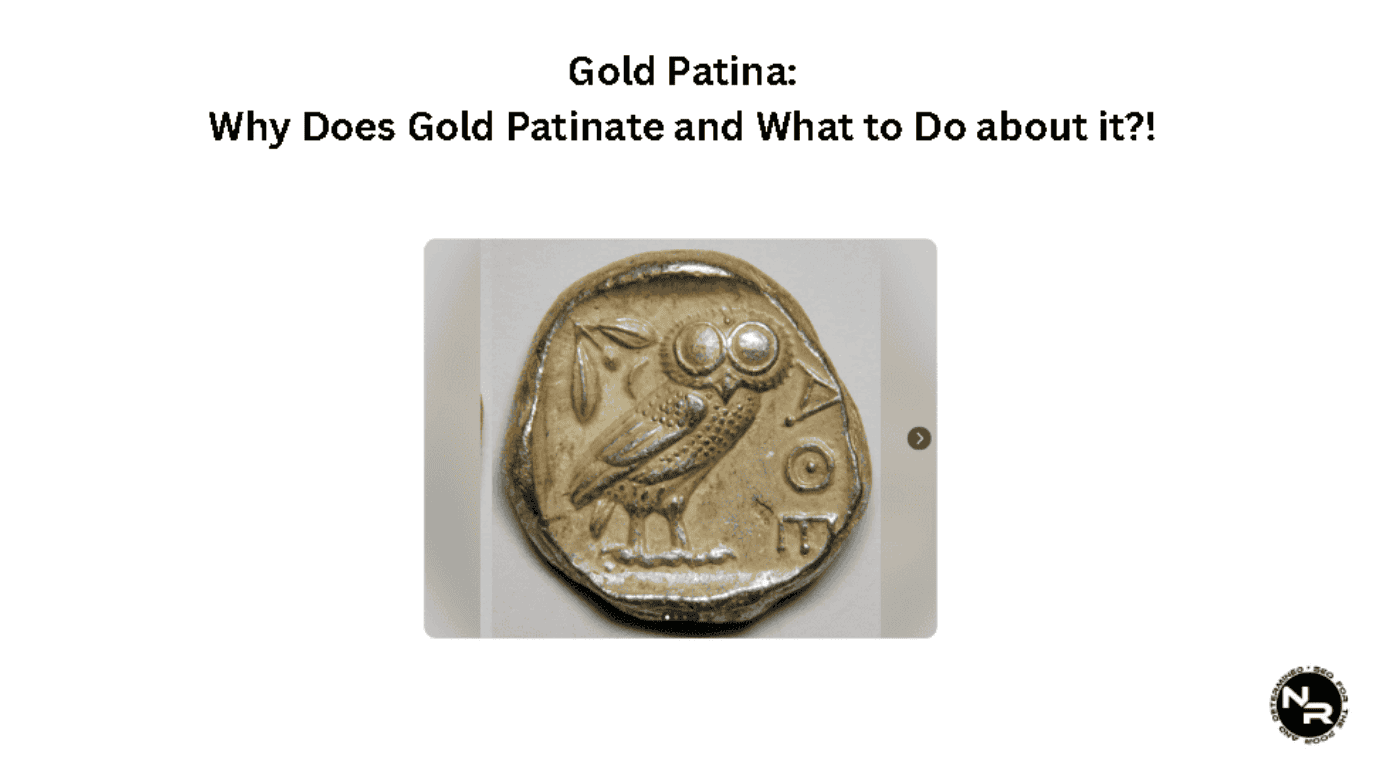
What is a Gold Patina? What Does it Look Like and What Does it Mean?
A gold patina is a discoloration (surface tarnish) that occurs on gold item either due to natural oxidation of metals within the alloy or due to tarnish-inducing chemical treatments.
Pure yellow gold doesn’t tarnish, but gold alloys containing other metals do.
These gold alloys overtime develop a patina that affects their appearance. Gold patination ranges from subtle changes in color and luster to more noticeable effects like a reddish, greenish or yellowish hue.

Is Gold Patina the Same as Gold Tarnish?
No, gold patina and gold tarnish aren’t the same.
Gold tarnish is a dull, discolored layer on the surface of metal caused by chemical reactions. Gold patina is a broader term that includes tarnish, but also encompasses other surface transformations that enhance the appearance of a metal.
Gold tarnish is often seen as undesirable change on the surface of gold jewelry, whereas gold patina brings elegance and uniqueness to any jewelry piece that adorns it.
Gold patination is a fascinating topic. But you should check out this next, especially if you’re an American with a keen interest in the economy and precious metal investing.
Does Gold Vermeil Patinate?
Yes, gold vermeil patinates.
Gold vermeil is high-quality jewelry that’s from a base of sterling silver and a thick gold layer. It’s a popular choice for those who want the look and feel of gold without the higher price tag of solid gold.
Pure gold (24k gold) doesn’t patinate because gold is a highly unreactive and noble metal that resists oxidation and corrosion. This means gold vermeil made from sterling silver as base and 24k gold as plating would be immune to patination and tarnishing.
However, gold vermeil isn’t made with pure gold because 24k gold is too soft, malleable and ductile. Instead, gold vermeil is made from sterling silver as base and various gold alloys as plating. Different gold alloys patinate differently and at different speeds, but they all eventually change in appearance.
Finally, exposed sterling silver is highly susceptible to tarnish from air, moisture, skin oils and various chemicals.
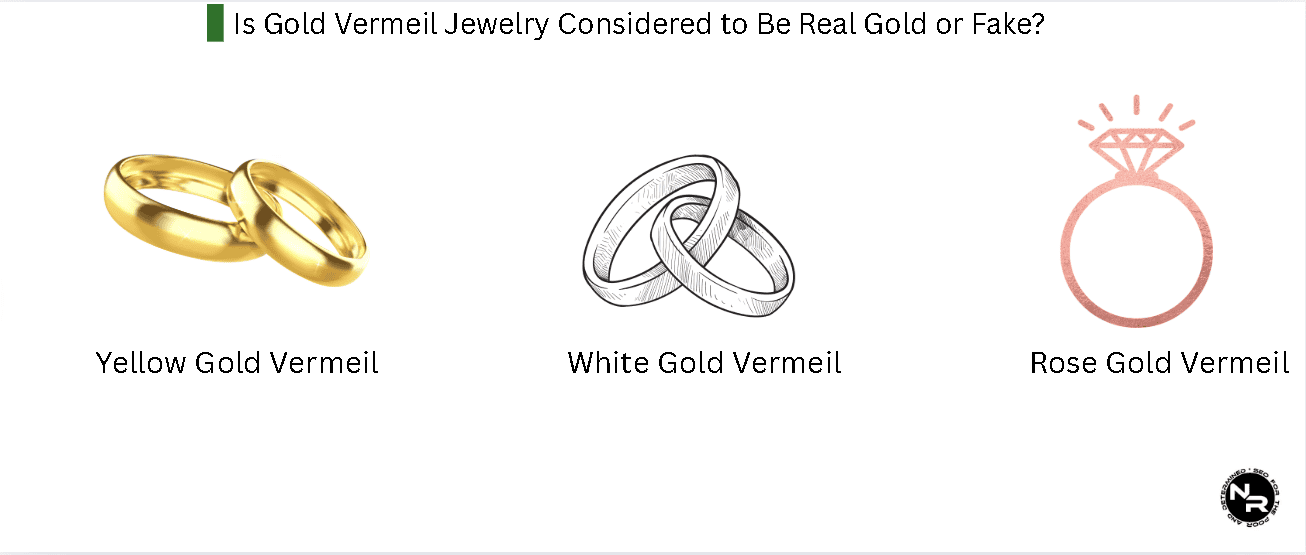
Yellow gold vermeil is the most common type of gold vermeil.
Other popular options are rose gold vermeil and white gold vermeil. Both of these patinate, with rose gold’s patina coming from copper oxidation, and white gold’s patina coming from chipped rhodium plating.

Gold patination is a fascinating topic. But you should check out this next, especially if you’re an American with a keen interest in the economy and precious metal investing.
Is it Possible to add Patina to Gold Jewelry?
Yes, it is possible to add a patina to gold jewelry, as long as that gold jewelry is made of some gold alloy, and not of pure gold (pure gold jewelry is exceedingly rare).
There are several ways to add patina to gold jewelry.
First, there’s the natural way of just waiting. It’s a free method that lasts longer and produces uneven results. I mean uneven in a literal sense as the tarnish spreads out unevenly and the results are poor.
Second, certain chemicals patinate gold effectively. For example, Liver of Sulfur creates a range of colors on gold, from yellows and browns to blues and blacks.
Third, exposing gold to fumes or atmosphere creates an even aging effect.
Fourth, certain solutions can be applied with a brush or spray to create a desired patina effect (you can also submerge your gold piece in a patination solution to achieve a uniform patina).
Will a Pure Gold Watch Patinate? How to add Patina to a Gold Watch?
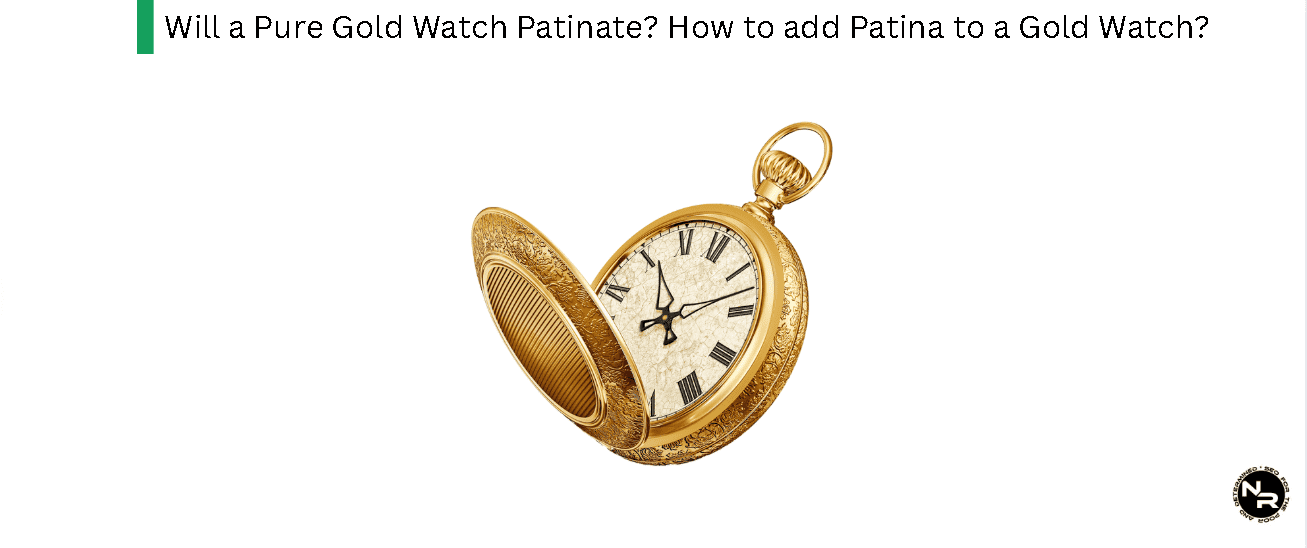
No, a pure gold watch won’t patinate as pure gold is chemically inert and stable. You can patinate your gold watch as long it’s not made from pure gold, but from a gold alloy.
Watches made from lower karatage gold like 5k, 6k, 8k, 9k, 10k and 12k golds can be patinated easier than watches made from higher karatage gold alloys like 14k, 18k, 20k and 22k golds.
What is the Best Way to Remove Natural Patina from Gold Jewelry?
To remove natural patina (tarnish) from gold jewelry, a gentle cleaning method is recommended. Mild dish soap and warm water, along with a soft-bristled toothbrush, are often effective.
For stubborn tarnish, a mixture of baking soda and water can be used as a mild abrasive. Alternatively, a vinegar and baking soda soak are also effective.
Removing gold patina with soap and water:
- Mix a few drops of mild dish soap with warm water.
- Soak the jewelry for 15-20 minutes.
- Gently scrub with a soft-bristled toothbrush to remove grime.
- Rinse thoroughly with warm water.
- Dry with a soft, lint-free cloth.
Removing gold patina with baking soda paste:
- Mix baking soda with water to form a paste.
- Apply the paste to the jewelry, focusing on tarnished areas.
- Gently rub with a soft cloth.
- Rinse with warm water and dry.
Removing gold patina with vinegar and baking soda:
- Mix 1/2 cup of white vinegar with 2 tablespoons of baking soda.
- Soak the jewelry for 2-3 hours.
- Clean with a soft cloth and rinse with water.
How to Remove Chemically Applied Patina from Gold Jewelry?
You can remove chemically applied patina from gold jewelry with a homemade soap and water solution.
- Mix a few drops of mild dish soap with warm water.
- Soak the jewelry for 15-20 minutes.
- Gently scrub with a soft-bristled toothbrush to remove grime.
- Rinse thoroughly with warm water.
- Dry with a soft, lint-free cloth.
Gold Patina Examples and Images- What Does Oxidized Gold Look Like?
Here’re some gold patina examples and images for you to know what patinated gold looks like. Notice how there’re several degrees of tarnish (patina) gold jewelry can get.


Gold patination is a fascinating topic. But you should check out this next, especially if you’re an American with a keen interest in the economy and precious metal investing.
Does White Gold Patinate?

Yes, white gold patinates.
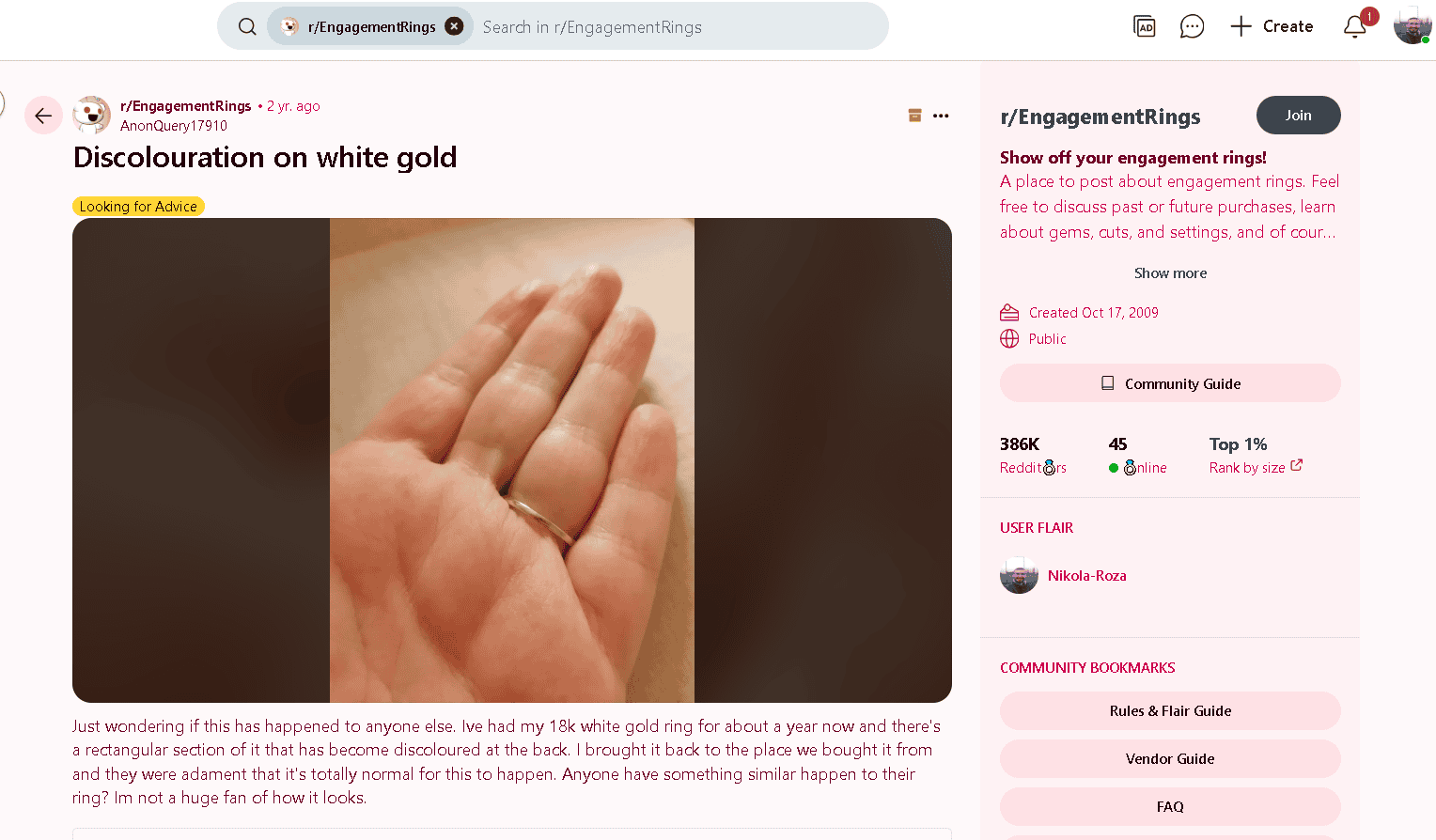
A white gold patina is a natural, subtle change in appearance white gold jewelry undergoes over time as its rhodium plating wears off.
As the rhodium wears off, the underlying white gold alloy becomes visible. This alloy is made up of gold and other metals like nickel, platinum or palladium. These metals have a slightly warmer, often yellowish tone compared to rhodium coating’s bright white color.
White gold without rhodium plating patinates differently than white gold with rhodium plating. Non-plated white gold over time gradually develops a yellowish or grayish hue as the exposed metal is subjected to the elements+ daily wear and tear.
The appearance change mainly comes from platinum and palladium content within the alloy.
Does Rose Gold Patinate?

Yes, rose gold patinates.
Rose gold patina is a natural, subtle darkening or deepening of the rose gold’s color that occurs over time due to oxidation. Rose gold patina specifically occurs because copper in rose gold reacts with oxygen and moisture.
The most common types of rose gold are made with 18k 14k and 10k gold. Higher karatage rose gold made with 18k gold is going to patinate slower and less noticeably than lower karatage rose gold made with 10k gold.
It’s because copper content is lower in 18k gold alloy compared to 14k.
Does Red Gold Patinate?

Yes, red gold patinates.
Red gold patina is a natural, subtle darkening or deepening of the red gold’s color that occurs over time due to oxidation. Red gold patination specifically occurs because copper in red gold reacts with oxygen and moisture.
Red gold is similar in looks to rose gold (pink gold) but with higher copper content. Higher copper content= faster and more noticeable patination.
Gold patination is a fascinating topic. But you should check out this next, especially if you’re an American with a keen interest in the economy and precious metal investing.
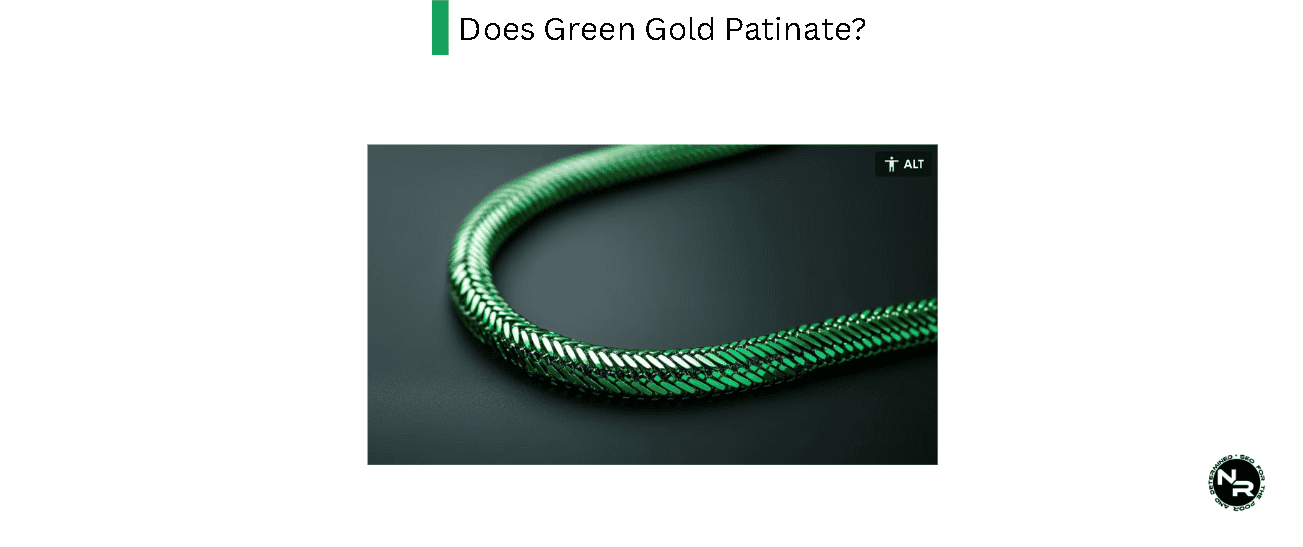
Does Green Gold Patinate?
Yes, green gold patinates.
Green gold is an alloy of gold and silver and it has a greenish hue due to high silver content. Silver within the green gold alloy tarnishes and this in turn gets green gold to patinate.
Natural green gold is called “Electrum”. Electrum has varying amounts of silver in it which means the patination process can’t be predicted and mapped as with standardized green gold alloy.
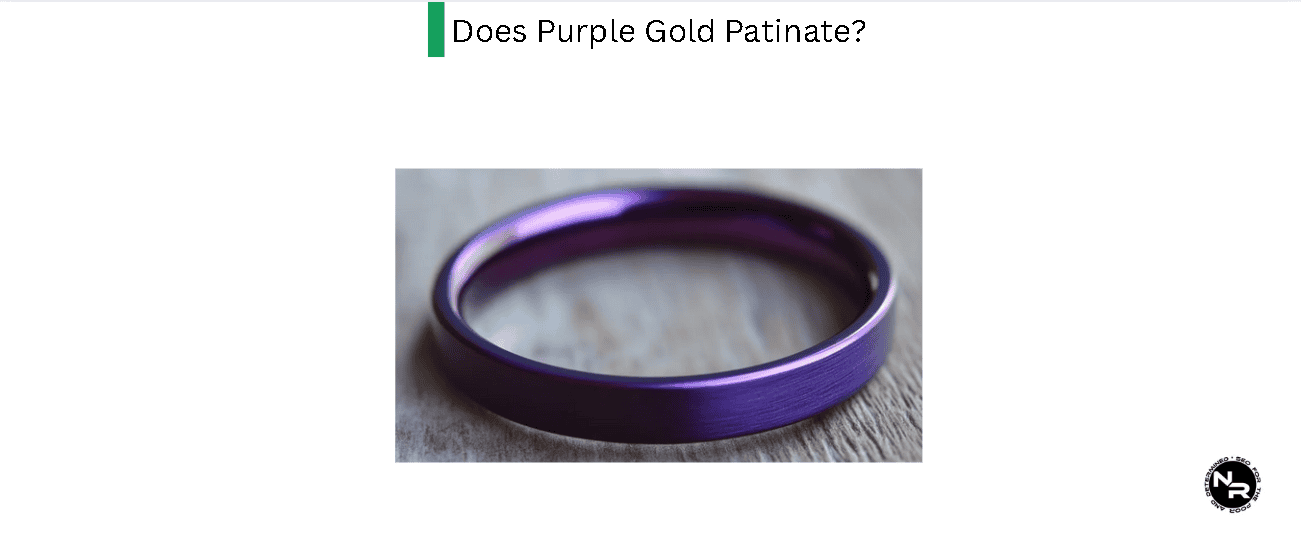
Does Purple Gold Patinate?
Yes, purple gold patinates.
Purple gold is an alloy of yellow gold and aluminum. The alloy is made of 79% gold and 21% aluminum, forming the intermetallic compound AuAl2.
Purple gold patinates because aluminum forms a protective layer of aluminum oxide (Al₂O₃) on its surface.
Patinated purple gold surface is a hard, transparent, and very thin layer that prevents further corrosion and maintains the metal’s integrity. It looks dull, grayish and chalky.
Does Blue Gold Patinate?
Yes, blue gold patinates when the gallium within the alloy reacts with moist air. The tarnishing process creates a thin layer of gallium oxide or hydroxide on its surface, which dulls blue gold’s luster.
Blue gold doesn’t patinate when it’s made with indium instead of gallium. Because indium is an unreactive metal in most circumstances.
Blue gold is an alloy of yellow gold and indium or gallium. The latter two metals give this alloy a distinct shade of blue.
Yellow gold alloyed with indium in proportions 44:56% gives blue gold. Yellow gold alloyed with gallium in proportions 58.5:41.5% gives blue gold.

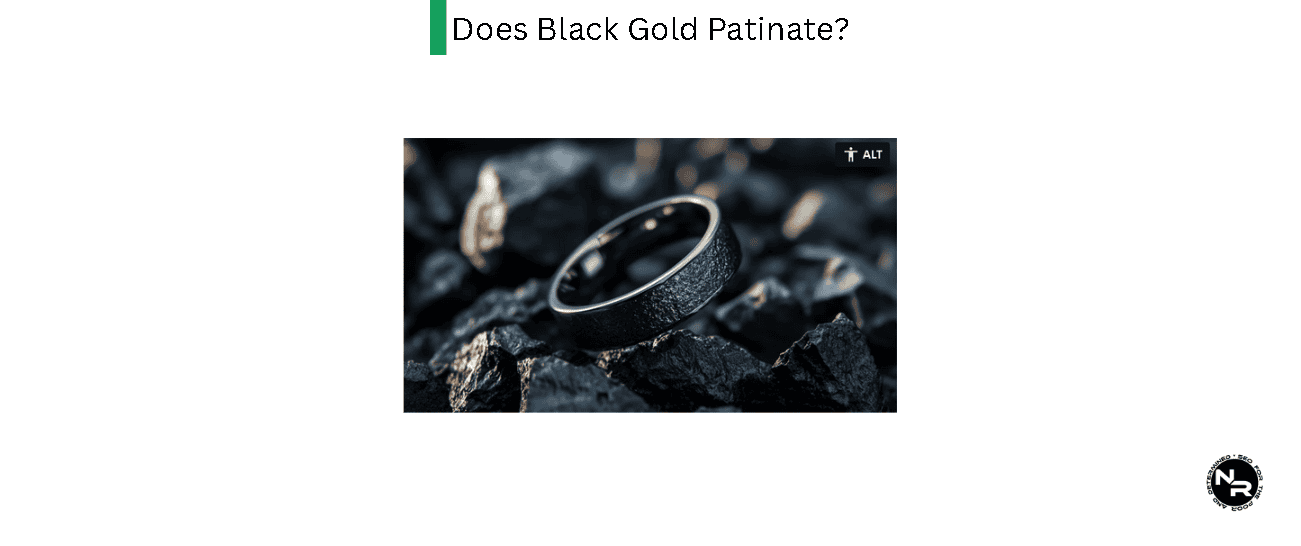
Does Black Gold Patinate?
It depends on the creation method whether black gold patinates. Black gold doesn’t patinate when it was made by coating with dark rhodium or ruthenium.
Black gold patinates when the metal was created through the alloying process. Patination happens if the metals in the alloy are prone to tarnishing.
Black gold made with laser treatments patinates, and patina makes the metal appear whiter in patches creating a noticeable contrast between the patinated and non-patinated parts of the surface.
Gold patination is a fascinating topic. But you should check out this next, especially if you’re an American with a keen interest in the economy and precious metal investing.
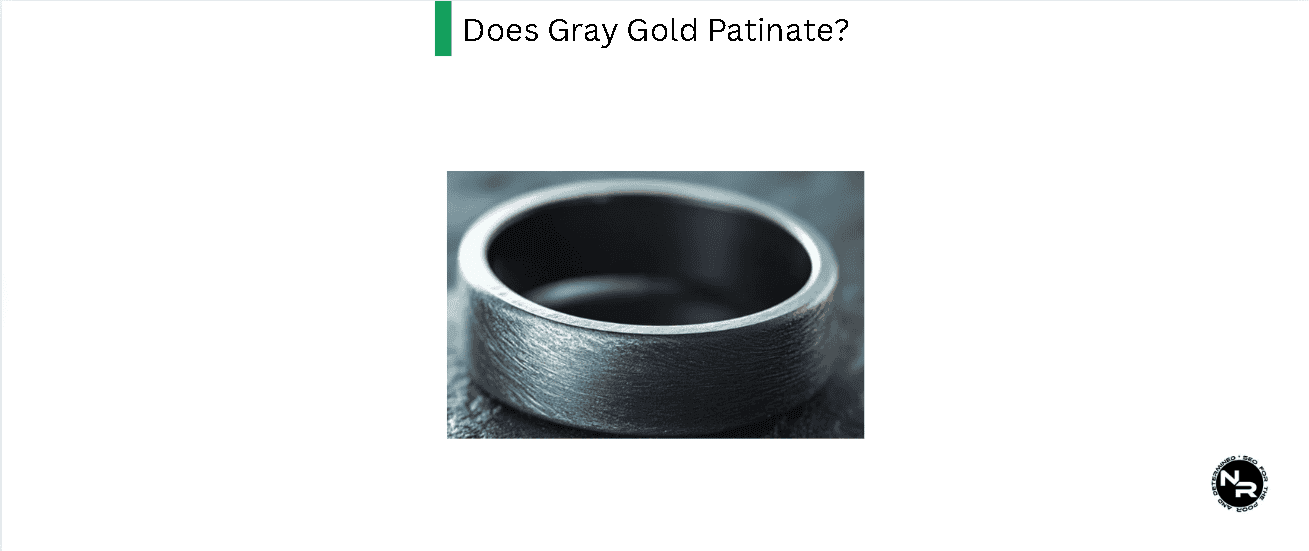
Does Gray Gold Patinate?
Yes, gray gold patinates. Gray gold is a gold alloy that gets its color from the alloying of yellow gold and other metals like platinum palladium, silver, copper, or manganese.
Besides yellow gold, each metal as part of the gray gold alloy tarnishes and this tarnish effect leads to patination.
Gray gold patina appears as a soft, muted gray or grayish-brown color, losing the bright luster of polished gold and replacing it with a dull, weathered look.
Does 24k Gold Patinate?
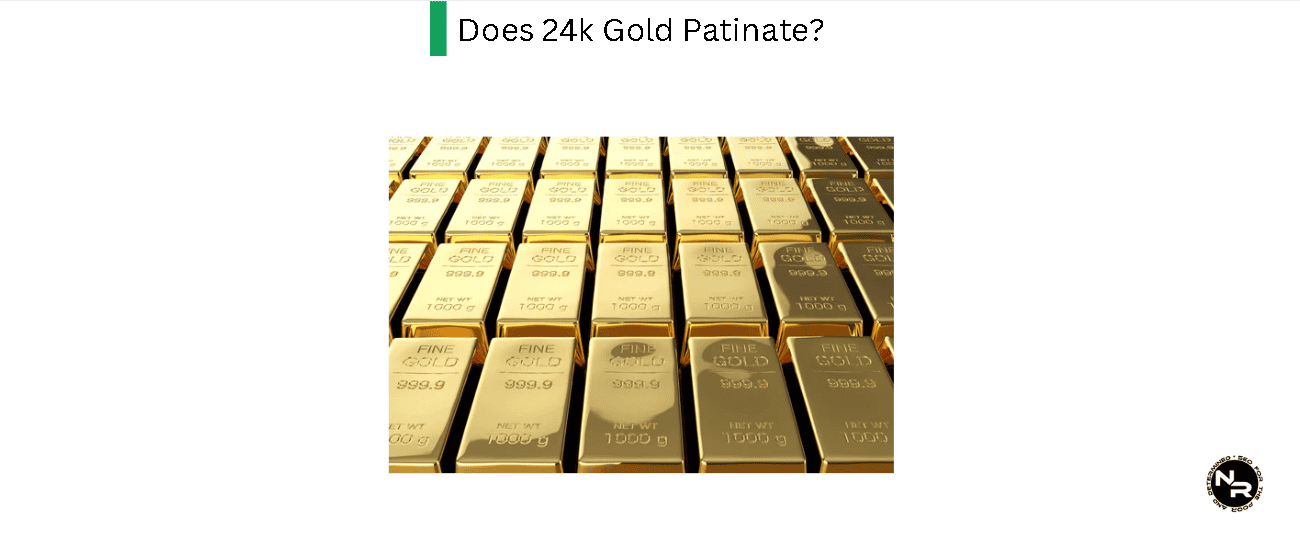
No, 24k gold doesn’t patinate. Pure gold is highly resistant to oxidation and other chemical reactions that cause tarnishing. Patina is a tarnish that forms on alloys (mixtures of metals), and not on pure gold.
Pure gold is 99.9% pure which means there’re still some metals present, but it’s far too low to cause any kind of patination or tarnishing.
Does 22k Gold Patinate?
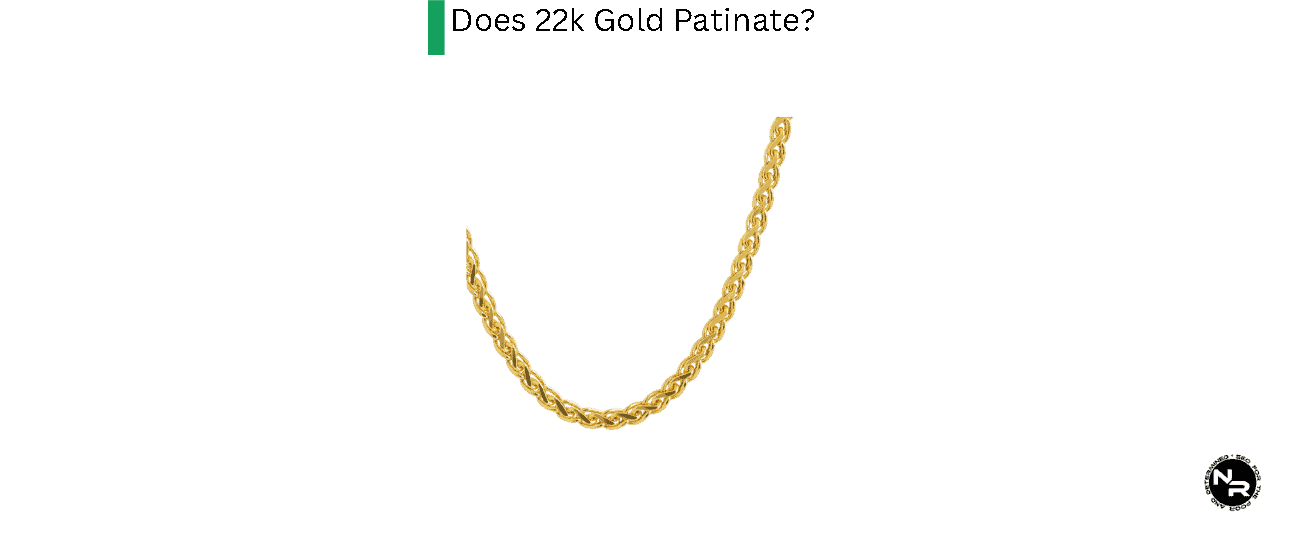
Yes, 22k gold patinates. 22k gold is a gold alloy containing 91.67% pure gold and 8.33% other metals like silver, copper, or zinc. 22k gold patinates because of 8.33% of other metals in this alloy.
22k gold patinates very slowly, especially compared to lower karatage gold alloys, because it has a very high pure gold content. With proper care your 22k jewelry could last you decades without needing to repolish it.
22k gold patinates slower than all lower purity gold alloys.
Does 20k Gold Patinate?
Yes, 20k gold patinates.
20k gold is a gold alloy containing 83.3% pure gold and 16.7% other metals like silver, copper, or zinc. 20k gold patinates because of 16.7% of other metals in this alloy.
20k gold patinates very slowly, especially compared to lower karatage gold alloys, because it has a very high pure gold content. With proper care your 20k jewelry could last you decades without needing to repolish it.
20k gold patinates slightly faster than 22k gold and slower than all lower purity gold alloys.

Does 18k Gold Patinate?
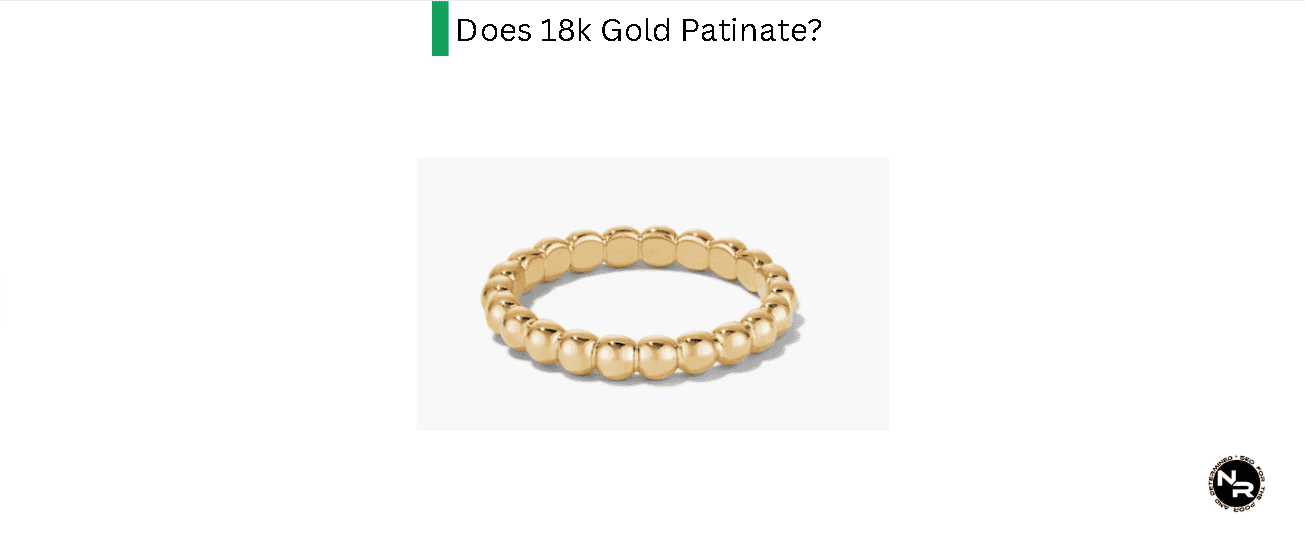
Yes, 18k gold patinates. 18k gold is a gold alloy containing 75% pure gold and 25% other metals like silver, copper, or zinc. 18k gold patinates because of 25% of other metals in this alloy.
18k gold patinates very slowly, especially compared to lower karatage gold alloys, because it has a very high pure gold content. With proper care your 18k jewelry could last you decades without needing to repolish it.
18k gold patinates slightly faster than 20k and 22k golds, and slower than all lower purity gold alloys.
Does 14k Gold Patinate?
Yes, 14k gold patinates.
14k gold is a gold alloy containing 58.3% pure gold and 41.7% other metals like silver, copper, or zinc. 14k gold patinates because of 41.7% of other metals in this alloy.
With proper care 14k gold can last for a long time without developing a patina. But, it’s inevitable that at some point you’ll need to take your 14k jewelry to a professional jeweler for a deep cleaning because of the 41.7% other metals in the alloy,
14k gold patinates slightly faster than 18k, 20k and 22k golds, and slower than all lower purity gold alloys.

Can 14k Gold Ring Have a Green Patina?
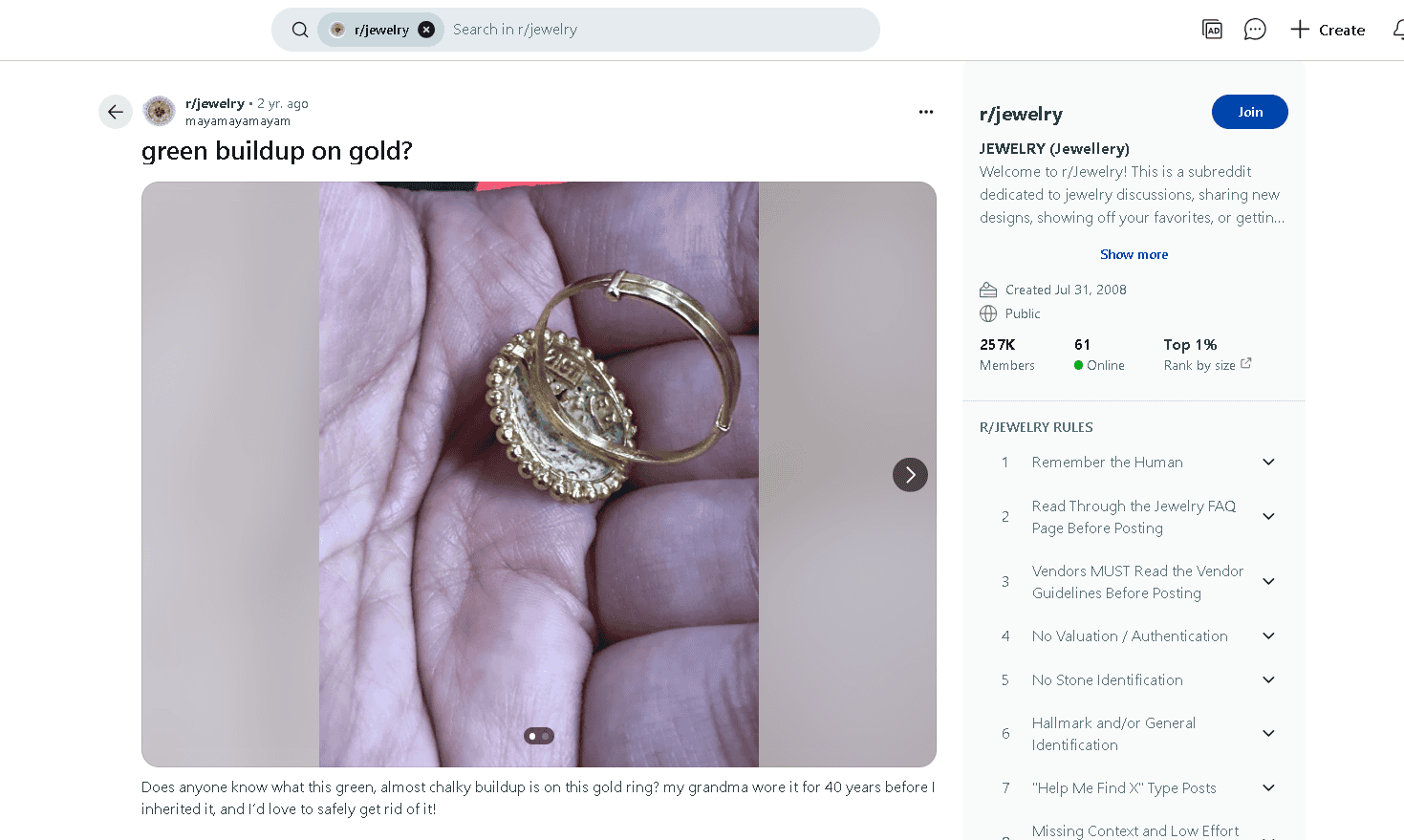
Yes, 14k gold ring can develop a green patina, provided that 14k gold is an alloy of yellow gold and sterling silver.
Sterling silver is an alloy of 92.5% silver and 7.5% other metals, typically copper. The copper in sterling silver reacts with moisture, oxygen, or sulfur compounds in the air and turns green.
Any other jewelry (bracelets, necklaces, earring, bands, armbands, pendants, broches, even cutlery and tableware) made from 14k gold that was created from yellow gold+ sterling silver is susceptible to developing a green or greenish patina over time as sterling silver oxidizes.
Does 12k Gold Patinate?
Yes, 12k gold patinates.
12k gold is a gold alloy containing 50% pure gold and 50% other metals like silver, copper, or zinc. 12k gold patinates because of 50% of other metals in this alloy.
With proper care 12k gold can last for a long time without developing a patina. But, it’s inevitable that at some point you’ll need to take your 12k jewelry to a professional jeweler for a deep cleaning and polishing due to the 50% of other metals in the alloy,
12k gold patinates slightly faster than 14k gold and significantly faster than 18k, 20k and 22k golds. 12k gold patinates slower than all lower purity gold alloys.

Gold patination is a fascinating topic. But you should check out this next, especially if you’re an American with a keen interest in the economy and precious metal investing.
Does 10k Gold Patinate?
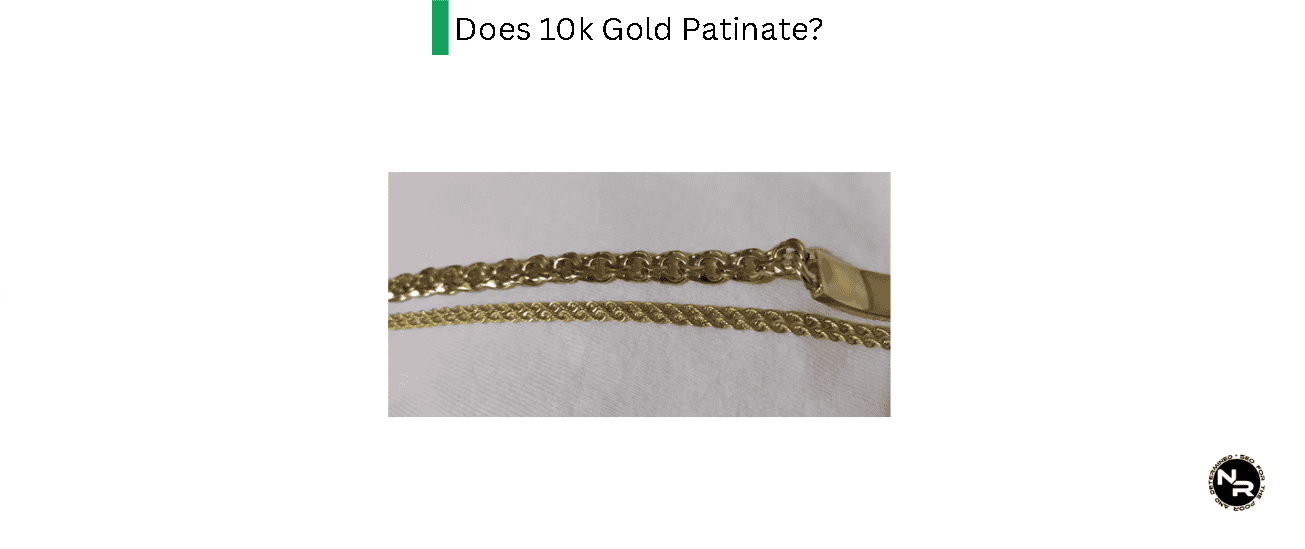
Yes, 10k gold patinates. 10k gold is a gold alloy containing 41.7% pure gold and 58.3% other metals like silver, copper, or zinc. 10k gold patinates because of 58.3% of other metals in this alloy.
With excellent care 10k gold can last for a long time without patinating. But, it’s inevitable that at some point you’ll need to take your 10k jewelry to a professional jeweler for a deep cleaning and polishing with so much of other metals in the alloy (58.3%),
10k gold patinates slightly faster than 12k gold and significantly faster than 14k 18k, 20k and 22k golds. 10k gold patinates slower than all lower purity gold alloys, namely 9k, 8k 6k and 5k gold.
Does 9k Gold Patinate?
Yes, 9k gold patinates. 9k gold is a gold alloy containing 37.5% pure gold and 62.5% other metals like silver, copper, or zinc. 9k gold patinates because of 62.5% of other metals in this alloy.
With excellent care 9k gold can last for a long time without developing a patina. But with so much of other metals in the alloy (62.5%), it’s inevitable that at some point you’ll need to take your 9k jewelry to a professional jeweler for a deep cleaning and polishing.
Note: 9k gold patinates slightly faster than 10k gold and significantly faster than 12k, 14k, 18k, 20k and 22k golds. 9k gold patinates slower than all lower purity gold alloys, namely 8k, 6k and 5k gold.

Does 8k Gold Patinate?
Yes, 8k gold patinates.
8k gold is a gold alloy containing 33.3% pure gold and 66.7% other metals like silver, copper, or zinc. 8k gold patinates because of 66.7% of other metals in this alloy.
With excellent care 8k gold can last for a long time without patinating. But, it’s inevitable that at some point you’ll need to take your 8k jewelry to a professional jeweler for a deep cleaning and polishing with so much of other metals in this alloy (66.7%),
8k gold patinates slightly faster than 9k gold and significantly faster than 10k, 12k, 14k, 18k, 20k and 22k golds. 8k gold patinates slower than all lower purity gold alloys (6k and 5k gold).

Does 6k Gold Patinate?
Yes, 6k gold patinates. 6k gold is a gold alloy containing 25% pure gold and 75% other metals like silver, copper, or zinc. 6k gold patinates because of 75% of other metals in this alloy.
With excellent care 6k gold might last you for a long time without developing a patina or tarnishing. But, it’s inevitable that at some point you’ll need to take your 6k jewelry to a professional jeweler for a deep cleaning and polishing as 75% of this gold alloy consists of metals other than pure gold,
6k gold patinates slightly faster than 8k gold and significantly faster than 9k, 10k, 12k, 14k, 18k, 20k and 22k golds. 6k gold patinates slower than 5k gold.

Does 5k Gold Patinate?
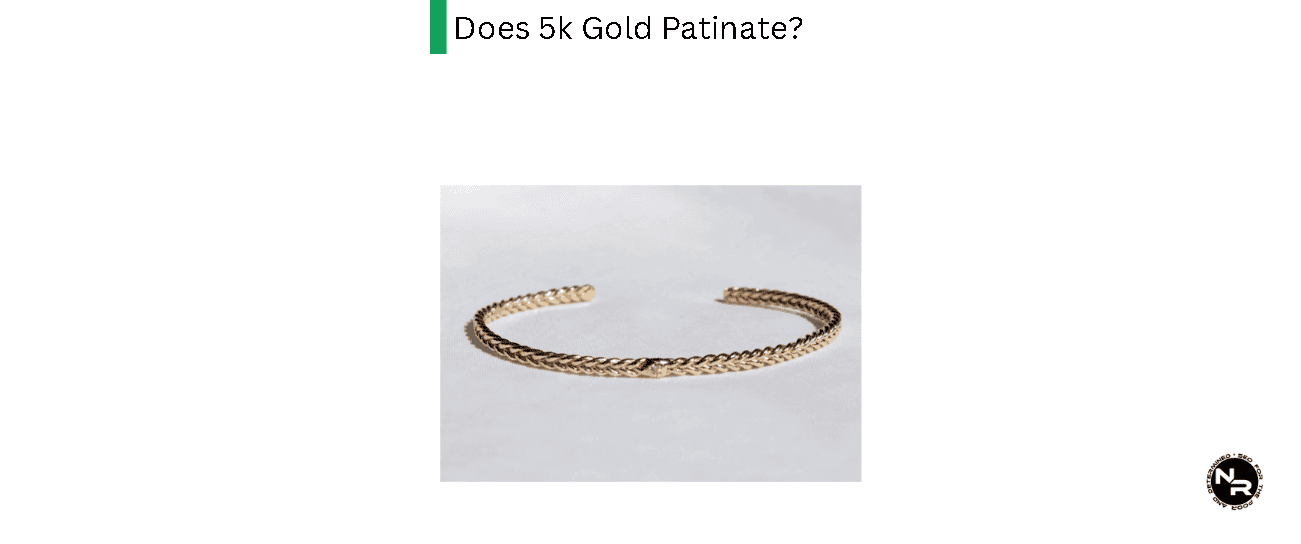
Yes, 5k gold patinates. 5k gold is a gold alloy containing 20.85% pure gold and 79.15% other metals like silver, copper, or zinc. 5k gold patinates because of 79.15% of other metals in this alloy.
With excellent care 5k gold might last you for a long time without developing a patina.
But, it’s inevitable at some point you’ll need to take your 5k jewelry to a professional jeweler for a deep cleaning and polishing as nearly eighty percent of this gold alloy consists of metals other than pure gold,
5k gold patinates slightly faster than 6k gold and significantly faster than 8k, 9k, 10k, 12k, 14k, 18k, 20k and 22k golds.
Does Fools Gold Patinate?
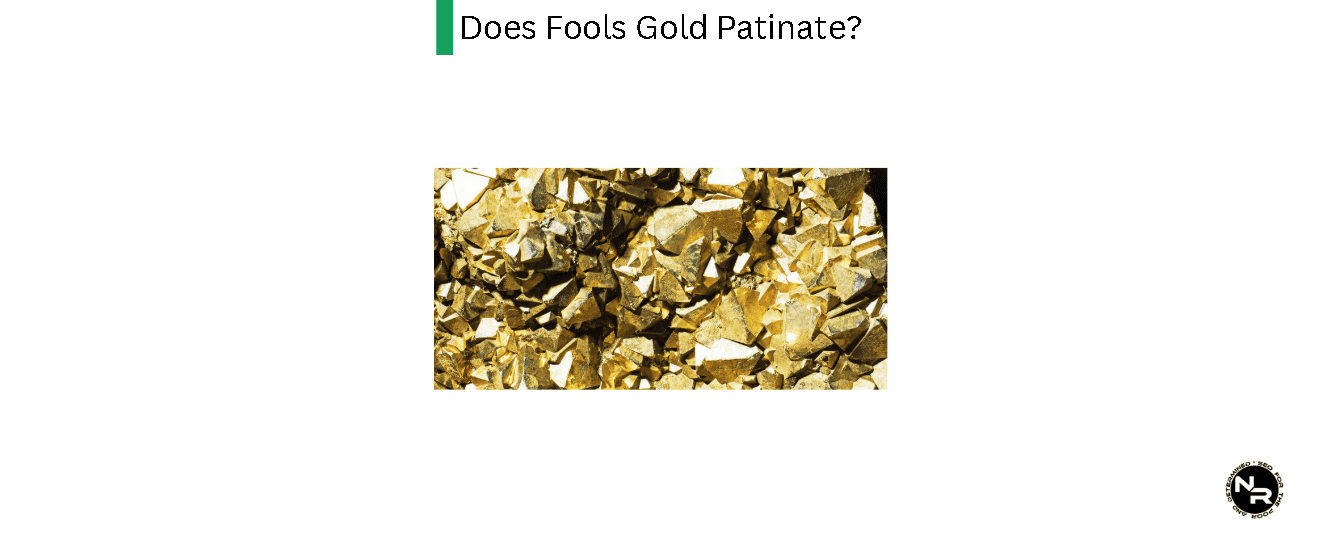
Yes, fools gold (pyrite) patinates. And unlike a simple metal tarnish that can be removed, the process is destructive and permanent. Pyrite (iron sulfide) is chemically unstable when exposed to the atmosphere, and it breaks down over time in a process called “pyrite disease”.
When pyrite is exposed to humid air, it reacts with oxygen and water, leading to a breakdown of the mineral. This means fool’s gold jewelry (almost exclusively marcasite jewelry) over time begins to dull, darken, and eventually crack or crumble if you don’t store it properly.
Gold Patina vs Sterling Silver Patina- What are the Differences?
There’re many differences between gold patina and sterling silver patina.
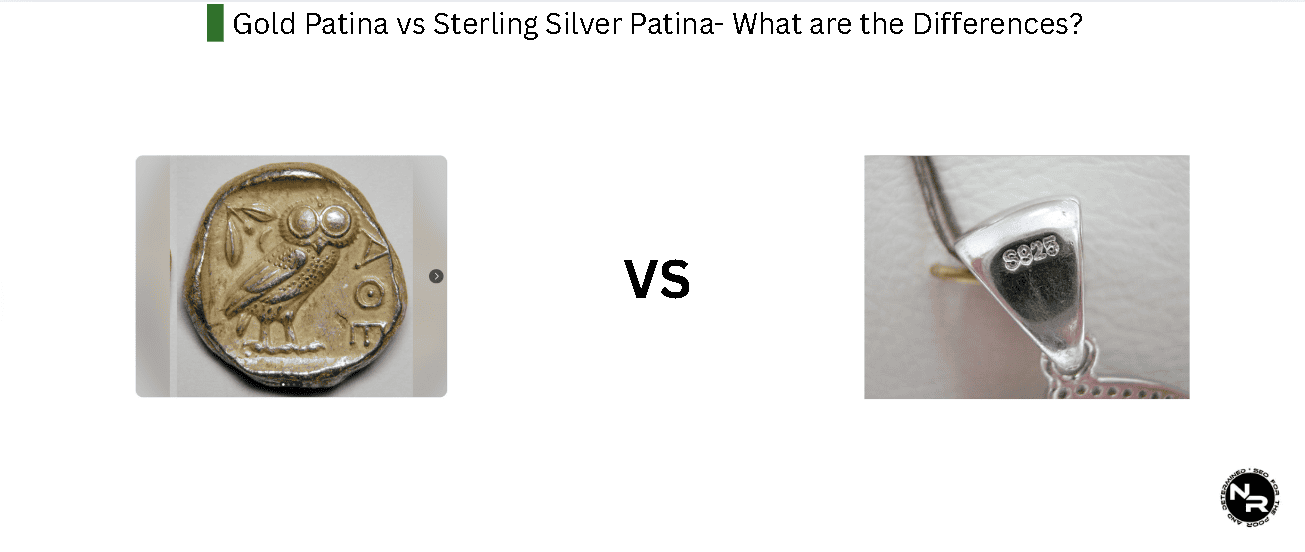
The main difference is that gold patina is a deliberate, applied finish to give gold-colored metal a specific aged look. Sterling silver patina is a natural oxidation process that darkens the silver over time.
Gold patina is a desired aesthetic achieved through various chemical or paint processes, while sterling silver tarnish is an unwanted reaction that can be polished away.
Gold Patina vs Platinum Patina- What are the Differences?
There’re many differences between gold patina and platinum patina.
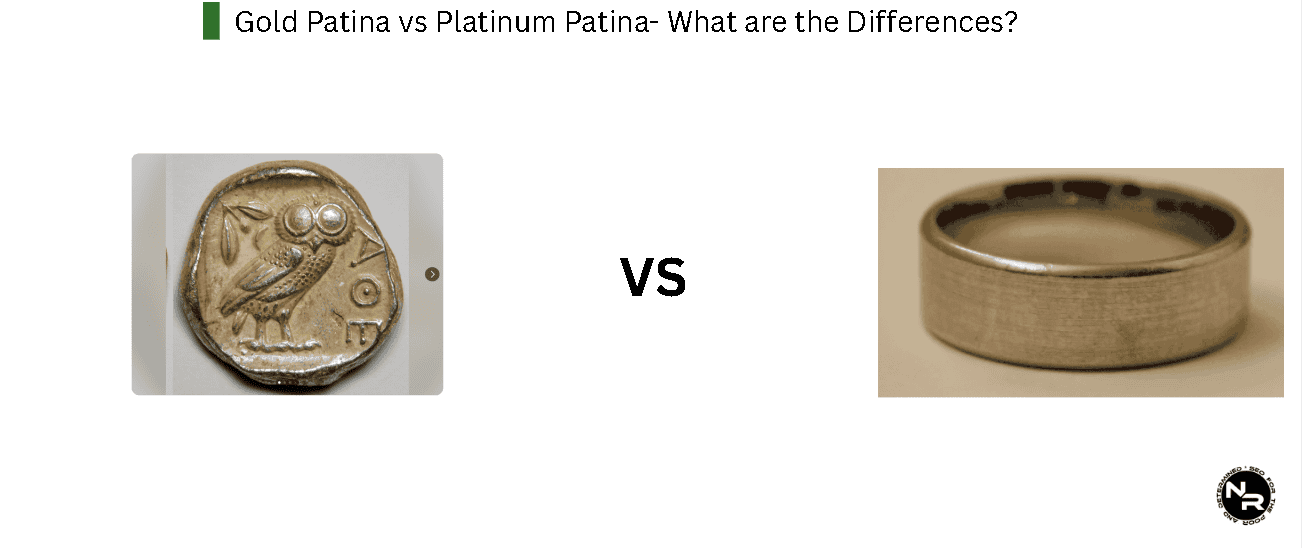
The main difference is that platinum develops a matte, satiny patina from surface scratches that happen from daily wear and tear.
Gold patina is a natural or chemically induced surface discoloration that occurs or is added to gold items to make them appear aged, vintage and classic.
Platinum patina develops slower than gold patina because it takes time from scratches to develop from daily wear and tear. Metals in gold alloys oxidize on their own even if you’re not wearing your jewelry.
Similar to pure gold, pure platinum (fine platinum) tarnishes and patinates way slower than low karatage platinum alloys like platinum 600.
Gold Patina vs Palladium Patina- What are the Differences?
There’re many differences between gold patina and palladium patina.
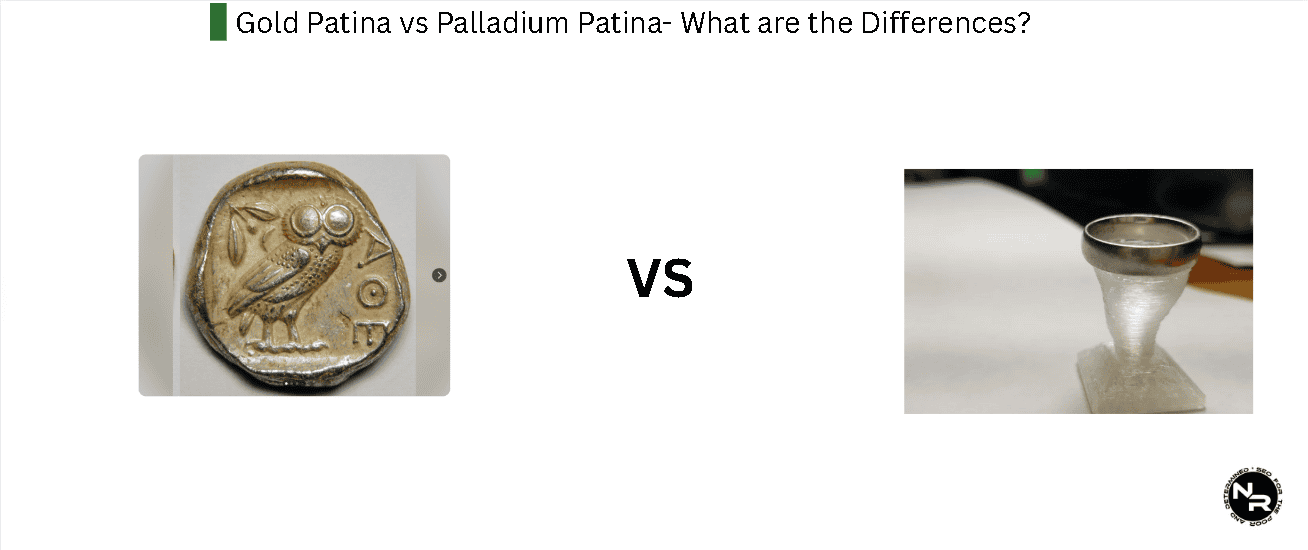
The main difference is that palladium develops a matte, satiny patina from surface scratches that simply move the metal.
Gold patina is a natural or chemically induced surface discoloration that occurs or is added to gold items to make them appear aged, vintage and classic.
Palladium patina develops slower than gold patina because it takes time from scratches to develop from daily wear and tear. Metals in gold alloys oxidize on their own even when you’re not wearing your jewelry.
Similar to pure gold, pure palladium (fine palladium) tarnishes and patinates way slower than low karatage palladium alloys like palladium 500.
Can Old Gold Have Blue Patina?
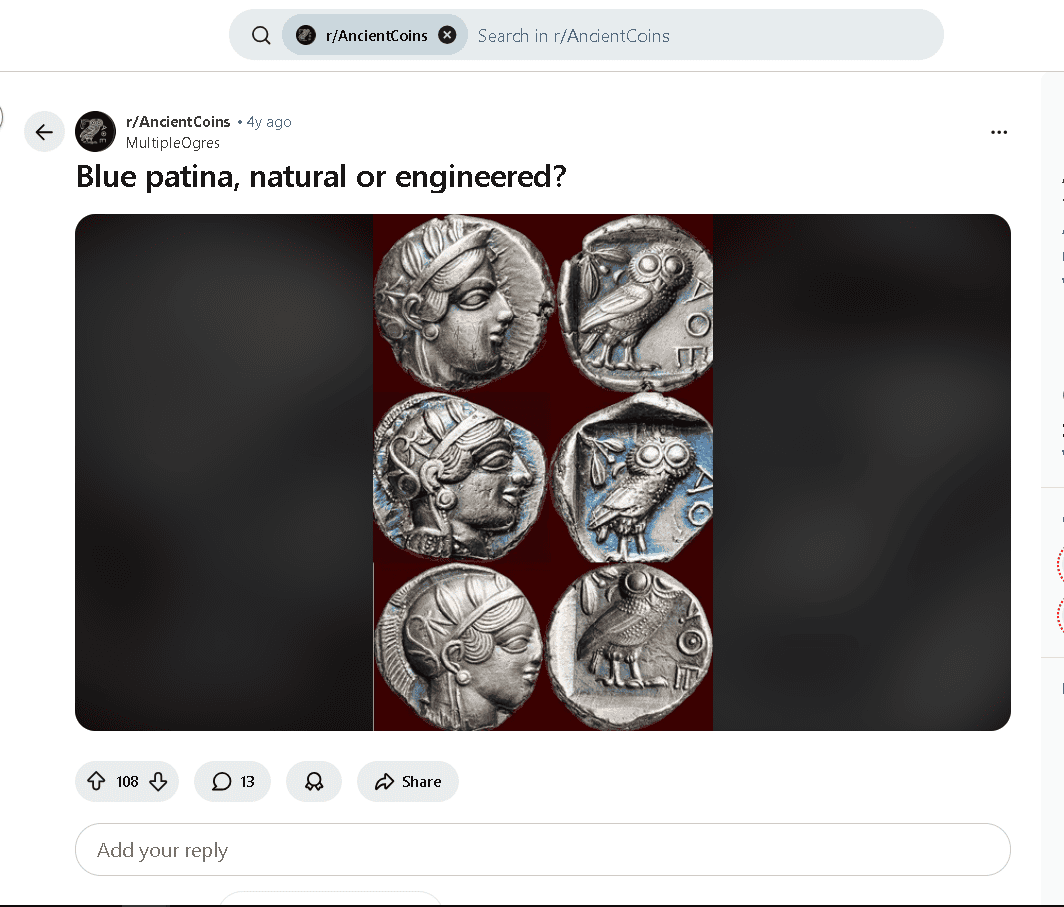
Yes, a blue patina can form on old gold. But it is not a natural patina like you’d see on bronze or copper.
Instead, a blue color on gold is usually a sign of a specific type of alloy. Or it’s a sign that the item is made of fake gold.
- Tarnish vs. Patina: What’s the Difference in Precious Metals?- https://firstnationalbullion.com/how-are-patina-and-tarnish-different/
- Patina on gold- https://orchid.ganoksin.com/t/patina-on-gold/39776/4
- Old Red Gold Patina- https://www.militaria.co.za/nmb/topic/19672-old-red-gold-patina/
- How to patina gold- https://www.reddit.com/r/jewelrymaking/comments/1k5eb67/how_to_patina_gold/
- Gold patina- https://www.reddit.com/r/StainedGlass/comments/p03drb/gold_patina/
- Tarnished 14k gold?- https://www.reddit.com/r/jewelry/comments/16ksl7q/tarnished_14k_gold/
- Why did my Stud Earring tarnish even though it’s 18k Gold?- https://www.reddit.com/r/jewelry/comments/185bvi1/why_did_my_stud_earring_tarnish_even_though_its/
- Tarnished 18k gold ?- https://www.reddit.com/r/CleaningTips/comments/19erysq/tarnished_18k_gold/
- Gold watch tarnishing- https://www.reddit.com/r/jewelry/comments/ztvwh8/gold_watch_tarnishing/
- Gold ring tarnishing?- https://www.reddit.com/r/jewelry/comments/176we0q/gold_ring_tarnishing/
- The Rise of Anti-Tarnish Jewelry: A New Era for Fashion Lovers- https://thejewellerytribe.com/blogs/news/the-rise-of-anti-tarnish-jewelry-a-new-era-for-fashion-lovers
- What Is Green Gold: Your Ultimate Guide- https://www.nobbier.com/blogs/editorial/what-is-green-gold/
- What Is Purple Gold: Your Ultimate Guide- https://www.nobbier.com/blogs/editorial/what-is-purple-gold/
- What Is Blue Gold: Your Ultimate Guide- https://www.nobbier.com/blogs/editorial/what-is-blue-gold/
- What Is Black Gold: Your Ultimate Guide- https://www.nobbier.com/blogs/editorial/what-is-black-gold/
- What Is Grey Gold: Your Ultimate Guide- https://www.nobbier.com/blogs/editorial/what-is-grey-gold/
- Discolouration on white gold- https://www.reddit.com/r/EngagementRings/comments/134qk08/discolouration_on_white_gold/
- 22k Gold Curb Chain 20 inches- https://www.purejewels.com/product/22k-gold-curb-chain-27602/
- Hello, I have a 20K gold coin in my inventory, I need to know if it’s worth anything aside from its current gold value- https://www.reddit.com/r/oldcoins/comments/x6a2qn/hello_i_have_a_20k_gold_coin_in_my_inventory_i/
- 18k Gold Vermeil Jewelry- https://mejuri.com/world/en/collections/gold-vermeil-jewelry
- green buildup on gold?- https://www.reddit.com/r/jewelry/comments/16ffj49/green_buildup_on_gold/
- 12K gold Chain- https://www.reddit.com/r/Gold/comments/1bghxy6/12k_gold_chain/
- Both are 10k. Is the color difference normal?- https://www.reddit.com/r/jewelry/comments/v30cxe/both_are_10k_is_the_color_difference_normal/
- 9k gold ring (+ diamonds?)- https://www.reddit.com/r/whatsthisworth/comments/17gdkr4/9k_gold_ring_diamonds/
- Picked this up for $20… 8k gold, marked and tested 333. Almost looks like brass but still has more gold than gold fill so I’ll take it. 34.2 grams.- https://www.reddit.com/r/Gold/comments/1b52pkn/picked_this_up_for_20_8k_gold_marked_and_tested/
- Beautiful 6k Gold- https://www.reddit.com/r/RefiningGold/comments/1ax30v6/beautiful_6k_gold/
- 5K Yellow Gold and Tiny Diamond Thin Braid Stacking Bracelet-Ready to ship- https://www.jennifertullwestbergjewelry.com/listing/253971387/5k-yellow-gold-and-tiny-diamond-thin
- How to Verify Indian Silver Purity Marks- https://touch925.com/blogs/jewellery-knowledge/identify-indian-silver-purity-marks
- Platinum Patina- https://www.reddit.com/r/EngagementRings/comments/18dgk85/platinum_patina/
- Can I polish my palladium wedding band myself? It’s been worn almost daily for 14 years. Needs some love.- https://www.reddit.com/r/jewelers/comments/psvej0/can_i_polish_my_palladium_wedding_band_myself_its/
- Blue patina, natural or engineered? –https://www.reddit.com/r/AncientCoins/comments/sxxfsz/blue_patina_natural_or_engineered/
- Fool’s gold is a good source of the real stuff- https://www.economist.com/science-and-technology/2021/07/19/fools-gold-is-a-good-source-of-the-real-stuff

Nikola Roza
Nikola Roza is the owner of Nikola Roza- Everything You Can Learn About Precious Metals. He writes for people who love precious metals and jewelry and who're interested in adding gold, silver platinum and palladium to their Gold IRAs and retirement portfolios.