
Disclosure: Some of the links you’ll encounter are unique links. Click and buy something and I’ll earn some money, at zero expense to you. Thank you!
Sterling silver patina is a controlled darkening of the metal’s surface caused by oxidation, distinct from tarnish, which is an unwanted, uneven discoloration from copper in the alloy reacting with oxygen. Green discoloration that stains skin is tarnish triggered by copper reacting with moisture, sweat, or sulfur. Patina can be added deliberately using liver of sulfur for an even, attractive blackened finish, while natural tarnish develops unevenly over time.
Removing patina or tarnish from sterling silver involves commercial polish or home methods like baking soda paste, or baking soda combined with vinegar or boiling water and aluminum foil. Prevention includes storing pieces in anti-tarnish pouches and avoiding harsh chemicals.
Compared to other silver alloys, sterling’s tarnish rate depends on copper content: it patinates faster than fine silver, Argentium, and Britannia silver, but slower than silver 900, 875, 800, Decoplata, and nickel silver. It also tarnishes more readily than platinum or palladium, which develop different, more durable patinas.
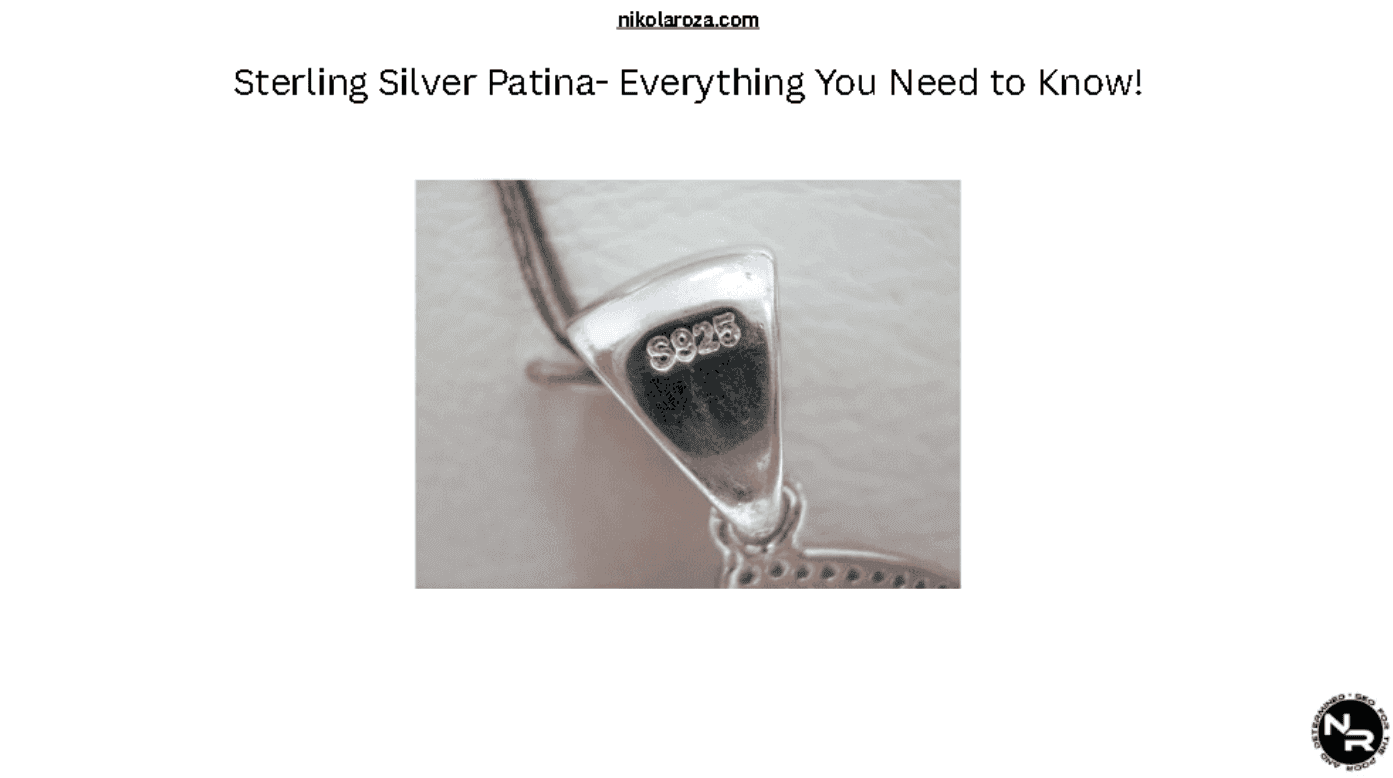
What is Sterling Silver Patina?
Sterling silver patina is a natural darkening of the silver’s surface due to oxidation and other chemical reactions. It’s a controlled type of silver tarnishing that creates a desired, unique, blackened look on sterling silver jewelry.
Sterling silver tarnishing is an undesirable process that produces ugly output, but controlled patination results in uniquely looking sterling silver jewelry.
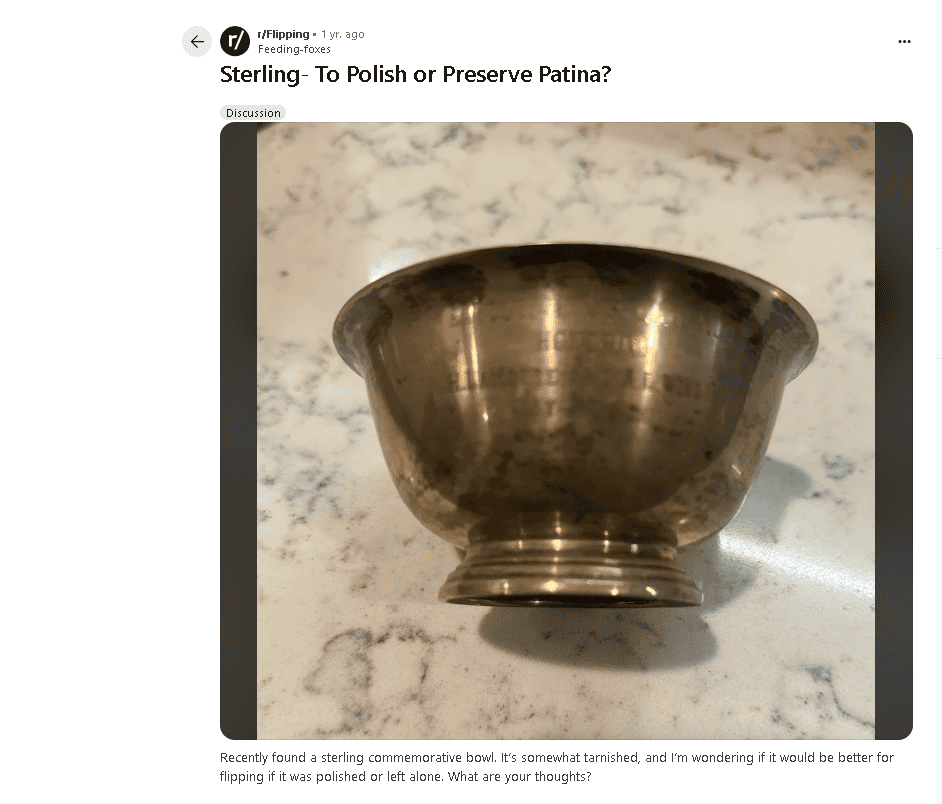
Sterling silver patination is a fascinating topic. But you should check out this next, especially if you’re an American with a keen interest in the economy and precious metal investing.
Is Sterling Silver Patina the Same as Sterling Silver Tarnish?
No, sterling silver patina and sterling silver tarnish aren’t the same.
Sterling silver tarnish is an undesirable, uncontrollable discoloration that happens when copper within sterling silver reacts with oxygen. The end result is ugly looking sterling silver jewelry that’s asking to be polished.
Sterling silver patination is a natural darkening of the silver’s surface due to oxidation and other chemical reactions. It’s a controlled form of silver tarnishing that creates exquisite sterling silver jewelry pieces.
Does Patina on Sterling Silver Eventually Tarnish?
Yes, both natural and artificially-made sterling silver patina eventually tarnishes if you don’t take good care of your sterling silver jewelry.
Sterling silver patina stays roughly the same for a long time if you take good care of your sterling silver jewelry.
To keep sterling silver jewelry looking its best, store it in a cool, dry place, ideally in anti-tarnish pouches or airtight containers to prevent tarnishing.
Regularly clean your jewelry with a soft cloth and mild soap, and avoid exposing it to harsh chemicals like perfumes, hairspray, and cleaning products. Use a silver polishing cloth or a specialized silver cleaner when cleaning your sterling silver rings, necklaces, bracelets, bands, armbands, pendants, broches, cutlery, tableware and more.
Sterling silver patination is a fascinating topic. But you should check out this next, especially if you’re an American with a keen interest in the economy and precious metal investing.
What is Green Patina on Sterling Silver?
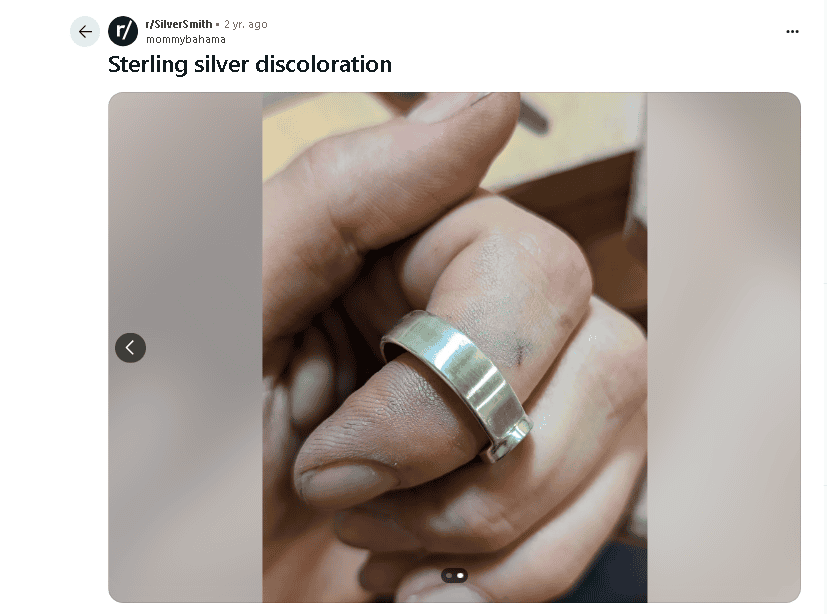
Green patina on sterling silver is sterling silver tarnish. Sterling silver turns green due to a reaction between the copper in the alloy and substances like moisture, sweat, or sulfur compounds. This reaction forms a greenish layer on the silver which transfers to your skin as you wear it.
Here’s an example of a green sterling silver patina/tarnish leaving a green mark on human skin.
What is the Best Way to Remove Natural Patina from Sterling Silver?
The best way to remove natural patina from sterling silver is to use a commercial silver polish.
This method works, but you have to spend money. You can also remove tarnish from sterling silver manually and for free.
To remove tarnish and restore the natural patina on sterling silver in your home, you can use a baking soda paste, or a solution of boiling water, baking soda, and aluminum foil. First, mix baking soda with water to create a paste. Then, apply the paste to the silver with a soft cloth and rub gently. Finally, rinse with water and dry with a soft cloth.
How to Remove Chemically Applied Patina from Sterling Silver?
To remove chemically applied patina from sterling silver you should use a baking soda+ vinegar solution.
First, combine warm water, baking soda, and white vinegar in a bowl. Next, soak the tarnished silver for a few hours. Finally, rinse and dry your sterling silver jewelry with a soft cloth.
You can also use the baking soda+ water method I described above.
Sterling silver patination is a fascinating topic. But you should check out this next, especially if you’re an American with a keen interest in the economy and precious metal investing.
Is it Possible to add Patina to Sterling Silver?
Yes, it’s possible to add patina to sterling silver. You can patinate sterling silver jewelry naturally or artificially (chemically).
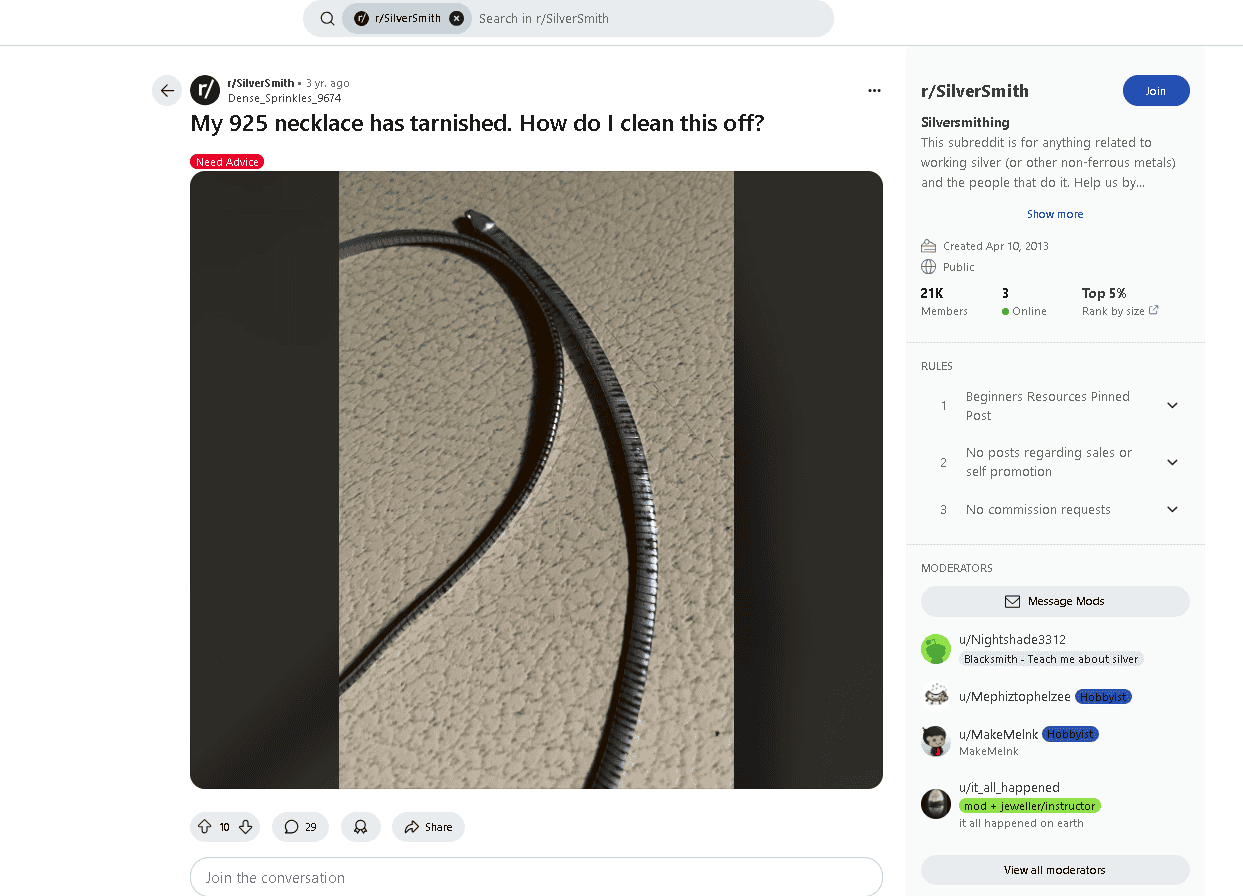
Sterling silver naturally tarnishes over time and it’s one way to add a patina. The problem is that this type of tarnish is uneven and the end result is unsatisfactory. Plus it take a bit of time.
Here’s an example of unevenly tarnished sterling silver necklace.
You can also use Liver of Silver to add even patina to the surface of your sterling silver jewelry piece.
First, prepare the solution by dissolving a small amount of liver of sulfur in hot water until it turns a brownish color. Then, immerse your silver piece in the solution, allowing it to darken to your desired shade. Finally, neutralize the reaction with baking soda and water, rinse, and dry your piece. Afterwards, take good care of your piece so it doesn’t continue to naturally tarnish and ruin your desired patina.
Silver Patina Examples and Images
Here’re some examples and images of silver patina, both natural and chemically made.
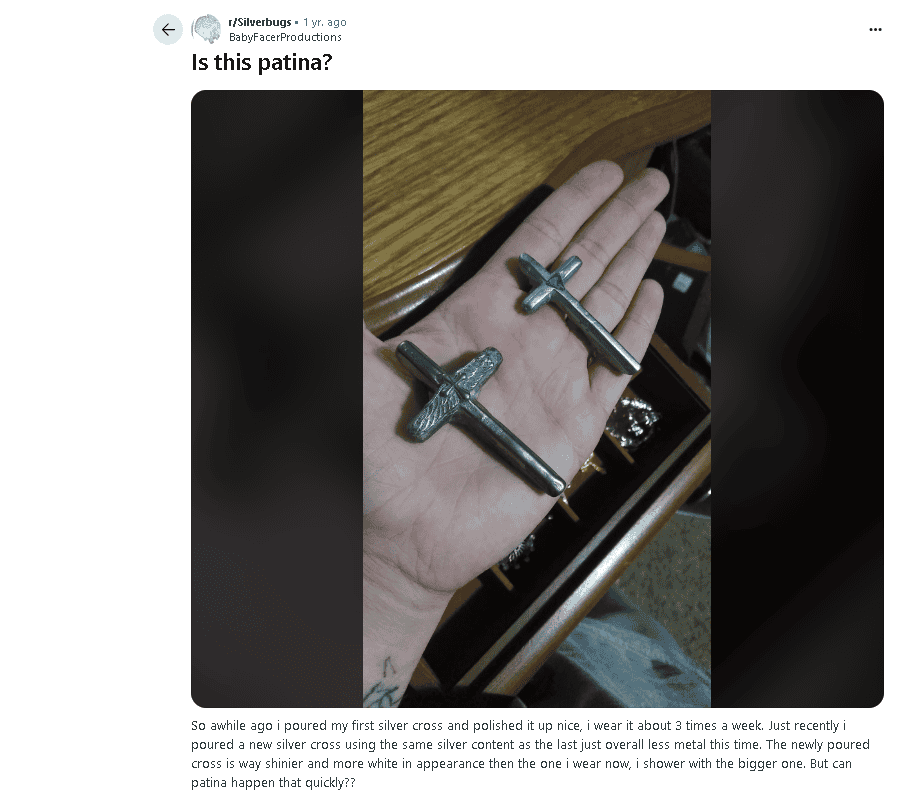
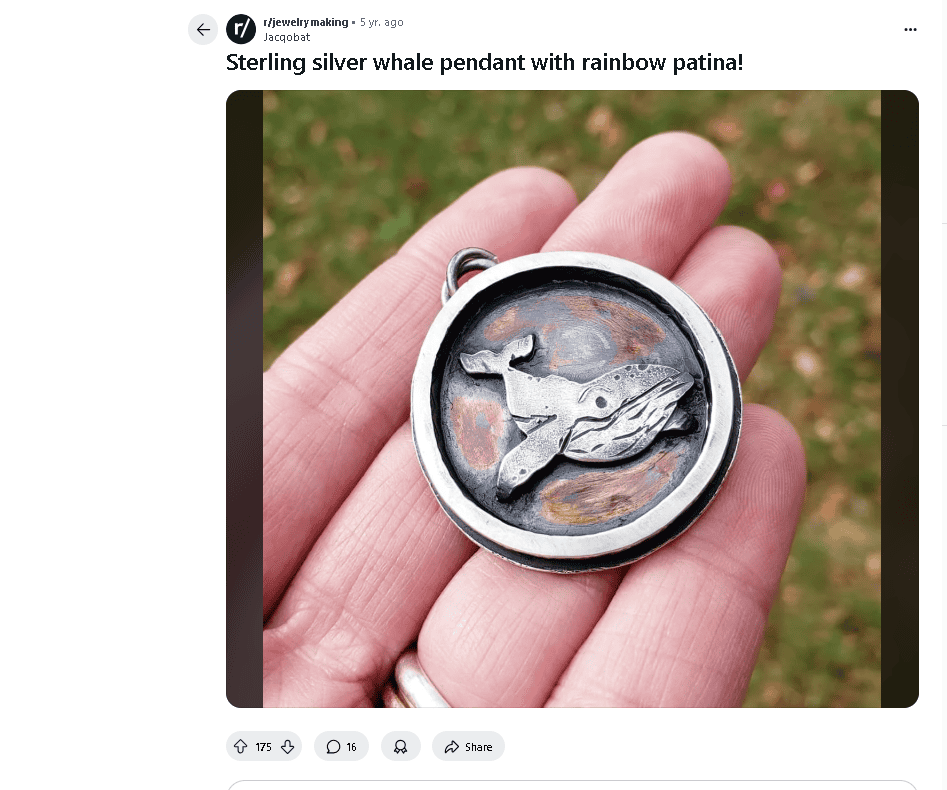
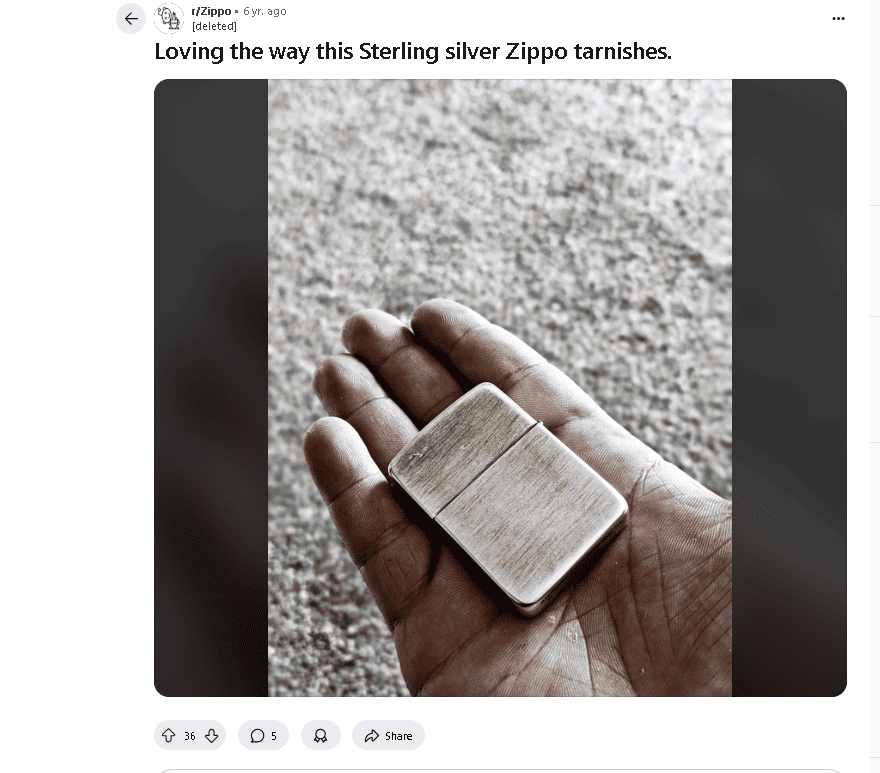
Sterling silver patination is a fascinating topic. But you should check out this next, especially if you’re an American with a keen interest in the economy and precious metal investing.
Does Plated Sterling Silver Patinate?
No, plated sterling silver doesn’t patinate as long as the plating around sterling silver is intact and sufficiently thick. In this case gold plating isolates sterling silver from air, moisture and other elements and this prevents patination process from happening.
Sterling silver encased in a gold plate made of at least 10kgold and at least 2.5 microns thick is called “gold vermeil”. Besides the standard yellow gold vermeil, there’s also rose gold vermeil and white gold vermeil.
Sterling silver can be plated with gold that’s thinner than 2.5 microns. In that case gold plating might not fully protect sterling silver and then uneven patination happens.
Sterling Silver vs Fine Silver- Which Metals Patinates More?
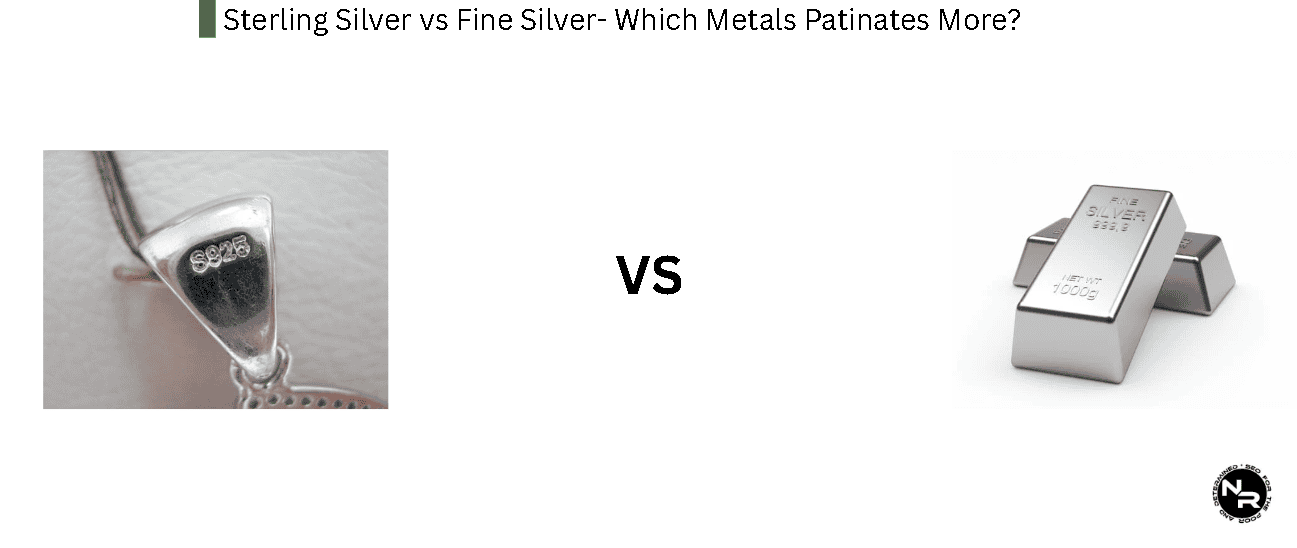
Sterling silver patinates more and faster than fine silver. Sterling silver is more vulnerable to patination because of the oxidizing copper within the alloy. Fine silver is 99.%9 pure silver with only traces of other metals in it, and no copper.
Pure silver still reacts with sulfur-containing gases in the air to form a layer of silver sulfide which appears as a black or gray discoloration.
But this is a slower process than sterling silver tarnishing/patination.
Fine silver in jewelry is extremely rare because it’s too soft and easy to scratch. Pure silver is mainly used making investment bullion (25% of yearly silver production goes to bullion creation).
Sterling Silver vs Silver Argentium- Which Metal Patinates More and Faster?
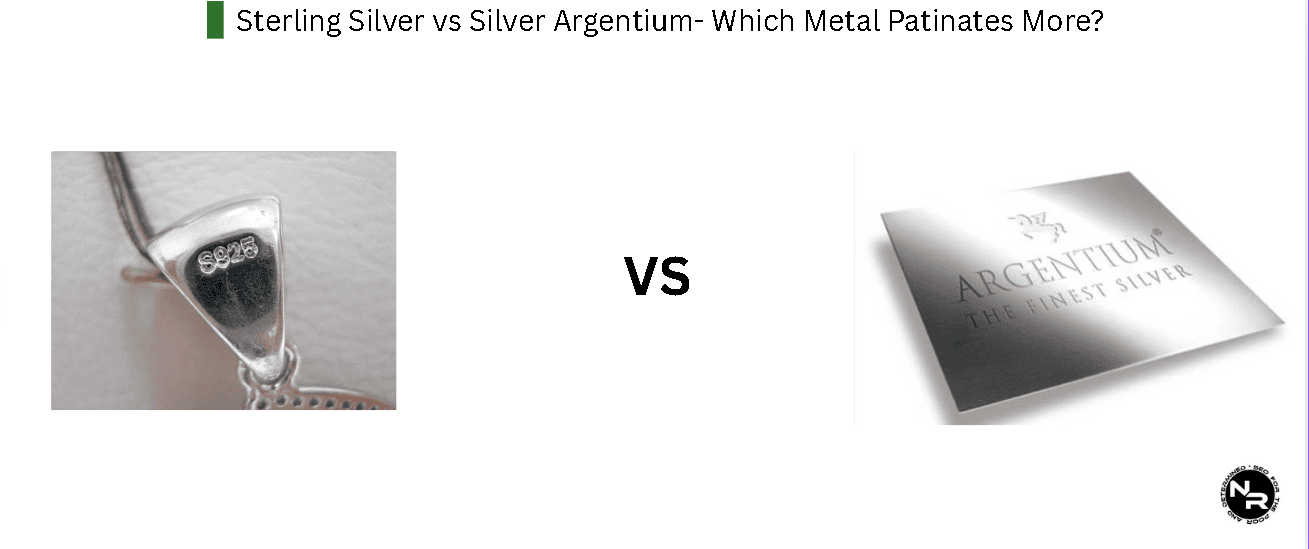
Sterling silver patinates more and faster than silver Argentium.
Silver Argentium is a modern silver alloy with a higher silver content (93.5%, 94%, or 96%) and germanium as copper replacement. Lack of copper and addition of copper make silver Argentium resistant to tarnishing and patination.
Sterling Silver vs Silver 958 (Britannia Silver)- Which Metal Patinates More and Faster?
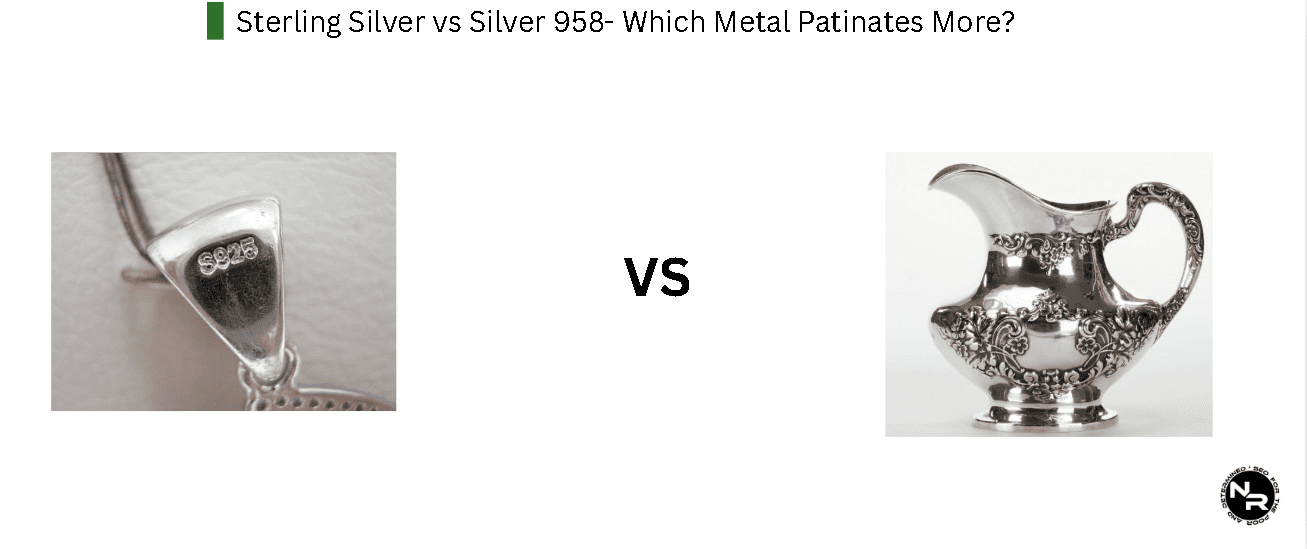
Sterling silver patinates more and faster than Britannia silver. Because sterling silver contains a lower percentage of pure silver and a higher percentage of copper compared to Britannia silver.
Since copper is the primary tarnishing component in silver alloys, the alloy with more copper (Sterling) tarnishes faster than the purer Britannia silver which contains 95.8% silver and 4.2% copper.
Sterling Silver vs Silver 900- Which Metal Patinates More and Faster?
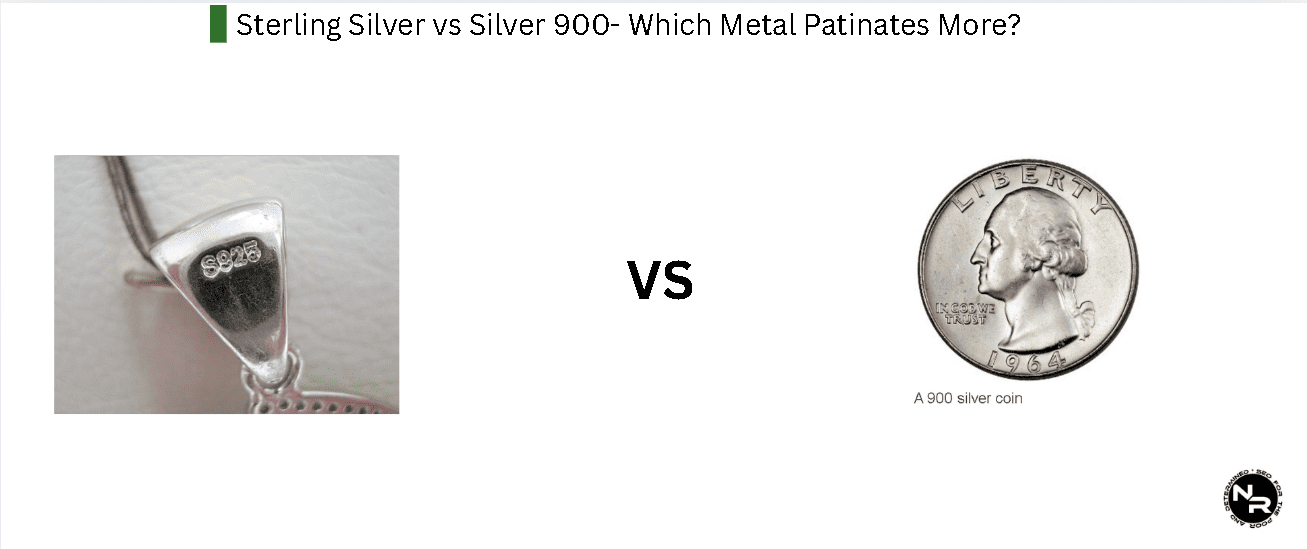
Sterling silver patinates less and slower than silver 900. It’s because sterling silver alloy contains more pure silver and less copper than silver 900.
Silver 900 is made of 90% pure silver and 10% copper and this amount of copper causes it to tarnish/patinate faster than sterling silver.
Sterling Silver vs Silver 875- Which Metal Patinates More?
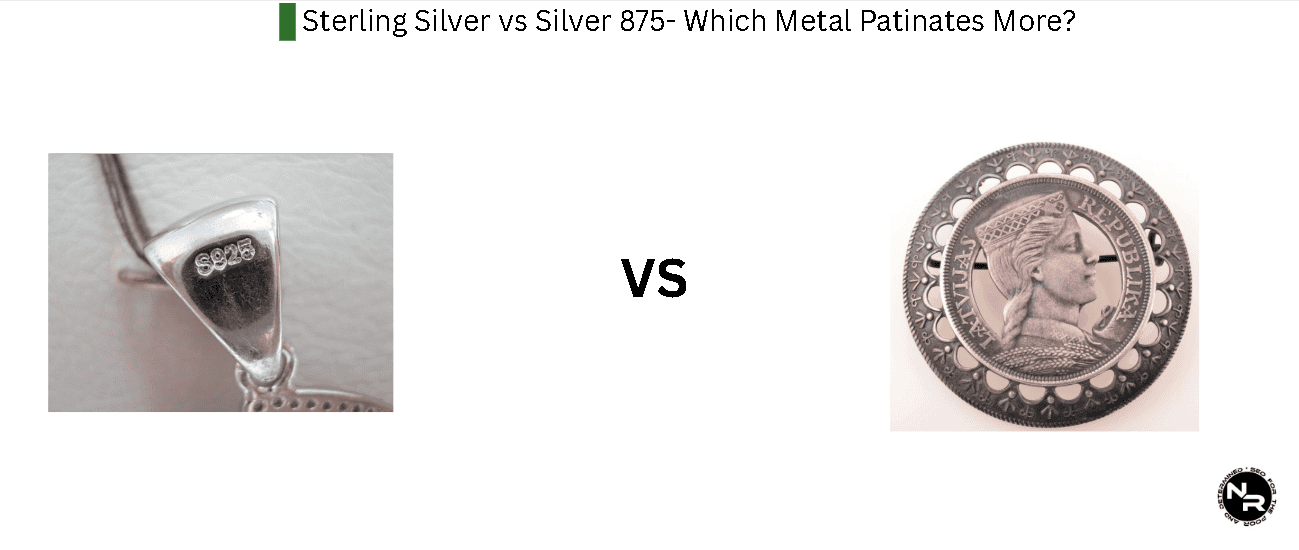
Sterling silver patinates less and slower than silver 875 because it contains more pure silver and less copper than silver 875.
Silver 875 is made of 87.5% pure silver and 12.5% copper and this amount of copper causes it to tarnish/patinate faster than sterling silver.
Sterling silver patination is a fascinating topic. But you should check out this next, especially if you’re an American with a keen interest in the economy and precious metal investing.
Sterling Silver vs Scandinavian Silver- Which Metal Patinates More?
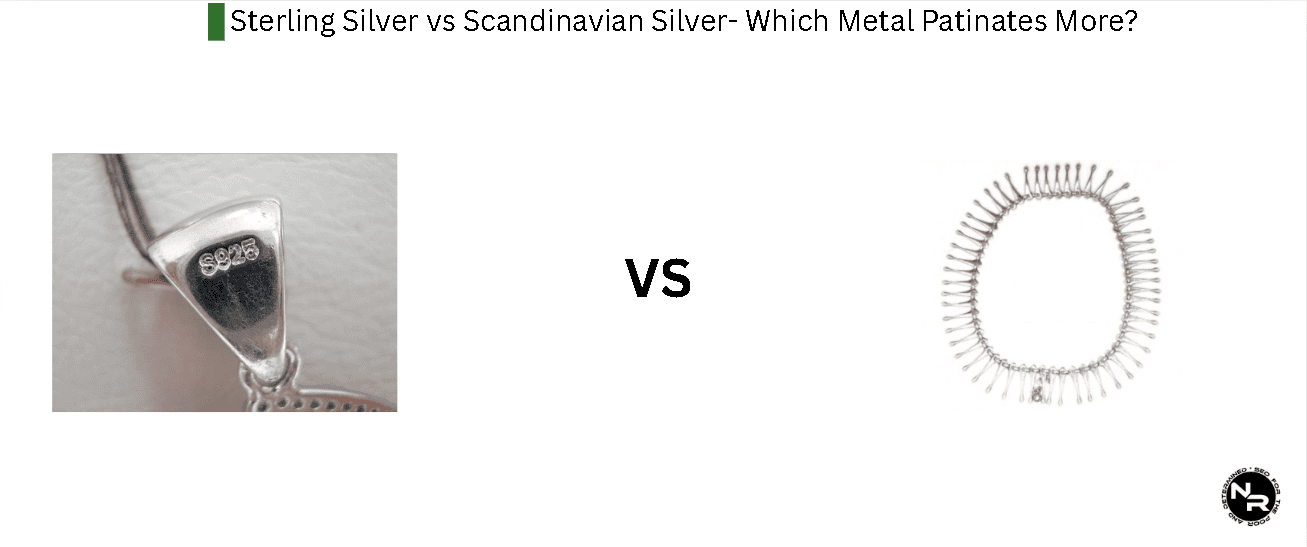
Sterling silver patinates less and slower than Scandinavian silver because it contains more pure silver and less copper than this silver alloy.
Scandinavian silver is made of 83% pure silver and 17% copper and this amount of copper causes it to tarnish/patinate faster than sterling silver.
Sterling Silver vs Silver 800 (Continental Silver)- Which Metal Patinates More?
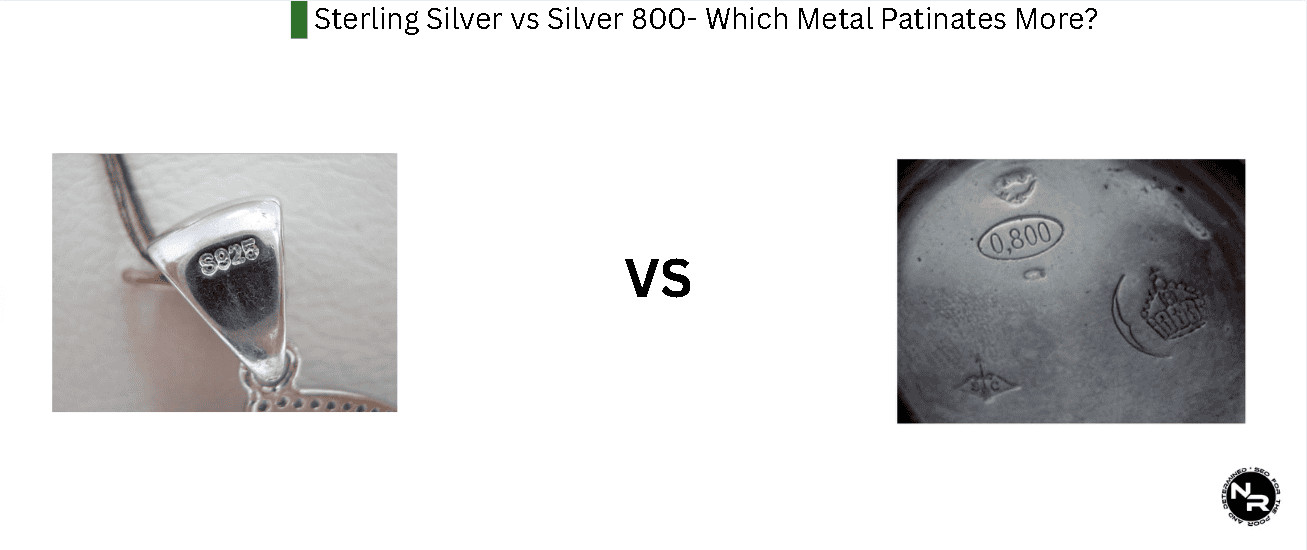
Sterling silver patinates less and slower than silver 800 because it contains more pure silver and less copper than this silver alloy. Silver 800 (Continental Silver) is made of 80% pure silver and 20% copper and this amount of copper causes it to tarnish/patinate faster and more than sterling silver.
Sterling Silver vs Silver Decoplata- Which Metal Patinates More?
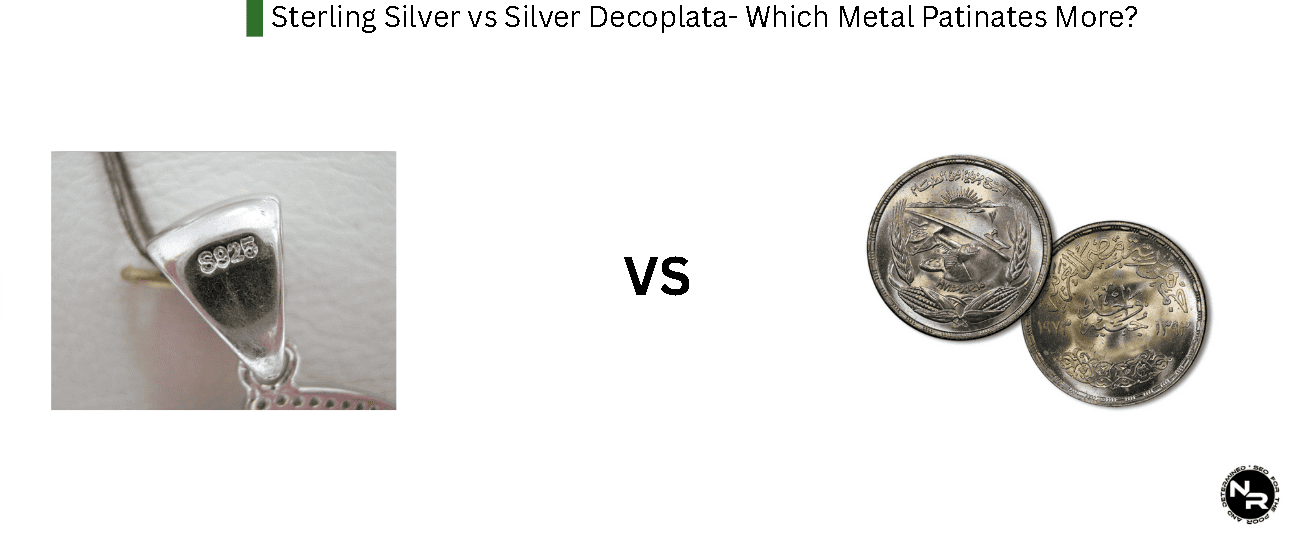
Sterling silver patinates less and slower than silver Decoplata because it contains more pure silver and less copper than this silver alloy. Silver 720 (silver Decoplata) is made of 72% pure silver and 28% copper and this amount of copper causes it to tarnish/patinate faster and more than sterling silver.
Sterling Silver vs Silver 500 (Half Silver)- Which Metal Patinates More and Faster?
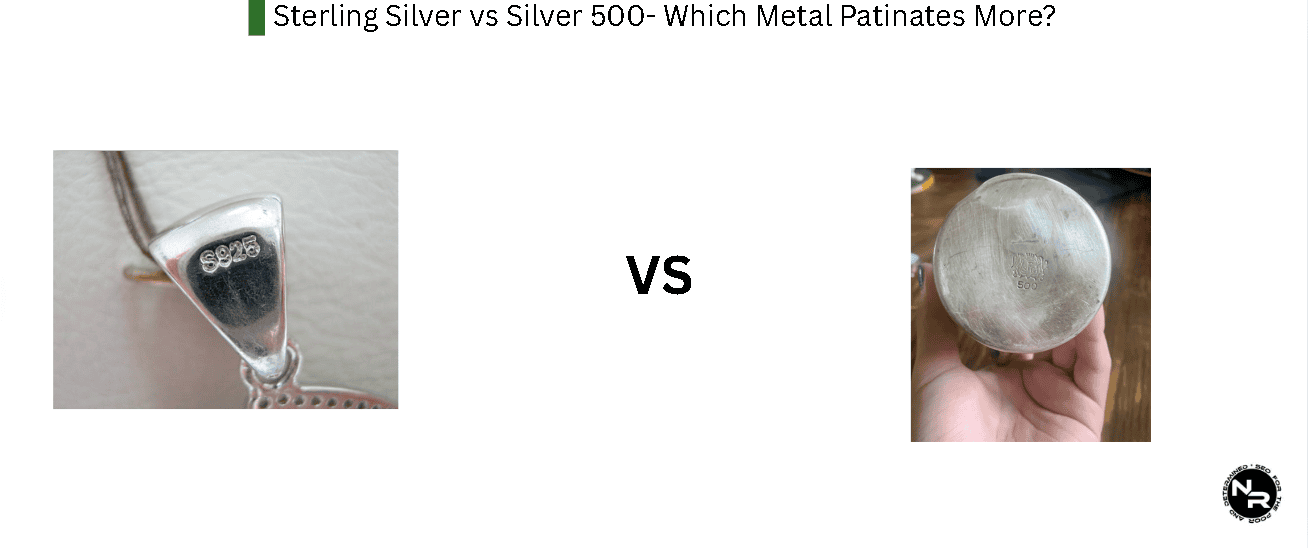
Silver 500 (half silver) patinates more and faster than sterling silver. Silver 500 contains 50% copper and 50% and this high amount of copper causes half silver to tarnish much faster than sterling silver.
Sterling silver patination is a fascinating topic. But you should check out this next, especially if you’re an American with a keen interest in the economy and precious metal investing.
Sterling Silver vs Nickel Silver- Which Metal Patinates More?
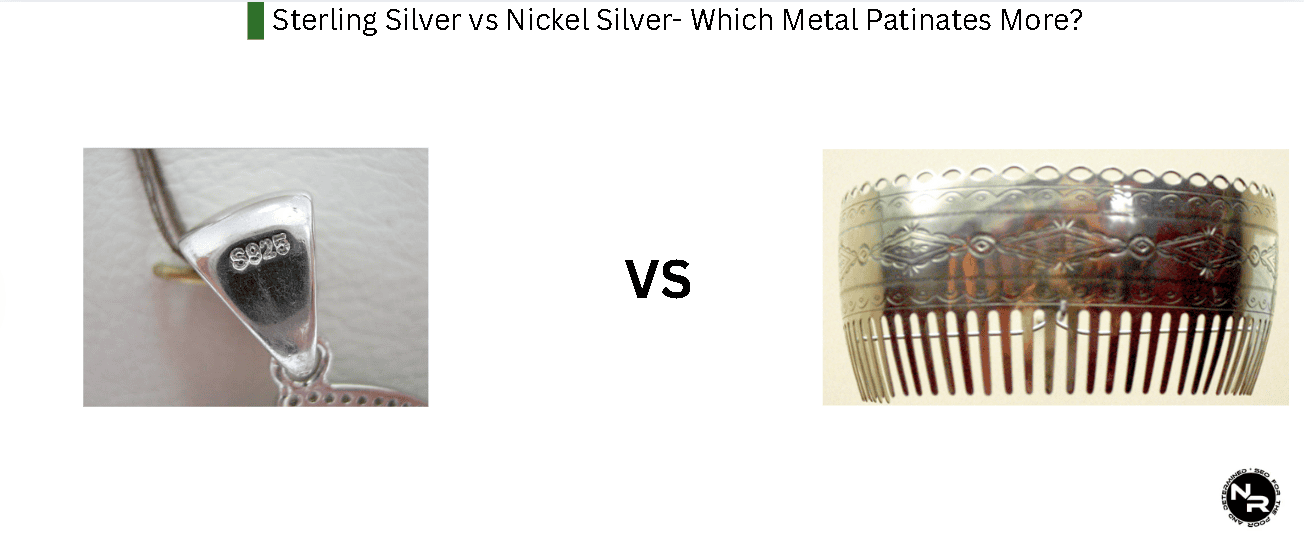
Nickel silver patinates more and faster than sterling silver.
It’s because nickel silver contains an average of 50-80% copper in its alloy and this amount of copper leads to faster tarnishing/patination. Zinc and nickel make up the remaining metals in the nickel silver alloy and both nickel and zinc tarnish, though slower than copper.
Sterling Silver Patina vs Platinum Patina- What are the Differences?
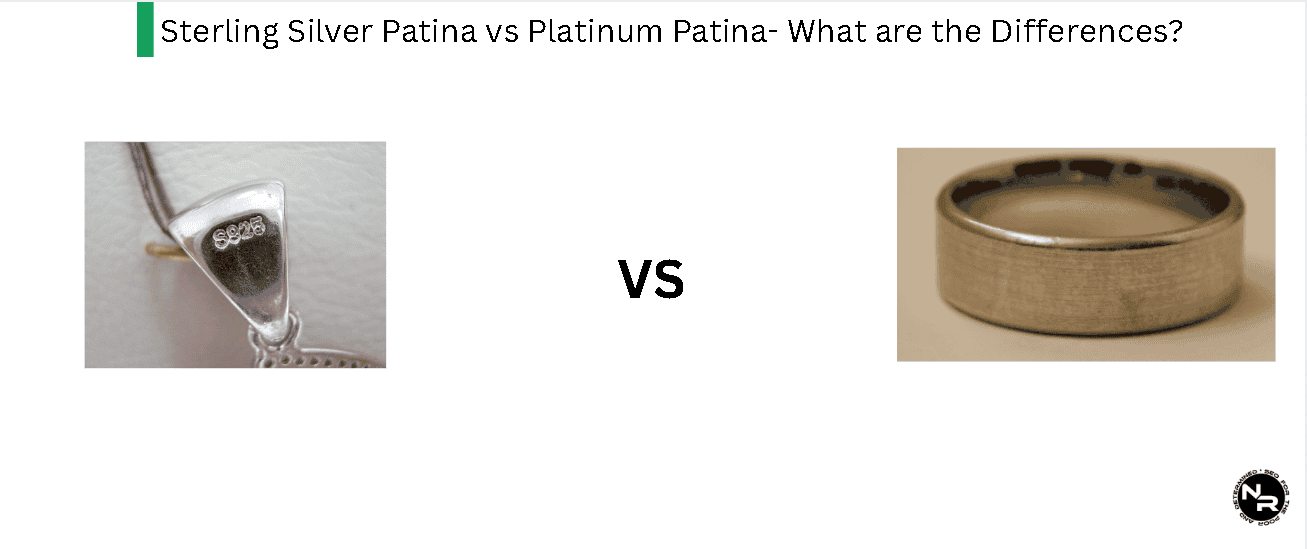
There’re many differences between sterling silver patina and platinum patina.
The main difference is that sterling silver patina is a dark, undesirable tarnish that requires frequent polishing. Platinum patina is a softer, satiny finish that is considered a sign of character.
Platinum patinates way slower than sterling silver and the end result is worth the wait. It’s the opposite with sterling silver.
Lower purity platinum alloys like platinum 600 have more copper in them than sterling silver so they’ll patinate faster and their patina will resemble the patina of sterling silver.
Sterling Silver Patina vs Palladium Patina- What are the Differences?
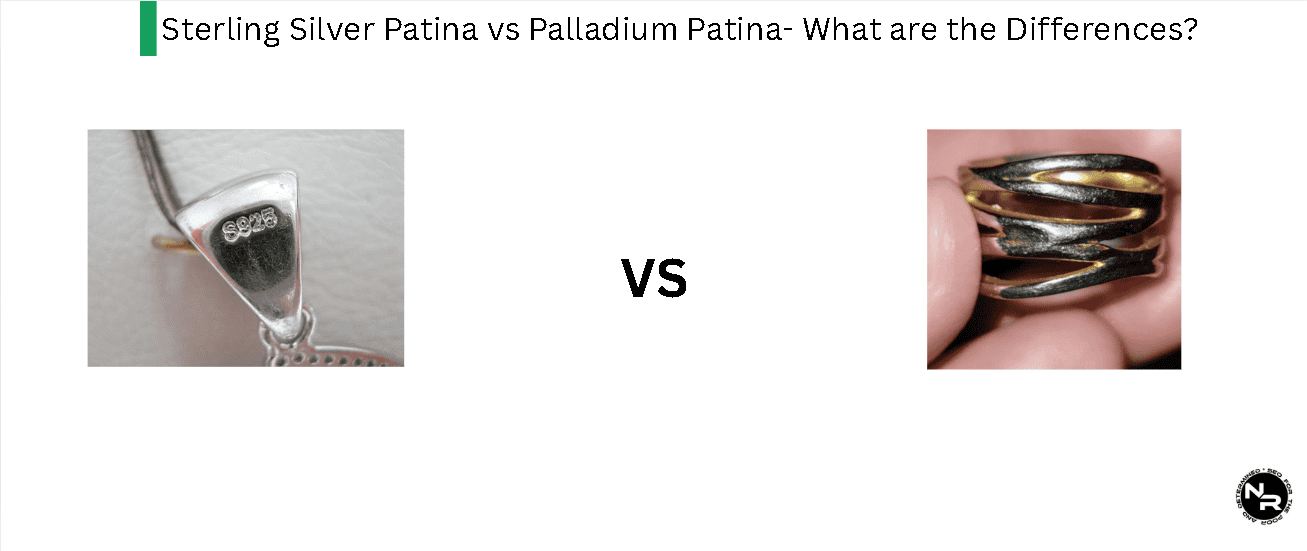
There’re many differences between sterling silver patina and palladium patina.
The main difference is that sterling silver tarnishes by oxidizing and developing a dark tarnish, while palladium develops a gray patina due to wear and scratches.
Palladium is more durable and resistant to tarnish than sterling silver, a softer metal that requires regular polishing to maintain its bright white shine.
A lower purity palladium alloy like palladium 500 has more copper in it than sterling silver so it patinates faster and its patina resembles the patina of sterling silver.
- Sterling- To Polish or Preserve Patina?- https://www.reddit.com/r/Flipping/comments/1c8frk7/sterling_to_polish_or_preserve_patina/
- Palladium?- https://www.reddit.com/r/VintageJewelry/comments/1cu8p3i/palladium/
- Loving the way this Sterling silver Zippo tarnishes.- https://www.reddit.com/r/Zippo/comments/du0mde/loving_the_way_this_sterling_silver_zippo/
- Sterling silver whale pendant with rainbow patina!- https://www.reddit.com/r/jewelrymaking/comments/jvexdo/sterling_silver_whale_pendant_with_rainbow_patina/
- Sterling silver discoloration- https://www.reddit.com/r/SilverSmith/comments/14mjkwh/sterling_silver_discoloration/
- What Does the “925” Stamp Mean? https://jewelryebenezer.com/what-does-925-mean-on-jewelry/
- My 925 necklace has tarnished. How do I clean this off?- https://www.reddit.com/r/SilverSmith/comments/zyz27c/my_925_necklace_has_tarnished_how_do_i_clean_this/
- Is this patina?- https://www.reddit.com/r/Silverbugs/comments/1d5cf06/is_this_patina/
- Platinum Patina- https://www.reddit.com/r/EngagementRings/comments/18dgk85/platinum_patina/
- Argentium 940 Silver Sheet 0.70mm- https://www.cooksongold.com/Argentium-Silver/Argentium-940-Silver-Sheet-0.70mm-prcode-CS40-070
- What is Britannia Silver?- https://goldguys.com/what-is-britannia-silver/
- 900 Silver Guide- https://www.silverrecyclers.com/blog/900-silver.aspx
- Scandinavian Silver Fringe Necklace- https://www.antiquejewellerycompany.com/au/shop/scandinavian-silver-fringe-necklace/
- Scandinavian Silver Fringe Necklace- https://www.antiquejewellerycompany.com/au/shop/scandinavian-silver-fringe-necklace/
- Norwegian silver- https://www.silver-collector.com/t/norwegian-silver/16937/1
- sakta, made of 5 lats coin, silver, 875 standard, 35.55 g., the item’s dimensions Ø 5 cm, the 20-30ties of 20th cent., by Julijs Blums, Latvia- https://www.vitber.com/en/lot/48507
- Silver 800- https://www.ascasonline.org/newsFEBBRA45.html
- Decoplata: The History of .720 Silver in World Coinage- https://coinweek.com/decoplata-the-history-of-720-silver-in-world-coinage/
- SF Co (500) hallmark – 50% or plate?- https://www.reddit.com/r/Hallmarks/comments/1l5owa5/sf_co_500_hallmark_50_or_plate/
- Nickel silver- https://en.wikipedia.org/wiki/Nickel_silver

Nikola Roza
Nikola Roza is the owner of Nikola Roza- Everything You Can Learn About Precious Metals. He writes for people who love precious metals and jewelry and who're interested in adding gold, silver platinum and palladium to their Gold IRAs and retirement portfolios.
