Disclosure: Some of the links you’ll encounter are unique links. Click and buy something and I’ll earn some money, at zero expense to you. Thank you!
Gray gold is a real, man-made gold alloy that achieves its distinctive grayish hue by combining yellow gold with metals such as palladium, silver, copper, manganese, or iron. Gray gold doesn’t occur in nature and can’t be mined. Instead, all its components are sourced and alloyed separately.
Gray gold is hypoallergenic and non-magnetic, though versions containing iron may exhibit slight magnetic properties. No gray gold coins, bars, vermeil, or IRA-approved bullion exist, largely due to minimal market demand. Jewelry made from it is extremely rare and typically custom-ordered.
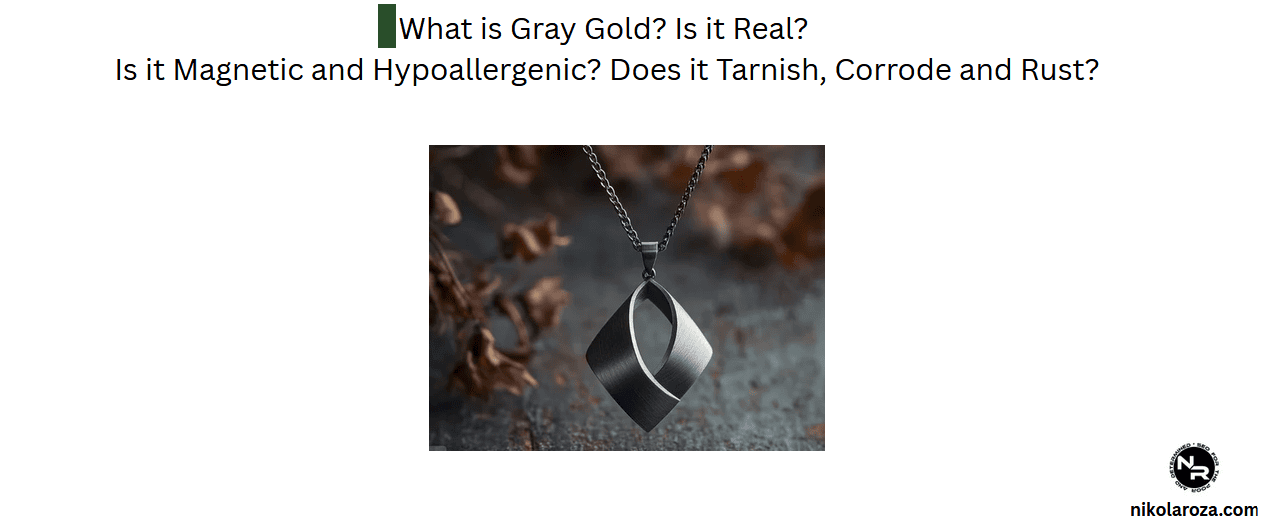
What is Gray Gold? Is it Real? What is it Made of?
Gray gold is real. It’s a gold alloy made from the combination of yellow gold and metals like palladium, silver, copper and manganese. Gray gold is a popular alternative to white gold, offering a unique gray hue, and can be made with or without rhodium plating.
No, gray gold isn’t natural. It’s a man-made gold alloy. Raw gray gold isn’t real, doesn’t exist and isn’t mined anywhere. Instead, all the components of gray gold alloy are mined separately and later alloyed into a finished product.
| Gray Gold Composition | Composition |
|---|---|
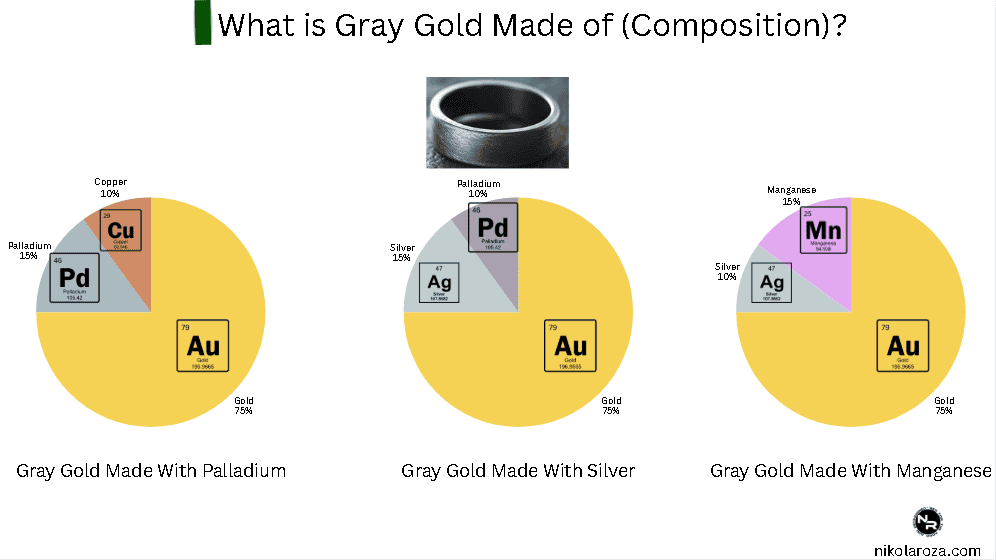
| Variant 1 (Gray gold made with palladium) | 15-25%, palladium, 65-75% yellow gold and ~10% of other metals like silver, copper, or even platinum. |
| Variant 2 (Gray gold made with silver) | 75% yellow gold, 15% silver and 10% of other metals like palladium and iron. |
| Variant 3 (Gray gold made with manganese) | 75-78% yellow gold, 7% to 15% manganese and 1-10% silver. |
Gray gold is often plated with rhodium to improve its looks and strength. Rhodium plating gives gray gold a brighter appearance more akin to white gold than to gray gold.
Also worth noting is that very small percentage of titanium (1%) added to yellow gold creates a gray-toned shimmer. However, making gray gold with titanium is rare compared to the methods I explained above.

You like gray gold which means you like real, yellow gold as well, right? Check this out next if you answered yes! Crucial if you’re an American worried about the economy and interested in precious metals as investment hedges.
Is Gray Gold Magnetic?
No, gray gold isn’t magnetic. It’s diamagnetic.
Gray gold is diamagnetic due to the overwhelming presence of diamagnetic pure yellow gold in the alloy.
The other common metals in gray gold alloy are palladium and silver. Palladium is paramagnetic (it has an extremely weak magnetic attraction), whereas silver is diamagnetic like yellow gold.
Iron is a common gray gold component as it’s cheaper and a good replacement for more expensive palladium and silver. Iron is a ferromagnetic material and iron that’s replacing palladium and silver makes gray gold magnetic.
Is There Gray Gold Jewelry? Does it Exist?
No, gray gold jewelry doesn’t exist. Gray gold is just a proof of concept, proof that it can be made and shaped into various jewelry.
However, there’s no demand for gray gold jewelry. It doesn’t exist except when made by order.
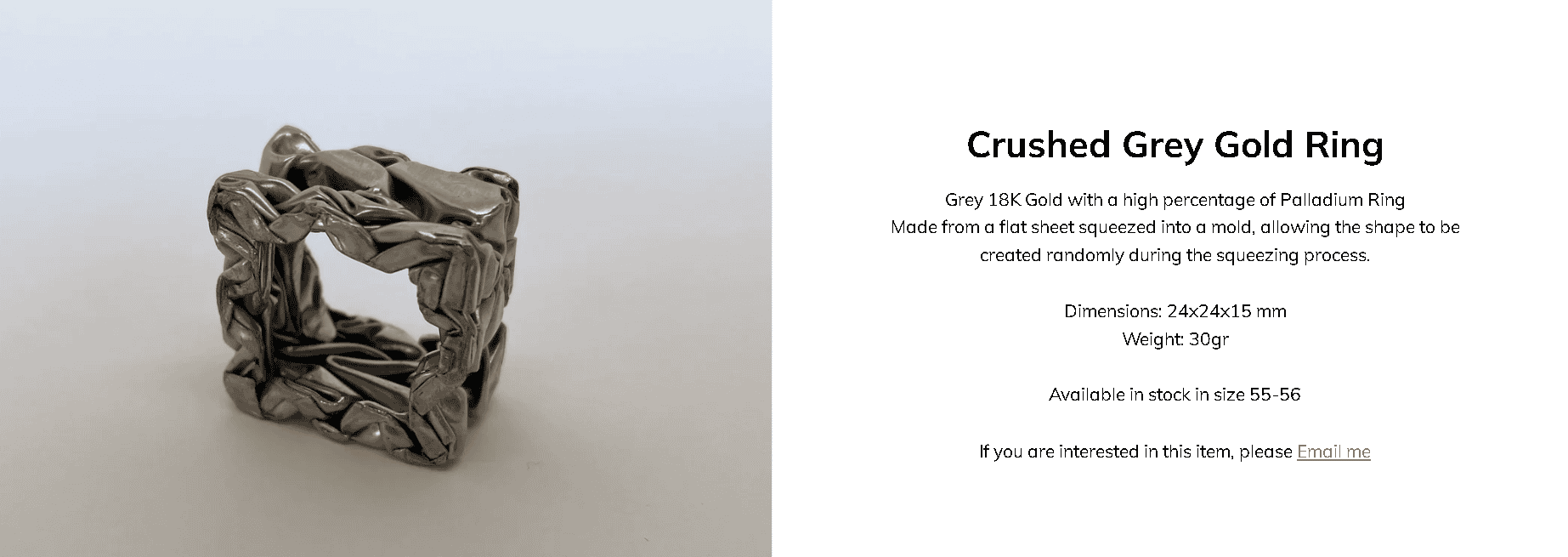
For example, I found a ring made of genuine gray gold. It’s a rare find but you could probably get one if you’re willing to pay for it.
You like gray gold which means you like real, yellow gold as well, right? Check this out next if you answered yes! Crucial if you’re an American worried about the economy and interested in precious metals as investment hedges.
Is There Gray Gold Vermeil? Does it Exist?
No, there’s no gray gold vermeil. It doesn’t exist. It’s because gray gold is a novel gold type and there’s barely any jewelry made from it on the market. So no one produces gray gold vermeil because there’s isn’t a market for it.
Gold vermeil is a jewelry type where gold plating that’s at least 2.5 microns thick covers a sterling silver base. And there’re several interesting varieties based on different types of colored gold.
There’s rose gold vermeil made from 2.5 micron thick rose gold plating over a sterling silver base. Then there’s white gold vermeil made from white gold plating and sterling silver base. And of course the classic, “original” gold vermeil made from yellow gold over sterling silver base.
Is Gray Gold Hypoallergenic or Allergenic?
Gray gold is hypoallergenic. As an alloy consisting of several different hypoallergenic metals gray gold is unlikely to cause a skin reaction in even the most sensitive individuals. Pure, yellow gold doesn’t cause skin allergies. Palladium is hypoallergenic. And silver is hypoallergenic too.
Manganese and iron are also safe metals for people with skin sensitivities.
The only true exception here is copper which is allergenic to some individuals. However, even then the percentage of susceptible people is small and the skin reactions are mild at their worst.

You like gray gold which means you like real, yellow gold as well, right? Check this out next if you answered yes! Crucial if you’re an American worried about the economy and interested in precious metals as investment hedges.
Do Gray Gold Coins and Bars Exist? Is That Bullion Real?
No, gray gold coins and bars don’t exist. Gray gold is an exquisite gold type known for its novelty and rarity, and not as a store of value.
Most gold coins and bars on the market are made from yellow gold, and yellow gold that’s at least 99.5% pure in the case of IRA-approved gold bullion.
Is it Possible to Include Gray Gold as Part of a Gold IRA?
No, it’s not possible to include gray gold as part of a gold IRA. Gray gold isn’t IRA approved and the only precious metals which are IRA-eligible are gold, silver, platinum and palladium.
Augusta Precious Metals is the place where you can buy genuine IRA-approved gold without worrying about a multitude of gold IRA frauds.
Augusta is the best gold IRA company in the United States and working with them is safe, secure and fast.
They also waive all fees for 10 years for all new customers.

Is it Possible to Turn Gray Gold into Yellow Gold?
Yes, it’s possible to turn gray gold into yellow gold. However, it’s a delicate process only a professional jeweler can do correctly.
First, the jeweler melts the gray gold. Second, they remove the metals which give gray gold its distinctive color. Once only yellow gold remains the jeweler re-alloys it with different metals to enhance the yellow color and increase durability as pure gold is a highly malleable and ductile precious metal. The jeweler then solidifies and reshapes the new yellow gold jewelry. And that’s how to turn gray gold into yellow gold.
Gray gold made with palladium gives you melted palladium which you can sell as this noble metal is often more valued than pure gold.
You like gray gold which means you like real, yellow gold as well, right? Check this out next if you answered yes! Crucial if you’re an American worried about the economy and interested in precious metals as investment hedges.
- What Is Gray Gold: Your Ultimate Guide- https://www.nobbier.com/blogs/editorial/what-is-grey-gold/
- What is the difference between White (Gray) Gold and Yellow Gold?- https://www.goldmarket.fr/en/difference-or-blanc-gris-or-jaune/
- Does anyone know where to get gray gold? Or if this colour can be achieved on white gold using oxidation or patina?- https://www.reddit.com/r/jewelrymaking/comments/11nvk9x/does_anyone_know_where_to_get_grey_gold_or_if/
- Crushed Grey Gold Ring- https://yael-herman.com/collections/grey-gold-jewelry

Nikola Roza
Nikola Roza is the owner of Nikola Roza- Everything You Can Learn About Precious Metals. He writes for people who love precious metals and jewelry and who're interested in adding gold, silver platinum and palladium to their Gold IRAs and retirement portfolios.