Disclosure: Some of the links you’ll encounter are unique links. Click and buy something and I’ll earn some money, at zero expense to you. Thank you!
Colored gold is gold that has been altered in color by alloying it with other metals or through surface treatments.
Pure gold has a natural yellowish-red hue, but combining it with metals like copper, silver, palladium, nickel, or aluminum produces a wide spectrum of colors.
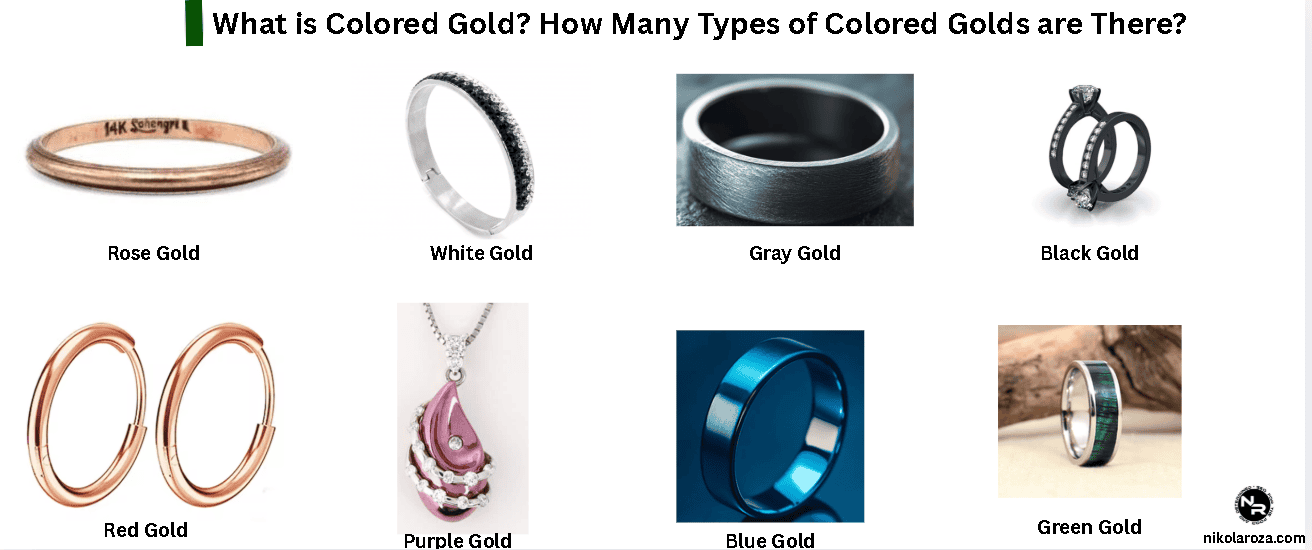
The main colored gold types include white gold (gold mixed with nickel or palladium), rose and red gold (gold mixed with copper), green gold (gold mixed with silver), purple gold (gold and aluminum), blue gold (gold with gallium or indium), black gold (treated through electroplating or laser techniques), and gray gold (gold with palladium or manganese).
Colored golds fall into three categories: malleable alloys, brittle intermetallic compounds used as decorative gems, and surface-treated alloys.
Since pure gold is 24 karats, all colored golds are necessarily less pure. Common purities include 18k, 14k, 10k, and 9k. Fool’s gold and spangold aren’t true colored golds.
What is Colored Gold?
Colored gold is gold that has been altered in color through various techniques, primarily by alloying yellow gold with other metals.
Pure gold has a natural yellowish-red hue. Goldsmiths create a wide range of colored gold by combining pure gold with metals like copper, silver, palladium, or nickel,
Colored golds are classified in three groups.
- Alloys with copper and silver in various proportions. These produce white, green, rose, pink and red golds and these are typically malleable gold alloys.
- Intermetallic compounds. These produce blue and purple golds, as well as other rarer types of colored gold. These gold alloys are brittle, but can be used as gems and inlays.
- Surface treatment gold alloys. A good example is black gold which is made by superficial layer oxidation.
100% pure (in practice, 99.9% or higher) gold is 24 karat by default, so all colored golds are necessarily less pure than this. Common gold purity levels are 18k (75%), 14k (58.5%), 10k (41.6%), and 9k (37.5%).
| Colored gold type | Type of colored gold (how it's made) | Composition |
|---|---|---|
| White gold | Alloying | 75% yellow gold and 25% some other white metal (nickel, platinum, palladium and silver). |
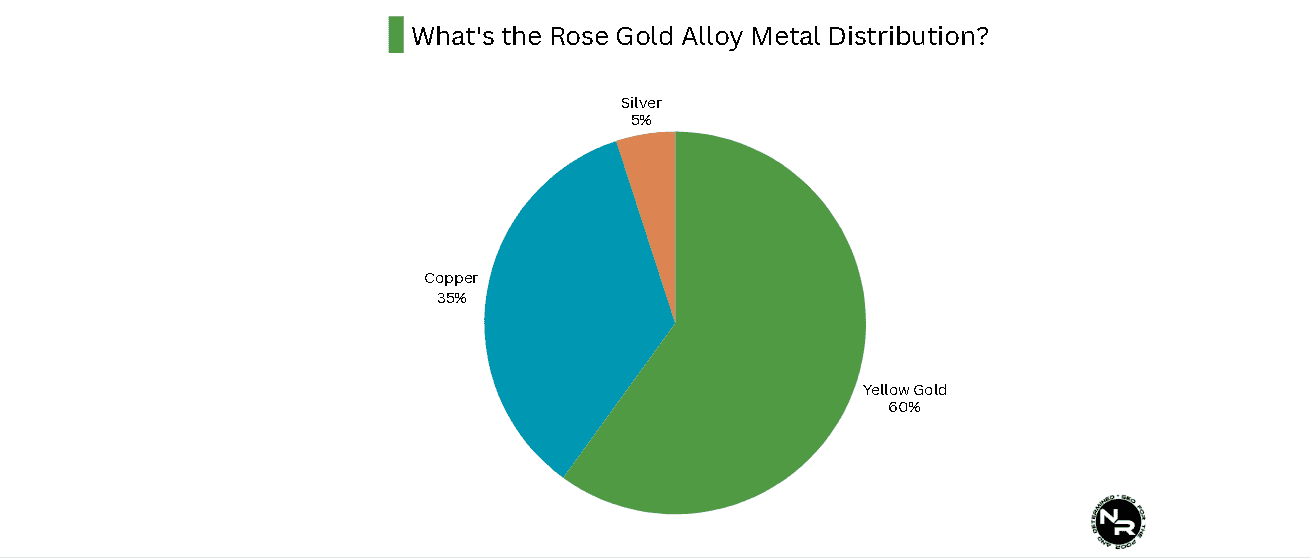
| Rose gold | Alloying | 60% yellow gold. 35% copper and 5% silver. Other variants exist. |
| Red gold | Alloying | 75% yellow gold and 25% copper. |
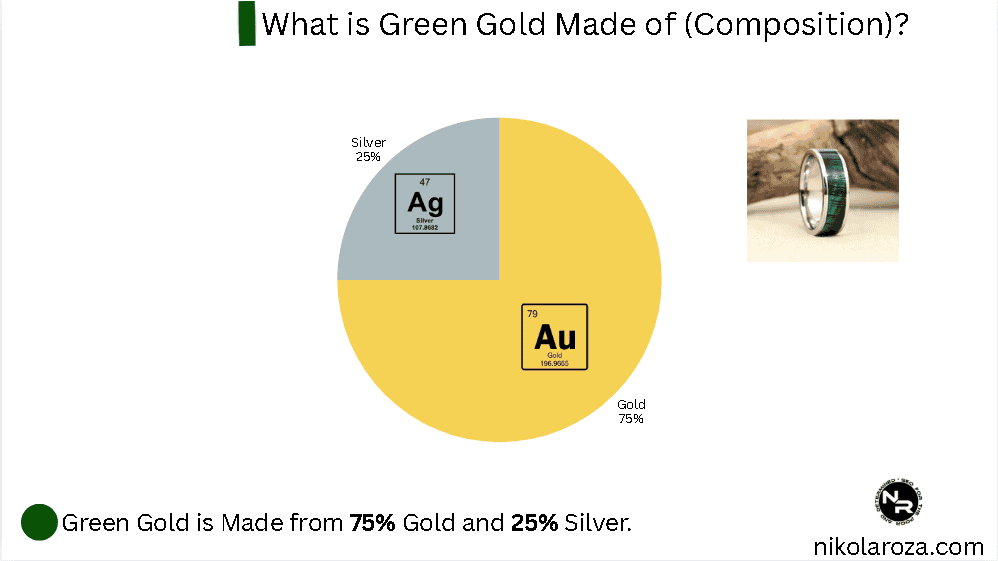
| Green gold | Alloying | 75% yellow gold and 25% silver. |
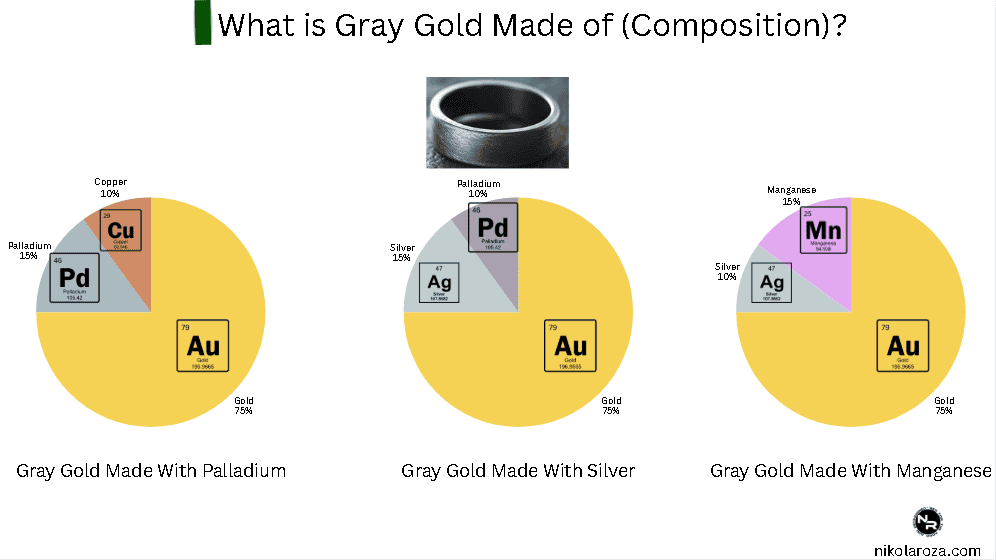
| Gray gold | Alloying | 15-25%, palladium, 65-75% yellow gold and ~10% of other metals like silver, copper or platinum. Other variants exist. |
| Blue gold | Intermetallic compounds | 46% gold+ 54% indium or 58.5% gold+ 41.5% gallium. |
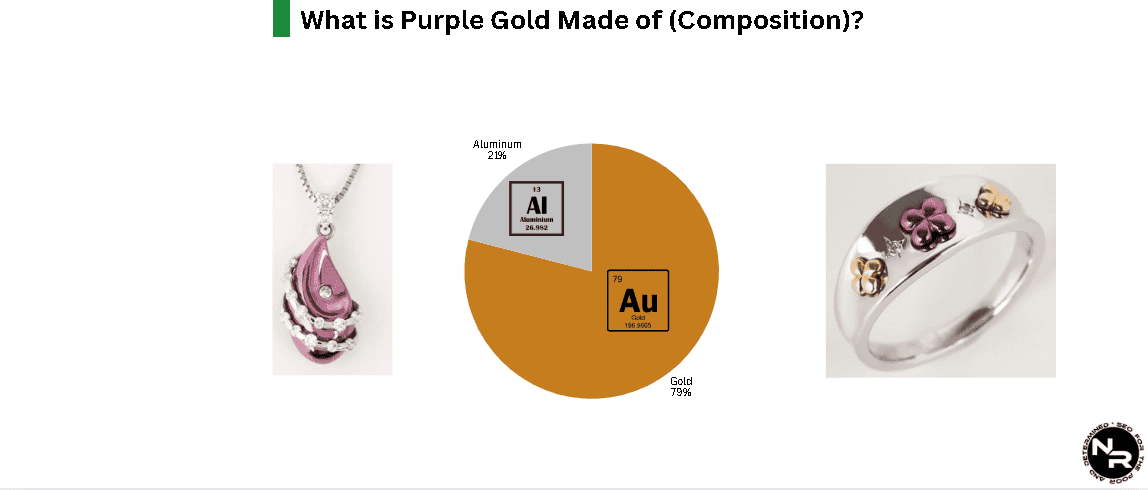
| Purple gold | Intermetallic compounds | 79% pure gold and 21% aluminum. |
| Black gold | Oxidation | 75% pure gold (18K) mixed with metals like cobalt, chromium, or iron, and finished with black rhodium plating, ruthenium, or controlled oxidation. |
Check this out next once you’re done reading my colored gold guide. Especially important if you’re an American citizen with a keen interest in precious metals and investing.
Types of Colored Gold
Below are all the types of colored gold you can find in jewelry stores.
What is a White Gold Alloy?
White gold is an alloy of yellow gold and white metals such as nickel, platinum, palladium and silver.
Its exact metal composition varies, but it’s typically 75% yellow gold and 25% some other white metal or a combination of white metals. Jewelers add the above mentioned white metals to yellow gold to give it exclusive look and to increase white gold jewelry’s durability.
Jewelers use rhodium to coat white gold jewelry items and make them even whiter, more durable and resistant to wear and tear.

What is a Rose Gold Alloy?
Rose gold is an alloy of yellow gold and copper. Copper gives rose gold its distinctive pinkish-red hue, and the copper content determines the rose gold’s color intensity. Higher copper content leads to a deeper shade of red.
Yellow gold and copper are the primary metals in a rose gold alloy, and silver is added in small amounts to adjust the color and improve the metal’s workability and durability.

What is a Red Gold Alloy?
Red gold is an alloy of yellow gold and copper+ trace amount of silver and other metals.
Copper adds hardness and durability to red gold and gives it its intense reddish hue. The copper content determines the color intensity and higher copper content leads to a redder color.
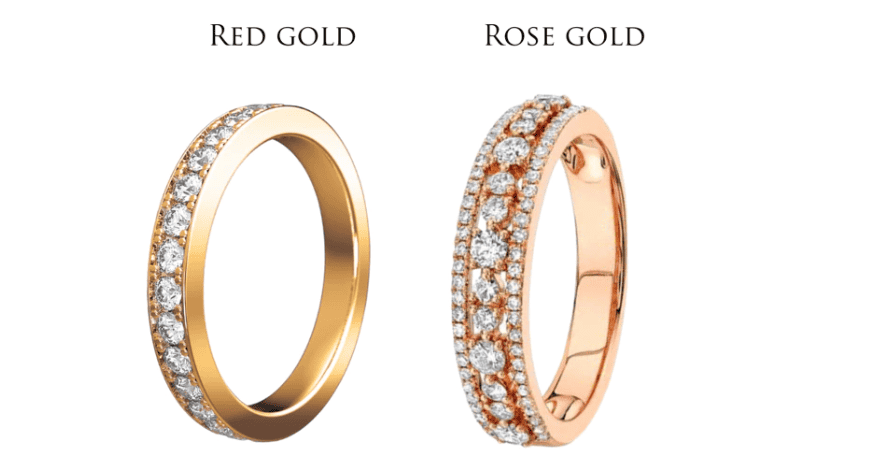
Red gold is visually similar to rose gold, with the former being more amber in color than rose.

Check this out next once you’re done reading my colored gold guide. Especially important if you’re an American citizen with a keen interest in precious metals and investing.
What is a Green Gold Alloy?
Green gold is an alloy of silver and gold. It has a greenish hue due to high silver content. Nickel, zinc and copper are often added to green gold alloy to strengthen it.
Green gold is either natural or man-made. Man-made green gold used to be highly toxic because of cadmium that was added to the alloy to achieve a desired green tint. Just 2-4% cadmium was enough for this purpose. Cadmium is no longer used in green gold production.
Natural green gold is called electrum.

What is a Purple Gold Alloy?
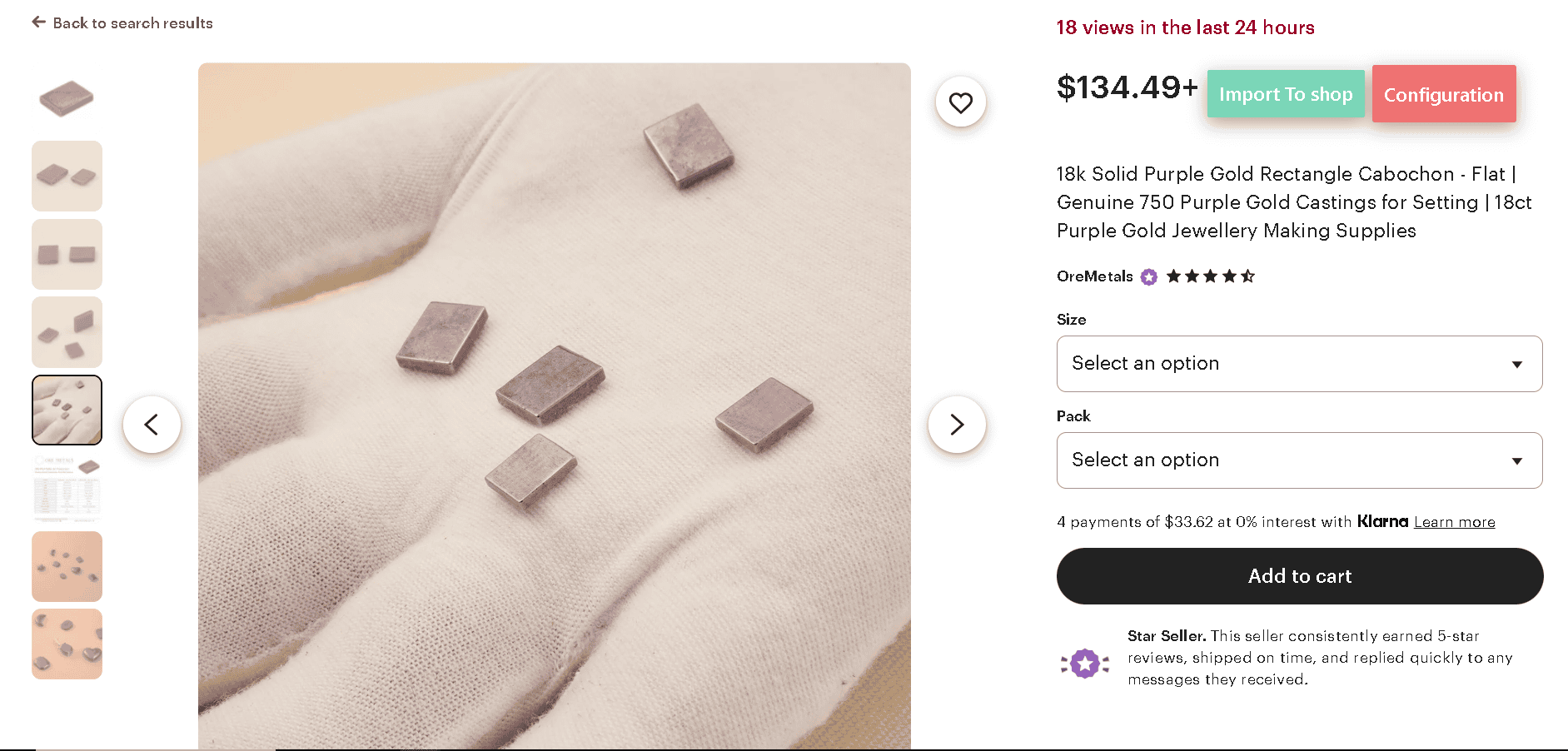
Purple gold is an alloy of aluminum and yellow gold.
Purple gold alloy is made of 79% gold and 21% aluminum, forming the intermetallic compound AuAl2 with a distinct purple hue. Purple gold is a rare and challenging gold alloy to make and this makes it one of the most expensive types of colored gold you can own.
Check this out next once you’re done reading my colored gold guide. Especially important if you’re an American citizen with a keen interest in precious metals and investing.
What is a Blue Gold Alloy?
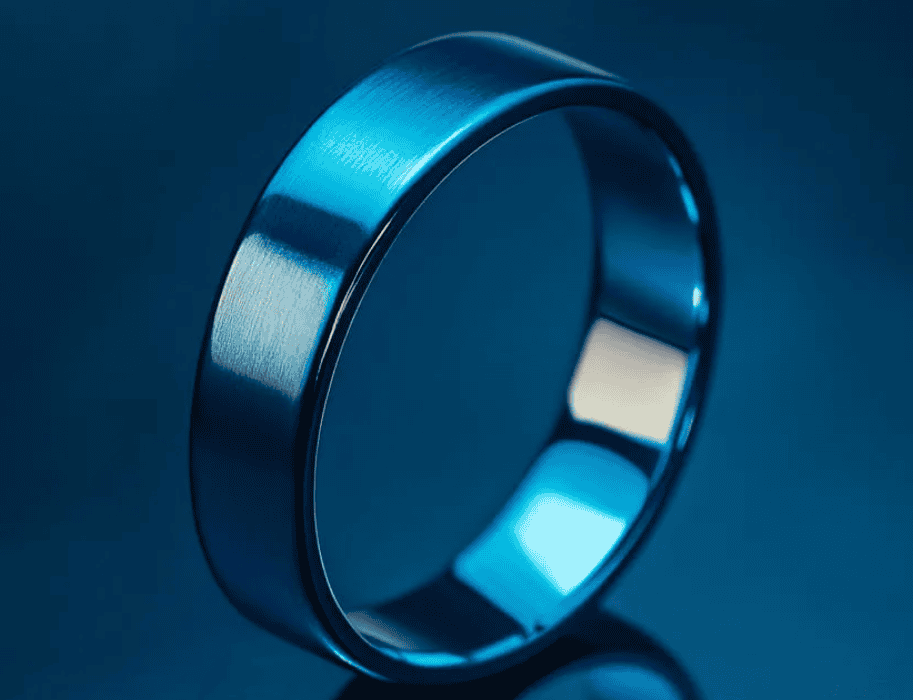
Blue gold is an alloy of yellow gold and gallium and indium. The latter two metals give this gold alloy a distinct shade of blue.
Blue gold is different from other colored golds because there’re two ways of producing it.
Yellow gold alloyed with indium in proportions 44:56% gives blue gold. Yellow gold alloyed with gallium in proportions 58.5:41.5% gives blue gold.
Pure blue gold jewelry doesn’t exist because blue gold is too brittle to make long-lasting jewelry. But blue gold is still used in jewelry design, specifically for high-end ornamental applications.


What is a Black Gold Alloy?
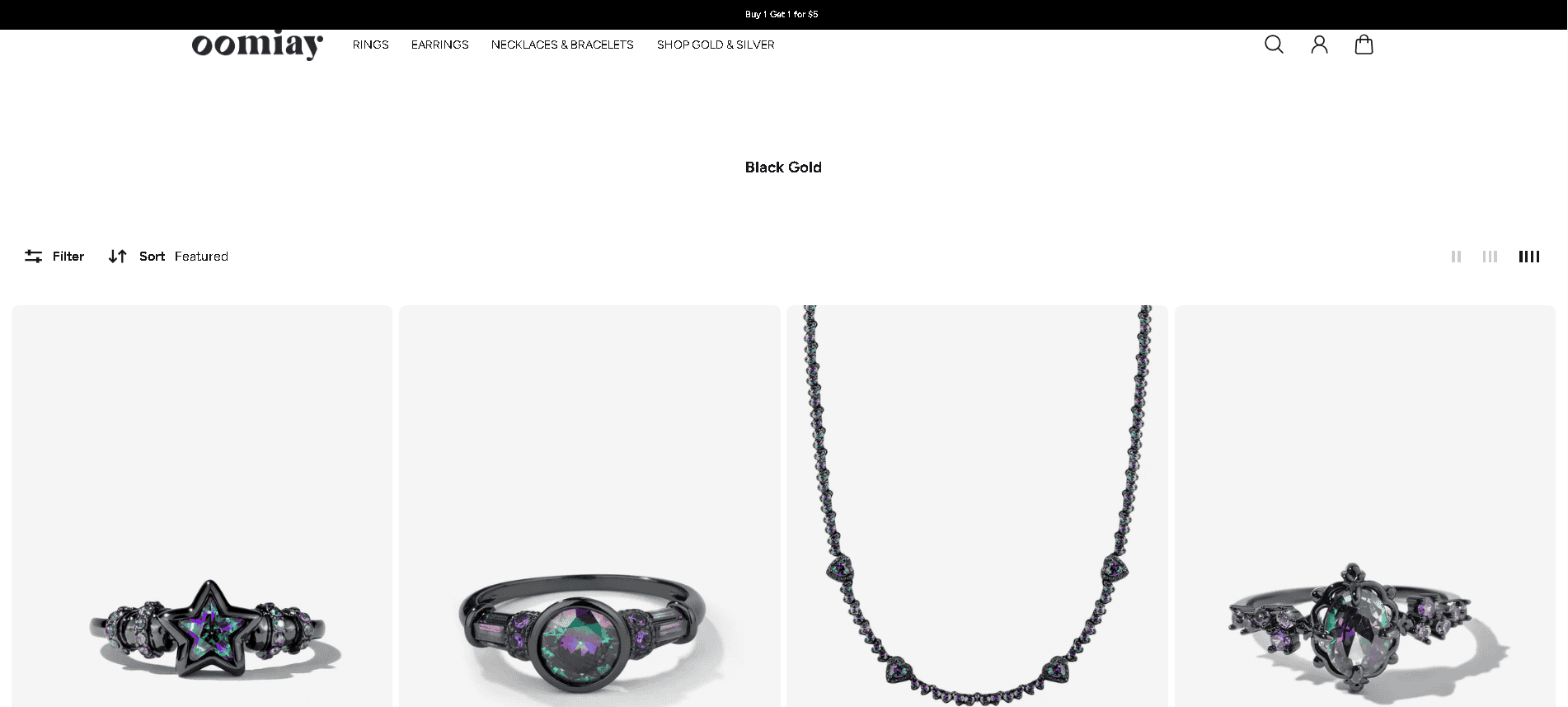
Black gold is a gold type that’s been treated to achieve a black color.
Black gold doesn’t occur naturally in the world and is one of the rarer colored gold types (though far from being the rarest).
The most popular ways of making black gold are with electroplating, alloying and laser treating. There’s also purposeful yellow gold oxidizing as a method.
What is a Gray Gold Alloy?
Gray gold is an alloy of gold that gets its color from the combination of yellow gold and other metals like palladium, silver, copper, or manganese.
Gray gold is a popular alternative to white gold, offering a unique gray hue, and is made with or without rhodium plating.
Check this out next once you’re done reading my colored gold guide. Especially important if you’re an American citizen with a keen interest in precious metals and investing.
Is Fools Gold a Type of Colored Gold?
No, fools gold isn’t a type of colored gold. Fool’s gold, scientifically known as pyrite (iron sulfide, FeS₂), is a naturally occurring mineral that resembles real gold but has minimal value.
Pyrite is abundant in various geological environments across the world. Unlike precious metals, fools gold coins and bars don’t exist due to lack of demand. Though rare, marcasite jewelry made from polished pyrite does exist.

Is Spangold a Type of Colored Gold?
No, spangold isn’t a type of colored gold.
Spangold is a specialized alloy that combines copper, gold and aluminum to create a unique material with shape-memory properties.
Spangold gets it’s name from the distinctive “spangled” appearance that comes from a martensitic-type phase transformation induced on a polished surface.
Spangold’s composition is 76% gold, 18% copper, and 6% aluminum and is made with either 18K or 23K gold. Varying compositions of copper and aluminum give spangold different colors, including yellow and rose (rose spangold is visually similar to red gold, pink gold and rose gold).
- Colored gold- https://en.wikipedia.org/wiki/Colored_gold
- Colored Gold: Usage and History- https://www.vrai.com/journal/post/colored-gold
- Gold is my favorite material to work with when I make wedding and engagement rings. There are different colors of gold- https://makiokamoto.com/colors-of-gold/
- Different Colors of Gold: Learn About The Luxuries Shades Of Gold- https://www.goldenbirdjewels.com/blogs/topic/different-color-of-gold
- Electrum Mineral Facts:- https://nevada-outback-gems.com/mineral_information/Electrum_mineral_info.htm
- Black Gold Jewelry for Her- https://www.mareinewyork.com/collections/black-gold-jewelry-collection

Nikola Roza
Nikola Roza is the owner of Nikola Roza- Everything You Can Learn About Precious Metals. He writes for people who love precious metals and jewelry and who're interested in adding gold, silver platinum and palladium to their Gold IRAs and retirement portfolios.