
Disclosure: Some of the links you’ll encounter are unique links. Click and buy something and I’ll earn some money, at zero expense to you. Thank you!
Silver’s safety depends on its form. Solid metallic silver found in jewelry and bullion is safe for humans because it’s biologically inert and doesn’t interact with body tissue. It is also non-radioactive, as natural silver consists of two stable isotopes.
Certain silver compounds are highly toxic. Silver nitrate, silver iodide, silver fulminate, and silver oxide can cause serious harm, including argyria (a permanent blue-gray skin discoloration) along with organ damage and other symptoms. These dangerous silver-derived compounds exist almost exclusively in laboratory or industrial settings, so everyday exposure is extremely unlikely.
Colloidal silver supplements represent a more realistic risk, as prolonged ingestion leads to argyria. Silver allergies exist but are rare and distinct from toxicity. Fake silver products carry unknown risks.
Overall, wearing silver jewelry or handling silver bullion poses no meaningful health concern for the vast majority of people.
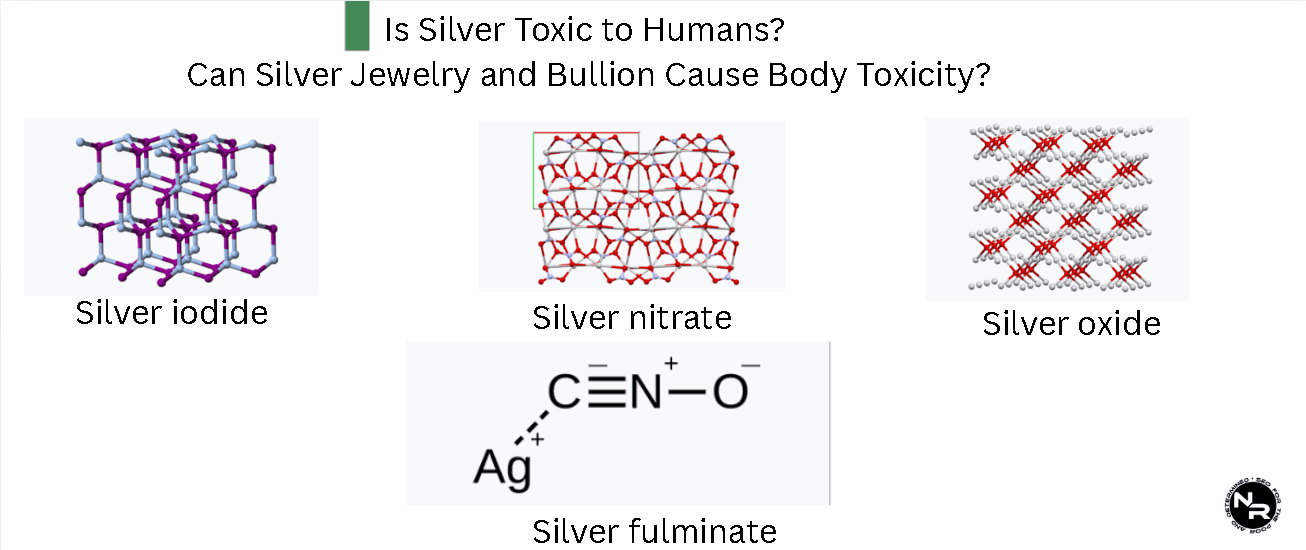
Which Silver Forms are Toxic to Humans? And Which are Safe?
Metallic silver in its solid, bulk form is safe to humans because it’s biologically inert and not easily absorbed by the body.
Certain silver forms are highly toxic to human bodies and these are the ones you should avoid. The common toxic silver forms are silver iodide, silver nitrate, silver fulminate, silver oxide and fake silver.
- Silver iodide. Silver iodide is an inorganic compound used primarily in weather modification (cloud seeding) and in photography. It’s a yellow salt that’s insoluble in water and has a crystalline structure similar to ice. Silver iodide has antiseptic properties and is used in some medical treatments.
- Silver nitrate. Silver nitrate is an inorganic chemical compound composed of silver, nitrogen, and oxygen. It appears as a white or colorless crystalline solid that turns black when exposed to light or organic matter. Silver nitrate is highly soluble in water and has numerous applications, including use in photography, as a topical antiseptic and as a cauterizing agent in medicine.
- Silver fulminate. Silver fulminate is a sensitive and powerful silver compound. It’s notoriously unstable, detonating from minimal stimuli like a touch, static discharge, or the impact of a water droplet. This instability severely limits silver fulminate’s practical use.
- Silver oxide. Silver oxide is an inorganic compound formed from two silver ions and one oxygen ion. It appears as a black or dark-brown powder and is used in various applications, most notably in silver-zinc and zinc/silver oxide batteries and as a catalyst in organic reactions. Silver oxide also acts as a precursor for other silver compounds.
- Fake silver. Any type of fake silver is potentially toxic because you don’t know what you’re ingesting.
Toxic silver forms are substances you’ll never find in day to day life unless you’re a chemist working in a lab. So don’t worry too much about silver toxicity, but know a little bit about it so you’re prepared in case you ever encounter a deadly form of silver.
Check this out next after reading my silver toxicity and radioactivity guide. Especially important if you’re an American with a keen interest in the economy and a concern about the future.
Is Silver Jewelry Toxic to Humans or Not?
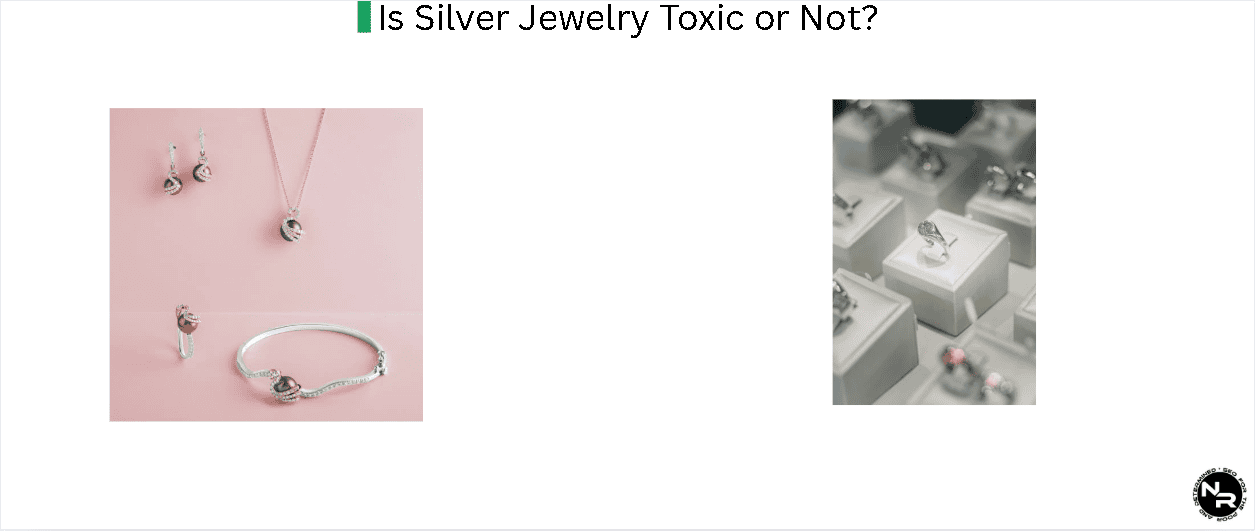
No, silver jewelry isn’t toxic to humans. It’s safe to wear for prolonged periods of time. Solid silver isn’t toxic because it’s biologically inert and doesn’t react in any way with body’s skin, organs and tissue.
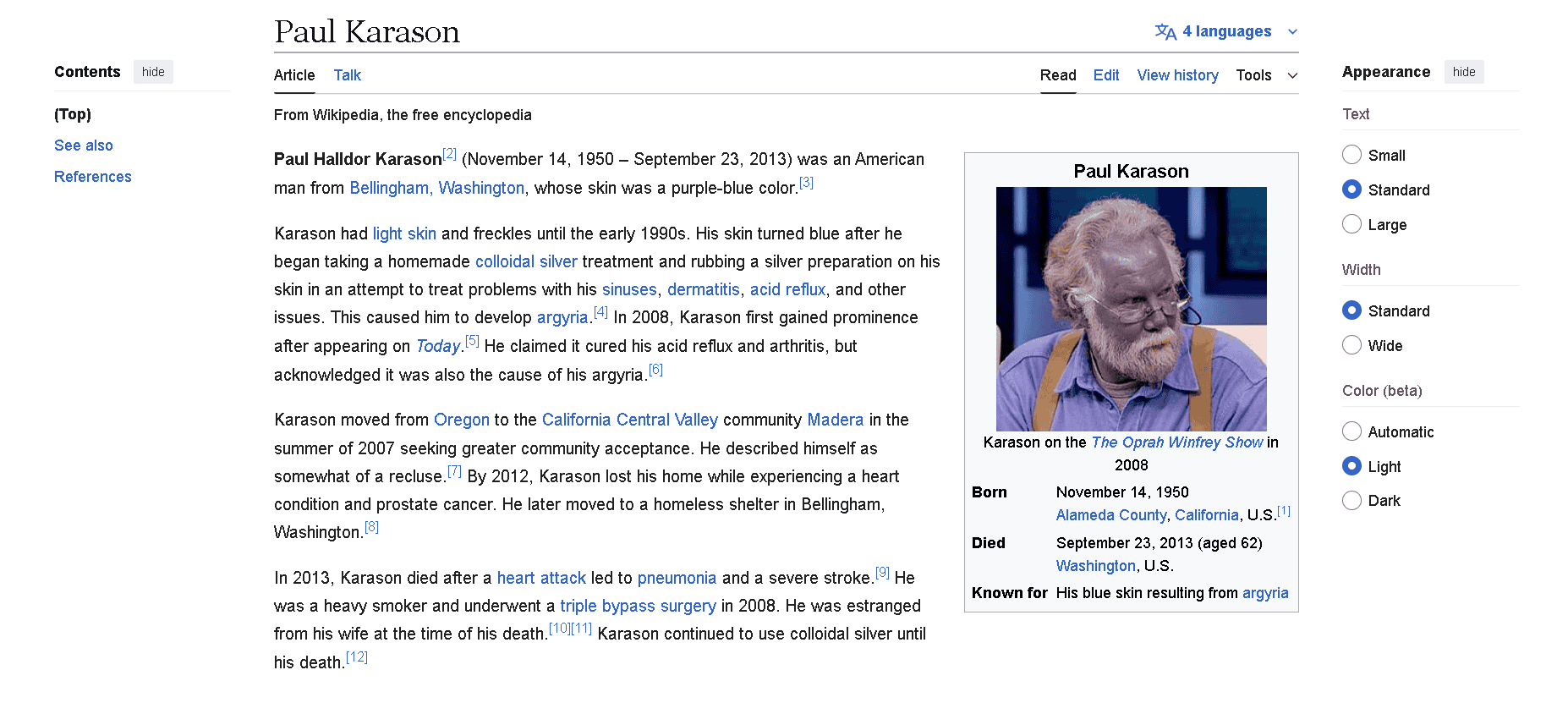
However, prolonged or high-level exposure to silver in other forms, such as dust, fumes, or certain compounds leads to a permanent blue-gray skin discoloration known as argyria.
Can Silver Jewelry Cause Skin Discoloration (Argyria)?
No, silver jewelry can’t permanently discolor human skin and cause argyria.
Argyria is caused by prolonged exposure to silver that occurs when silver is ingested, inhaled, or absorbed through the skin, leading to its accumulation in the body.
Common silver sources include supplements like colloidal silver, medications, and occupational exposure in industries that use silver.
Symptoms of argyria other than skin pigmentation change are abdominal pain, fatigue, headaches, kidney and liver damage, and skin irritation.
Bottom line is that silver jewelry is safe for everyone except for rare people allergic to silver.
Here’s an example of a man stricken with argyria gotten from prolonged colloidal silver usage.
Check this out next after reading my silver toxicity and radioactivity guide. Especially important if you’re an American with a keen interest in the economy and a concern about the future.
Is Silver Toxicity the Same as Silver Allergies?
No, silver toxicity and silver allergies aren’t the same.
The toxic silver forms covered above are toxic to all humans and most animals. Only a small percentage of people are allergic to silver and to them silver is dangerous though far from being toxic or deadly.
Bottom line is that any toxic silver type will be poisonous to you, even if you aren’t allergic to silver.
Is Silver Bullion Toxic Or Not?
No, silver bullion isn’t toxic.
Silver coins and bars are made from solid silver, and solid silver isn’t toxic to humans. Don’t worry about it.
Getting scammed is the bigger worry when buying silver and other precious metals from dealers.
Most precious metals dealers are legit, but there’s always those looking to scam unsuspected investors out of their retirement savings. You can check out my gold IRA scams guide to learn more.
I recommend you check out Augusta Precious Metals if you want to buy legit silver bullion.
Augusta is the best gold investment company in the USA and they sell IRA-approved silver to people looking to open silver IRA accounts.
With Augusta you won’t have to worry about getting fake silver instead of real coins and bars.

Is Silver Toxic to Pets and Other Animals?
Yes, silver is toxic to pets and other animals exposed to it.
We’re talking here about the toxic silver forms I covered in my guide above (silver nitrate, silver fulminate, silver oxide and silver iodide). Toxic silver forms are only found in a chemist lab so a chance of exposure is low for regular humans and nil for most animals (cats, dogs, horses, hamsters, turtles, birds…).
Solid silver is inert and isn’t toxic to animals just as it isn’t toxic to humans.
However, you’d need to take your pet to a vet as soon as possible if it were to swallow a silver coin, earring or any other small piece of silver jewelry. It will get stuck somewhere in their bowl.

Check this out next after reading my silver toxicity and radioactivity guide. Especially important if you’re an American with a keen interest in the economy and a concern about the future.
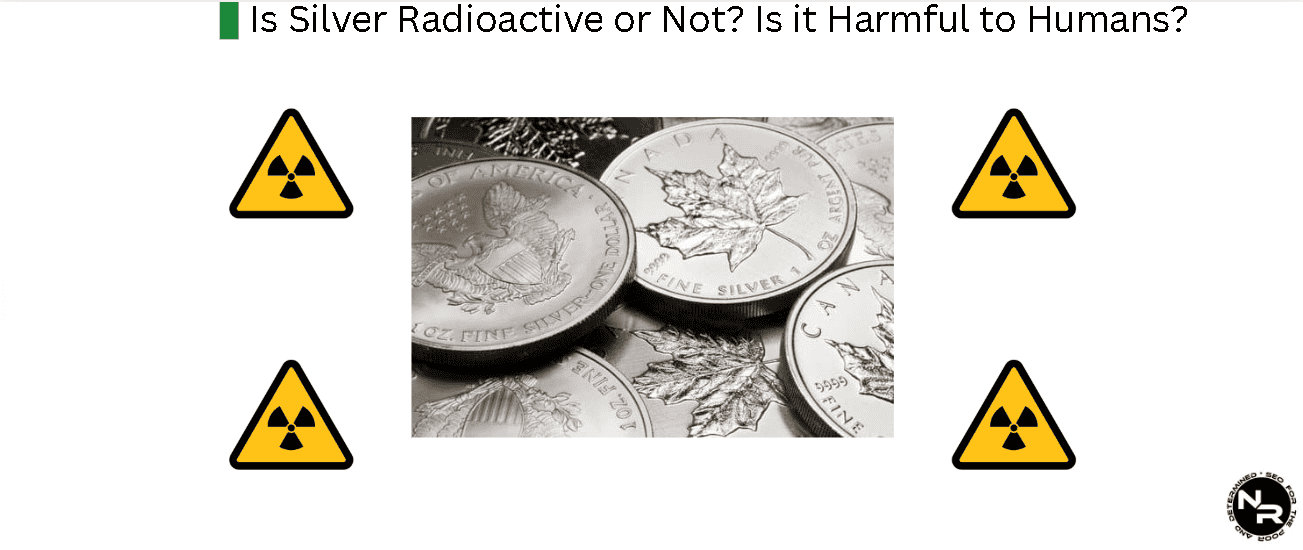
Is Silver Radioactive or Not? Is it Harmful to Humans?
No, naturally occurring silver isn’t radioactive and harmful to human health. It’s safe.
Natural silver is composed of silver-107 and silver-109, two stable isotopes. These two stable silver isotopes combined make solid silver nonradioactive and safe for humans.
However, dangerous silver isotopes like silver-111 can be created in a lab or through nuclear processes, and these are dangerous to human health and highly radioactive.
Artificial radioactive sliver isotopes aren’t found in nature and you’ll probably never be exposed to them. Bottom line is that all silver jewelry, silver bullion and even colloidal silver is nonradioactive and perfectly safe.
There’re 28 known radioactive silver isotopes. Some of these have medical and industrial uses. Radioactive silver isotopes are used as tracers for industrial applications like leak detection and flow monitoring, as well as for medical purposes such as cancer therapy and non-invasive imaging.
Check this out next after reading my silver toxicity and radioactivity guide. Especially important if you’re an American with a keen interest in the economy and a concern about the future.
Is Silver More Toxic and Radioactive to Humans Than Platinum?
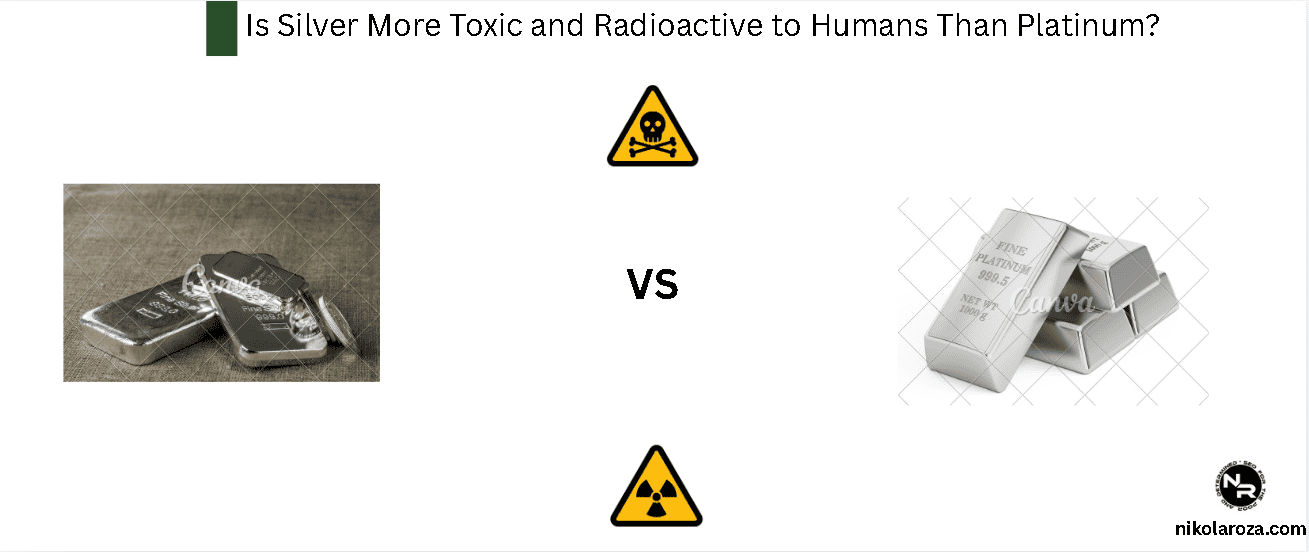
Silver and platinum are both safe in their pure, solid forms.
Solid metallic silver is biologically inert and not absorbed by the body, making it safe. However, silver compounds like silver nitrate, silver iodide, silver fulminate, and silver oxide are highly toxic to humans and life in general.
Pure platinum is similarly non-toxic. It’s chemically inert and passes through the body unchanged if ingested. Toxic platinum forms include soluble platinum salts, platinum nanoparticles, platinum fumes, and platinum-based chemotherapy drugs like cisplatin.
Neither silver nor platinum are radioactive in their solid forms. Both are safe for humans from the radioactivity standpoint.
Is Silver More Toxic and Radioactive to Humans Than Palladium?
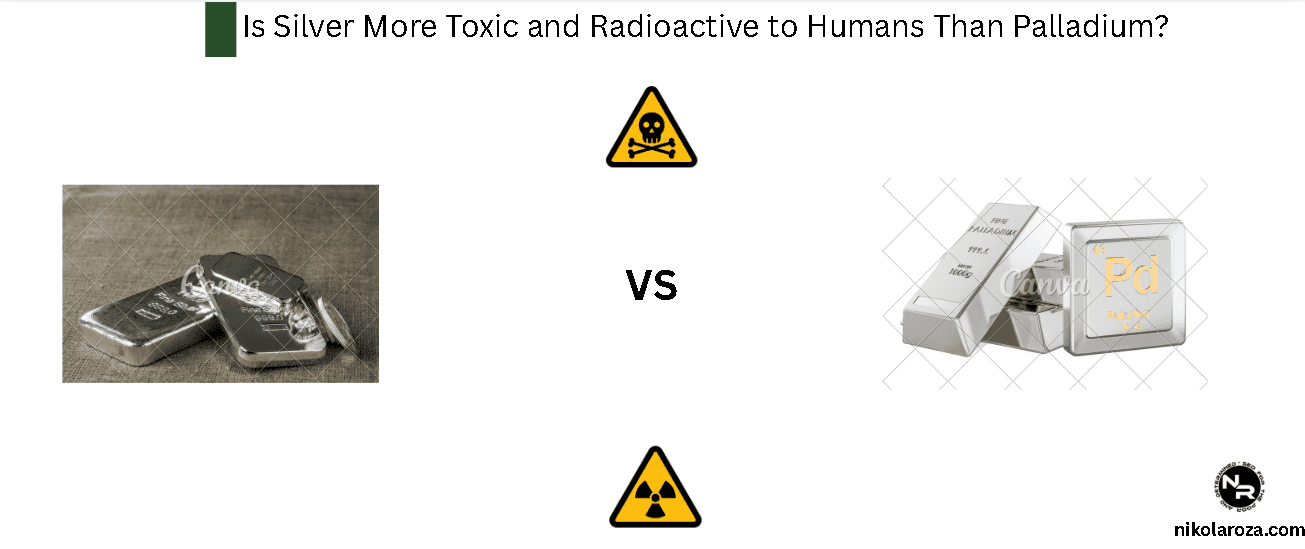
Solid metallic silver is biologically inert and not absorbed by the body, making it safe. However, silver compounds like silver nitrate, silver iodide, silver fulminate, and silver oxide are highly toxic to humans, animals and life in general.
Palladium in solid form is equally non-toxic and non-radioactive. It’s safe for jewelry, dental use, and bullion creation. Toxic palladium forms include palladium salts, palladium chloride, and palladium nanoparticles, but these are found in chemical labs, and not in your typical surroundings.
Neither silver nor palladium are radioactive in their solid forms. Both are safe for humans from the radioactivity standpoint.
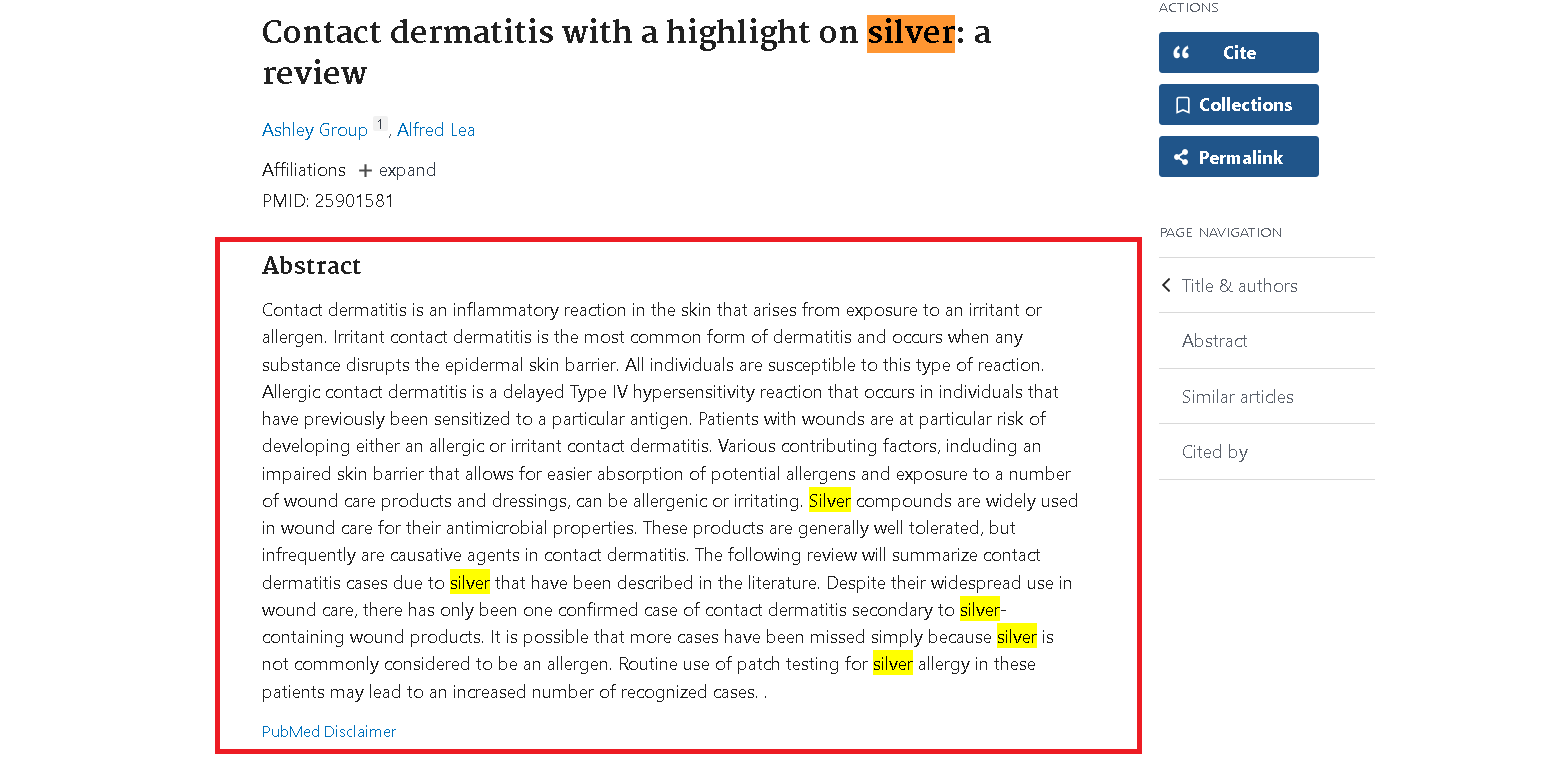
- Contact dermatitis with a highlight on silver: a review- https://pubmed.ncbi.nlm.nih.gov/25901581/
- Silver iodide- https://en.wikipedia.org/wiki/Silver_iodide
- Silver nitrate- https://en.wikipedia.org/wiki/Silver_nitrate
- Silver oxide- https://en.wikipedia.org/wiki/Silver_oxide
- Paul Karason- https://en.wikipedia.org/wiki/Paul_Karason
- Isotopes of silver- https://en.wikipedia.org/wiki/Isotopes_of_silver

Nikola Roza
Nikola Roza is the owner of Nikola Roza- Everything You Can Learn About Precious Metals. He writes for people who love precious metals and jewelry and who're interested in adding gold, silver platinum and palladium to their Gold IRAs and retirement portfolios.
