Disclosure: Some of the links you’ll encounter are affiliate links. If you click and buy something, I’ll get a commission. If you’re reading a review of some precious metals company, please understand that some of the links are affiliate links that help me pay my bills and write about what I love with no extra cost to you. Thank you!
Copper is an essential nutrient that’s safe in normal amounts but toxic in excess.
Toxicity symptoms include diarrhea, fever, abdominal pain, and jaundice, typically resulting from heavy supplementation rather than food.
Treatment involves stopping copper intake or chelation therapy for severe cases.
Pure copper jewelry, bullion, and properly lined cookware are safe for non-allergic individuals.
Certain toxic copper compounds exist, like copper cyanide and copper dust, though these are rarely encountered.
Beryllium copper is dangerous due to beryllium content causing lung diseases.
Natural copper isn’t radioactive, but artificial radioactive isotopes are used in medical applications. Copper allergies differ from toxicity.
- Is Copper Toxic to Humans? Or is it Safe?
- Is Copper Toxicity the Same as Copper Allergies?
- Is Copper Jewelry Toxic and Dangerous to Humans or Not?
- Is Copper Bullion Toxic to Humans Or Not?
- Is Copper Cookware Toxic and Dangerous to Humans or Not?
- Is Beryllium Copper Toxic to Humans or Not?
- Is Copper Radioactive and Harmful to Humans, Yes or No?
Take this quiz and test your knowledge on copper’s toxicity and radioactivity.

Table of Contents
Is Copper Toxic to Humans? Or is it Safe?
No, copper isn’t toxic to humans when ingested in normal amounts. Instead, copper is an essential nutrient that’s vital to human health and wellbeing.
However, too much copper is bad for your health and toxic to human body.
Common symptoms of copper toxicity and overdosing are:
- Diarrhea;
- Fever and bodily chills;
- Muscular convulsion or weakness;
- Pain or burning sensation in your abdominal area;
- Yellowing of your eyes and skin (jaundice);
- Anemia;
- Metallic taste in your mouth;
- Lack of urine due to kidney malfunction;
- and more.
Copper toxicity from food is unlikely as human body has the mechanisms to stop the absorption of copper from food once the amount that was need for the body was absorbed.
Instead, copper toxicity happens due to heavy supplementation.
Treatment for copper toxicity depends on the severity of symptoms.
Mild copper toxicity symptoms are treated by immediately ceasing copper supplementation, stopping the intake of high copper food, and stopping the usage of copper cookware.
Treatment for severe copper toxicity involves supportive care, removing excess copper from the body through chelation therapy (using drugs like D-penicillamine or dimercaprol to bind and excrete copper) and gastric lavage in most severe cases.
In very rare cases a liver transplant may be necessary.
Copper as a nutrient is safe and non-toxic. However, toxic copper forms do exist and you should know about them even though you’ll probably never encounter most of these out in the open.
These are:
- Copper sub-acetate (verdigris). Copper sub-acetate is a basic salt of acetic acid, often used as a synonym for copper(II) acetate or verdigris. It is a blue-green crystalline solid with a wide range of uses, including as a pigment, a catalyst, an oxidizing agent, and historically as a fungicide and insecticide.
- Copper cyanide. Copper cyanide is a toxic inorganic compound, appearing as an off-white to greenish powder, that has various industrial applications, including electroplating and as a catalyst in organic synthesis. This copper compound is harmful when absorbed through the skin, ingested, or inhaled, as it can release highly toxic hydrogen cyanide gas under certain conditions.
- Copper chloride. Copper chloride is a chemical compound of copper and chlorine, existing in two main forms: cuprous chloride and cupric chloride. Both are used in various applications, such as chemical synthesis, dyeing, and as a catalyst in organic reactions.
- Copper acetate. Copper acetate is a chemical compound, typically the copper(II) salt of acetic acid, used as a fungicide, pigment, and a reagent in various chemical syntheses. It’s a blue-green crystalline solid, though its anhydrous form is dark green. Copper acetate is synthesized by reacting copper with acetic acid and is used in modern applications such as catalyst development and the production of nanomaterials.
- Copper dust and fumes. Inhaling copper dust or fumes from welding or other industrial processes can cause chemical pneumonitis, a syndrome similar to metal fume fever, and other respiratory and gastrointestinal issues. Copper dust is common in areas where copper is processed and mined. In normal day-to-day life you’ll never encounter copper fumes and dust particles.

Is Copper Toxicity the Same as Copper Allergies?
No, copper toxicity isn’t the same as copper allergy.
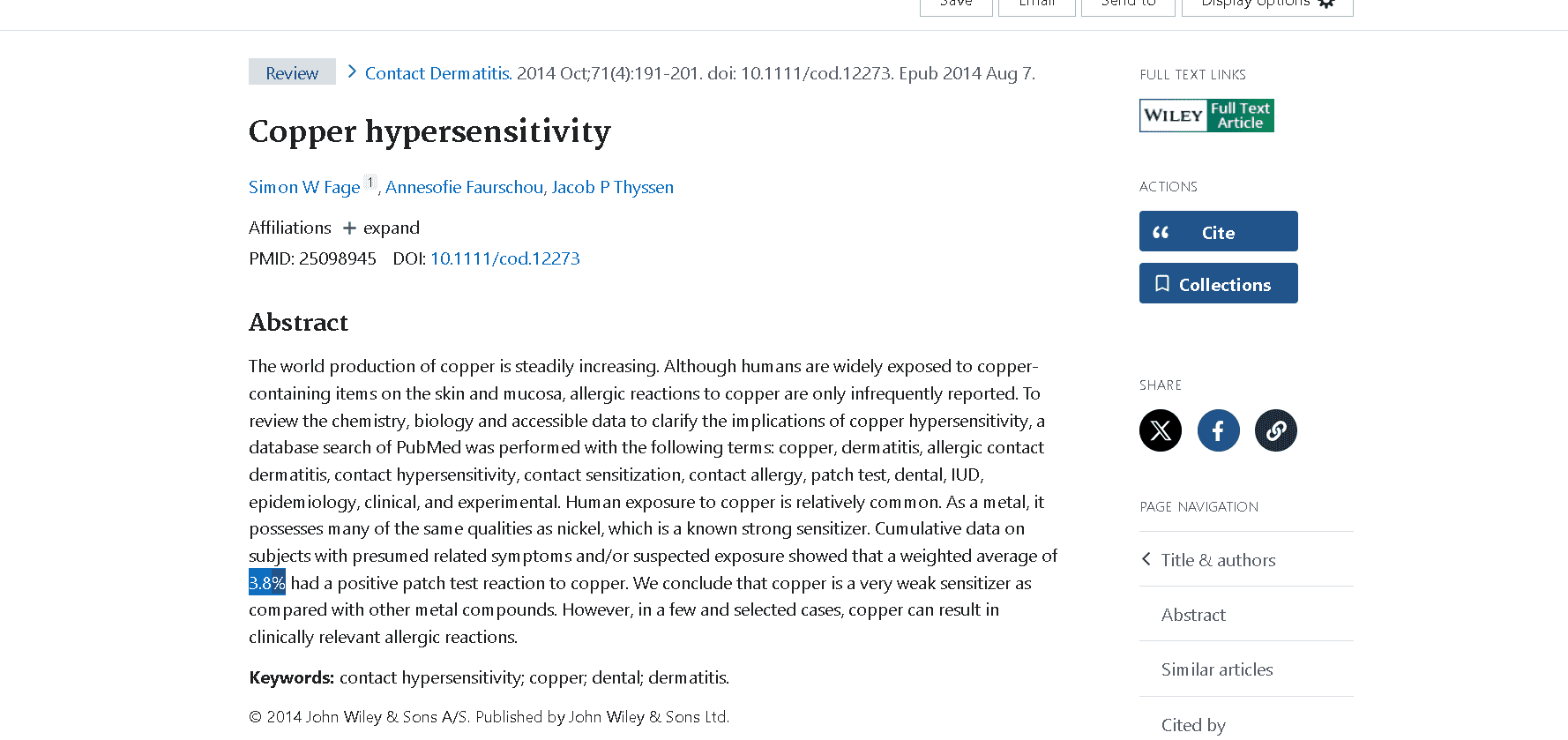
Allergies to copper are relatively uncommon but affect a certain percentage of the population. Copper toxicity happens when you get exposed. to a toxic form of copper.
Most people aren’t allergic to copper but anyone can be poised by a toxic form of it.
Is Copper Jewelry Toxic and Dangerous to Humans or Not?
No, copper jewelry isn’t toxic and dangerous to humans.
Pure copper jewelry is 100% safe because copper is an unreactive metal that doesn’t interact with human skin in any way provided you’re not allergic to this metal.
Here’s are some examples of pure copper jewelry below. All of these are 100% safe to wear permanently if you aren’t allergic to copper.


Note: copper is a common metal that’s added (alloyed) to precious metals to increase their strength, durability, scratch resistance and color in case of red gold alloy and rose gold alloy.
Nearly all silver alloys contains some amount of copper and most gold alloys do as well.
Jewelry made from these alloys is 100% safe provided you don’t have metal allergies. But even if you do copper and other metals can’t poison you as jewelry metals are all non-toxic.
Is Copper Bullion Toxic to Humans Or Not?
No, copper bullion isn’t toxic to humans. It’s 100% safe.
Handling 100% pure copper coins and bars won’t poison you or give you any health issues provided you’re not allergic to this metal.
Stay away from copper bullion if you’re allergic to copper.
Here’s an example of a 100% copper bar that’d be 100% safe and non toxic to handle and own.

Note: copper bullion isn’t IRA-approved. You need to buy IRA-eligible gold, silver, platinum or palladium in order to fund your gold IRA account.
Check out Augusta Precious Metals if you’re interested in gold IRAs. They’re a safe gold IRA company from the United States. which means you won’t have to worry about the multitude of gold and silver IRA scams when working with them.
Is Copper Cookware Toxic and Dangerous to Humans or Not?
No, copper cookware isn’t toxic when properly lined with tin or stainless steel.
The lining prevents copper from leaching into food and causing copper toxicity symptoms like nausea, vomiting, and diarrhea.
Most modern copper cookware is lined with a non-reactive metal like stainless steel or, traditionally, tin to prevent this reaction and ensure safety for everyday cooking.
You should dispose of old and damaged cookware that’s lined with worn-out tin or nickel as these will leach copper into your food.
Note: high temperature cooking with reactive ingredients (for example acidic foods) produces copper sulfate.
Copper sulfate isn’t toxic, but over time causes you to develop a copper allergy that will manifest when you touch copper made items such as jewelry and bullion.
Here’s an example of copper cookware that’s 100% safe because it’s lined, new and unused.

Is Beryllium Copper Toxic to Humans or Not?
Yes, beryllium copper is toxic to humans because it contains beryllium, a confirmed human carcinogen that causes severe lung diseases lung cancer, and other serious respiratory and systemic illnesses.
The primary health risks come from inhaling beryllium dust or fumes.
This can happen during manufacturing or other processing of this copper alloy. Physical contact with copper beryllium solid metal is safe and non toxic.
Copper Beryllium is used in applications like electrical components, precision tools, and automotive parts, especially where safety and durability are critical.
It’s not used for producing copper jewelry, bullion or cookware.

Is Copper Radioactive and Harmful to Humans, Yes or No?
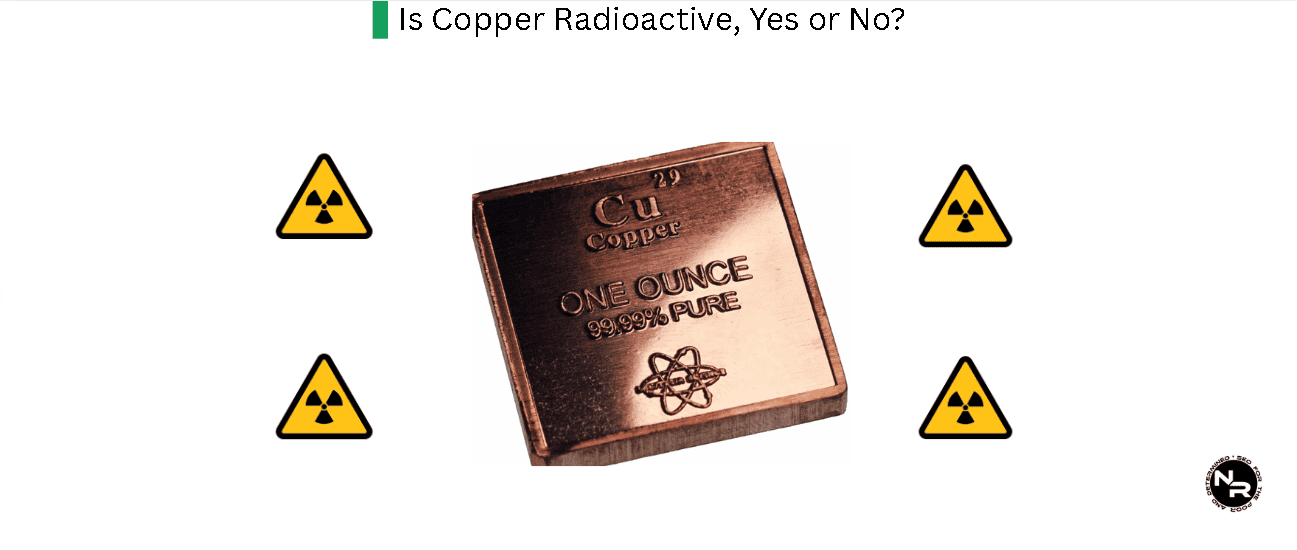
No, copper isn’t radioactive and harmful to humans, it’s safe.
Naturally occurring copper in the world is made up of two stable, non-radioactive isotopes: copper-63 and copper-65. These stable isotopes make copper safe and nonradioactive.
However, there are many artificial radioactive isotopes of copper that have been produced in laboratories, nuclear reactors, or cyclotrons for scientific and medical applications.
- Copper-64- this is the most versatile copper radioisotope, with a half-life of 12.70 hours. It’s widely used for PET imaging, studying copper metabolism, radioimmunological tracing, and cancer radiotherapy. Its longer half-life allows it to be produced at regional facilities and distributed to local nuclear medicine departments, and is compatible with slower-clearing agents like monoclonal antibodies and nanoparticles.
- Copper-67. Cu-67 is the most stable copper radioisotope with a half-life of 61.83 hours, and is used for in vivo targeted radiation therapy.
- Copper-62. Cu-62 is used for PET perfusion imaging and for imaging tumor hypoxia, myocardial and cerebral ischemia Springer. It’s one of the five copper radioisotopes particularly interesting for molecular imaging applications.


Is Copper Toxic and Dangerous to Humans, Yes or No? What are the Symptoms of Copper Toxicity? Is Copper Radioactive or Not? Conclusion
Copper is an essential nutrient that’s safe for humans in normal amounts, but toxic in excess.
Copper toxicity symptoms include diarrhea, fever, abdominal pain, jaundice, and kidney problems.
Toxicity rarely occurs from food since the body regulates copper absorption; instead, it typically results from heavy supplementation. Treatment ranges from stopping copper intake for mild cases to chelation therapy for severe poisoning.
Certain toxic copper compounds exist, including copper cyanide, copper chloride, and copper dust/fumes, though most people never encounter these. Copper toxicity differs from copper allergies, which are relatively rare.
Pure copper jewelry, bullion, and properly lined cookware are completely safe for non-allergic individuals.
However, beryllium copper is toxic due to beryllium content, which causes severe lung diseases when inhaled as dust or fumes.
Natural copper isn’t radioactive, though artificial radioactive isotopes exist for medical applications.
References:
- Beryllium Toxicity- https://www.ncbi.nlm.nih.gov/books/NBK585042/
- 100% Pure Copper Jewelry for the relief of Rheumatism & Arthritis- https://copperfayre.co.uk/
- Duparquet Copper Cookware- https://duparquet.com/products
- Is it safe to cook with copper pots?- https://www.reddit.com/r/Cooking/comments/117ejt6/is_it_safe_to_cook_with_copper_pots/
- Copper .9999 1 oz Bar- https://www.luciteria.com/bullion/p/copper-9999-1-oz-bar
- Copper toxicity- https://en.wikipedia.org/wiki/Copper_toxicity
- Copper hypersensitivity- https://pubmed.ncbi.nlm.nih.gov/25098945/
- What Are the Symptoms of Copper Toxicity?- https://www.webmd.com/diet/what-to-know-copper-toxicity
- Suspecting I’m allergic to my copper IUD. Glued a copper covered coin on my arm for 24 hours and this is the result. It doesn’t itch nor burn. Does it necessarily mean I’m allergic? I’ll schedule a doctor to get properly tested but it will take some time until the appointment. https://www.reddit.com/r/CopperIUD/comments/1bjqucv/suspecting_im_allergic_to_my_copper_iud_glued_a/
- Copper-64- https://en.wikipedia.org/wiki/Copper-64

Nikola Roza
Nikola Roza is a blogger behind Nikola Roza- SEO for the Poor and Determined. He writes for bloggers who don't have huge marketing budget but still want to succeed. Nikola is passionate about precious metals IRAs and how to invest in gold and silver for a safer financial future. Learn about Nikola here.