Disclosure: Some of the links you’ll encounter are affiliate links. If you click and buy something, I’ll get a commission. If you’re reading a review of some precious metals company, please understand that some of the links are affiliate links that help me pay my bills and write about what I love with no extra cost to you. Thank you!
Is pure platinum toxic to humans, yes or no?
What about platinum bullion and jewelry?
Are these safe or should you worry about them?
Is platinum radioactive and dangerous?
Find out right below!
- Is Pure Platinum Toxic to Humans? Or is it Safe?
- Which Platinum Forms are Toxic to Humans?
- Is Platinum Toxicity the Same as Platinum Allergies?
- Is Platinum Jewelry Toxic or Not?
- Is Platinum Bullion Toxic to Humans Or Not?
- Is Pure Platinum Toxic to Pets and Other Animals?
- Is Platinum Radioactive to Humans? Is it Harmful?
Take this quiz and test your knowledge on platinum toxicity and its radioactive properties.
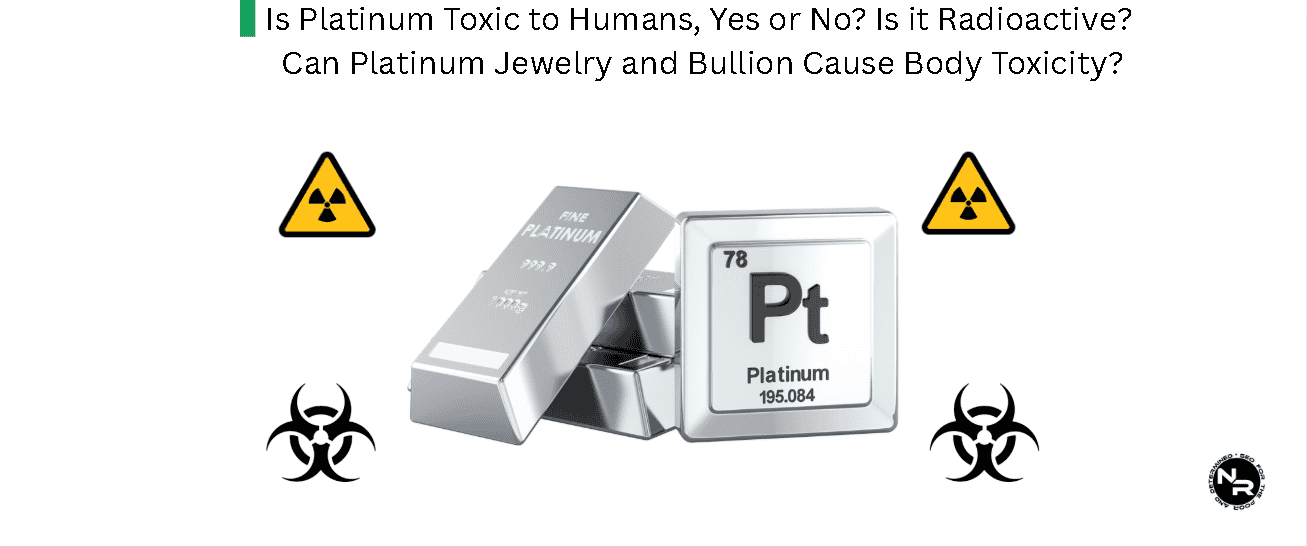
Table of Contents
Is Pure Platinum Toxic to Humans? Or is it Safe?
No, pure platinum isn’t toxic to humans. It’s safe to touch, handle and even ingest.
Pure platinum is chemically inert and not absorbed by the body when ingested. Instead, it just passes through digestive tract unchanged and without affecting the body and any of its organs.
It’s even possible to intentionally eat pure platinum without suffering adverse effects. This is similar to how you can eat pure, 24k gold without getting sick.
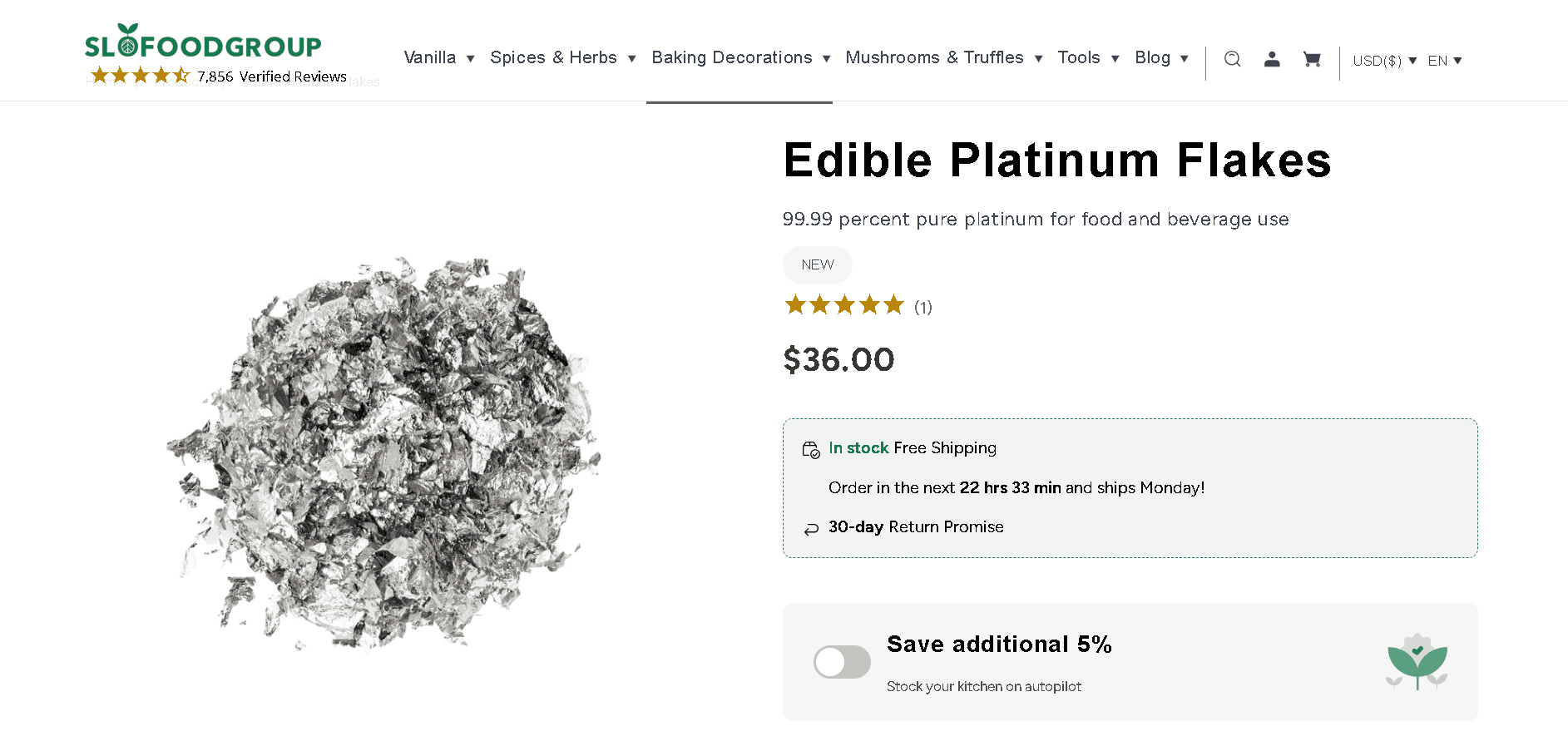
For example, I found this online store selling edible platinum in the form of flakes.
It’s 24k platinum without any other metals and impurities. It’s safe, non-toxic and very expensive as this noble metal is rare and it takes 12 tons of ore to produce one troy ounce of platinum.
Note: solid platinum is 100% safe and not toxic, but some platinum forms are toxic to humans.
Learn more below.
Which Platinum Forms are Toxic to Humans?
Platinum forms that are toxic to humans are:
- Platinum-based chemotherapy drugs. Medications like cisplatin, carboplatin, and oxaliplatin are widely used to treat various cancers. However, these medications cause significant side effects, including severe neurotoxicity, particularly with oxaliplatin.
- Soluble platinum salts. Compounds such as sodium chloroplatinate, ammonium chloroplatinate, and platinum tetrachloride are toxic and cause acute health effects if inhaled, or if they contact the skin and eyes.
- Platinum nanoparticles (PtNPs). Platinum nanoparticles cause acute toxic effects on cardiac electrophysiology (this means platinum nanoparticles adversely affect human heart health).
- Platinum fumes. Platinum fumes are airborne particles or gases generated when platinum metals or their compounds are heated. They cause irritation to the nose and throat, and prolonged or repeated exposure leads to “platinosis,” a serious and permanent allergic reaction characterized by asthma, skin rashes (dermatitis), and rhinitis. People working in platinum mines and jewelry shops are most at risk of being exposed to platinum fumes. Regular people don’t need to worry about them as solid platinum in jewelry and bullion doesn’t emit any fumes.

Note: pure platinum is 100% safe for humans. But pure platinum is rare on the market. Most platinum used for jewelry is used up in various platinum alloys.
Platinum alloys are safe when platinum is alloyed with other non-toxic metals like silver, palladium, copper…
Occasionally, platinum alloys contains heavy metals like lead, cadmium and mercury and these are toxic to humans when ingested, even in very small quantities.
Common platinum alloys are Platinum/Iridium, platinum 950, platinum 900, platinum 850, platinum 600 and platinum 500.
All of the platinum forms above are 100% safe provided they’re not contaminated with heavy metals toxic to humans.
Buying from reputable precious metal dealers and providers removes this risk completely.
Is Platinum Toxicity the Same as Platinum Allergies?
No, platinum toxicity isn’t the same as platinum allergies.
Toxic platinum forms affect everyone, but not everyone is allergic to platinum.
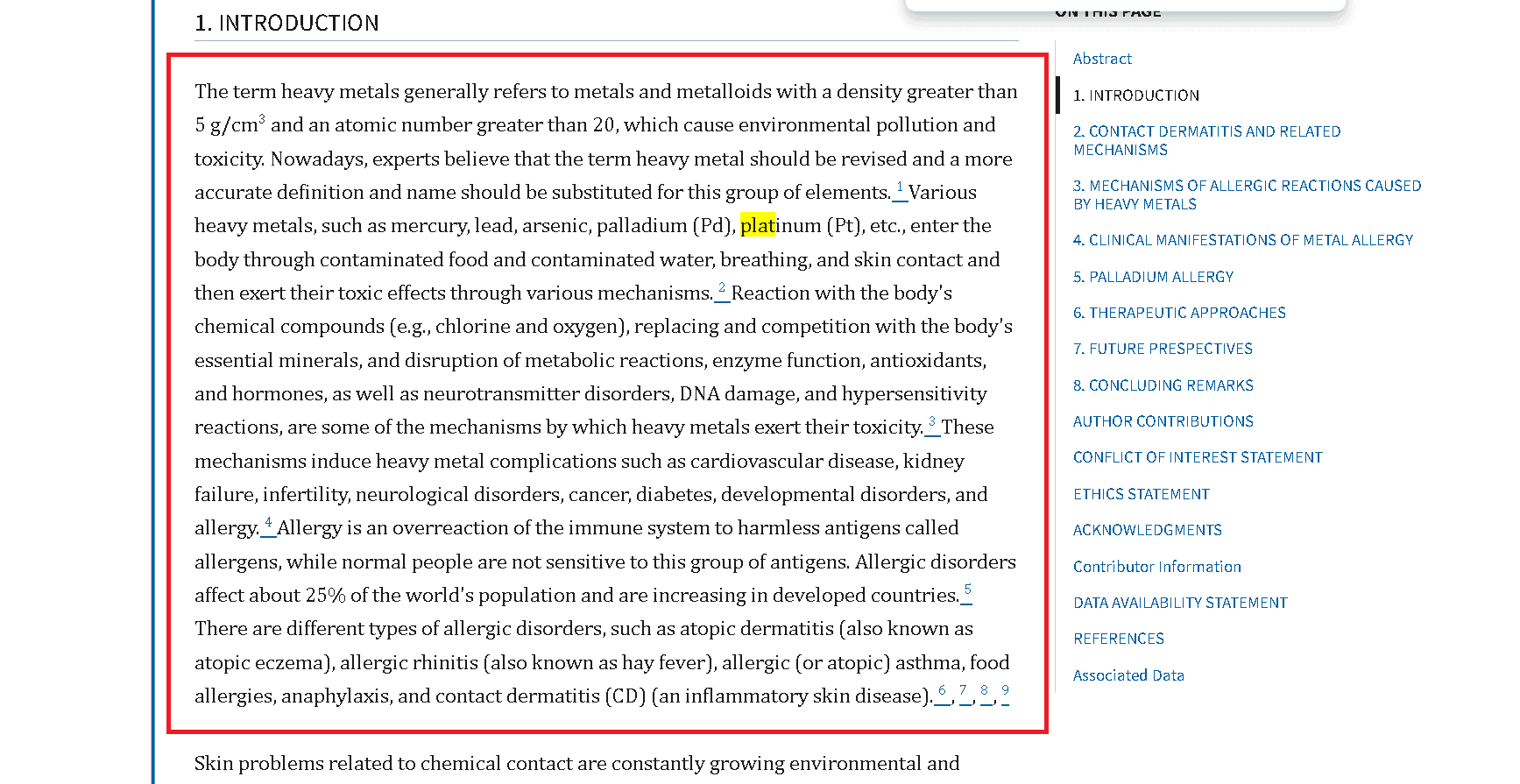
In fact, platinum allergies are extremely rare and only a small percentage of people are affected.
Note: people who’re allergic to nickel or other metals form the platinum metals group are more likely to be allergic to platinum than people who don’t have metal sensitivities.
Is Platinum Jewelry Toxic or Not?
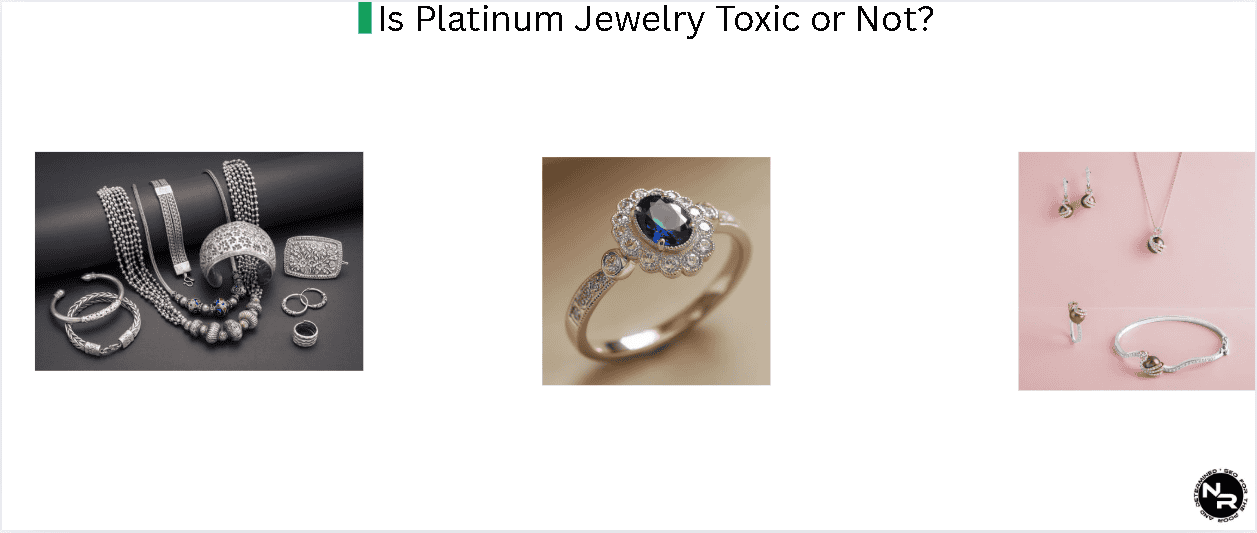
No, platinum jewelry isn’t toxic. Instead, it’s safe and you shouldn’t worry about wearing your pure platinum jewelry, or even jewelry made of some platinum alloy like Platinum Iridium.
Platinum jewelry isn’t toxic because platinum is chemically inert and doesn’t react with the body or skin (except if you’re allergic to platinum, but platinum allergy is different and less dangerous than platinum toxicity).
Obviously, don’t try to swallow a piece of platinum jewelry because it’ll get stuck in your digestive tract and then you’ll need to visit the hospital to have it surgically removed. The symptoms of intestinal blockage are cramping abdominal pain, bloating, constipation, nausea, and vomiting.
Note: platinum used for jewelry design often has added ruthenium mixed with it for additional strength and durability. Ruthenium interacts with household bleach and produces nasty (highly toxic and volatile) ruthenium tetroxide (\(\text{RuO}_{4}\)) fumes, along with chlorine gas.
The symptoms of ruthenium tetroxide poisoning stemming from platinum jewelry include severe irritation of the respiratory tract, coughing and choking, difficulty breathing, pulmonary edema, eye irritation and pain, headache, dizziness and more.
There’s a remote chance this could happen to you, but it’s not impossible and you need to know whether you have platinum jewelry with ruthenium in it (solid ruthenium not covered in bleach is safe and isn’t toxic).
Is Platinum Bullion Toxic to Humans Or Not?
No, platinum bullion isn’t toxic to humans. It’s safe.
Platinum in its solid form is chemically inert and won’t cause any problems for you as you handle it.
Platinum bullion is almost exclusive made from 24k platinum which means pure platinum without anything else added. So there’s no chance of other metals causing any type of toxicity.
Note: getting scammed is the bigger worry when buying platinum from dealers.
Most precious metals dealers are legit, especially in the United States, but there’s always those looking to scam unsuspected investors out of their retirement savings.
Before doing business with any company make sure you check out their customer’s reviews on popular watchdog sites. These reviews from authenticated buyers will tell you whether a company is legit or not.
I recommend you check out Augusta Precious Metals if you want to buy real platinum coins and bars.
Augusta is the top gold investment company in the USA and they sell IRA-approved precious metals to people looking to open gold IRA accounts with their retirement savings.
Bottom line is that with Augusta you won’t have to worry about purchasing fake platinum instead of the real thing.

Is Pure Platinum Toxic to Pets and Other Animals?
No, pure platinum isn’t toxic to pets and other animals. Pure platinum is chemically inert and passes though the animals’ digestive tract without affecting the body and its organs.
The toxic platinum forms I covered above will also be toxic to animals, but animals are very unlikely to be exposed to them.
Note: theoretically, bigger animals like horses, ponies and cows would have no problems in eating and passing solid platinum jewelry and small coins.
Those items won’t be digested and will just pass through the body unchanged.

Is Platinum Radioactive to Humans? Is it Harmful?
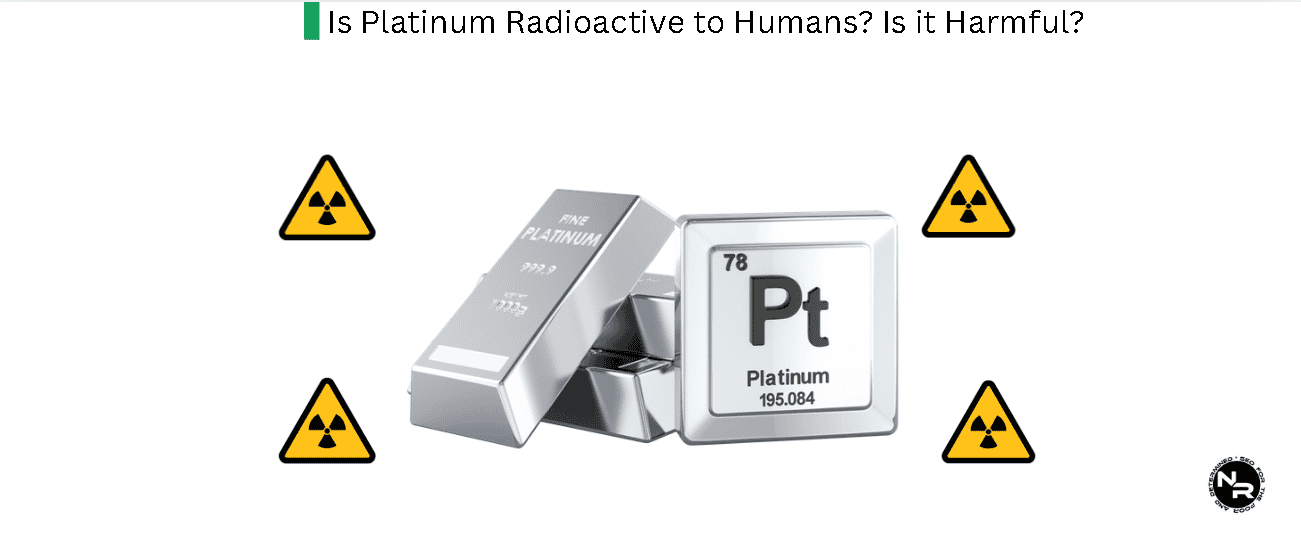
No, platinum isn’t radioactive and harmful to humans. It’s safe.
Platinum isn’t radioactive because it’s made of six isotopes, five of which stable and nonradioactive, and one that’s radioactive, but with a half life of about 700 billion years.
This means that for all practical purposes, platinum is a stable and non-radioactive metal, even though it’s technically not completely stable from a physics standpoint (due to that one radioactive isotope).
Radioactive decay of platinum has never been observed because of this extremely long half life and the one radioactive isotope has no practical impact on the safety of platinum in everyday use.
Bottom line is is that physical platinum items, including all jewelry and bullion, is 100% safe to handle and wear (in case of jewelry).
Platinum alloyed with other metals is also safe because alloying this metal doesn’t change its radioactive status.
Is Platinum Toxic to Humans? Is it Radioactive? Can Platinum Jewelry and Bullion Cause Body Toxicity (Conclusion)?
Pure platinum isn’t toxic to humans and is completely safe to handle, touch, or even ingest. It’s chemically inert and passes through the digestive system unchanged without affecting the body or organs. Platinum jewelry and bullion are safe to own and wear.
However, certain platinum forms are toxic, including platinum-based chemotherapy drugs (like cisplatin), soluble platinum salts, platinum nanoparticles, and platinum fumes.
Platinum fumes can cause “platinosis,” an allergic reaction affecting workers in platinum mines and jewelry shops.
Some platinum alloys containing heavy metals like lead or mercury can also be toxic. Platinum toxicity differs from platinum allergies.
Pure platinum is also safe for pets and animals. The main concern when buying platinum bullion is avoiding scams rather than toxicity, with reputable dealers recommended for legitimate purchases.
Platinum isn’t radioactive as all of its isotopes are either stable or have a very long half life.
References:
- Systemic allergic contact dermatitis to palladium, platinum, and titanium: mechanisms, clinical manifestations, prevalence, and therapeutic approaches- https://pmc.ncbi.nlm.nih.gov/articles/PMC10590457/
- Edible Platinum Flakes- https://www.slofoodgroup.com/products/edible-platinum-flakes
- Platinosis- https://en.wikipedia.org/wiki/Platinosis
- Jewelry toxicity: choosing between platinum (95%) vs 14K white gold wedding rings- https://www.reddit.com/r/chemistry/comments/cy2w0t/jewelry_toxicity_choosing_between_platinum_95_vs/
- Metal toxicity- https://www.reddit.com/r/chemistry/comments/rx0urn/metal_toxicity/
- Isotopes of platinum- https://en.wikipedia.org/wiki/Isotopes_of_platinum

Nikola Roza
Nikola Roza is a blogger behind Nikola Roza- SEO for the Poor and Determined. He writes for bloggers who don't have huge marketing budget but still want to succeed. Nikola is passionate about precious metals IRAs and how to invest in gold and silver for a safer financial future. Learn about Nikola here.