
Disclosure: Some of the links you’ll encounter are unique links. Click and buy something and I’ll earn some money, at zero expense to you. Thank you!

Search engine optimization (SEO) has always been a revolving door. With algorithms and user behavior changing constantly, SEO has been an evolving field since the days of Ask Jeeves.
Business owners are once again in uncharted territory as marketers grapple with the rapid changes AI has brought to the table. It’s easy to feel like keeping SEO visibility is harder than staying afloat on a life raft made of toothpicks.
The good news is that technological advancement hasn’t completely left us out to dry. SEO still plays a vital role, and automated SEO tools have significantly reduced the manual work behind content optimization and keyword research.
However, they have also impacted traditional workflows for content marketing teams, leaving some struggling to navigate SEO processes with modern AI tools.
So we’re here to talk about it.
First, we’ll examine the traditional structures of optimization workflows before diving into how new automated SEO tools can positively impact your business. Finally, we’ll help you think through how to choose the tools that are right for you.
Traditional SEO Workflows
Traditional SEO is slow, labor-intensive, and hard to scale.
Optimizing a website the old-fashioned way is a time-consuming manual process that monopolizes the time of one or more SEO specialists on your team who could be focused on SEO strategy, search intent, and ranking tactics to help your business grow.
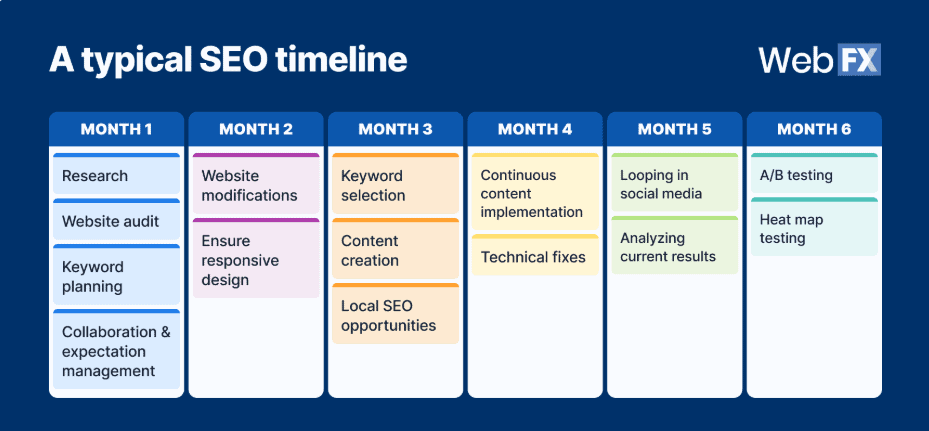
Keyword research and analysis, manual on-page optimization, and a thorough review of best practices all require significant time and effort. If you’re a small business or don’t have a lot of wiggle room in your budget, you fall behind the organizations with huge content teams and lots of cash to dedicate to the constant work of keeping your content relevant.
This is where automated SEO tools (like SE Ranking, Semrush and Ahrefs) level the playing field.
Redefining Workflows With Automated SEO Tools
You may be stuck in old ways of thinking that are slowing you down. It’s easy to get intimidated by the advanced features of automated tools and want to stick to the old, tried-and-true method of copying and pasting into spreadsheets.
Manual optimization has its place, and it’s wise to be wary of the drawbacks of overreliance on automated SEO tools.
However, implementing simple and easy-to-use features will streamline your process and keep your content pipeline running smoothly, ultimately leading to higher conversion rates and business growth.
The point of using automating SEO processes is to save time, improve rank tracking, and scale efficiently while maintaining keyword relevance.
We discuss more here below.
Automation in Keyword Research and Content Strategy
Streamlining keyword research is one of the most significant transformations automation has brought to SEO.
In the past, keyword research required meticulous analysis and hours of manually sifting through a wide range of search volumes, relevant keywords, and competitor SEO rankings. It required lots of time and more than a bit of guesswork.
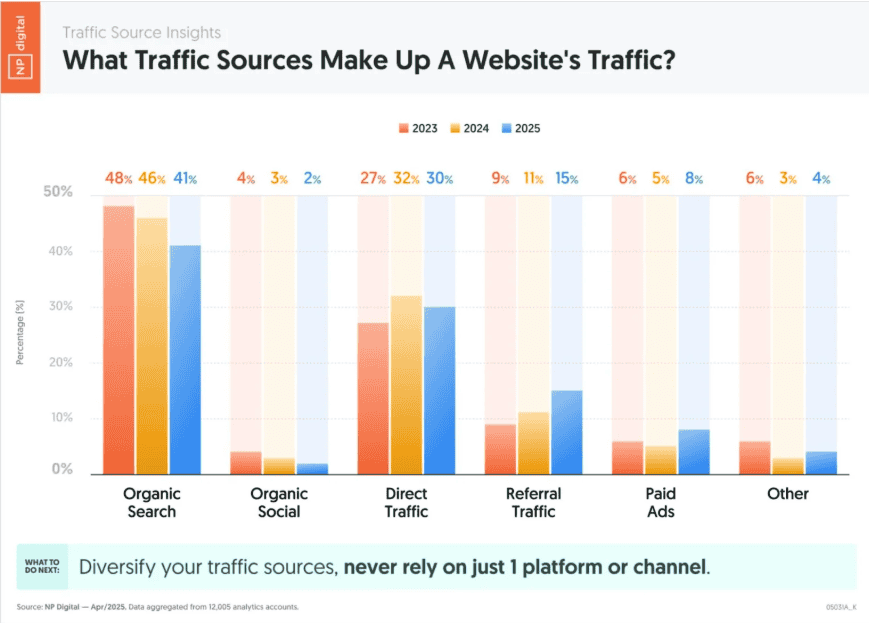
It’s not an SEO task you can afford to skip, though. Neil Patel’s 2025 SEO data analysis reveals that organic search accounts for 41% of all traffic to most websites.
AI-powered SEO tools now instantly generate lists of keyword opportunities, complete with metrics on search volume, keyword difficulty, and competition. You no longer need to cross-check results manually—your tool does this in a fraction of the time.
This means you can focus on strategy, knowing your keyword data aligns with audience demand and current search engine results.
Automatic On-page Keyword Optimization
On-page SEO is where you have the most control over content optimization. The algorithms will do what they will do, but what you can do is keep the cleanest, most well-structured, and tightly optimized content possible to appeal to search engines.
To accomplish this in a traditional SEO workflow, you would manually adjust title tags, headers, image alt text, and internal links for every page. For businesses with many pages, this process quickly becomes overwhelming.
With SEO automation, you get real-time site audits on on-page elements, allowing you to see all technical issues at a glance and fix them systematically.
Link Building and Outreach Automation
Link building has always been one of the more tedious aspects of SEO, requiring hours of outreach and relationship-building with other websites.
However, it also remains one of the most important aspects of good SEO. Backlinko published an analysis exploring the 200 ranking factors Google’s search algorithm uses when ranking content. Guess which factors are in the top two?
- Content quality
- Backlink profiles
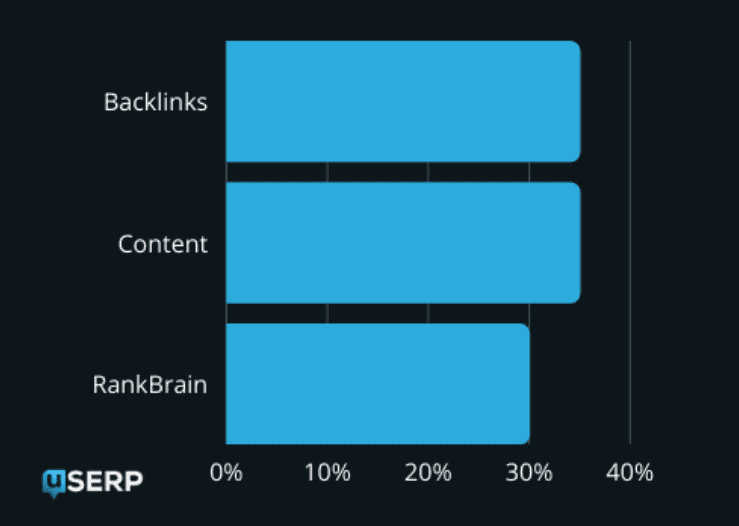
This won’t come as a surprise to anyone who has worked in digital marketing, but what may raise your eyebrows is realizing that link building doesn’t have to be a chore.
Automated SEO tools, such as BuzzSumo and Majestic, instantly identify top-performing SEO content and websites to target for backlinks, saving hours of manual labor.
Tools like Pitchbox further automate the process by managing outreach campaigns, sending personalized emails, and tracking the success of your link-building efforts.
This is the kind of thing you’re looking for in good automation software—does it take a necessary, repetitive task and simplify it? If so, it may be the right fit for your business.
How to Choose Automated SEO Tools to Scale Your Business
Many businesses already use tools in their day-to-day work that boost SEO without realizing it. For instance, tools like an AI-powered grammar checker improve readability score, while analytics tools like Google Analytics and Google Search Console provide insights into search intent and performance trends.
Your tools don’t have to be big, fancy, and expensive to have a positive impact on your search results.
Here’s how to think through what tools are best for you and your business.
Where is my greatest time-suck? Which part of your SEO efforts is taking the most time? Is it keyword research? Competitor analysis? Writing content outlines? SEO reports? Link building? Once you’ve analyzed where the pipeline is slowing down, you’ll have your roadmap for what automation tools will help you.
What tools are best for my industry? An AI writing tool? A keyword research tool?
While it’s true that SEO is necessary for the visibility of any service, different sectors have different audiences and, thus, other content marketing needs. Roof replacement companies, for instance, won’t be speaking to the same audience looking for a client database system.
And with SEO automation, they can auto-update service pages based on seasonal trends or local search demands.
Understand what’s going to help you by leading with your industry knowledge first and not getting lost in the sleek sales pages of tools that won’t benefit your business.
Where is my SEO weakest? If you know your content is already struggling with SEO issues, such as keyword cannibalization, a high bounce rate, broken links, or poor on-page optimization, you know what needs to be fixed. Learning how to fix 404 error pages quickly, for example, is a simple yet impactful way to recover lost traffic. That’s half the battle.
Use the SWOT method when doing this analysis.
This is what it stands for:
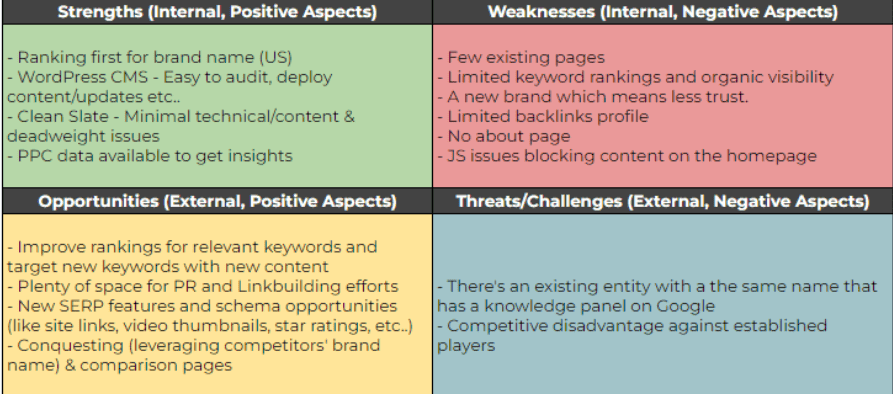
Look for a tool that’s going to help you solve your immediate problems, not lofty promises of being the solution to hypothetical issues.
How will this tool help me reach my business goals? Are automated SEO tools just a nice-to-have, or do they symbolize the feeling of being left behind in your industry if your content marketing teams aren’t using X, Y, or Z tools?
Don’t get caught up in the noise. Before opening your wallet and disrupting your team with yet another SEO platform to learn, ensure it’s moving the needle on your overall company goals.
What’s my budget? This right here is often what it all comes down to. It’s devastating to build castles in the air about your ideal SEO strategy only to discover you can’t afford any of it. However, don’t swing too far the other way and decide you can’t afford to do anything you want.
Many tools offer free tiers that include everything small businesses need to create amazing SEO campaigns and keep the content wheels moving. Others are available at a very reasonable price. So, know your baseline and understand what you can spend, but don’t throw the proverbial baby out with the bath water.
(Also, keep in mind that automation tools are not limited to SEO efforts. Automation is tremendously helpful for growing social visibility, too, with options like jumpstarting accounts by purchasing initial TikTok followers, scheduled posting, and content curation.)
Doing What’s Right For Your Business
SEO automation is here to change your business. The aim is to save you time and make scaling easier, faster, and more sustainable.
But these automated tools aren’t a magic button. Managing SEO performance still requires detailed insights from someone with the industry knowledge needed to reach high-growth goals.
I post content on SEO, automation, and keyword tools, among other things, to help business owners like you scale.
If you’re looking for more free resources, head to Nikola Roza’s blog to learn more about SEO and automation.
Author Bio

Alia Sinclair is a writer and marketer with a decade of experience in content marketing. She lives in the Pacific Northwest with her wife and an ever-increasing library of books.

Nikola Roza
Nikola Roza is a blogger behind Nikola Roza- SEO for the Poor and Determined. He writes for bloggers who don't have huge marketing budget but still want to succeed. Nikola is passionate about precious metals IRAs and how to invest in gold and silver for a safer financial future. Learn about Nikola here.