Disclosure: Some of the links you’ll encounter are unique links. Click and buy something and I’ll earn some money, at zero expense to you. Thank you!
Counterfeit Sacagawea dollars frequently dupe collectors by mimicking rare mint errors and special varieties. Authentic Sacagawea dollar coins weigh precisely 8.1 grams and are made of manganese brass with a distinctive golden color.
Key indicators of fakes include incorrect coloring (particularly copper tones), improper weight, and wrong edge lettering placement on coins minted between 2000-2008.
Most gold, silver, platinum, or palladium Sacagawea coins are counterfeit, as the U.S. Mint never produced Sacagawea dollars made from these metals for circulation. However, genuine mint errors exist, including the extremely valuable Sacagawea/Washington Quarter mule
Collectors should verify authenticity through careful examination of weight, color, and design details.
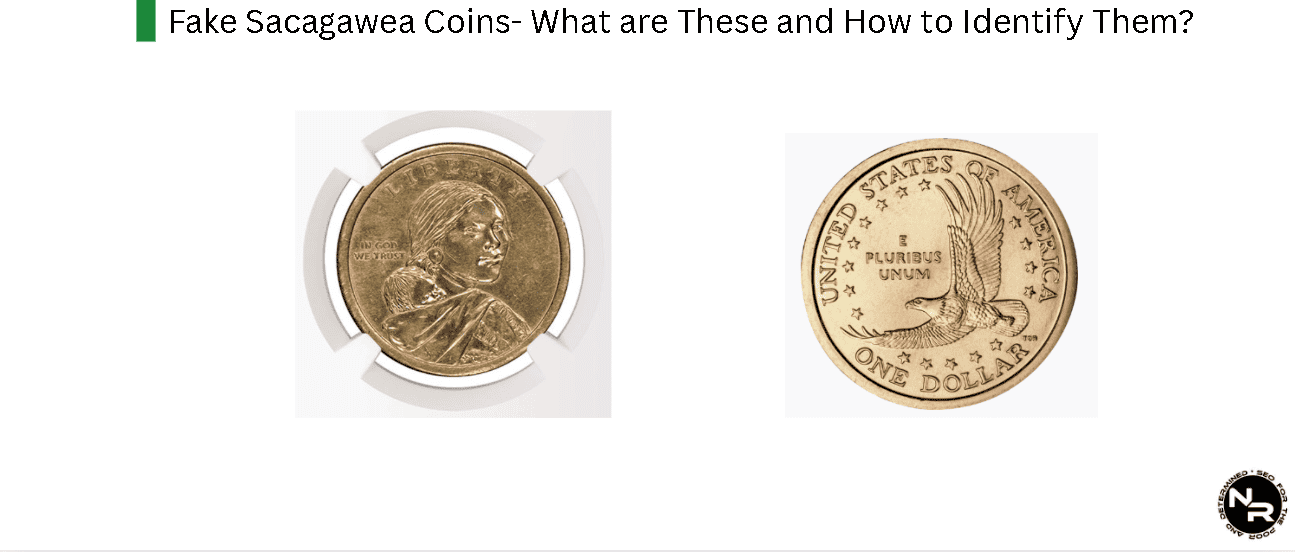
What are Fake Sacagawea Coins?
Fake Sacagawea coins are counterfeit dollars made to look genuine to scam collectors.
Common scams involving the Sacagawea Dollar are listed below.
- Faking rare mint errors like the “mule” coin (which incorrectly pairs the Washington quarter obverse with the Sacagawea reverse).
- Faking coins with missing edge lettering.
- Faking the famous “no date” Sacagawea Dollars.
- etc.
These scams work on naïve collectors because real mule Sacagawea coins exist. Real and rare Sacagawea coins with no edge lettering and no dates exist as well. Fake Sacagawea Dollar coins look like the real deal, but they’re never truly identical to them and if you’re careful and smart you’ll be able to easily discern real from fake.
See below how (with picture examples).
Do you like Sacagawea dollars and valuable coins in general? Check this out next! Especially if you’re from the United States and are worried about the economy.
How to Distinguish Between Fake and Real Sacagawea Coins?
To distinguish between fake and real Sacagawea coins first you need to know what to look for.
You can discern between real and fake Sacajawea dollars based on intricate details of the real coin which the fake one lacks. Sacagawea coins are golden in color due to their manganese brass composition. A wrongly-colored Sacajawea dollar coin should raise your suspicion, provided the metal isn’t severely tarnished and the coin isn’t old and damaged.
A few years back (in 2002) a major counterfeiting plot was discovered in Bogotá, Columbia. Close to 1 million counterfeit Sacagawea coins were struck there for use in Ecuador and the rest of Latin America.
The counterfeit coin’s diameter, thickness, and weight were within tolerance of genuine Sacagawea Dollars, but the color was noticeably different.
The fake Sacagawea coins had more of a pronounced copper color instead of a golden color resembling true gold.
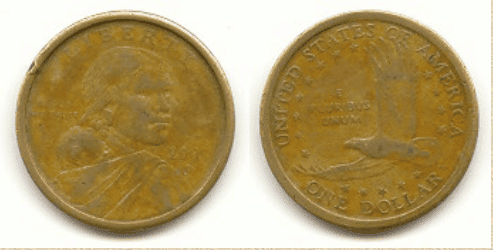
Next, a Sacagawea Dollar coin weighs exactly 8.1 grams (0.26 troy oz). A supposed Sacagawea coin that weighs 8 grams, or 8.2 grams isn’t real. It’s a fake.
Here’s a picture of a fake Sacagawea coin lying next to the real one. The one telltale sign is that the fake coin looks 10-15% heavier than its counterpart on the left.
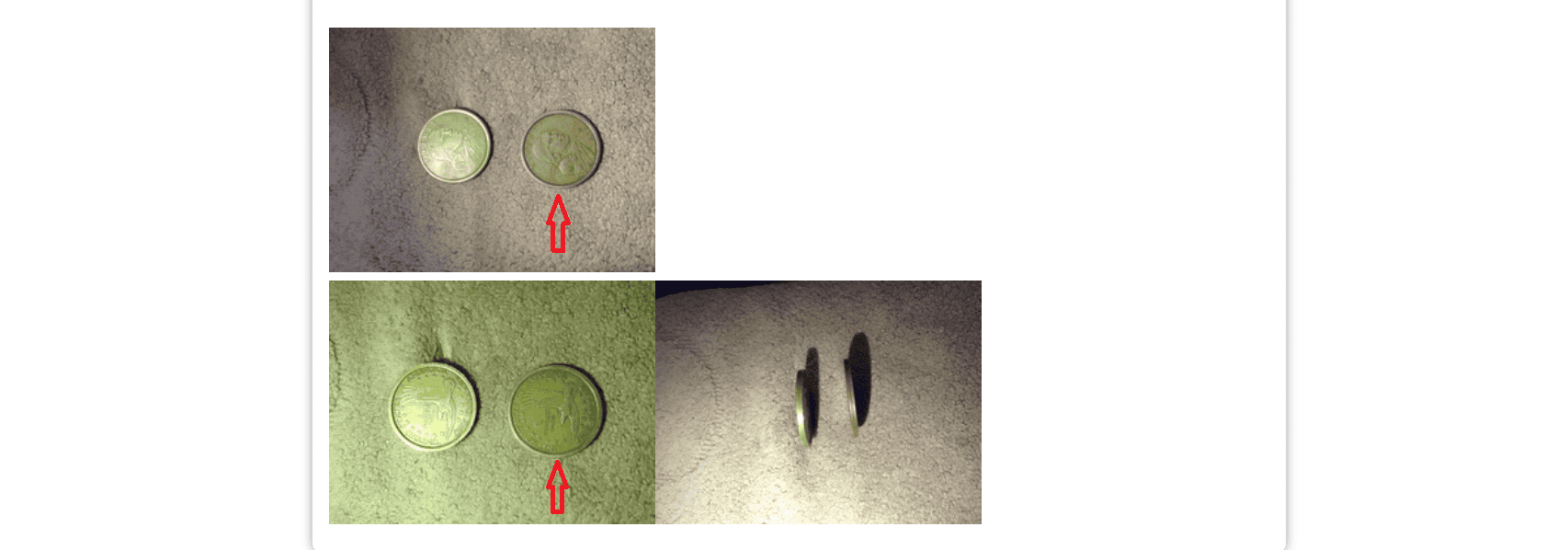
Here’s an even better example where the weight difference is more pronounced making these coins easier to flag as fake.
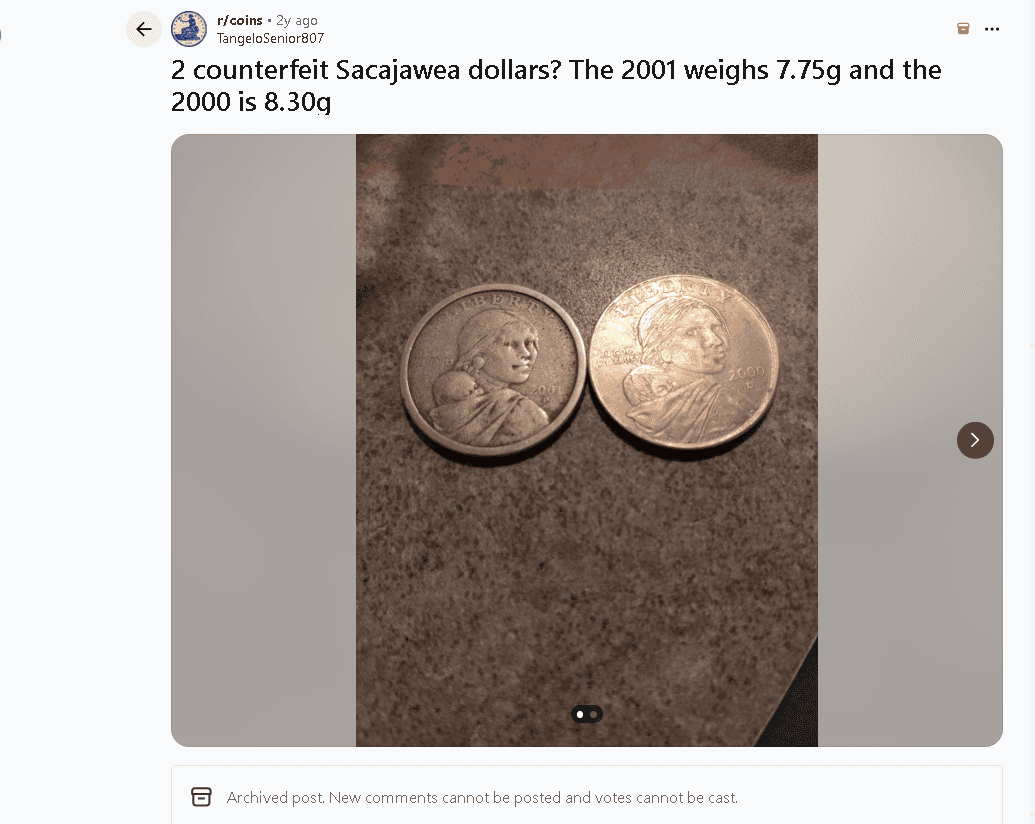
Next, Sacagawea Dollar coins had no edge lettering from 2000 to 2008. Meaning these coins were minted with a plain edge.
Therefore, a Sacagawea Dollar with edge lettering is a fake coin, error coin, or a newer Native American dollar (Native American Series coins have edge lettering, with the date, mint mark, and “e pluribus unum” written on the edge).
The obverse of the Sacagawea dollar coin shows Sacagawea carrying her son, Jean Baptiste Charbonneau, with the inscriptions “LIBERTY” and “IN GOD WE TRUST”. The reverse design features a soaring eagle with 17 stars representing the number of states in the Union at the start of the Lewis and Clark Expedition.
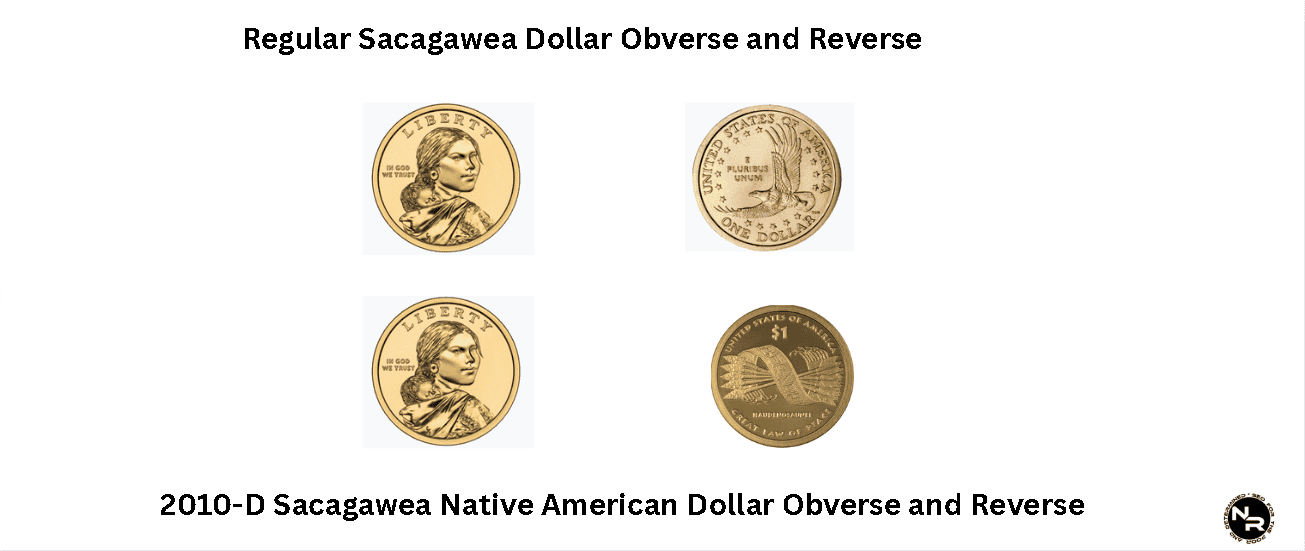
A supposed Sacagawea coin with a normal obverse but a different reverse is either a fake, or one of the coins from the Native American Series.
These coins feature the same same obverse of Sacagawea carrying her son on her back, but the reverse changes to honor American native people and their contribution to U.S. history.
Here’s a visual comparison of regular Sacagawea Dollar and one coin from the Native American Series (2010-D Sacagawea Native American Dollar).
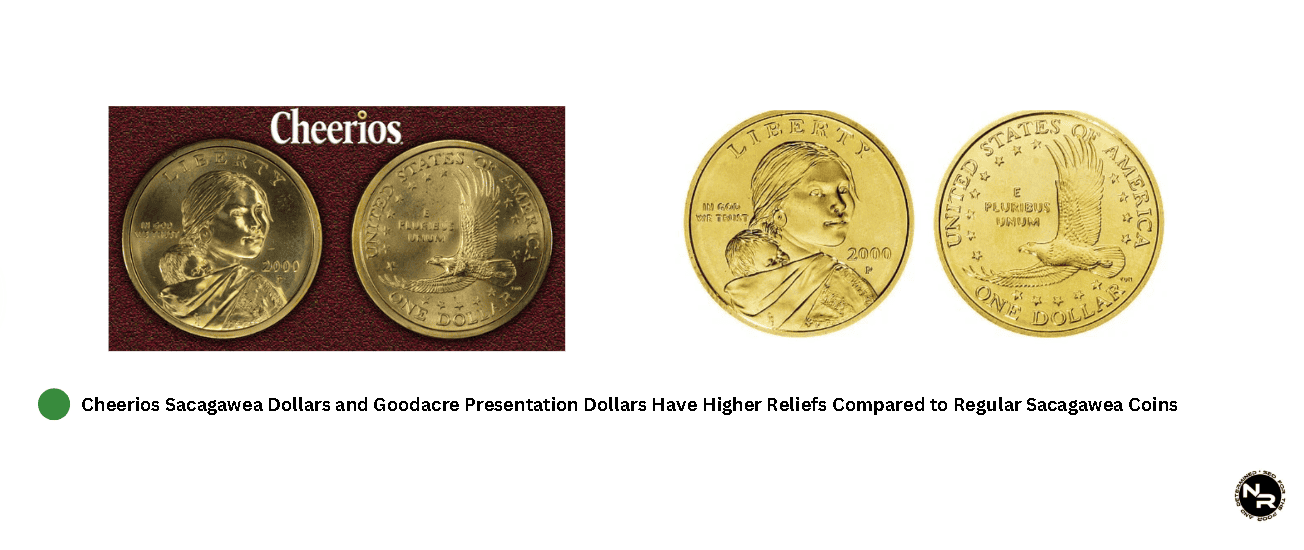
Sacagawea coins were produced in low relief to allow for easy stacking in vending machines and banking. So, Sacagawea dollars with high or ultra high reliefs are almost certainly fake.
The only exception to this rule are Cheerios Sacagawea Dollars and Goodacre Presentation Dollars which both feature higher and more detailed reliefs.
Sacagawea Dollar mint mark is either “P” for Philadelphia, “D” for Denver, and “S” for San Francisco.
From 2000 to 2008, the mint mark was on the obverse (front) of the coin, located on the lower right, below the date. Staring in 2009, the mint mark was moved to the coin’s edge along with the date and other mottos. So, a supposed Sacagawea Dollar coin isn’t real if it has correct obverse and reverse, but the mint mark is on edge instead on the obverse. It’s a fake.
Finally, Sacagawea Dollars are just that, dollars. It’s a fake Sacagawea coin if it has any other denomination. But you won’t find such an example as no coin forger will make such a rookie mistake.
| Coin Feature | Sacagawea Dollar |
|---|---|
| Denomination | $1 |
| Edge lettering | No edge lettering from 2000-2008. |
| Obverse | Three-quarter profile of Sacagawea carrying her infant son, Jean Baptiste Charbonneau, on her back. |
| Reverse | Soaring eagle surrounded by 17 stars, representing the states at the time of the Lewis and Clark expedition. |
| Rim | Raised rim |
| Relief | Low relief (except Cheerios and Goodacre Presentation Dollars). |
| Composition | 88.5% copper, 6% zinc, 3.5% manganese, and 2% nickel |
| Color | Gold |
| Weight | 8.1 gram |
Do you like Sacagawea dollars and valuable coins in general? Check this out next! Especially if you’re from the United States and are worried about the economy.
Are Sacagawea Coins With Mint Errors Fake or Real?
Sacagawea coins with mint errors are real. They’re not fake.
Most Sacagawea Dollars were minted as intended, but few mistakes have been discovered.
- 2000 Sacagawea/Washington Quarter Mule. This is the most famous and valuable error, where the Sacagawea obverse (front) was accidentally paired with a George Washington quarter reverse (back). Only 11 examples are known to exist, and they’re extremely valuable, with one example valued at over $8 million. Experienced counterfeiters who know what they’re doing won’t even try to fake this coin as it’ll be an obvious fake. No one would fall for it.
- Sacagawea Dollar/Presidential Dollar Mule. A rare 2014 Denver Mint error coin combining a Sacagawea Dollar front with a Presidential Dollar back sold for $84,000 at Heritage Auctions in 2021. It gained national attention as an unusual mule error similar to the popular Sacagawea/State quarter mule. Only one of these coins has been discovered so far.
- Missing edge lettering. Some Native American dollars left the Mint without the required edge lettering (date and “E Pluribus Unum”). The no-date Sacagawea Dollar is a genuine error, though fakes can be made by smoothing the edge of a regular coin.
Are Cheerios Sacagawea Coins Real or Fake?
Yes, Cheerios Sacagawea coins are real. They’re a set of approximately 5,500 authentic 2000-P Sacagawea dollars that were randomly inserted into Cheerios boxes as part of a promotion.
These coins are real and distinguished by a unique “enhanced reverse” design with bolder, more defined diagonal lines in the eagle’s tail feathers compared to the standard version.
The main difference between regular and Cheerios Sacagawea coins is the detail of the eagle’s tail feathers on the reverse side.
But there’re other, subtle differences too.
| Feature | Cheerios Sacagawea Dollar | Regular Sacagawea Dollar |
|---|---|---|
| Tail Feathers | Bolder, more detailed lines, with a visible central line on the shafts. | Smoother, less detailed, and lighter tail feathers because the central lines were removed to make the design more realistic. |
| Origin | A 2000-P Sacagawea dollar given away in a limited promotion by General Mills in some Cheerios boxes. | The standard 2000 Sacagawea dollar minted for general circulation. |
| Minting | Struck using an early die that had more detail. | Struck using a modified, lighter and less detailed on the tail feathers. |
Note: real Cheerios Sacagawea Dollar are very rare and very valuable. That’s the incentive for scammers to fake them. Be vigilant when purchasing one of these coins and always look for clues from the table above to determine if it’s the real thing.
Do you like Sacagawea dollars and valuable coins in general? Check this out next! Especially if you’re from the United States and are worried about the economy.
Are Gold Sacagawea Coins Real or Fake?
Most Sacagawea gold coins you find online are fake coins made by counterfeiters wishing to dupe you.
True gold Sacagawea Dollars exist, but are extremely rare and have never been destined for public circulation.
There’re two types of gold Sacagawea dollar coins. First, there’re thirty nine 22k-gold Sacagawea Dollars struck at West Point in 1999 (though dated 2000). 12 of these 39 gold dollars went to space on Space Shuttle Columbia in July 1999, becoming one of the rare U.S. coins to have flown out of Earth’s orbit. These 12 gold coins were deposited at Fort Knox for safekeeping upon returning to Earth. The remaining 27 coins were melted down and had their gold used elsewhere. This means any “Space Gold Sacagawea Dollar” you encounter online or offline is either 100% fake or a coin replica.
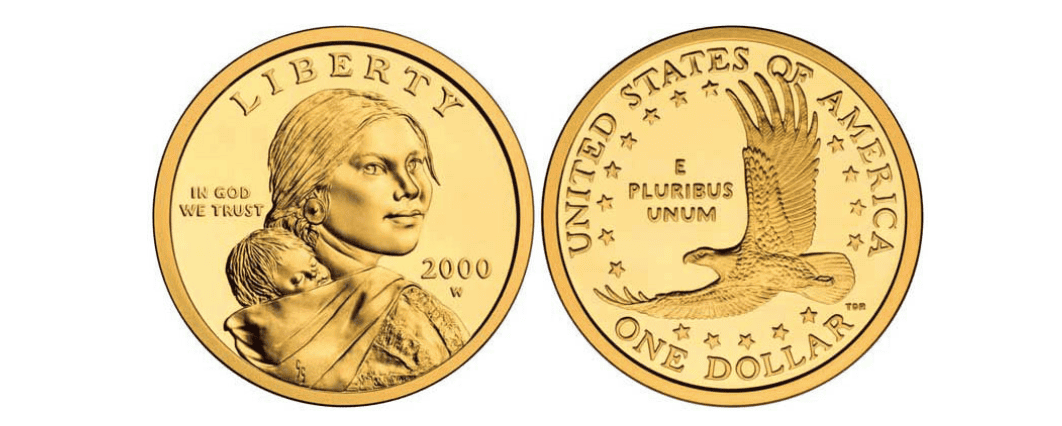
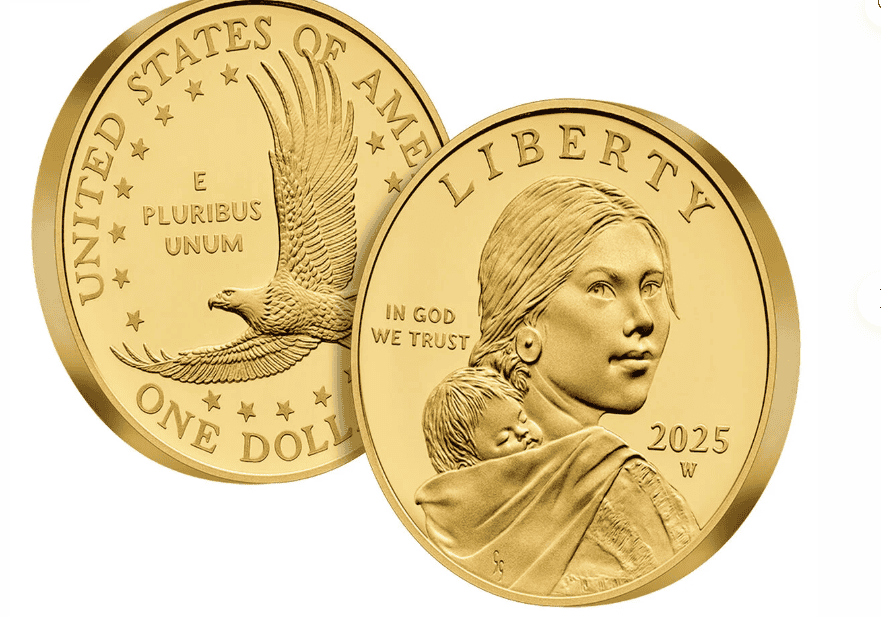
Second, there’s the 25th Anniversary Proof Coin.
In 2025, the U.S. Mint produced a special 24-karat gold proof version of the Sacagawea dollar coin to celebrate its 25th anniversary. This was a limited-edition collector’s item not meant for circulation (only 7.500 were minted) and containing a half-ounce of pure gold.
These gold Sacagawea coins exist and are real. But now they’re owned by collectors and none of them are for sale. But this doesn’t mean that in the future a collector might not decide to part from his or her golden Sacagawea Dollar. This could be an opportunity for you provided you do your due diligence.
Ask for the Certificate of Authenticity and also the official U.S. Mint packaging the coin originally came with.
Do you like Sacagawea dollars and valuable coins in general? Check this out next! Especially if you’re from the United States and are worried about the economy.
Are Sacagawea Coins Made of Silver Real or Fake?
Most silver Sacagawea coins are fake because the U.S. Mint has only minted a limited number of silver Sacagawea coins. And there’re too many of them offered online for all of them to be real.
The U.S. Mint has produced special silver proof versions of Sacagawea dollars for all years of the series. These coins were made of 90% silver and 10% copper and were included in special silver proof sets.
Moreover, other types of silver Sacagawea coins exist, and these are real. They exist as regular coins plated with silver for novelty purposes. And they exist as silver rounds coming from private mints and made specifically for collectors to buy to include in their collections.
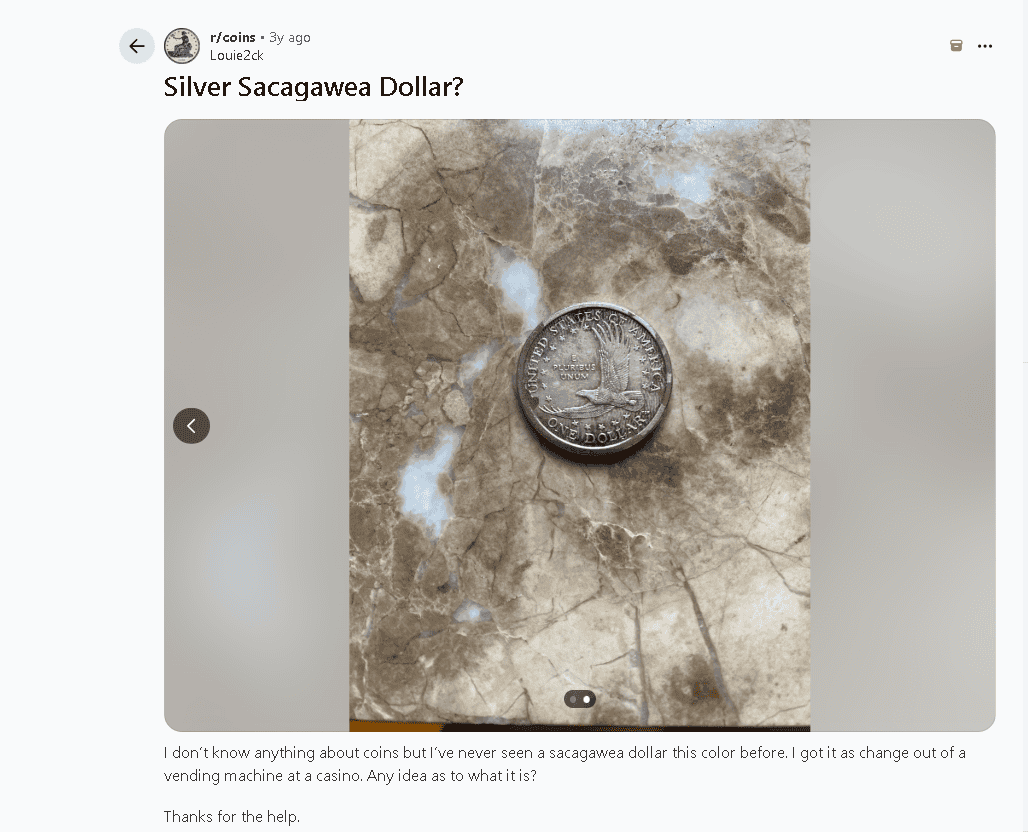
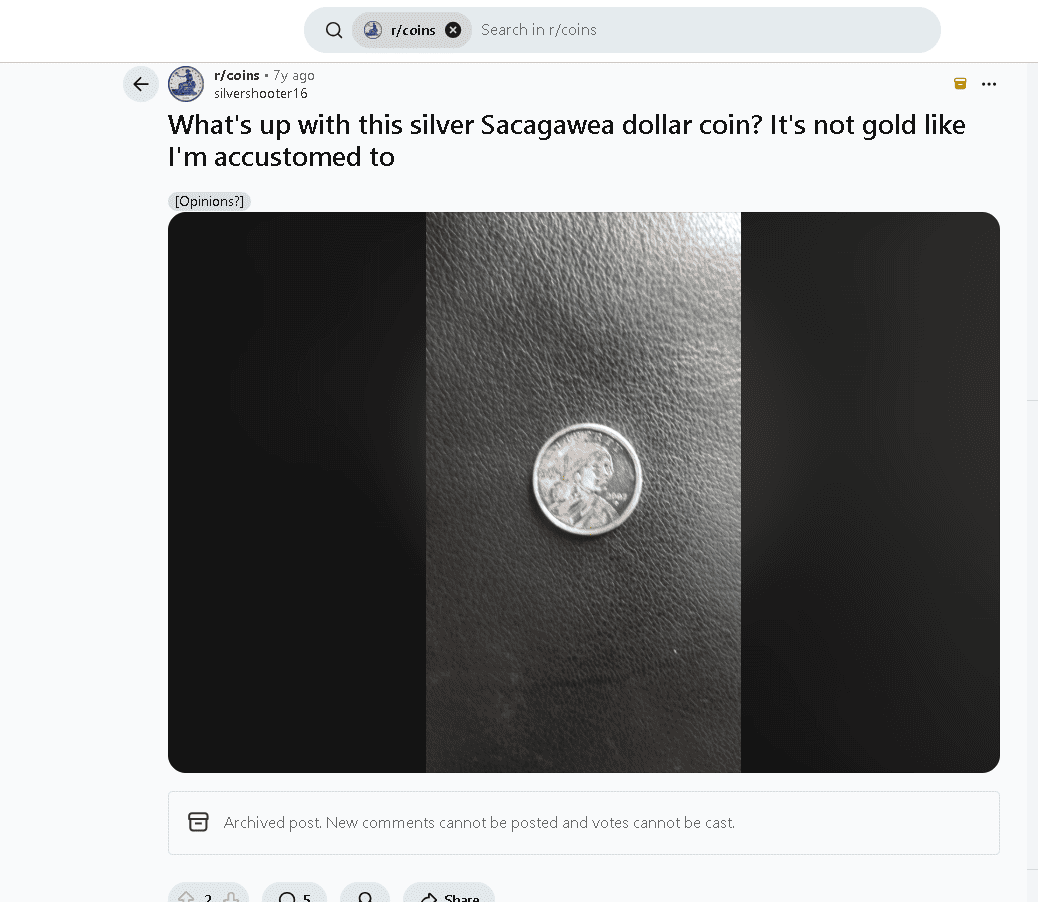
A normal Sacagawea Dollar can start to look silvery due to environmental exposure or chemical reactions. But the underlying metal is still the original copper/brass alloy and the value of coin is unchanged.
Here’s an example of a silver plated Sacagawea coin. And below is an example of a badly tarnished/damaged regular Sacagawea Dollar that’s silver only in looks, but not in substance.
Do you like Sacagawea dollars and valuable coins in general? Check this out next! Especially if you’re from the United States and are worried about the economy.
Are Sacagawea Coins Made of Platinum Real or Fake?
Sacagawea coins made of platinum aren’t real. They’re fake.
Platinum Sacagawea Dollars don’t exist. The U.S. Mint has never minted Sacagawea Dollars made of platinum, neither for circulation nor for collectors.
It’s possible for an investor or coin collector to commission a private mint to make them a platinum Sacagawea Dollar. In this case the specimen would be real, but unique and you’ll never encounter such a coin anywhere offline or online.
Are Sacagawea Coins Made of Palladium Real or Fake?
Sacagawea coins made of palladium aren’t real. They’re fake.
Palladium Sacagawea Dollars don’t exist. The U.S. Mint has never minted Sacagawea Dollars made of palladium, neither for circulation nor for collectors.
It’s possible for an investor or coin collector to commission a private mint to make them a Sacagawea Dollar made of palladium, or a regular coin coated with palladium.
In this case the specimen would be real, but unique and you’ll never encounter such a coin anywhere offline or online.
- Fake Sacagawea- https://en.numista.com/forum/topic47705.html
- 2010-D Sacagawea Native American Dollar Uncirc BU Golden Nice No Problem Coin- https://qualitycollectiblecoins.com/2010-d-sacagawea-native-american-dollar-uncirc-bu-golden-nice-no-problem-coin/
- 2000-P Sacagewea Dollar – Cheerios Variety FS-902 – Prototype Reverse of 1999- https://www.reddit.com/r/coins/comments/efzm47/2000p_sacagewea_dollar_cheerios_variety_fs902/
- 2000 P Sacagawea Dollar : Goodacre Presentation Finish
Golden Dollar- https://www.usacoinbook.com/coins/3378/dollars/native-american-sacagawea/2000-P/goodacre-presentation-finish/ - 2 counterfeit Sacajawea dollars? The 2001 weighs 7.75g and the 2000 is 8.30g- https://www.reddit.com/r/coins/comments/16dfxux/2_counterfeit_sacajawea_dollars_the_2001_weighs/
- ANTHONY AND SACAGAWEA
DOLLAR COUNTERFEITS- http://www.smalldollars.com/dollar/add014.html - Mule error realizes $84,000 in Heritage sale- https://www.coinworld.com/news/us-coins/mule-error-realizes-84-000-dollars-in-heritage-sale
- Silver Sacagawea Dollar?- https://www.reddit.com/r/coins/comments/1459v85/silver_sacagawea_dollar/
- What’s up with this silver Sacagawea dollar coin? It’s not gold like I’m accustomed to- https://www.reddit.com/r/coins/comments/95g3t0/whats_up_with_this_silver_sacagawea_dollar_coin/
- I have a silver sacagawea dollar. No one knows anything about it.- https://www.reddit.com/r/coins/comments/1epobpx/i_have_a_silver_sacagawea_dollar_no_one_knows/
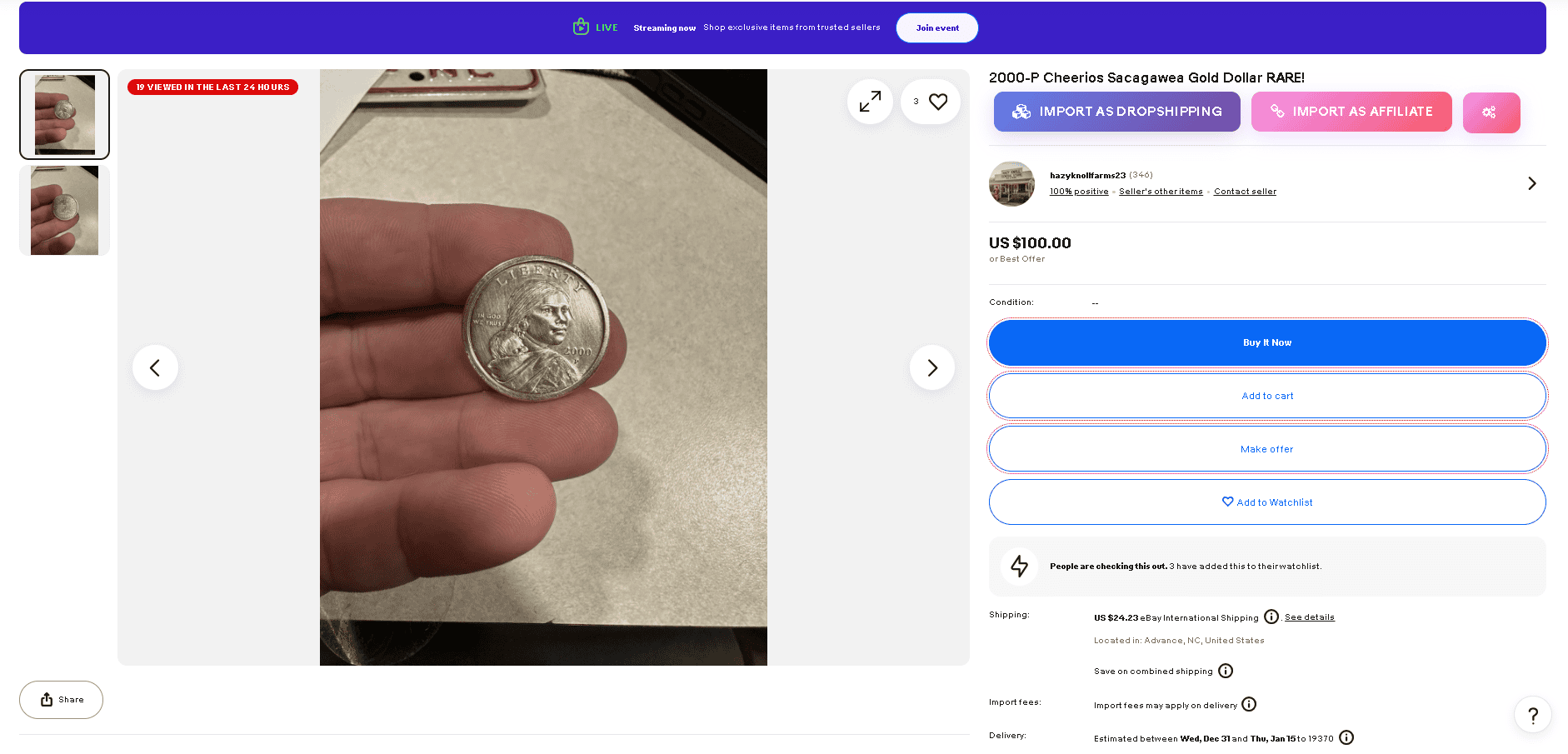
- 2000-P Cheerios Sacagawea Gold Dollar RARE!- https://www.ebay.com/itm/306595049916

Nikola Roza
Nikola Roza is the owner of Nikola Roza- Everything You Can Learn About Precious Metals. He writes for people who love precious metals and jewelry and who're interested in adding gold, silver platinum and palladium to their retirement portfolios. Nikola is passionate about gold IRAs and investing in multiple asset types for a safer financial future. He also runs a successful online jewelry store where you can buy precious metal jewelry and various replicas of famous coins and bars. Learn about Nikola here.