Disclosure: Some of the links you’ll encounter are affiliate links. If you click and buy something, I’ll get a commission. If you’re reading a review of some precious metals company, please understand that some of the links are affiliate links that help me pay my bills and write about what I love with no extra cost to you. Thank you!
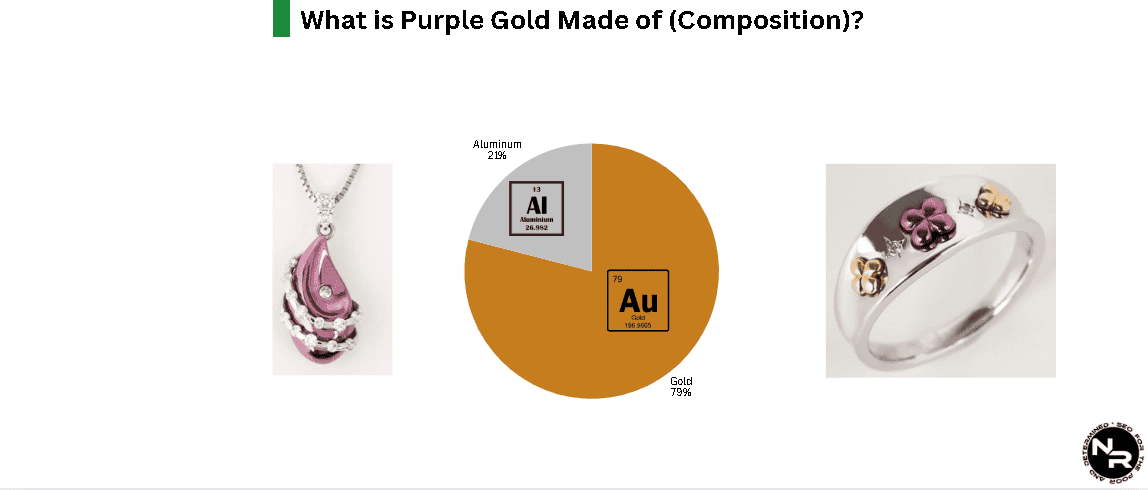
Purple gold is a manufactured alloy composed of 79% gold and 21% aluminum, forming the intermetallic compound AuAl₂ with a distinctive purple hue.
Unlike natural gold, purple gold can’t be mined and must be created by combining separately sourced materials. This gold alloy is only available in 18-karat form because this specific ratio is required to achieve the desired purple color.
Purple gold is extremely brittle and difficult to work with, making it unsuitable for solid jewelry pieces. Instead, it’s used as small decorative inlays or gem-like accents in more durable gold settings.
This gold type is hypoallergenic for most people, non-magnetic, and can tarnish when exposed to various chemicals like chlorine, bleach, and acids due to the aluminum content.
Purple gold is one of the most expensive colored gold alloys due to its rarity and manufacturing challenges and it’s not available as investment-grade bullion or approved for gold IRA accounts.
Learn it all and more in my guide below.
Here’s an awesome quiz about purple gold. Take it after you’ve read my guide.
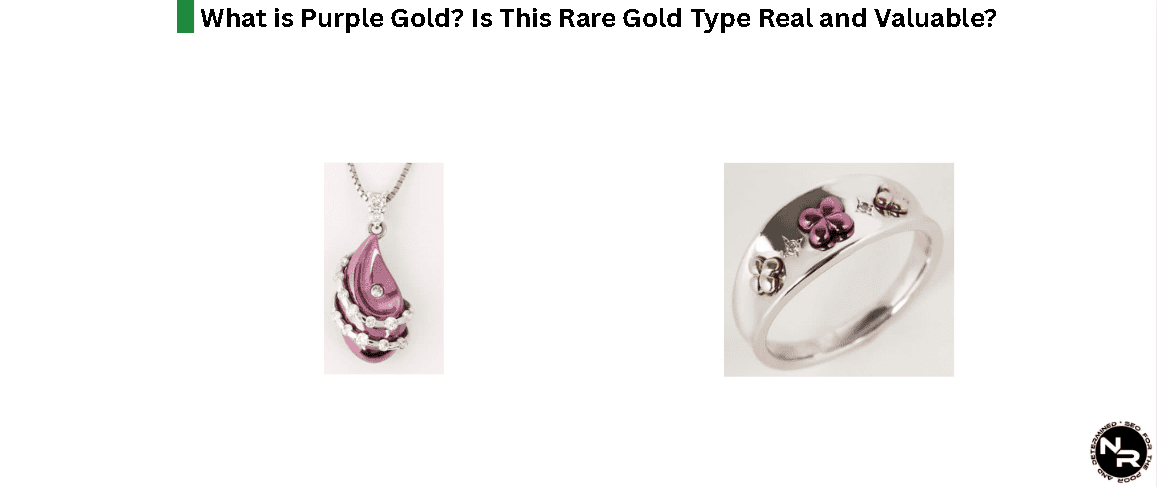
What is Purple Gold? Is it Real? What is it Made of?
Purple gold is an alloy of yellow gold and aluminum.
It’s a colored gold alloy made of 79% gold and 21% aluminum, forming the intermetallic compound AuAl2 and giving it a distinct purple hue.
Purple gold is a rare and challenging gold alloy to work with and this makes it one of the most expensive types of colored gold you can own.
Hey, you like purple gold which means you probably like real, yellow gold as well, right? Check this out next if you answered yes! Especially if you’re a proud American with a keen eye for economy.
Is Purple Gold Natural? Is Raw Purple Gold Real? Do Purple Gold Ores Exist? How is it Mined?
No, purple gold isn’t natural. It’s a manufactured alloy of yellow gold and aluminum.
Raw purple gold doesn’t exist and purple gold ores don’t exist as well. It’s not possible to mine purple gold. Instead, yellow gold and aluminum are mined separately and later alloyed into expensive jewelry items.
Is There Purple Gold Jewelry? Does it Exist?
Yes, purple gold jewelry exists and is a real type of jewelry type made from gold and aluminum (AuAl₂).
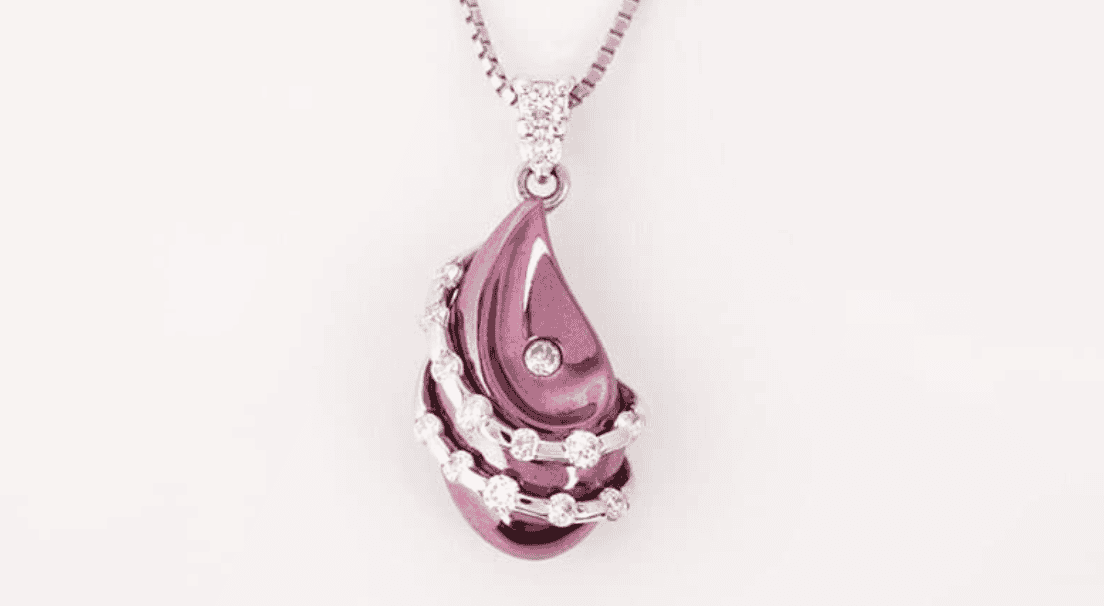
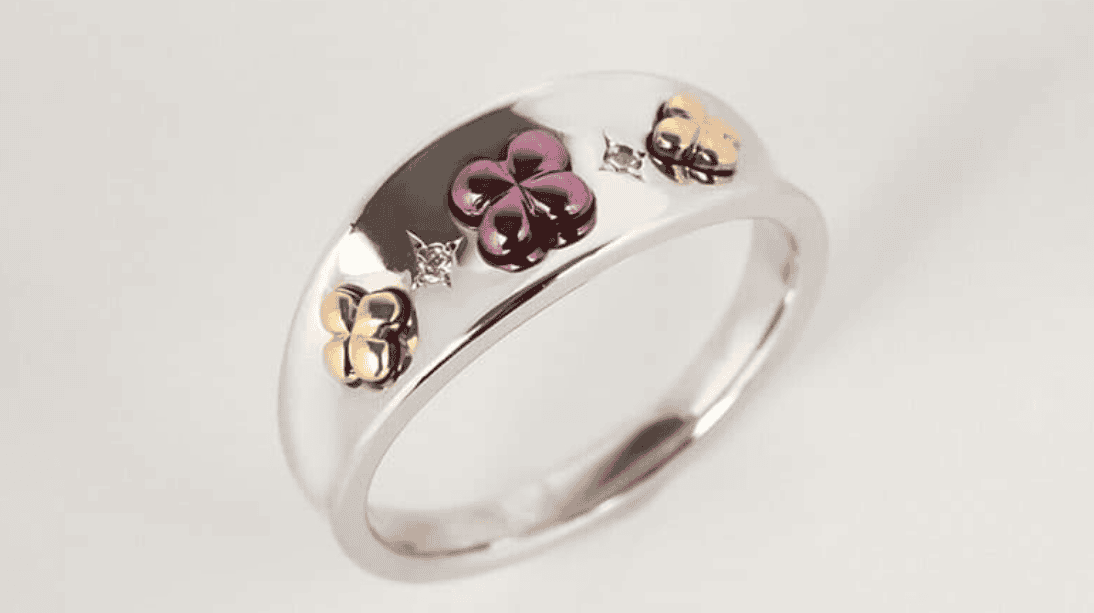
True to its name purple gold jewelry offers a distinct purple hue, but this gold alloy is brittle and very hard to work with making purple gold very expensive and only suitable for small gem-like inlays rather than solid pieces.
Here’re some examples of purple gold jewelry. You’ll notice there’s not a single jewelry piece made 100% from this alloy.
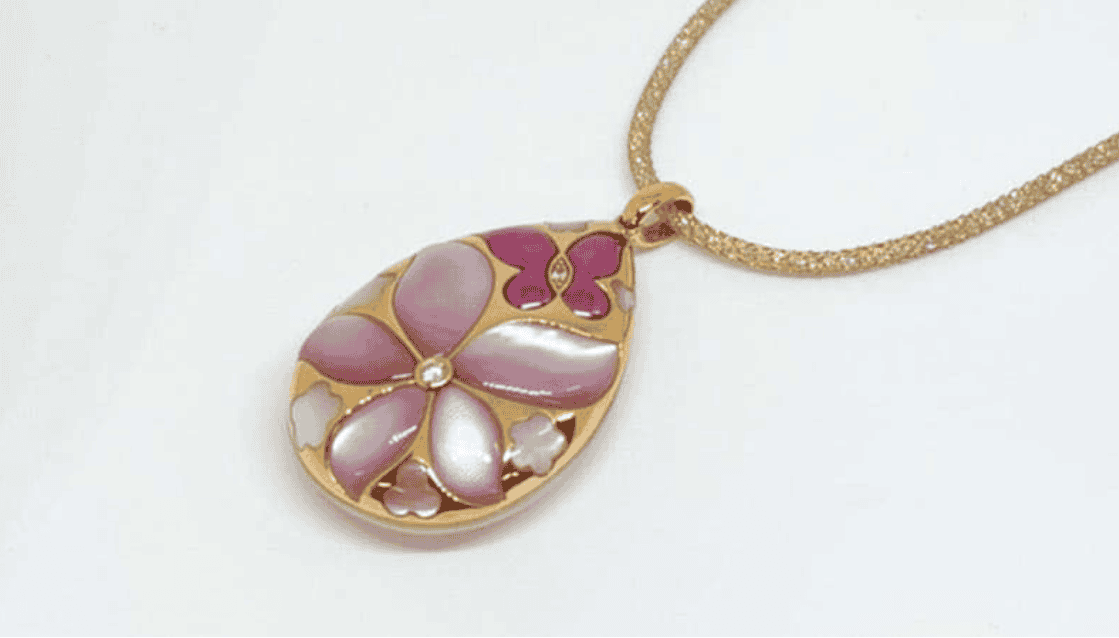

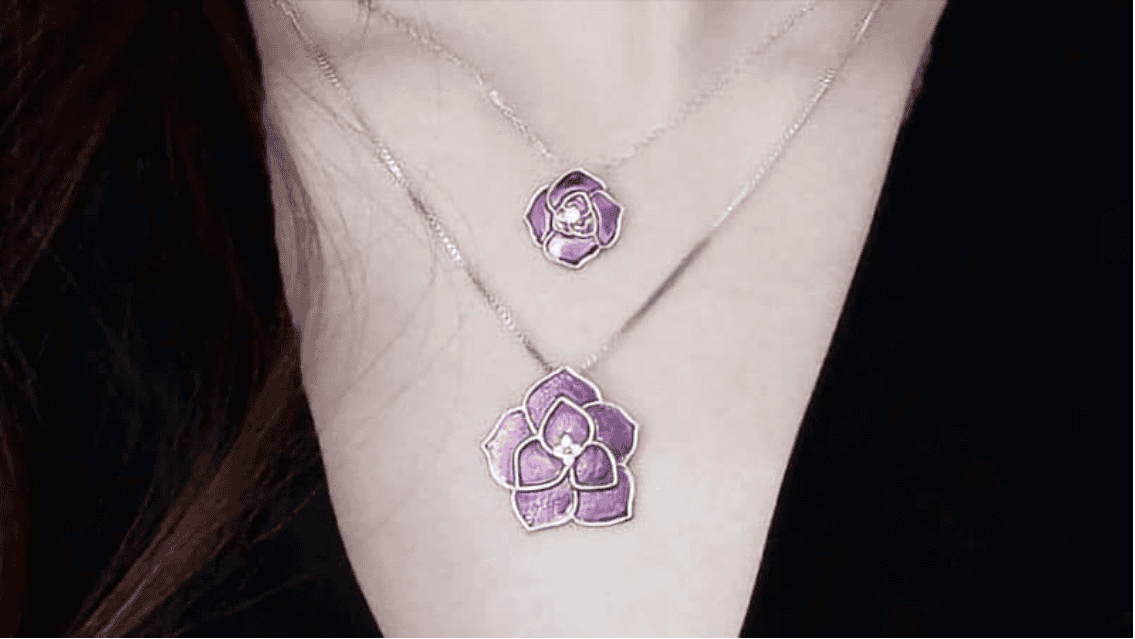
Note: purple gold is only available in 18k. It’s because 18k purple gold equals to 79% of yellow gold within the purple gold alloy.
This exact percentage is the purple gold alloy’s composition requirement because it’s been found that 21% of aluminum makes the alloy achieve the perfect desirable shade of purple.
Purple gold vermeil doesn’t exist because purple gold is way too fragile and brittle and can be shattered with a strong enough blow.
Other types of gold vermeil can’t be shattered so easily.
Hey, you like purple gold which means you probably like real, yellow gold as well, right? Check this out next if you answered yes! Especially if you’re a proud American with a keen eye for economy.
What’s the Value of Purple Gold? What is its Worth Per Gram?
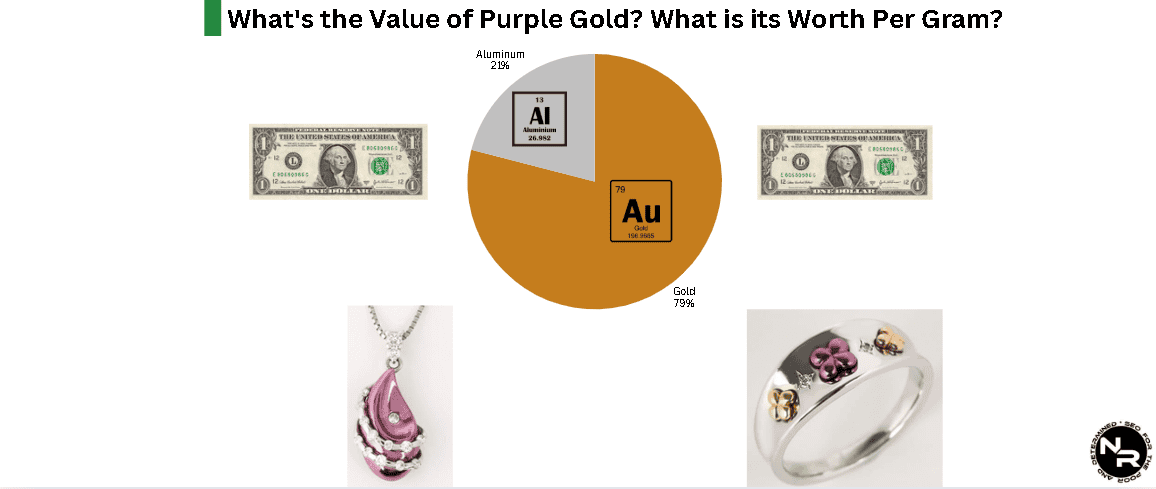
The worth of purple gold depends on the current gold market price which fluctuates from moment to moment based on the interplay of demand and supply.
To determine the worth of a purple gold item first you need to measure the weight of your jewelry item.
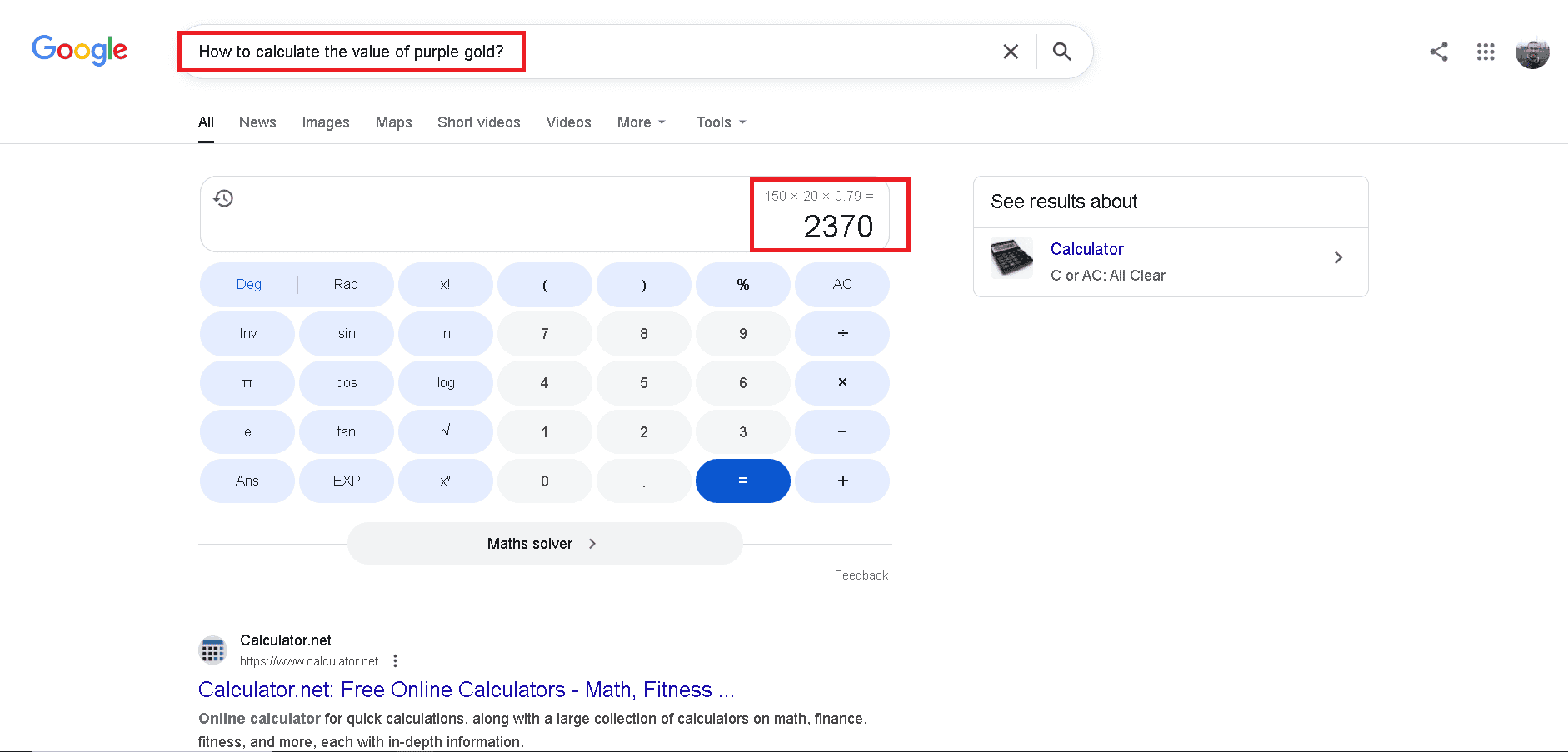
Next, multiply the item’s weight in grams with the current gold price per gram, and then multiply that by 0.79 (the amount of gold in purple gold alloy).
For example, let’s say the current price of gold is $150 per gram, and you have a purple gold necklace that weighs 20 grams.
The exact worth of that purple gold item would be $150 x 20 x 0.79=$2,370.
Hey, you like purple gold which means you probably like real, yellow gold as well, right? Check this out next if you answered yes! Especially if you’re a proud American with a keen eye for economy.
Is Purple Gold Magnetic or Not?
No, purple gold isn’t magnetic. It’s diamagnetic.
Purple gold is diamagnetic because yellow gold is diamagnetic and it represents 79% of the purple gold alloy.
Aluminum is a paramagnetic metal. This means it has a very slight attraction to a magnetic field.
Aluminum’s paramagnetic properties are so weak they might as well not exist. They’re not enough to magnetize a purple gold jewelry object, especially with so much diamagnetic gold present.

Hey, you like purple gold which means you probably like real, yellow gold as well, right? Check this out next if you answered yes! Especially if you’re a proud American with a keen eye for economy.
Is Purple Gold Hypoallergenic?
Yes, purple gold is hypoallergenic. Yellow gold is hypoallergenic and aluminum is safe for most people too.
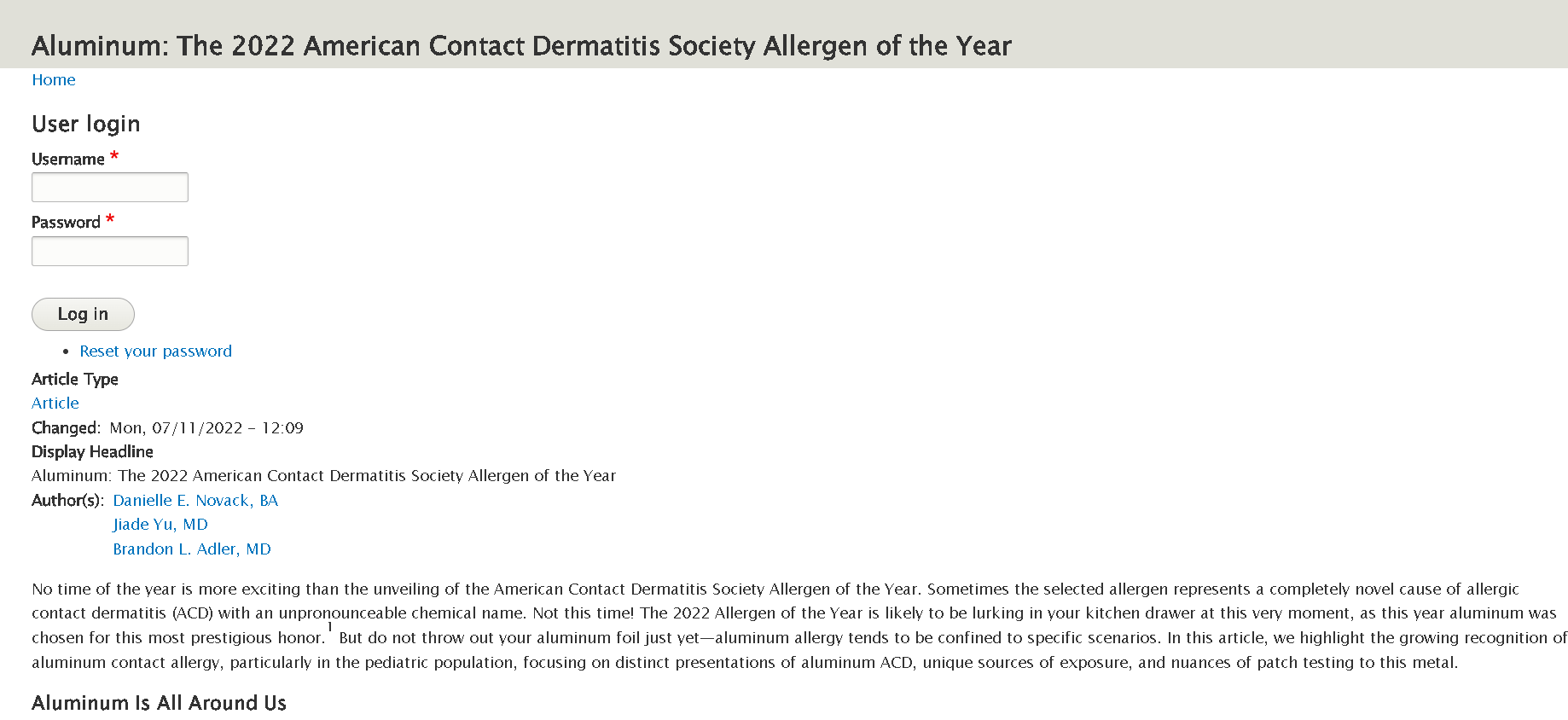
However, a study by JiaDe Yu, MD, a pediatric dermatologist specializing in allergic contact dermatitis at Massachusetts General Hospital in Boston showed in a recent study entitled “Aluminum: The 2022 American Contact Dermatitis Society Allergen of the Year” that 0.9% and up to 5% of children respond positively (meaning they’re allergic) to aluminum.
Hey, you like purple gold which means you probably like real, yellow gold as well, right? Check this out next if you answered yes! Especially if you’re a proud American with a keen eye for economy.
Does Purple Gold Tarnish? Does it Corrode, Rust and Oxidize?
Yes, purple gold tarnishes. Yellow gold within purple gold alloy doesn’t tarnish, but aluminum does.
Below are all the potential tarnishing-causing substances and their dangerous effect on purple gold jewelry items.
- Chlorine. Chlorine tarnishes and corrodes purple gold. Chlorine is a harsh chemical that reacts with aluminum and causes discoloration and weakening of the purple gold jewelry item’s structure.
- Bleach. Bleach both tarnishes and corrodes purple gold. Bleach is an alkaline solution and alkaline solutions affect aluminum within the purple gold alloy.
- Toothpaste. Toothpaste tarnishes and corrodes purple gold. The abrasive particles in toothpaste react with aluminum and cause discoloration and dulling of purple gold’s surface.
- Vinegar. Vinegar both tarnishes and corrodes purple gold. Undiluted vinegar is especially dangerous because its acids attack and disintegrate aluminum within the purple gold alloy.
- Hydrogen peroxide. Hydrogen peroxide tarnishes and corrodes purple gold. Hydrogen peroxide reacts with the aluminum’s protective oxide layer and degrades it over time. This process leads to color changes and structure degradation.
- Lemon juice. Lemon juice tarnishes purple gold. The acids within lemon juice chemically react with aluminum and dissolve its protective oxide layer. Over time this causes a permanent discoloration on purple jewelry items.
- Makeup. Makeup tarnishes purple gold because the chemicals within it react with aluminum and cause permanent discoloration. Makeup doesn’t corrode, rust or oxidize purple gold.
- Alcohol. Alcohol tarnishes purple gold. It reacts with yellow gold and aluminum in the alloy and repeated exposure leaves purple gold tarnished and even slightly corroded. Alcohol corrodes purple gold with repeated, long term exposure.
- Water. Purple gold doesn’t tarnish in water. However, long term exposure of purple gold to water causes it to corrode and lose its luster. Saltwater is especially dangerous to purple gold because chloride ions in saltwater destroy aluminum’s protective oxide layer leading to pitting and intergranular corrosion.
- Nitric acid. Nitric acid tarnishes and corrodes purple gold. Nitric acid is corrosive and purple gold jewelry can’t resist it for long before it starts degrading.
- Fire. Fire doesn’t tarnish and corrode purple gold. Both yellow gold and aluminum within the purple gold alloy are resistant to fire and hot temperatures.
Hey, you like purple gold which means you probably like real, yellow gold as well, right? Check this out next if you answered yes! Especially if you’re a proud American with a keen eye for economy.
Is it Possible to Turn Purple Gold into Yellow Gold?
Yes, it’s possible to turn purple gold into yellow gold.
First, you need to melt the purple gold alloy. Second, remove the aluminum from the alloy. Now you’re left with melted pure yellow gold.
Third, add additional metals to yellow gold to make it harder and more durable and reshape the new yellow gold alloy into a jewelry item of your choice.
Turing purple gold into yellow gold is possible, but I recommend you turn to a professional jeweler to help you.
Do Purple Gold Coins and Bars Exist? Is That Bullion Real?
No, purple gold coins and bars don’t exist. Purple gold is a novelty gold alloy in the precious metals bullion market and currently you can’t buy and own coins and bars made from it.
The closest product I found online is this 18k Solid Purple Gold Rectangle Cabochon – Flat | Genuine 750 Purple Gold Castings for Setting.
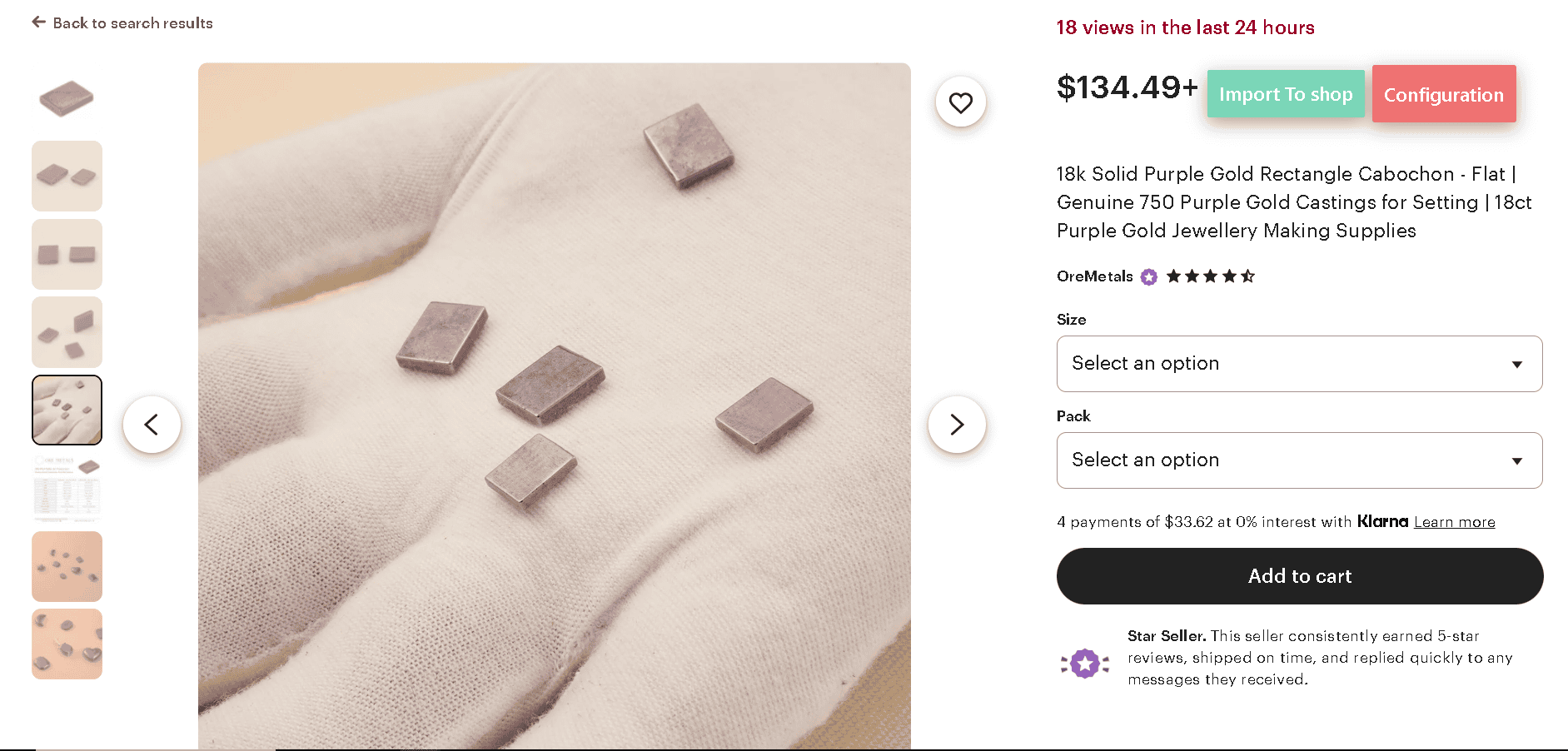
Another product I found is Purple Gold Pieces by Luciteria.

Hey, you like purple gold which means you probably like real, yellow gold as well, right? Check this out next if you answered yes! Especially if you’re a proud American with a keen eye for economy.
Is it Possible to Include Purple Gold as Part of a Gold IRA Account?
No, it’s not possible to include purple gold as part of a gold IRA account. Purple gold bullion isn’t IRA-approved.
IRA-approved precious metals are gold, silver, platinum and palladium. And only the purest bullion can be included in a gold IRA.
- Gold bullion must be 99.5% pure;
- Silver bullion must be at least 99.9% pure;
- Platinum bullion must be at least 99.95% pure;
- Palladium must be at least 99.95% pure.
Check out this U.S. company if you’re looking to buy IRA-eligible precious metals.
They’re the top gold investment company in the U.S. and working with them is safe, secure and fast.
They also waive all fees for 10 years for all new customers.
Download their free gold investment guide here!

Read my Augusta Precious Metals review here!
What are the Differences Between Purple Gold and Gray Gold?
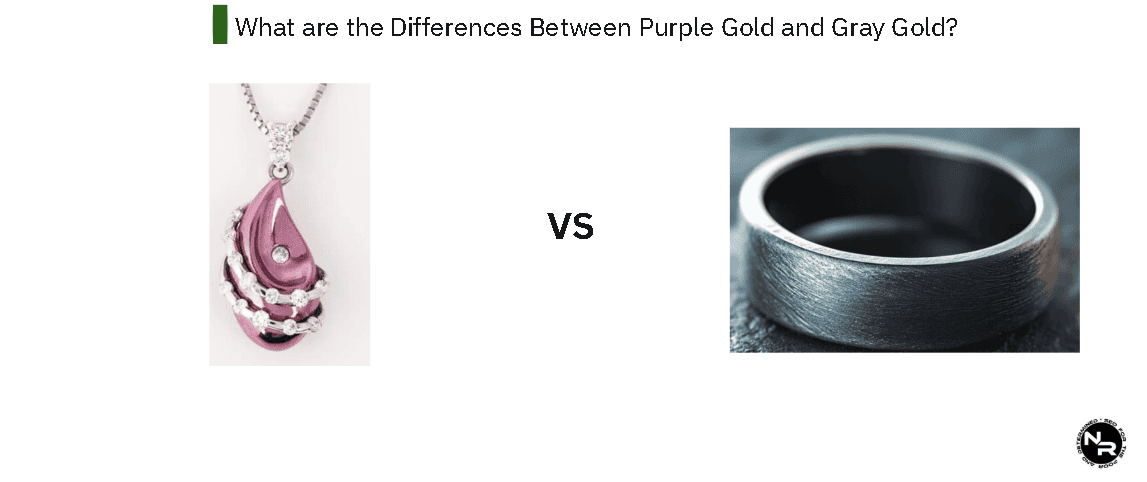
Purple gold and gray gold differ significantly in their composition, color, and physical properties, particularly their malleability and use in jewelry.
Purple gold is an intermetallic compound composed of 79% gold and 21% aluminum.
It has a distinct, rich violet or amethyst hue which comes from its unique crystalline structure.
It is notably brittle and hard, unlike traditional, malleable gold alloys and can shatter if struck sharply.
Purple gold is rarely used for entire jewelry pieces like rings or bracelets because of its fragility. Instead, it is often machined and faceted to be used as a “gemstone” inlay or a decorative accent within more robust gold jewelry.
Gray gold is a gold alloy created by mixing pure gold with other white or gray metals such as palladium,
silver, manganese, and/or copper. A common composition is 75% gold with 15% palladium and 10% silver and it has a muted, soft, silvery-gray appearance.
Gray gold is a malleable alloy, much like traditional yellow or white gold, making it suitable for standard jewelry-making techniques like shaping, soldering, and stone setting.
It’s popular in contemporary and men’s jewelry designs and is a durable alternative to white gold that often doesn’t require rhodium plating.
| Comparison | Purple Gold | Gray Gold |
|---|---|---|
| Composition | Yellow gold + aluminum. | Yellow gold +palladium+ low amounts of manganese and copper. |
| Color and tarnish resistance | Purple gold tarnishes because of the presence of aluminum. | Gray gold is highly resistant to tarnishing because both yellow gold and palladium are tarnish resistant. |
| Durability and scratch resistance | Purple gold is extremely brittle and not very durable and scratch resistant. | Gray gold is moderately durable and scratch resistant. |
| Cost | Purple gold is less expensive than gray gold because it doesn't contain any palladium, an extremely expensive precious metal. | Gray gold is more expensive than purple gold because the combination of yellow gold +palladium (gray gold) is worth more that yellow gold+ aluminum. |
| Skin tone compatibility | The best skin tone for purple gold is a cool skin tone or a neutral undertone. | The best skin tone for gray gold is natural warm, cool, or neutral undertones |
| Hypoallergenic properties | Purple gold is allergenic because aluminum is a known allergenic metal. | Gray gold is hypoallergenic because all constituent parts of gray gold alloy are hypoallergenic. |
Hey, you like purple gold which means you probably like real, yellow gold as well, right? Check this out next if you answered yes! Especially if you’re a proud American with a keen eye for economy.
What are the Differences Between Purple Gold and Blue Gold?
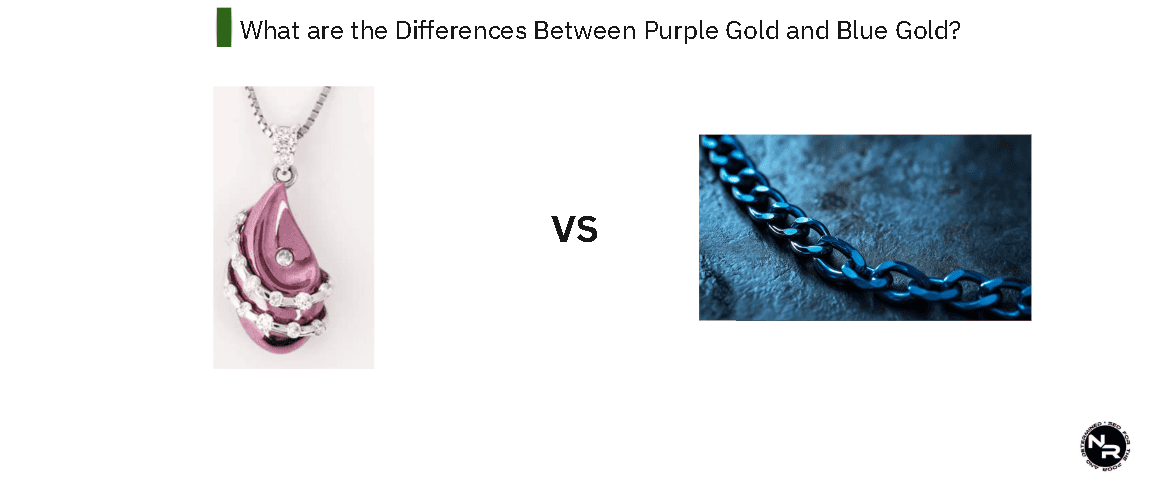
The primary difference between purple gold and blue gold is the alloying element used. Purple gold is an intermetallic compound of gold and aluminum, while blue gold is an intermetallic compound of gold and either indium or gallium.
Neither gold alloy occurs naturally and both are created through precise metallurgical processes involving melting and controlled cooling.
Due to their fragility, these colored golds can’t be worked using traditional jewelry-making techniques (like bending or reshaping).
Instead, they require specialized methods such as precision casting, laser welding, or being cut like a gemstone and set into more durable traditional gold.
Both are rare in commercial jewelry, making them more expensive than common gold alloys due to their complex production and the specialized skills required to work with them.
| Comparison | Purple Gold | Blue Gold |
|---|---|---|
| Composition | Yellow gold + aluminum. | Yellow gold +gallium or indium |
| Color and tarnish resistance | Purple gold tarnishes because of the presence of aluminum. | Blue gold tarnishes when blue gold is made from yellow gold and gallium. Blue gold doesn't tarnish when it's made from yellow gold and indium. |
| Durability and scratch resistance | Purple gold is extremely brittle and not very durable and scratch resistant. | Blue gold is extremely brittle and not very durable and scratch resistant. |
| Cost | Purple gold is more expensive than blue gold because it's harder to make. | Blue gold is less expensive than purple gold because it's slightly easier to make and work with from jewelry perspective. |
| Skin tone compatibility | The best skin tone for purple gold is a cool skin tone or a neutral undertone. | The best skin tone for blue gold is a cool skin tone or a neutral undertone. |
| Hypoallergenic properties | Purple gold is allergenic because aluminum is a known allergenic metal. | Blue gold is hypoallergenic to most people. Allergies to indium and gallium are rare, but possible. |
Hey, you like purple gold which means you probably like real, yellow gold as well, right? Check this out next if you answered yes! Especially if you’re a proud American with a keen eye for economy.
What are the Differences Between Purple Gold and Black Gold?
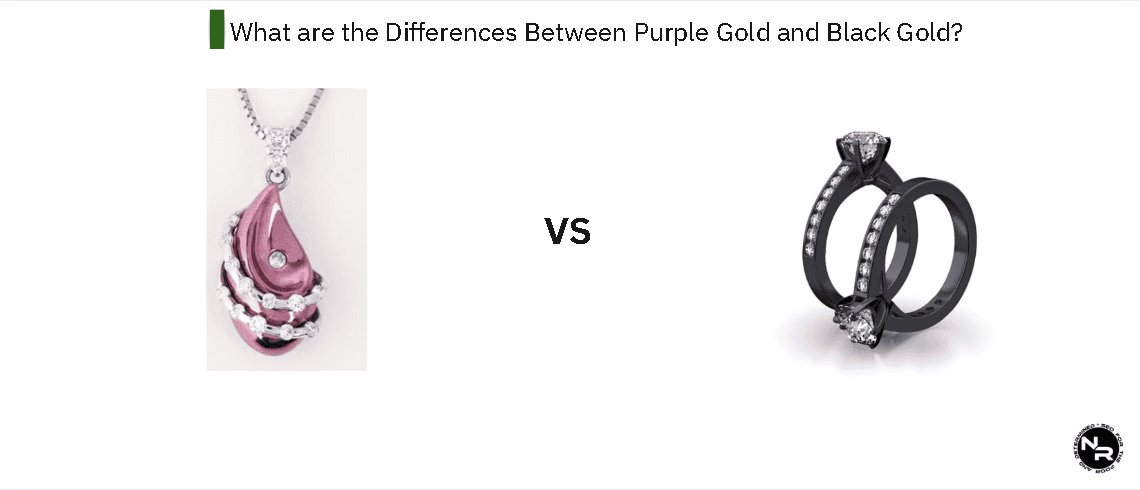
The main differences between purple gold and black gold are in their composition.
Purple is a gold-aluminum intermetallic compound, while black gold is a gold alloy made with superficial surface treatment.
| Comparison | Purple Gold | Black Gold |
|---|---|---|
| Composition | Yellow gold + aluminum. | Yellow gold coated with with a thin layer of a dark metal like rhodium or ruthenium. |
| Color and tarnish resistance | Purple gold tarnishes because of the presence of aluminum. | Black gold doesn't tarnish because its core is real gold, which doesn't tarnish. |
| Durability and scratch resistance | Purple gold is extremely brittle and not very durable and scratch resistant. | Black gold that has rhodium or ruthenium plating is exceptionally strong, durable and scratch resistant. Electroplated black gold scratches easily. |
| Cost | Purple gold is more expensive than black gold because it's harder to make and contains more pure gold than black gold. | Black gold is less expensive than purple gold because it's easier to make and contains less precious metal content. |
| Skin tone compatibility | The best skin tone for purple gold is a cool skin tone or a neutral undertone. | The best skin tone for black gold is natural warm, cool, or neutral undertones. |
| Hypoallergenic properties | Purple gold is allergenic because aluminum is a known allergenic metal. | Black gold is hypoallergenic. Yellow gold as base is hypoallergenic and both rhodium and ruthenium as coating are non-allergenic. |
Hey, you like purple gold which means you probably like real, yellow gold as well, right? Check this out next if you answered yes! Especially if you’re a proud American with a keen eye for economy.
What is Purple Gold? Is This Rare Gold Type Real and Valuable? Conclusion
Purple gold is an alloy of yellow gold and aluminum. The alloy is made of 79% gold and 21% aluminum, forming the intermetallic compound AuAl2.
Purple gold isn’t natural. It’s manufactured gold alloy that’s not magnetic, is hypoallergenic and that doesn’t easily tarnish, rust or corrode.
This specific composition gives purple gold a distinct purple hue. Purple gold is a rare and challenging gold alloy to create and work with and this makes it one of the most expensive types of colored gold you can own.
References:
- Question about Purple Gold- https://www.reddit.com/r/metallurgy/comments/p3pf11/question_about_purple_gold/
- Purple Gold for Ring- https://www.reddit.com/r/jewelers/comments/16rs9lv/purple_gold_for_ring/
- 7 Fascinating Facts About Purple Gold- https://jewelryinformer.com/gold/purple-gold/
- What Is Purple Gold: Your Ultimate Guide- https://www.nobbier.com/blogs/editorial/what-is-purple-gold
- The World’s Rarest Gold Alloys: Purple, Blue, and Black Gold- https://alromaizan.com/blog/the-worlds-rarest-gold-alloys-purple-blue-and-black-gold-LPFMr
- What is purple gold?- https://timeandtidewatches.com/what-is-purple-gold/
- Aluminum: The 2022 American Contact Dermatitis Society Allergen of the Year- https://medauth2.mdedge.com/content/aluminum-2022-american-contact-dermatitis-society-allergen-year
- 18k Solid Purple Gold Rectangle Cabochon – Flat | Genuine 750 Purple Gold Castings for Setting | 18ct Purple Gold Jewelry Making Supplies- https://www.etsy.com/listing/1663037993/18k-solid-purple-gold-rectangle-cabochon
- Purple Gold- https://www.luciteria.com/elements-for-sale/p/purple-gold
- What Is Blue Gold: Your Ultimate Guide- https://www.nobbier.com/blogs/editorial/what-is-blue-gold/
- What Is Black Gold: Your Ultimate Guide- https://www.nobbier.com/blogs/editorial/what-is-black-gold/

Nikola Roza
Nikola Roza is a blogger behind Nikola Roza- SEO for the Poor and Determined. He writes for bloggers who don't have huge marketing budget but still want to succeed. Nikola is passionate about precious metals IRAs and how to invest in gold and silver for a safer financial future. Learn about Nikola here.