Disclosure: Some of the links you’ll encounter are unique links. Click and buy something and I’ll earn some money, at zero expense to you. Thank you!
Real gold isn’t magnetic, it’s diamagnetic. This means pure gold has a weak repulsive force to magnets.
Pure 24k gold can’t be magnetized because its atoms prevent unpaired electrons from forming, and these atoms are necessary for magnetism. However, gold alloys become magnetic when mixed with ferromagnetic metals like iron, nickel and cobalt.
Lower karat gold (5k-14k) is more likely to be magnetic than higher karats (18k-24k) due to higher percentages of other metals. White gold can be magnetic if it contains nickel, while rose gold, red gold, green gold, purple gold, black gold, and blue gold are non-magnetic.
Gold-plated items become magnetic if the base metal underneath is magnetic and the plate is damaged.
Is Real Gold Magnetic? And When Can Gold Become Magnetic?
Real gold isn’t magnetic. It’s diamagnetic, which means real gold has a weak repulsive force to magnets. Gold isn’t magnetic because its atoms are arranged in a way that prevents unpaired electrons from forming. Unpaired electrons are necessary to create a magnetic field.
Gold becomes magnetic when mixed with other metals to create different types of colored gold (white gold, rose gold, black gold…) and different types of gold alloys used for making jewelry.
These colored gold types and gold alloys have or haven’t magnetic properties depending on the metals alloyed with gold. For example, white gold contains nickel in small amounts, but often just enough to make it magnetic.
Is it Possible to Test Gold Purity With Magnets?
Yes, it’s possible to test gold purity with magnets.
Pure gold is immune to magnets so any reaction tells you your gold item isn’t made of 100% gold.
For example, let’s say you bought some gold coins and bars from a gold IRA enabler called Augusta Precious Metals, (a premier US gold investment company). Take a store-bought magnet and bring it close to your coins and bars. The magnet shouldn’t touch the surface of your gold bullion.
You don’t have pure gold if coins and bars start to magnetize. And this is a problem if you bought IRA approved gold coins and bars which must be at least 99.5% pure.
Testing gold with magnets is an imperfect test, but worth taking because it’s easy and fast. Use it as preliminary test before taking your item to a jeweler for professional appraisal.
Read my guide to identifying fake gold in any shape and form to learn more.

Gold’s magnetic properties is a fascinating topic to learn about. Check this out next once you’re done reading. It’s crucial info you must have an American citizen.
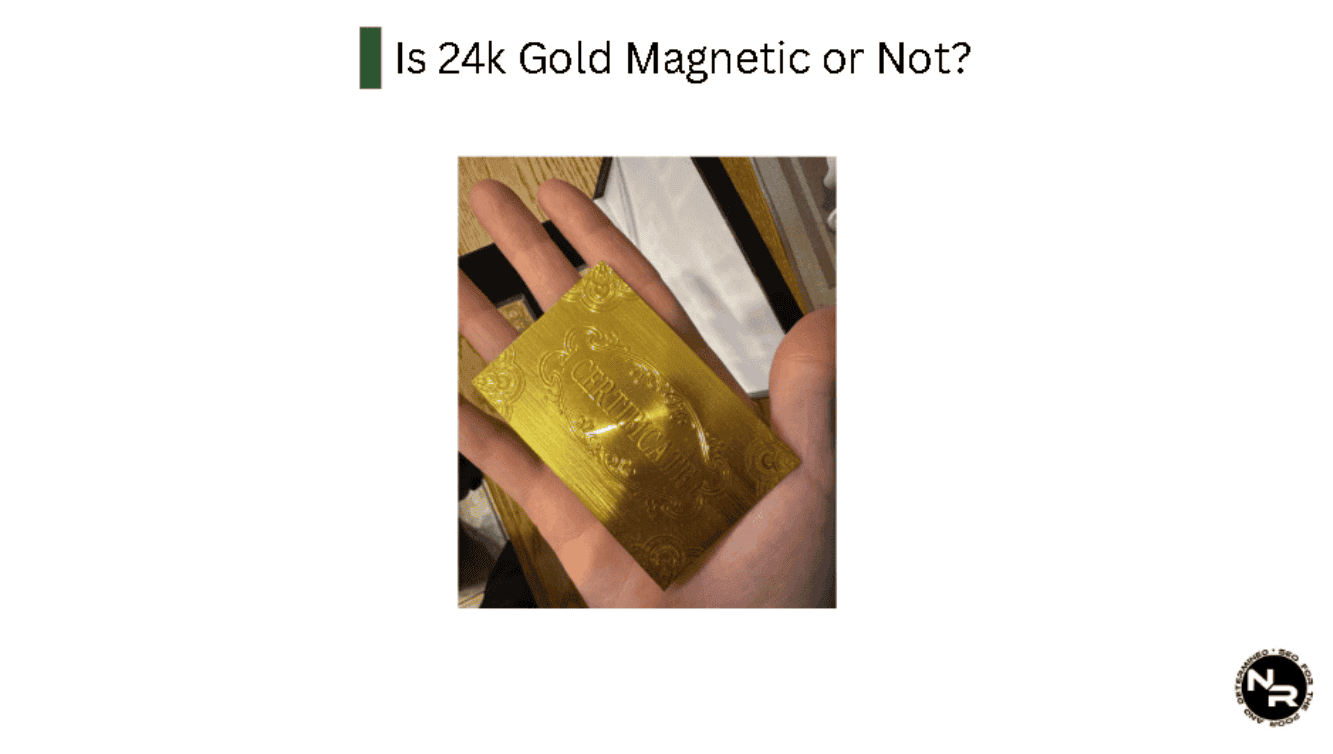
Is 24K Gold Magnetic or Not?
No, 24k gold isn’t magnetic. It’s diamagnetic.
Pure gold (24k gold) isn’t attracted to a magnet in normal circumstances because its atoms are arranged in a way that prevents unpaired electrons from forming. No unpaired electrons means no magnetism.
24K gold is 100% authentic gold, meaning it contains no other metals. It’s also known as .999 gold because it’s at least 99.9% pure.
I mention this because all other gold karats are potentially magnetic depending on the presence of other metals in the alloy.
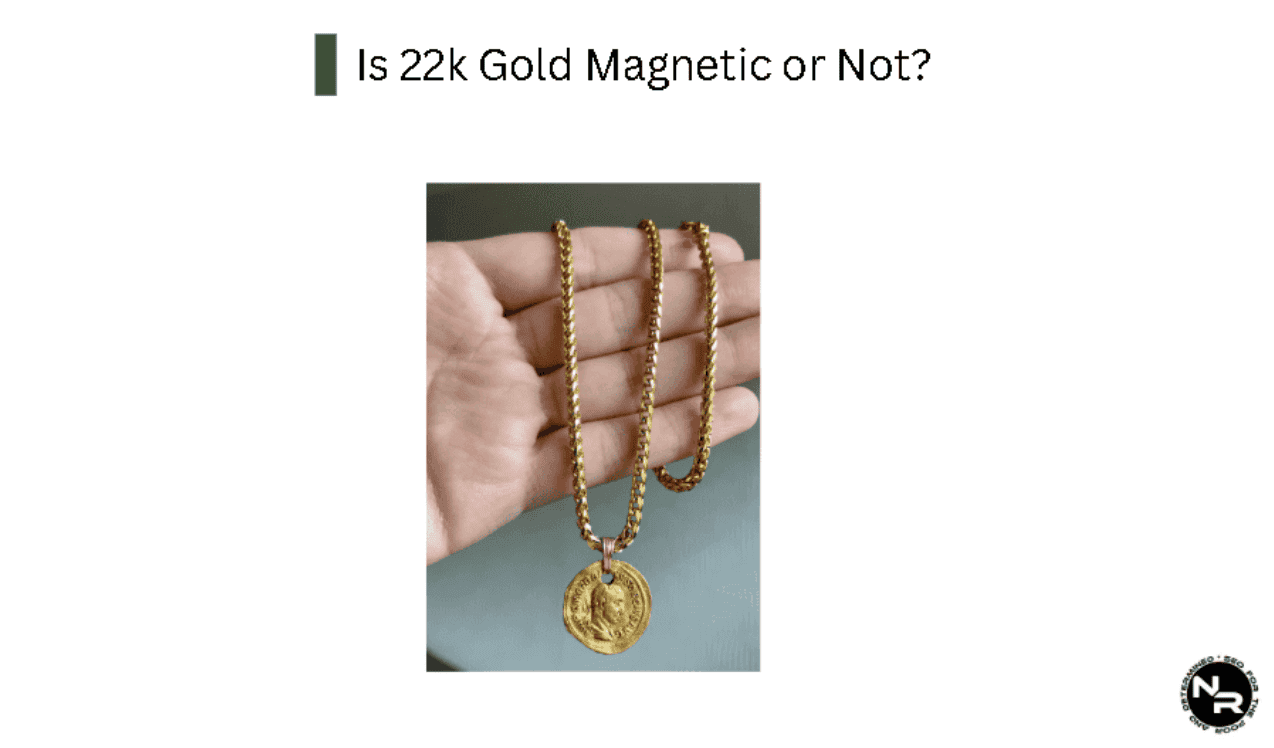
Is 22K Gold Magnetic or Not?
No, 22k gold isn’t magnetic when pure gold is alloyed with other non-magnetic materials like silver, palladium, rhodium… 22k gold is also not magnetic when pure gold is alloyed with ferromagnetic metals like iron, nickel and cobalt.
Because 22k gold is composed of 91.67% pure gold and 8.33% other metals. In 22k gold the percentage of non-magnetic pure gold is very high and the percentage of ferromagnetic metals is too low to cause a noticeable magnetic effect.
Gold’s magnetic properties is a fascinating topic to learn about. Check this out next once you’re done reading. It’s crucial info you must have an American citizen.
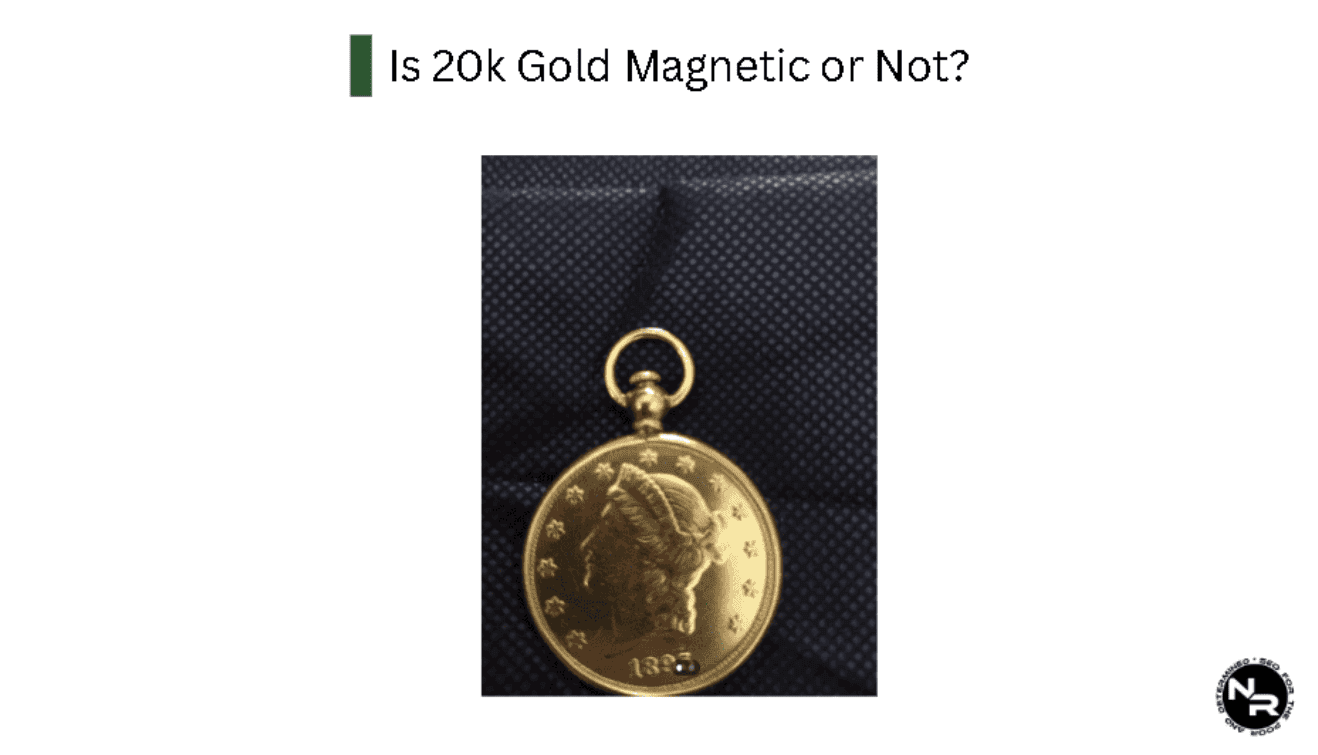
Is 20K Gold Magnetic or Not?
No, 20k gold isn’t magnetic when pure gold is alloyed with other non-magnetic materials like silver, palladium, rhodium… 20k gold becomes magnetic when pure gold is alloyed with ferromagnetic metals like iron, nickel and cobalt.
20k gold contains a minimum of 83.3% pure gold and 16.7% other metals. This means 20k gold that’s magnetic will be less so than 18k gold and all other gold karats below it.
It’s because 18k, 14k, 12k, 10k, 9k, 8k, 6k and 5k gold contain much higher percentage of ferromagnetic metals than 20k gold.
20k gold is more magnetic than 22k and 24k gold.
Is 18K Gold Magnetic or Not?
No, 18k gold isn’t magnetic when pure gold is alloyed with other non-magnetic materials like silver, palladium, rhodium…
18k gold becomes magnetic when pure gold is alloyed with ferromagnetic metals like iron, nickel and cobalt. 18k gold contains a minimum of 75% pure gold and 25% other metals. This means 18k gold that’s magnetic will be less so than 14k gold and all other gold karats below it.
Because 14k, 12k, 10k, 9k, 8k, 6k and 5k gold contain much higher percentage of ferromagnetic metals than 18k gold.
18k gold is more magnetic than 20k, 22k and 24k gold.
Gold’s magnetic properties is a fascinating topic to learn about. Check this out next once you’re done reading. It’s crucial info you must have an American citizen.
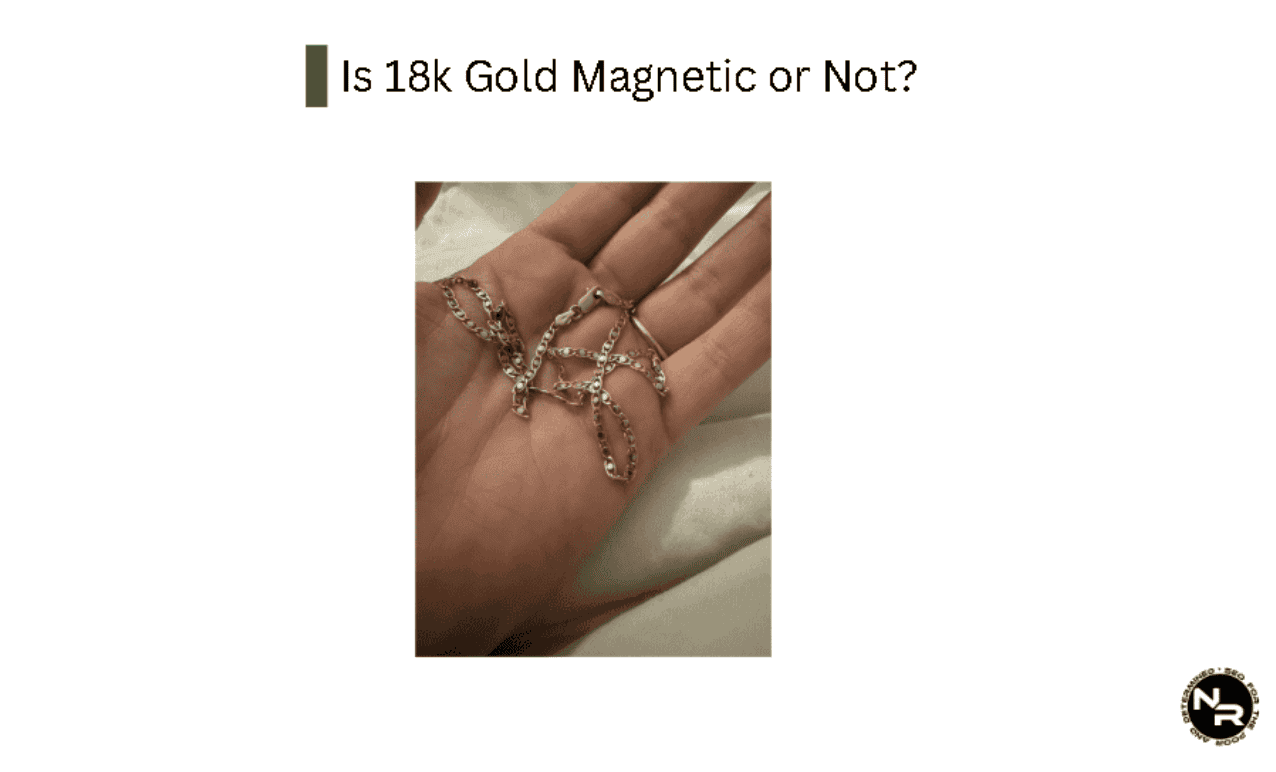
Is 14K Gold Magnetic or Not?
No, 14k gold isn’t magnetic when real gold is alloyed with other non-magnetic materials like authentic platinum, silver, palladium, rhodium…
14K gold becomes magnetic when real gold is mixed with ferromagnetic metals like iron, nickel and cobalt.
14k gold contains a minimum of 58.3% pure gold and 41.7% other metals. This means 14k gold that’s magnetic will be less so than 12k gold and all other gold karats below it. Because 12k, 10k, 9k, 8k, 6k and 5k gold contain much higher percentage of ferromagnetic metals than 14k gold.
14k gold is more magnetic than 18k, 20k, 22k and 24k gold.
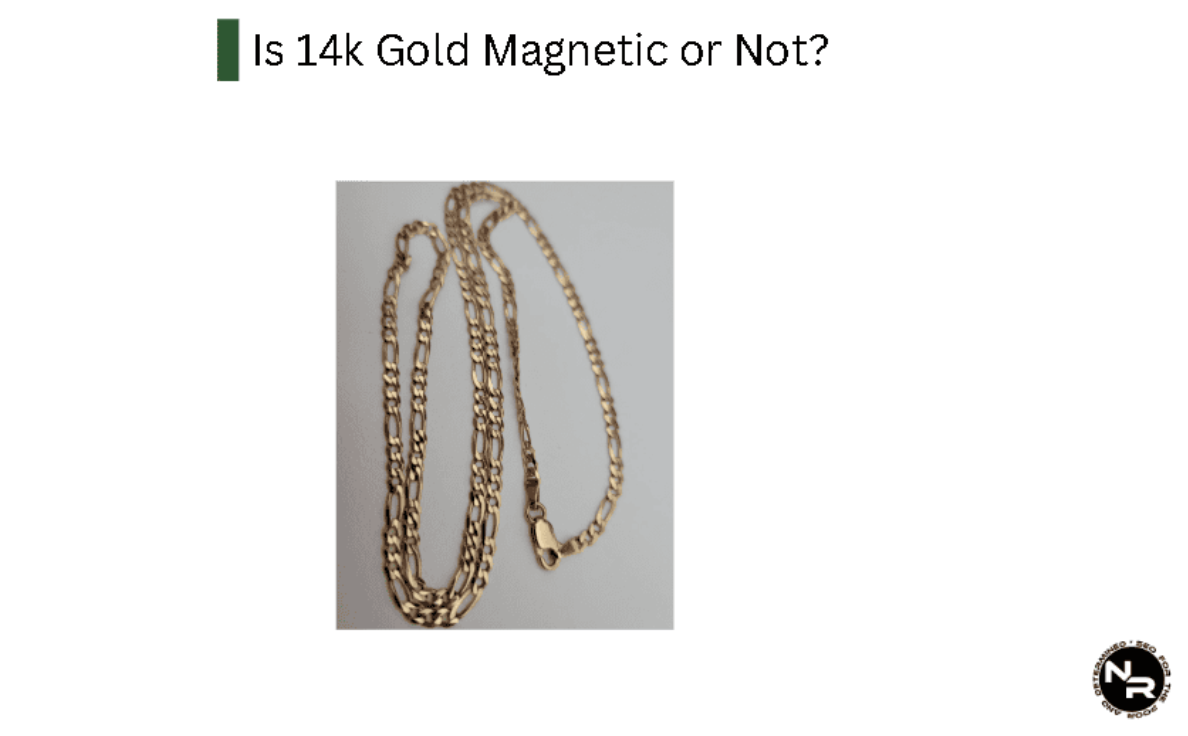
Is 12K Gold Magnetic or Not?
No, 12k gold isn’t magnetic when gold is alloyed with other non-magnetic materials like authentic silver, palladium and rhodium.
12k gold becomes magnetic when gold is mixed with ferro-magnetic metals like iron, nickel and cobalt.
12k gold contains a minimum of 50% pure gold and 50% other metals. This means 12k gold that’s magnetic will be less so than 10k gold and all other gold karats below it. Because 10k, 9k, 8k, 6k and 5k gold contain much higher percentage of ferromagnetic metals than 12k gold.
12k gold is more magnetic than 14k, 18k, 20k, 22k and 24k gold.
Gold’s magnetic properties is a fascinating topic to learn about. Check this out next once you’re done reading. It’s crucial info you must have an American citizen.
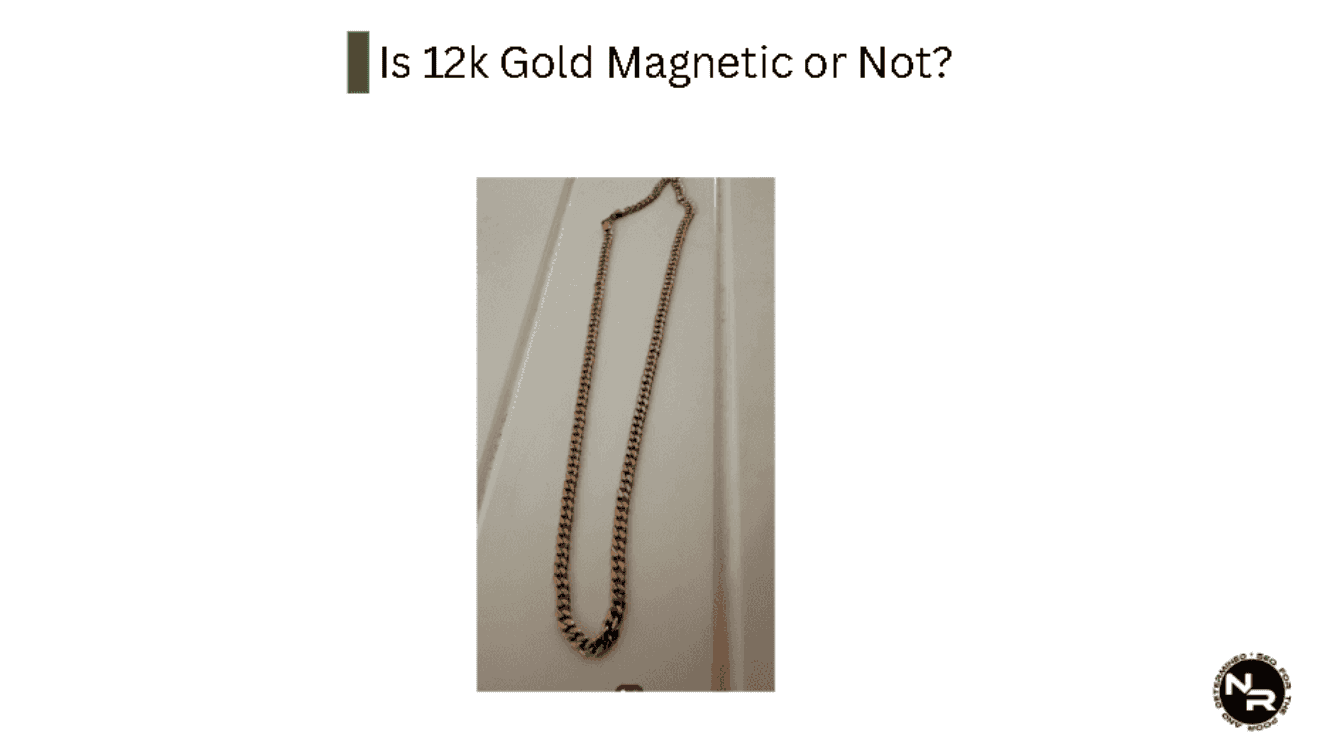
Is 10K Gold Magnetic or Not?
No, 10k gold isn’t magnetic when gold is alloyed with other non-magnetic materials like authentic silver, palladium and rhodium.
10k gold becomes magnetic when gold is mixed with ferro-magnetic metals like iron, nickel and cobalt.
10k gold contains a minimum of 41.7% pure gold and 58.3% other metals. This means 10k gold that’s magnetic will be less so than 9k gold and all other gold karats below it. Because 9k, 8k, 6k and 5k gold contain much higher percentage of ferromagnetic metals than 10k gold.
10k gold is more magnetic than 12k, 14k, 18k, 20k, 22k and 24k gold.
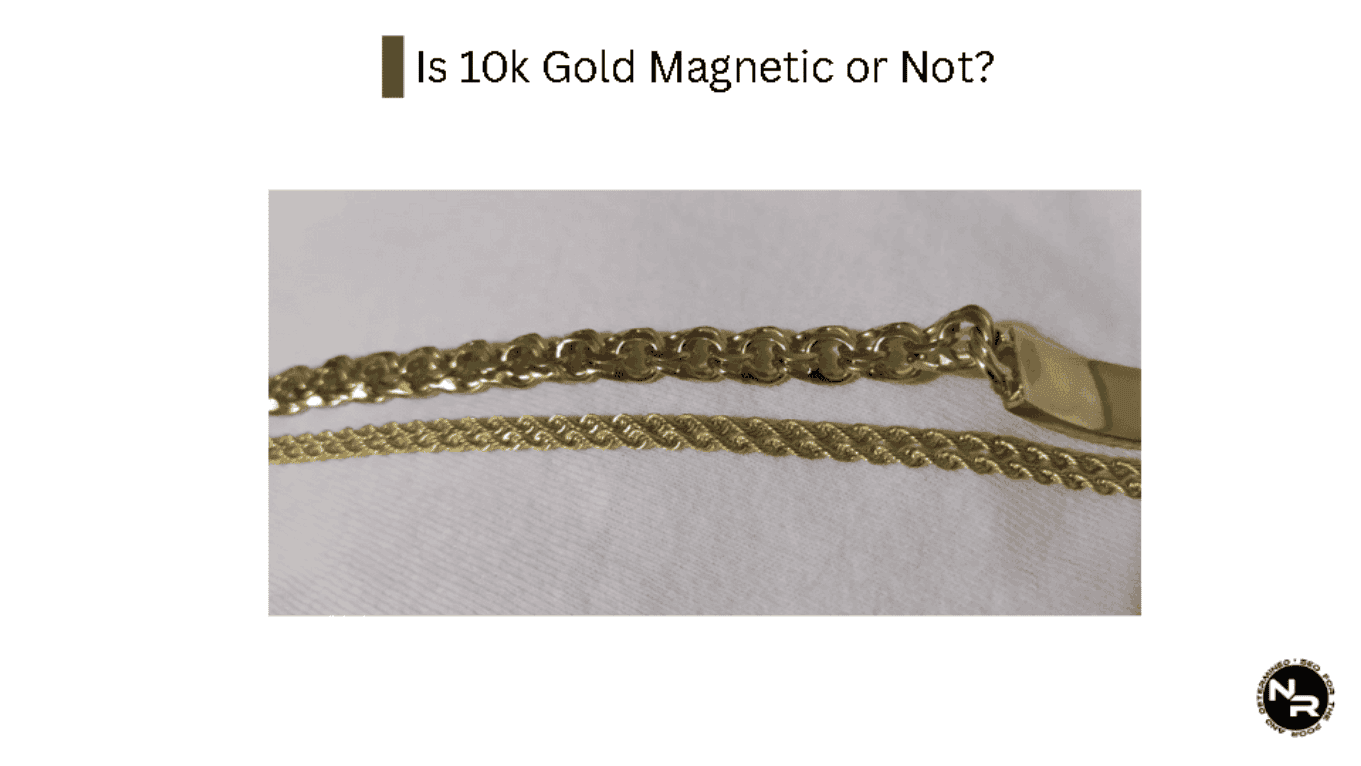
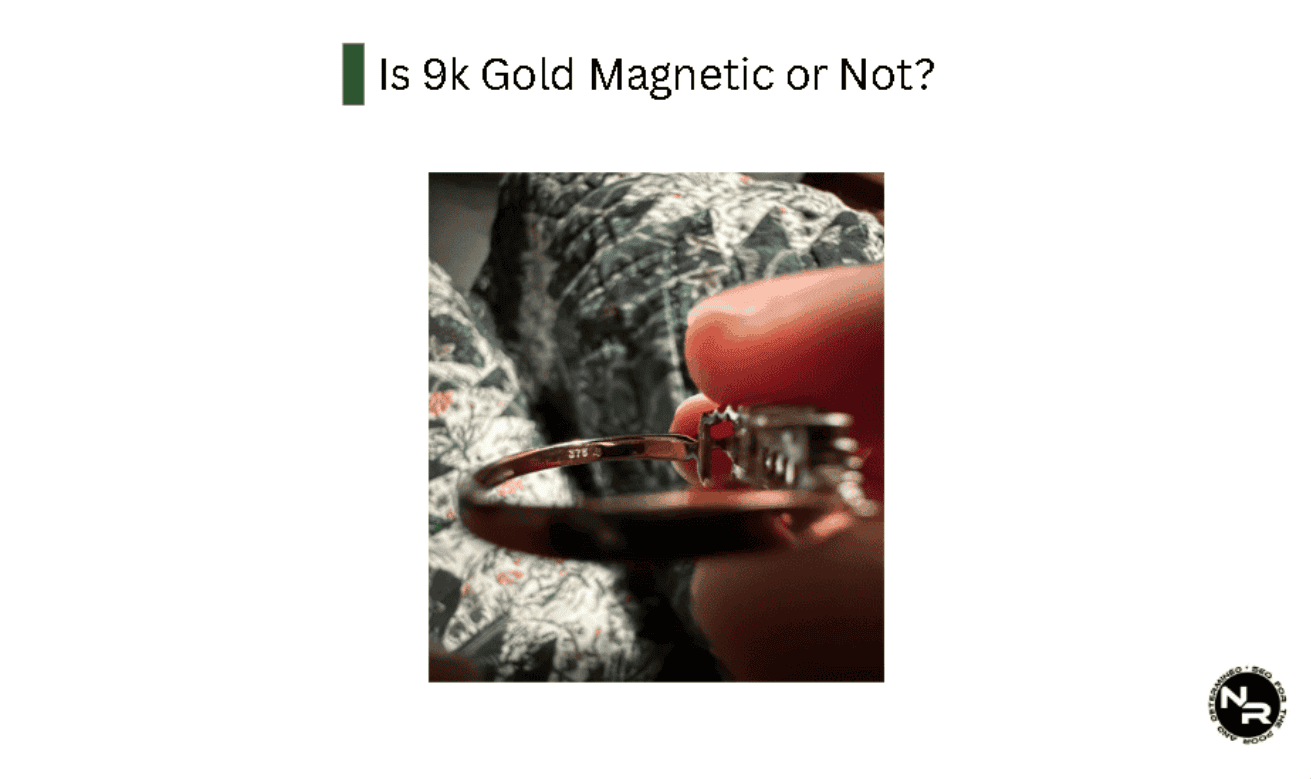
Is 9K Gold Magnetic or Not?
No, 9k gold isn’t magnetic when yellow gold is alloyed with other non-magnetic materials like silver, palladium, platinum and rhodium.
9k gold becomes magnetic when gold is mixed with ferro-magnetic metals like iron, nickel, cobalt and some stainless steel forms.
9k gold contains a minimum of 37.5% pure gold and 62.5% other metals. This means 9k gold that’s magnetic will be less so than 8k gold and all other gold karats below it. Because 8k, 6k and 5k gold contain much higher percentage of ferromagnetic metals than 9k gold.
9k gold is more magnetic than 10k, 12k, 14k, 18k, 20k, 22k and 24k gold.
Gold’s magnetic properties is a fascinating topic to learn about. Check this out next once you’re done reading. It’s crucial info you must have an American citizen.
Is 8K Gold Magnetic or Not?
No, 8k gold isn’t magnetic when yellow gold is alloyed with other non-magnetic materials like silver, palladium, platinum and rhodium.
8k gold becomes magnetic when gold is mixed with ferro-magnetic metals like iron, nickel, cobalt and some stainless steel forms.
8k gold contains a minimum of 33.3% pure gold and 66.7% other metals. This means 8k gold that’s magnetic will be less so than 6k gold and all other gold karats below it. Because 6k and 5k gold contain much higher percentage of ferromagnetic metals than 8k gold.
8k gold is more magnetic than 9k 10k, 12k, 14k, 18k, 20k, 22k and 24k gold.
Is 6K Gold Magnetic or Not?
No, 6k gold isn’t magnetic when yellow gold is alloyed with other non-magnetic materials like silver, palladium, platinum and rhodium.
6k gold becomes magnetic when gold is mixed with ferro-magnetic metals like iron, nickel, cobalt and some forms of stainless steel. 6k gold contains a minimum of 25% pure gold and 75% other metals. This means 6k gold that’s magnetic will be less so than 5k gold and all other gold karats below it. Because 5k gold contains much higher percentage of ferromagnetic metals than 6k gold.
6k gold is more magnetic than 8k, 9k 10k, 12k, 14k, 18k, 20k, 22k and 24k gold.
Gold’s magnetic properties is a fascinating topic to learn about. Check this out next once you’re done reading. It’s crucial info you must have an American citizen.
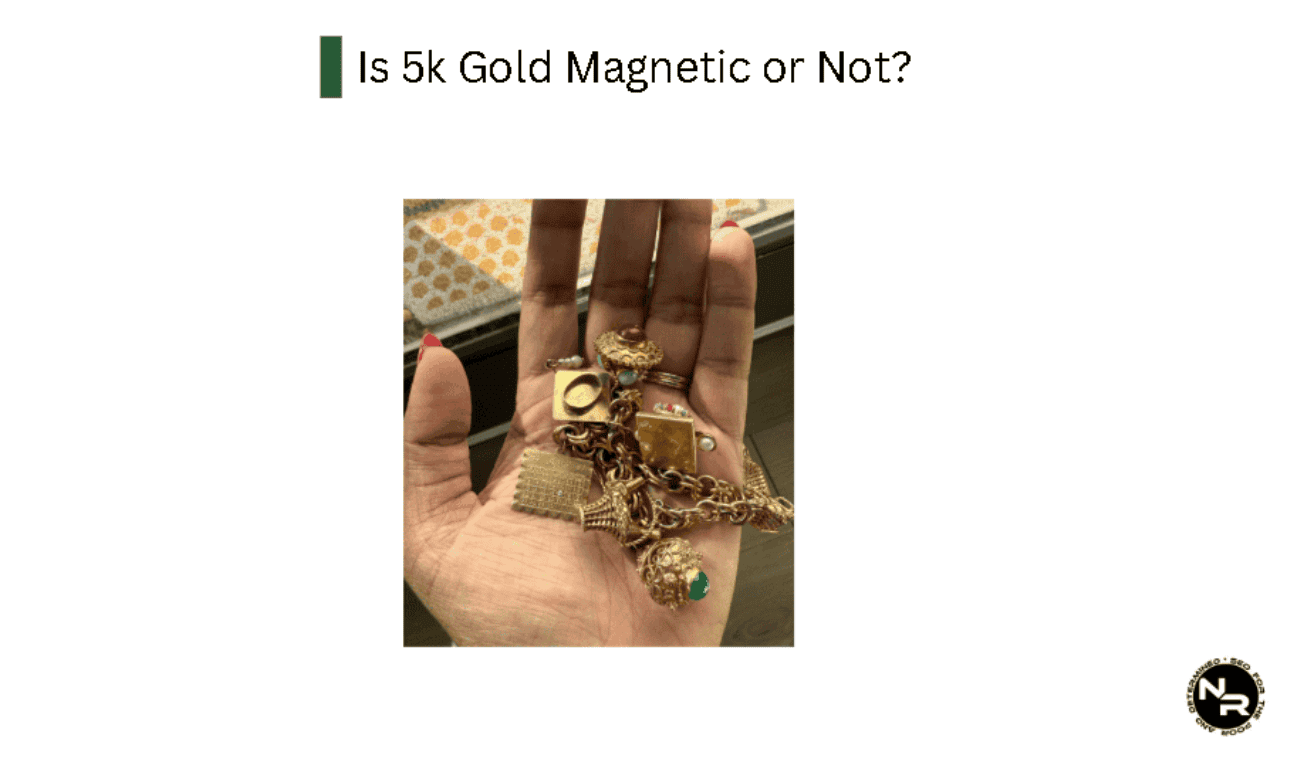
Is 5K Gold Magnetic or Not?
No, 5k gold isn’t magnetic when yellow gold is alloyed with other non-magnetic materials like silver, palladium, platinum and rhodium.
5k gold becomes magnetic when gold is mixed with ferro-magnetic metals like iron, nickel, cobalt and some stainless steel forms.
5k gold contains a minimum of 20.85% pure gold and 79.15% other metals. This means 5k gold that’s magnetic will be less so than all other gold karats below it. Because lower gold karats contains much higher percentage of ferromagnetic metals than 5k gold.
5k gold is more magnetic than 6k, 8k, 9k 10k, 12k, 14k, 18k, 20k, 22k and 24k gold.
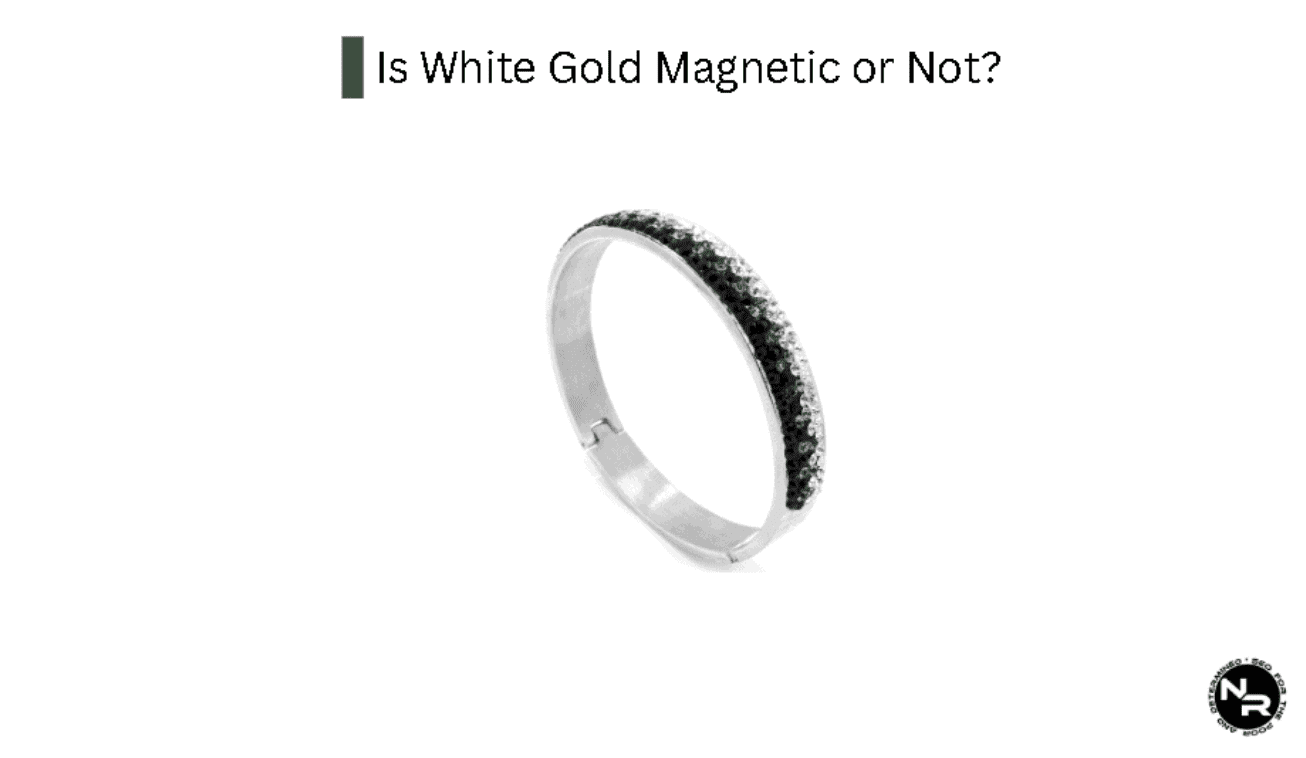
Is White Gold Magnetic or Not?
White gold isn’t magnetic when real gold is alloyed with authentic palladium or silver. It’s because palladium isn’t magnetic, and neither is silver.
White gold becomes magnetic when yellow gold is alloyed with nickel. The amount of nickel in the white gold alloy dictates how magnetic white gold will be. 5% of nickel in the alloy doesn’t make white gold jewelry magnetic. 25%+ nickel content makes solid white gold jewelry (and white gold vermeil) visibly responsive to magnets.
Gold’s magnetic properties is a fascinating topic to learn about. Check this out next once you’re done reading. It’s crucial info you must have an American citizen.
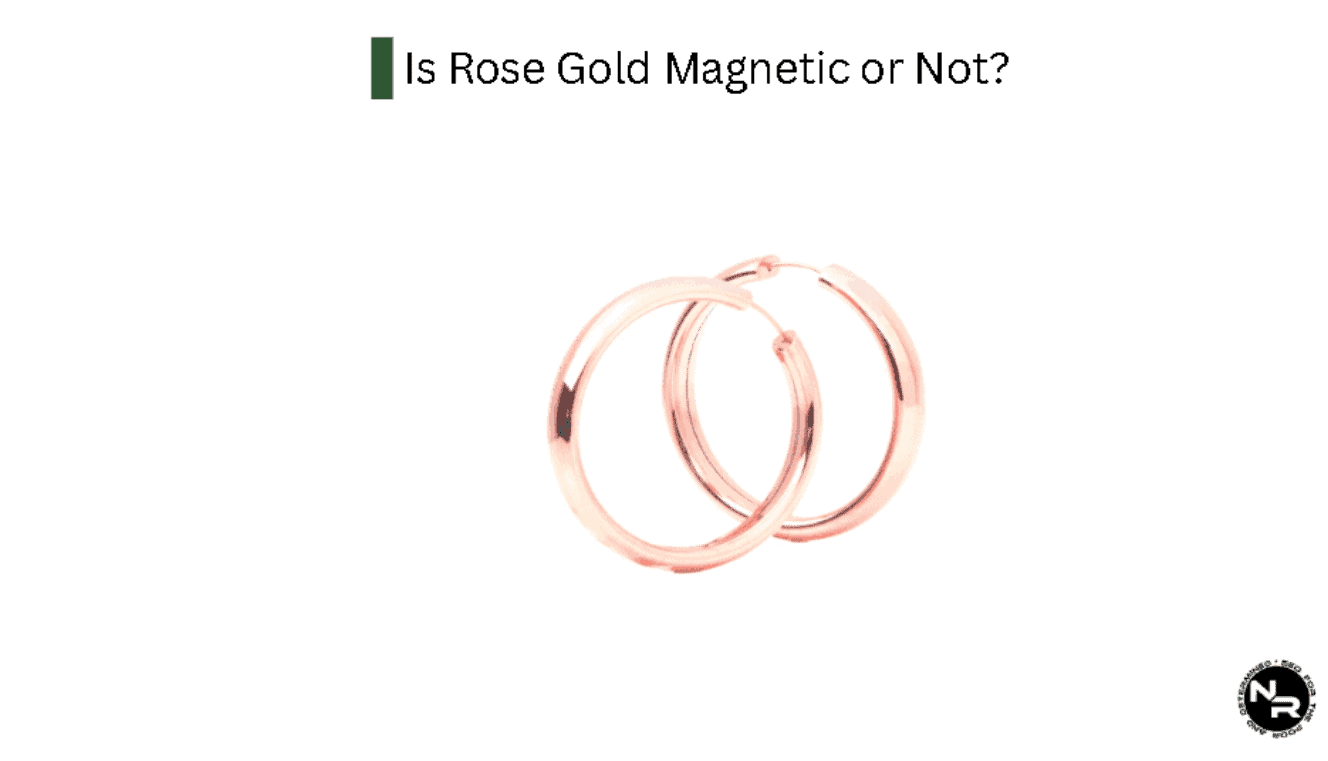
Is Rose Gold Magnetic?
No, rose gold isn’t magnetic because rose gold is an alloy made from non-magnetic yellow gold and copper.
Typical rose gold alloy is 75% gold and 25% copper. This alloy is known as 18k rose gold. The higher the copper content, the more pinkish-red the color (rose gold is also called pink gold). Rose gold vermeil is also non-magnetic because of it’s alloy composition (yellow gold+ copper above a sterling silver base).
Is Red Gold Magnetic?
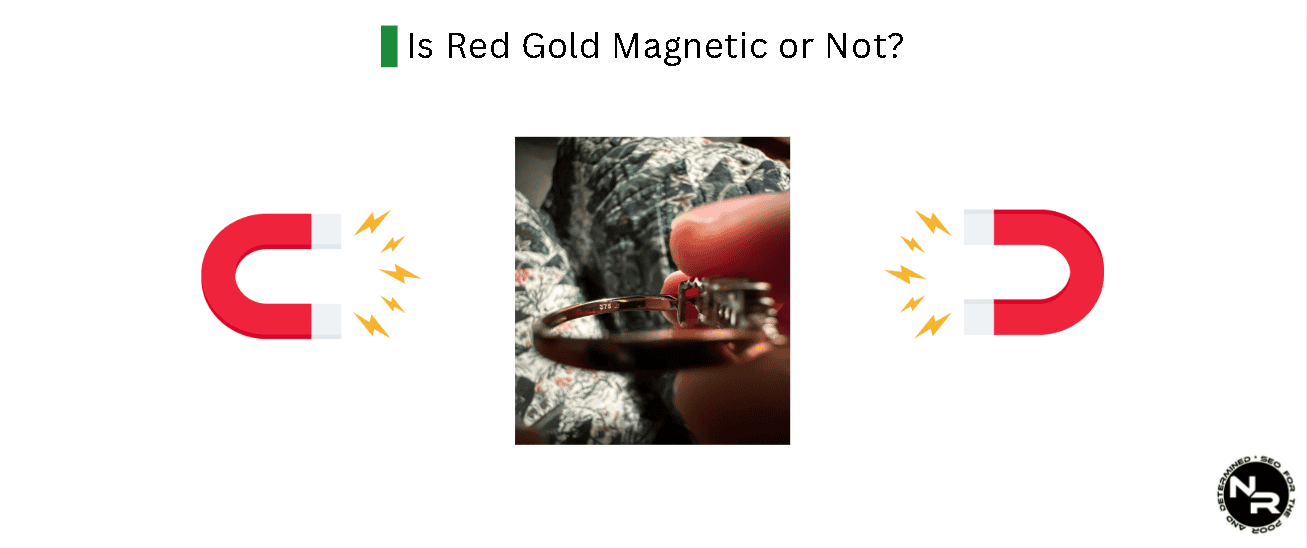
No, red gold isn’t magnetic, it’s diamagnetic. Red gold is an alloy of yellow gold, copper and small amounts of silver. Yellow gold, copper and silver are all diamagnetic metals making red gold diamagnetic.
Red gold is a variant of rose gold. The difference between the two alloys is that red gold as a gold alloy contains significantly more copper than rose gold.
Gold’s magnetic properties is a fascinating topic to learn about. Check this out next once you’re done reading. It’s crucial info you must have an American citizen.
Is Green Gold Magnetic?
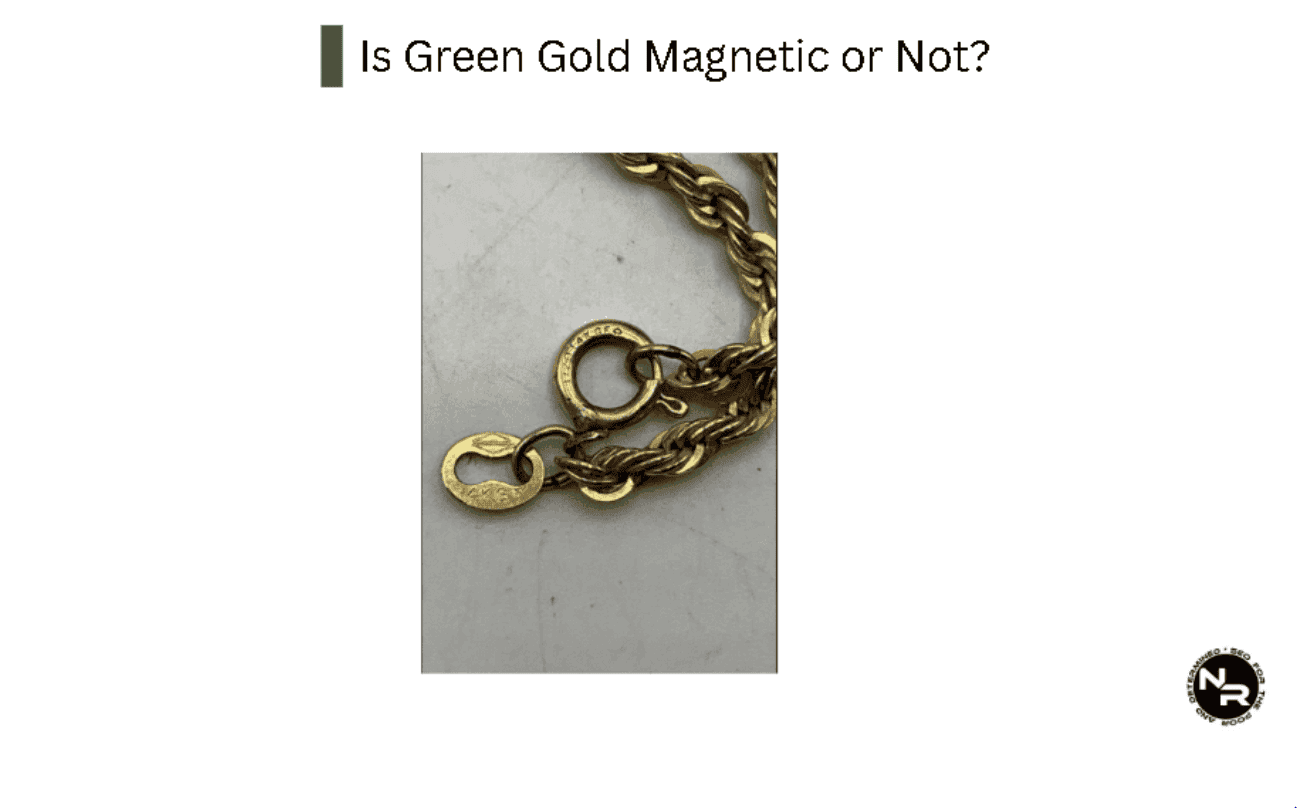
No, green gold isn’t magnetic. It’s diamagnetic.
Green gold, also known as electrum, is a naturally occurring alloy of gold and silver. Neither gold nor silver are magnetic (both metals are diamagnetic), hence green gold isn’t magnetic too.
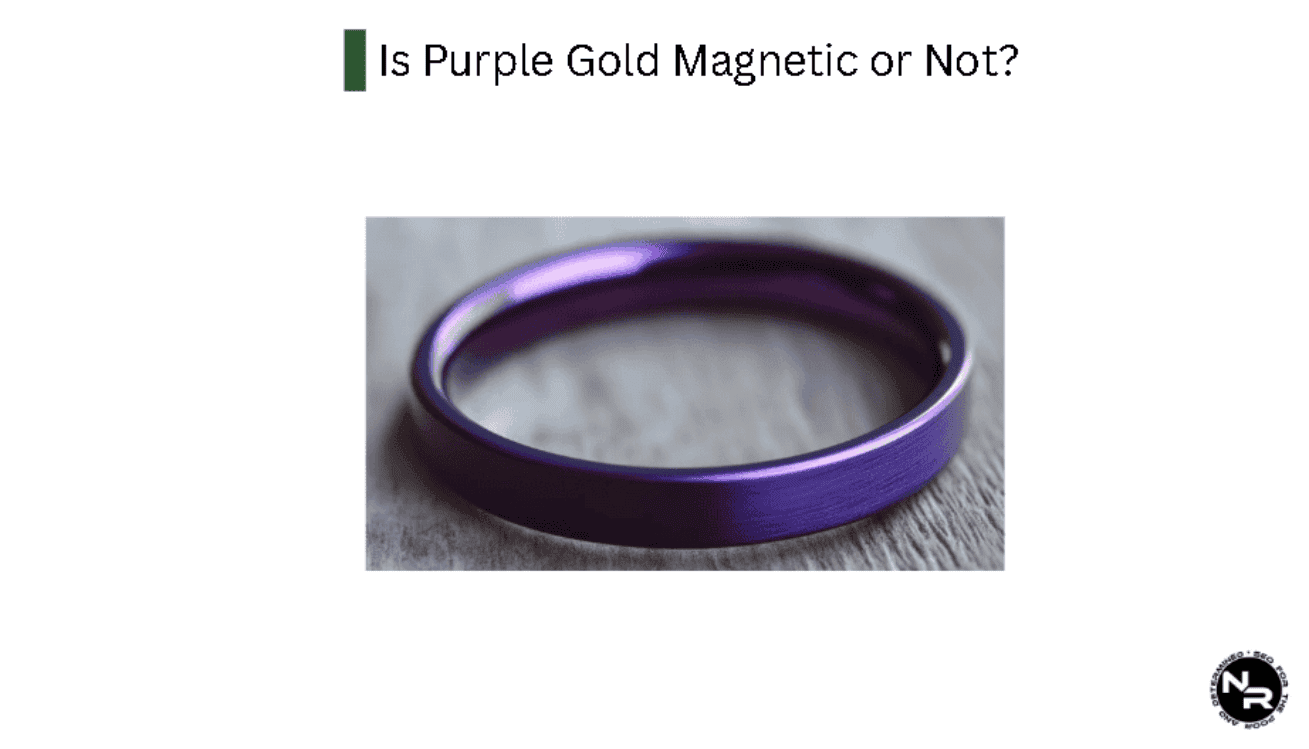
Is Purple Gold Magnetic?
No, purple gold isn’t magnetic. Purple gold is an alloy of 79% yellow gold and 21% aluminum.
Yellow gold isn’t magnetic and aluminum is a paramagnetic metal, meaning it has a very slight attraction to a magnetic field. This combination of metals makes purple gold a non-magnetic gold alloy.
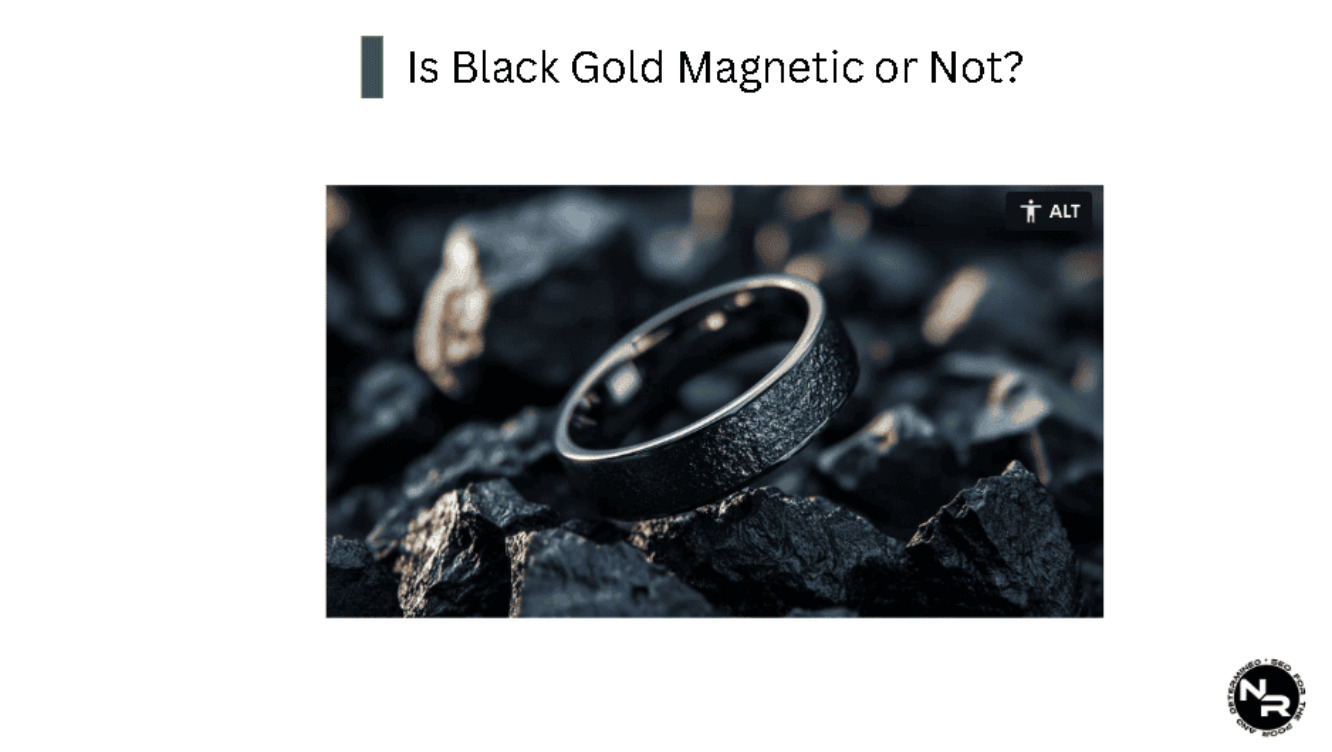
Is Black Gold Magnetic?
No, black gold isn’t magnetic.
Black gold is an alloy made of yellow gold and rhodium to give it a charcoal gray color. Rhodium isn’t magnetic and neither is yellow gold.
Is Blue Gold Magnetic or Not?
No, blue gold isn’t magnetic. Blue gold doesn’t magnetize neither when it’s made with indium, nor when it’s made with gallium.
Indium is paramagnetic which means it’s weakly attracted by an externally applied magnetic field. And once the magnet is removed the magnetic effect disappears.
Gallium is diamagnetic, meaning it’s weakly repelled by a magnetic field.
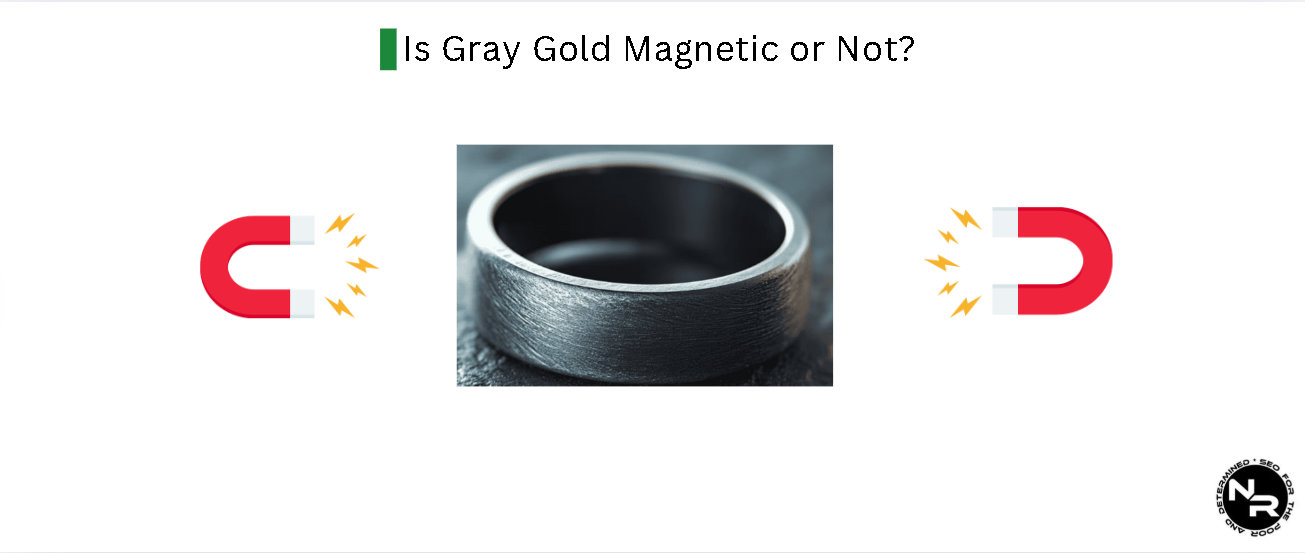
Is Gray Gold Magnetic or Not?
No, gray gold isn’t magnetic. It’s diamagnetic.
Gray gold is diamagnetic due to the overwhelming presence of diamagnetic pure yellow gold in the alloy. The other common metals in gray gold alloy are palladium and silver. Palladium is paramagnetic (it has a weak magnetic attraction), whereas silver is diamagnetic similar to yellow gold.
Iron is a common component of gray gold alloy. It’s a good replacement for more expensive palladium and silver because it’s much cheaper and changes the color of yellow gold to the desired shade of gray.
Iron is a ferromagnetic material and iron that’s replacing palladium or silver makes gray gold magnetic.
Gold’s magnetic properties is a fascinating topic to learn about. Check this out next once you’re done reading. It’s crucial info you must have an American citizen.
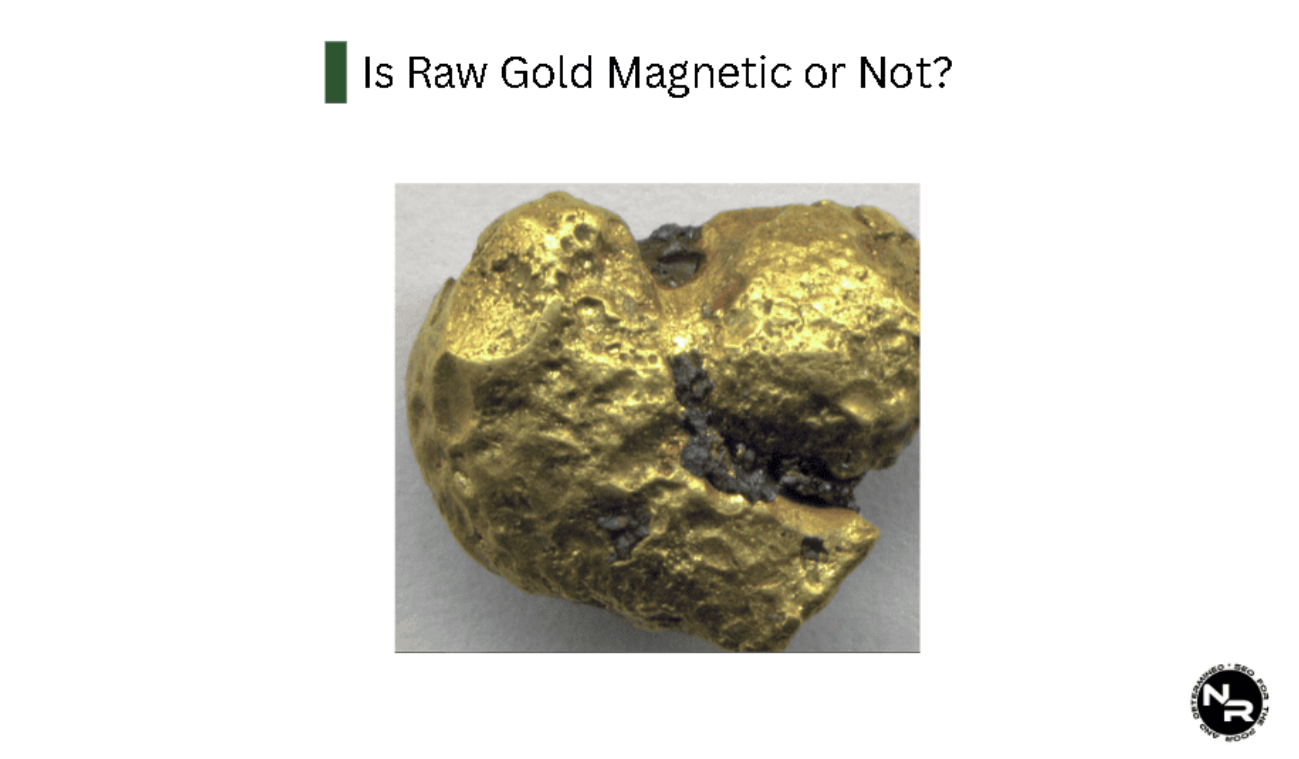
Is Raw Gold Magnetic?
No, raw gold isn’t magnetic. It’s diamagnetic.
Raw gold is the natural gold found in gold mines. Upon extraction it usually contains impurities like silver and other minerals. Silver isn’t magnetic, but some of these other minerals and metals are.
However, the amount of these ferromagnetic materials in raw gold is so small that it can’t cause a magnetic reaction, even if you use the strongest magnet possible.
Is Fools Gold Magnetic?
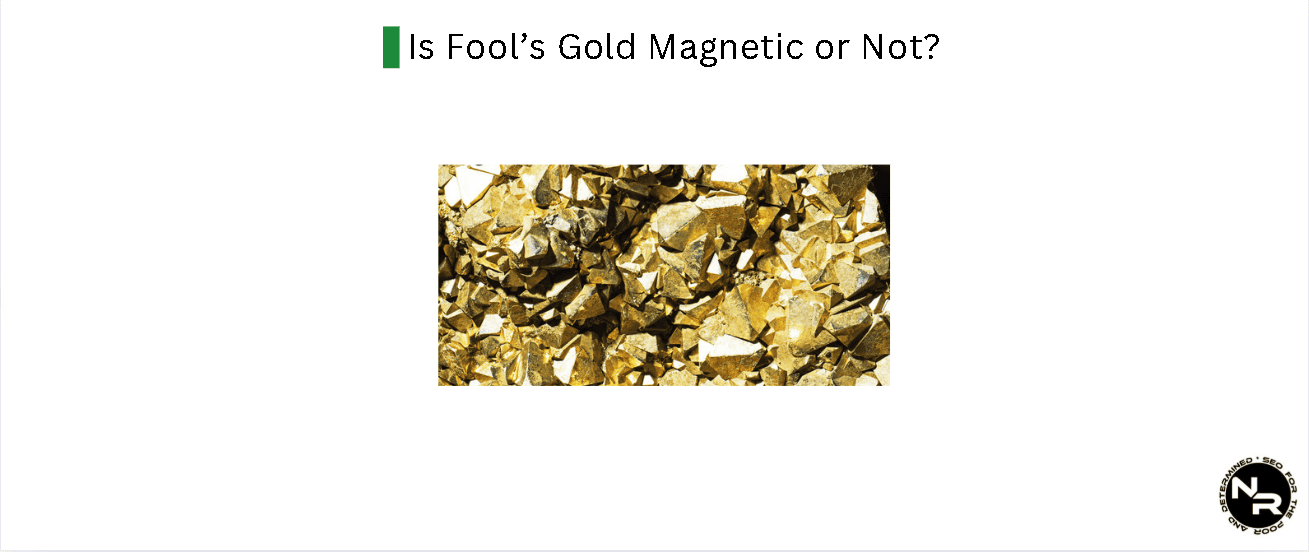
No, fool’s gold isn’t magnetic. Fool’s gold becomes magnetic when it’s impure and the other present metals are magnetic. A good example is fool’s gold contaminated with traces of iron.
But even in that case the magnetic effect will be very weak.
Is Plated Gold Magnetic or Not?
No, plated gold isn’t magnetic because the base metal underneath the gold plating is usually not magnetic.
However, if the base metal used in the plating process is magnetic, then the plated gold piece becomes attracted to a magnet.
For example, nickel mixed with gold in the gold plate makes the whole object magnetic, even though it’s only nickel being magnetized.
Plated gold’s magnetic properties depend on the thickness of the gold plate and whether the plate is damaged or thinned out. Damaged and thin gold plate leads to higher magnetism.
The advice above applies to all types of plated gold jewelry (gold chains, rings, earrings, pendants, broches, bracelets, necklaces…)
Is Pure Gold Jewelry Magnetic?
No, pure gold jewelry isn’t magnetic because pure gold isn’t magnetic.
However, pure gold jewelry is virtually non existent because yellow gold is extremely malleable and ductile precious metal that’s not suitable for jewelry making.
So, gold jewelry can be magnetic when it’s alloyed with ferro-magnetic metals (iron, cobalt, nickel…).
Is Gold Titanium Alloy Magnetic?
No, pure titanium+ gold alloy isn’t magnetic. However, titanium and gold alloy become magnetic under certain conditions.
A crystalline form of titanium and gold becomes magnetic when cooled to 36 kelvins, or about minus 395 degrees Fahrenheit.
TiAu is the first itinerant antiferromagnetic metal made from nonmagnetic elements. Itinerant magnets aren’t bonded to a single atom, and can extend their influence over more than one atom.
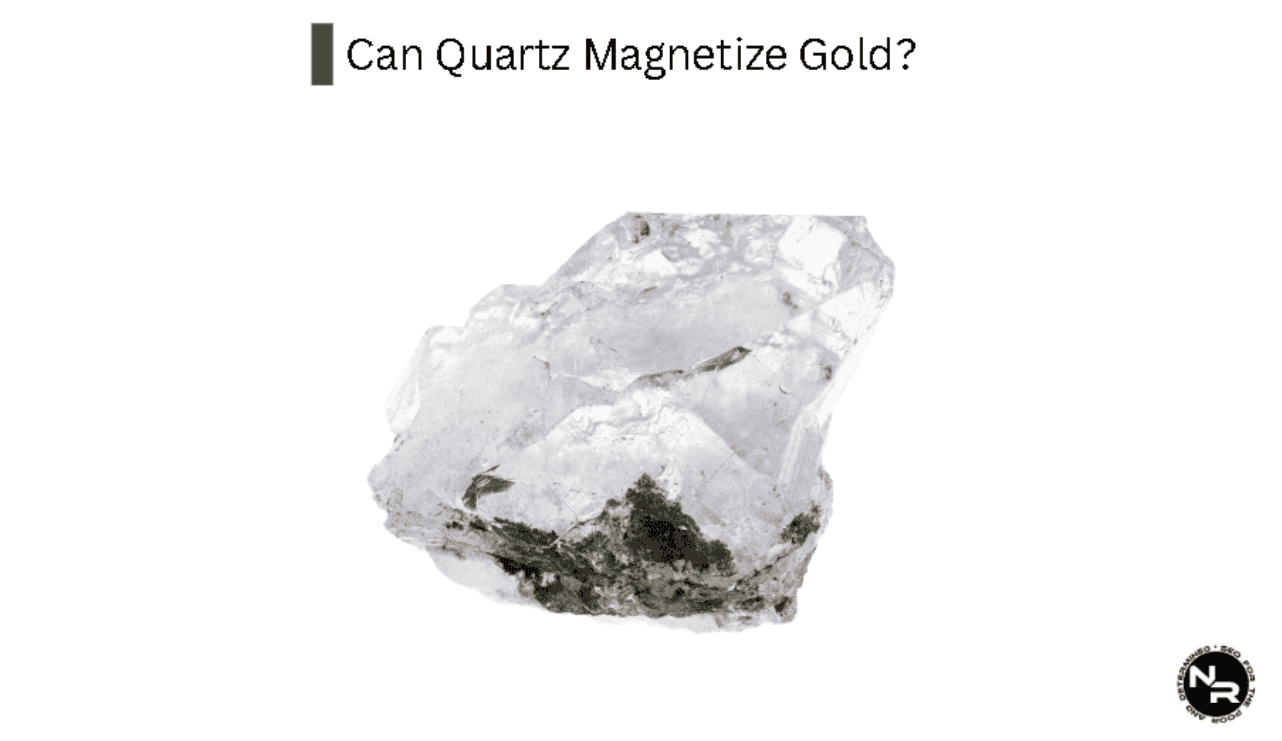
Can Quartz Magnetize Real Gold?
No, quartz cannot magnetize real gold. Because gold isn’t a magnetic metal, and quartz is diamagnetic, meaning it is weakly repelled by magnetic fields.
Does Gold Become Magnetic When it’s Heated?
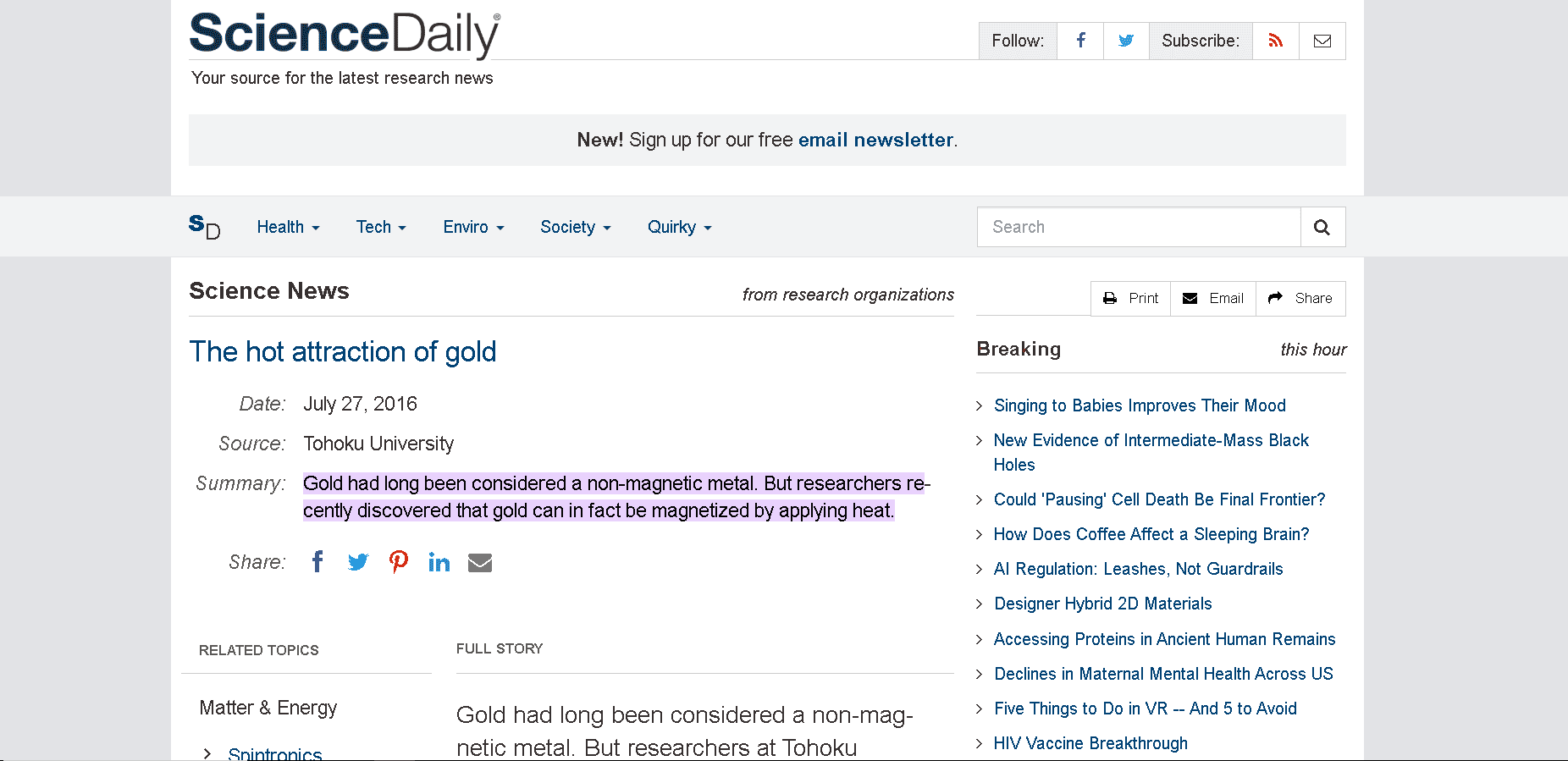
Yes, gold becomes magnetic when it’s heated.
Recently, Tohoku University researchers discovered that gold, traditionally considered non-magnetic, can be magnetized through heat application. Using a simple bilayer setup with yttrium iron garnet and gold film, they demonstrated that temperature gradients induce magnetization in gold, measured via Hall voltage.
This breakthrough could advance spintronics and thermoelectric energy harvesting applications.
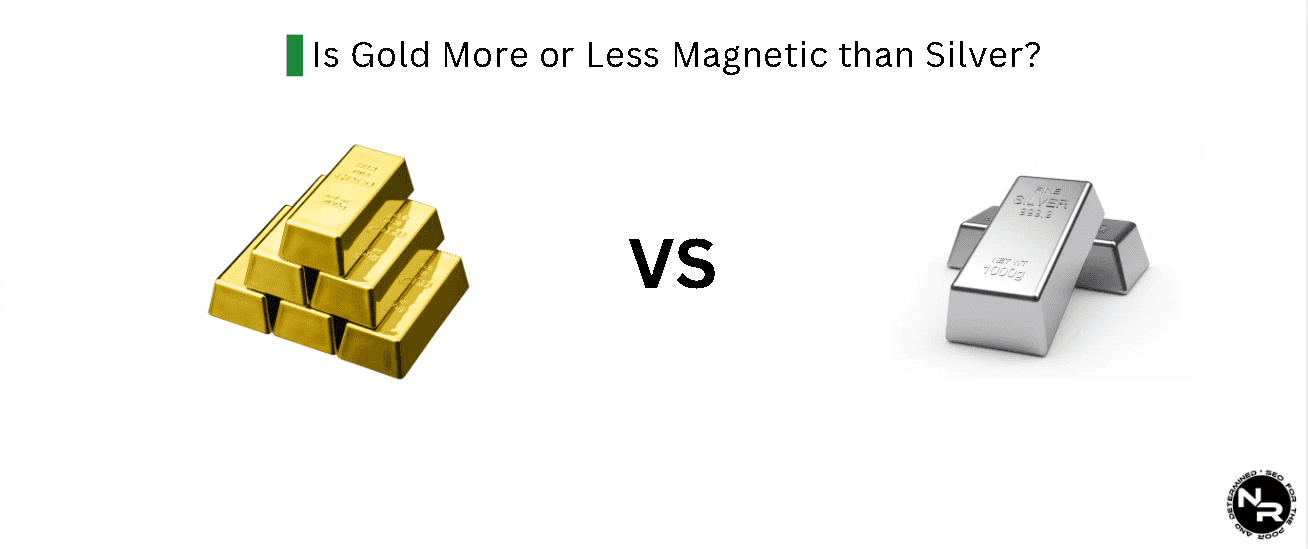
Is Gold More or Less Magnetic than Silver?
Gold isn’t more magnetic than silver because both real gold and real silver are non-magnetic precious metals.
Real gold isn’t magnetic. It’s diamagnetic, meaning it has a weak repulsive force to magnets. Genuine silver is diamagnetic and doesn’t respond to a strong magnet even when said magnet is pressed against it.
Both gold and silver atoms have electrons that are paired up, which cancels out their individual magnetic effects.
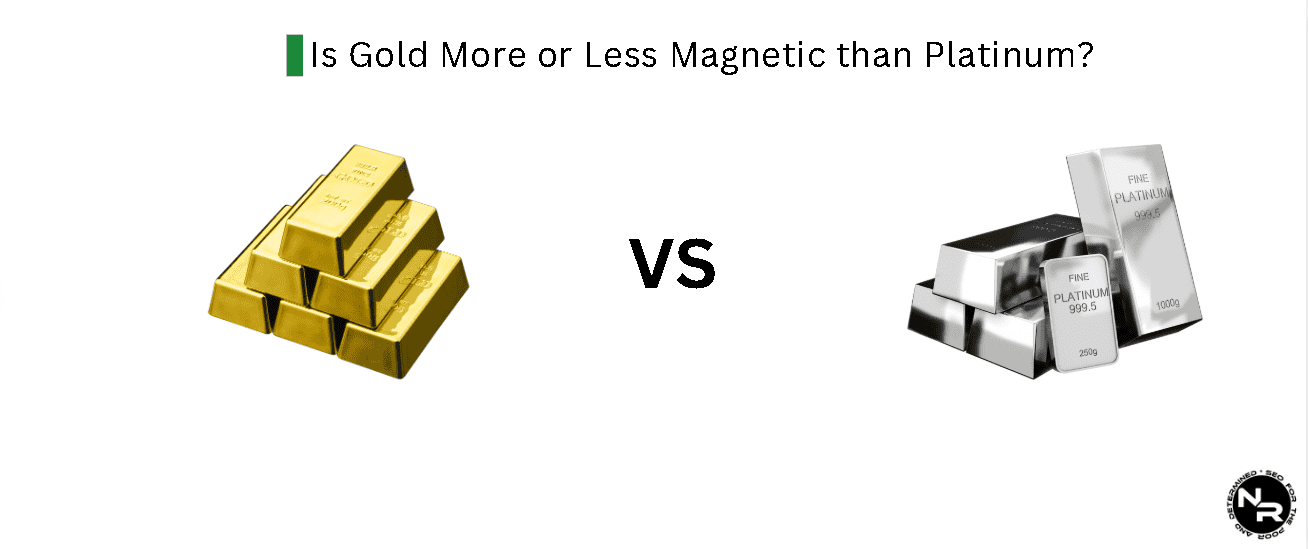
Is Gold More or Less Magnetic than Platinum?
Gold isn’t more magnetic than platinum because both real gold and real platinum are non-magnetic precious metals. Platinum is a “paramagnetic” precious metal.
This means platinum is weakly attracted to a magnetic field and doesn’t retain any magnetism once the field is removed.
Platinum is paramagnetic because its electronic configuration contains unpaired electrons in its outermost 5d shell. This gives it a weak magnetic moment and causes it to be attracted to an external magnetic field.
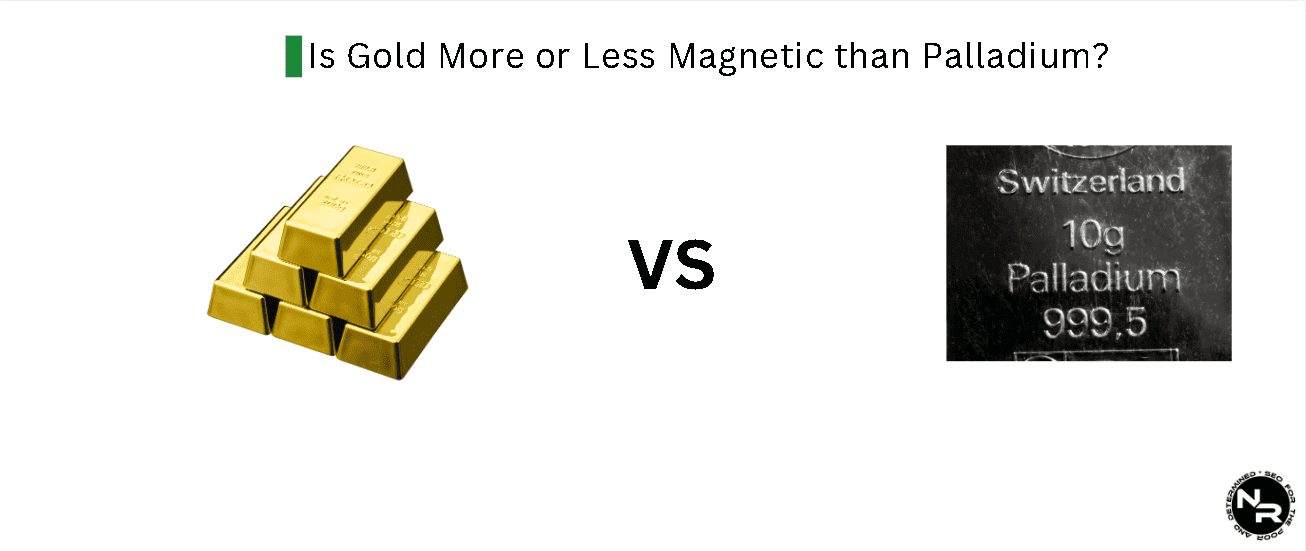
Is Gold More or Less Magnetic than Palladium?
Gold is less magnetic than palladium. Gold is diamagnetic, meaning it’s weakly repelled by a magnet, while palladium is paramagnetic, meaning it’s weakly attracted to a magnet.
Palladium’s paramagnetism arises from the presence of unpaired electrons, which act like tiny magnets.
- Magnetic gold is evidence of relativity- https://cosmosmagazine.com/science/physics/magnetic-gold-is-evidence-of-relativity-study-finds/
- Is gold magnetic?- https://www.bullionbypost.com/index/gold/is-gold-magnetic/
- Is gold and solid silver magnetic materials?- https://hyab.com/blog/post/Is_gold_and_silver_magnetic_materials/1848/en
- Why are metals like solid gold not magnetic? And is there something similar to a magnet that would work for such metals?- https://www.reddit.com/r/askscience/comments/1vwmsj/why_are_metals_like_gold_not_magnetic_and_is/
- Gold has an unpaired electron. But still gold is diamagnetic. Why?- https://www.researchgate.net/post/Gold_has_an_unpaired_electron_But_still_gold_is_diamagnetic_Why
- 24K gold plated bullion set- https://www.reddit.com/r/coins/comments/194g62n/24k_gold_plated_bullion_set/
- My most prized piece, a 22k Franco chain with an ancient Roman gold coin from 250 AD as a pendant- https://www.reddit.com/r/jewelry/comments/qatc03/my_most_prized_piece_a_22k_franco_chain_with_an/
- Hello, I have a 20K gold coin in my inventory, I need to know if it’s worth anything aside from its current gold value- https://www.reddit.com/r/oldcoins/comments/x6a2qn/hello_i_have_a_20k_gold_coin_in_my_inventory_i/
- How durable are 18k gold chains?- https://www.reddit.com/r/jewelry/comments/1buhg4g/how_durable_are_18k_gold_chains/
- Is this 14k necklace ok for everyday use, or more of a “special occasion” situation?- https://www.reddit.com/r/jewelry/comments/17op0ci/is_this_14k_necklace_ok_for_everyday_use_or_more/
- 12K gold Chain- https://www.reddit.com/r/Gold/comments/1bghxy6/12k_gold_chain/
- Both are 10k. Is the color difference normal?- https://www.reddit.com/r/jewelry/comments/v30cxe/both_are_10k_is_the_color_difference_normal/
- 9k gold ring (+ diamonds?)- https://www.reddit.com/r/whatsthisworth/comments/17gdkr4/9k_gold_ring_diamonds/
- Picked this up for $20… 8k gold, marked and tested 333. Almost looks like brass but still has more gold than gold fill so I’ll take it. 34.2 grams.- https://www.reddit.com/r/Gold/comments/1b52pkn/picked_this_up_for_20_8k_gold_marked_and_tested/
- Beautiful 6k Gold- https://www.reddit.com/r/RefiningGold/comments/1ax30v6/beautiful_6k_gold/
- Where to sell? Melt or no?- https://www.reddit.com/r/jewelry/comments/1imbo65/where_to_sell_melt_or_no/
- Pyrite (Fool’s Gold)- https://www.flickr.com/photos/98609459@N08/29620287477
- Gold had long been considered a non-magnetic metal. But researchers at Tohoku University recently discovered that gold can in fact be magnetized by applying heat. https://www.sciencedaily.com/releases/2016/07/160727103434.htm
- Rings White Gold- https://www.ernestjones.co.uk/l/rings-white-gold
- 9ct Rose Gold 18mm Hinged Sleeper Hoop Earrings- https://www.jewellerybox.co.uk/products/9ct-rose-gold-18mm-hinged-sleeper-hoop-earrings
- What does “14k GF” marked on jewelry?- https://www.reddit.com/r/Gold/comments/1bam99d/what_does_14k_gf_marked_on_jewelry/
- What Is Purple Gold: Your Ultimate Guide- https://www.nobbier.com/blogs/editorial/what-is-purple-gold/
- https://commons.wikimedia.org/wiki/File:Gold_nugget_(placer_gold)_2_(17025829922).jpg
- Fool’s gold is a good source of the real stuff- https://www.economist.com/science-and-technology/2021/07/19/fools-gold-is-a-good-source-of-the-real-stuff
- Clear Quartz Meaning, Uses, and Healing Properties- https://www.kumioils.com/pages/clear-quartz

Nikola Roza
Nikola Roza is the owner of Nikola Roza- Everything You Can Learn About Precious Metals. He writes for people who love precious metals and jewelry and who're interested in adding gold, silver platinum and palladium to their retirement portfolios. Nikola is passionate about gold IRAs and investing in multiple asset types for a safer financial future. He also runs a successful online jewelry store where you can buy precious metal jewelry and various replicas of famous coins and bars. Learn about Nikola here.