Disclosure: Some of the links you’ll encounter are affiliate links. If you click and buy something, I’ll get a commission. If you’re reading a review of some precious metals company, please understand that some of the links are affiliate links that help me pay my bills and write about what I love with no extra cost to you. Thank you!
Does gold tarnish or not?
Yes, gold tarnishes over time due to a combination of moisture, oxygen, sulfur compounds and other metals pure gold is alloyed with.
The higher the karat of gold, the less likely it’s to tarnish. For example, 18-karat gold rings take longer to tarnish because of their higher yellow gold content. And pure 24-karat gold is non-reactive and won’t tarnish at all.
However, most jewelry is made of gold alloyed with other metals, which means that jewelry can and will tarnish.
| Gold Alloy | Does it Tarnish? | Comparative Tarnishing Resistance |
|---|---|---|
| 24k | No | Absolute resistance to tarnishing |
| 22k | Yes | Second-best resistance to tarnishing. |
| 20k | Yes | Excellent resistance to tarnishing, but still susceptible to it. |
| 18k | Yes | Excellent resistance to tarnishing, but still susceptible to it. |
| 14k | Yes | Medium-level resistance to tarnishing. Better than all lower karat gold alloys. |
| 12k | Yes | Poor resistance to tarnishing. |
| 10k | Yes | Poor resistance to tarnishing. |
| 9k | Yes | Poor resistance to tarnishing. |
| 8k | Yes | Poor resistance to tarnishing. |
| Substance | Does it Tarnish Gold? |
|---|---|
| Water | No |
| Moisturized air | Pure 24k gold doesn't tarnish in moist air because it's chemically inert, but lower-karat gold jewelry tarnishes due to the reactive metals alloyed with it, with higher karats tarnishing less than lower ones. |
| Vinegar | Gold does tarnish when exposed to vinegar due to its acidity, which can damage gold surfaces especially on plated items, though vinegar can be used cautiously to clean tarnish if handled properly to avoid further corrosion. |
| Alcohol | Pure gold doesn't tarnish from alcohol and can be safely cleaned with it, but alcohol-containing products like perfumes and hand sanitizers can tarnish gold vermeil, plated gold, and lower-karat gold alloys over time. |
| Hydrogen peroxide | Pure 24k gold and other karat golds don't tarnish from hydrogen peroxide and can be cleaned with it, but hydrogen peroxide can damage gold-plated jewelry and pieces with gemstones. |
| Lemon juice | Gold does tarnish when exposed to lemon juice because its acidity can damage and discolor gold, especially lower-karat alloys, making lemon juice an unreliable and potentially harmful method for testing gold authenticity. |
| Makeup | Gold doesn't tarnish from makeup, but cosmetics can dull its shine and cause slight discoloration due to chemicals and abrasives, with 24k gold being immune while lower-karat gold alloys tarnish based on their base metal content. |
| Nitric acid | Gold doesn't tarnish from nitric acid, and this property is used to test gold authenticity since pure gold won't react while lower-karat gold alloys will dissolve slightly due to their base metal content. |
| Bleach | Pure 24k gold doesn't tarnish from bleach, but bleach causes a chemical reaction with alloyed gold that goes beyond tarnishing and can disintegrate or even completely destroy lower-karat gold jewelry over time. |
| Toothpaste | Pure gold doesn't tarnish from toothpaste due to its chemical resistance, and while toothpaste can be used as a basic authenticity test, it's strong enough to strip away thin gold plating but too weak to affect solid gold. |
| Baking soda | Pure 24k gold doesn't tarnish from baking soda and can even be cleaned with it, but caution is needed when using baking soda on thinly plated gold items as it can wear through the plating. |
Below are all the questions people ask about tarnishing gold + quick answers to them. You’ll also learn how to intelligently protect your gold jewelry from tarnishing.
- What is Gold Tarnish?
- Does 24k Gold Tarnish?
- Does 22k Gold Tarnish?
- Does 20k Gold Tarnish?
- Does 18k Gold Tarnish?
- Does 14k Gold Tarnish?
- Does 12k Gold Tarnish?
- Does 10k Gold Tarnish?
- Does 9k Gold Tarnish?
- Does 8k Gold Tarnish?
- Does Gold Tarnish in Water? What about Saltwater and Chlorinated Water?
- Does Gold Tarnish When Exposed to Hydrogen Peroxide?
- Does Gold Tarnish When Exposed to Vinegar?
- Does Gold Tarnish When Exposed to Lemon Juice?
- Does Gold Tarnish When Exposed to Makeup?
- Does Gold Tarnish When Exposed to Nitric Acid?
- Does Pure Gold Tarnish When Exposed to Bleach?
- Does Gold Tarnish When Exposed to Baking Soda?
- Does Pure Gold Tarnish When Exposed to Alcohol?
- Does Pure Gold Tarnish When Exposed to Toothpaste?
- Does Pure Gold Tarnish When Exposed to Moisturized Air?
- Does White Gold Tarnish?
- Does Black Gold Tarnish?
- Does Rose Gold Tarnish?
- Does Green Gold Tarnish?
- Does Purple Gold Tarnish?
- Does Blue Gold Tarnish?
- Does Gold Vermeil Tarnish?
- Does Gold-Plated Brass Tarnish?
- Does Gold-Plated Stainless Steel Tarnish?

Table of Contents
What is Gold Tarnish?
Gold tarnishing is a chemical reaction that occurs when the surface of gold reacts with oxygen, moisture, and sulfur compounds, causing a discoloration or darkening of the metal.
Here’s an example below of tarnished gold necklace.

Does 24k Gold Tarnish?
No, 24k gold doesn’t tarnish.
24k (pure gold) doesn’t tarnish because it’s a non-reactive metal that doesn’t easily combine with oxygen.
24k gold items are rare because pure gold is soft, malleable and easily scratched or damaged. This means most gold items you’ll encounter will be made of gold+ some other harder metal.
Note: fake gold is rampant on the market. Here’s someone on Reddit complaining their 24k gold bar started tarnishing and the owner found it hard to remove that stubborn tarnish.
Most redditors in the comments of that post suggested the gold bar is fake.

Pro tip: are you looking to buy 24k gold in the form of gold bullion?
Then you need to work with a reputable US gold investment company as you can’t afford to get scammed.
My number #1 recommendation is Augusta Precious Metals. They’re one of the best gold IRA companies in the US and they have hundreds of raving reviews from their former customers posted on biggest consumer watchdog websites.
APM can furnish you with 100% legit 24k gold which you can store at your home or in a specialized gold IRA depository. In the latter case you’ll need to open a gold IRA account, but Augusta will help you with the process there.

Does 22k Gold Tarnish?
Yes, 22K gold tarnishes over time. 22K gold is an alloy of pure gold (91.67%) and other metals such as copper, zinc, nickel, and silver (8.33%).
Pure gold is immune to tarnishing, but these other metals react with oxygen, sulfur, and moisture, causing the gold to discolor.
For example, sterling silver is very susceptible to tarnishing.
In this post from Reddit a redditor asks whether they can shower with a 22k gold bracelet. The other redditors advise against it because the gold will tarnish faster with repeated exposure to water (especially chlorinated water).

Hey, I bet you like gold since you’re reading my guide on real gold’s tarnishing properties? Check this out next if you answered yes!
Does 20k Gold Tarnish?
Yes, 20K gold tarnishes over time. 20K gold is an alloy of pure gold (83.33%) and other metals such as copper, zinc, nickel, and silver (16.67%).
Pure gold is immune to tarnishing, but these other metals react with oxygen, sulfur, and moisture, causing the gold to discolor.
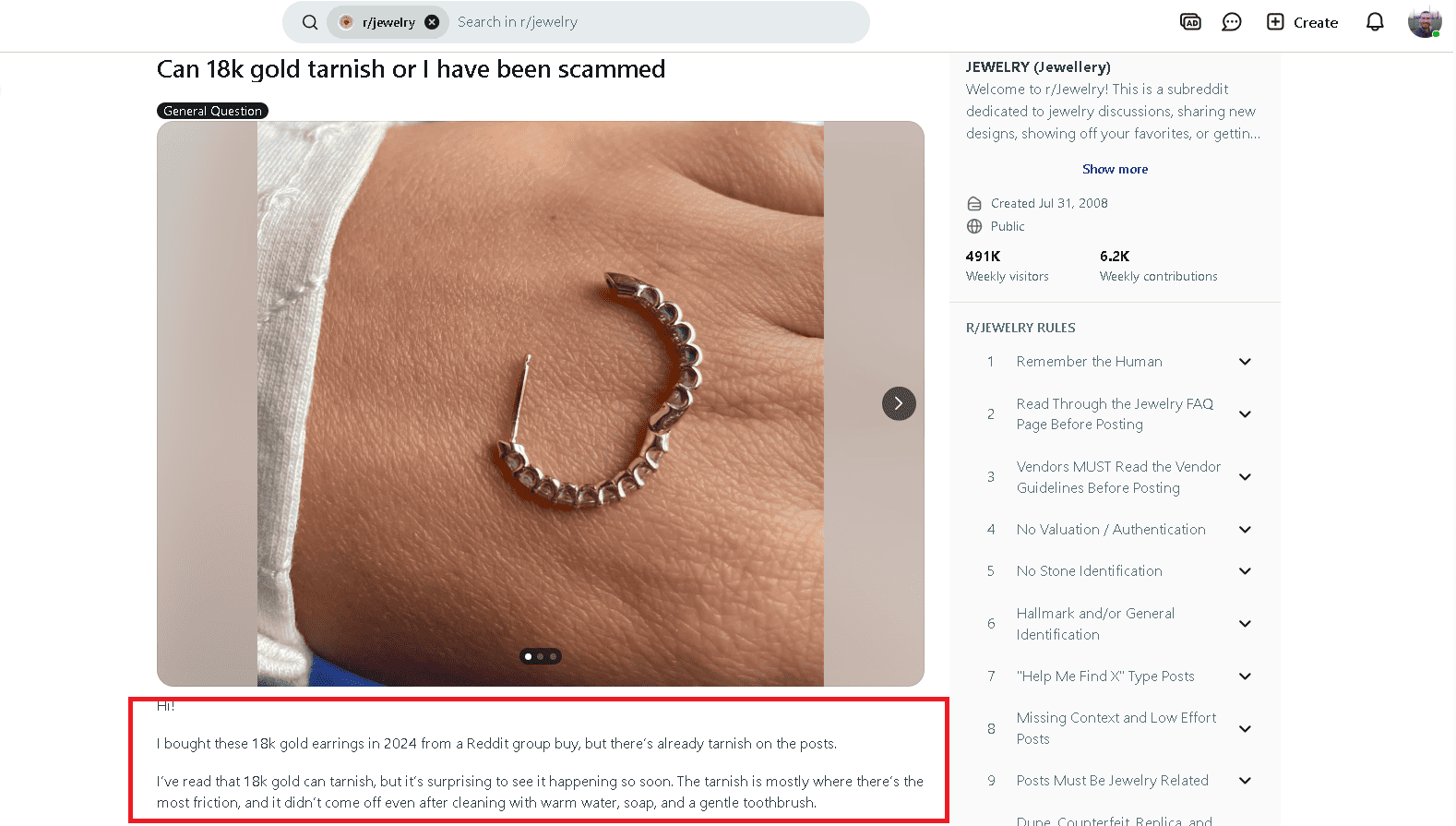
Does 18k Gold Tarnish?
Yes, 18k gold tarnishes and isn’t immune to that effect. 18k gold is a type of gold alloy that’s 75% pure gold and 25% other metals (copper, silver, or nickel).
It’s the presence of those other metals that cause the tarnishing effect given that 100% pure gold won’t tarnish.
Hey, I bet you like gold since you’re reading my guide on real gold’s tarnishing properties? Check this out next if you answered yes!
Does 14k Gold Tarnish?
Yes, 14k gold tarnishes and isn’t immune to that effect. 14k gold is a metal alloy that’s 58.3% pure gold and 41.7% other metals, (copper, silver, zinc, nickel…).
14k gold is a popular choice for jewelry because it’s durable and affordable, but the downside is that it tarnishes more easily than 24k, 22k, 20k and 18k gold.

Hey, I bet you like gold since you’re reading my guide on real gold’s tarnishing properties? Check this out next if you answered yes!
Does 12k Gold Tarnish?
Yes, 12k gold tarnishes and isn’t immune to that effect. 12k gold is a metal alloy that’s 50% pure gold and 50% other metals, (copper, silver, zinc, nickel…).
12k gold is a popular choice for jewelry because it’s durable and affordable, but the downside is that it tarnishes more easily than 24k, 22k, 20k, 18k, and 14 gold.
Does 10k Gold Tarnish?
Yes, 10k gold tarnishes and isn’t immune to that effect. 10k gold is a gold alloy that’s 41.7% pure gold and 58.3% other metals (silver, zinc, copper, nickel, or palladium).
10k gold is the least pure gold form that can still be legally called “gold” in the United States and most other countries.
10k gold tarnishes much more easily than 24k, 22k, 20k, 18k, 14k and 12k gold.
Does 9k Gold Tarnish?
Yes, 9k gold tarnishes and isn’t immune to that effect. 8k gold is an alloy of 37.5% pure gold and 62.5% other metals (copper, silver, palladium, nickel…). 9k gold is affordable and durable, making it a popular choice for jewelry.
However, 9k jewelry tarnishes very easily compared to other higher karat gold types because of the much higher non-gold content amount.
Does 8k Gold Tarnish?
Yes, 8k gold tarnishes and isn’t immune to that effect. 8k gold is an alloy of 33.3% pure gold and 66.7% other metals (copper, silver, palladium, nickel…). 8k gold is affordable and durable, making it a popular choice for jewelry.
However, 8k jewelry tarnishes very easily compared to other higher karat gold types because of the much higher non-gold content amount.
| Gold Alloy | Does it Tarnish? | Comparative Tarnishing Resistance |
|---|---|---|
| 24k | No | Absolute resistance to tarnishing |
| 22k | Yes | Second-best resistance to tarnishing. |
| 20k | Yes | Excellent resistance to tarnishing, but still susceptible to it. |
| 18k | Yes | Excellent resistance to tarnishing, but still susceptible to it. |
| 14k | Yes | Medium-level resistance to tarnishing. Better than all lower karat gold alloys. |
| 12k | Yes | Poor resistance to tarnishing. |
| 10k | Yes | Poor resistance to tarnishing. |
| 9k | Yes | Poor resistance to tarnishing. |
| 8k | Yes | Poor resistance to tarnishing. |
Hey, I bet you like gold since you’re reading my guide on real gold’s tarnishing properties? Check this out next if you answered yes!
Does Gold Tarnish in Water? What about Saltwater and Chlorinated Water?
No, pure, 24k gold doesn’t tarnish in water. All other, lower purity gold alloys tarnish in water depending on the presence of other metals in the alloy.
The least susceptible to tarnishing from water are 23k and 22k golds, while the most susceptible are low purity gold alloys like 5k, 6k and 8k golds.
Does saltwater tarnish gold?
No, saltwater doesn’t tarnish 24k, gold (pure gold). This means you can swim in the sea wearing your favorite 24k gold necklace, ring or bracelet.
Salt water tarnishes all other gold karat alloys and tarnishes them faster than regular water.
Does chlorine in water tarnish gold and gold jewelry?
No, chlorine doesn’t tarnish 24k gold jewelry. Chlorine in water tarnishes all other gold karat alloys. It causes gold jewelry to develop a nasty patina. The jewelry will appear darker, yellowish, greyish, or develop unpleasant white spots.

Hey, I bet you like gold since you’re reading my guide on real gold’s tarnishing properties? Check this out next if you answered yes!
Does Gold Tarnish When Exposed to Hydrogen Peroxide?
No, pure, 24k gold doesn’t tarnish when exposed to hydrogen peroxide. All other karat types of gold are also highly resistant to this chemical and you can use hydrogen peroxide to clean your gold jewelry and remove tarnish from it.
Hydrogen peroxide is strong enough to damage and strip away gold-plated jewelry and make it tarnish rapidly. Jewelry with embedded gemstones isn’t safe as well.

Does Gold Tarnish When Exposed to Vinegar?
Yes, gold tarnishes when exposed to vinegar. Vinegar is acidic and damages the surface of gold, especially if it’s plated or has intricate details.
You can use vinegar to clean tarnish from your gold items, but you need to be careful as improper handling will further tarnish and corrode your gold coins, bars and jewelry.

Does Gold Tarnish When Exposed to Lemon Juice?
Yes, gold tarnishes when exposed to lemon juice.
Lemon juice is acidic and bathing gold in it causes it to tarnish and be damaged. Especially susceptible is gold alloyed with other metals which are even more reactive to acid in lemon juice.
Amateur jewelry owners often use lemon juice to test the authenticity of their gold. I don’t recommend this gold testing method because lemon juice can tarnish and discolor gold jewelry and bullion.
Hey, I bet you like gold since you’re reading my guide on real gold’s tarnishing properties? Check this out next if you answered yes!

Does Gold Tarnish When Exposed to Makeup?
No, gold doesn’t tarnish when exposed to makeup. However, exposure to makeup, especially liquid foundations and powders causes gold jewelry to lose its shine and slightly discolor due to the chemicals and abrasives present in cosmetics.
Makeup also causes a significant tarnishing reaction when gold is alloyed with other metals like silver or copper.
In general, 24k gold is completely immune to tarnishing from makeup. Other gold karat alloys are more or less resistant based on other metals yellow gold is alloyed with.

Does Gold Tarnish When Exposed to Nitric Acid?
No, gold doesn’t tarnish when exposed to nitric acid.
You can use nitric acid to test if your gold is real or fake. Genuine gold won’t react with nitric acid, while lower karat gold alloys containing other metals like silver or copper will show a reaction by dissolving slightly in the acid.

Does Pure Gold Tarnish When Exposed to Bleach?
No, pure, 24k gold doesn’t tarnish when exposed to bleach. This means 24k gold coins, bars and jewelry are immune to bleaches’ tarnishing effects.
However, gold alloyed with other metals is much more susceptible to bleach. Bleach causes a chemical reaction that disintegrates the alloys in gold jewelry over time and this is much more serious than simple tarnish.
Bleach can even completely destroy gold items submerged in it for long enough time.

Hey, I bet you like gold since you’re reading my guide on real gold’s tarnishing properties? Check this out next if you answered yes!
Does Gold Tarnish When Exposed to Baking Soda?
No, pure, 24k gold doesn’t tarnish when exposed to baking soda. This means 24k gold coins, bars and jewelry are immune to baking soda’s tarnishing effects.
You can even use baking soda to remove tarnish from your gold items. It’s easy to do but you need to be fast and gentle when cleaning gold items with it.
Especially be careful when cleaning thinly plated gold items as baking soda will often eat right through them.
Does Pure Gold Tarnish When Exposed to Alcohol?
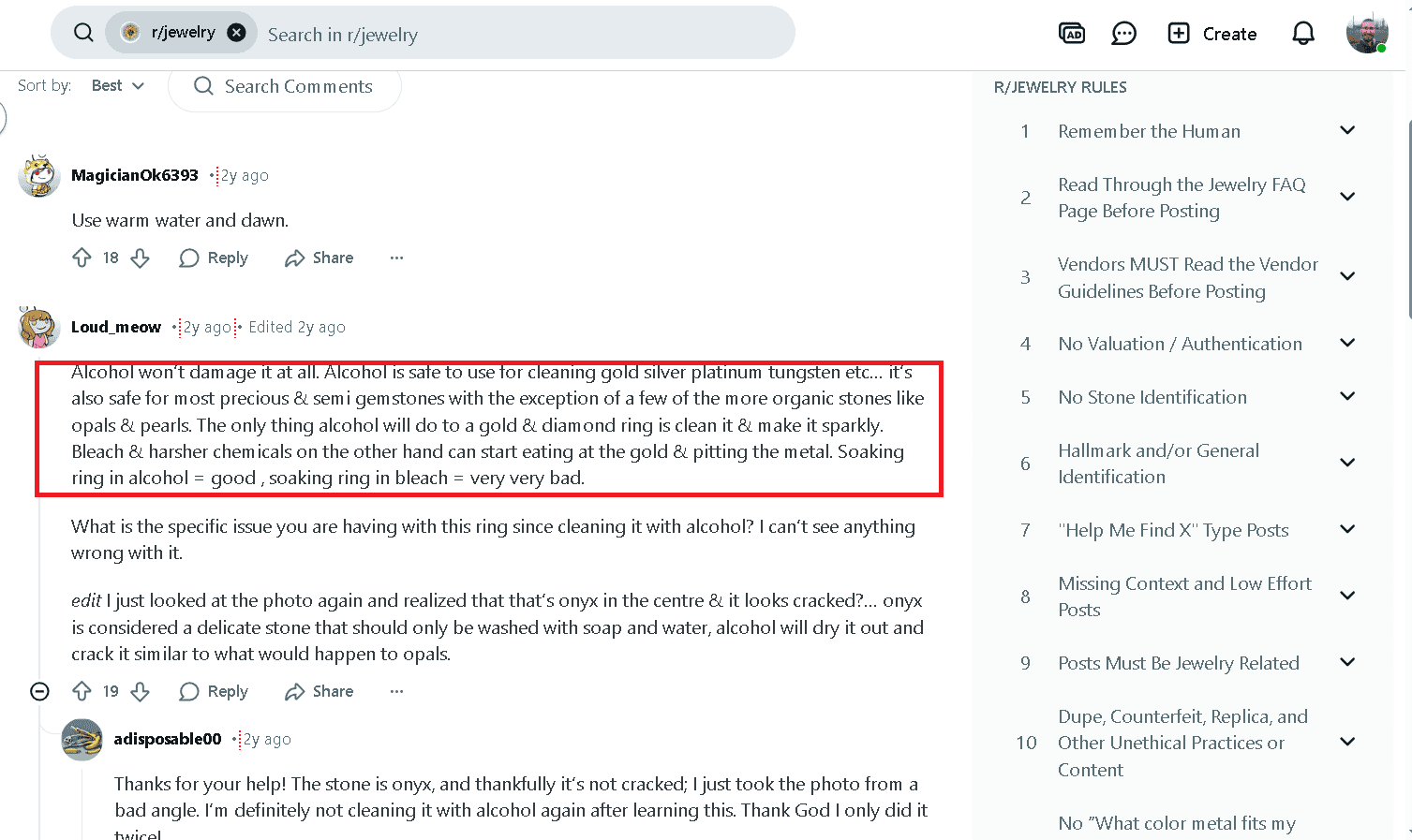
No, pure gold doesn’t tarnish when exposed to alcohol. You can even use alcohol to clean your pure gold jewelry without any issues.
However, alcohol easily tarnishes gold vermeil and plated gold. Keep in mind that many products contain alcohol, often hidden deep down in the ingredients list.
Some of the alcohol containing products are various perfumes, cosmetics, hand sanitizers, nail polish removers….
These products can react with non-24k gold over time causing it to discolor and tarnish.
Does Pure Gold Tarnish When Exposed to Toothpaste?
No, pure gold doesn’t tarnish when exposed to toothpaste. Pure gold is highly resistant to oxidation and doesn’t readily react with chemicals, including those found in toothpaste.
You can use toothpaste to test your gold for authenticity, though the method is rudimentary and not the best.
Toothpaste is too weak to tarnish gold, but strong enough to remove the gold plate of thinly plated gold jewelry.
Does Pure Gold Tarnish When Exposed to Moisturized Air?
No, pure, 24k gold doesn’t tarnish when exposed to moisturized air. Authentic gold is a very inert metal and doesn’t readily react with oxygen or moisture.
However, gold jewelry that’s alloyed with other metals (copper, silver steel, iron…) will tarnish due to the reactivity of those alloyed metals with air and moisture.
Basically, 24k gold is unaffected by moisturized air. 22k, 20k, 18k, 14k, 12k, 10k, 9k, 8k, 6k and 5k golds all tarnish when exposed to moisturized air.
Higher karat gold tarnish less and slower than lower karat gold.
| Substance | Does it Tarnish Gold? |
|---|---|
| Water | No |
| Moisturized air | Pure 24k gold doesn't tarnish in moist air because it's chemically inert, but lower-karat gold jewelry tarnishes due to the reactive metals alloyed with it, with higher karats tarnishing less than lower ones. |
| Vinegar | Gold does tarnish when exposed to vinegar due to its acidity, which can damage gold surfaces especially on plated items, though vinegar can be used cautiously to clean tarnish if handled properly to avoid further corrosion. |
| Alcohol | Pure gold doesn't tarnish from alcohol and can be safely cleaned with it, but alcohol-containing products like perfumes and hand sanitizers can tarnish gold vermeil, plated gold, and lower-karat gold alloys over time. |
| Hydrogen peroxide | Pure 24k gold and other karat golds don't tarnish from hydrogen peroxide and can be cleaned with it, but hydrogen peroxide can damage gold-plated jewelry and pieces with gemstones. |
| Lemon juice | Gold does tarnish when exposed to lemon juice because its acidity can damage and discolor gold, especially lower-karat alloys, making lemon juice an unreliable and potentially harmful method for testing gold authenticity. |
| Makeup | Gold doesn't tarnish from makeup, but cosmetics can dull its shine and cause slight discoloration due to chemicals and abrasives, with 24k gold being immune while lower-karat gold alloys tarnish based on their base metal content. |
| Nitric acid | Gold doesn't tarnish from nitric acid, and this property is used to test gold authenticity since pure gold won't react while lower-karat gold alloys will dissolve slightly due to their base metal content. |
| Bleach | Pure 24k gold doesn't tarnish from bleach, but bleach causes a chemical reaction with alloyed gold that goes beyond tarnishing and can disintegrate or even completely destroy lower-karat gold jewelry over time. |
| Toothpaste | Pure gold doesn't tarnish from toothpaste due to its chemical resistance, and while toothpaste can be used as a basic authenticity test, it's strong enough to strip away thin gold plating but too weak to affect solid gold. |
| Baking soda | Pure 24k gold doesn't tarnish from baking soda and can even be cleaned with it, but caution is needed when using baking soda on thinly plated gold items as it can wear through the plating. |
Hey, I bet you like gold since you’re reading my guide on real gold’s tarnishing properties? Check this out next if you answered yes!
Does White Gold Tarnish?
No, white gold doesn’t tarnish. White gold is made of an alloy of yellow gold and nickel, palladium or silver coated with a rhodium plating.
Rhodium doesn’t tarnish and the metals in the alloy are impervious to tarnishing too.
However, the rhodium coating can wear away over time, causing white gold to change color to a pale yellow hue.
This isn’t tarnish though but white gold patination.

Does Black Gold Tarnish?
Yes, black gold tarnishes when the black rhodium or ruthenium plating wears off reveling the yellow gold underneath.
Black gold tarnishes because the yellow gold under the coating contains copper, and when that yellow gold is exposed to air and oxidized by it, t starts to tarnish, fade and change color.
Black ruthenium and rhodium are both resistant to tarnishing.
Does Rose Gold Tarnish?
No, rose gold doesn’t tarnish.
The yellow gold within rose gold will never tarnish. But the copper content of pink gold will oxidize and cause rose gold to darken and develop a patina.
However, patina on a rose gold isn’t rose gold tarnishing.
Some people love the way rose gold with patina looks, and some don’t and seek to remove it.
Below is an example of a heavily tarnished rose gold ring.

Hey, I bet you like gold since you’re reading my guide on real gold’s tarnishing properties? Check this out next if you answered yes!
Does Green Gold Tarnish?
Yes, green gold tarnishes. It’s because green gold is a natural gold alloy that contains silver and silver can tarnish.
Still, there’s only an average of 25% silver in typical green gold and this means tarnishing will take a lot of time and will be barely noticeable.
Note: don’t confuse green gold with the green skin discoloration cheap gold jewelry leaves on human skin.
They’re not the same.
Does Purple Gold Tarnish?
No, purple gold doesn’t tarnish. Purple gold is an alloy of yellow, 24k gold and aluminum in the standard percentage ratio of 75:25.
24k gold is immune to tarnishing, and so is aluminum.
Note: purple gold can still change its appearance due to aluminum content. Even though aluminum is immune to tarnishing it still corrodes when repeatedly hit with water, humidity, acidity, and other harsh chemicals.
Deep scratches and abrasions also expose the aluminum to corrosion.
Does Blue Gold Tarnish?
Yes, blue gold tarnishes when yellow gold is alloyed with gallium. Gallium is a metal that’s stable in dry air, but slowly oxidizes in moist air to form a protective film. In blue gold this would be seen as tarnish and blemish on the surface of the jewelry.
Blue gold doesn’t tarnish when yellow gold is alloyed with indium. Indium is resistant to tarnishing and even corrosion unless you drop strong acids on it.
| Colored Gold | Tarnish or Not? |
|---|---|
| Blue gold | Blue gold made with gallium does tarnish in moist air as gallium slowly oxidizes to form a film, but blue gold made with indium doesn't tarnish since indium resists oxidation and corrosion except from strong acids. |
| Purple gold | Purple gold doesn't tarnish because it's made from tarnish-resistant 24k gold and aluminum, though the aluminum component can still corrode over time when exposed to water, humidity, acids, or harsh chemicals, especially if scratched. |
| Green gold | Green gold does tarnish because it contains about 25% silver which can oxidize, though the tarnishing occurs slowly and is barely noticeable due to the relatively small amount of silver in the alloy. |
| Rose gold | Rose gold doesn't technically tarnish, but the copper content in it oxidizes over time to create a darkened patina, which some people appreciate while others prefer to remove it. |
| Black gold | Black gold tarnishes when its black rhodium or ruthenium plating wears off, exposing the underlying yellow gold alloy which contains copper that oxidizes and tarnishes when exposed to air. |
| White gold | White gold doesn't tarnish because it's made from tarnish-resistant metals and coated with rhodium, but the rhodium plating can wear away over time, revealing a pale yellow color underneath—a patination process rather than true tarnishing. |
Does Gold Vermeil Tarnish?
Yes, gold vermeil tarnishes. Gold vermeil is a type of gold jewelry that combines an authentic sterling silver base with a thick layer of gold plating. The outer gold won’t tarnish, especially if it’s made of 24k gold.
But when the plating is damaged and silver is exposed, that silver will start to tarnish over time.
The same tarnishing principle applies to both white gold vermeil which starts tarnishing when the rhodium plate get damages and starts to fall off.
Rose gold vermeil is different as rose gold inherently has a lot of copper in it. Copper is prone to tarnishing which means rose gold vermeil tarnishes much faster than yellow gold vermeil and white gold vermeil.
Does Gold-Plated Brass Tarnish?
Yes, gold-plated brass tarnishes. The gold plate around the brass won’t tarnish, especially if made of 24k gold. But if the plate is damaged and brass is exposed then tarnishing will happen as both copper and zinc tarnish when exposed to water, moist air and other substances.
Note: brass is composed of copper and zinc in various proportions.

Does Gold-Plated Stainless Steel Tarnish?
No, gold-plated stainless steel doesn’t tarnish. Gold plate doesn’t tarnish, especially if the plate is made of 24k gold. And the stainless steel base won’t tarnish as well because stainless steel contains chromium.
Chromium reacts with oxygen to form a protective layer over the metal and this layer prevents moisture and oxygen from reaching the metal, thus preventing tarnishing.

Does Pure Gold Rust, Corrode and Oxidize?
No, pure gold doesn’t rust, corrode and oxidize.
Technically, only iron and stainless steel can rust and pure gold is free of both of these metals.
However, gold alloyed with iron can rust, and so can gold-plated stainless steel once the gold plate has fallen off and stainless steel is exposed to water and moisturized air.
Does Gold Tarnish or Not (Including Info on Tarnishing Gold Jewelry, 18K Gold, 14K, 9K…)- Conclusion
Real gold doesn’t tarnish. Gold alloyed with other metals tarnishes and how much depends on the metal it’s alloyed with.
Pure gold jewelry doesn’t tarnish, but gold-plated jewelry that’s mostly made of silver, brass, stainless steel or even iron will tarnish and potentially oxidize and corrode.
The two notable exceptions are gold-plated items with platinum and palladium as bases. It’s because platinum doesn’t tarnish. And palladium doesn’t tarnish too.
Have questions?
Shoot them in the comment section below.
References:
- Why Does Jewelry Tarnish & Does Gold Filled Jewelry Tarnish Over Time?- https://s-kin.com.au/blogs/s-kin-studio-diaries/why-does-jewelry-tarnish-does-gold-filled-jewelry-tarnish-over-time
- Why is this happening? sterling silver gold plated earrings tarnishing but only the part that stays inside the skin. https://www.reddit.com/r/jewelry/comments/y8bzfp/why_is_this_happening_sterling_silver_gold_plated/
- How long Gold Plating over brass will last? Will the zinc discolor plating?- https://www.finishing.com/534/24p2.shtml
- Tarnish on 18K rose gold band after holding it once. Did I get scammed?- https://www.reddit.com/r/EngagementRings/comments/1126sm4/tarnish_on_18k_rose_gold_band_after_holding_it/
- Why is my white gold tarnishing?- https://www.jodiegearing.com/why-is-my-white-gold-tarnishing/
- Tarnish on 18K rose gold band after holding it once. Did I get scammed?- https://www.reddit.com/r/EngagementRings/comments/1126sm4/tarnish_on_18k_rose_gold_band_after_holding_it/
- Why is my white gold tarnishing?- https://www.jodiegearing.com/why-is-my-white-gold-tarnishing/
- Keep Bleach/Chlorine away from Your Gold Jewelry!- https://goodmansjewelers.com/keep-bleachchlorine-away-gold-jewelry/
- How badly does alcohol damage 14k gold?- https://www.reddit.com/r/jewelry/comments/18paocs/how_badly_does_alcohol_damage_14k_gold/
- Why Does Jewelry Tarnish & Does Gold Filled Jewelry Tarnish Over Time?- https://s-kin.com.au/blogs/s-kin-studio-diaries/why-does-jewelry-tarnish-does-gold-filled-jewelry-tarnish-over-time
- Can I shower with this gold bracelet? It’s 22k and has many gaps in the pattern so I’m afraid if it’ll get dirty/wear off due to soap getting in between all the time? –https://www.reddit.com/r/jewelry/comments/x49gcf/can_i_shower_with_this_gold_bracelet_its_22k_and/
- 24k Gold Tarnish- https://www.reddit.com/r/jewelry/comments/1ce1rts/24k_gold_tarnish/
- Can 18k gold tarnish or I have been scammed- https://www.reddit.com/r/jewelry/comments/1hklrwm/can_18k_gold_tarnish_or_i_have_been_scammed/
- 14k gold but has this tarnish or something?- https://www.reddit.com/r/jewelry/comments/1he7wk4/14k_gold_but_has_this_tarnish_or_something/
- Plating gold directly onto brass- https://www.finishing.com/534/24.shtml

Nikola Roza
Nikola Roza is a blogger behind Nikola Roza- SEO for the Poor and Determined. He writes for bloggers who don't have huge marketing budget but still want to succeed. Nikola is passionate about precious metals IRAs and how to invest in gold and silver for a safer financial future. Learn about Nikola here.