Disclosure: Some of the links you’ll encounter are unique links. Click and buy something and I’ll earn some money, at zero expense to you. Thank you!
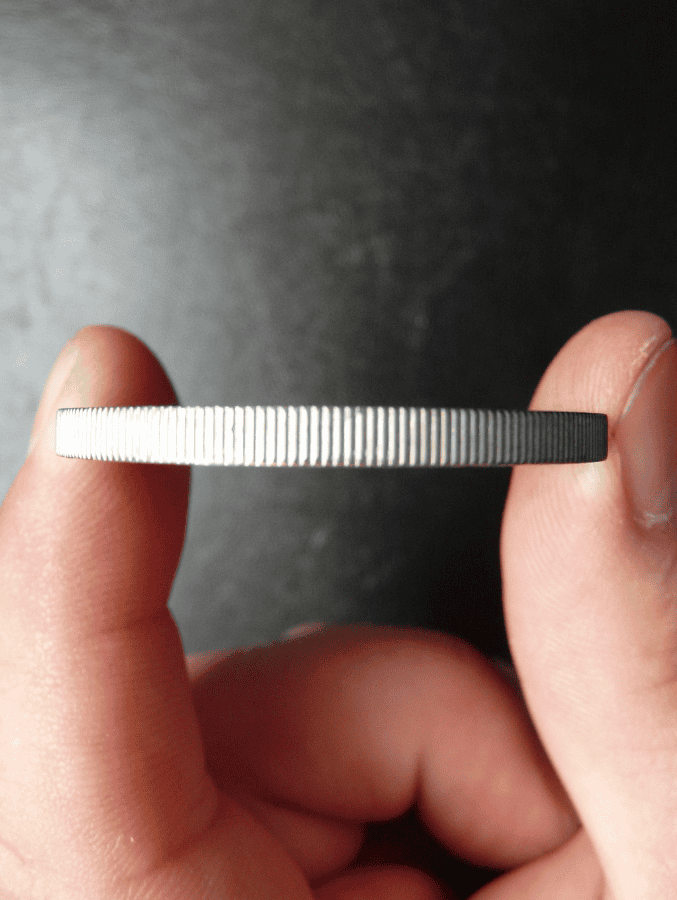
Coin reeding is the process of adding grooves or ridges to a coin’s edge to deter counterfeiting, clipping, and shaving. Ancient civilizations used reeded edges, but the practice was standardized by Sir Isaac Newton during his tenure at the Royal Mint in the late 17th century to combat precious metal theft.
Modern minting uses a collar die that imprints the reeded pattern as the coin is struck. Coin reeding can’t completely prevent counterfeiting or shaving. But it makes both much more difficult by revealing tampering and increasing design complexity. Most modern bullion and Gold IRA coins feature reeded edges for added security and authenticity.
What is Coin Reeding (Meaning and Definition)
Coin reeding is the process of making reeds or grooves on the edges of coins in a bid to prevent counterfeiting. Reeding makes it hard for forgers to replicate coins and also gives coins unique patterns and designs on their edge’s surface.
Check this out next once you’re done reading my coin reeding guide. Especially important if you’re an American citizen with a keen interest in precious metals and investing.
Who Invented Coin Reeding?
Ancient Greeks and Romans invented coin reeding.
Many of the recovered ancient coins feature reeded edges. And we know from ancient documents remaining coin specimens that coin shaving and counterfeiting were malpractices even then.
The official invention of coin reeding traces back to Sir Isaac Newton. He introduced the concept during his time as Warden of The Royal Mint in the late 17th century.
The rampant practice of coin clipping, (individuals shaving off metal from gold and silver coins) was the impetus behind this innovation in coin minting. Reeding gained traction with the introduction of the collar die in coin presses during the late 1700s and 1800s. This advancement enabled easier application of reeded edges in the minting process.
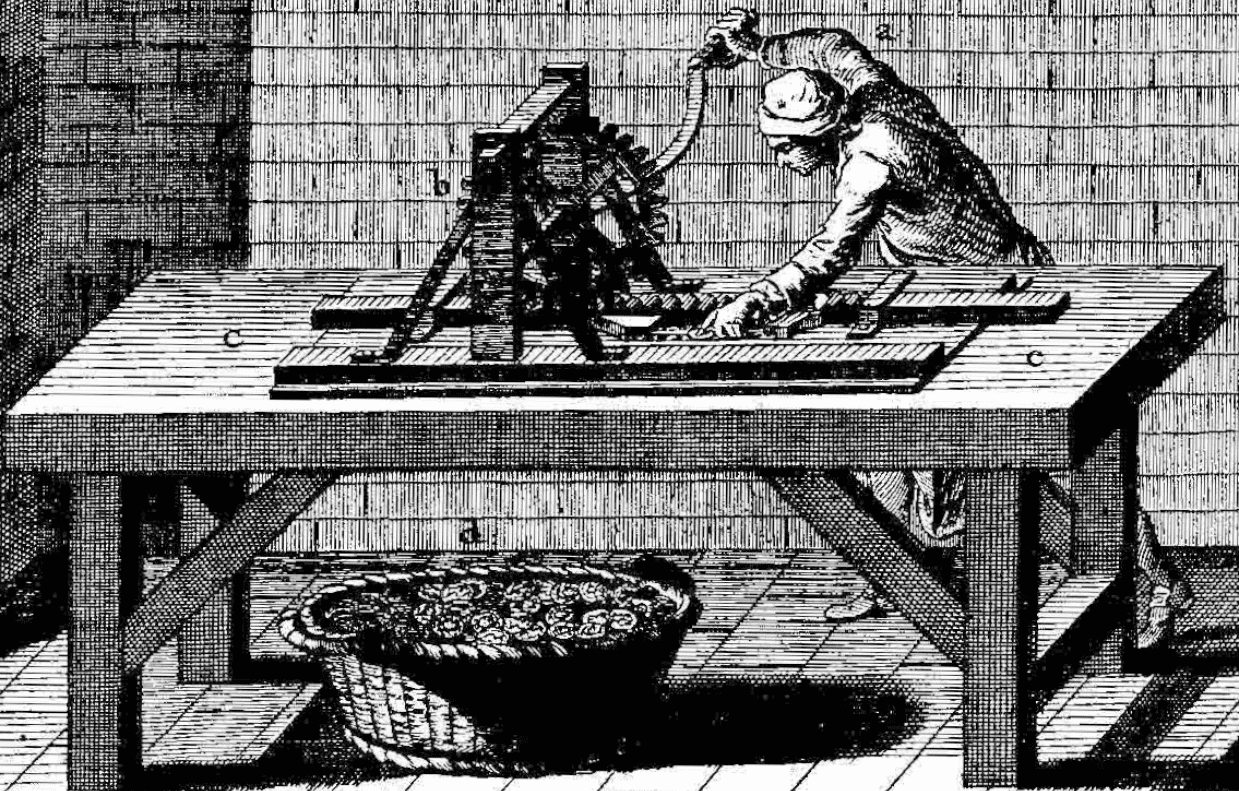
Historical machines, for example the Castaing machine from the 14th century, also played a role in the development of reeding on coin blanks prior to striking.
Overall, Newton’s contribution marked a significant shift in coin production and security as now coin reeding was standardized and automatized as much as possible for those times.
Check this out next once you’re done reading my coin reeding guide. Especially important if you’re an American citizen with a keen interest in precious metals and investing.
Does Coin Reeding Fully Prevent Coin Shaving?
No, coin reeding doesn’t fully prevent coin shaving. It makes it much harder though. Coin reeds are uniform in design and looks. It’s a clear sign the coin’s been tampered with when reeds appear disrupted and damaged.
Modern coins aren’t made with precious metals so coin reeding’s anti-shaving role is now hugely diminished, but not obsolete. For example, Sacagawea dollars have smooth edges because no one’s is trying to counterfeit these base metal coins.
Does Coin Reeding Fully Prevent Coin Counterfeiting?
No, coin reeding doesn’t fully prevent coin counterfeiting. It makes it more difficult for forgers because reeded coins are harder to replicate than smooth-edged coins.
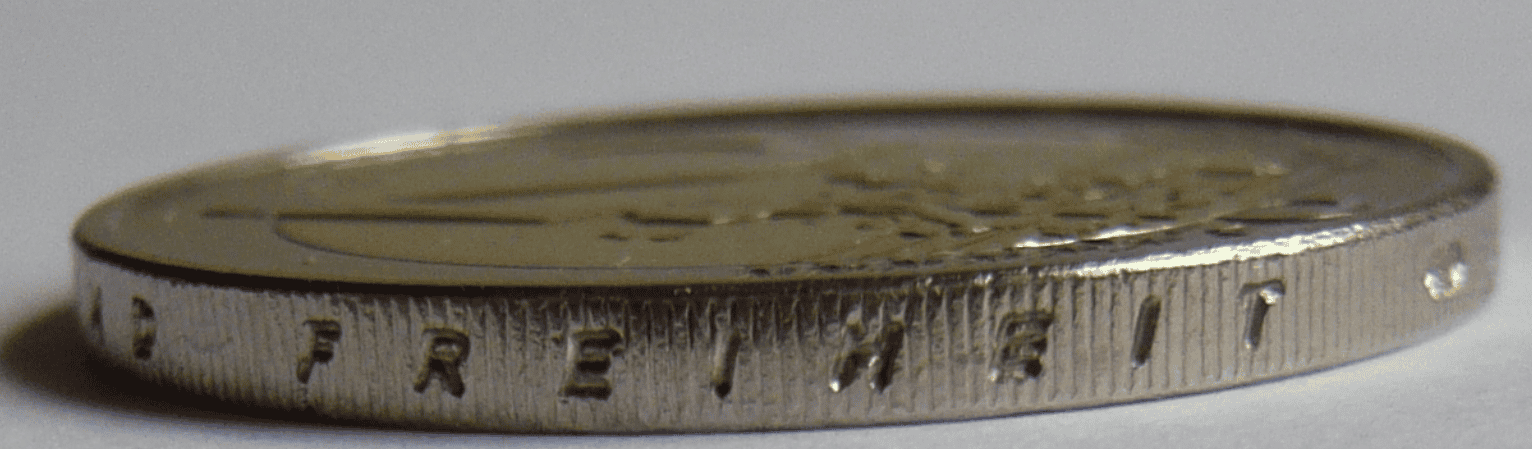
Especially when you consider that reeds needn’t be uniform. Some reed on coins contain elaborate designs and different spacing between reeds and these two factors combined make it nearly impossible for a forger to replicate.
Here’s an example from a German 2 euro coin, embossed with Germany’s unofficial national motto “Einigkeit und Recht und Freiheit”
Check this out next once you’re done reading my coin reeding guide. Especially important if you’re an American citizen with a keen interest in precious metals and investing.
How is Coin Reeding Done?
Coin reeding is done through a process that utilizes a collar during the striking of the coin. The collar, which has the reeded pattern milled into its inner surface, surrounds the blank coin during the striking process.
As the dies press into the blank, the metal flows outwards and into the grooves of the collar, forming the reeded edge.
Do Gold IRA Coins Have Reeded or Smooth Edges?
Yes, most gold IRA coins have reeded edges.
Reeds are added to IRA-approved coins as a security measure and to make them intricate and beautiful.
Gold IRA eligible coins are made of four most popular precious metals (gold, silver, platinum and palladium) and any coin forger would want to successfully replicate and sell these coins to unsuspecting investors.
Fake gold IRA coins are one of the common scams in the gold IRA space. Check out this gold investment company if you’re interested in buying genuine gold IRA coins and bars.
They’re the safest gold IRA company in the USA and they’ll waive all common gold IRA fees for up to 10 years for you.

- Why do Coins Have Ridges?- https://learn.apmex.com/answers/why-do-coins-have-ridges-what-is-reeding/
- Reeded Edge Defined – What is a Reeded Edge?- https://www.thesprucecrafts.com/reeded-edge-definition-768474
- Coin Reeding- https://en.wikipedia.org/wiki/Reeding
- The Difference Between Reeded Edges and Plain Coin Edges- https://customcoins.osbornecoin.com/news/the-difference-between-plain-and-reeded-edge-coins
- Why Do Some Coins Have Ridges (Reeds) On The Edge? https://blog.goldeneaglecoin.com/coins-ridges-reeds-edge/
- Castaing machine- https://en.wikipedia.org/wiki/Castaing_machine

Nikola Roza
Nikola Roza is the owner of Nikola Roza- Everything You Can Learn About Precious Metals. He writes for people who love precious metals and jewelry and who're interested in adding gold, silver platinum and palladium to their retirement portfolios. Nikola is passionate about gold IRAs and investing in multiple asset types for a safer financial future. He also runs a successful online jewelry store where you can buy precious metal jewelry and various replicas of famous coins and bars. Learn about Nikola here.