Disclosure: Some of the links you’ll encounter are affiliate links. If you click and buy something, I’ll get a commission. If you’re reading a review of some precious metals company, please understand that some of the links are affiliate links that help me pay my bills and write about what I love with no extra cost to you. Thank you!
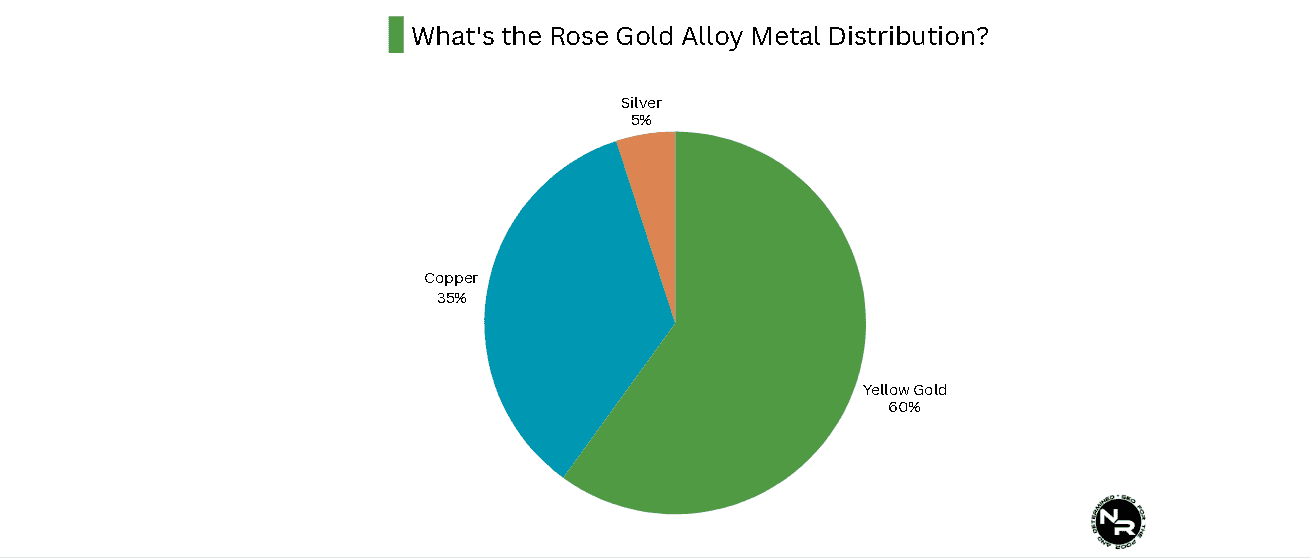
Rose gold is real gold. It’s an alloy of yellow gold, copper that gives it its pinkish-red hue and small amounts of silver added to increase strength and durability.
Rose gold is commonly available in 14k and 18k variants, with 14k having a more pronounced pink hue due to higher copper content.
Rose gold isn’t magnetic; it’s diamagnetic. It’s hypoallergenic since yellow gold, copper, and silver are all hypoallergenic metals. Rose gold doesn’t tarnish but develops a patina over time as copper oxidizes. It doesn’t fade or turn yellow.
Rose gold isn’t natural it doesn’t exist in nature as an ore that can be mined. Rose gold can’t be included in gold IRA accounts, which only accept yellow gold, platinum, palladium and silver.
Learn more right below!
- What is Rose Gold? Is it Real Gold or is it a Scam? How is Rose Gold Made?
- Which Karats is Rose Gold Available in?
- Is Rose Gold Magnetic? Is Rose Gold Jewelry Magnetic?
- Does Rose Gold Tarnish? Does it Corrode, Rust and Oxidize?
- Does Rose Gold Fade? Does it Turn Yellow?
- What is Rose Gold Vermeil?
- Is Rose Gold Natural? Is Raw Rose Gold Real? Do Rose Gold Ores Exist? How is it Mined?
- Is Rose Gold Hypoallergenic?
- Does Rose Gold Contain Nickel?
- Rose Gold vs Yellow Gold- What are the Differences?
- Rose Gold vs Purple Gold- What are the Differences?
- Rose Gold vs Blue Gold- What are the Differences?
- Rose Gold vs Green Gold- What are the Differences?
- Rose Gold vs Black Gold- What are the Differences?
- Rose Gold vs Gray Gold- What are the Differences?
- Is it Possible to Include Rose Gold as Part of a Gold IRA Account?
- Do Rose Gold Coins and Bars Exist? Is That Bullion Real?
- Is Rose Gold Worth Anything?
Here’s an awesome quiz about rose gold based on my post. Take it after you’ve read my guide here.
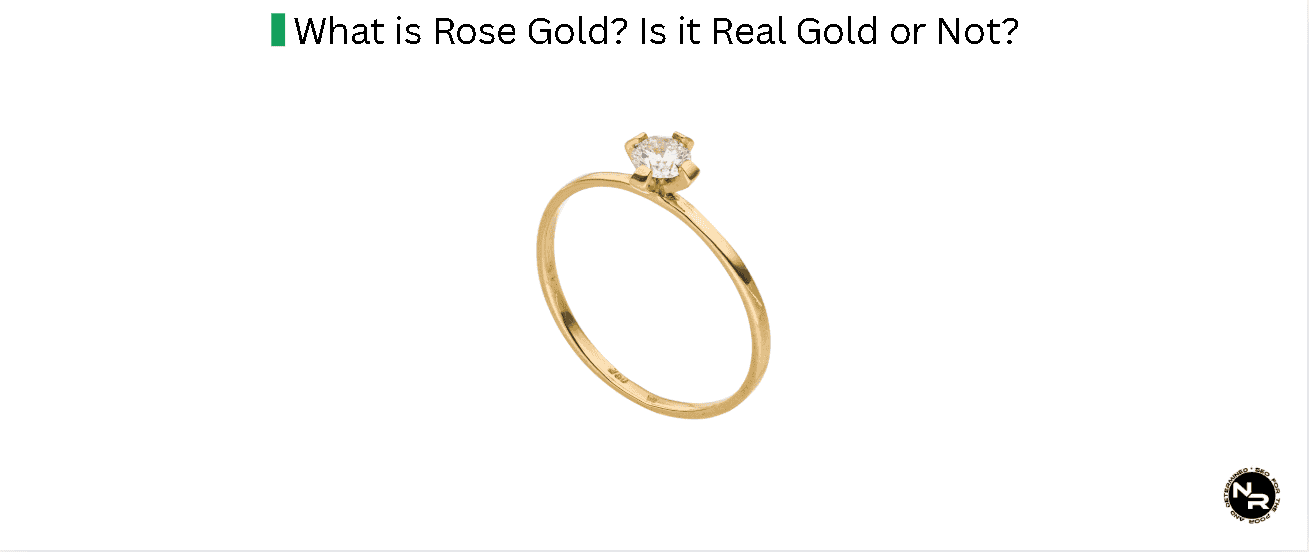
Table of Contents
What is Rose Gold? Is it Real Gold or is it a Scam? How is Rose Gold Made?
Yes, rose gold is real gold.
Rose gold is an alloy of yellow gold and other metals, primarily copper which gives it its pinkish-red hue.
The copper content determines the color intensity with; higher copper content leading to deeper shades of red.
Yellow gold and copper are the primary metals in a rose gold alloy, but small amounts of silver are also added to adjust the color and improve the metal’s workability and durability.
Which Karats is Rose Gold Available in?
Rose gold is commonly available in 14k and 18k variants.
14k rose gold typically has a more pronounced pink hue, while 18k rose gold has a slightly more yellow or brassier tone due to higher gold content.
14k rose gold is more common on the market than 18k rose gold because 14k rose gold looks more pinkish while 18k rose gold looks more yellow than rose.
People who want rose gold usually like it because of its warm red-pinkish hue and 18k rose gold is just too yellow for them.
For example, take a look at this Reddit thread about rose gold karat varieties.
A professional jeweler there says she likes to work with 14k rose gold because it’s durable, strong and has a warm pink tone. 18k rose gold is softer and too yellow. Whereas 8k and 9k rose golds have an unappealing orange hue to them.

Purely mathematically speaking 14k rose gold contains about 58% pure gold and 42% copper alloys while a 18k rose gold contains about 75% pure gold and 25% copper alloys.
10k rose gold also exists, though it’s comparatively rare.
| Karat | Gold | Copper | Silver | Color | Durability |
|---|---|---|---|---|---|
| 18k | 75% | ~22.25% | ~2.75% | The richest, softest pink-gold tone. | Softer than 14k, but more durable than pure 24k gold. |
| 14k | 58.3% | ~33.7% | ~8% | A more pronounced, rosy-red color due to the higher copper content. | Harder and more resistant to scratches than 18k rose gold. |
| 10k | 41.7% | ~52% | ~6.3% | The deepest reddish-pink tone, with the least gold. | The strongest and most durable of the three common karats. |


Is Rose Gold Magnetic? Is Rose Gold Jewelry Magnetic?
No, rose gold isn’t magnetic. It’s diamagnetic.
Rose gold is an alloy of yellow gold, copper and small amounts of silver.
Pure yellow gold isn’t magnetic, it’s diamagnetic. Copper is also diamagnetic. And silver is diamagnetic too.
Therefore, a piece of rose gold jewelry won’t ever be attracted to a magnet. Instead it’ll be slightly repelled due to the piece’s diamagnetism.
You have fake rose gold jewelry in your hands if you try to magnetize your jewelry item and it works. In that case bring your item to a professional jeweler for a thorough reevaluation.

Does Rose Gold Tarnish or Not?
Yes, rose gold tarnishes.
Rose gold tarnish happens because the copper in rose gold alloy reacts with moisture and oxygen and starts to oxidize.
Does Rose Gold Fade? Does it Turn Yellow?
No, rose gold doesn’t fade. And it doesn’t turn yellow.
Rose gold develops a slight patina over time due to the oxidation of the copper content. Copper oxidation causes it to darken and take on more reddish undertones.
This change is gradual, you’ll notice it way in advance and you’ll be able to prevent this by getting your rose gold item professionally polished.


Note: rose gold doesn’t turn yellow, but white gold does. White gold is an alloy of yellow gold and white metals such as nickel, palladium, and silver.
Rhodium plating is often added to white gold for added shine, strength and durability. The problem is that rhodium plating is thin and eventually cracks and falls off exposing the white gold with yellow undertones underneath.
What is Rose Gold Vermeil?
Rose gold vermeil is a type of jewelry where a thick layer of solid rose gold is bonded to a sterling silver base.
Think of rose gold vermeil as form of gold plating, but with thicker plating (at least 2.5 microns (0.0025mm)) and a high-quality sterling silver base.
Rose gold vermeil visually differs from standard yellow gold vermeil. Rose gold has a warm pinkish hue due to the addition of copper to the gold alloy, while traditional gold vermeil has the classic yellow gold appearance.
Rose gold vermeil is popular because it’s more affordable than pure rose gold (sterling silver is significantly cheaper than rose gold).
See below example of rose gold vermeil.

Is Rose Gold Natural? Is Raw Rose Gold Real? Do Rose Gold Ores Exist? How is it Mined?
No, rose gold isn’t natural. Rose gold is a handmade alloy of yellow gold and other metals, primarily copper which gives it its pinkish-red hue. Raw rose gold isn’t real and doesn’t exist in nature.
Rose gold ores don’t exist.
Is Rose Gold Hypoallergenic?
Yes, rose gold is hypoallergenic. The main ingredients of a rose gold alloy are yellow gold, copper and small amounts of silver.
All three of these metals are hypoallergenic, thus making rose gold hypoallergenic. This means most people won’t have any allergic reaction wearing rose gold jewelry.
It’s possible to be allergic to copper, but copper allergies happen far and between compared to far more common nickel allergies.

It is also possible to be allergic to silver, but allergic reaction to silver are even less common than copper allergies.
Also, there’s very little silver in a typical rose gold alloy.
Rose gold isn't allergenic. It's hypoallergenic. Share on XDoes Rose Gold Contain Nickel?
No, rose gold doesn’t contain nickel.
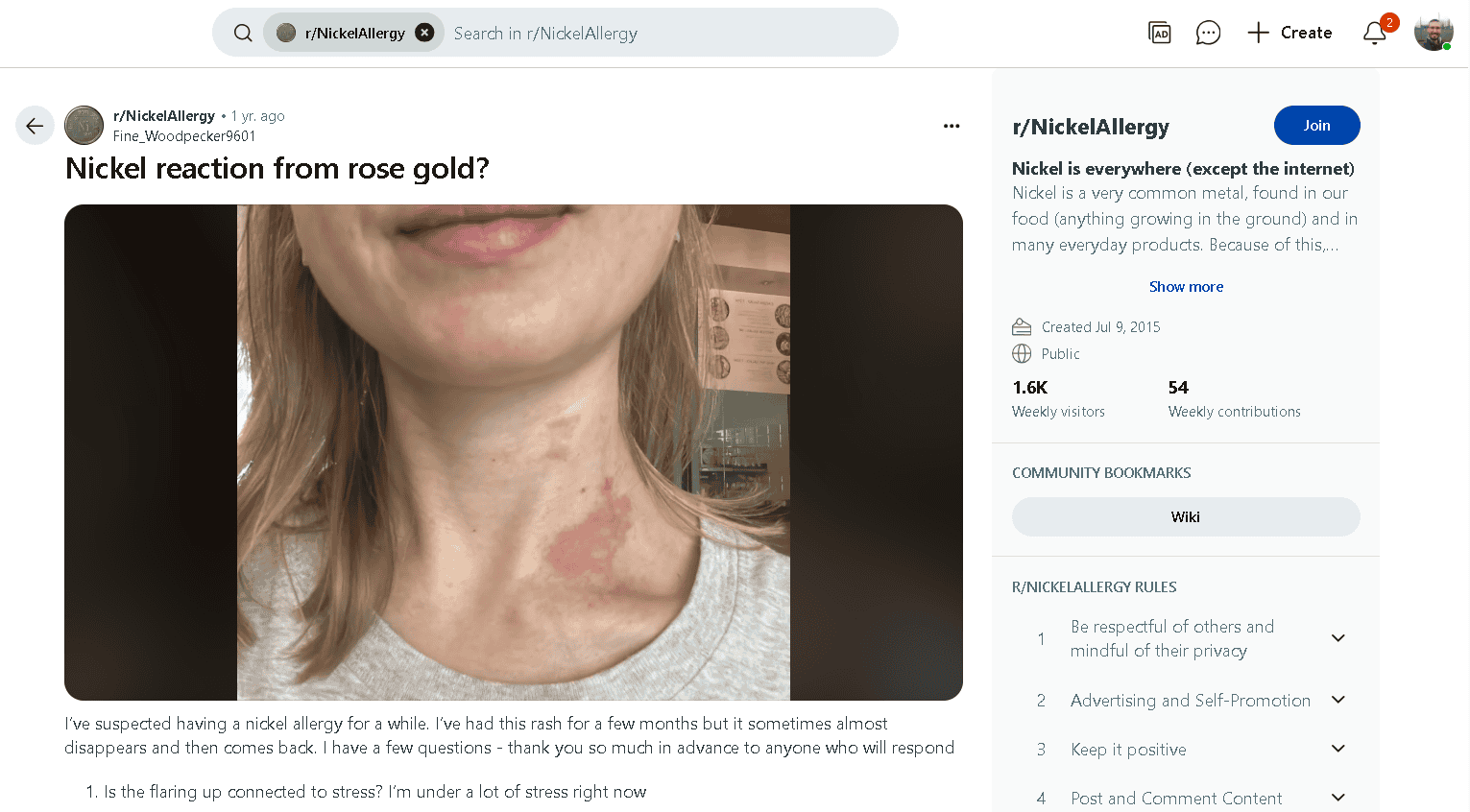
However, traces of nickel can be introduced during the manufacturing or casting process of some rose gold jewelry, potentially causing allergic reactions in sensitive individuals.
Reputable jewelers usually guarantee their rose gold is free of nickel contamination.
Note: reaction to traces of nickel within a rose gold jewelry piece are rare, but possible.
See example below of a woman who got a nasty and itchy rash from a purportedly nickel-free rose gold necklace.
Rose Gold vs Yellow Gold- What are the Differences?
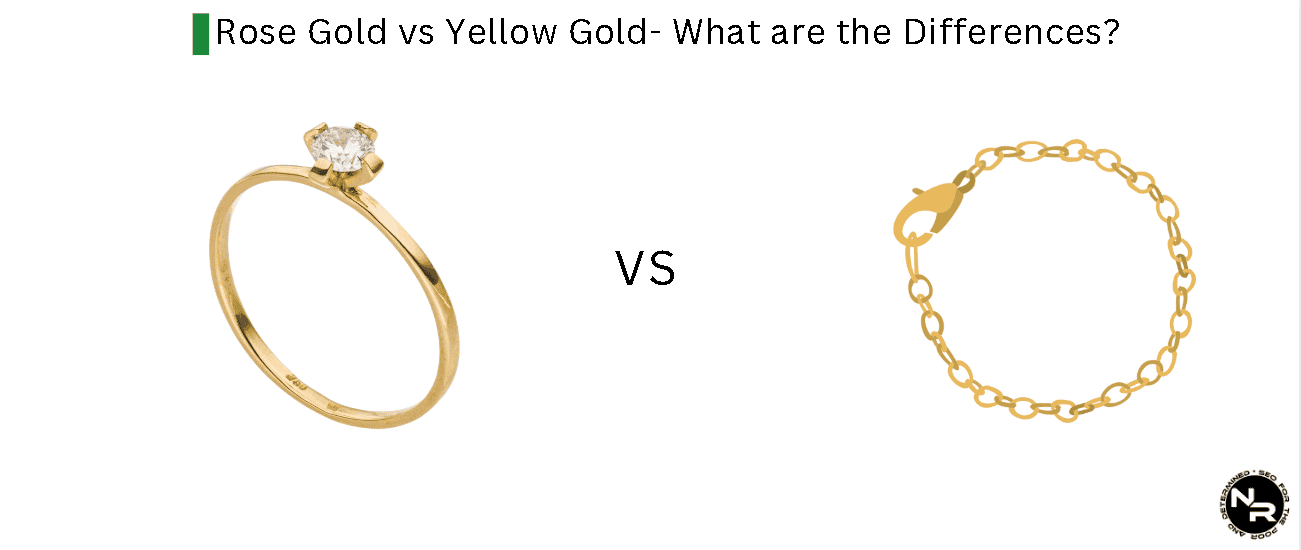
There’re many differences between rose gold and yellow gold.
Rose gold has a higher copper content, giving it a pinkish hue, while yellow gold is alloyed with metals like silver or zinc to achieve its classic warm yellow color.
Rose gold is often more durable and scratch-resistant due to the harder copper content, making it a good choice for daily wear. Whereas yellow gold is significantly softer, especially in higher karats.
Rose gold tarnishes more easily than yellow gold due to its high copper content.
Both are priced similarly based on the amount of pure gold they contain given that the price of copper is negligible compared to the spot gold price.
| Comparison | Rose Gold | Yellow Gold |
|---|---|---|
| Composition | Yellow gold + copper + a small amount of silver. | Yellow gold+ white metals such as nickel, palladium, and silver. |
| Color and tarnish resistance | Rose gold tarnishes because of oxidizing copper. And rose gold tarnishes more easily than yellow gold due to its high copper content. | Yellow, doesn't easily tarnish |
| Durability and scratch resistance | Rose gold is fairly durable and scratch resistant, but to a lesser extent than yellow gold plated with rhodium, platinum and palladium. | Very durable and scratch resistant, especially when plated with stronger metals like rhodium, palladium and platinum. |
| Cost | Rose gold is similarly priced as yellow gold, provided the karatage is the same. For example, 18k rose gold jewelry will cost roughly the same as 18k yellow gold jewelry. | Yellow gold is similarly priced as rose gold, provided the karatage is the same. For example, 14k yellow gold jewelry will cost roughly the same as 14k rose gold jewelry. |
| Skin tone compatibility | The best skin tone for rose gold is a warm skin tone or neutral undertone. | Yellow gold best suits warm and olive skin tone. |
| Hypoallergenic properties | Rose gold is hypoallergenic to people without copper sensitivities, and allergenic to people sensitive to copper. | Yellow gold is hypoallergenic if the pure gold content is high enough and if there's no nickel in the alloy. |
Rose Gold vs Purple Gold- What are the Differences?
There’re many differences between rose gold and purple gold.
Rose gold is a pinkish alloy of gold and copper, known for being malleable and romantic. Whereas purple gold is a rare, brittle alloy of gold and aluminum that creates a violet hue and is often used decoratively rather than for everyday jewelry.
Rose gold is malleable and durable, making it suitable for traditional jewelry. You can buy rose gold rings, necklaces, bracelets, earring, pendants, broches, chains… I’ve even seen fancy rose gold cutlery sold online.
Purple gold is highly brittle and fragile, as the gold-aluminum alloy is an intermetallic compound. Purple gold is rarely used for independent jewelry pieces due to its fragility and is instead used in small, decorative elements or combined with more traditional gold alloys for structural integrity.
| Comparison | Rose Gold | Purple Gold |
|---|---|---|
| Composition | Yellow gold + copper + a small amount of silver. | Yellow gold + aluminum. |
| Color and tarnish resistance | Rose gold tarnishes because of oxidizing copper. And rose gold tarnishes more easily than purple gold due to its high copper content. | Purple gold tarnishes because of the presence of aluminum. |
| Durability and scratch resistance | Rose gold is more durable and scratch resistant than purple gold. | Purple gold is extremely brittle and not very durable and scratch resistant. |
| Cost | Rose gold is cheaper than purple gold. | Purple gold is more expensive than rose gold because it's a harder gold alloy to make. |
| Skin tone compatibility | The best skin tone for rose gold is a warm skin tone or neutral undertone. | The best skin tone for purple gold is a cool skin tone or a neutral undertone. |
| Hypoallergenic properties | Rose gold is hypoallergenic to people without copper sensitivities, and allergenic to people sensitive to copper. | Purple gold is allergenic because aluminum is a known allergenic metal. |

Rose Gold vs Blue Gold- What are the Differences?
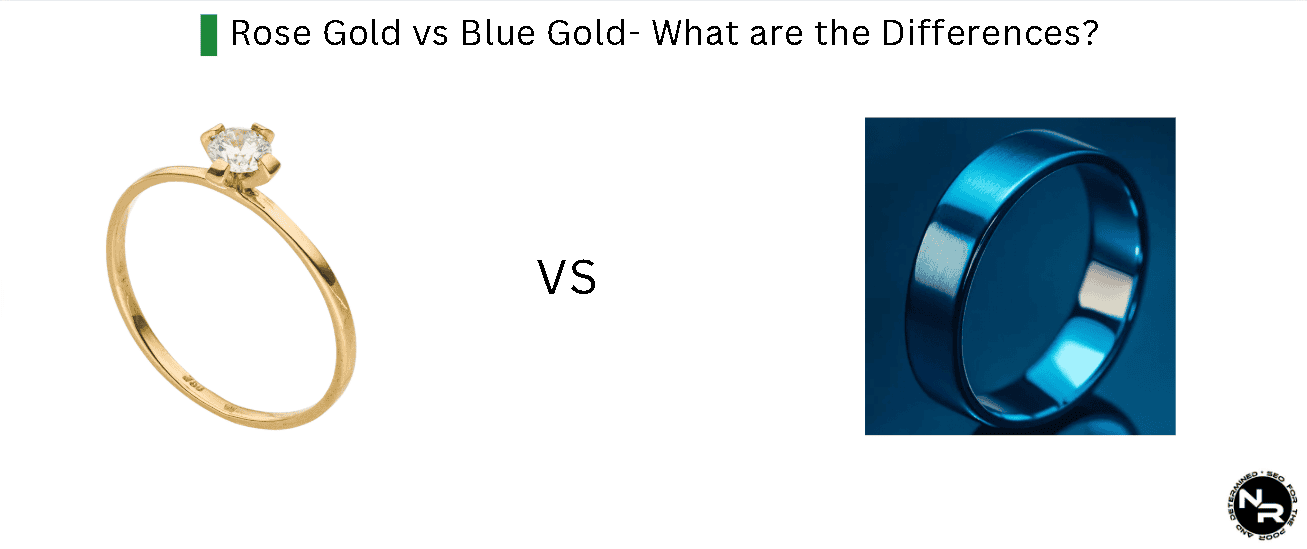
There’re many differences between rose gold and blue gold.
Rose gold is an alloy of gold and copper that produces a pinkish-red color. Blue gold is an alloy of yellow gold with either gallium or indium, resulting in a blue or indigo hue.
The key difference between rose gold and blue lies in their distinct alloying metals: copper for rose gold and gallium or indium for blue gold. This difference in composition affects their color and practicality, with rose gold being a common choice for jewelry and blue gold being far less common and more fragile.
As mentioned, rose gold is a versatile and common choice for jewelry, widely used in jewelry, including engagement rings, wedding bands, necklaces, and earrings.
Blue gold is notably softer and less practical for standard jewelry making, though it’s sometimes used for watchmaking, i.e., creating expensive and unique watches.
| Comparison | Rose Gold | Blue Gold |
|---|---|---|
| Composition | Yellow gold + copper + a small amount of silver. | Yellow gold +gallium or indium |
| Color and tarnish resistance | Rose gold tarnishes because of oxidizing copper. And rose gold tarnishes more easily than blue gold due to its high copper content. | Blue gold tarnishes when blue gold is made from yellow gold and gallium. Blue gold doesn't tarnish when it's made from yellow gold and indium. |
| Durability and scratch resistance | Rose gold is more durable and scratch resistant than blue gold. | Blue gold is extremely brittle and not very durable and scratch resistant. |
| Cost | Rose gold is cheaper than blue gold as it's a standardized alloy compared to blue gold. | Blue gold is more expensive than rose gold due to uniqueness of this gold alloy and it's constituent parts. |
| Skin tone compatibility | The best skin tone for rose gold is a warm skin tone or neutral undertone. | The best skin tone for blue gold is a cool skin tone or a neutral undertone. |
| Hypoallergenic properties | Rose gold is hypoallergenic to people without copper sensitivities, and allergenic to people sensitive to copper. | Blue gold is hypoallergenic to most people. Allergies to indium and gallium are rare, but possible. |
Rose Gold vs Green Gold- What are the Differences?
There’re many differences between rose gold and green gold.
Rose gold’s distinct pink hue comes from added copper, while green gold gets its subtle greenish tint from silver, or sometimes cadmium.
Both rose gold and green gold are alloys of pure gold and other metals, but the different alloying metals and their proportions result in the unique appearances and characteristics of each gold type.
Rose gold is a modern gold alloy that consists of gold, copper, and often silver. It has a warm, rosy pink color.
Green gold is an alloy of gold and silver that was known already in Ancient Greek and Roman times. It has a greenish hue due to high silver content. Zinc, copper and nickel are often added in small quantities to green gold alloy to strengthen it and make it more workable from the jewelry design perspective.
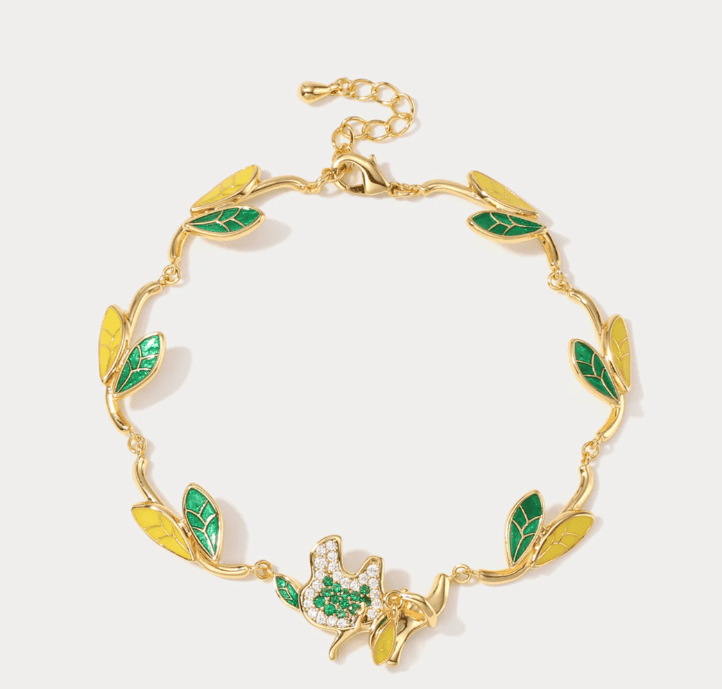
Pure green gold jewelry doesn’t exist, but green gold is used for creating accents for nature-themed designs like leaves or flowers and providing a distinct alternative to traditional yellow, white, or rose gold.
Natural green gold is called “electrum”.
| Comparison | Rose Gold | Green Gold |
|---|---|---|
| Composition | Yellow gold + copper + a small amount of silver. | Yellow gold +silver+ low amounts of zinc, nickel and copper. |
| Color and tarnish resistance | Rose gold tarnishes because of oxidizing copper. And rose gold tarnishes more easily than green gold due to its high copper content. | Green gold doesn't tarnish as both of its main constituent parts (pure gold and pure silver) don't tarnish. |
| Durability and scratch resistance | Rose gold is more durable and scratch resistant than green gold. | Green gold is durable, strong, scratch resistant and suitable for jewelry applications. |
| Cost | Rose gold is cheaper than green gold as it's a standardized alloy compared to green gold. | Green gold is more expensive than rose gold because a combination of gold and silver is more expensive than the combination of yellow gold and copper. |
| Skin tone compatibility | The best skin tone for rose gold is a warm skin tone or neutral undertone. | The best skin tone for green gold is the warm skin undertone, characterized by green or yellowish veins on the wrist and a tendency to tan rather than burn. |
| Hypoallergenic properties | Rose gold is hypoallergenic to people without copper sensitivities, and allergenic to people sensitive to copper. | Green gold is hypoallergenic to most people. Allergies to silver within the green gold alloy are rare, but possible. |
Rose Gold vs Black Gold- What are the Differences?
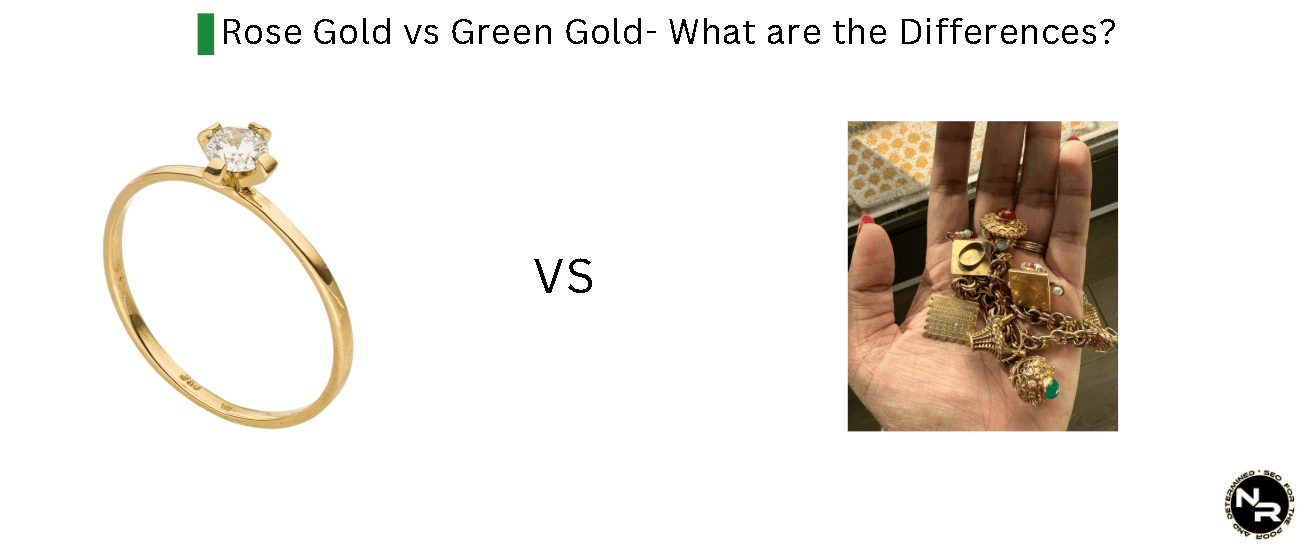
There’re many differences between rose gold and black gold.
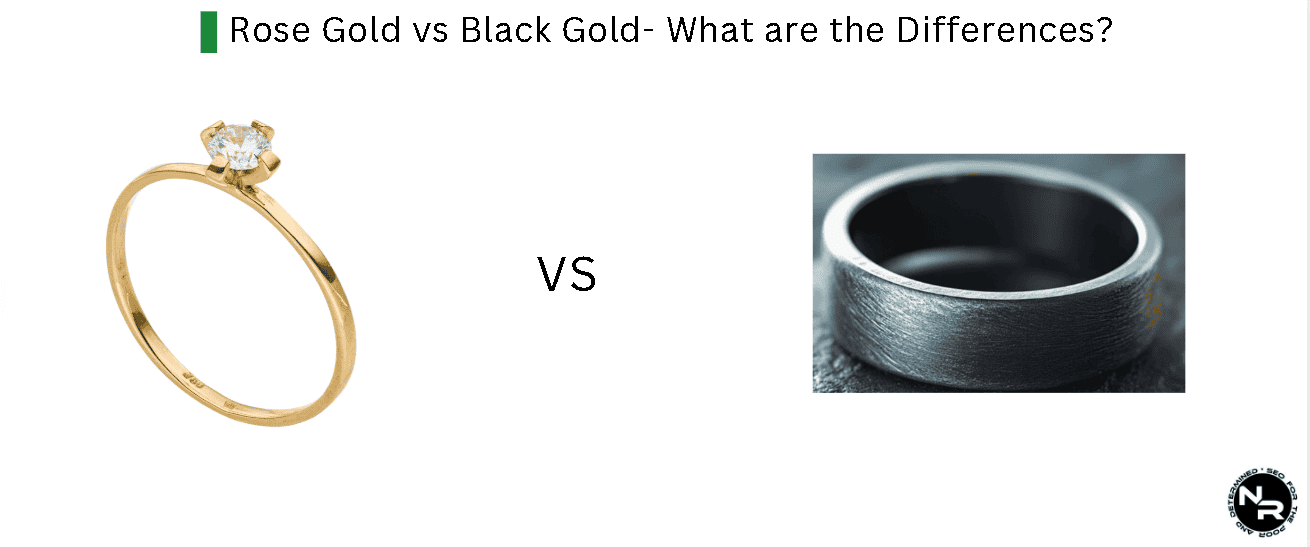
Rose gold is a copper-gold alloy with a pink hue, while black gold isn’t a natural gold alloy. Instead, it’s yellow gold treated with a dark finish through plating or alloying, such as with cobalt.
The key difference between rose gold and black gold lies in their creation. Rose gold is an alloy of gold+copper+silver, whereas black gold gets its color from a surface treatment applied to yellow gold.
Rose gold is a durable alloy and doesn’t need frequent replating, though regular cleaning helps maintain its luster.
Black gold is yellow gold that’s received surface treatment to obtain its dark, anthracite gray with metallic reflections.
Black gold jewelry is rare on the market, but still available in various designs, including rings, earrings, and necklaces, and is a popular choice for those seeking a unique and fashionable look.
| Comparison | Rose Gold | Black Gold |
|---|---|---|
| Composition | Yellow gold + copper + a small amount of silver. | Yellow gold coated with with a thin layer of a dark metal like rhodium or ruthenium. |
| Color and tarnish resistance | Rose gold tarnishes because of oxidizing copper. And rose gold tarnishes more easily than black gold due to its high copper content. | Black gold doesn't tarnish because its core is real gold, which doesn't tarnish. |
| Durability and scratch resistance | Rose gold is less durable and scratch resistant than black gold because both ruthenium and rhodium are extremely strong metals. | Black gold that has rhodium or ruthenium plating is exceptionally strong, durable and scratch resistant. Electroplated black gold scratches easily. |
| Cost | Rose gold is cheaper than black gold as it's a standardized alloy compared to black gold. | Black gold is more expensive than rose gold because of the typically higher yellow gold content and expensive rhodium and ruthenium coatings. |
| Skin tone compatibility | The best skin tone for rose gold is a warm skin tone or neutral undertone. | The best skin tone for black gold is natural warm, cool, or neutral undertones. |
| Hypoallergenic properties | Rose gold is hypoallergenic to people without copper sensitivities, and allergenic to people sensitive to copper. | Black gold is hypoallergenic. Yellow gold as base is hypoallergenic and both rhodium and ruthenium as coating are non-allergenic. |
Rose Gold vs Gray Gold- What are the Differences?
There’s many differences between rose gold and gray gold.
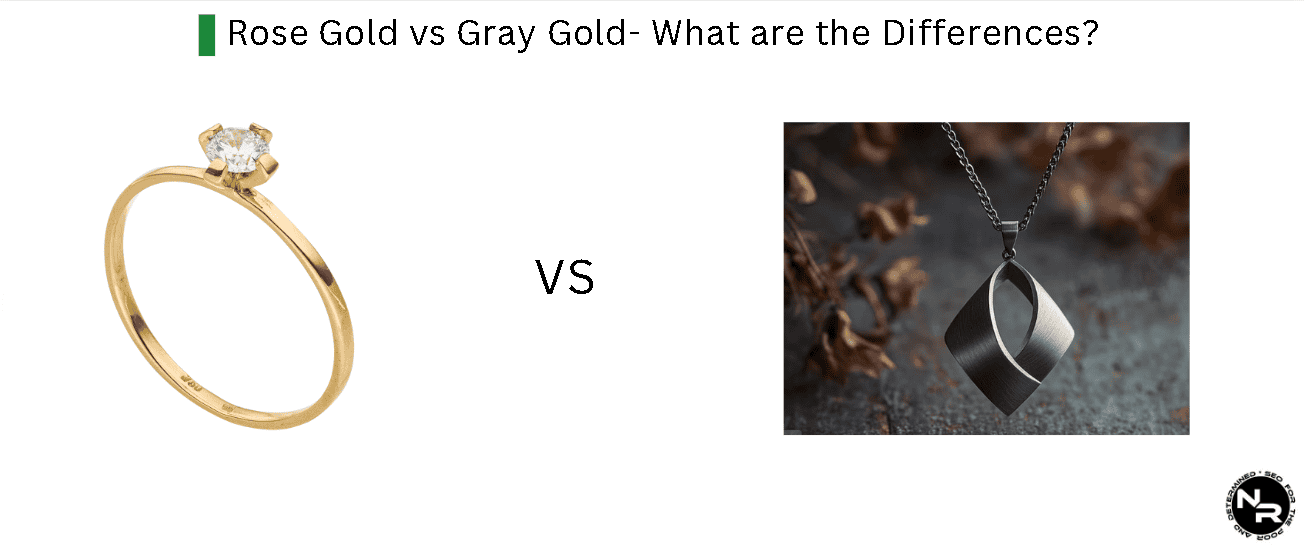
Rose gold’s signature warm, pink hue comes from alloying gold with copper, while gray gold is a muted, understated alloy made with gold and palladium, silver, copper, or manganese to achieve its soft gray shade.
Rose gold offers a romantic, feminine aesthetic, and is a durable choice thanks to its high copper content. Gray gold provides a sophisticated, modern, and discreet look, often favored for men’s jewelry
Rose gold is a more popular choice in the current jewelry market compared to gray gold, which is still just a novelty.
| Comparison | Rose Gold | Gray Gold |
|---|---|---|
| Composition | Yellow gold + copper + a small amount of silver. | Yellow gold +palladium+ low amounts of manganese and copper. |
| Color and tarnish resistance | Rose gold tarnishes because of oxidizing copper. And rose gold tarnishes more easily than gray gold due to its high copper content. | Gray gold is highly resistant to tarnishing because both yellow gold and palladium are tarnish resistant. |
| Durability and scratch resistance | Rose gold is less durable and scratch resistant than gray gold. | Gray gold is moderately durable and scratch resistant. |
| Cost | Rose gold is cheaper than gray gold as gray gold's yellow gold and palladium are more expensive than just rose gold's gold and copper content. | Gray gold is more expensive than rose gold because the combination of yellow gold +palladium (gray gold) is worth more that yellow gold+ copper. |
| Skin tone compatibility | The best skin tone for rose gold is a warm skin tone or neutral undertone. | The best skin tone for gray gold is natural warm, cool, or neutral undertones |
| Hypoallergenic properties | Rose gold is hypoallergenic to people without copper sensitivities, and allergenic to people sensitive to copper. | Gray gold is hypoallergenic because all constituent parts of gray gold alloy are hypoallergenic. |
Is it Possible to Include Rose Gold as Part of a Gold IRA Account?
No, it isn’t possible to include rose gold as part of a gold IRA account.
Gold IRA account can only contain yellow gold IRA approved coins and bars. Other IRA-approved precious metals are silver, platinum and palladium.
Augusta Precious Metals is the place where you can buy genuine IRA-approved gold without worrying about a multitude of gold IRA scams.
Augusta is the best gold IRA company in the US and working with them is safe, secure and fast.
They also waive all fees for 10 years for all new customers.
Download your free gold investing guide here!

Do Rose Gold Coins and Bars Exist? Is That Bullion Real?
Rose gold bars don’t exist. Rose gold coins exist, but they’re rare and exclusively released as special editions or commemorative pieces.
For example, here’s this 2019 Tuvalu 2 oz Rose Gold 60th Anniversary Barbie™ Proof.
This rose gold coin was the second release in an exclusive series celebrating 60 years since Barbie’s debut.
Only 60 of these coins were minted and the value of each coin far surpasses their precious metal content.

Is Rose Gold Worth Anything?
Yes, rose gold is worth a lot.
Rose gold is an alloy of yellow gold, copper and small amounts of silver.
Yellow gold is worth a lot of money, but the spot price of gold fluctuates many times per day based on the interplay of supply and demand.
To sell the yellow gold within the rose gold alloy you’ll need to melt your rose gold jewelry item first. You can also sell silver you get from the melted rose gold alloy, but the amount is usually miniscule and not worth the bother.
Note: only a professional jeweler will be able to safely melt your rose gold for you given that heat above 1,770°F (966°C) is required to melt it.
What is Rose Gold? Is it Real? Is it Magnetic and Hypoallergenic? Does it Tarnish, Corrode and Rust? (Conclusion)
Rose gold is a real gold alloy made of yellow gold and copper. Copper gives rose gold its pinkish hue.
Rose gold isn’t magnetic, is generally hypoallergenic (though copper allergies afflict a certain percentage of people), and doesn’t tarnish but develops a patina as the copper content oxidizes over time.
Rose gold jewelry is commonly found in 14k and 18k karats, with 14k having a more pronounced pink color due to higher copper content.
Check out our jewelry store for gold products you can purchase. We don’t sell rose gold jewelry, but we do ship worldwide!
References:
- What is the difference between Yellow Gold, White Gold and Rose Gold?- https://www.theraregemstonecompany.com/gem-blog/the-difference-between-yellow-white-and-rose-gold
- What is Rose Gold? The Essential Guide- https://shop.kenanddanadesign.com/pages/rose-gold
- What Is Rose Gold? A Brief History and Description- https://www.laurapreshong.com/blogs/fromthebench/what-is-rose-gold-a-brief-history-and-description
- What is Rose Gold and Is Rose Gold Real Gold?- https://www.jewelersmutual.com/the-jewelry-box/what-is-rose-gold
- Every jeweler I go to says ROSE GOLD is a weak metal but every source on the internet says the opposite- https://www.reddit.com/r/jewelers/comments/kd7g6d/every_jeweler_i_go_to_says_rose_gold_is_a_weak/
- Rose Or Pink Gold – What Is It?- https://www.ohmygiddyaunt.com.au/blog/rose-or-pink-gold-what-is-it
- What Is Grey Gold: Your Ultimate Guide- https://www.nobbier.com/blogs/editorial/what-is-grey-gold/
- 2019 Tuvalu 2 oz Rose Gold 60th Anniversary Barbie™ Proof- https://www.apmex.com/product/188264/2019-tuvalu-2-oz-rose-gold-60th-anniversary-barbie-proof
- Nickel reaction from rose gold?- https://www.reddit.com/r/NickelAllergy/comments/1e2b9xl/nickel_reaction_from_rose_gold/
- Understanding Copper Allergy: Causes, Symptoms, and Treatment- https://www.wyndly.com/blogs/learn/copper-allergy
- 18K Rose Gold Vermeil Double Sided Chain Ring- https://www.aymeelove.com/collections/rose-gold-plated/products/sterling-silver-ring-covered-with-18-karat-rose-gold?variant=44395385684274
- Patina on rose gold- https://www.reddit.com/r/ouraring/comments/1iw05of/patina_on_rose_gold/
- Rose gold color difference with pics!- https://www.reddit.com/r/ouraring/comments/1d7j9jq/rose_gold_color_difference_with_pics/
- Rose gold optimal karat- https://www.reddit.com/r/jewelry/comments/qq1jdy/rose_gold_optimal_karat/
- Metal Guide: 14k vs 18k Rose Gold- https://www.lamoredesign.com/blogs/news/14k-vs-18k-rose-gold-ring
- Four Leaf Clover Bracelet- https://selenichast.com/products/green-leaf-bracelet
- What Is Purple Gold: Your Ultimate Guide- https://www.nobbier.com/blogs/editorial/what-is-purple-gold/
- What Is Blue Gold: Your Ultimate Guide- https://www.nobbier.com/blogs/editorial/what-is-blue-gold/
- Where to sell? Melt or no?- https://www.reddit.com/r/jewelry/comments/1imbo65/where_to_sell_melt_or_no/
- What Is Grey Gold: Your Ultimate Guide- https://www.nobbier.com/blogs/editorial/what-is-grey-gold/
- Adjustable Stainless Steel Bracelet with Chunky Chain, Puffy Heart Charm Silver Bracelet for Women, Engraveable Non-Tarnish Stainless Steel Charm Bracelet Available in 7 and 8 inch lengths- https://www.amazon.sa/-/en/Loralyn-Designs-Stainless-Bracelet-Adjustable/dp/B01KN7619S
- What Is 950 Platinum? https://www.silverrecyclers.com/blog/950-platinum.aspx
- 1 oz Palladium Bar Varied Condition | Any Mint- https://www.providentmetals.com/1-oz-9995-fine-palladium-bar.html
- Rhodium metal 99.9%- https://www.luciteria.com/elements-for-sale/buy-rhodium
- Osmium .9995 1 oz Bar- https://www.luciteria.com/bullion/osmium-ounce-bar
- Iridium .9995 1 oz Bar- https://www.luciteria.com/bullion/iridium-9995-1-oz-bar
- Ruthenium .9995 1 oz Bar- https://www.luciteria.com/bullion/ruthenium-9995-1-oz-bar

Nikola Roza
Nikola Roza is a blogger behind Nikola Roza- SEO for the Poor and Determined. He writes for bloggers who don't have huge marketing budget but still want to succeed. Nikola is passionate about precious metals IRAs and how to invest in gold and silver for a safer financial future. Learn about Nikola here.